


Search results
Search for "passive film" in Full Text gives 2 result(s) in Beilstein Journal of Nanotechnology.
Ambient pressure XPS at MAX IV
Beilstein J. Nanotechnol. 2025, 16, 1677–1694, doi:10.3762/bjnano.16.118
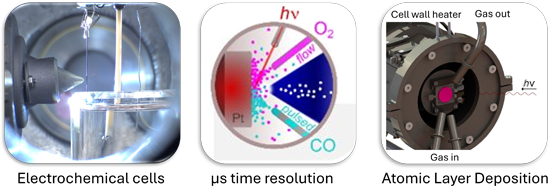
- is largely derived from ex situ surface analysis using XPS and scanning tunneling microscopy. However, the findings of UHV-XPS do not accurately represent the genuine passive film/electrolyte interface. APXPS is essential to observe the onset and progression of corrosion and to gain a fundamental
- near the alloy’s surface, exacerbating metal dissolution. The passive film breakdown has been studied for different acidities of the electrolyte solution, as reported in Figure 14. A parallel study extended these findings to martensitic stainless steel, offering further insights into the chemical





Relationship between corrosion and nanoscale friction on a metallic glass
Beilstein J. Nanotechnol. 2022, 13, 236–244, doi:10.3762/bjnano.13.18
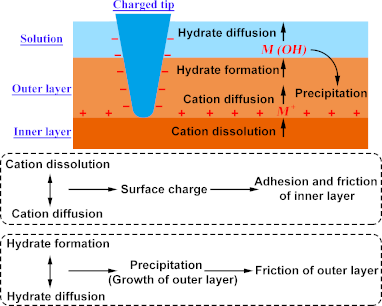
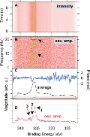
- ); corrosion; friction; metallic glass; passive film; Introduction Metallic glasses (MGs) exhibit excellent mechanical properties including extraordinary hardness and strength [1][2]. Thus, MGs have emerged as novel wear-resistant materials with high potential in tribological applications [3][4][5][6][7][8


Other Beilstein-Institut Open Science Activities



