


Search results
Search for "phytochemical" in Full Text gives 8 result(s) in Beilstein Journal of Nanotechnology.
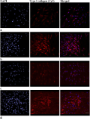
Development of Protium heptaphyllum essential oil-loaded nanocapsules: experimental design and biological activity
Beilstein J. Nanotechnol. 2026, 17, 974–990, doi:10.3762/bjnano.17.67
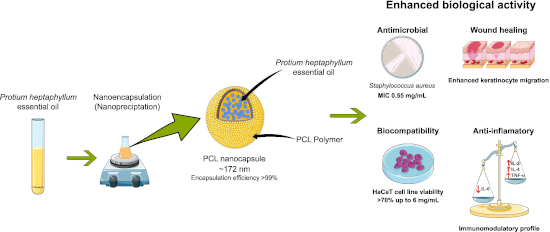
- bioactive natural product of significant pharmacological interest. Phytochemical analyses show a high concentration of monoterpenes, particularly p-cymene [5][6], which contribute to its antimicrobial, anti-inflammatory, and wound-healing properties [7]. These biological activities make breu branco




Restorative potential of laser-synthesized silver nanoparticles with Salvia officinalis for periodontal disease treatment: an in vitro study
Beilstein J. Nanotechnol. 2026, 17, 781–795, doi:10.3762/bjnano.17.55
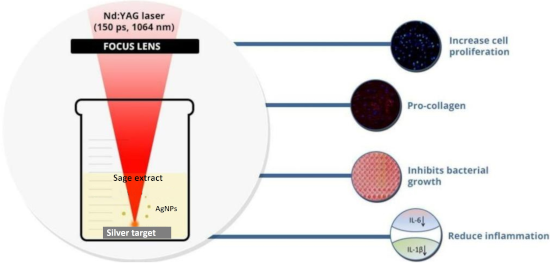
- contaminant-free physical approach with bioactive plant-derived compounds. This strategy enables the potential preservation and enhancement of both nanoparticle and phytochemical properties, while avoiding chemical reagents. Furthermore, the work provides a novel, comprehensive evaluation of these



On the road to sustainability – application of metallic nanoparticles obtained by green synthesis in dentistry: a scoping review
Beilstein J. Nanotechnol. 2025, 16, 1851–1862, doi:10.3762/bjnano.16.128
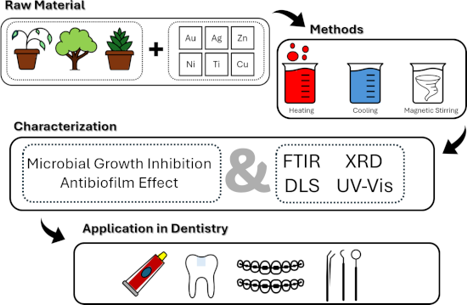
- (n = 6) among the species used in green synthesis (Figure 4) reflects their rich phytochemical profiles, particularly their high content of phenolic compounds [33]. These secondary metabolites, including flavonoids, tannins, phenolic acids, and terpenoids, act as both reducing and stabilizing agents
- potential of plant-based nanotechnology in core areas of dentistry. The high frequency of these families in the reviewed articles indicates a strategic phytochemical selection that maximizes both synthetic feasibility and therapeutic potential. This correlation highlights the critical role of phenolic-rich
- stringent regulatory oversight. The prominent use of silver and zinc oxide nanoparticles, produced through environmentally sustainable phytochemical-mediated synthesis, underscores a convergence of advanced antimicrobial functionality, enhanced biocompatibility, and alignment with global sustainability


Polymer lipid hybrid nanoparticles for phytochemical delivery: challenges, progress, and future prospects
Beilstein J. Nanotechnol. 2024, 15, 1473–1497, doi:10.3762/bjnano.15.118
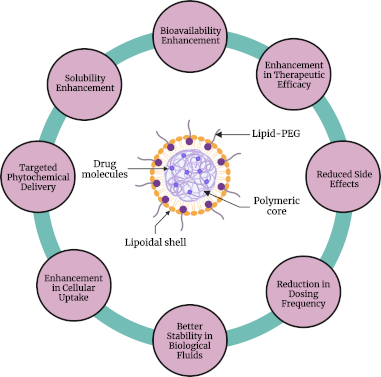
- modification strategies to improve overall therapeutic efficacy by site-specific delivery of encapsulated phytochemicals are also discussed. Furthermore, we extensively discuss the preclinical studies on phytochemical encapsulated PLHNPs for the management of different diseases. Additionally, we explore the
- diseases. Keywords: bioavailability; phytochemical; polymer lipid hybrid nanoparticles; solubility; stability; surface modification; Introduction Phytochemicals are naturally occurring compounds found in plants (from the Greek word “phyton” meaning plant) [1]. These bioactive compounds are responsible
- and enhances their solubility, stability, and bioavailability. Additionally, the physicochemical characteristics of PLHNPs can be tailored by varying the concentrations of polymers and lipids [16]. PLHNPs can address various challenges associated with phytochemical delivery. The benefits of PLHNPs


In search of cytotoxic selectivity on cancer cells with biogenically synthesized Ag/AgCl nanoparticles
Beilstein J. Nanotechnol. 2022, 13, 1505–1519, doi:10.3762/bjnano.13.124
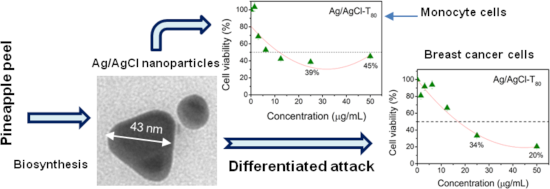
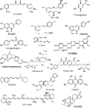
- its flavonoid content. Li et al. [14] reported that some phenolic compounds, such as gallic acid, catechin, epicatechin, and ferulic acid are present in pineapple peel extracts. On the other hand, Steingass et al. [19] reported an extensive phytochemical study, by HPLC-DAD-ESI-MSn and GM-MS, of


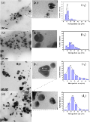
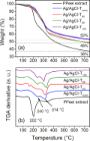


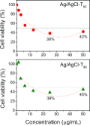

Antibacterial activity of a berberine nanoformulation
Beilstein J. Nanotechnol. 2022, 13, 641–652, doi:10.3762/bjnano.13.56
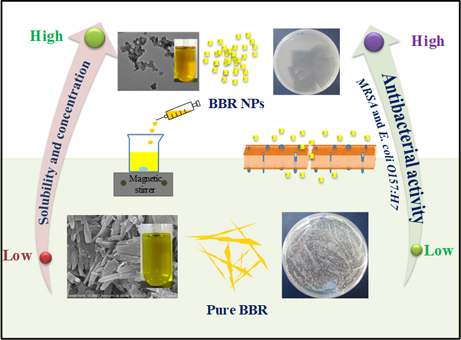
- Phytochemicals are organic substances produced by plants with pharmacological and biological activity. Phytochemical-based medicines have become popular in the pharmaceutical market because of their diversity, availability, low cost, and little or no undesirable side effects [1]. Berberine (BBR) has been widely
- known as a phytochemical substance in treating diarrhea, digestive disorders, and gastroenteritis. It is the quaternary salt of the isoquinoline alkaloid extracted from many plants, such as Berberis aristata, Berberis aquifolium, Berberis vulgaris, Coptis chinensis, Coptis japonica, and Hydrastis
- remarkable at concentrations greater than 8 µg/mL through affecting the aggregation of phenol-soluble modulins into amyloid fibrils. This result suggests that BBR may be a therapeutic agent against microbial-generated amyloid-involved diseases. BBR is also a phytochemical exhibiting a strong antiviral



A review on the green and sustainable synthesis of silver nanoparticles and one-dimensional silver nanostructures
Beilstein J. Nanotechnol. 2021, 12, 102–136, doi:10.3762/bjnano.12.9
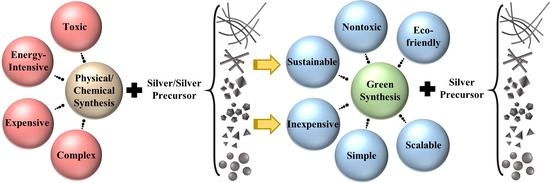
- the phytochemical compounds simplifies the process. Various parts of plants such as roots, fruits, seeds, needles, and aerial parts may be used for extraction of phytochemicals [321]. These extracts contain a substantial amount of polyphenols which are strong antioxidants [140][186] with significant


Green and energy-efficient methods for the production of metallic nanoparticles
Beilstein J. Nanotechnol. 2015, 6, 2354–2376, doi:10.3762/bjnano.6.243
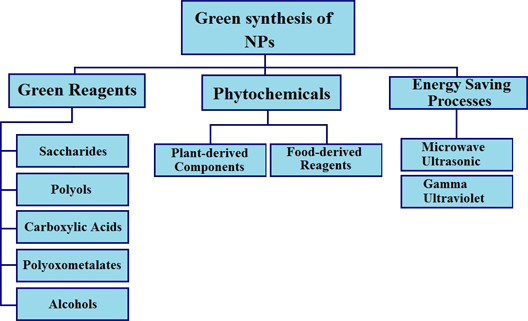
- largest feedstock for this process [78]. The hydroxyl and other functional groups in polysaccharides can play a major role in the reduction and stabilization steps during the production of metallic NPs. Also, phytochemical compounds have biological activities and can be considered as a renewable resource
- their results, using this phytochemical compound can stabilize the NPs and reduce the particle size from 81 to 66 nm [46]. Zhan et al. simultaneously reduced HAuCl4 and PdCl2 by aqueous leaf extract of Cacumen Platycladi to produce Au–Pd bimetallic NPs with an average size of 7 nm. The reaction took


Other Beilstein-Institut Open Science Activities



