


Search results
Search for "protoporphyrin IX" in Full Text gives 7 result(s) in Beilstein Journal of Nanotechnology.
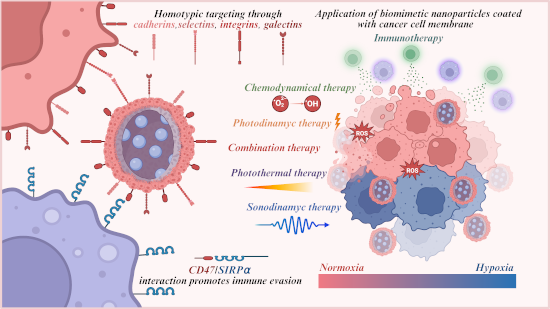
Biomimetic nanoparticles in cancer photodynamic therapy: a review of targeted delivery systems and therapeutic outcomes
Beilstein J. Nanotechnol. 2026, 17, 396–422, doi:10.3762/bjnano.17.27


Investigation of the solubility of protoporphyrin IX in aqueous and hydroalcoholic solvent systems
Beilstein J. Nanotechnol. 2025, 16, 1209–1215, doi:10.3762/bjnano.16.89
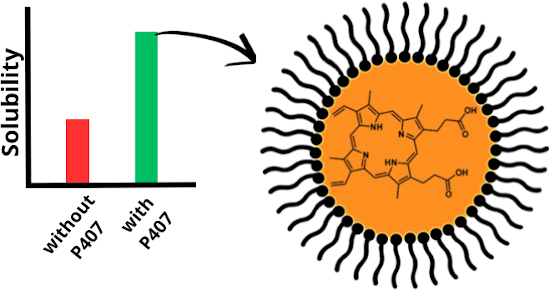
- source, and tissue oxygen. Protoporphyrin IX (PpIX) is commonly used as a PS due to its tumor-targeting properties and phototoxicity. However, the physicochemical properties of PpIX foster self-aggregation, which is a challenge for its incorporation into pharmaceutical formulations. This study aimed to
- ; protoporphyrin IX; shake-flask; solubility test; Introduction Photodynamic therapy (PDT) is a promising therapeutic modality that has raised keen interest in the treatment of various conditions including cancer and microbial infections [1][2]. This non-invasive treatment combines a photosensitizer (PS), a
- suitable light source, and molecular oxygen, generating reactive oxygen species that induce cellular damage [3][4]. Among the PSs used in PDT, protoporphyrin IX (PpIX) stands out as a natural precursor of hemoglobin and porphyrins, exhibiting low toxicity in its monomeric form [5]. When exposed to light


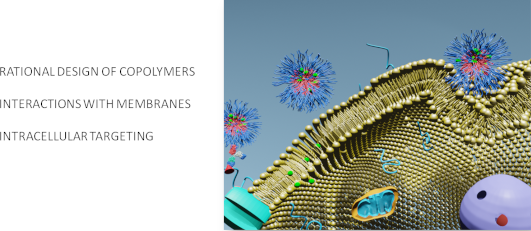
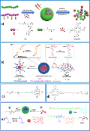
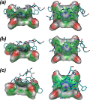
Rational design of block copolymer self-assemblies in photodynamic therapy
Beilstein J. Nanotechnol. 2020, 11, 180–212, doi:10.3762/bjnano.11.15






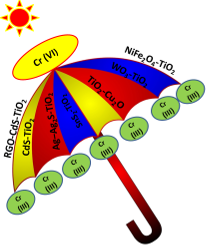
Cr(VI) remediation from aqueous environment through modified-TiO2-mediated photocatalytic reduction
Beilstein J. Nanotechnol. 2018, 9, 1448–1470, doi:10.3762/bjnano.9.137


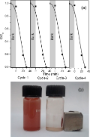
Optical techniques for cervical neoplasia detection
Beilstein J. Nanotechnol. 2017, 8, 1844–1862, doi:10.3762/bjnano.8.186

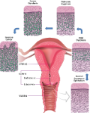
- by Bae and co-workers [54]. Using an optical imaging system they detected the enhancement of protoporphyrin IX (PpIX) autofluorescence in tumor regions. This endogenous protein tends to accumulate in tumor tissue, and may help in effective localization and visualization of tumor lesions by PpIX



Three-in-one approach towards efficient organic dye-sensitized solar cells: aggregation suppression, panchromatic absorption and resonance energy transfer
Beilstein J. Nanotechnol. 2017, 8, 1705–1713, doi:10.3762/bjnano.8.171
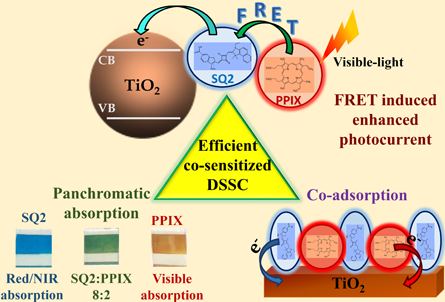
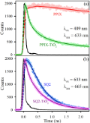
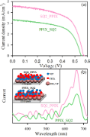
- , Mendelssohnstraße 3, 38106 Braunschweig, Germany Laboratory for Emerging Nanometrology, TU Braunschweig, Braunschweig, Germany 10.3762/bjnano.8.171 Abstract In the present study, protoporphyrin IX (PPIX) and squarine (SQ2) have been used in a co-sensitized dye-sensitized solar cell (DSSC) to apply their high
- helpful to optimize the co-sensitization procedure and to understand the complicated set of electron and energy transfer processes occurring in co-sensitized DSSCs. We have chosen squarine (SQ2) and protoporphyrin IX (PPIX) to fabricate a co-sensitized DSSC and detailed photo-physical studies have been
- increased absorption window, FRET-enhanced photocurrent and the prevention of SQ2 aggregation. Experimental Reagents TiO2 nanoparticles (21 nm), protoporphyrin IX (PPIX), platinum chloride (H2PtCl6), lithium iodide (LiI), 4-tert-butylpyridine (TBP) and iodine (I2) were purchased from Sigma-Aldrich. Squarine



Hierarchical coassembly of DNA–triptycene hybrid molecular building blocks and zinc protoporphyrin IX
Beilstein J. Nanotechnol. 2016, 7, 697–707, doi:10.3762/bjnano.7.62
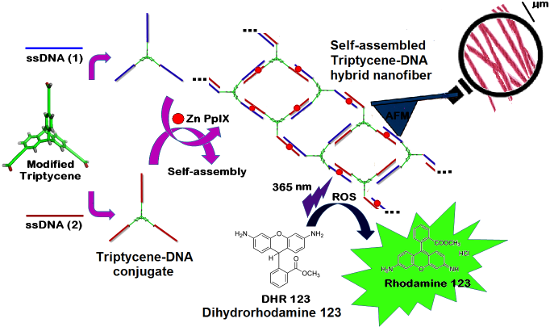
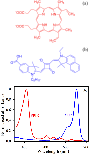
- composite DNA nanostructures by the self-assembly of complementary symmetrical 2,6,14-triptycenetripropiolic acid (TPA)–DNA building blocks and zinc protoporphyrin IX (Zn PpIX). DNA–organic molecule scaffolds for the composite DNA nanostructure were constructed through covalent conjugation of TPA with 5
- therapy (PDT) applications as well as photocatalytic reactions. Keywords: DNA nanostructure; DNA–organic hybrid; DNA self-assembly; 2,6,14-triptycenetripropiolic acid; zinc protoporphyrin IX; Introduction Hybrid nanomaterials resulting from the covalent conjugation of DNA with organic molecules [1][2][3
- polymeric networks [46][47]. In this study, we report the synthesis of the DNA–TPA scaffolds by covalent conjugation of 2,6,14-triptycenetripropiolic acid (TPA) with amine-modified 12-mer ssDNA and coassembly with zinc protoporphyrin IX(Zn PpIX) to form composite DNA nanostructures (Scheme 1). Porphyrins


Other Beilstein-Institut Open Science Activities



