


Search results
Search for "pulsed laser ablation in liquid (PLAL)" in Full Text gives 5 result(s) in Beilstein Journal of Nanotechnology.
Restorative potential of laser-synthesized silver nanoparticles with Salvia officinalis for periodontal disease treatment: an in vitro study
Beilstein J. Nanotechnol. 2026, 17, 781–795, doi:10.3762/bjnano.17.55
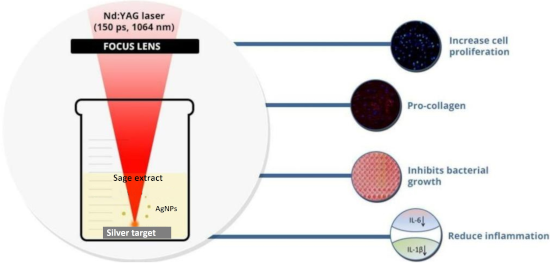
- local damage, systemic associations highlight the urgent need for innovative therapies. Herein, we present an eco-friendly synthesis of silver nanoparticles (AgNPs) by picosecond pulsed laser ablation in liquid (PLAL), using Salvia officinalis aqueous extract (sage extract) as both medium and stabilizer
- inflammation. This dual antibacterial and regenerative action demonstrates the high potential of sage-assisted PLAL-synthesized AgNPs as a safe, sustainable strategy for periodontal disease treatment. Keywords: cell proliferation; periodontal disease; pulsed laser ablation in liquid (PLAL); Salvia officinalis
- , specifically pulsed laser ablation in liquid (PLAL), involves laser ablation of a metal target immersed in a liquid, upon which a laser plasma is produced and nanoparticles are generated [4]. To the best of our knowledge, although PLAL is traditionally associated with lower yields compared to conventional



Laser ablation in liquids for shape-tailored synthesis of nanomaterials: status and challenges
Beilstein J. Nanotechnol. 2025, 16, 1963–1997, doi:10.3762/bjnano.16.137
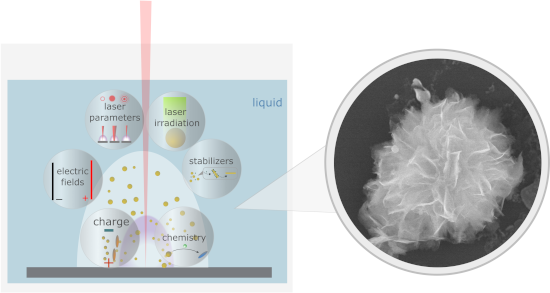
- progress in the pulsed laser ablation in liquid (PLAL) field has been achieved by getting new insights into the process of laser ablation, its stages, and mechanisms allowing to significantly boost the productivity and reach gram-scale NP production [1][4]. Another direction of the research is the control


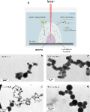
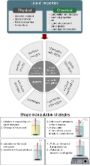


Morphology and properties of pyrite nanoparticles obtained by pulsed laser ablation in liquid and thin films for photodetection
Beilstein J. Nanotechnol. 2025, 16, 785–805, doi:10.3762/bjnano.16.60
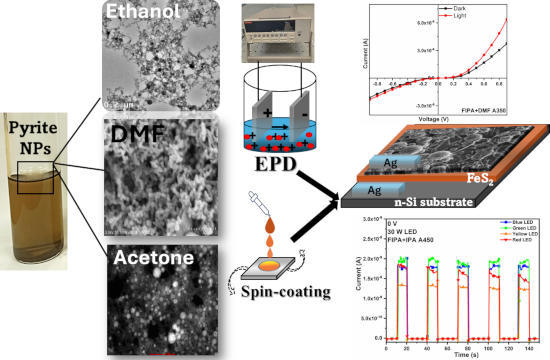
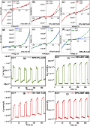
- disulfide (FeS2)) nanoparticles (NPs) of different morphologies using pulsed laser ablation in liquid (PLAL) in different organic solvents. The impact of the solvent on the morphological, compositional, and optical properties of the synthesized NPs is investigated by techniques such as transmission electron
- Earth, including toxic heavy metals and metalloids, radionuclides, and organic pollutants [5]. In addition to the aforementioned advantages as a semiconductor, it has the potential to be used in various applications through its nanostructures created via pulsed laser ablation in liquid (PLAL) and thin


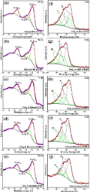




Antibacterial activity of silver nanoparticles obtained by pulsed laser ablation in pure water and in chloride solution
Beilstein J. Nanotechnol. 2016, 7, 465–473, doi:10.3762/bjnano.7.40
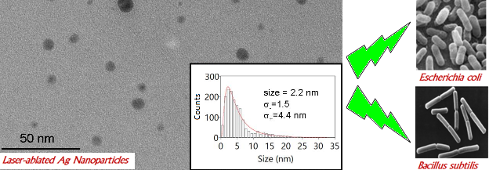
- as antibacterial agents with applications in several fields due to their strong, broad-range antimicrobial properties. AgNP synthesis by pulsed laser ablation in liquid (PLAL) permits the preparation of stable Ag colloids in pure solvents without capping or stabilizing agents, producing AgNPs more
- by synthesizing the NPs using pulsed laser ablation in liquid (PLAL). In fact, PLAL is a physical approach that permits preparation of stable metal colloids in pure solvents without the use of capping or stabilizing agents [26][27]. The NPs are obtained by focusing a pulsed laser beam onto a metallic


Current state of laser synthesis of metal and alloy nanoparticles as ligand-free reference materials for nano-toxicological assays
Beilstein J. Nanotechnol. 2014, 5, 1523–1541, doi:10.3762/bjnano.5.165
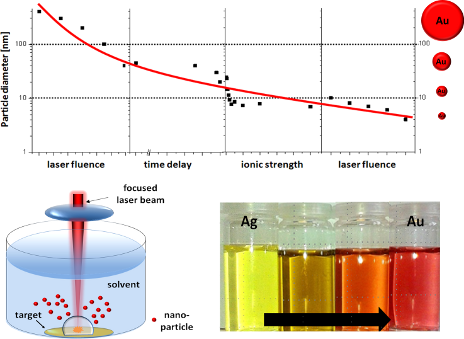
- nanoparticle reference materials are needed which have to be totally ligand-free in order to avoid cross contaminations. Such demands are ideally fulfilled by nanoparticles obtained by pulsed laser ablation in liquid (PLAL). Size control of these materials without artificial stabilizers can be achieved via


Other Beilstein-Institut Open Science Activities



