Search results
Search for "renewable energy" in Full Text gives 72 result(s) in Beilstein Journal of Nanotechnology.
Glycerol photoelectrochemical oxidation reaction at carbon nitrides/BiVO4 materials
Beilstein J. Nanotechnol. 2026, 17, 806–817, doi:10.3762/bjnano.17.57
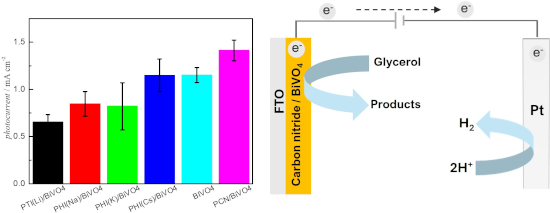
- ; bismuth vanadate; glycerol valorization; heterojunctions; photoelectrochemistry; Introduction Hydrogen production based on sustainable and renewable energy sources (the so-called green-H2) is a promising alternative for energy storage, with potential applications in fuel cells and the chemical industry





Oxidative atmosphere-driven formation of single-phase spinel CuRh2O4 nanofibers for alkaline water oxidation
Beilstein J. Nanotechnol. 2026, 17, 737–743, doi:10.3762/bjnano.17.50
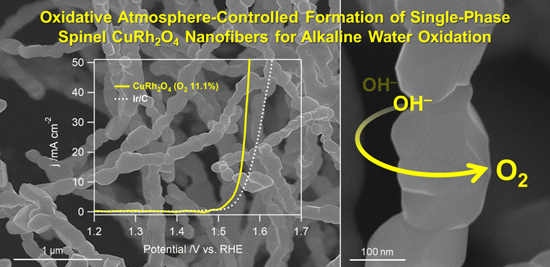
- the efficiency of alkaline water electrolysis [1]. Developing robust and highly active OER electrocatalysts is therefore essential for practical hydrogen production and large-scale renewable energy conversion. Among numerous catalyst platforms, spinel oxides (AB2O4) have attracted significant





Toward clinical translation of carbon nanomaterials in anticancer drug delivery: the need for standardisation
Beilstein J. Nanotechnol. 2025, 16, 2092–2104, doi:10.3762/bjnano.16.144

- delivery systems (DDSs); nanocarriers; quality control (QC); Introduction Nanomaterials Nanomaterials (NMs) have an extensive array of various properties and applications across many industries, including the biomedical, health care, food/agriculture, industrial, environmental, electronic, and renewable
- energy sectors (Figure 1). NMs have seen use as antimicrobial agents [1], catalysts [2], bioimaging agents [3][4][5][6], magnetic particle imaging agents [7], nanofluids [8], antiviral agents [9], photothermal convertors [10], and in environmental remediation [11]. Topically, the biomedical applications




Ambient pressure XPS at MAX IV
Beilstein J. Nanotechnol. 2025, 16, 1677–1694, doi:10.3762/bjnano.16.118
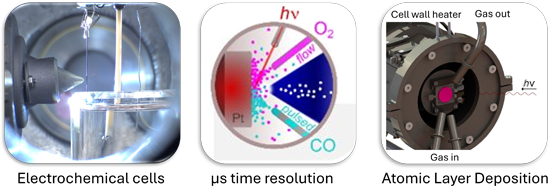
- in detector development. Their availability at HIPPIE and SPECIES is a major asset for APXPS studies. Photocatalysis Utilizing solar energy to drive chemical reactions is a central focus of sustainable energy research. Replacing fossil fuels with clean and renewable energy sources is one of the most








Nanotechnology-based approaches for the removal of microplastics from wastewater: a comprehensive review
Beilstein J. Nanotechnol. 2025, 16, 1607–1632, doi:10.3762/bjnano.16.114



Laser processing in liquids: insights into nanocolloid generation and thin film integration for energy, photonic, and sensing applications
Beilstein J. Nanotechnol. 2025, 16, 1428–1498, doi:10.3762/bjnano.16.104








Synthesis of biowaste-derived carbon-dot-mediated silver nanoparticles and the evaluation of electrochemical properties for supercapacitor electrodes
Beilstein J. Nanotechnol. 2025, 16, 933–943, doi:10.3762/bjnano.16.71
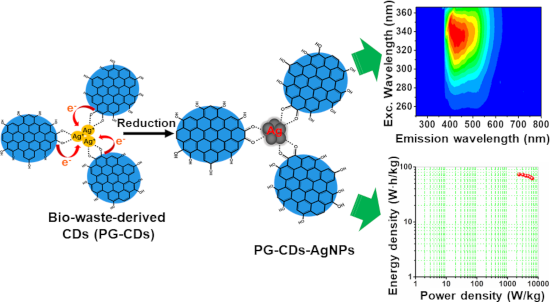
- energy demand. Therefore, a notable research focus has been given to advancements in renewable energy storage systems. Secondary batteries and supercapacitors are promising alternatives for energy storage applications [1][2]. Through the electrostatic polarization of electrolyte solutions, supercapacitor


Tailoring of physical properties of RF-sputtered ZnTe films: role of substrate temperature
Beilstein J. Nanotechnol. 2025, 16, 333–348, doi:10.3762/bjnano.16.25
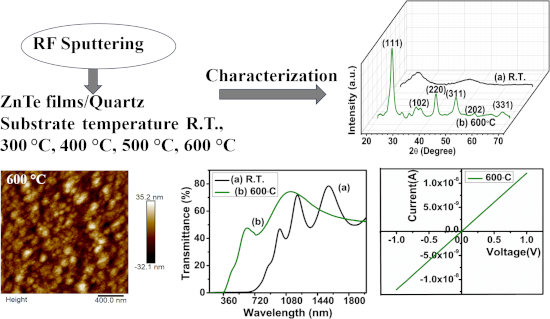
- fossil fuels to fulfil the growing demands of energy results in environmental pollution. Environmentally friendly resources such as solar and wind energy can act as a substitute for these non-renewable energy resources because of their sustainability and abundance. Commonly, silicon-based solar cells are






Comparison of organic and inorganic hole transport layers in double perovskite material-based solar cell
Beilstein J. Nanotechnol. 2025, 16, 119–127, doi:10.3762/bjnano.16.11
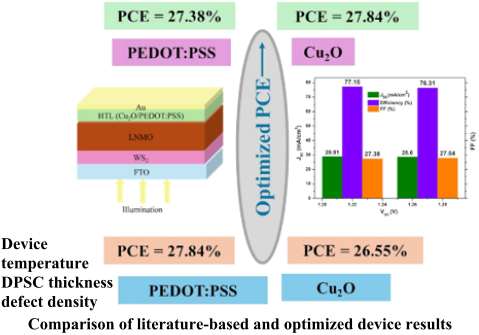
- , as well as geothermal, tidal, and solar energy. Renewable energy sources are unlimited and can be constantly replenished. In the coming years, renewable energy sources will contribute to decarbonizing energy systems. Solar energy safeguards both human health and a healthy environment [1]. Akmam and
- their applicability to practical device development. Conclusion Solar energy is one of the most promising renewable energy sources. It is one of those energy sources creating no harmful emissions. PSCs are a new generation in the photovoltaic industry. Here, a La2NiMnO6 (LNMO)-based DPSC is simulated


Various CVD-grown ZnO nanostructures for nanodevices and interdisciplinary applications
Beilstein J. Nanotechnol. 2024, 15, 1390–1399, doi:10.3762/bjnano.15.112

- electronic/optoelectronic devices, energy storage/generation systems, and renewable energy conversion devices with high performance and low-power consumption [1][2][3]. In comparison to semiconductors, ZnO has attracted much more attention. This is due to ZnO having outstanding semiconductor behaviours in





Quantum-to-classical modeling of monolayer Ge2Se2 and its application in photovoltaic devices
Beilstein J. Nanotechnol. 2024, 15, 1153–1169, doi:10.3762/bjnano.15.94
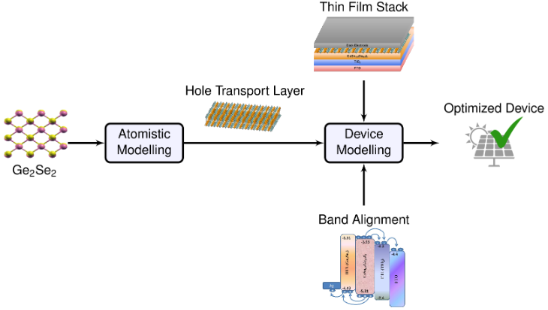
- in the last few decades has led to many successful breakthroughs in terms of the stability, efficiency, and cost of PV technology. In the past few decades, perovskite solar cells (PSCs) have emerged as a groundbreaking technology in the field of renewable energy because of their remarkable efficiency





Intermixing of MoS2 and WS2 photocatalysts toward methylene blue photodegradation
Beilstein J. Nanotechnol. 2024, 15, 817–829, doi:10.3762/bjnano.15.68
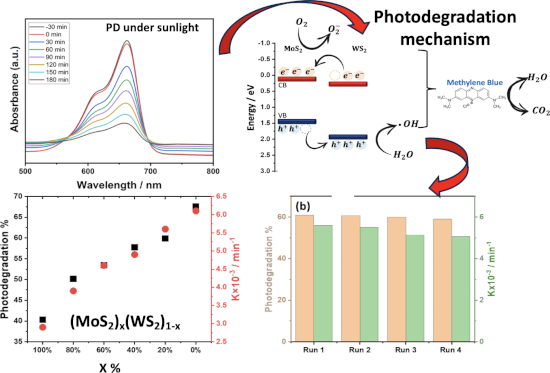
- , directly threatening human health if present in drinking water or in aquatic organisms [8]. In this context, photocatalysis has emerged as a reliable and environmentally friendly solution for MB photodegradation (PD) as it only consumes renewable energy, prevents the formation of secondary waste, and is a


Influence of conductive carbon and MnCo2O4 on morphological and electrical properties of hydrogels for electrochemical energy conversion
Beilstein J. Nanotechnol. 2024, 15, 57–70, doi:10.3762/bjnano.15.6
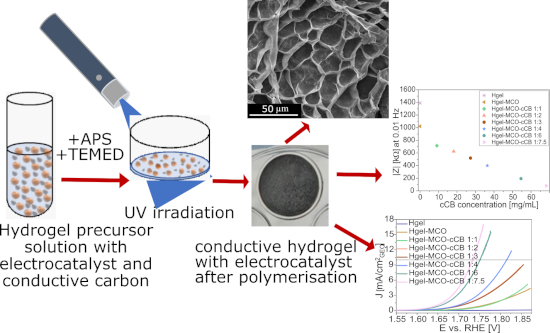
- ], and environmental [17][18]. In recent years, scientists have been very interested in the use of hydrogels in electrocatalytic water splitting to produce hydrogen from renewable energy sources. These studies assume the use of empty spaces, thus ensuring efficient mass transport, as well as increasing
- , such as environmental engineering [32], renewable energy [22][33][34][35], electronics [36][37][38], medical devices [39][40][41], and drug delivery systems [42][43][44][45]. They combine the properties of a hydrophilic matrix with conductive properties obtained thanks to the use of an appropriate


Metal-organic framework-based nanomaterials for CO2 storage: A review
Beilstein J. Nanotechnol. 2023, 14, 964–970, doi:10.3762/bjnano.14.79

- problem involves increased government funding for the maintenance of existing renewable energy sources and the development of new green energies [2][3]. However, the widespread implementation of these solutions is hindered by the challenges posed by nascent technology [4][5]. Another feasible approach to





In situ magnesiothermic reduction synthesis of a Ge@C composite for high-performance lithium-ion batterie anodes
Beilstein J. Nanotechnol. 2023, 14, 751–761, doi:10.3762/bjnano.14.62

- various negative environmental consequences of using fossil fuel energy, such as water pollution, increasing emissions of greenhouse gases, and air pollution [1]. Therefore, research regarding eco-friendly and renewable energy resources has emerged [2]. One of the best alternatives to fossil fuels are


Nanomaterials for photocatalysis and applications in environmental remediation and renewable energy
Beilstein J. Nanotechnol. 2023, 14, 722–724, doi:10.3762/bjnano.14.58
- appropriate for treating pollutants, even in atmospheric conditions [9][10][11]. Moreover, the photocatalysis method is also a potential solution for environmental remediation, carbon emission reduction, and renewable energy production [12][13][14]. Combining photocatalysts and sunlight irradiation is a
- ]. Semiconducting photocatalyst nanomaterials, such as SnO2, TiO2, MoS2, g-C3N4, and Bi-nanostructures have been proven efficient for a range of applications, including organic pollutant removal, NOx degradation, renewable energy production, and waste-to-energy conversion [15][17][18]. Figure 1 shows a general

Evaluation of electrosynthesized reduced graphene oxide–Ni/Fe/Co-based (oxy)hydroxide catalysts towards the oxygen evolution reaction
Beilstein J. Nanotechnol. 2023, 14, 420–433, doi:10.3762/bjnano.14.34
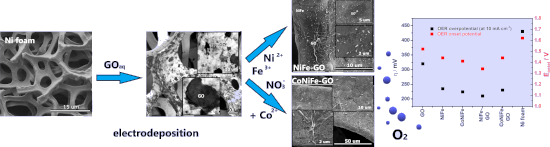
- production of hydrogen energy is focused mainly on hydrocarbon reforming, which is a low-efficiency and environmentally unfriendly process [1][2]. As an alternative, water electrolysis using renewable energy sources has recently been extensively studied [3]. The main limitation to the efficiency of this





Recent trends in Bi-based nanomaterials: challenges, fabrication, enhancement techniques, and environmental applications
Beilstein J. Nanotechnol. 2022, 13, 1316–1336, doi:10.3762/bjnano.13.109
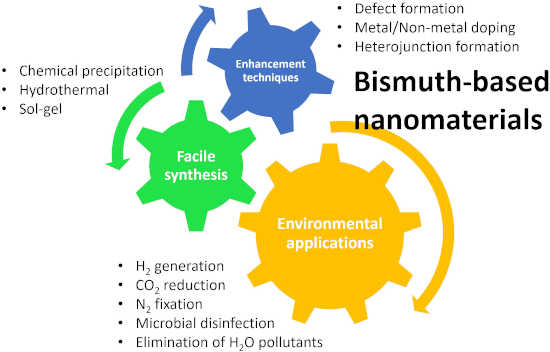
- ][108][109]. Photocatalysts with Bi-based photocatalysts are discussed in this section in more depth. Photocatalytic hydrogen generation At the moment, humanity’s existence greatly depends on the consumption finite fossil fuels. Thus, finding long-term renewable energy sources is critical. Hydrogen is




Application of nanoarchitectonics in moist-electric generation
Beilstein J. Nanotechnol. 2022, 13, 1185–1200, doi:10.3762/bjnano.13.99
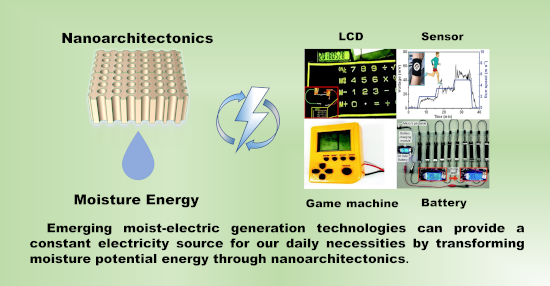
- are renewable energy source. The advantage of MEG devices is that the devices can convert moisture or water energy from the environment directly into electrical energy. For a theoretical understanding of MEGs, the historical lineage of MEGs has been reviewed above, and its principles have been traced


Electrocatalytic oxygen reduction activity of AgCoCu oxides on reduced graphene oxide in alkaline media
Beilstein J. Nanotechnol. 2022, 13, 1020–1029, doi:10.3762/bjnano.13.89
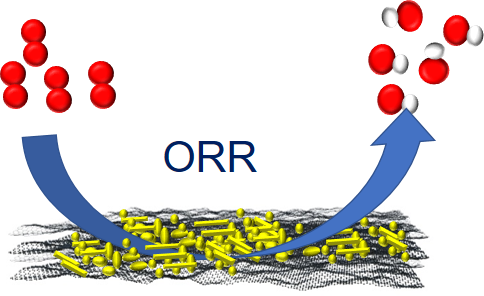
- ; microwave synthesis; oxygen electroreduction; reduced graphene oxide; silver NPs; Introduction Fuel cells and rechargeable metal–air batteries have become an integral part of the renewable energy system because of their superior efficiency, high power density, and reliability. Also, they are



The effect of metal surface nanomorphology on the output performance of a TENG
Beilstein J. Nanotechnol. 2022, 13, 298–312, doi:10.3762/bjnano.13.25
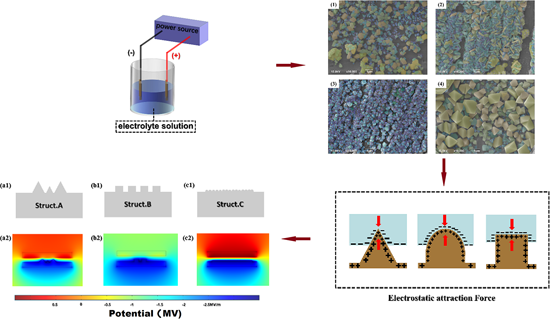
- widely exists in nature and is not fully utilized has raised great interest of researchers [1][2]. Triboelectric nanogenerators (TENGs) are environmentally friendly energy collectors that improve energy utilization. They can use forms of renewable energy that are widely available in the environment and









The effect of cobalt on morphology, structure, and ORR activity of electrospun carbon fibre mats in aqueous alkaline environments
Beilstein J. Nanotechnol. 2021, 12, 1173–1186, doi:10.3762/bjnano.12.87
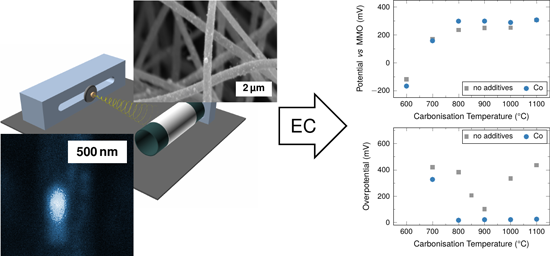
- ; oxygen reduction; Introduction As the global production of renewable energy is on the rise, demand for sustainable ways of storing this energy in times of overproduction increases [1]. Systems based on abundant, cheap materials with high energy densities are required. Alkaline aqueous metal–air


Paper-based triboelectric nanogenerators and their applications: a review
Beilstein J. Nanotechnol. 2021, 12, 151–171, doi:10.3762/bjnano.12.12
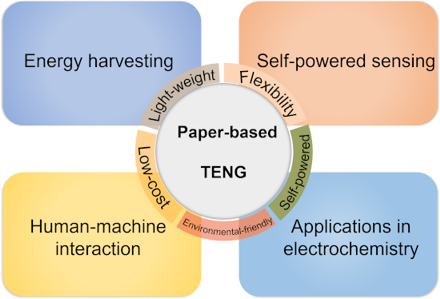
- [1][2]. Meanwhile, with the rapid growth of the Internet of Things (IoTs), the explosive growth of sensors has led to the massive use of batteries, which have also resulted in severe environmental issues in virtue of their short lifetime. In this regard, renewable energy sources, such as wind, wave








A review on the green and sustainable synthesis of silver nanoparticles and one-dimensional silver nanostructures
Beilstein J. Nanotechnol. 2021, 12, 102–136, doi:10.3762/bjnano.12.9
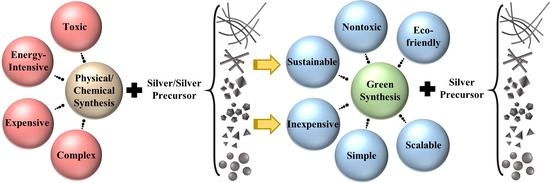
- but not limited to renewable energy, electronics, biosensors, wastewater treatment, medicine, and clinical equipment. The properties of silver nanostructures, such as size, size distribution, and morphology, are strongly dependent on synthesis process conditions such as the process type, equipment
- delivery [1][2][3][4][5][6], nanomedicine [7][8][9][10], food packaging [11][12][13], aseptic procedures [14][15][16], correlative microscopy [17], imaging [18][19][20][21][22], optics [23][24], microelectronics [25][26][27], three dimensional (3D) printing [27][28][29][30][31], renewable energy [32][33


ZnO and MXenes as electrode materials for supercapacitor devices
Beilstein J. Nanotechnol. 2021, 12, 49–57, doi:10.3762/bjnano.12.4
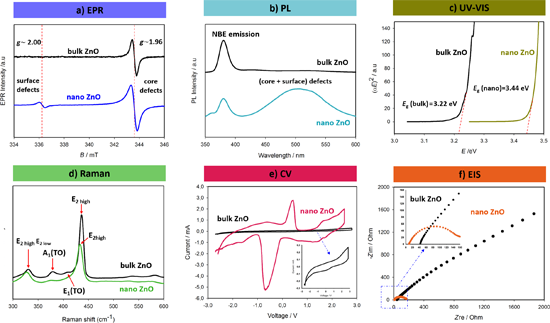
- MXenes as electrode material for their use in supercapacitor devices. MXenes as electrode material in supercapacitors Today, there is a great interest in renewable energy sources, such as solar and wind, for various reasons, such as the depletion of fossil fuels and the smaller environmental impact [15
- systems are not only required for renewable energy sources but also for portable or wearable electronics and electric vehicles [16][20][21]. To tackle these challenges supercapacitors are amongst the numerous candidates, due to unique properties such as high power density, fast charge/discharge capability