


Search results
Search for "spinel oxides" in Full Text gives 2 result(s) in Beilstein Journal of Nanotechnology.
Oxidative atmosphere-driven formation of single-phase spinel CuRh2O4 nanofibers for alkaline water oxidation
Beilstein J. Nanotechnol. 2026, 17, 737–743, doi:10.3762/bjnano.17.50
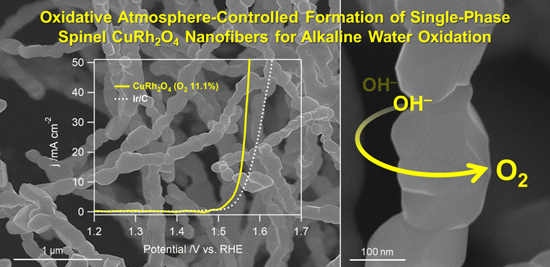
- the efficiency of alkaline water electrolysis [1]. Developing robust and highly active OER electrocatalysts is therefore essential for practical hydrogen production and large-scale renewable energy conversion. Among numerous catalyst platforms, spinel oxides (AB2O4) have attracted significant
- , enhances metal–oxygen (M–O) covalency and optimizes the adsorption energies of key intermediates (*OH, *O, and *OOH), leading to improved reaction energetics [6][7][8]. Despite these advantages, synthesizing phase-pure spinel oxides remains challenging when Cu is incorporated. Cu-based catalysts are
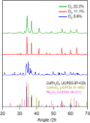
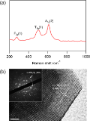
- secondary phases (e.g., CuO or Cu2O) [11]. Thus, establishing an atmosphere-controlled synthesis route is critical for producing single-phase Cu-containing spinel oxides with reliable and optimized electrocatalytic properties. Herein, we demonstrate the synthesis of Cu–Rh bimetallic single-phase spinel




Cr(VI) remediation from aqueous environment through modified-TiO2-mediated photocatalytic reduction
Beilstein J. Nanotechnol. 2018, 9, 1448–1470, doi:10.3762/bjnano.9.137
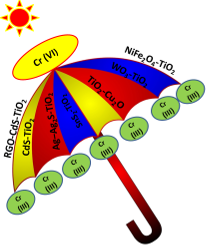
- photocatalytic reduction of Cr(VI) along with their good recoverability and recyclability. Keywords: charge transfer; Cr(VI) reduction; heterojunction; modified TiO2; photocatalysis; spinel oxides; Review Introduction The increase in the global population demands rapid growth of industrialization and
- because the hopping of electrons takes place between different valence states of metals in O-sites. This caused efficient transfer of charge carriers [180]. Hence, spinel oxides are being recognized as the potential photocatalysts. The modification of TiO2 with these metal oxides has shown promising



Other Beilstein-Institut Open Science Activities



