


Search results
Search for "surface science" in Full Text gives 82 result(s) in Beilstein Journal of Nanotechnology.
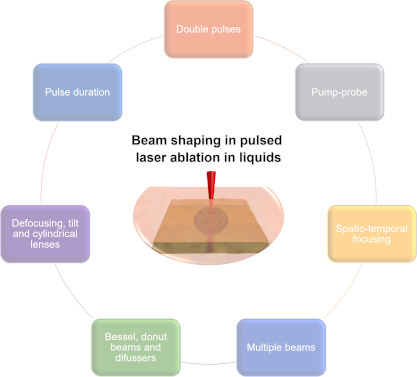
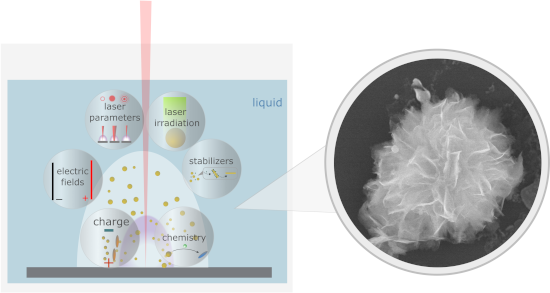
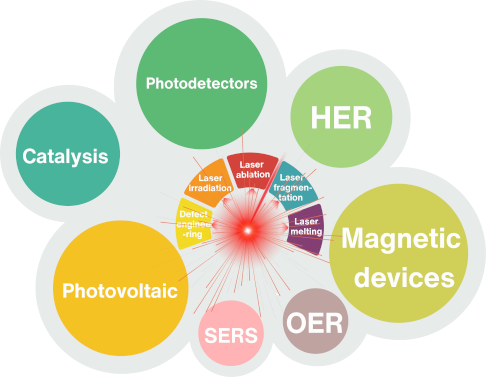
Beam shaping techniques for pulsed laser ablation in liquids: Unlocking tunable control of nanoparticle synthesis in liquids
Beilstein J. Nanotechnol. 2026, 17, 309–342, doi:10.3762/bjnano.17.22


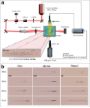

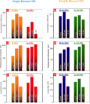




Laser ablation in liquids for shape-tailored synthesis of nanomaterials: status and challenges
Beilstein J. Nanotechnol. 2025, 16, 1963–1997, doi:10.3762/bjnano.16.137





Mechanical property measurements enabled by short-term Fourier-transform of atomic force microscopy thermal deflection analysis
Beilstein J. Nanotechnol. 2025, 16, 1952–1962, doi:10.3762/bjnano.16.136
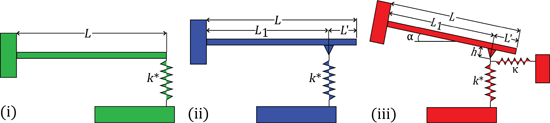
- ); mechanical property measurements; surface science; Introduction Atomic force microscopy (AFM) has become an indispensable tool for imaging the surface topography on a variety of surfaces [1]. Since the invention of the AFM [2], several other modes of AFM have been developed, including friction force




Ambient pressure XPS at MAX IV
Beilstein J. Nanotechnol. 2025, 16, 1677–1694, doi:10.3762/bjnano.16.118
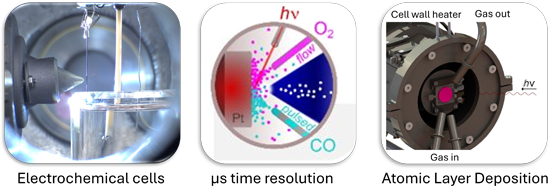
- representative studies at MAX IV, including investigations of single-atom catalysts, confined catalysis, time-resolved catalysis, atomic layer deposition, and electrochemical interfaces, showcasing the role of APXPS in advancing material and surface science. Keywords: 2D materials; atomic layer deposition
- spectroscopy (XPS) is a powerful surface science technique that enables the investigation of modifications in the chemical environment of a sample surface and its electronic states, owing to its exceptional surface sensitivity. However, the requirement for ultrahigh vacuum (UHV) conditions previously limited
- new research fields with respect to traditional surface science, such as corrosion and battery research, with specifically designed electrochemical cells suitable for APXPS measurements [8]. The SPECIES & HIPPIE beamlines SPECIES is a soft X-ray beamline on the 1.5 GeV ring. It covers a wide photon


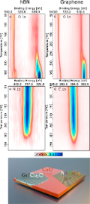
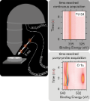

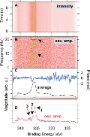


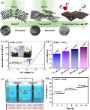
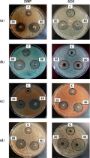
Laser processing in liquids: insights into nanocolloid generation and thin film integration for energy, photonic, and sensing applications
Beilstein J. Nanotechnol. 2025, 16, 1428–1498, doi:10.3762/bjnano.16.104






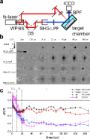
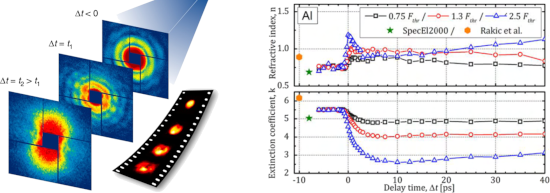
Time-resolved probing of laser-induced nanostructuring processes in liquids
Beilstein J. Nanotechnol. 2025, 16, 968–1002, doi:10.3762/bjnano.16.74


Tendency in tip polarity changes in non-contact atomic force microscopy imaging on a fluorite surface
Beilstein J. Nanotechnol. 2025, 16, 944–950, doi:10.3762/bjnano.16.72
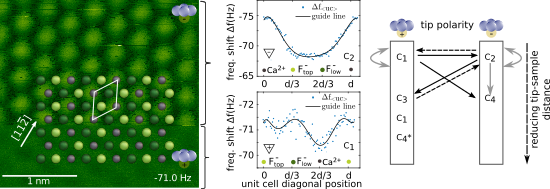
- . Keywords: atomic resolution imaging; calcium fluoride surface; interaction force; non-contact atomic force microscopy (NC-AFM); tip change; Introduction Non-contact atomic force microscopy (NC-AFM) [1] is a surface science tool that has been used to atomically resolve surfaces of semiconductor and


Insights into the electronic and atomic structures of cerium oxide-based ultrathin films and nanostructures using high-brilliance light sources
Beilstein J. Nanotechnol. 2025, 16, 860–871, doi:10.3762/bjnano.16.65

- , thin films, and supported nanostructures, investigated using laboratory-based surface science methods, we refer the reader to existing reviews [18][19][20]. The aim of this work is to provide an overview of recent studies highlighting the advantages of using synchrotron and FEL radiation to achieve a
- 125 eV corresponding to the maximum of the Ce 4d→4f giant resonance (on-resonance), while spectra (a) and (c) have been excited with a photon energy of 110 eV (off-resonance). Reprinted from [23], Surface Science, vol. 520, by S. Eck; C. Castellarin-Cudia; S. Surnev; M. G. Ramsey; F. P. Netzer
- ) Evolution of the Zr4+ 3d5/2 intensity as a function of photon exposure time for a Ce0.4Zr0.6O2−x and a ZrO2 film. Adapted from [39], Surface Science, vol. 682, by M. Allan; D. Grinter; S. Dhaliwal; C. Muryn; T. Forrest; F. Maccherozzi; S.S. Dhesi; G. Thornton, “Redox behaviour of a ceria–zirconia inverse


Performance optimization of a microwave-coupled plasma-based ultralow-energy ECR ion source for silicon nanostructuring
Beilstein J. Nanotechnol. 2025, 16, 484–494, doi:10.3762/bjnano.16.37

- not suitable for modern-day applications. In material science as well as surface science applications, the ion source should be mobile and adaptable to the vacuum system, having a longer lifetime. Further, the ion source should produce a relatively high beam current (i.e., capable of forming a high


Precursor sticking coefficient determination from indented deposits fabricated by electron beam induced deposition
Beilstein J. Nanotechnol. 2025, 16, 35–43, doi:10.3762/bjnano.16.4

- itself once the first closed layer is formed. In another series of surface-science-oriented works, the sticking coefficient has been studied for small organic molecules, such as allyl methyl ether on Si(100) [17], trimethylamine on Si(001) [18], tetrahydrofuran on Si(001) [19], and benzene on Pt(111) [20


Ion-induced surface reactions and deposition from Pt(CO)2Cl2 and Pt(CO)2Br2
Beilstein J. Nanotechnol. 2024, 15, 1427–1439, doi:10.3762/bjnano.15.115

- 10.3762/bjnano.15.115 Abstract Ion beam-induced deposition (IBID) using Pt(CO)2Cl2 and Pt(CO)2Br2 as precursors has been studied with ultrahigh-vacuum (UHV) surface science techniques to provide insights into the elementary reaction steps involved in deposition, complemented by analysis of deposits formed
- ability of data acquired from fundamental UHV surface science studies to provide insights that can be used to better understand the interactions between ions and precursors during IBID from inorganic precursors. Keywords: deposition; ion beam; nanostructure; organometallic; precursor; Introduction



Direct electron beam writing of silver using a β-diketonate precursor: first insights
Beilstein J. Nanotechnol. 2024, 15, 1117–1124, doi:10.3762/bjnano.15.90

- the formation mechanism of the interfacial silver layer deserves further in-depth studies, which are beyond the scope of this article. These studies would involve surface science approaches using mass spectrometry and/or other spectroscopic techniques, such as X-ray photoelectron spectroscopy, and


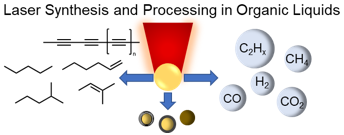
Laser synthesis of nanoparticles in organic solvents – products, reactions, and perspectives
Beilstein J. Nanotechnol. 2024, 15, 638–663, doi:10.3762/bjnano.15.54





Electron-induced deposition using Fe(CO)4MA and Fe(CO)5 – effect of MA ligand and process conditions
Beilstein J. Nanotechnol. 2024, 15, 500–516, doi:10.3762/bjnano.15.45
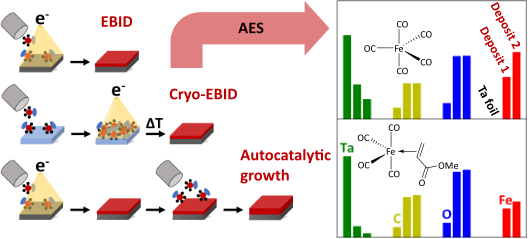
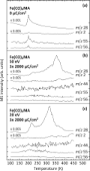
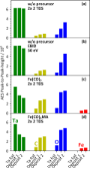
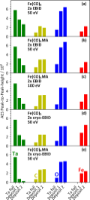
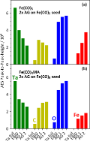
- new precursor for focused electron beam-induced deposition (FEBID), was investigated by surface science experiments under UHV conditions. Auger electron spectroscopy was used to monitor deposit formation. The comparison between Fe(CO)4MA and Fe(CO)5 revealed the effect of the modified ligand
- phase [30][31][32][33][34], of clusters of the precursor [35][36][37][38], or of Fe(CO)5 adsorbed on surfaces [27][39][40][41][42][43] with the aim to provide insight into the chemical reactions inherent in the FEBID process. A recent surface science study was performed on Fe(CO)5 adsorbed on a Au
- deposit. The present study uses a surface science approach to investigate the electron-induced decomposition of Fe(CO)4MA and the composition of the deposits resulting from experiments that mimic different FEBID processes. All experiments were repeated under the same conditions using Fe(CO)5 to elucidate



Unveiling the nature of atomic defects in graphene on a metal surface
Beilstein J. Nanotechnol. 2024, 15, 416–425, doi:10.3762/bjnano.15.37
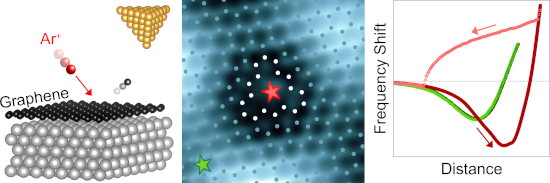
- , during its epitaxial growth in surface science experiments or its fabrication for applications, defects, that is, deviations from the ideal 2D lattice, inevitably occur. Examples for defects are vacancies, interstitial atoms, grain boundaries, stacking faults or wrinkles [5][6][7][8][9][10][11][12][13


A combined gas-phase dissociative ionization, dissociative electron attachment and deposition study on the potential FEBID precursor [Au(CH3)2Cl]2
Beilstein J. Nanotechnol. 2023, 14, 1178–1199, doi:10.3762/bjnano.14.98
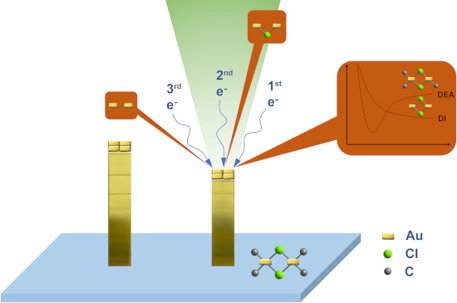
- -vacuum (UHV) surface science studies and mass spectrometry in high-vacuum (HV) gas-phase investigations [27][28]. In this context, surface science experiments allow for electron-dose-dependent studies of the elemental composition of the deposit, and desorbing ligands may be monitored by means of mass
- spectrometry. On the other hand, gas-phase studies using controllable, quasi-monoenergetic electron beams under single collision conditions, provide information on the electron energy dependence and extent of the individual fragmentation processes [28]. A number of such comparative gas-phase and surface
- science studies have been carried out in the past using a 500 eV flood gun in the surface studies [29][30], and also in combination with higher energy FEBID studies [30][31]. In a recent study [32], we took a similar approach and investigated (CH3)AuP(CH3)3 as a potential gold precursor for FEBID. We used



N-Heterocyclic carbene-based gold etchants
Beilstein J. Nanotechnol. 2023, 14, 865–871, doi:10.3762/bjnano.14.71
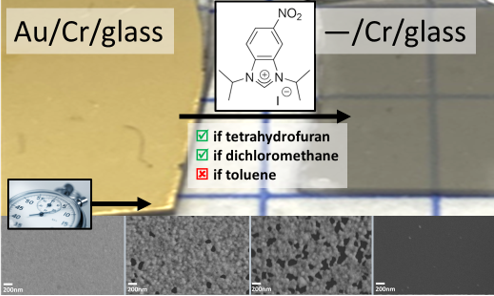
- attachment of NHCs to gold and the properties of the corresponding monolayers have been studied using conventional surface science techniques under ultrahigh-vacuum conditions [13][14]. NHC monolayers have also been used in applications such as surface-enhanced Raman spectroscopy and surface plasmon



Dry under water: air retaining properties of large-scale elastomer foils covered with mushroom-shaped surface microstructures
Beilstein J. Nanotechnol. 2022, 13, 1370–1379, doi:10.3762/bjnano.13.113
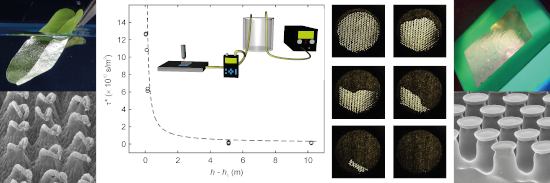
- ] and is known for more than thousand years [3], but after the Lotus effect publication [4], this research led to a paradigm shift in surface science [5] and was the starting point for novel technologies in surface science [5]. Today many products in forms of coatings, sprays and paints providing


A cantilever-based, ultrahigh-vacuum, low-temperature scanning probe instrument for multidimensional scanning force microscopy
Beilstein J. Nanotechnol. 2022, 13, 1120–1140, doi:10.3762/bjnano.13.95
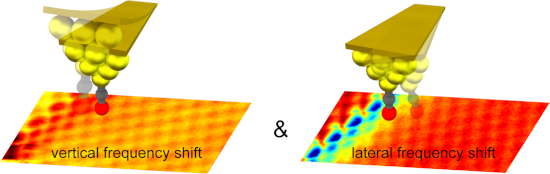
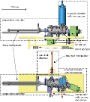
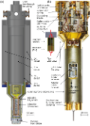
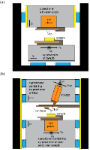
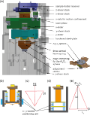
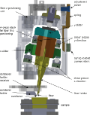
- -based AFM may have lost the attention of the surface science and UHV AFM communities, possibly because of the ease of operation of tuning fork-based AFM and the availability of the corresponding instruments from various manufacturers. Here, we present the design of a robust and easy-to-use cantilever
- as shown in Figure 1. The preparation chamber is equipped with various ports for the attachment of evaporators, a sputter gun, and surface science analytical tools. A rotatable coolable linear manipulator with two sample/cantilever receivers is used to transport sample and cantilever holders to the





Low-energy electron interaction and focused electron beam-induced deposition of molybdenum hexacarbonyl (Mo(CO)6)
Beilstein J. Nanotechnol. 2022, 13, 182–191, doi:10.3762/bjnano.13.13
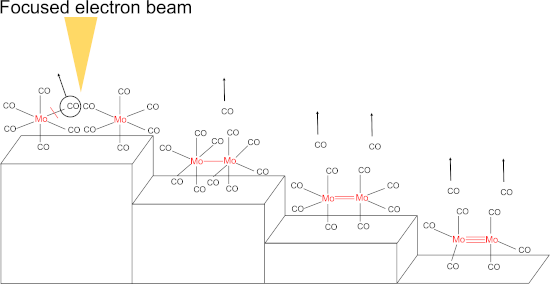
- electron transmission study. Relative contributions of individual ionic species obtained through DEA and DI of Mo(CO)6 and the average CO loss per incident are calculated and compared to the composition of the FEBID deposits produced. These are also compared to gas phase, surface science and deposition
- deposits composition with carbonyl loss through DEA vs DI. We compare this to previous gas phase, surface science and FEBID experiments on W(CO)6 and discuss these studies in context to the current findings and potential deposition mechanisms. Method Quantum chemical calculations Similar to the approach in
- schematically in the Graphical Abstract accompanying this article. Though admittedly speculative, this may explain the very different findings in surface science studies. The surface science studies are conducted under non-steady-state conditions, where few monolayers are exposed to 500 eV electrons from a


Tin dioxide nanomaterial-based photocatalysts for nitrogen oxide oxidation: a review
Beilstein J. Nanotechnol. 2022, 13, 96–113, doi:10.3762/bjnano.13.7
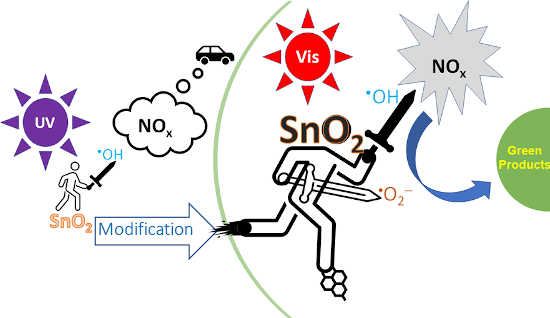
- coordinated threefold with surface tin (Sn 5f); 4-oxygen coordinated fivefold with surface tin (Sn 5f). Figure 4b was reprinted from [53], Surface Science, vol. 577, by Mäki-Jaskari, M. A.; Rantala, T. T.; Golovanov, V. V. “Computational study of charge accumulation at SnO2(110) surface”, pages 127–138
- . (c) Transient photocurrent response and (d) EIS curves of SnO2 and SnO2/GQDs (1%) under visible light illumination and in darkness. Figure 13 was reprinted from [36], Applied Surface Science, vol. 448, by Xie, Y.; Yu, S.; Zhong, Y.; Zhang, Q.; Zhou, Y. “SnO2/graphene quantum dots composited


Theranostic potential of self-luminescent branched polyethyleneimine-coated superparamagnetic iron oxide nanoparticles
Beilstein J. Nanotechnol. 2022, 13, 82–95, doi:10.3762/bjnano.13.6
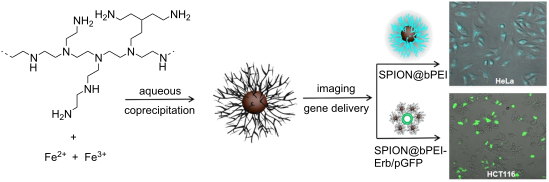
- Rouhollah Khodadust Ozlem Unal Havva Yagci Acar Koc University, Department of Chemistry, Surface Science and Technology Center (KUYTAM), Rumelifeneri Yolu, Sariyer, Istanbul, Turkey University of Health Science, Health Science Institute, Department of Biotechnology Selimiye Mahallesi, Tıbbiye




Irradiation-driven molecular dynamics simulation of the FEBID process for Pt(PF3)4
Beilstein J. Nanotechnol. 2021, 12, 1151–1172, doi:10.3762/bjnano.12.86
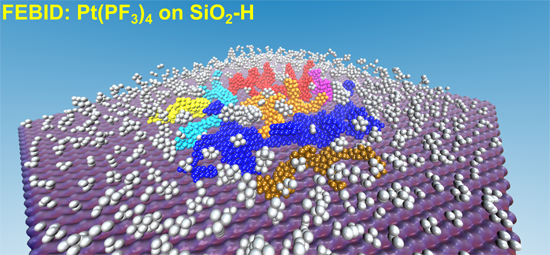
- amorphous substrates, for example, amorphous silica or amorphous carbon, which are commonly used in FEBID and surface science experiments. The structure of precursor molecules, their interaction with a substrate, and the dynamics of nanostructure formation and growth are influenced by interatomic
- the whole simulated surface). The latter case is relevant for surface science experiments on irradiation of thin films of adsorbed precursor molecules. The yields of SE and BSE and the corresponding spatial distributions depend on the energy of the PE beam and the material of a substrate. These








Molecular assemblies on surfaces: towards physical and electronic decoupling of organic molecules
Beilstein J. Nanotechnol. 2021, 12, 950–956, doi:10.3762/bjnano.12.71

- layer; molecular self-assembly; scanning probe microscopy; surface science; Over the past two decades, organic molecules adsorbed on atomically defined metal surfaces have been intensively studied to obtain an in-depth understanding of their self-assembly behavior, on-surface reactivity, as well as
- dielectric layers on top of the surface [34][35] or a chemical modification of the surface to saturate the dangling bonds. In surface-science-based studies, for the latter approach hydrogenation of semiconductor surfaces is frequently applied as effective passivation against chemisorption of adsorbates [36
- molecules for performing insightful fundamental surface-science-based studies on them and, thus, play a crucial role in designing new molecule-based electronic and optoelectronic devices. Sabine Maier and Meike Stöhr Erlangen and Groningen, July 2021 Acknowledgements We would like to thank all the authors
Influence of electrospray deposition on C60 molecular assemblies
Beilstein J. Nanotechnol. 2021, 12, 552–558, doi:10.3762/bjnano.12.45
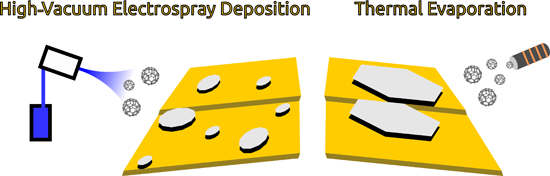
- the sample. Nevertheless, the contamination from solvent introduction can be reduced down to conditions compatible with high-resolution scanning probe microscopy (SPM) techniques [10][12]. Buckminsterfullerene C60, scheme in Figure 1b, is among the most extensively studied molecules in surface science





