Search results
Search for "time dependent" in Full Text gives 233 result(s) in Beilstein Journal of Nanotechnology. Showing first 200.
Ferroelectric nanodot reservoir for neuromorphic computing
Beilstein J. Nanotechnol. 2026, 17, 352–364, doi:10.3762/bjnano.17.24
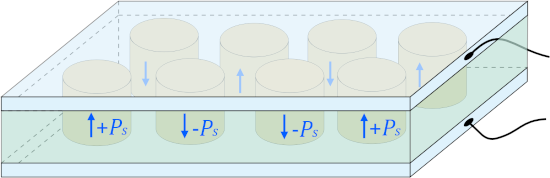
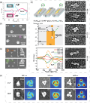
- processing by exploiting polarization dynamics under external input signals. Figure 1 illustrates two conceptual configurations of the ferroelectric-based reservoir and its integration into a neuromorphic computing framework. In Figure 1a, a single input channel delivers time-dependent electrical or optical
- structured ferroelectric domain networks, the present system shifts toward dynamic, time-dependent processing, essential for tasks such as time-series prediction, temporal pattern recognition, and classification. The reservoir’s ability to encode temporal correlations through physical polarization evolution
- , coercive field inhomogeneity, and global electrostatic interactions. Such dynamics provide the essential nonlinear temporal memory required for time-dependent information processing in neuromorphic systems. Signal processing We now turn to large systems where the collective behavior of many interacting


Fast vortex dynamics and relaxation times in NbRe-based heterostructures
Beilstein J. Nanotechnol. 2026, 17, 292–302, doi:10.3762/bjnano.17.20
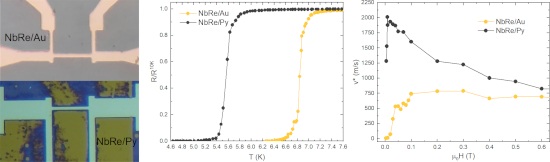
- by the time-dependent magnetic flux, resulting in a magnetic breaking effect [29][30]. In the opposite limit of thin capping layers, the proximity effect plays a dominant role leading to an enhancement of the critical vortex velocity and promoting faster relaxation processes [26][27][28]. In this


Structure-dependent thermochromism of PAZO thin films: theory and experiment
Beilstein J. Nanotechnol. 2026, 17, 186–199, doi:10.3762/bjnano.17.12
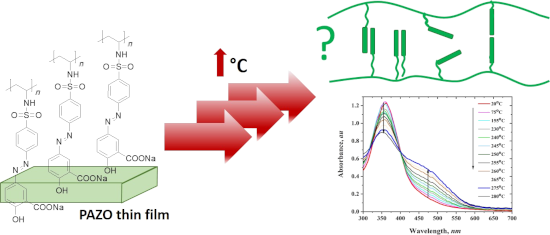
- dimers of the chromophore containing azobenzene and comparing them with experimental ones. The time-dependent DFT (TDDFT) scheme was used to calculate at PBE1PBE/6-311+G(2d,p) level of theory the absorption spectra of the simplified models of nonaggregated/aggregated PAZO side chains starting from the


Influence of surface characteristics on the in vitro stability and cell uptake of nanoliposomes for brain delivery
Beilstein J. Nanotechnol. 2026, 17, 139–158, doi:10.3762/bjnano.17.9




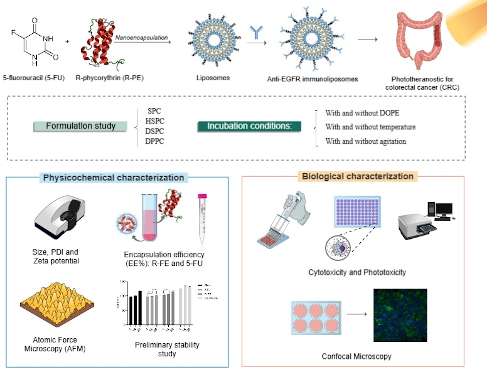
Development and in vitro evaluation of liposomes and immunoliposomes containing 5-fluorouracil and R-phycoerythrin as a potential phototheranostic system for colorectal cancer
Beilstein J. Nanotechnol. 2026, 17, 97–121, doi:10.3762/bjnano.17.7



Chiral plasmonic nanostructures fabricated with circularly polarized light
Beilstein J. Nanotechnol. 2025, 16, 2245–2264, doi:10.3762/bjnano.16.154
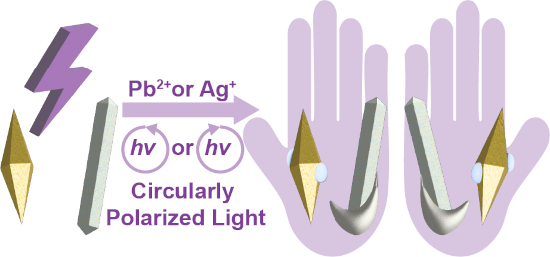
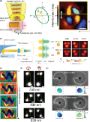
- with asymmetry exceeding that of CPL are referred to as superchiral fields. The optical chirality (C) of a superchiral field is described in Equation 1 [116][117][118]. Here, ε0 and μ0 are, respectively, the permittivity and permeability of free space, and E and B are the time-dependent electric and





Calibration of piezo actuators and systems by dynamic interferometry
Beilstein J. Nanotechnol. 2025, 16, 2086–2091, doi:10.3762/bjnano.16.143
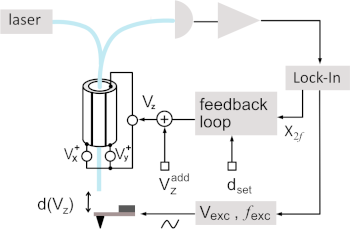
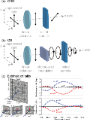
- stabilized so that the working point is the inflection point and center of symmetry of the time-dependent interferometer signal [16], implying that the mean cavity length is d0 = , where m is an odd integer and λ is the vacuum wavelength of the light used for interferometer operation in a UHV environment. As


Evaluating metal-organic precursors for focused ion beam-induced deposition through solid-layer decomposition analysis
Beilstein J. Nanotechnol. 2025, 16, 1942–1951, doi:10.3762/bjnano.16.135
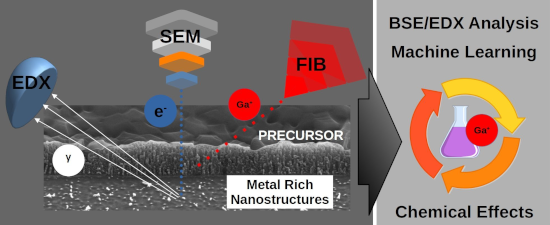
- current and duration of the experiments were adjusted (within a range of 1 to 10 nA for the ion current, and 10 s to 10 min the irradiation) in order to achieve the optimal ion fluence necessary for the decomposition of the entire precursor layer. Time-dependent changes in the morphology of the irradiated


Programmable soliton dynamics in all-Josephson-junction logic cells and networks
Beilstein J. Nanotechnol. 2025, 16, 1883–1893, doi:10.3762/bjnano.16.131

- sign, and all summands with φk,j(h) are written with a plus sign. Additional currents (e.g., the bias current or the time-dependent current from the generator) are also included as components. After writing down Equation 6 for each node, a system of second-order diffeomorphic equations are obtained


Phytol-loaded soybean oil nanoemulsion as a promising alternative against Leishmania amazonensis
Beilstein J. Nanotechnol. 2025, 16, 1826–1836, doi:10.3762/bjnano.16.126

- exhibited significant time-dependent leishmanicidal activity against Leishmania amazonensis promastigotes, with lower IC50 values (up to five times lower at 48 hours) and up to 75% parasite death after 48 hours, showing greater antiparasitic activity compared to that of free phytol. Although the use of


Ambient pressure XPS at MAX IV
Beilstein J. Nanotechnol. 2025, 16, 1677–1694, doi:10.3762/bjnano.16.118
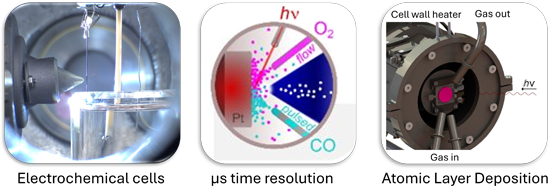
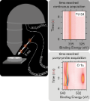
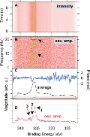
- approaches are blind to the time-dependent dynamics that govern film nucleation and early growth. Operando APXPS overcomes this limitation, enabling direct observation of surface reactions cycle-by-cycle in real time [53]. ALD typically operates in the 10−3 to 1 mbar pressure range, ideally matched to the





Few-photon microwave fields for superconducting transmon-based qudit control
Beilstein J. Nanotechnol. 2025, 16, 1580–1591, doi:10.3762/bjnano.16.112
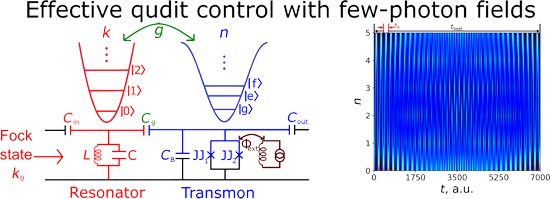
- rapid and can be performed on the sub-nanosecond time scale. Indeed, Figure 8 demonstrates the time-dependent probability of excitation of considered transmon states calculated for each state at its own optimal detuning. The obtained results demonstrate a very fast excitation with probability equal to
- numerical calculation results, see Table 1 for details. A demonstration of the rapid control of the states with n = 1–4 of the designed transmon (from (a) to (d), respectively). The panels show the time-dependent population of transmon states at the selected optimal frequency detuning. The parameters for
- energy in Equation 14 becomes non-zero, providing a different energy state that leads to additional preferred values of the frequency detuning. To demonstrate more precisely the possibility of highly efficient excitation of any transmon state “on demand” by frequency detuning, we calculate the time


Transient electronics for sustainability: Emerging technologies and future directions
Beilstein J. Nanotechnol. 2025, 16, 1545–1556, doi:10.3762/bjnano.16.109

- electronics. Active degradation has emerged as a complementary strategy alongside conventional encapsulation. Unlike passive and time-dependent degradation, active degradation involves materials that remain stable under normal physiological conditions but are designed to break down in response to specific
- overcome these challenges, active degradation strategies based on stimuli-responsive materials rather than passive, time-dependent breakdown have emerged as a promising complementary approach. As these strategies mature, they may enable the development of intelligent encapsulation layers capable of sensing
- bioresorbable electronics. If these technological challenges can be addressed, bioresorbable electronics are expected to evolve beyond the current paradigm of single-use, time-dependent devices into intelligent, autonomous systems capable of real-time self-assessment and self-regulated degradation. By


Laser processing in liquids: insights into nanocolloid generation and thin film integration for energy, photonic, and sensing applications
Beilstein J. Nanotechnol. 2025, 16, 1428–1498, doi:10.3762/bjnano.16.104






Piezoelectricity of hexagonal boron nitrides improves bone tissue generation as tested on osteoblasts
Beilstein J. Nanotechnol. 2025, 16, 1068–1081, doi:10.3762/bjnano.16.78
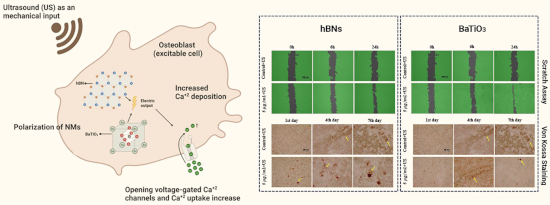
- interaction studies Cell viability assay The concentrations and exposure-time-dependent cell viability data for the cells treated with hBNs, hBNs+US, BaTiO3, and BaTiO3+US are shown in Figure 2. As observed, none of the tested concentrations of the NMs exhibited cytotoxicity on HOb cells over a 48 h period


Time-resolved probing of laser-induced nanostructuring processes in liquids
Beilstein J. Nanotechnol. 2025, 16, 968–1002, doi:10.3762/bjnano.16.74


Shape, membrane morphology, and morphodynamic response of metabolically active human mitochondria revealed by scanning ion conductance microscopy
Beilstein J. Nanotechnol. 2025, 16, 951–967, doi:10.3762/bjnano.16.73
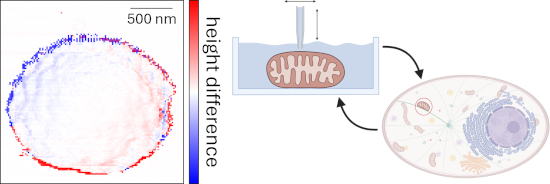
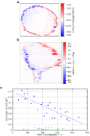
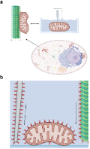
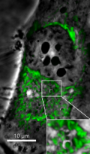
- this work, we employ SICM to investigate the shape, dynamics, and nanomorphology of metabolically active, isolated mitochondria, with a specific focus on the outer mitochondrial membrane. Furthermore, we identify and characterise two distinct dynamic effects observed in time-dependent topography data
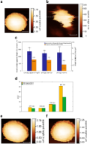
- small and primarily influenced by instrumental factors. Furthermore, its time-dependent behaviour should resemble that of metabolically inactive objects. This hypothesis is validated in the subsequent analysis. Figure 6a shows a difference image of a fixed mitochondrion and Figure 6b the TEV as a



Nanoscale capacitance spectroscopy based on multifrequency electrostatic force microscopy
Beilstein J. Nanotechnol. 2025, 16, 637–651, doi:10.3762/bjnano.16.49

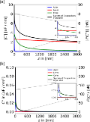
- static component in Equation 3, the electrostatic force has periodic time-dependent components at frequencies ωe and 2ωe, which correspond to Equation 4 and Equation 5, respectively. In the case of an oscillating AFM tip, the tip–sample distance z and, thereby, the tip–sample capacitance and its




Development of a mucoadhesive drug delivery system and its interaction with gastric cells
Beilstein J. Nanotechnol. 2025, 16, 371–384, doi:10.3762/bjnano.16.28

- in a time-dependent manner. In vitro mucus interaction studies To analyze the interactions of nanoparticles with mucins in vitro, mucus-secreting AGS cells [69] were used. The mucus secretion of cells under our culturing conditions were determined via the PAS stain assay. The evaluation of mucin
- cells were seeded into 12-well plates and treated with F-EudAlg nanoparticles (1 mg/mL). Two incubation intervals were used in the study (1 and 4 h) to study the internalization of nanoparticles in a time-dependent manner. At the end of incubation, the cells were washed twice with PBS and fixed in 4


Pulsed laser in liquid grafting of gold nanoparticle–carbon support composites
Beilstein J. Nanotechnol. 2025, 16, 349–361, doi:10.3762/bjnano.16.26
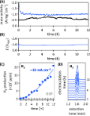
- , evident from electrochemical impedance spectroscopy (EIS) data (Figure 5B). Impedance, measured in an electrochemical setup, is the time-dependent opposition to alternating current stemming from the combined effect of ohmic resistance, capacitance, and phase elements in an electronic circuit. Impedance is


Enhancing mechanical properties of chitosan/PVA electrospun nanofibers: a comprehensive review
Beilstein J. Nanotechnol. 2025, 16, 286–307, doi:10.3762/bjnano.16.22

- involves applying a sinusoidal stress or strain to the material and measuring the resulting strain or stress, allowing for the characterization of time-dependent deformation of the material. The parameters varied in the tests include oscillation amplitude and frequency, while DMTA tests include temperature


Radiosensitizing properties of dual-functionalized carbon nanostructures loaded with temozolomide
Beilstein J. Nanotechnol. 2025, 16, 229–251, doi:10.3762/bjnano.16.18
- evaluated. In the study of Zhang et al. [77] in which cellular accumulation and cytotoxicity of NDs, MWCNTs, and GO in HeLa cells were compared, concentration- and time-dependent cytotoxicity was observed, with an uptake via non-specific mechanisms and rates in the following order: NDs > MWCNTs > GO. The
- exclude their molecular interactions with the GBM cells and a contribution to the cytotoxicity of the formulations. Despite the evidence for excellent biocompatibility of PEG, there are papers demonstrating that PEG (depending on the molecular weight) may show selective dose- and time-dependent cytostatic




A review of metal-organic frameworks and polymers in mixed matrix membranes for CO2 capture
Beilstein J. Nanotechnol. 2025, 16, 155–186, doi:10.3762/bjnano.16.14




Nanocarriers and macrophage interaction: from a potential hurdle to an alternative therapeutic strategy
Beilstein J. Nanotechnol. 2025, 16, 97–118, doi:10.3762/bjnano.16.10
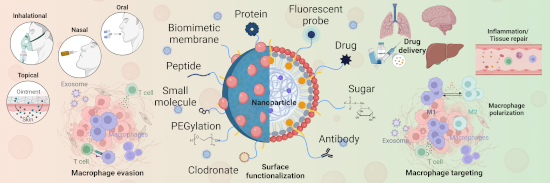
- affect NP internalization. They actively engulf NCs and accelerate their clearance, acting differentially in a time-dependent manner and altering the fate of nanomaterials [26]. In addition to immune-related barriers, the physicochemical properties of the nanomaterial itself can impair the NCs’ ability


Modeling and simulation of carbon-nanocomposite-based gas sensors
Beilstein J. Nanotechnol. 2025, 16, 90–96, doi:10.3762/bjnano.16.9
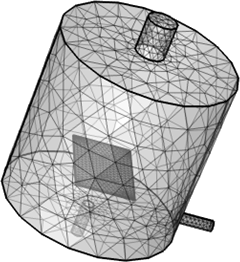
- settings for time-dependent and stationary analyses. In the solving phase, simulations are executed to generate results, followed by post-processing to analyse and present the outcomes in 1D and 3D plots. The sensor layer where the adsorption of the gas occurs and thus participate in detecting the CO gas