


Search results
Search for "ultrasonic cleaning" in Full Text gives 5 result(s) in Beilstein Journal of Nanotechnology.
Sustainable fabrication of 2D-based devices through reuse of substrates with microfabricated electrodes
Beilstein J. Nanotechnol. 2026, 17, 818–827, doi:10.3762/bjnano.17.58
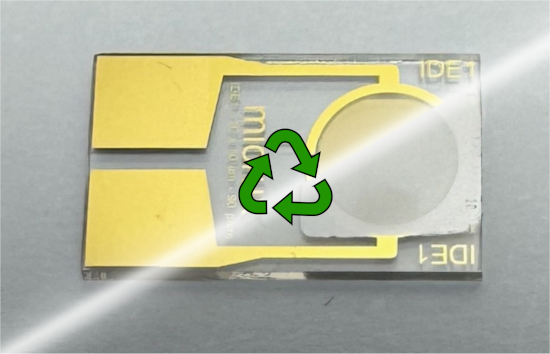
- . Keywords: 2D device fabrication; microfabricated electrode; N-methyl-2-pyrrolidone; substrate reuse; ultrasonic cleaning; Introduction Nanoscience research often needs the fabrication of proof-of-concept devices to demonstrate applications of novel nanomaterials or to study their fundamental properties [1
- immersed in NMP and treated in an ultrasonic bath at 50 °C. The effectiveness of the ultrasonic cleaning is likely related to the interaction between NMP molecules and the interface between the 2D material flakes and the SiO2/Si substrate. NMP is known for its strong affinity for surface contaminants and
- performed using dimethylformamide, dimethyl sulfoxide (TechniStrip Micro D350), and acetone under analogous conditions, as discussed in Supporting Information File 1. Demonstration of the ultrasonic cleaning process for substrate reuse. (a) Schematic diagram illustrating the ultrasonic cleaning setup with N


Probing tribological evolution in atomically thin MoS2 at different scales
Beilstein J. Nanotechnol. 2026, 17, 586–597, doi:10.3762/bjnano.17.40
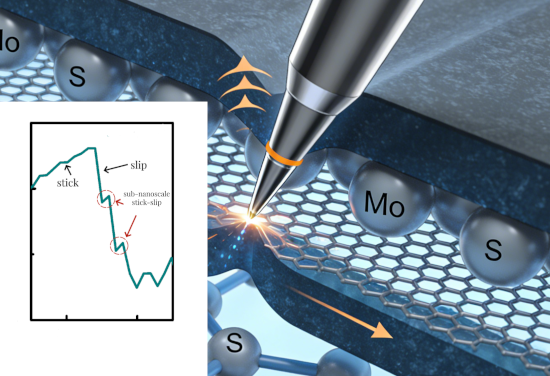
- sequentially in acetone, ethanol, and deionized water via ultrasonic cleaning and then dried with high-purity nitrogen. Sample characterization MoS2 layer thickness was determined via AFM (MFP-3D, Asylum Research) and Raman spectroscopy (inVia Reflex, Renishaw). AFM topographic images were acquired in tapping


Development of an anti-pollution coating process technology for the application of an on-site PV module
Beilstein J. Nanotechnol. 2019, 10, 332–336, doi:10.3762/bjnano.10.32
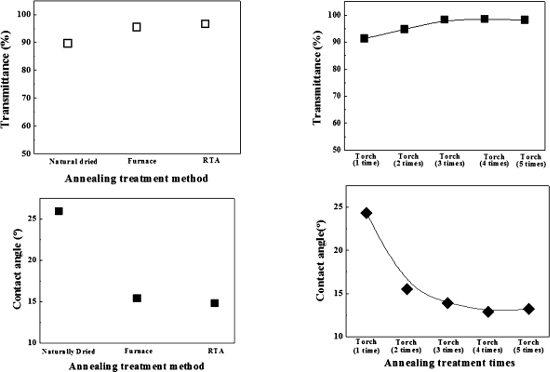
- coat various materials, such as metals, ceramics, and glass [9]. Before coating the glass slide substrates, the substrates were subjected to ultrasonic cleaning for 10 min in, consecutively, trichloroethylene, acetone, methanol and deionized water (DI water). The substrates were coated with the coating


Topology assisted self-organization of colloidal nanoparticles: application to 2D large-scale nanomastering
Beilstein J. Nanotechnol. 2014, 5, 1203–1209, doi:10.3762/bjnano.5.132
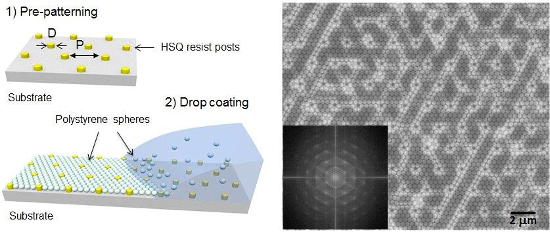
- pitch varied between 5 to 20 times the diameters of the beads (Figure 1). Self-organization of PS beads on patterned silicon substrate PS beads were deposited on the silicon patterned substrates by a convective self-assembly technique. Figure 1 shows a schematic of the entire process. The ultrasonic
- cleaning of the patterned substrates was conducted in acetone for 5–10 min in order to remove the surface contamination. Thereafter, we applied 60 µL drops of PS beads (concentration 1 wt %). This concentration is chosen to ensure the formation of a dense monolayer structure after the evaporation of water


Antimicrobial properties of CuO nanorods and multi-armed nanoparticles against B. anthracis vegetative cells and endospores
Beilstein J. Nanotechnol. 2014, 5, 789–800, doi:10.3762/bjnano.5.91
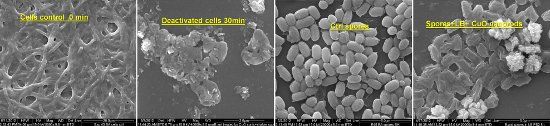
- incubator shaker bath at 150 rpm and ultrasonic cleaning bath (Spectralab, India). It was expected that accelerated mixing in ultrasonic bath would lead to higher mechanical damage to cells in test suspension carrying bacterial cells and CuO NPs due to an increased frequency of collisions between the two


Other Beilstein-Institut Open Science Activities



