


Search results
Search for "water treatment" in Full Text gives 49 result(s) in Beilstein Journal of Nanotechnology.
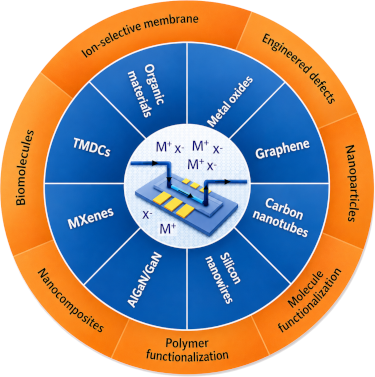
Materials challenges in solid-state sensors for continuous monitoring of ions in water
Beilstein J. Nanotechnol. 2026, 17, 935–973, doi:10.3762/bjnano.17.66



Environmental applications of silver nanoparticles: state-of-the-art review and emerging trends
Beilstein J. Nanotechnol. 2026, 17, 697–736, doi:10.3762/bjnano.17.49
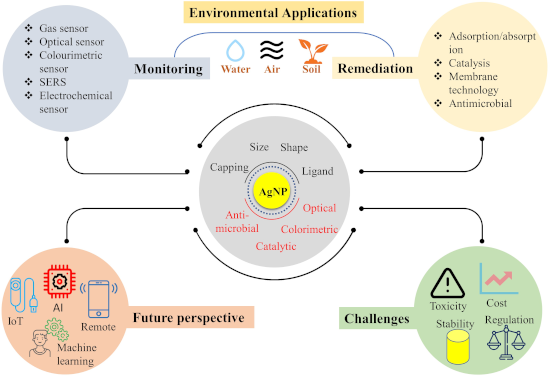
- . Nanosilver has emerged as a promising material for water treatment, offering efficient and cost-effective solutions for removing, monitoring, and disinfecting water sources [71]. Nanosilver’s catalytic and antimicrobial properties make it a highly efficient material in treating water pollutants. 3.1.1
- contaminate water and spread through water sources [77]. Nanosilver can kill viruses and make water safe to drink under controlled laboratory conditions, but translating this to potable water treatment would require comprehensive validation in realistic matrices, assessment of Ag+ release, and long-term
- , respectively [84]. The above studies, along with those in Table 1, confirmed the potential of AgNPs as disinfectants for water treatment applications. However, the environmental remediation perspective of AgNPs needs to be discussed to assess their full potential. 3.1.2 Pollutant removal or degradation. The


Cellulose as a photocatalyst support material: extraction, structural features, and environmental applications
Beilstein J. Nanotechnol. 2026, 17, 635–652, doi:10.3762/bjnano.17.44
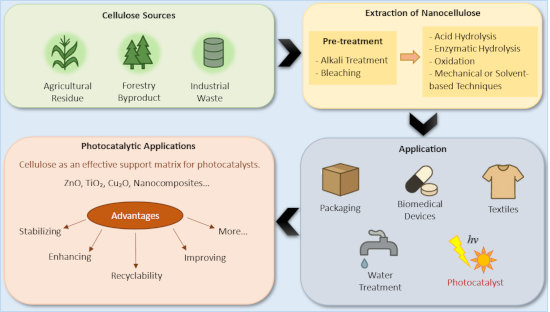
- their structural integrity [12]. Cellulose possesses strong mechanical properties, and its favorable dimensions and strength make it an ideal material for water treatment membranes. This led researchers to apply it as a base material for developing such membranes [13]. A new approach involves
- photoactive nanomaterials, including metal oxides and nonmetallic semiconductors, to remediate and purify water, and the use of these hybrid systems is growing steadily in water treatment applications [15]. Photocatalyst immobilization on membranes addresses key challenges by preventing photocatalyst loss
- water treatment performance as shown in Figure 2 [14]. Photocatalytic degradation is an advanced oxidation process (AOP) in which a catalyst is used to accelerate the degradation or breakdown of organic pollutants in water or air using light energy. This AOP relies on the ability of the catalyst to


Two-step laser synthesis of Ag@TiO2 nanomaterials for the photocatalytic degradation of rhodamine B
Beilstein J. Nanotechnol. 2026, 17, 622–634, doi:10.3762/bjnano.17.43
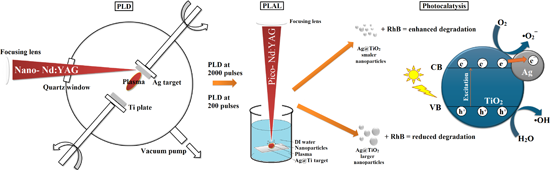
- visible light, such as water treatment and degradation of organic contaminants [10][11][12]. Among various synthesis techniques, laser-based methods, such as pulsed laser ablation in liquids (PLAL) and laser pyrolysis, stand out as clean, efficient, and surfactant-free routes for fabricating Ag@TiO2


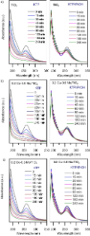
Synthesis of Cu–Mo/TiO2 and Co–Mo/TiO2 photocatalysts for the efficient degradation of organic pollutants in water
Beilstein J. Nanotechnol. 2026, 17, 559–570, doi:10.3762/bjnano.17.37
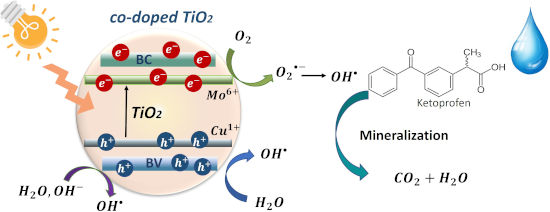
- (AOPs) have been considered an alternative to conventional water treatment technologies [2]. They are initiated through the formation of reactive and short-lived radicals (e.g., ·OH, HOO·, ·O2−), where the hydroxyl radical (HO·) is the most reactive and powerful oxidant (E0 = 2.7 V), which reacts with



Current status of using adsorbent nanomaterials for removing microplastics from water supply systems: a mini review
Beilstein J. Nanotechnol. 2025, 16, 1837–1850, doi:10.3762/bjnano.16.127
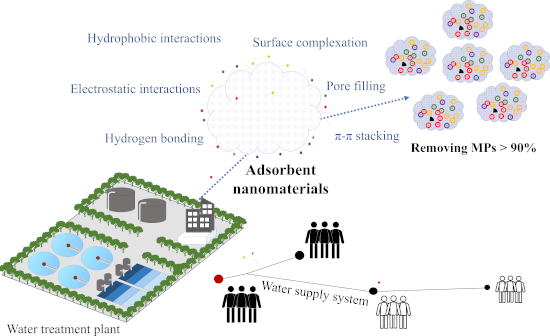
- supply systems is a global concern due to their persistence and ability to adsorb toxic pollutants. Despite having effectiveness, conventional water treatment processes still have limited efficiency in removing MPs, especially smaller particles. Thus, it requires researchers to develop effective and
- these materials into existing water treatment systems. Similarly, the reviews by Yu et al. and Das et al. highlighted the purification potential of different nanomaterials but lack a detailed discussion on the risks and limitations of these materials, particularly in the context of water supply systems
- in water supply systems worldwide, and MP pollution directly affects the water quality used in water treatment plants (WTPs) [35]. The occurrences of MPs in water supply systems The water distribution systems are responsible for transporting treated water from WTPs to various locations through the


Nanotechnology-based approaches for the removal of microplastics from wastewater: a comprehensive review
Beilstein J. Nanotechnol. 2025, 16, 1607–1632, doi:10.3762/bjnano.16.114
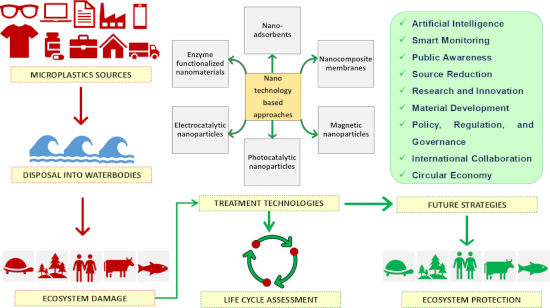
- synthesis and characterisation techniques have enabled the detection of materials at the nanoscale, unlocking new opportunities across various streams. In the field of water treatment, nanotechnology is gaining wide attention due to its enhanced efficiency, effectiveness, affordability, and durability. The
- key properties of nanoparticles include high surface area, extensive functionalization, high reactivity, and size-dependent characteristics. By leveraging these properties, water treatment methods can be refined at the nanoscale to selectively target pollutants [16][17]. This comprehensive review
- capabilities. By combining the principles of water treatment technologies and nanoscience, this study highlights innovative pathways for improved removal efficiency, selective pollutant targeting, and sustainable application. As the global concern over plastic pollution is a rising concern, this review sets



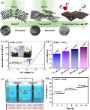
Laser processing in liquids: insights into nanocolloid generation and thin film integration for energy, photonic, and sensing applications
Beilstein J. Nanotechnol. 2025, 16, 1428–1498, doi:10.3762/bjnano.16.104






The role of biochar in combating microplastic pollution: a bibliometric analysis in environmental contexts
Beilstein J. Nanotechnol. 2025, 16, 1401–1416, doi:10.3762/bjnano.16.102
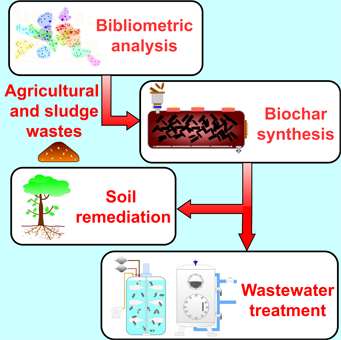
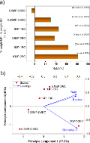
- modulating plant gene expression and ARG dynamics in the soil. Ultimately, these effects foster a healthier and more resilient soil ecosystem under MP contamination. Water treatment MP removal from aqueous media by BC adsorption A summary of research on MP removal is provided in Table S2, Supporting



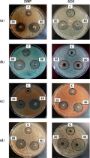
Synthesis and antibacterial properties of nanosilver-modified cellulose triacetate membranes for seawater desalination
Beilstein J. Nanotechnol. 2025, 16, 1380–1391, doi:10.3762/bjnano.16.100
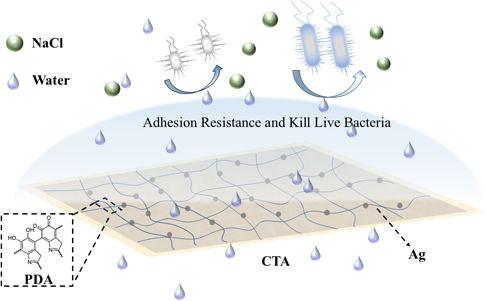
- significant attention for their ability to enhance the antibacterial properties of membrane materials, effectively addressing critical issues such as biofouling and microbial contamination in water treatment systems. These nanomaterials, characterized by their high surface area-to-volume ratio, tunable


Synthesis of a multicomponent cellulose-based adsorbent for tetracycline removal from aquaculture water
Beilstein J. Nanotechnol. 2025, 16, 728–739, doi:10.3762/bjnano.16.56
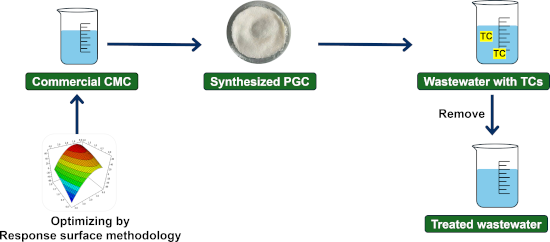
- provides an abundant and low-cost source of raw materials and mitigates environmental issues linked to the burning or improper handling of agricultural by-products. Notably, PGC also shows strong potential for commercialization as an efficient water treatment solution. Nonetheless, the presence of humic


Enhancing mechanical properties of chitosan/PVA electrospun nanofibers: a comprehensive review
Beilstein J. Nanotechnol. 2025, 16, 286–307, doi:10.3762/bjnano.16.22

- sensitive compounds [3]. Electrospun nanofibers exhibit a large surface area, high porosity, and small pore size, making them useful for a wide range of applications, as shown in Figure 1. Chitosan/polyvinyl alcohol (PVA) electrospun nanofibers have many applications, including water treatment, biomedical
- water treatment. Table 1 shows the properties applications of chitosan that have been studied. Among the crucial factors in the electrospinning process is the solubility of the polymer [51]. Chitosan is soluble in organic acids such as diluted aqueous acetic, formic, and lactic acids, but it is


Emerging strategies in the sustainable removal of antibiotics using semiconductor-based photocatalysts
Beilstein J. Nanotechnol. 2025, 16, 264–285, doi:10.3762/bjnano.16.21
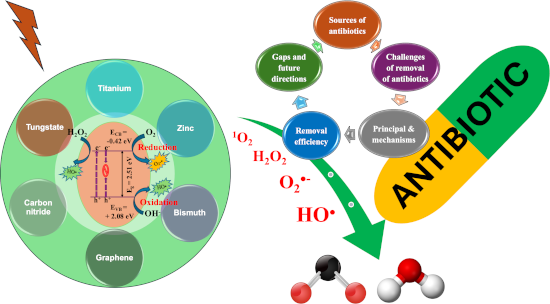
- , rGO-ZnO, ferrocene-rGO-ZnO, α-Fe2O3/ZnO/rGO, CdS-Bi2MoO6/rGO, and rGO-modified tin selenide (see below in Table 5). Tungsten oxide-based materials or composites Tungsten trioxide (WO3) is considered environmentally benign, making it a preferable option for eco-friendly water treatment applications. In



Photocatalytic methane oxidation over a TiO2/SiNWs p–n junction catalyst at room temperature
Beilstein J. Nanotechnol. 2024, 15, 1132–1141, doi:10.3762/bjnano.15.92
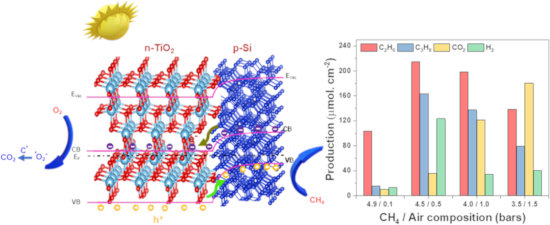
- formed at the interface have emerged, which effectively force charge carriers to move in opposite directions and hinder recombination [31][32][33]. Very recently, Cu2O/BiVO4, Ag2O/Bi12O17Cl2 and CuFe2O4/Bi4Ti3O12 composite powders have shown improved efficiencies in water treatment based on p–n


Intermixing of MoS2 and WS2 photocatalysts toward methylene blue photodegradation
Beilstein J. Nanotechnol. 2024, 15, 817–829, doi:10.3762/bjnano.15.68
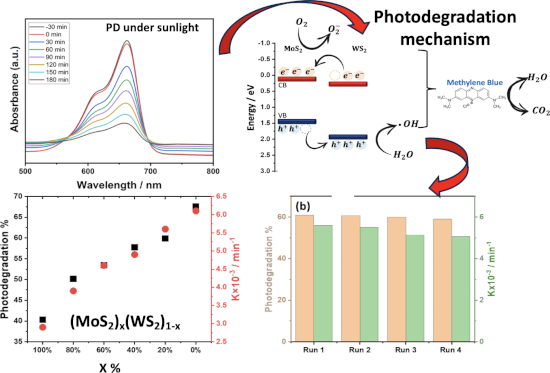
- place corrective actions for the development of efficient strategies for water treatment [3]. Following these measures, various technologies have proven their efficacy for water depollution, including adsorption and photocatalysis, and are often utilized for heavy metals, pharmaceuticals, pesticide


Nanomaterials for photocatalysis and applications in environmental remediation and renewable energy
Beilstein J. Nanotechnol. 2023, 14, 722–724, doi:10.3762/bjnano.14.58

- potential strategy for water treatment via the effectively infinite energy from the sun and the photocatalysts. Photocatalysis based on nanostructured semiconductors can significantly contribute to tackling several environmental pollution problems, sustainable synthesis, and energy production [2][15][16

Metal-organic framework-based nanomaterials as opto-electrochemical sensors for the detection of antibiotics and hormones: A review
Beilstein J. Nanotechnol. 2023, 14, 631–673, doi:10.3762/bjnano.14.52
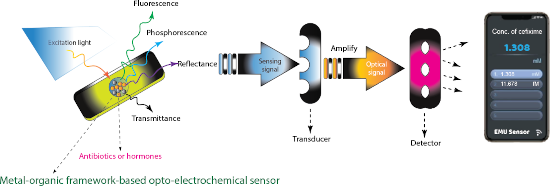
- in MOFs can either be quenched or enhanced. Due to their exceptional characteristics, MOFs have found usage in a variety of fields, including sensors, gas adsorption, energy storage, drug delivery, catalysis, water treatment, and bio-medical imaging [89][90][91][92][93][94][95][96][97][98][99][100


Conjugated photothermal materials and structure design for solar steam generation
Beilstein J. Nanotechnol. 2023, 14, 454–466, doi:10.3762/bjnano.14.36
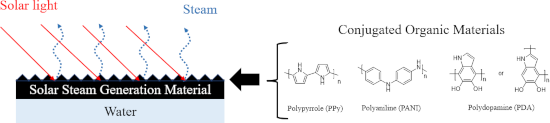
- optimize and extend this functionality. Combining solar energy and water, the most abundant resources on earth, SSG is expected to lead to a sustainable future through synergy with other solar devices and water treatment technologies. Design concept for high-performance SSG devices. (a) Solar spectral


Bismuth-based nanostructured photocatalysts for the remediation of antibiotics and organic dyes
Beilstein J. Nanotechnol. 2023, 14, 291–321, doi:10.3762/bjnano.14.26
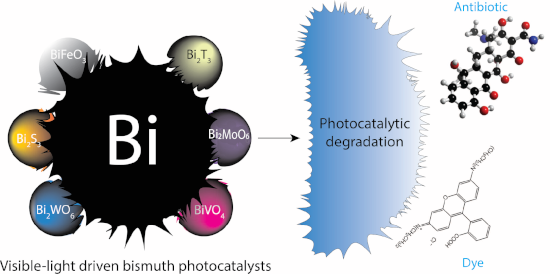
- techniques has demonstrated varying levels of effectiveness and drawbacks that restrict their widespread use. For instance, due to deficiencies such as the formation of harmful by-products and incomplete removal of organic pollutants, traditional water treatment methods such as sedimentation, filtration, and
- treatment technologies, advanced oxidation processes (AOPs) are regarded as a practical, efficient, and fiercely competitive technology for water treatment for the removal of a variety of toxic and bio-recalcitrant organic pollutants and for the inactivation of pathogen microorganisms that cannot be treated
- , using noble metals in small or medium-sized industrial water treatment plants will be rather expensive. Recently, bismuth demonstrated a clear surface plasmon resonance effect, indicating the possibility of substituting it for noble metals. Because of the intrinsic photocatalytic characteristics of


Non-stoichiometric magnetite as catalyst for the photocatalytic degradation of phenol and 2,6-dibromo-4-methylphenol – a new approach in water treatment
Beilstein J. Nanotechnol. 2022, 13, 1531–1540, doi:10.3762/bjnano.13.126
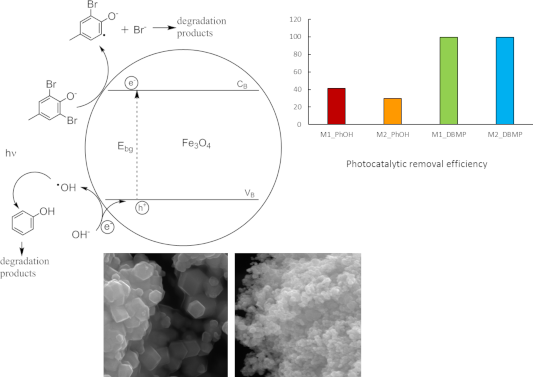
- the available electrons, and, as a result, bromide ions can be released. The results confirm that magnetite is an effective photocatalyst in the degradation of halogenated aromatic pollutants. Keywords: magnetite; ozonolysis; persistent organic pollutants; photocatalysis; water treatment


A comprehensive review on electrospun nanohybrid membranes for wastewater treatment
Beilstein J. Nanotechnol. 2022, 13, 137–159, doi:10.3762/bjnano.13.10
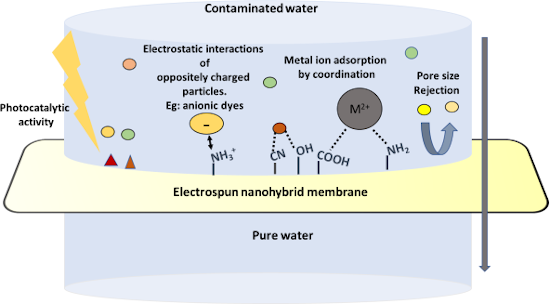
- agricultural run-offs, leading the world to a critical situation in meeting the growing demand for clean water. When compared with the conventional water treatment methods, ENH membranes have shown promising results to meet these challenges. This article reviews ENH membranes that have been developed in recent
- years for water purification and treatment. The basics of electrospinning, the limiting factors affecting electrospinning and the advantages of the ENH membranes in water treatment/purification over conventional membranes are highlighted. The application of ENHs in removing major pollutants and their
- utilization in different membrane technologies for water treatment are then elaborated. Finally, the future potentials of the ENH membranes are discussed. 2 Electrospinning technology Due to its simple operating technique and the superior properties of the produced nanofiber mats, electrospinning has become





Fate and transformation of silver nanoparticles in different biological conditions
Beilstein J. Nanotechnol. 2021, 12, 665–679, doi:10.3762/bjnano.12.53
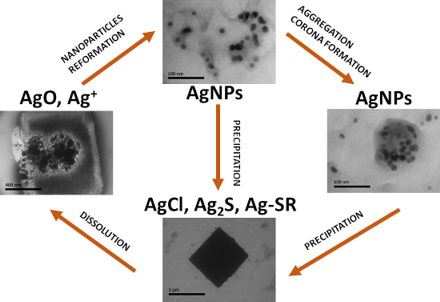
- 200 tons/year by 2022 [1]. AgNPs are extensively used in multiple industries and fields spanning from electronics, textiles, food, cosmetics to water treatment and healthcare [2][3]. A significant market contribution originates from the agriculture sector as evidenced by the Center for Food Safety


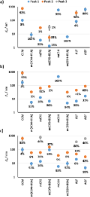


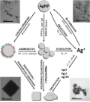
High-yield synthesis of silver nanowires for transparent conducting PET films
Beilstein J. Nanotechnol. 2021, 12, 624–632, doi:10.3762/bjnano.12.51
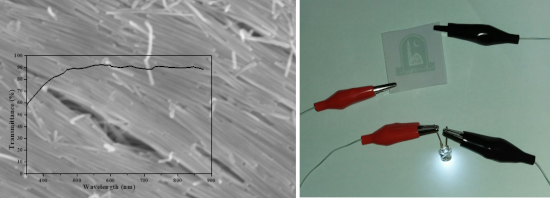
- & Optoelectronics Laboratory (AFMOL), Department of Physics, Faculty of Science, King Khalid University, Abha 9004, Saudi Arabia Center of Research Excellent in Desalination & Water Treatment, King Fahd University of Petroleum and Minerals, Dhahran 31261, Saudi Arabia 10.3762/bjnano.12.51 Abstract Silver nanowires


On the stability of microwave-fabricated SERS substrates – chemical and morphological considerations
Beilstein J. Nanotechnol. 2021, 12, 541–551, doi:10.3762/bjnano.12.44
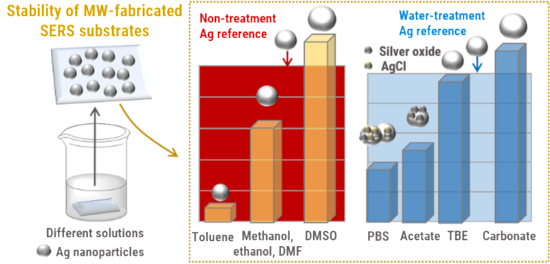
- in PBS and the corresponding particle size distributions. (b) SERS spectra of a monolayer of 4-ATP. The spectrum obtained after water treatment serves as a reference. (c) Error analysis of the 1078 cm−1 marker peak which is attributed to the electromagnetic field enhancement mechanism [29]. The blue
- dotted line marks the Raman intensity level obtained for 1 h of water treatment. Stability test of microwave-fabricated SERS substrates for different buffer solutions with different pH values. (a) SEM images of Ag nanoparticle coatings after 1 h of immersion into different buffer solutions. (b) SERS
- spectra of a monolayer of 4-ATP. The spectrum obtained after water treatment serves as a reference. (c) Error analysis of the 1078 cm−1 marker peak which is attributed to the electromagnetic field enhancement mechanism [29]. The blue dotted line marks the Raman intensity level obtained for 1 h of water


Unravelling the interfacial interaction in mesoporous SiO2@nickel phyllosilicate/TiO2 core–shell nanostructures for photocatalytic activity
Beilstein J. Nanotechnol. 2020, 11, 1834–1846, doi:10.3762/bjnano.11.165
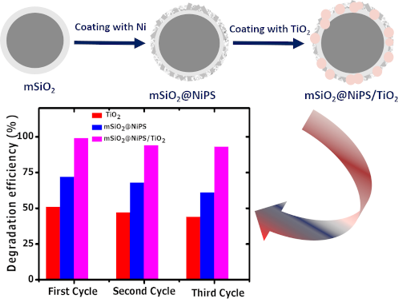
- efficient, reliable, and eco-friendly water-treatment and decontamination techniques in order to mitigate this issue [3][4]. Among the various techniques, the use of semiconducting photocatalysts for light-stimulated degradation of dye pollutants has been extensively investigated [5]. Owing to its chemical
- inertness, low cost, and non-toxicity, titanium dioxide (TiO2) has been widely used as a photocatalyst in the degradation of dyes in textile industries as well as in water-treatment systems [5][6]. There are three different phases of TiO2, namely anatase, rutile, and brookite. Compared to the rutile and





