


Search results
Search for "wavelet transforms" in Full Text gives 6 result(s) in Beilstein Journal of Nanotechnology.
Mechanical property measurements enabled by short-term Fourier-transform of atomic force microscopy thermal deflection analysis
Beilstein J. Nanotechnol. 2025, 16, 1952–1962, doi:10.3762/bjnano.16.136
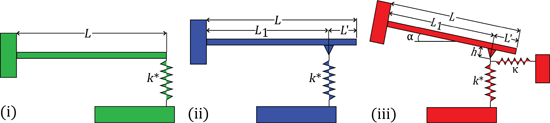
- ][12][13].The drawback to most wavelet transforms applied to analyze AFM thermal deflection signals is that these measurements suffer from insufficient spectral resolution, which limits the ability to accurately quantify cantilever oscillation characteristics, as well as making it difficult to obtain
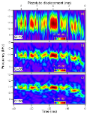
- the thermal motion of the cantilever using short-term Fourier transforms (STFTs). Similar to wavelet transforms, STFTs allow one to calculate the time-varying spectra of the cantilever’s deflection signal over the measurement time with a simpler way of controlling the spectral/frequency resolution
- AFM experiments on well-characterized surfaces, such as highly ordered pyrolytic graphite (HOPG), using silicon cantilevers with integrated probes. To examine the time evolution of the AFM cantilever’s oscillatory modes during an experiment, STFTs, rather than wavelet transforms, of the thermal motion




Correction to "Energy dissipation in multifrequency atomic force microscopy"
Beilstein J. Nanotechnol. 2014, 5, 667–667, doi:10.3762/bjnano.5.78

- /bjnano.5.78 Keywords: band excitation; multifrequency atomic force microscopy (AFM); phase reference; wavelet transforms; In the section "Energy dissipation" of the above manuscript, there is a typesetting error in the mathematical expressions after Equation 5. The correct form must be: The energy
Energy dissipation in multifrequency atomic force microscopy
Beilstein J. Nanotechnol. 2014, 5, 494–500, doi:10.3762/bjnano.5.57
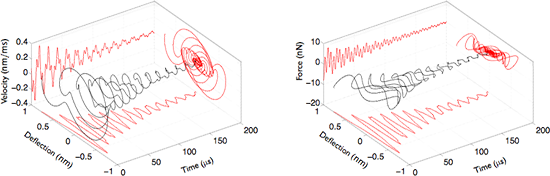
- ; wavelet transforms; Introduction Multifrequency dynamic atomic force microscopy [1] is a powerful technique to retrieve quantitative information on materials properties such as the elastic constants and the sample chemical environment with a lateral resolution in the nanometer range. In this context the


Wavelet cross-correlation and phase analysis of a free cantilever subjected to band excitation
Beilstein J. Nanotechnol. 2012, 3, 294–300, doi:10.3762/bjnano.3.33
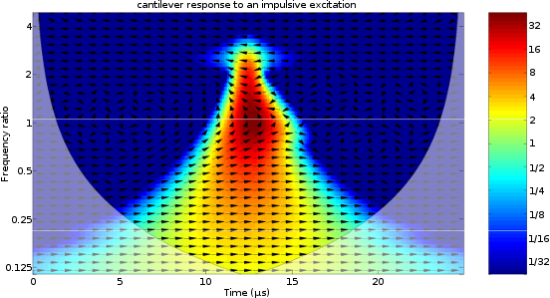
- ” information on the driver-response phase delay as a function of frequency. These concepts are introduced through the calculation of the response of a free cantilever subjected to continuous and impulsive excitation over a frequency band. Keywords: AFM; band excitation; force; wavelet transforms
- ], impulsive cantilever excitation [5] or thermal-noise excitation [6][7][8][9]. Thermal noise analysis has been performed, with the aid of wavelet transforms, to characterize the time–frequency response of a thermally excited cantilever in dynamic force spectroscopy [10][11][12]. In these previous works, the
- indetermination (for details see [10]). Given two time series f(t) and g(t), with wavelet transforms Wf(s,d) and Wg(s,d), the cross-wavelet spectrum is defined as: where * denotes the complex conjugate. Since the cross-correlation coefficients are complex numbers, they can be represented as Wf(s,d) = |Wf(s,d)|exp


Extended X-ray absorption fine structure of bimetallic nanoparticles
Beilstein J. Nanotechnol. 2011, 2, 237–251, doi:10.3762/bjnano.2.28
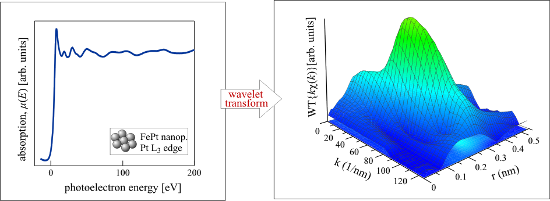
- relatively new field of wavelet transforms that have the potential to outperform traditional analysis, especially in bimetallic alloys. As an example, the lattice expansion and inhomogeneous alloying found in FePt nanoparticles is presented, and this is discussed below in terms of the influence of employed
- method is described in more detail as well as wavelet transforms as a useful tool, which is rarely used for this application. Both methods first require a background subtraction from the experimental data, as already mentioned above (Equation 5). This is usually performed by using the AUTOBK algorithm
- (red dotted line). In this specific case a Kaiser–Bessel window has been used with a sharp truncation (dk = 1 nm−1) starting at k ≈ 21 nm−1 and ending at k ≈ 147 nm−1 for FFT, and (dr = 0.01 nm) starting at r ≈ 0.14 nm and ending at r ≈ 0.46 nm for BFT. Wavelet transforms An obvious disadvantage of FT



Tip-sample interactions on graphite studied using the wavelet transform
Beilstein J. Nanotechnol. 2010, 1, 172–181, doi:10.3762/bjnano.1.21
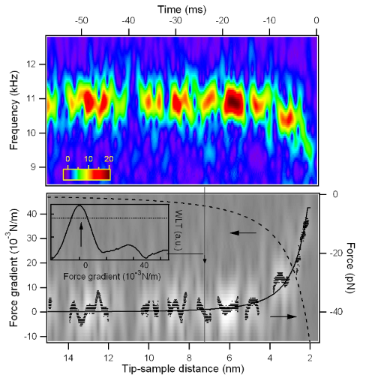
- oscillations of a cantilever with an interacting tip. This analysis allows to retrieve the force gradients, the forces and the Hamaker constant in a measurement time of less than 40 ms. Keywords: AFM; force; graphite; thermal excitation; wavelet transforms; Introduction The non-contact atomic force
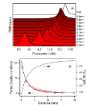
- analysis is a mathematical tool able to analyze the instantaneous spectral content of rapidly varying signals. Using the wavelet transforms to analyze the temporal traces of the thermal motion superposed on a force-distance curve, the tip-sample interaction is measured in tens of ms, a time compatible with




Other Beilstein-Institut Open Science Activities



