Search results
Search for "work of adhesion" in Full Text gives 17 result(s) in Beilstein Journal of Nanotechnology.
First-principles study on elastic properties of Cu, (Cu1−x,Nix)3Sn and interfacial mechanical properties of (Cu1−x,Nix)3Sn/Cu in the lead-free solder joint
Beilstein J. Nanotechnol. 2026, 17, 428–439, doi:10.3762/bjnano.17.29
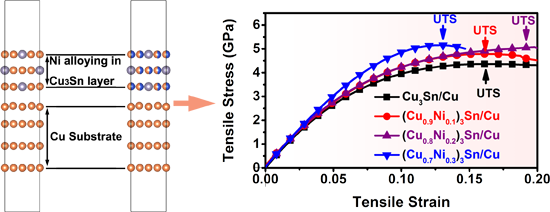
- alloying strategies to meet the requirements for electronic device miniaturization and harsh environmental applications. Keywords: ductility; elastic modulus; interfacial toughness; lead-free solder; work of adhesion; Introduction Due its toxicity, lead has caused serious problems in human health and
- ductility in terms of elastic moduli. Subsequently, the orientation-dependent Young’s moduli of Cu and (Cu1−xNix)3Sn were calculated. Finally, tensile modulus, ultimate tensile stress, work of adhesion, and interfacial toughness of (Cu1−xNix)3Sn/Cu were calculated based the interface model with the
- orientation relationship of (001)ε//(111)Cu and [100]ε//[−110]Cu; the underlying mechanisms responsible for the influence of Ni alloying on the work of adhesion and interfacial toughness are demonstrated. Methods In this study, first-principles calculations within the framework of density functional theory


Quantitative estimation of nanoparticle/substrate adhesion by atomic force microscopy
Beilstein J. Nanotechnol. 2026, 17, 1–14, doi:10.3762/bjnano.17.1

- calibration achieved through wedge and diamagnetic lateral force calibrator methods. The work of adhesion was quantified by integrating the obtained lateral forces over the distance moved during manipulation, revealing a non-monotonic dependency on nanoparticle size with maximum adhesion observed for
- manipulation as a first approximation for the work of adhesion as the details in the process of manipulation are rather complex including adhesion, static and dynamic friction, and humidity [49]. Due to the challenges in direct calculation of the dissipated work, the work of separation is approximated using
- higher work of separation, is required to manipulate NPs in this size range. In our approach, the work of separation includes both the work of adhesion and the dissipated energy that is lost via different channels during the pushing experiment (e.g., deformation energy of NP and/or surface). Despite this



Mechanical property measurements enabled by short-term Fourier-transform of atomic force microscopy thermal deflection analysis
Beilstein J. Nanotechnol. 2025, 16, 1952–1962, doi:10.3762/bjnano.16.136
- of adhesion, which can be calculated from the pull-off force in experiments. We calculated the Tabor parameter, μT, and the transition parameter, λ, for each material pair, which are given in Table 2. Rather than fitting data with Tabor parameters smaller than 0.1 with the DMT model and greater than
- normal force for the DMT, JKR, and COS models are then given by Equation 5, Equation 6, and Equation 7, respectively [24][28]: where R is the tip radius and Fa is the adhesive force. In Equation 7, we use the transition parameter λ to bridge the two contact streams. We then denote and and γ is the work




Nanotechnology-based approaches for the removal of microplastics from wastewater: a comprehensive review
Beilstein J. Nanotechnol. 2025, 16, 1607–1632, doi:10.3762/bjnano.16.114

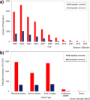
- contact angle decreasing from 84.6° ± 1° to 64.2° ± 1.2°), work of adhesion, wetting energy, porosity, and pore dimensions. Among various loadings, the membrane with 0.5 wt % MIL-100 (Fe) (M0.5) showed the best overall performance. It delivered a pure water flux over ten times higher than M0 and achieved


Interaction between honeybee mandibles and propolis
Beilstein J. Nanotechnol. 2022, 13, 958–974, doi:10.3762/bjnano.13.84
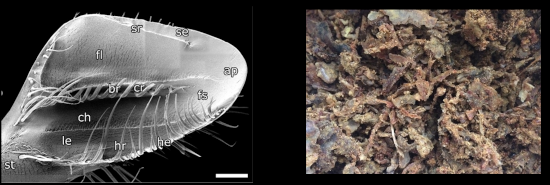
- , and E and ∆γ are the effective elastic modulus and the work of adhesion, respectively. The work of adhesion ∆γ is the energy per unit of area needed to separate two bodies in contact. It was chosen as a measure of adhesion because it is independent of the contact area. To characterize viscoelastic
- of Young’s modulus and work of adhesion obtained from adhesion experiments was performed by calculating the Pearson correlation coefficient. Results Honeybee mandible When bees handle propolis, the mandibles are the first surfaces that will come into contact with plant resin or propolis. They were
- work of adhesion values of single measurements that were conducted on different positions of the bee mandible (P = 0.995). For some measurements, near the hairy edge of the bee mandible the point of contact was not clearly distinguishable in the loading curve due to hair touching the sample before it


Temperature and chemical effects on the interfacial energy between a Ga–In–Sn eutectic liquid alloy and nanoscopic asperities
Beilstein J. Nanotechnol. 2022, 13, 817–827, doi:10.3762/bjnano.13.72
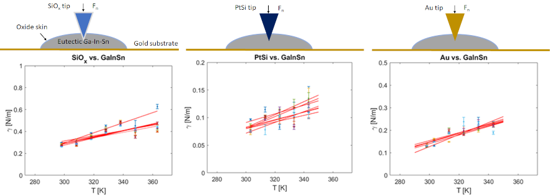
- and calculate the corresponding work of adhesion Wad as suggested in [19] for solid interfaces. The authors measured the adhesion between atomically smooth quasicrystalline surfaces of TiN-coated AFM tips in ultrahigh vacuum by analyzing the pull-off force during atomic force spectroscopy measurements
- . Here, we attempt to estimate the work of adhesion from the adhesion force according to the Johnson–Kendall–Roberts (JKR) model of adhesive contact [20], where Wad = and R is the tip radius. Strictly, this model applies to adhesive contact between elastic solids that form a wetting neck. Contact
- between two elastic solids is not provided in our experiments, and liquid flow will likely alter the calculated work of adhesion values. These values should thus be taken as rough estimates. With the manufacturer’s data for the tip radius (RSiOx = 7 nm and RPtSi = RAu = 25 nm), we calculate the following



Quantitative determination of the interaction potential between two surfaces using frequency-modulated atomic force microscopy
Beilstein J. Nanotechnol. 2020, 11, 729–739, doi:10.3762/bjnano.11.60
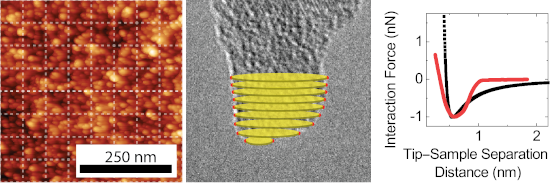
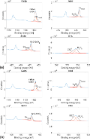
- then compared to experimental results. The method is demonstrated here using a silicon AFM probe with its native oxide and a diamond sample. Assuming the 6-12 Lennard-Jones potential form, best-fit values for the work of adhesion (Wadh) and range of adhesion (z0) parameters were determined to be 80


Development of a new hybrid approach combining AFM and SEM for the nanoparticle dimensional metrology
Beilstein J. Nanotechnol. 2019, 10, 1523–1536, doi:10.3762/bjnano.10.150
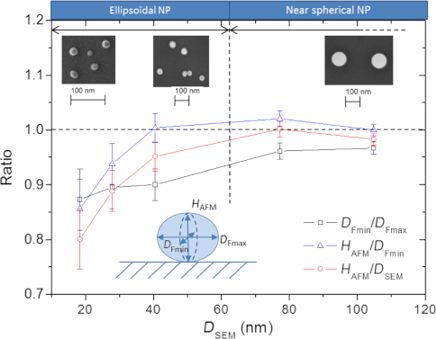
- deformation of spherical bodies by including adhesion forces to the Hertz contact equation. This interaction can be described by the Bradley theory [34]: with P the adhesion force and Δγ = γ1 + γ2 − γ12 the work of adhesion with γ1 and γ2, the surface energies of NP and substrate, respectively, and γ12 the




Adhesive contact of rough brushes
Beilstein J. Nanotechnol. 2018, 9, 2405–2412, doi:10.3762/bjnano.9.225
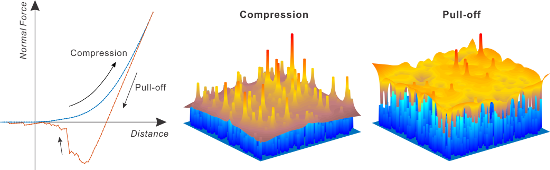
- elastic modulus, E is Young’s modulus, ν is Poisson’s ratio, γ is the work of separation (work of adhesion) per unit area, and is an effective radius of the square, defined so that the area of a cylinder with the radius a0 is equal to the area of the square. Note that the maximum adhesive force for a flat
- can be approximated by and the fill factor, is defined as the ratio of the area filled by pillars to the total apparent area of the square. Equation 4 has a simple physical meaning: it just says that in the case of the not-completely-filled square, the work of adhesion has to be replaced through the
- effective work of adhesion, γρ. The force of adhesion of a flat brush is a natural reference for comparison with rough brushes. 3. For characterization of the role of the statistical distribution of the pillar height, we consider the critical separation, the point at which the adhesive contact of one single


Measuring adhesion on rough surfaces using atomic force microscopy with a liquid probe
Beilstein J. Nanotechnol. 2017, 8, 813–825, doi:10.3762/bjnano.8.84
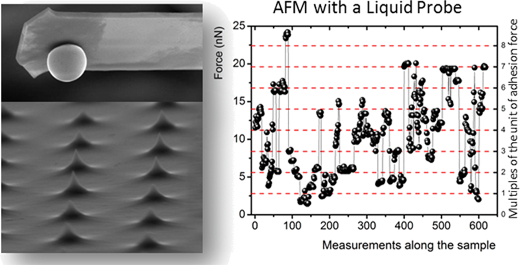
- particle. Ducker et al. [2][3] and Butt [4] were the first ones in using the newly termed “colloidal-probe technique” [5], which became a standard and powerful tool for the study of surface forces. In particular, this colloidal-probe technique has been useful to characterize the work of adhesion between
- the work of adhesion. It is usually assumed that the process takes place in a regime of small strains, that the materials are homogeneous, isotropic, linearly elastic, and that the tips are perfectly smooth. On this last point, previous studies [6][7][8] have demonstrated the high sensitivity of
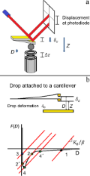
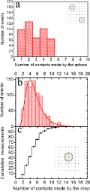
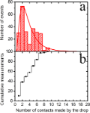
- ′. First, we discuss the case of the pull-off force between the drop and the multi-scaled rough diamond surface. The work of adhesion, i.e., the energy of adhesion per unit area, w = Wadh/unit area can be obtained with the Dupré equation for wetting w = γ(1 + cos θc). Using the contact angle between

When the going gets rough – studying the effect of surface roughness on the adhesive abilities of tree frogs
Beilstein J. Nanotechnol. 2016, 7, 2116–2131, doi:10.3762/bjnano.7.201
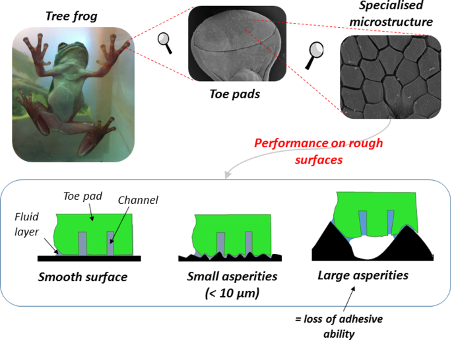
- the asperity as Usurface = πd2W, where d is the distance from the bead to the pad in contact (i.e., the circular opening radius) and W is the work of adhesion. As the bead size increases, the opening size also increases as suggested by profiles presented in Figure 6. We thus make the assumption that R
- elastoadhesive length scale, E/W. Using a value for the work of adhesion of 70 mN·m−1, estimated for tree frog toe pads by Barnes et al. [19], and the slope of the best fit line of the d3/2 vs h5/2 plot in Figure 9, the elastic modulus is calculated to be E ~ 20 kPa. Indeed, the estimate here is comparable to
- Figure 5, we believe that our assumption is reasonable within a factor of 2. Additionally, the assumed work of adhesion may also be an overestimation since the fluid underneath the toe pad likely changes the interfacial energy. Such values, however, would also be within a factor of about 2. For example




Functional diversity of resilin in Arthropoda
Beilstein J. Nanotechnol. 2016, 7, 1241–1259, doi:10.3762/bjnano.7.115
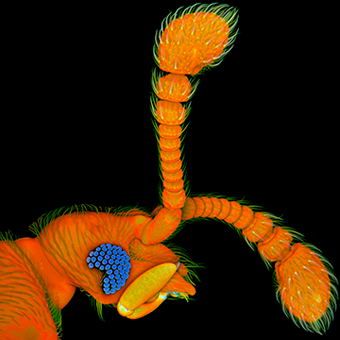
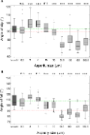
- layer as well as a higher density of rods than those of T. viridissima (Figure 6A–D). In addition, indentation experiments revealed a higher effective Young’s modulus and a lower work of adhesion for L. migratoria pads (Figure 6F,G). The lower adhesive properties of L. migratoria pads can be explained


Influence of the PDMS substrate stiffness on the adhesion of Acanthamoeba castellanii
Beilstein J. Nanotechnol. 2014, 5, 1393–1398, doi:10.3762/bjnano.5.152
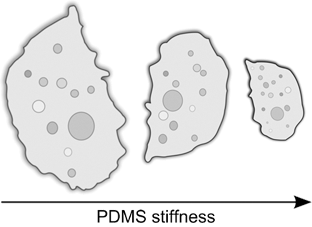
- the PDMS substrates and the work of adhesion with the Johnson–Kendall–Roberts (JKR) model [25]. This model is used to characterize the mechanical properties of soft materials in the presence of adhesion, since it takes into account the attractive forces between the microindenter tip and the sample



The optimal shape of elastomer mushroom-like fibers for high and robust adhesion
Beilstein J. Nanotechnol. 2014, 5, 630–638, doi:10.3762/bjnano.5.74
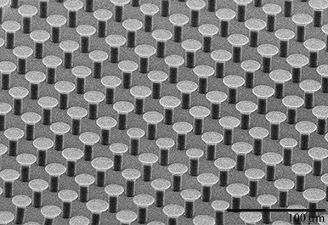
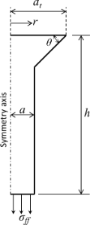
- the interface can no longer support stress, resulting in a crack to initiate. The region where the separation of interface occurs is referred to as the cohesive zone. In this model, the work of adhesion is given by wadh = σoδc. Tang et al. [15] found the pull-off force of a soft, elastic cylindrical



Single-asperity contact mechanics with positive and negative work of adhesion: Influence of finite-range interactions and a continuum description for the squeeze-out of wetting fluids
Beilstein J. Nanotechnol. 2014, 5, 419–437, doi:10.3762/bjnano.5.50
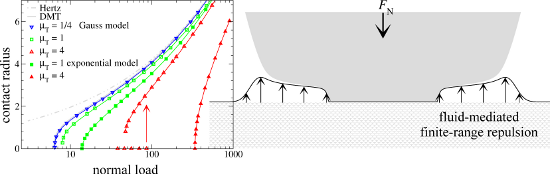
- Martin H. Muser Jülich Supercomputing Centre, FZ Jülich, 52428 Jülich, Germany 10.3762/bjnano.5.50 Abstract In this work, single-asperity contact mechanics is investigated for positive and negative work of adhesion Δγ. In the latter case, finite-range repulsion acts in addition to hard-wall
- constraints. This constitutes a continuum model for a contact immersed in a strongly wetting fluid, which can only be squeezed out in the center of the contact through a sufficiently large normal load FN. As for positive work of adhesion, two stable solutions can coexist in a finite range of normal loads. The
- -range repulsion. For example, coexistence and discontinuous wetting or squeeze-out do not occur when the repulsion decreases exponentially with distance. For positive work of adhesion, the normal displacement mainly depends on FN, Δγ, and μT but – unlike the contact area – barely on the functional form


Manipulation of nanoparticles of different shapes inside a scanning electron microscope
Beilstein J. Nanotechnol. 2014, 5, 133–140, doi:10.3762/bjnano.5.13
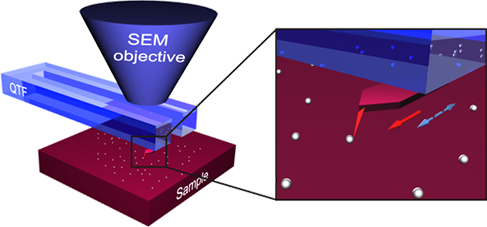
- Johnson–Kendall–Roberts (JKR) [23] or the Derjaguin–Müller–Toporov (DMT-M) model [24]. According to Tabor [25], the choice of the most suitable model is determined by the parameter where R is the radius of the sphere, γ is the work of adhesion, and z0 is the equilibrium spacing for the Lennard-Jones


Dynamic nanoindentation by instrumented nanoindentation and force microscopy: a comparative review
Beilstein J. Nanotechnol. 2013, 4, 815–833, doi:10.3762/bjnano.4.93
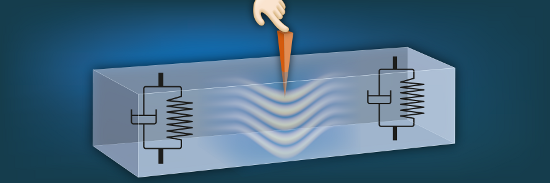
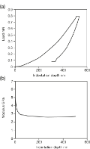
- between indenter and sample during pull-out. This behavior is highlighted by a significant attraction between tip and surface upon pull-out seen as a hysteretic negative unloading force (Figure 1). Accordingly, the contact radius depends on the thermodynamic work of adhesion, ∆γ, considered in the JKR