


Search results
Search for 抖音 AI文案帮写 功能入口 2026年1月 最新位置 in Full Text gives 2681 result(s) in Beilstein Journal of Nanotechnology. Showing first 200.
Acrocomia aculeata oil-loaded nanoemulsion: development, anti-inflammatory properties, and cytotoxicity evaluation
Beilstein J. Nanotechnol. 2025, 16, 1277–1288, doi:10.3762/bjnano.16.93
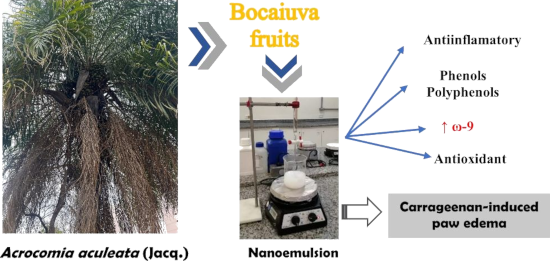
- Brazil. A. aculeata stands out for its wide geographic distribution, being native to tropical forests [1][2]. Its rounded fruits present sensory attractions, such as color, distinctive and intense flavor, and aroma. They are traditionally consumed by the native population, occupying an important place in
- presence of phenols and carotenoids, which were characterized in this study. These secondary metabolites are considered to have high antioxidant activity and provide high stability to the oil [5]. These metabolites have been shown to possess anti-inflammatory and immunostimulant properties [1][33
- ) [19]. These results were found within the reference values established for oils rich in oleic acids, such as extra virgin olive oil, palm oil, and almond oil [34]. The presence of polyphenols and carotenoids was also identified in this oil (see Table 1). Table 2 shows the profile of fatty acids


Better together: biomimetic nanomedicines for high performance tumor therapy
Beilstein J. Nanotechnol. 2025, 16, 1246–1276, doi:10.3762/bjnano.16.92
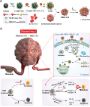
- surrounding environment, including immunosuppression in T cells via PD-1/PD-L1 axis, recruitment of stem cells via CXCR4/CXCL2 chemokine axis, maturation of immune cells via membrane interactions, and various other physical/chemical interactions, uncover the emergence of cell membrane-based drug delivery
- systems [1][2]. Cancer treatment has been revolutionized, yet cancer is treated with traditional methods, that is, chemotherapy, radiotherapy, and surgical intervention, accompanied by several lethal implications along with low solubility, poor bioavailability, and fatal off-target effects [3][4]. In
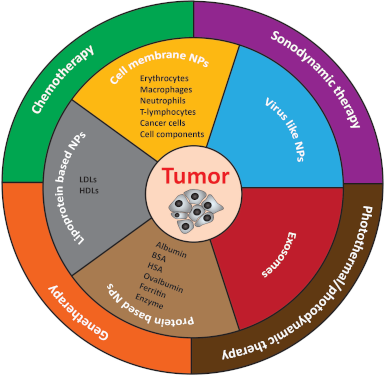
- tracking and profound interactions within complex biological environments can be achieved by using biomimetic NPs with prolonged circulation time, summarized in Figure 1. Moreover, research in NP-mediated drug delivery has been shifted to focus on the use of cell-derived cancer therapies/engineered or live






Functional bio-packaging enhanced with nanocellulose from rice straw and cinnamon essential oil Pickering emulsion for fruit preservation
Beilstein J. Nanotechnol. 2025, 16, 1234–1245, doi:10.3762/bjnano.16.91
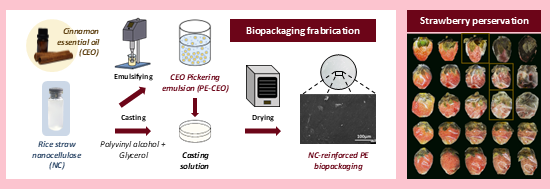
- biodegradability [1][2][3]. Polyvinyl alcohol (PVA) has been shown to provide better biodegradability compared to other polymers such as polyethylene, polyvinyl chloride, and polystyrene [4][5][6] due to its secondary alcohol groups being susceptible to enzymatic oxidation and its water solubility enhancing
- microbial access [7]. PVA also exhibits superior biocompatibility as evidenced by its high safety threshold (LD50 of 15–20 g·kg−1), low systemic absorption, absence of mutagenic effects, and established medical applications, making it a reliable choice for biopackaging without concerns of harmful
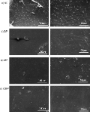
- and enhanced food safety [30]. Results and Discussion Physicochemical properties FTIR spectroscopy (Figure 1a) was used to study the PVA/glycerol biopackaging (BP), NC-reinforced BP (rBP), and PE-CEO-containing rBP (rCBP) composite films. BP exhibited characteristic peaks at 3330 cm−1 (O–H stretching



Hydrogels and nanogels: effectiveness in dermal applications
Beilstein J. Nanotechnol. 2025, 16, 1216–1233, doi:10.3762/bjnano.16.90
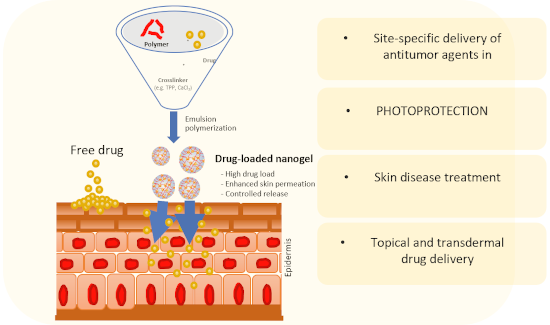
- -1950s and 1960s [1][2][3][4]. From the beginning, hydrogels composed of cross-linked acrylic acid were designed to release drugs into the body [5]. 2-Hydroxyethyl methacrylate was one of the first compounds used to build hydrogels as drug delivery systems (DDSs) [6]. Over the past century, hydrogels
- - or intermolecularly cross-linked by chemical bonding or physical interaction (Figure 1). Physical cross-linking is performed using interactions other than the covalent bond, such as hydrogen bonding or ionic interaction. Physical cross-links can be reversibly dissociated and recombined under specific
- that can be topically and systemically applied [66]. Table 1 summarizes the composition, cross-linkers, and preparation methods of hydrogels related to dermal applications. Chitosan is one of the most versatile polymers used to prepare hydrogels. It can be combined with gelatin [122], pectin [123


Investigation of the solubility of protoporphyrin IX in aqueous and hydroalcoholic solvent systems
Beilstein J. Nanotechnol. 2025, 16, 1209–1215, doi:10.3762/bjnano.16.89
- ; protoporphyrin IX; shake-flask; solubility test; Introduction Photodynamic therapy (PDT) is a promising therapeutic modality that has raised keen interest in the treatment of various conditions including cancer and microbial infections [1][2]. This non-invasive treatment combines a photosensitizer (PS), a
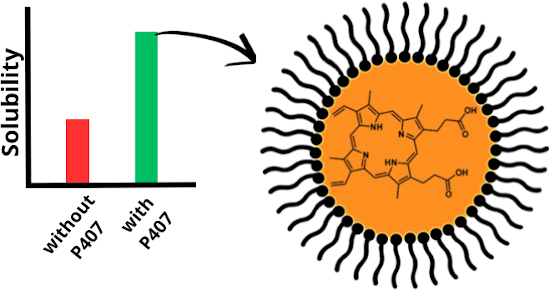
- , EtOHAbs), or polymeric systems. Experiments were conducted in triplicate. The resulting systems exhibited concentrations of 0.4 mg/mL (EtOH50, EtOH77, and water) and 1 mg/mL (EtOHAbs). For the systems containing P407 in EtOH50, EtOH77, and water, a PpIX concentration of 0.4 mg/mL was used. The flasks were
- sealed, protected from light, and maintained under agitation at 37 ± 1 °C and 100 rpm. Aliquots of 50 to 500 µL were collected at time intervals up to 96 h, diluted in 77% ethanol (v/v), filtered through a 0.45 µm membrane, and quantified by spectrophotometry at λ = 400 nm. Quantification was performed


Chitosan nanocomposite containing rotenoids: an alternative bioinsecticidal approach for the management of Aedes aegypti
Beilstein J. Nanotechnol. 2025, 16, 1197–1208, doi:10.3762/bjnano.16.88
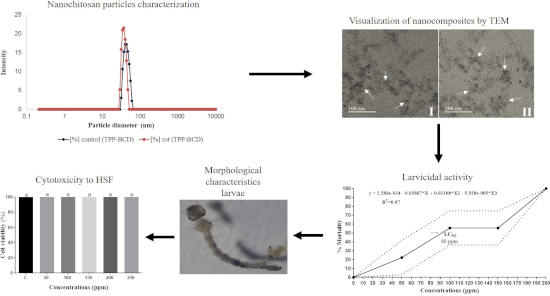
- , Italy, France, and Spain. Recent studies indicate that the risk of dengue transmission has increased by 11% in the past decade due to the climate crisis [1]. From even more recent data from Brazil for the year 2024, dengue cases increased by 297%, and chikungunya cases by 65% compared to the same period
- efficiency, the size analysis of the produced nanochitosan particles confirmed that both ion gelation methods produced nanostructures smaller than 100 nm (Figure 1). However, in Figure 1B, the peak area is narrower, indicating a higher uniformity in particle size. Figure 2C and 2D also show that the
- rotenoids in the nanostructures also increased the zeta potential (ζ) in both ion gelation methods, which appears to influence the polydispersity index (PDI) of these nanocomposites, as the PDI values are significantly higher than those of their respective controls (Table 1). The zeta potential is an



Electronic and optical properties of chloropicrin adsorbed ZnS nanotubes: first principle analysis
Beilstein J. Nanotechnol. 2025, 16, 1184–1196, doi:10.3762/bjnano.16.87
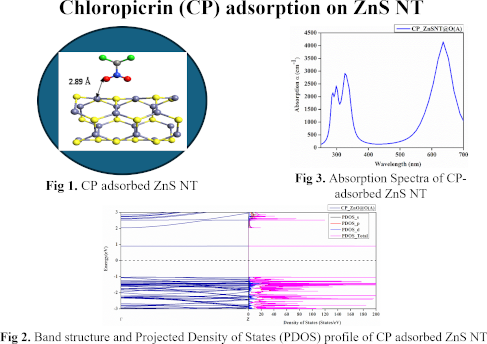
- (CCl3NO2), is a chemical warfare agent that poses significant risks of accidental, occupational, and intentional exposure [1][2]. It was first synthesized in 1848 by the Scottish chemist John Stenhouse via the reaction of picric acid with sodium hypochlorite [3]. CP is classified as a Category I toxic
- and a pulmonary toxicant, CP exhibits potent lachrymatory and ocular irritant properties. Its degradation products, including chlorine, phosgene, nitric oxides, and ammonia, contribute to its toxicity by causing severe pulmonary and ocular damage [5]. Exposure to CP, as depicted in Figure 1, can
- agents is paramount to ensure safety in agricultural settings and protect public health from potential hazards. Nanomaterials have emerged as an exceptional class of materials, characterized by at least one dimension in the range of 1 to 100 nm. These materials exhibit remarkably high surface areas


Mechanical stability of individual bacterial cells under different osmotic pressure conditions: a nanoindentation study of Pseudomonas aeruginosa
Beilstein J. Nanotechnol. 2025, 16, 1171–1183, doi:10.3762/bjnano.16.86
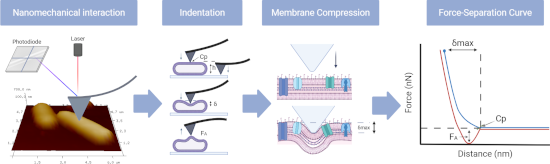
- medical devices [1][2][3][4][5]. Although PA is part of the normal microbiota of the skin and mucous membranes of many healthy individuals, it can cause serious opportunistic infections in the respiratory and urinary tracts and during wound healing in people with weakened immune systems or in hospitalized
- . The mentioned parameters derived from force–separation curves are analyzed and mapped in real time as shown below in Figure 1. In the present study, we investigated the mechanical response of the outer membrane of PA at the single bacterium level in FV mode when exposed to relevant osmolarity
- surface of poly-ʟ-lysine-coated mica. Supporting Information File 1, Figure S1 shows some 3D images of PA taken in contact mode when in PBS. Bacteria and the substrate can be observed. For a straightforward interpretation using quantitative nanomechanics in FV mode, the object to be mechanically tested


Transfer function of an asymmetric superconducting Gauss neuron
Beilstein J. Nanotechnol. 2025, 16, 1160–1170, doi:10.3762/bjnano.16.85
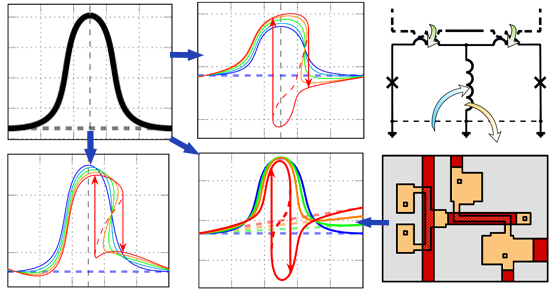
- , prediction, pattern recognition, and image and video generation. The increasing number of tasks and the growing volume of processed information highlight the relevance of using superconducting elements, which offer the advantages of high clock frequency and energy efficiency [1][2]. Studies [3][4][5][6
- ] describe neuromorphic elements based on superconducting interferometers that emulate the signal response of biological neurons in various real-world scenarios. In [1][7][8][9][10][11][12][13][14][15], adiabatic neuromorphic interferometers were presented, whose energy consumption can be reduced to the
- in favor of superconducting neuromorphic devices. The subject of this study is the Gauss neuron [1][7][8][9][11][12][14], schematically depicted in Figure 1. It consists of three arms connected at a common point O and grounded to a shared electrode (Gnd). Two arms (“Josephson” or “input” ones) each



Crystalline and amorphous structure selectivity of ignoble high-entropy alloy nanoparticles during laser ablation in organic liquids is set by pulse duration
Beilstein J. Nanotechnol. 2025, 16, 1141–1159, doi:10.3762/bjnano.16.84
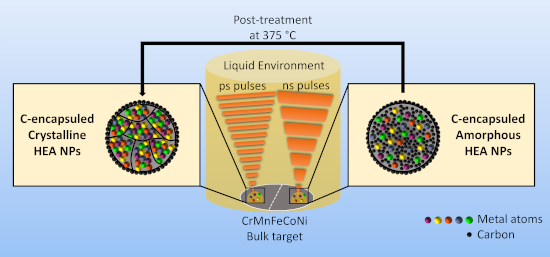
- solution; EELS; electron energy loss spectroscopy; laser processing in liquids; multicomponent alloy; STEM-EDX; selected area electron diffraction; X-ray diffraction; Introduction High-entropy alloys (HEAs), also referred to as compositionally complex solid solutions (CCSS) [1], are of great interest in
- , compositionally complex alloys, derived from the critical view of the high-entropy effect [1]. The symbiosis of multiple elements leading to potential highly effective properties was already shown in energy applications [13], particularly in the field of heterogeneous catalysis, boosting efficiencies in ammonia
- determined by STEM-EDX and were similar for both laser pulse durations, namely Cr22Mn17Fe21Co20Ni20 for colloids made by ps-LAL and Cr21Mn21Fe20Co19Ni19 for colloids fabricated by ns-LAL (global values determined via STEM-EDX displayed in Supporting Information File 1, Table S1 and Table S2). These values




Deep learning for enhancement of low-resolution and noisy scanning probe microscopy images
Beilstein J. Nanotechnol. 2025, 16, 1129–1140, doi:10.3762/bjnano.16.83
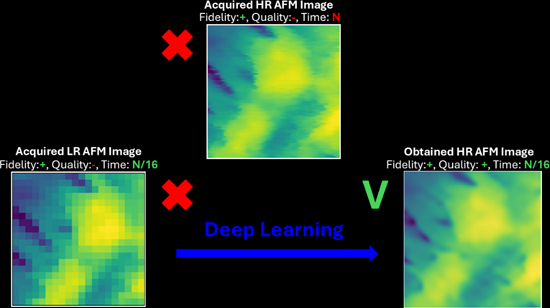
- -resolution imaging of simple and complex surfaces that capture the sensitive features, details, and information of the surface structure. Whereas many manifestations of AFM are in use, including remarkable sub-molecular resolution for specialized systems working under low temperatures and high vacuum [1
- . Results and Discussion In this study, 4× upscaled images were obtained from real measured low-resolution AFM images of Celgard® 2400 membrane and high-roughness titanium film used for tip characterization (Figure 1 and Figure 2, respectively). 4× upscaling means upscaling both the x and y directions and
- stringency required). This is also evident from the metrics values in Table 1 and Table 2 for both data sets. Both PSNR and SSIM are based on comparison between the 4× upscaled images and the GT. Since there is no significant statistical difference between the traditional methods and the deep learning models


Towards a quantitative theory for transmission X-ray microscopy
Beilstein J. Nanotechnol. 2025, 16, 1113–1128, doi:10.3762/bjnano.16.82
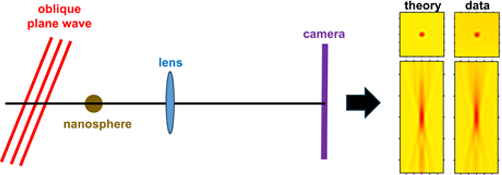
- that this model produces good qualitative agreement with our 3D measurements of 60 nm gold nanospheres, but only if both β and δ for the complex refractive index n = 1 – δ + iβ of gold are included in the model. This shows that both absorption and phase properties of the specimen influence the acquired
- ; transmission X-ray microscope; Introduction Transmission X-ray microscopes (TXMs) operating in the soft and tender X-ray energy range are valuable tools for structural analysis in both biomedical and materials science research [1][2][3][4]. These microscopes yield images at a lateral resolution approaching 25
- currently presume a role only for β. Second, our surprising finding that the microscope underestimates absorption underscores the need to understand how this discrepancy arises such that more accurate quantitative TXM measurements are possible. Results 1 Overview: microscope configuration To understand the



Influence of ion beam current on the structural, optical, and mechanical properties of TiO2 coatings: ion beam-assisted vs conventional electron beam evaporation
Beilstein J. Nanotechnol. 2025, 16, 1097–1112, doi:10.3762/bjnano.16.81
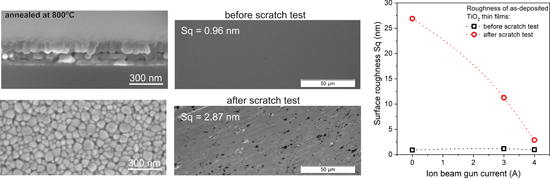
- ; Introduction One of the commonly used methods for the deposition of various materials for thin film optical coatings, is electron beam evaporation (EBE) [1][2][3][4][5]. Today, in many applications, including medicine, telecommunications, optoelectronics, photovoltaics, the requirements for optical coatings
- , and good availability, TiO2 in the form of thin films is now widely used in the development of gas sensors, photodetectors, solar cells, memristors, and photocatalysts [1][12][15][16][17]. The area of application of titanium dioxide is also related to the crystal structure in which it occurs, that is
- , S3A, and S4A, respectively. The deposition parameters are shown in Table 1. Like in our previous reports [23][24], additional post-process modification of as-prepared thin films was carried out, that is, annealing at 800 °C (Nabertherm tubular furnace). The post-process annealing was carried out for 2




Fabrication of metal complex phthalocyanine and porphyrin nanoparticle aqueous colloids by pulsed laser fragmentation in liquid and their potential application to a photosensitizer for photodynamic therapy
Beilstein J. Nanotechnol. 2025, 16, 1088–1096, doi:10.3762/bjnano.16.80
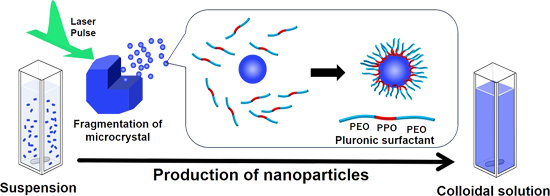
- fragmentation in liquids; reactive oxygen species generation; Introduction Porphyrins and phthalocyanines (Pcs), exhibiting intense absorption in the visible to near-infrared (NIR) regions, are well studied as photosensitizers in photodynamic therapy (PDT) [1]. Especially, Pcs absorb strongly light in the
- acetate [23], paclitaxel [24], naproxen and fenofibrate [25], curcumin [26], and cinnamon [27]. This work aims to fabricate aqueous colloids of MPc (M = AlCl, Fe, Co, Zn) and Pt complex octaethylporphyrin (PtOEP) (Figure 1) nanoparticles with a high dispersion stability and to demonstrate the potential
- amphiphilic polymer (Pluronic® F-127, Figure 1) [28] was used as a dispersant to ensure high dispersion stability in various aqueous environments in anticipation of future bio-applications. F-127 is a less toxic and non-ionic copolymer containing hydrophilic polyethylene oxide (PEO) and hydrophobic


Single-layer graphene oxide film grown on α-Al2O3(0001) for use as an adsorbent
Beilstein J. Nanotechnol. 2025, 16, 1082–1087, doi:10.3762/bjnano.16.79
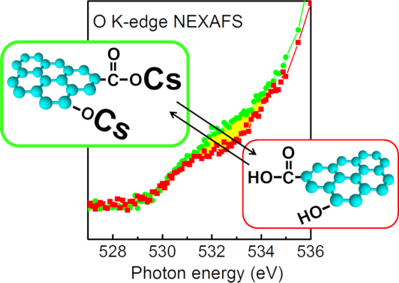
- deposition; electronic state analysis; graphene oxide; X-ray absorption fine structure; Introduction Graphene oxide (GO) is oxidized graphene and its surface and periphery are partially modified by epoxy, hydroxy, and carboxy functional groups [1][2]. GO can be thinned to a monolayer of one carbon atom and
- Figure 1 shows an atomic force microscopy (AFM) image of SLG and SLGO on α-Al2O3(0001) substrates. The as-grown SLG film has an atomically flat surface and wrinkles with its height less than 0.4 nm [18]. The single layer of graphene was confirmed through X-ray photoelectron spectroscopy (XPS) peak
- structure are confirmed by Raman spectroscopy measurements. Figure 2 shows two sets of the Raman spectra of SLG and SLGO. In SLG/α-Al2O3(0001), four prominent peaks are identified, which are assigned to the D band (around 1355 cm−1), G band (around 1585 cm−1), 2D band (around 2700 cm−1), and D+G band


Piezoelectricity of hexagonal boron nitrides improves bone tissue generation as tested on osteoblasts
Beilstein J. Nanotechnol. 2025, 16, 1068–1081, doi:10.3762/bjnano.16.78
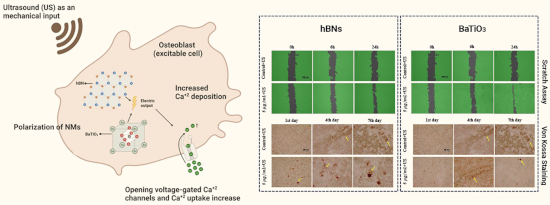
- undergoes continuous remodeling, where old bone is replaced with new tissue, a process that becomes particularly prominent once bones reach peak mass and continues through adulthood, replacing most of the skeleton approximately every decade [1]. Hydroxyapatite crystals (Ca10(PO4)6(OH)2) form through the
- was synthesized using boric acid (Sigma-Aldrich, Germany) and ammonia as the boron and nitrogen sources. Specifically, 1 gram of boric acid was mixed with 5 mL of 25% aqueous ammonia solution (Sigma-Aldrich, Germany) to create a suspension, which was then poured onto a silicon carbide (SiC) plate
- drop-casting 1 μL of hBN suspension (prepared in deionized water) onto a TEM grid. Fourier-transform infrared spectroscopy (FTIR, Shimadzu IRAffinity-1S) and Raman spectroscopy (Renishaw, 532 nm laser) were used to analyze chemical bonds and assess crystallinity. UV–visible spectroscopy (Varian Cary UV


Soft materials nanoarchitectonics: liquid crystals, polymers, gels, biomaterials, and others
Beilstein J. Nanotechnol. 2025, 16, 1025–1067, doi:10.3762/bjnano.16.77
- Katsuhiko Ariga Research Center for Materials Nanoarchitectonics, National Institute for Materials Science (NIMS), 1-1 Namiki, Tsukuba 305-0044, Japan Graduate School of Frontier Sciences, The University of Tokyo, 5-1-5 Kashiwa-no-ha Kashiwa 277-8561, Japan 10.3762/bjnano.16.77 Abstract The
- materials, collectively known as “soft materials” [1][2][3][4][5], may be indicative of the significant advancements made in materials science. In the past, materials that were robust, rigid, and durable were esteemed. Nevertheless, the significance of materials endowed with intelligent capabilities that
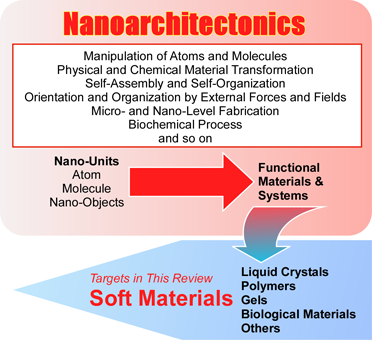
- construction of functional materials from nanoscale units using a variety of materials processes (Figure 1) [125]. It is evident that the integration of knowledge and technology from both nanotechnology and materials sciences is imperative. Nanoarchitectonics may be regarded as a convergence of nanotechnology






Multifunctional properties of bio-poly(butylene succinate) reinforced with multiwalled carbon nanotubes
Beilstein J. Nanotechnol. 2025, 16, 1014–1024, doi:10.3762/bjnano.16.76
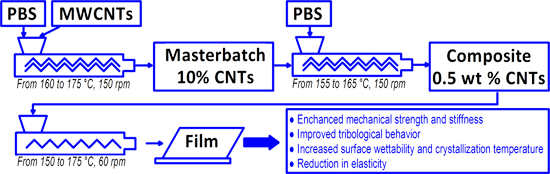
- strength, thermal stability, and biodegradability. However, to broaden its range of applications, certain properties require enhancement, including mechanical performance, thermal and electrical conductivity, biodegradation rate, and barrier properties [1][2][3][4][5]. The limited biodegradability of PBS
- nanocomposites are primarily synthesized using two methods, that is, solution casting [18][22][24] and melt compounding [17][19][23]. In this study, the melt compounding method was chosen due to its simplicity, high throughput, and industrial feasibility. Bandyopadhyay et al. [23] demonstrated that melt mixing 1
- . The surface morphology of the original substances and the PBS/CNTs nanocomposites was studied using SEM (Figure 1). In Figure 1a, the typical surface structure of PBS is visible. CNTs appear as agglomerates ranging from 500 nm to 200 μm, composed of woven nanotubes with an outer diameter of 14 to 28



A calix[4]arene-based supramolecular nanoassembly targeting cancer cells and triggering the release of nitric oxide with green light
Beilstein J. Nanotechnol. 2025, 16, 1003–1013, doi:10.3762/bjnano.16.75
- , characterized by the presence of a cavity with remarkable hosting properties and synthetic versatility [1][2][3][4][5]. Water soluble calixarenes can be obtained by the introduction of appropriate hydrophilic moieties in the calixarene molecular scaffold, leading to a good biocompatibility and low
- immunogenicity and paving the way for a variety of applications in the biomedical field [1][6][7][8][9]. Due to their amphiphilic character, calix[n]arene derivatives can self-assemble in water medium, leading to nanoaggregates exhibiting much better hosting performances than the single monomers [10]. Aggregates
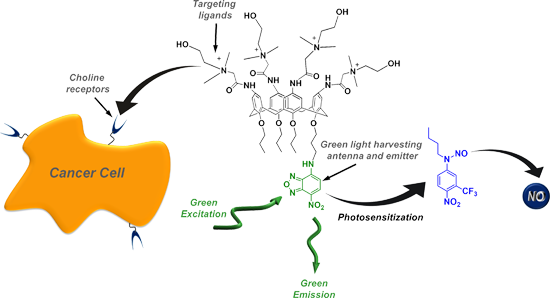
- purpose, we report the design and synthesis of the cationic calix[4]arene 1 and its supramolecular nanoassembly with the blue-light-activatable nitroso-derivative NOPD 2 (Scheme 1). We show that (i) 1 self-assembles in water medium into nanoaggregates able to internalize into cancer cells selectively and


Time-resolved probing of laser-induced nanostructuring processes in liquids
Beilstein J. Nanotechnol. 2025, 16, 968–1002, doi:10.3762/bjnano.16.74
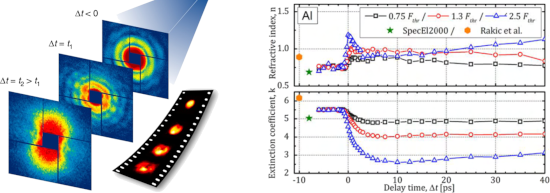
- scattering; Review Introduction Laser synthesis and processing of materials with emphasis on structure formation on the nanoscale offers a multitude of pathways to desired structure-related functions [1]. In green processes, nanostructures and nanoparticles (NPs) can be produced that serve applications in
- demanding studies that eventually show convergence with experimental results. Generally, the classification of the mechanisms in LSPC identifies three main pathways that are pictured schematically in Figure 1: (i) thermal processes, where the condensed matter is heated to high lattice temperatures, leading
- in aqueous solutions via laser pulse exposures [1][59], demonstrating practical applications and underscoring the need for deeper insights into non-equilibrium light–matter interactions. Experimental approaches to uncover the underlying reaction kinetics of such complex interactions have been diverse


Shape, membrane morphology, and morphodynamic response of metabolically active human mitochondria revealed by scanning ion conductance microscopy
Beilstein J. Nanotechnol. 2025, 16, 951–967, doi:10.3762/bjnano.16.73
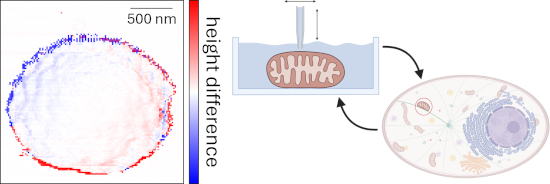
- Mitochondria are essential organelles in eukaryotic cells, primarily responsible for energy supply. They have an endosymbiotic origin, resulting from the incorporation of an ancestral prokaryote into another prokaryotic host approximately 1.8 billion years ago [1][2][3]. This symbiotic relationship gave rise
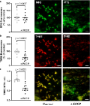
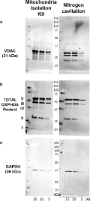
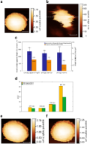
- investigated mitochondria was analysed by microscopy and oxygen consumption measurement. Figure 1 shows isolated mitochondria by nitrogen cavitation [34] and subsequently labelled by MitoTracker™ Green FM (MTG, Figure 1a) and tetramethylrhodamine ethyl ester perchlorate (TMRE, Figure 1b). TMRE accumulates only
- . Therefore, the TMRE/MTG ratio decreases significantly after FCCP treatment (Figure 1c). In addition, oxygen consumption was measured. An oxygen consumption rate of 211.0 ± 10.16 μmol·L−1 was recorded within 10 min in Krebs–Ringer medium with CaCl2, 5.5 mmol·L−1 glucose and 0.1% BSA (mass fraction



Tendency in tip polarity changes in non-contact atomic force microscopy imaging on a fluorite surface
Beilstein J. Nanotechnol. 2025, 16, 944–950, doi:10.3762/bjnano.16.72
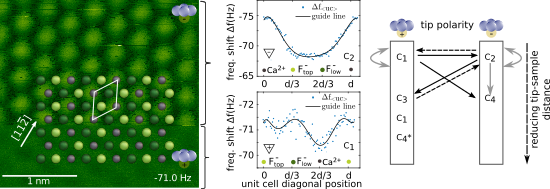
- . Keywords: atomic resolution imaging; calcium fluoride surface; interaction force; non-contact atomic force microscopy (NC-AFM); tip change; Introduction Non-contact atomic force microscopy (NC-AFM) [1] is a surface science tool that has been used to atomically resolve surfaces of semiconductor and
- * for a positively terminated tip and C2 and C4 for a negatively terminated tip. The distance-dependent contrast evolution [10] is summarized along the vertical columns in Figure 1. This figure additionally includes markers for tip changes as demonstrated in this work: Black solid arrows mark contrast
- experimental support and discussions regarding the 77 K data with Philip Moriarty and Adam Sweetman. Funding The authors gratefully acknowledge funding from the Deutsche Forschungsgemeinschaft (DFG) via grant RA2832/1-1 and from FP7/2007-2013 under REA grant number 628439.


Synthesis of biowaste-derived carbon-dot-mediated silver nanoparticles and the evaluation of electrochemical properties for supercapacitor electrodes
Beilstein J. Nanotechnol. 2025, 16, 933–943, doi:10.3762/bjnano.16.71
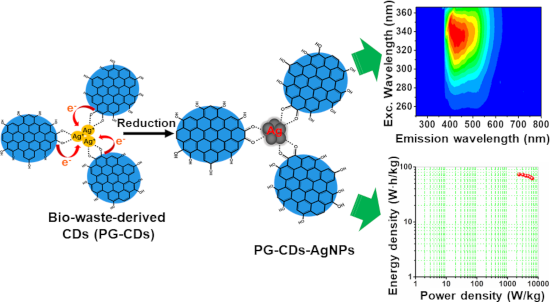
- energy demand. Therefore, a notable research focus has been given to advancements in renewable energy storage systems. Secondary batteries and supercapacitors are promising alternatives for energy storage applications [1][2]. Through the electrostatic polarization of electrolyte solutions, supercapacitor
- depicted in Supporting Information File 1, Scheme S1. Experimental Materials All reagents of analytical grade were used for the experimental procedures. The details about all the chemicals are covered in Supporting Information File 1, section S1. Synthesis of carbon dots from Pongamia pinnata leaves (PG
- -CDs) For the synthesis of PG-CDs, 100 g of Pongamia pinnata leaves powder was taken into 1 L of water and stirred for 15 min at 60 °C on a magnetic stirrer. Procedures for the preparation of Pongamia pinnata leaves powder are discussed in Supporting Information File 1, section S1. Then, it was


Structural and magnetic properties of microwave-synthesized reduced graphene oxide/VO2/Fe2O3 nanocomposite
Beilstein J. Nanotechnol. 2025, 16, 921–932, doi:10.3762/bjnano.16.70
- . Keywords: Fe2O3; magnetism; microwave irradiation; reduced graphene oxide; VO2; Introduction Graphene-based materials have been significantly explored in various fields of materials science due to their unique physical and chemical characteristics [1][2][3][4]. The special arrangement of carbon materials
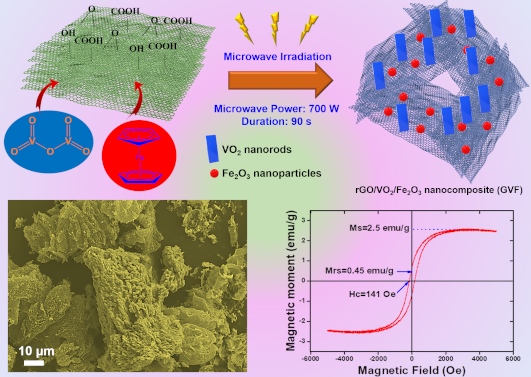
- to synthesize the ternary GVF. Results and Discussion The NC based on rGO, VO2, and Fe2O3 was synthesized through a cost-effective, ultrafast MW route. As shown in Figure 1, the graphite powder was initially oxidized through a chemical synthetic route to form graphite oxide. In the next step, the MW
- shown in Table 1. Most of the reported synthetic processes are composed of multiple steps, are time-consuming, and utilize higher temperatures. Compared to these approaches, the adopted synthetic route has the advantages of less time and energy consumption. Moreover, the solid-state MW irradiation was



Focused ion beam-induced platinum deposition with a low-temperature cesium ion source
Beilstein J. Nanotechnol. 2025, 16, 910–920, doi:10.3762/bjnano.16.69
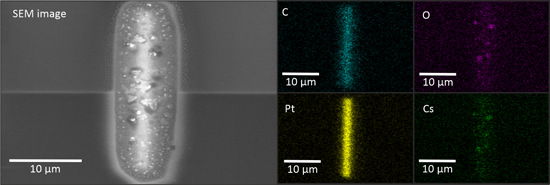
- magnetic or superconductive structures can be created [1][2][3][4]. Also, specific mechanical structures on atomic force microscopy (AFM) cantilevers can be made [5][6]. In the literature, four mechanisms are used to explain the complex process of focused ion beam-induced deposition (FIBID) [5][7]; the
- time, and refresh time, precursor material and substrate have an influence on the effective deposition rate. Gallium (Ga+) and helium (He+) are the most often utilized ion species for FIBID [1][2][5]. Besides these standard FIB systems, new kinds of laser-cooled ion sources have been developed in the
- avoid, for example, any inhomogeneous ripple structures. The dwell time was always 200 ns. For growth rate characterization, Pt layers with a length of 20 μm and a width of 1 μm were deposited on silicon (Si). The ion beam currents were changed, while the pattern size was kept constant. With the Cs+ FIB





