Search results
Search for "alkynes" in Full Text gives 518 result(s) in Beilstein Journal of Organic Chemistry. Showing first 200.
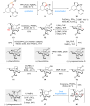
Synthesis of pyrrolo[3,2-d]pyrimidine-2,4(3H)-diones by domino C–N coupling/hydroamination reactions
Beilstein J. Org. Chem. 2025, 21, 1010–1017, doi:10.3762/bjoc.21.82
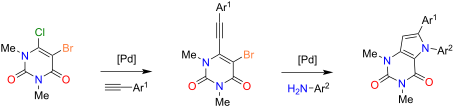
- . Keywords: alkynes; catalysis; cyclizations; domino reactions; heterocycles; Introduction Pyrimidines and purines are one of the most important heterocyclic compounds with prevalent biological functions. Both are found in nucleosides and their corresponding polymeric DNA and RNA, and hence are vital for
- procedure [25], 5-bromo-6-chloro-1,3-dimethyluracil (2) in 52% yield (Scheme 1). We previously reported Sonogashira reactions of the latter with various alkynes to give products 3a–d,g,h [26][27]. In this work, we extended the scope and prepared novel derivatives 3e and 3f. A nearly quantitative yield was



Recent total synthesis of natural products leveraging a strategy of enamide cyclization
Beilstein J. Org. Chem. 2025, 21, 999–1009, doi:10.3762/bjoc.21.81
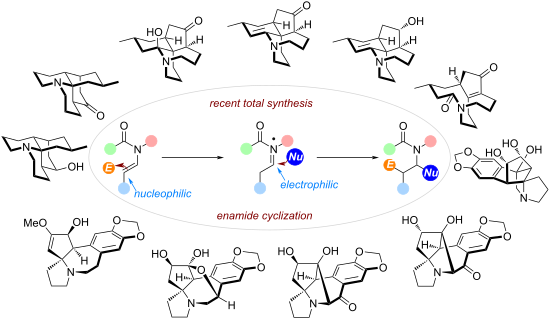
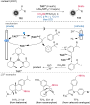
- resulting iminium ion can be readily captured by a wide variety of nucleophiles, including alkenes and alkynes. These aza-Prins cyclizations have potential applications in the synthesis of natural alkaloids, as exemplified by She’s total synthesis of (−)-dihydrolycopodine and (−)-lycopodine [17]. These
- the α-position of enamide to be an active cyclization site, with the alkyne tether acting as the nucleophile. Since it is well-established that alkynes, when activated by transition metals such as gold or platinum, can also function as electrophiles, modulating the reactivity of the decahydroquinoline




Silver(I) triflate-catalyzed post-Ugi synthesis of pyrazolodiazepines
Beilstein J. Org. Chem. 2025, 21, 915–925, doi:10.3762/bjoc.21.74
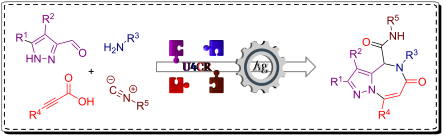
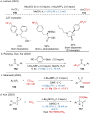
- ][44] and hydroalkoxylations [45]. In 2013, Van der Eycken and co-workers described an intramolecular cationic gold-catalyzed post-Ugi heteroannulation of imidazoles with activated alkynes for the diversity-oriented synthesis of imidazo[1,4]diazepines 13 from Ugi-derived propargylamides 12 (Scheme 1c
- ) [46]. In 2019, Li, Yang, Van der Eycken and co-workers reported a modification of this strategy relying on thermal activation instead of cationic gold catalysis [47]. The approach worked particularly well with substrates featuring terminal alkynes. Inspired by these developments and taking into
- pyrazolodiazepines 16w and 16x, respectively. Such an outcome is notable, as related carbocyclizations often switch to an exo mode when shifting from internal to terminal alkynes [61][62][63]. To demonstrate the robustness of our methodology, we tested a telescope procedure in which, after the Ugi step, the product




Recent advances in controllable/divergent synthesis
Beilstein J. Org. Chem. 2025, 21, 890–914, doi:10.3762/bjoc.21.73

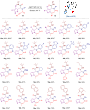
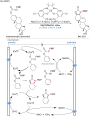
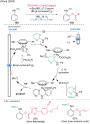
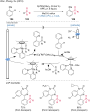
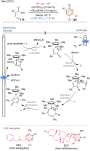
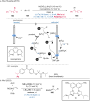
- in steering catalytic selectivity. In 2016, the Jiang group achieved regioselective control in the gold-catalyzed intramolecular hydroarylation of alkynes by modulating the electronic and steric effects of ligands (Scheme 2) [20]. Mechanistically, the electron-deficient phosphite ligand L1 and the
- imides and TMS-alkynes, enabling the rapid construction of S(VI)–C(sp2) or S(VI)–C(sp) bonds efficiently (Scheme 24) [55]. This linkage utilizes the high bond dissociation energy (BDE = 135 kcal/mol) of silicon–fluorine bonds, employing trifluoroborate as a fluorine transfer reagent to simultaneously
- tactics in chemical synthesis. Ligand-controlled regiodivergent C1 insertion into arynes [19]. Ligand effect in homogenous gold catalysis enabling regiodivergent π-bond-activated cyclization [20]. Ligand-controlled palladium(II)-catalyzed regiodivergent carbonylation of alkynes [21]. Catalyst-controlled




Cu–Bpin-mediated dimerization of 4,4-dichloro-2-butenoic acid derivatives enables the synthesis of densely functionalized cyclopropanes
Beilstein J. Org. Chem. 2025, 21, 877–883, doi:10.3762/bjoc.21.71
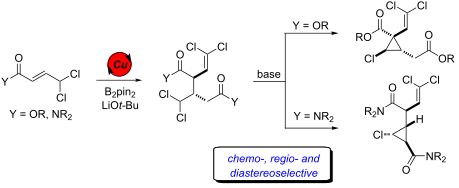
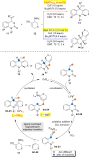
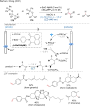
- carboboration of unsaturated hydrocarbons [1][2][3][4][5][6][7]. In the course of our investigation of the copper-catalyzed borylative coupling of alkynes with allylic gem-dichlorides [3], we observed that alkyl 4,4-dichloro-2-butenoates deviated from the general reactivity trend. While allylic gem-dichlorides


Recent advances in the electrochemical synthesis of organophosphorus compounds
Beilstein J. Org. Chem. 2025, 21, 770–797, doi:10.3762/bjoc.21.61
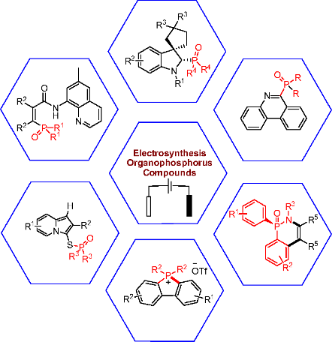
- amides with electron-withdrawing or electron-donating groups on their aromatic ring, producing products with yields ranging from 51% to 82%. In 2023, Lei and co-workers [47] reported an electrochemical C–P bond formation via a coupling reaction of C–H bonds of alkynes, alkenes, and aryl compounds with


Recent advances in allylation of chiral secondary alkylcopper species
Beilstein J. Org. Chem. 2025, 21, 639–658, doi:10.3762/bjoc.21.51
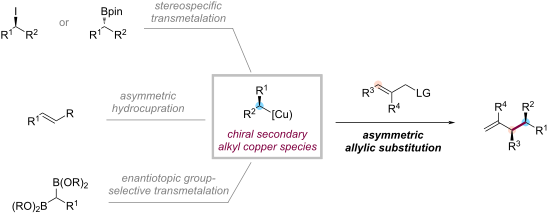
- bearing various functionalities. Notably, no erosion of enantiomeric excess was observed during any of the transformations. Double CuH insertion into alkynes for regiodivergent allylic substitution Generating chiral secondary alkylcopper species in situ through sequential hydrocupration of terminal
- alkynes in a chemo-, regio-, and enantioselective manner represents a recent advance in copper hydride chemistry. Along these lines, in 2024, Su and co-workers developed a strategy for the copper-catalyzed regio- and enantioselective synthesis of secondary homoallylboron compounds by assembling four
- readily available starting materials: terminal alkynes, HBdan, polymethylhydrosiloxane (PMHS), and allylic phosphates, through a complex cascade hydroboration and hydroallylation sequence [56]. Shortly after this work, Xiong, Zhu, and co-workers reported a ligand-controlled copper-catalyzed regiodivergent




Photocatalyzed elaboration of antibody-based bioconjugates
Beilstein J. Org. Chem. 2025, 21, 616–629, doi:10.3762/bjoc.21.49
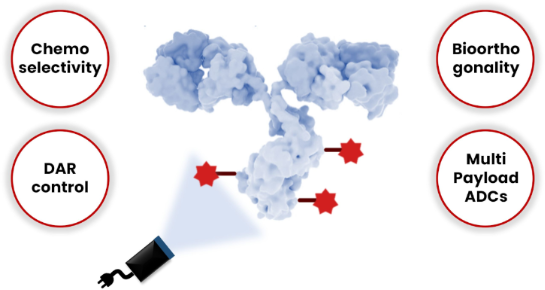
- particularly useful and important tool in which azides and other dipolar species engage with reactive alkenes and alkynes on non-canonical amino acids [20]. Transition-metal-mediated processes, including metathesis reactions, aryl cross-coupling reactions, and conjugate addition reactions with dehydroalanine


Formaldehyde surrogates in multicomponent reactions
Beilstein J. Org. Chem. 2025, 21, 564–595, doi:10.3762/bjoc.21.45
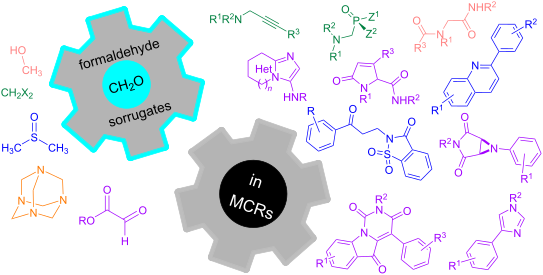
- substituted styrene under copper(I) catalysis to give the target compounds via a Povarov reaction. A further aromatization process yields product I (Scheme 8, path I). In a closely related approach, the same group reported on the synthesis of quinolines from anilines and alkynes [37]. In this case, the alkyne
- compound and MMS, undergoes an aza-Diels–Alder cyclization with the alkyne, and after oxidation and aromatization steps generates quinoline II. Unfortunately, under these gentle and greener conditions, aliphatic alkynes remain unreacted, compared to the metal-catalyzed version developed by Xu et al. [37
- ] with which a wide range of aromatic and aliphatic disubstituted alkynes were reactive, resulting in a greater diversity of quinolines II. In both cases, regardless of the catalyst used, the MCR tolerates a wide variety of anilines that have either electron-donating or electron-withdrawing groups with


Red light excitation: illuminating photocatalysis in a new spectrum
Beilstein J. Org. Chem. 2025, 21, 296–326, doi:10.3762/bjoc.21.22

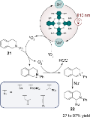
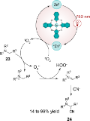
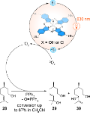
- the substrate, an activated ester 25, subsequently generating carbon-centered radicals without the need for sacrificial electron donors via a decarboxylation process. In reacting with electron-deficient alkenes or alkynes 26, these radicals further yield tetralin and dialin moieties 27, respectively















Dioxazolones as electrophilic amide sources in copper-catalyzed and -mediated transformations
Beilstein J. Org. Chem. 2025, 21, 200–216, doi:10.3762/bjoc.21.12
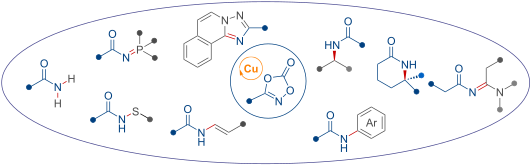
- ) nitrenoid intermediate INT-7. Subsequent nitrene insertion, protodemetalation, and intramolecular cyclization furnish the desired 1,2,4-triazole. 1.3 Three-component formation of N-acyl amidines In 2019, N-acyl amidines were prepared from dioxazolones using a copper catalyst with terminal alkynes and
- terminal alkynes did not result in the desired N-acyl amidine 10l. Based on the substrate scope of acetylenes, the authors noted that the lower acidity of terminal acetylenes led to a diminished formation of the copper acetylide intermediate. Based on several mechanistic experiments and density functional
- the targeted amidated product upon protonation, while simultaneously regenerating the active copper hydride species. 2.2 Hydroamidation of alkynes In 2022, Sato and co-workers introduced a copper-catalyzed hydroamidation of alkynes 25 using dioxazolones 24 as amide sources (Scheme 9) [99]. A


Recent advances in electrochemical copper catalysis for modern organic synthesis
Beilstein J. Org. Chem. 2025, 21, 155–178, doi:10.3762/bjoc.21.9

- toxic chemical oxidants and releasing hydrogen gas as the sole byproduct. Various benzamides 1 and terminal arylalkynes 2 bearing electron-rich or electron-withdrawing groups provided the desired products 3 with high chemoselectivities. However, terminal alkynes with alkyl substituents did not yield the
- desired annulation products. Moreover, the same products were generated using alkynyl carboxylic acids instead of terminal alkynes via decarboxylative C–H alkynylation and annulation. Cyclic voltammetry (CV) studies exhibited an oxidative current at 0.95 V vs SCE in the presence of the Cu(II) salt, base
- enantioselective C–H alkynylation of ferrocene carboxamides with terminal alkynes by using Cu/BINOL and an electrocatalytic system (Figure 5) [49]. 8-Aminoquinoline-assisted C–H functionalization provided planar chiral ferrocenes with high yield and enantioselectivity. This reaction can be applied to a wide range








Nickel-catalyzed cross-coupling of 2-fluorobenzofurans with arylboronic acids via aromatic C–F bond activation
Beilstein J. Org. Chem. 2025, 21, 146–154, doi:10.3762/bjoc.21.8
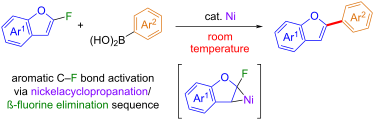
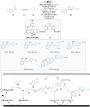
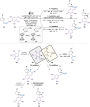
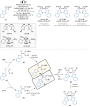
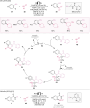
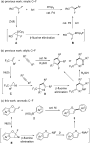
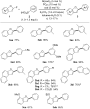
- -(trifluoromethyl)-1-alkenes strongly interact with electron-rich zero-valent nickel species to form nickelacyclopropanes C [15][16][17]. These intermediates enable C–F bond activation through the formation of nickelacyclopentenes D with alkynes, followed by β-fluorine elimination, leading to defluorinative



Cu(OTf)2-catalyzed multicomponent reactions
Beilstein J. Org. Chem. 2025, 21, 122–145, doi:10.3762/bjoc.21.7

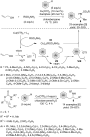
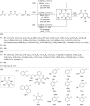
- ]. Three-component coupling of amines, aldehydes or ketones, and terminal alkynes catalyzed by Cu(OTf)2 is a fruitful tool for the production of α-substituted propargylamines 10 (Scheme 7) [20]. The reaction involves the alkynylation of the corresponding imines formed in situ and provides higher yields
- counteranion. The use of a carbamate among the substrates instead of the amine allowed the synthesis of propargylcarbamates 11. This reaction, effective only for the aromatic aldehydes, did not require other co-catalysts or ligands (Scheme 8) [21]. Three-component reactions of alkynes, alkyltrifluoroborates
- as a catalyst in three-component processes was also demonstrated in three-component reactions involving alkynes, amines and α,β-unsaturated aldehydes to obtain 1,4-dihydropyridines 20 (Scheme 14) [31]. By using terminal alkynes, 2,6-unsubstituted products were achieved. Concerning the mechanism, it






Reactivity of hypervalent iodine(III) reagents bearing a benzylamine with sulfenate salts
Beilstein J. Org. Chem. 2024, 20, 3281–3289, doi:10.3762/bjoc.20.272
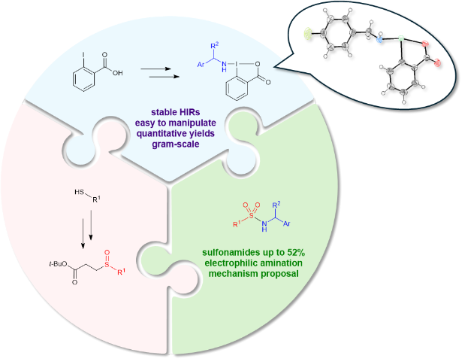
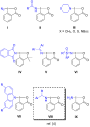
- 5aa (Table 1, entry 2) but with prior degassed solvent (DMF), to prevent potential oxidation of the sulfenate to sulfinate anions. Indeed, the oxidation of the unstable sulfenate intermediates has been previously reported by Waser when using EBX – an HIR applied in the transfer of alkynes to sulfenate



Germanyl triazoles as a platform for CuAAC diversification and chemoselective orthogonal cross-coupling
Beilstein J. Org. Chem. 2024, 20, 3198–3204, doi:10.3762/bjoc.20.265
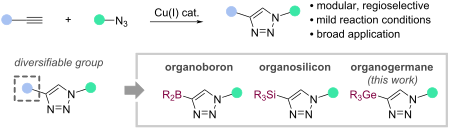
- 10.3762/bjoc.20.265 Abstract We report the synthesis of germanyl triazoles formed via a copper-catalysed azide–alkyne cycloaddition (CuAAC) of germanyl alkynes. The reaction is often high yielding, functional group tolerant, and compatible with complex molecules. The installation of the Ge moiety enables
- potential as functional handles for downstream elaboration of CuAAC products. To date, the main use of germanyl alkynes in (3 + 2) cycloadditions has been limited to a small number of Huisgen (non-Cu-catalysed) reactions [68][69]. Zaitsev and co-workers reported the synthesis and CuAAC reactions of a
- dialkynyl germane to access 1,2-bis(triazolyl)tetraphenyldigermanes [70]. Here, we report the development of germanyl alkynes as CuAAC components, with exploration of their scope and downstream diversification. Results and Discussion We undertook an exploratory survey of CuAAC reaction conditions using



Enantioselective regiospecific addition of propargyltrichlorosilane to aldehydes catalyzed by biisoquinoline N,N’-dioxide
Beilstein J. Org. Chem. 2024, 20, 3069–3076, doi:10.3762/bjoc.20.255
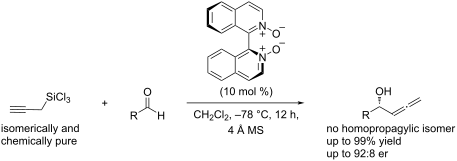
- study, Hoveyda and co-workers proposed a similar mechanism for the isomerization of alkynes to allenes catalyzed by 1,8-diazabicyclo[5.4.0]undec-7-ene [61]. Conclusion In this study, we prepared distilled propargyltrichlorosilane with >99% isomeric purity for the first time, developed its asymmetric


Synthesis of tricarbonylated propargylamine and conversion to 2,5-disubstituted oxazole-4-carboxylates
Beilstein J. Org. Chem. 2024, 20, 2827–2833, doi:10.3762/bjoc.20.238

- ] because of their easily modifiable dipeptide frameworks. Several methods exist for accessing PCPAs, such as the amination of 1-halo-1-alkynes [16][17], tandem reactions of α-imino esters with nucleophiles and electrophiles [18], and the nucleophilic addition of an acetylide to α-carbonylated N-acylimines
- -acetals 1 and alkynes 3 to determine the substrate scope of this protocol (Table 2). This reaction was effective with alkyl- and silyl-substituted alkynes 3b–d, yielding the corresponding adducts 4b–d, respectively (Table 2, entries 1–3). A significant advantage of this method is the high modifiability of
- ), 84.9 (C), 82.6 (C), 63.8 (CH2), 61.0 (C), 21.6 (CH3), 14.0 (CH3); IR (KBr, ATR) vmax: 1754, 1672, 1477, 1281, 1214, 1071, 751 cm−1; HRMS–APCI-TOF (m/z): [M + H]+ calcd for C23H24NO5, 394.1649; found, 394.1672. When other alkynes and N,O-acetals were used, the experiments were conducted in the same way


Copper-catalyzed yne-allylic substitutions: concept and recent developments
Beilstein J. Org. Chem. 2024, 20, 2739–2775, doi:10.3762/bjoc.20.232
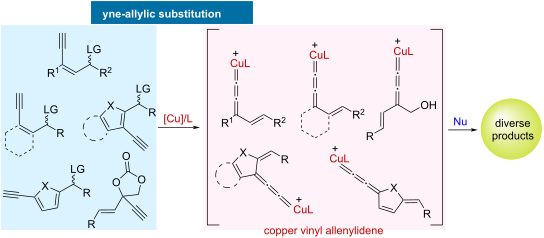
- 350100, China 10.3762/bjoc.20.232 Abstract The catalytic (asymmetric) allylation and propargylation have been established as powerful strategies allowing access to enantioenriched α-chiral alkenes and alkynes. In this context, combining allylic and propargylic substitutions offers new opportunities to
- via a radical mechanism and the presence of terminal alkynes was found to be crucial for the smooth progression of the reaction, which suggested that the reaction proceeded through the same copper vinyl allenylidene intermediate (Scheme 23). Yne-allylic substitutions through dearomatization and






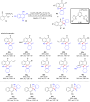


Synthesis of benzo[f]quinazoline-1,3(2H,4H)-diones
Beilstein J. Org. Chem. 2024, 20, 2708–2719, doi:10.3762/bjoc.20.228
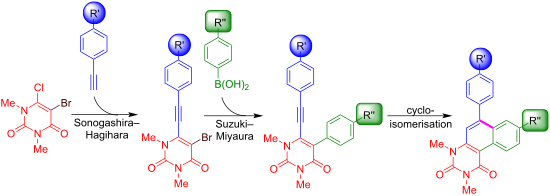
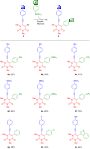
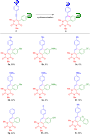
- , 21.6; EIMS (70 eV) m/z (%): 386 (M+, 100), 300 (13), 258 (14); HRESIMS-TOF (m/z): [M + H]+ calcd for C23H19N2O2S, 387.1167; found, 387.1169. Synthesis of uracil-based alkynes and aryl structures [51][62][63][64][65]. Structures of uracil derivatives A, B, and C. UV–vis absorption (left) and emission




Synthesis of fluoroalkenes and fluoroenynes via cross-coupling reactions using novel multihalogenated vinyl ethers
Beilstein J. Org. Chem. 2024, 20, 2691–2703, doi:10.3762/bjoc.20.226

- investigated using various boronic acids 4 and alkynes 5 in cross-coupling reactions using 1 (Table 3 and Table 4). p-Tolylboronic acid 4b provided 2b quantitatively, whereas m- and o-tolylboronic acids 4c and 4d produced 2c and 2d in low yields because the methyl group was positioned near the reaction site
- cross-coupling between 1e, derived from m-aminophenol, and 4a proceeded in only 15% yield (Table 3, entries 17 and 18). We performed Sonogashira cross-couplings between 1 and a variety of alkynes 5 (Table 4). Arylacetylenes, which have electron-donating substituents on the aromatic ring (5b–f), and 2
- and various boronic acids 4. Cross-coupling reactions between multihalogenated vinyl ethers 1 and various alkynes 5. Supporting Information Supporting Information File 16: Characterization data for 2b–s and 3b–w, and copies of 1H, 13C, and 19F NMR spectra.


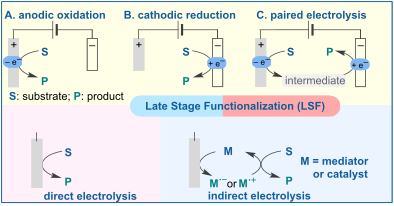
A review of recent advances in electrochemical and photoelectrochemical late-stage functionalization classified by anodic oxidation, cathodic reduction, and paired electrolysis
Beilstein J. Org. Chem. 2024, 20, 2500–2566, doi:10.3762/bjoc.20.214
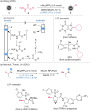
- of acrylic acids with alkynes was reported by Mei and coworkers [59]. Diverse functional groups on the aryl group connected to the alkyne are compatible with this transformation, and dialkylalkynes can also be effectively reacted. Extensive mechanistic studies have led to the following proposed
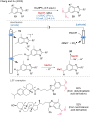
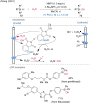
- pargyline and ethisterone (Scheme 43). 1.3.8 Au-assisted anodic oxidation. A gold-catalyzed C(sp3)–C(sp) coupling of diverse alkynes and arylhydrazines under mild electrochemical conditions with the dinuclear gold complex, bis(diphenylphosphino)methane digold(I) dichloride (dppm(AuCl)2) as catalyst and n






















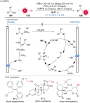
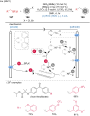
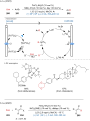


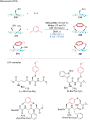


gem-Difluorination of carbon–carbon triple bonds using Brønsted acid/Bu4NBF4 or electrogenerated acid
Beilstein J. Org. Chem. 2024, 20, 2261–2269, doi:10.3762/bjoc.20.194
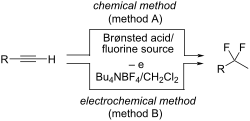
- containing alkyne substrates could also give the corresponding gem-difluorinated compounds (in-cell method). The ex-cell electrolysis method was also applicable for gem-difluorination of alkynes. Keywords: carbon–carbon triple bonds; chemical method; electrochemistry; gem-difluorination; Introduction
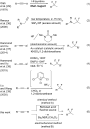
- the use of HF or its complexes as a reagent. These reactions seem to proceed via the formation of the vinyl fluoride as the intermediate [25][26][27][28]. In the first example, Olah and co-workers reported the reaction of terminal alkynes with HF/pyridine (Olah reagent) (Figure 1, reaction 1) [29][30
- to be a good reagent for the gem-difluorination of alkynes, reported by Hammond and Xu (Figure 1, reaction 3) [37]. HF/DMPU is easy to handle under experimental conditions. In addition, they recently reported the utilization of a combination of KHSO4·13HF and DMPU·12HF under neat conditions for the



Metal-free double azide addition to strained alkynes of an octadehydrodibenzo[12]annulene derivative with electron-withdrawing substituents
Beilstein J. Org. Chem. 2024, 20, 2234–2241, doi:10.3762/bjoc.20.191
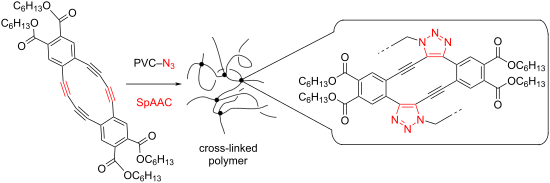
- ] cycloaddition–retroelectrocyclization (CA-RE) between electron-rich alkynes and electron-deficient olefins [8]. The [2 + 2] CA-RE click reactions were employed to produce a variety of functional materials, such as nonlinear optical chromophores [9][10], super acceptors [11][12], ion sensing D–A systems [13
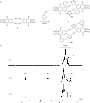
- (PCM) solvent (Figure 4). The reaction initially started with the addition of benzyl azide to one of the internal alkynes of 5. Although the benzyl group is situated on the interior side of DBA, a more energetically unstable transition state (in-ts) is generated. However, the resulting monoadduct (in




Multicomponent syntheses of pyrazoles via (3 + 2)-cyclocondensation and (3 + 2)-cycloaddition key steps
Beilstein J. Org. Chem. 2024, 20, 2024–2077, doi:10.3762/bjoc.20.178

- -carbon alkynoyl building blocks [121][122] could be generated catalytically [123], thereby facilitating reactions under mild reaction conditions and opening novel one-pot pathways for consecutive multicomponent syntheses of pyrazoles. Sonogashira alkynylation of terminal alkynes and (hetero)aroyl
- necessary [73]. Most advantageously, this methodology tolerates many polar functional groups and allows access to pyrazole libraries from simple starting materials (alkynes, acid chlorides, hydrazines) in good to excellent yield. Notably, pyrazoles 102 and 103 demonstrate intense luminescence both in
- and high optical refraction. Functionalized alkynes can alternatively be prepared in situ by a Kumada coupling [133] of aryl iodides and ethynylmagnesium bromide [134]. The Pd catalyst is reused in the subsequent Sonogashira coupling for the synthesis of alkynones in the sense of sequential catalysis