


Search results
Search for "cooperativity" in Full Text gives 27 result(s) in Beilstein Journal of Organic Chemistry.
Towards allosteric receptors – synthesis of β-cyclodextrin-functionalised 2,2’-bipyridines and their metal complexes
Beilstein J. Org. Chem. 2014, 10, 814–824, doi:10.3762/bjoc.10.77
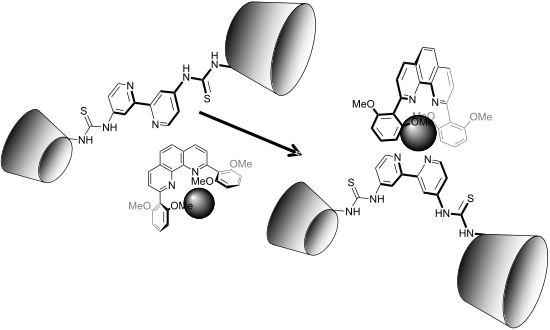
- ” is used by enzymes and proteins [6], which stands for cooperative effects in the binding of more than one substrate to different sites of a receptor. After binding of the first substrate (the effector), the receptor changes its conformation, and by this enhancing (positive allosteric cooperativity
- ) or hampering (negative allosteric cooperativity) the binding of another substrate at a second binding site. This powerful regulatory concept has become quite interesting in supramolecular chemistry, and the development of artificial receptor systems which can be controlled by allosteric effects comes




Spin state switching in iron coordination compounds
Beilstein J. Org. Chem. 2013, 9, 342–391, doi:10.3762/bjoc.9.39
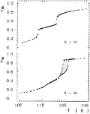
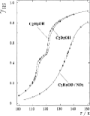
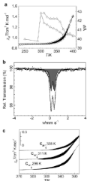
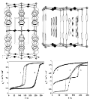
- three synthetic strategies that have been developed to create and strengthen cooperativity, i.e., (i) incorporation of a hydrogen-bonded network; (ii) incorporation of π-stacking moieties; and (iii) coordination of bridging ligands. The thermal ST behavior is commonly expressed in terms of the molar







![[Graphic 1]](/bjoc/content/inline/1860-5397-9-39-i3.png?max-width=637&scale=1.18182) ) modes versus the anion volu...
) modes versus the anion volu...






Other Beilstein-Institut Open Science Activities



