Search results
Search for "crystals" in Full Text gives 668 result(s) in Beilstein Journal of Organic Chemistry. Showing first 200.
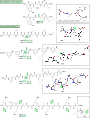
Thiadiazino-indole, thiadiazino-carbazole and benzothiadiazino-carbazole dioxides: synthesis, physicochemical and early ADME characterization of representatives of new tri-, tetra- and pentacyclic ring systems and their intermediates
Beilstein J. Org. Chem. 2025, 21, 2220–2233, doi:10.3762/bjoc.21.169
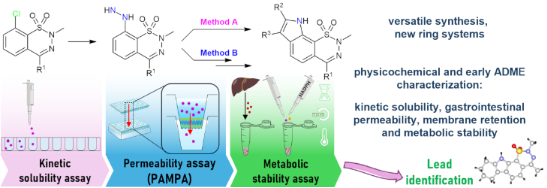
- influenced by their tendency to form thermodynamically stable crystals since disruption of such stable structures is more challenging [37][38][39][40][41][42]. Molecules with symmetric elements and plane rings typically tend to form such stable crystals. The notable solubility difference of hydrazones 7a and
- products. 8-(2-Cyclohexylidenehydrazino)-2,4-dimethyl-2H-1,2,3-benzothiadiazine 1,1-dioxide (7e). Prepared according to the general procedure, using 5a and 6e as the starting materials. Yield: 111.0 mg (83%), yellow crystals. Mp 99–100 °C (EtOH); 1H NMR (600 MHz, DMSO-d6) δ 9.19 (br s, 1H), 7.80 (d, J
- to LC–MS). Pure (E)-7h was obtained by purification using flash chromatography (hexane–EtOAc). Yield: 45 mg (40%), colorless crystals. Mp 138–139 °C (EtOH); 1H NMR (600 MHz, DMSO-d6) δ 9.54 (br s, 1H), 7.80 (d, J = 8.6 Hz, 1H), 7.62 (m, 2H), 7.57 (m, 2H), 7.54 (m, 3H), 6.71 (d, J = 7.7 Hz, 1H), 3.47


A m-quaterphenyl probe for absolute configurational assignments of primary and secondary amines
Beilstein J. Org. Chem. 2025, 21, 2211–2219, doi:10.3762/bjoc.21.168
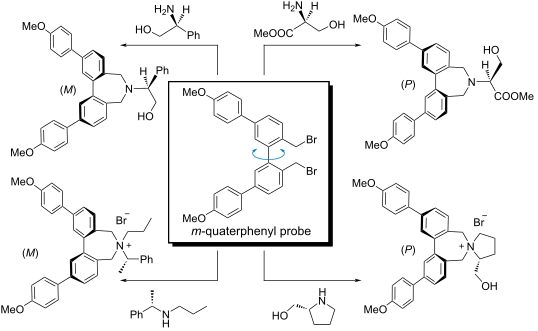
- configurations of both natural and synthetic compounds continues to pose a considerable challenge in the life and materials sciences [1]. While X-ray crystallography remains a reliable method for this purpose, the requirement for high-quality single crystals often limits its applicability. In recent years


Multicomponent reactions IV
Beilstein J. Org. Chem. 2025, 21, 2082–2084, doi:10.3762/bjoc.21.163
- Thomas J. J. Muller Valentyn A. Chebanov Heinrich-Heine-Universität Düsseldorf, Institut für Organische Chemie und Makromolekulare Chemie, Universitätsstraße 1, D-40225 Düsseldorf, Germany Institute of Functional Materials Chemistry, State Scientific Institution “Institute for Single Crystals” of
- is guest-edited by Thomas J. J. Müller (Heinrich Heine University Düsseldorf, Germany) together with Valentyn A. Chebanov (State Scientific Institution “Institute for Single Crystals” of the National Academy of Sciences of Ukraine, Kharkiv, Ukraine). The 30 contributions collected in this thematic
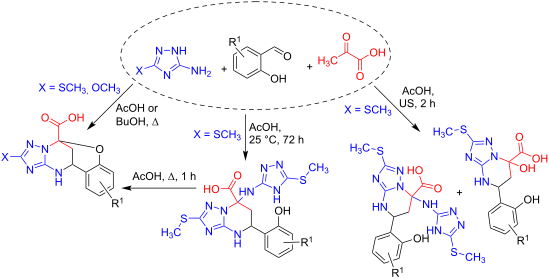
Switchable pathways of multicomponent heterocyclizations of 5-amino-1,2,4-triazoles with salicylaldehydes and pyruvic acid
Beilstein J. Org. Chem. 2025, 21, 2030–2035, doi:10.3762/bjoc.21.158
- Yana I. Sakhno Oleksander V. Buravov Kostyantyn Yu. Yurkov Anastasia Yu. Andryushchenko Svitlana V. Shishkina Valentyn A. Chebanov Institute of Functional Materials Chemistry, State Scientific Institution “Institute for Single Crystals” of National Academy of Sciences of Ukraine, Nauky Ave., 60


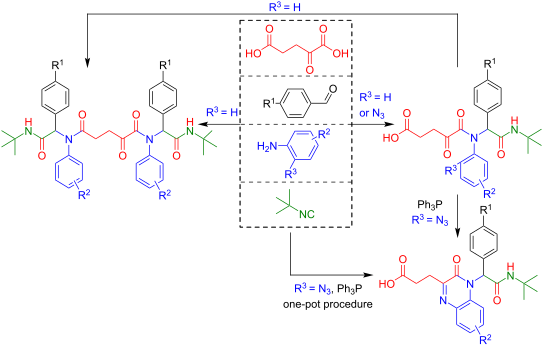
α-Ketoglutaric acid in Ugi reactions and Ugi/aza-Wittig tandem reactions
Beilstein J. Org. Chem. 2025, 21, 2021–2029, doi:10.3762/bjoc.21.157
- Vladyslav O. Honcharov Yana I. Sakhno Olena H. Shvets Vyacheslav E. Saraev Svitlana V. Shishkina Tetyana V. Shcherbakova Valentyn A. Chebanov Institute of Functional Materials Chemistry, State Scientific Institution “Institute for Single Crystals” of National Academy of Sciences of Ukraine, Nauky


Synthesis of N-doped chiral macrocycles by regioselective palladium-catalyzed arylation
Beilstein J. Org. Chem. 2025, 21, 1917–1923, doi:10.3762/bjoc.21.149
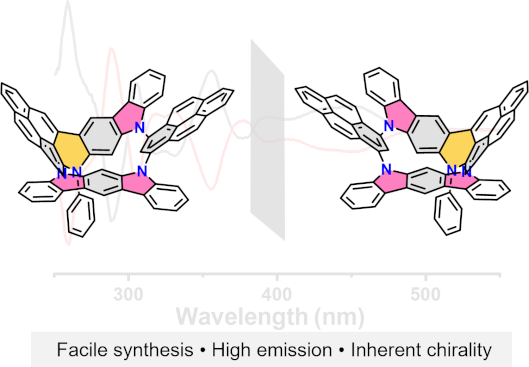
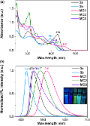
- characterized by NMR spectroscopy, mass spectrometry, and X-ray crystallography. Single crystals suitable for X-ray diffraction measurements of compounds 3a, MC2, and MC3 were successfully obtained to reveal their molecular structures. In the crystal structure of 3a (Figure 2a), the two pyrene units are nearly




Stereoselective electrochemical intramolecular imino-pinacol reaction: a straightforward entry to enantiopure piperazines
Beilstein J. Org. Chem. 2025, 21, 1897–1908, doi:10.3762/bjoc.21.147
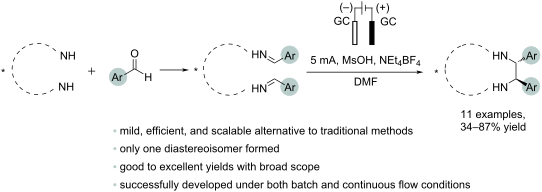
- absolute configuration of the piperazine formed, a pure sample of compound 2b derived from (1R,2R)-trans-diaminocyclohexane was crystallized from a chloroform solution resulting in the formation of white crystals suitable for single crystal X-ray diffraction studies. The absolute configuration of the





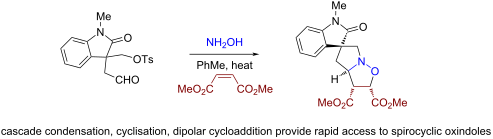
Preparation of spirocyclic oxindoles by cyclisation of an oxime to a nitrone and dipolar cycloaddition
Beilstein J. Org. Chem. 2025, 21, 1890–1896, doi:10.3762/bjoc.21.146
- rate of evaporation from a nanolitre solution of analyte encased within oil [33], suitable single crystals were obtained. The X-ray analysis allowed the determination of the relative stereochemistry, as shown in Figure 2. Compound 5a crystallised as a racemic mixture in the space group P21/c. The major


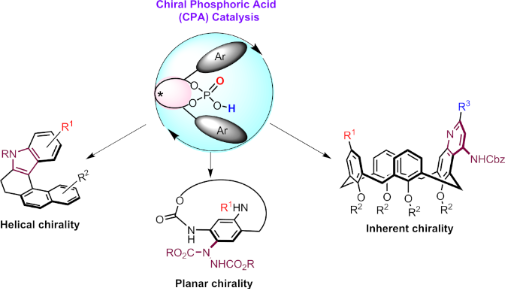
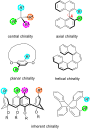
Chiral phosphoric acid-catalyzed asymmetric synthesis of helically chiral, planarly chiral and inherently chiral molecules
Beilstein J. Org. Chem. 2025, 21, 1864–1889, doi:10.3762/bjoc.21.145
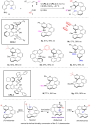
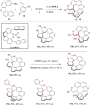
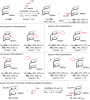
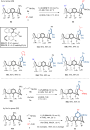
- molecular platforms in various applications, such as circularly polarized luminescence (CPL) materials, chiral liquid crystals and asymmetric catalysis. Currently, the asymmetric catalytic synthesis of helicenes predominantly revolves around transition metal-catalyzed asymmetric annulation reactions








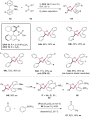
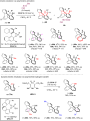

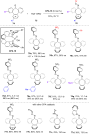
Systematic pore lipophilization to enhance the efficiency of an amine-based MOF catalyst in the solvent-free Knoevenagel reaction
Beilstein J. Org. Chem. 2025, 21, 1854–1863, doi:10.3762/bjoc.21.144
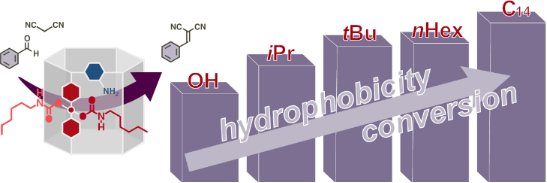
- , it is no surprise that PSM is a prevalent method for synthesizing MOF-based catalysts [30]. On this topic, our current work was inspired by Canivet et al. who previously reported the lipophilization of a MOF by grafting long alkyl chains to the external surfaces of its crystals. The active sites are


Unique halogen–π association detected in single crystals of C–N atropisomeric N-(2-halophenyl)quinolin-2-one derivatives and the thione analogue
Beilstein J. Org. Chem. 2025, 21, 1748–1756, doi:10.3762/bjoc.21.138
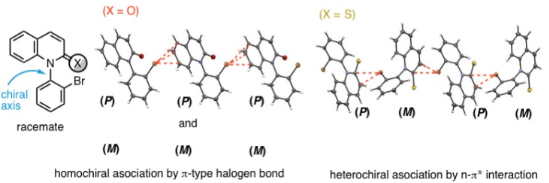
- , Shibaura Institute of Technology, 307 Fukasaku, Minuma-ku, Saitama 337-8570, Japan 10.3762/bjoc.21.138 Abstract In single crystals of C–N atropisomeric N-(2-halophenyl)quinolin-2-one and the thione analogue, a unique association based on a halogen–π interaction was detected. In racemic and optically pure
- ; single crystals; thiones; Introduction In the past several years, C–N atropisomers (C–N axially chiral compounds) owing to the rotational restriction around a C–N single bond have received great attention as new target molecules for catalytic asymmetric reactions. Highly enantioselective syntheses of
- the single crystals of racemates significantly differs from that of optically pure forms (chirality-dependent halogen bonding, Figure 1) [20][21]. That is, in crystals of racemic mebroqualone rac-I, heterochiral zig-zag polymer chains, in which (P)-I and (M)-I were alternately connected, were formed


Thermodynamics and polarity-driven properties of fluorinated cyclopropanes
Beilstein J. Org. Chem. 2025, 21, 1742–1747, doi:10.3762/bjoc.21.137
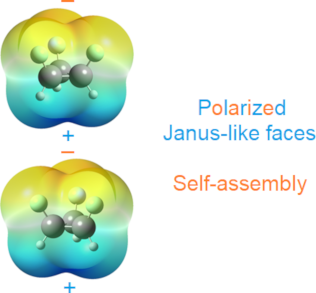
- insights can guide the prediction of molecular properties, paving the way for the design of innovative applications. Fluorinated cyclopropanes, with their unique electronic and structural characteristics, hold significant potential in the development of new drugs, advanced materials like liquid crystals
- delocalization interactions. Among the compounds shown in Figure 1, 1.2.3-c.c. is the most polar, with a calculated dipole moment of 4.17 D. Polarity is a key molecular property, as it influences solubility, lipophilicity, and various material characteristics. For example, liquid crystals used in LCD devices
- development of liquid crystals, ion carriers, and other technologies dependent on precise molecular properties. Computational Details The fluorinated cyclopropanes shown in Figure 1 were optimized using density functional theory (DFT) at the B3LYP-GD3BJ/6-311++G(d,p) level [20][21][22], which includes


Synthesis of an aza[5]helicene-incorporated macrocyclic heteroarene via oxidation of an o-phenylene-pyrrole-thiophene icosamer
Beilstein J. Org. Chem. 2025, 21, 1561–1567, doi:10.3762/bjoc.21.119
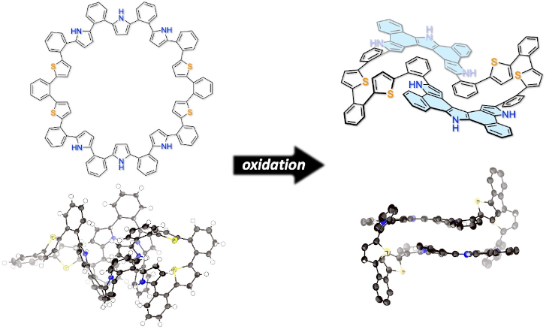
- and 8.98 ppm and five doublet signals due to the heterole β-protons in the range of 6.7–5.8 ppm, along with o-phenylene protons around 7 ppm. Single crystals suitable for X-ray diffraction analysis were obtained from a mixture of acetone/n-hexane and the solid-state structure was successfully


Ambident reactivity of enolizable 5-mercapto-1H-tetrazoles in trapping reactions with in situ-generated thiocarbonyl S-methanides derived from sterically crowded cycloaliphatic thioketones
Beilstein J. Org. Chem. 2025, 21, 1508–1519, doi:10.3762/bjoc.21.113
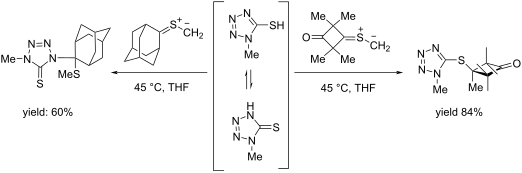
- analysis (Figure 1a and Figure 1b, respectively). Single crystals of 9i and 10i were obtained by slow evaporation from a hexane/CH2Cl2 solution and subsequently used for crystallographic X-ray measurements. In the case of 9i, the molecule is strongly disordered in the outer carbon ring regions. However
- (9a and 10m) or from MeOH (10c). Analytically pure samples of products isolated after chromatography were prepared after recrystallization from hexane/CH2Cl2 mixture. 1-Methyl-4-[2-(methylthio)adamantan-2-yl]-1,4-dihydro-1H-tetrazole-5-thione (9a): Yield 97 mg (66%), colorless crystals; mp 107‒109 °C
- . calcd for C13H20N4S2 (296.45): C, 52.67; H, 6.80; N, 18.90; S, 21.63; found: C, 52.63; H, 6.92; N, 18.81; S, 21.74. 2,2,4,4-Tetramethyl-3-[(1-methyl-1H-tetrazol-5-yl)thio]-3-(methylthio)cyclobutan-1-one (10c): Yield 120 mg (84%); colorless crystals; mp 136‒138 °C (MeOH); 1H NMR (CDCl3) δ 1.50 (s, 6H


High-pressure activation for the solvent- and catalyst-free syntheses of heterocycles, pharmaceuticals and esters
Beilstein J. Org. Chem. 2025, 21, 1374–1387, doi:10.3762/bjoc.21.102
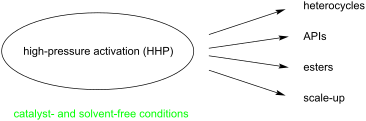
- compounds are expected to form crystals of higher density, compared to their liquid state. However, phase transitions of the vast majority of organic compounds at high pressure are not yet adequately studied. Data on their behaviour when pressurized are not readily available, except for some long chain


Recent advances and future challenges in the bottom-up synthesis of azulene-embedded nanographenes
Beilstein J. Org. Chem. 2025, 21, 1272–1305, doi:10.3762/bjoc.21.99
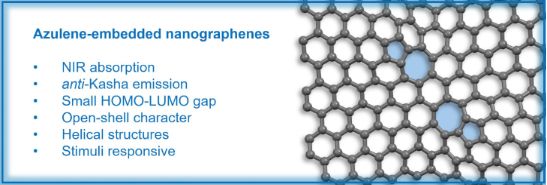
- non-benzenoid nanographene 34 [45]. Single crystals of 34 surprisingly exhibit SHG-CD (second harmonic generation–circular dichroism) properties due to the unusual self-sorting of R and S enantiomers in the crystalline state. Scholl-type oxidation: The Scholl oxidation is a highly useful tool for




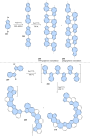
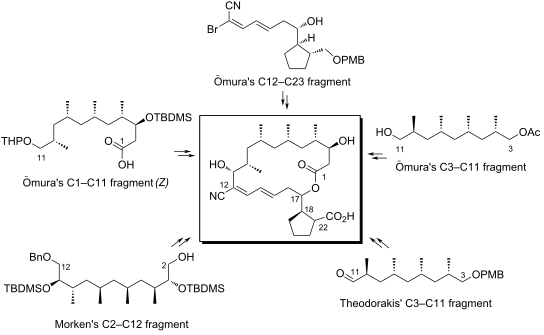
Synthetic approach to borrelidin fragments: focus on key intermediates
Beilstein J. Org. Chem. 2025, 21, 1135–1160, doi:10.3762/bjoc.21.91
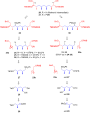
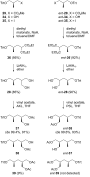
- LiAlH4 in ether to form alcohol 40 (89%) (Scheme 3). The primary alcohol 40 was then converted to its iodide derivative 42 (89%), from which single crystals were obtained, and its structure was determined unequivocally by XRD crystallography. Iodide 42 was then reacted with sodium phenylsulfinate in DMF








Investigations of amination reactions on an antimalarial 1,2,4-triazolo[4,3-a]pyrazine scaffold
Beilstein J. Org. Chem. 2025, 21, 1126–1134, doi:10.3762/bjoc.21.90
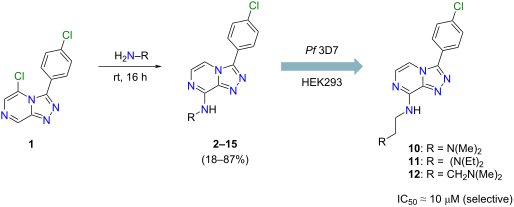
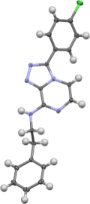
- undescribed amine analogues 2–15 were fully characterised following 1D/2D NMR, UV, and HRMS data analyses. X-ray crystallographic analysis of crystals obtained from the aminated products 2, 7, 10, and 15 are also reported here. The new library of amine-substituted triazolopyrazines was screened against the
- with relevant position numbering. Crystals obtained for 2 were analysed by X-ray crystallographic studies and confirmed the NMR-based structure assignment. The crystal structure of 2 is shown as a thermal ellipsoid plot below (Figure 3). With a simplified approach for the synthesis of aminated




Gold extraction at the molecular level using α- and β-cyclodextrins
Beilstein J. Org. Chem. 2025, 21, 1116–1125, doi:10.3762/bjoc.21.89
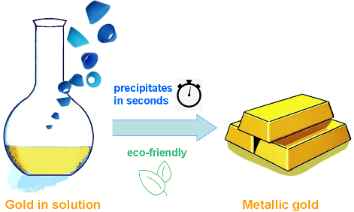
- expected tridimensional CD-MOF in the presence of KAuBr4 in aqueous solution. Instead, they self-assembled into unidimensional threads that aggregated into superstructures and formed, in less than one minute, needle-shaped crystals visible to the naked eye. In these crystals, the molecules of α-CD stacked
- diffraction of single crystals (Figure 3), showing, for both 1:1 and 2:1 stoichiometries, cyanoaurate anions inside the host cavity and potassium cations interacting with hydroxy groups of adjacent cyclodextrins. The strong host–guest affinity and complex stability in the solution phase has been studied by
- added to reach a final concentration of 0.25% (v/v). To better understand the role of DBC, crystals of the ternary complex β-CD·KAuBr4·DBC were obtained by slow vapor diffusion of DBC into an aqueous solution of KAuBr4 and β-CD over three days. Single-crystal diffraction showed the [AuBr4]− anion


Supramolecular assembly of hypervalent iodine macrocycles and alkali metals
Beilstein J. Org. Chem. 2025, 21, 1095–1103, doi:10.3762/bjoc.21.87
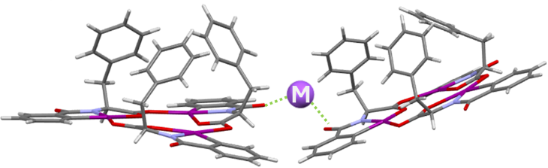
- further understand the complexation with metal cations, separate co-crystals of HIM 1 with LiBArF20 and NaBArF24 were obtained by vapor diffusion of diethyl ether into acetone. The details of the co-crystallization experiment are provided in the crystallographic information section of Supporting
- Information File 1. Single crystals with quality suitable for XRD analysis were obtained in both cases (Figure 5). Unlike the previous assumption of metal coordination at the macrocycle core [17], the crystal structures reveal complexation of both cations at the periphery of the macrocycle. Both 1/LiBArF20
- similar trend was seen in the HIM–Na+ crystals where complex 4 and complex 5 are similar in energy with a difference of less than 1.5 kJ/mol. While both Li+ and Na+ crystals were prepared in similar conditions, the difference in the resulting crystal structure (e.g., location of benzyl rings) could arise


Dicarboxylate recognition based on ultracycle hosts through cooperative hydrogen bonding and anion–π interactions
Beilstein J. Org. Chem. 2025, 21, 884–889, doi:10.3762/bjoc.21.72
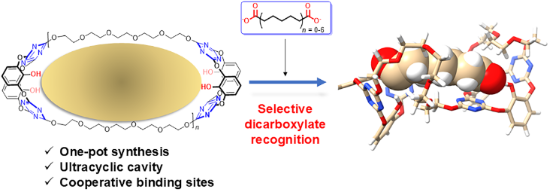
- target ultracyclic hosts. The synthesized ultracycles were fully characterized by spectrometric and elemental analysis (Scheme 1 and Schemes S1‒S3 in Supporting Information File 1). Single crystals of B4aH were obtained by slow vapor diffusion of ethyl ether into an acetonitrile/chloroform 1:1 (v/v


Unraveling cooperative interactions between complexed ions in dual-host strategy for cesium salt separation
Beilstein J. Org. Chem. 2025, 21, 845–853, doi:10.3762/bjoc.21.68

- understand cooperative interactions between complexed ions, we tried to grow the crystal structure of studied salts. Fortunately, single crystals of Cs2CO3 and Cs3PO4 complexes were obtained by slow vapor diffusion from acetonitrile and diethyl ether. Notably, clearly stronger ion-dipole interactions of


Development and mechanistic studies of calcium–BINOL phosphate-catalyzed hydrocyanation of hydrazones
Beilstein J. Org. Chem. 2025, 21, 755–765, doi:10.3762/bjoc.21.59
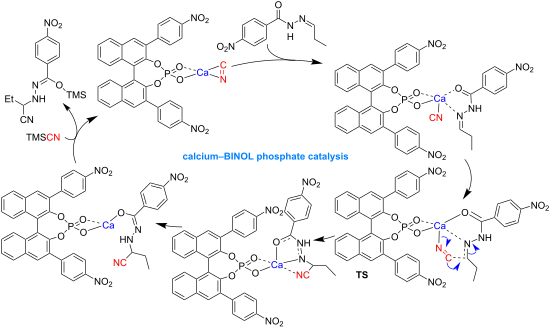
- conditions. The product was isolated as colorless crystals in good yield of 81% (Scheme 1). Complex 4 crystallizes as a C2-symmetric chiral mononuclear complex in which Ca is bound to two monodentate phosphate ligands (Figure 1). Four MeOH ligands complete the slightly distorted octahedral coordination


Acyclic cucurbit[n]uril bearing alkyl sulfate ionic groups
Beilstein J. Org. Chem. 2025, 21, 717–726, doi:10.3762/bjoc.21.55
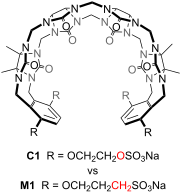
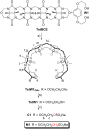
- hydrophobic region of the guest which changes the orientation of Ha with respect to the magnetically shielding region [54][63][64]. X-ray crystal structure of C1 We were fortunate to obtain single crystals of the C1·Me6CHDA complex and solved the crystal structure by X-ray diffraction (CCDC 2411723). Figure 5




Origami with small molecules: exploiting the C–F bond as a conformational tool
Beilstein J. Org. Chem. 2025, 21, 680–716, doi:10.3762/bjoc.21.54
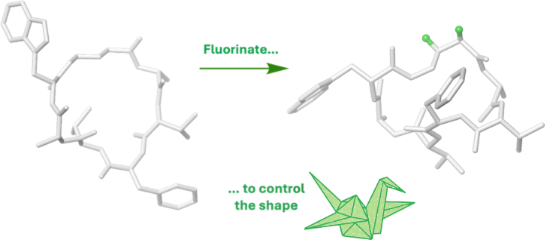
- stereoelectronic effects such as hyperconjugation and electrostatic attraction/repulsion. These fluorine-derived conformational effects have been exploited to control the shapes, and thereby enhance the properties, of a wide variety of functional molecules including pharmaceutical agents, liquid crystals
- stereochemical change can have upon physical properties. Another functional context in which multivicinal fluoroalkanes have been explored is in liquid crystals [8][40]. Liquid crystalline materials require the molecules to be rod-shaped, and to have a dipole moment that is oriented perpendicular to the long
- molecular properties. The fluorine–oxygen gauche effect has been exploited to influence the properties of liquid crystals [86][87]. For example, the vicinal fluoroether 50 (Figure 7) can adopt a low-energy conformation in which the terminal C–F bond aligns gauche to the vicinal C–O bond. This orientation of