


Search results
Search for "extraction" in Full Text gives 477 result(s) in Beilstein Journal of Organic Chemistry. Showing first 200.
Synthesis of an aza[5]helicene-incorporated macrocyclic heteroarene via oxidation of an o-phenylene-pyrrole-thiophene icosamer
Beilstein J. Org. Chem. 2025, 21, 1561–1567, doi:10.3762/bjoc.21.119
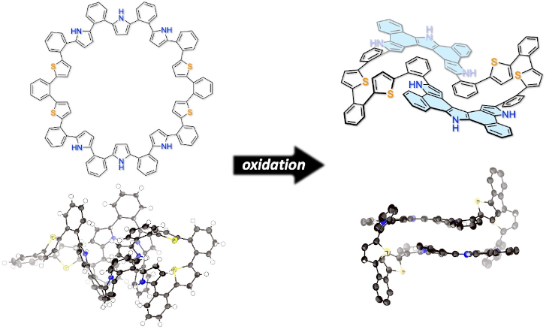
- acyclic heteroaromatics [26][27]. Thus, to a solution of 4 in CH2Cl2 was added 15 equivalents of PIFA at −78 °C and stirred for 3 h. The mixture was then allowed to warm to room temperature to give a dark solution. The system was worked-up with NaBH4/MeOH for 10 minutes followed by extraction with CH2Cl2


Microwave-enhanced additive-free C–H amination of benzoxazoles catalysed by supported copper
Beilstein J. Org. Chem. 2025, 21, 1462–1476, doi:10.3762/bjoc.21.108
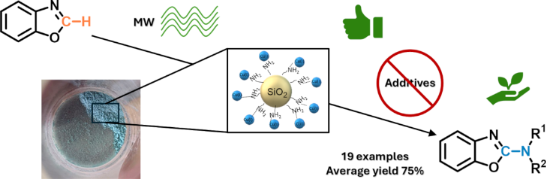
- are required to remove copper salts, and aqueous ammonia has been used to improve the efficacy of liquid–liquid extraction (see Supporting Information File 1 and experimental procedure). This issue made liquid–liquid extraction time-consuming and wasteful, while chromatographic column purification is



Gold extraction at the molecular level using α- and β-cyclodextrins
Beilstein J. Org. Chem. 2025, 21, 1116–1125, doi:10.3762/bjoc.21.89
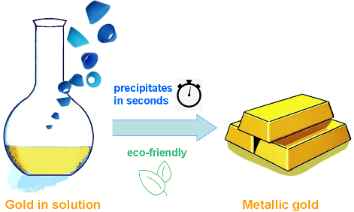
- relevant role in aerospace technology, being used in satellites [13] and telescopes [14] to protect sensitive components against the damaging effects of solar radiation. Production of gold encompasses the mining stage, followed by one more processing steps. Post-extraction processing can be carried out by
- accumulation in soil and water [17]. The shortage of natural resources in tandem with the increasing market demand for gold are driving the need to obtain this commodity from low grade ores, typically containing less than 1 wt % in gold, materials of difficult extraction, such as the gold-bearing silicates and
- -waste [21], or to acidophilic microbes such as chemolithotrophic bacteria and archaea, which can accelerate the oxidative dissolution of gold sulfides in a biotechnological extraction process suited for sulfidic ores [22]. Microbial leaching methods are not, however, implemented at the industrial scale


Unraveling cooperative interactions between complexed ions in dual-host strategy for cesium salt separation
Beilstein J. Org. Chem. 2025, 21, 845–853, doi:10.3762/bjoc.21.68

- L as an anion receptor to extract cesium salts (chloride, nitrate, carbonate, sulfate, and phosphate) from the solid phase into chloroform. Remarkably, Cs3PO4 exhibits the highest extraction efficiency, driven by strong cooperative interactions involving ion-dipole coordination between Cs+ and
- dual-host systems for selective ion separation. Keywords: anion binding; cesium extraction; dual-host strategy; ion-pair interaction; solid–liquid extraction; Introduction Ion-pair interaction, defined as the electrostatic attraction between a positively charged cation and a negatively charged anion
- binding. Compared to the use of individual anion or cation receptors, the dual-host strategy can significantly enhance the efficiency of ion-pair extraction. However, the driving forces and cooperative interactions of the complexed ions remain poorly understood (Figure 1a). To the best of our knowledge


Semisynthetic derivatives of massarilactone D with cytotoxic and nematicidal activities
Beilstein J. Org. Chem. 2025, 21, 607–615, doi:10.3762/bjoc.21.48
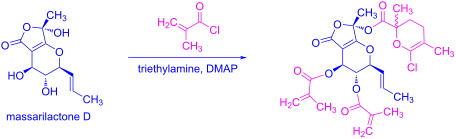
- -trans-cinnamoyl, these results suggested that massarilactone H could be an artifact formed during the extraction/isolation of massarilactone D. The molecular formula of compound 4 was deduced to be C38H32O9 from its HRESIMS spectrum (Figure S19, Supporting Information File 1) which showed the protonated
- with cinnamoyl chloride suggests that these two polyketides can interconvert from each other and could be artifacts and vice versa formed during extraction and isolation. This finding suggests that, to improve the antiproliferative efficacy of these derivatives, the exo-methylene group should be


Deep-blue emitting 9,10-bis(perfluorobenzyl)anthracene
Beilstein J. Org. Chem. 2025, 21, 515–525, doi:10.3762/bjoc.21.39
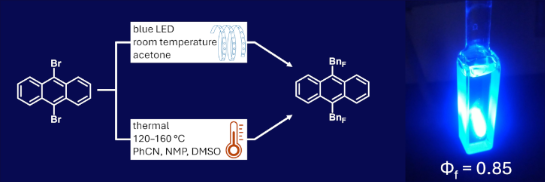
- the reaction with Na2S2O3 resulted in a 2:1 mixture of 9-Br-10-BnF-ANTH and 9,10-ANTH(BnF)2 with no remaining 9,10-ANTH(Br)2. However, the high boiling point of PhCN and its miscibility with almost every solvent that could be used for liquid–liquid extraction made the determination of isolated yields





Identification and removal of a cryptic impurity in pomalidomide-PEG based PROTAC
Beilstein J. Org. Chem. 2025, 21, 407–411, doi:10.3762/bjoc.21.28
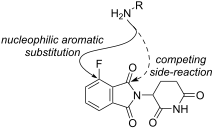
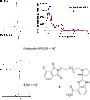
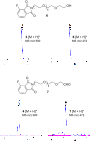
- of iVeliparib. The UV trace of the initially purified iVeliparib-AP6 and the MS ion extraction traces of the desired product and the byproduct 5 on HPLC. The structures of 6 and 7 and the MS ion extraction traces of 3, 4, 6, and 7 from HPLC analysis of the reaction mixtures after purification by




The effect of neighbouring group participation and possible long range remote group participation in O-glycosylation
Beilstein J. Org. Chem. 2025, 21, 369–406, doi:10.3762/bjoc.21.27
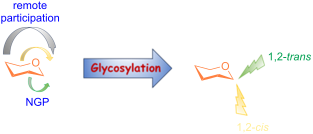
- ], cosmetics, and detergents. Carbohydrates are the most abundant and versatile renewable sources of energy on earth. However, extraction of naturally occurring complex glycans from natural sources is a laborious and cumbersome task. Moreover, the isolated samples provide a low-yield heterogenous mixture of




Antibiofilm and cytotoxic metabolites from the entomopathogenic fungus Samsoniella aurantia
Beilstein J. Org. Chem. 2025, 21, 327–339, doi:10.3762/bjoc.21.23
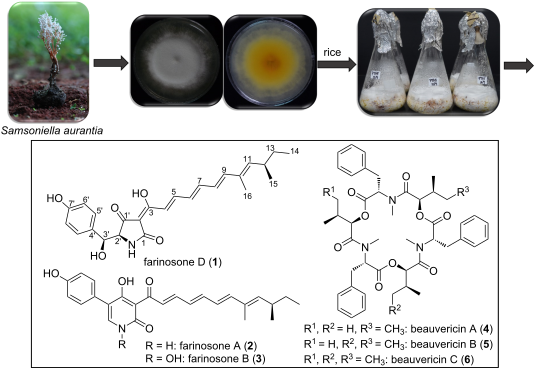
- isolated from a lepidopteran larva found on the leaf litter buried in the soil, on October 6, 2012. Cultivation and extraction Samsoniella aurantia was cultivated on potato dextrose agar (PDA: 200 g potato, 20 g dextrose, 15 g agar in 1 L distilled water, Difco). Mycelial plugs, each with a diameter of 7.0
- growth, the cultures underwent extraction. The mycelia were initially soaked in acetone overnight, followed by two rounds of ultrasonic extraction with freshly added acetone for each cycle. Resultant suspensions were filtered, and the liquid was collected. The combined liquid phases underwent vacuum
- evaporation at 40 °C, forming a semi-solid residue dispersed in water. Liquid–liquid extraction against EtOAc (1:1) was conducted twice. The organic phases were combined, filtered, and evaporated under vacuum, while the aqueous phase was discarded. Isolation of compounds 1–6 The obtained organic crude extract


Facile one-pot reduction of β-nitrostyrenes to phenethylamines using sodium borohydride and copper(II) chloride
Beilstein J. Org. Chem. 2025, 21, 39–46, doi:10.3762/bjoc.21.4
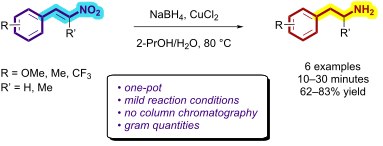
- extraction process and copper(II) removal. However, the addition of DETA led to decreased yields and a deterioration of the phase separation. It was observed that using a 20% aqueous sodium hydroxide solution, instead of 35%, negatively impacted phase separation, making the extraction process more time
- is simplified thanks to the ability of 2-propanol to partition from the sodium hydroxide aqueous solution, which allows prompt extraction of the products. Once 2-propanol is evaporated, the products can also be isolated as free amines by dissolving the residue in diethyl ether, decanting it into


Emerging trends in the optimization of organic synthesis through high-throughput tools and machine learning
Beilstein J. Org. Chem. 2025, 21, 10–38, doi:10.3762/bjoc.21.3
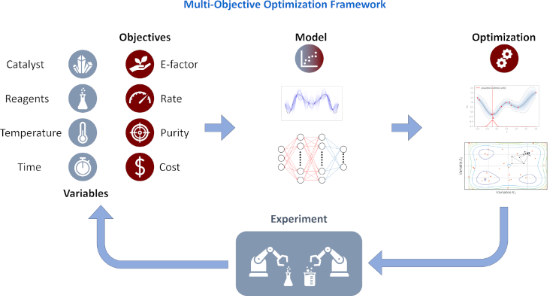
- into actionable inputs for building ML models for optimization: (i) extraction and categorization of appropriate spectra; (ii) fitting of spectral peaks utilizing predefined functional models, alongside deconvolution of overlapping signals; (iii) consolidation of extracted peak information and


Intramolecular C–H arylation of pyridine derivatives with a palladium catalyst for the synthesis of multiply fused heteroaromatic compounds
Beilstein J. Org. Chem. 2024, 20, 3256–3262, doi:10.3762/bjoc.20.269
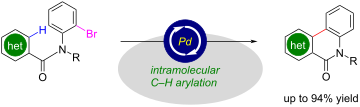
- efficient and selective extraction of lanthanides and actinides and, furthermore, a number of heterocycles involving pyridine rings have been reported to exhibit biological activities [14][15][16][17][18][19][20][21][22]. We have recently reported, as shown in Figure 1, that the introduction of a multiply
- fused structure toward a phenanthroline diamide (Phen-2,9-diamide) [23] can be achieved by employing a palladium-catalyzed intramolecular C–H arylation [24][25][26][27][28]. One of the thus obtained products exhibited a remarkable extraction performance for a lanthanide ion, in which a metal-specific
- extraction was found despite the similarities in the lanthanide series [23]. Chakravorty and co-workers reported that a similar arylation reaction gave access to the fused skeleton of the diamide of 2,6-pyridinedicarboxlic acid (Py-2,6-diamide) [29]. Our interest has thus turned to extend the substrate scope


Ceratinadin G, a new psammaplysin derivative possessing a cyano group from a sponge of the genus Pseudoceratina
Beilstein J. Org. Chem. 2024, 20, 3215–3220, doi:10.3762/bjoc.20.267
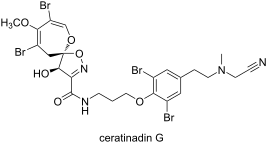
- 49.8 ppm were used as internal references. Mass spectra were acquired on a JEOL JMS-T100LP spectrometer. Flash column chromatography was performed using a Biotage Isolera flash purification system. Extraction and isolation The EtOAc-soluble material (2.45 g) of the methanol extract (38.06 g) from the


Discovery of ianthelliformisamines D–G from the sponge Suberea ianthelliformis and the total synthesis of ianthelliformisamine D
Beilstein J. Org. Chem. 2024, 20, 3205–3214, doi:10.3762/bjoc.20.266
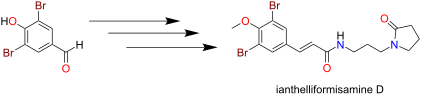
- aeruginosa biofilm inhibitors and antibiotic enhancers. Large-scale extraction and isolation studies resulted in the discovery of four new and minor natural products, ianthelliformisamines D–G (4–7) and the known steroid, aplysterol (8). Compounds 4–7 were fully characterised following 1D/2D NMR, MS and UV
- describe the large-scale extraction, isolation, and structure elucidation of four new metabolites, ianthelliformisamines D–G (4–7). Additionally, we report the isolation of the known natural products, aplysterol (8) and ianthelliformisamines A–C (1–3). Owing to the novelty of ianthelliformisamine D (4) we
- HPLC (RP-HPLC), which led to the purification of the known metabolites, ianthelliformisamines A–C (1–3) [7] and aplysterol (8) [13], and four new natural products, ianthelliformisamines D–G (4–7) (Figure 1). This extraction and isolation process was repeated twice to obtain sufficient quantities of the


![[Graphic 1]](/bjoc/content/inline/1860-5397-20-266-i2.svg?max-width=637&scale=1.18182)
![[Graphic 2]](/bjoc/content/inline/1860-5397-20-266-i3.svg?max-width=637&scale=1.18182)
![[Graphic 3]](/bjoc/content/inline/1860-5397-20-266-i4.svg?max-width=637&scale=1.18182)

![[Graphic 4]](/bjoc/content/inline/1860-5397-20-266-i5.svg?max-width=637&scale=1.18182)
![[Graphic 5]](/bjoc/content/inline/1860-5397-20-266-i6.svg?max-width=637&scale=1.18182)

Advances in the use of metal-free tetrapyrrolic macrocycles as catalysts
Beilstein J. Org. Chem. 2024, 20, 3085–3112, doi:10.3762/bjoc.20.257
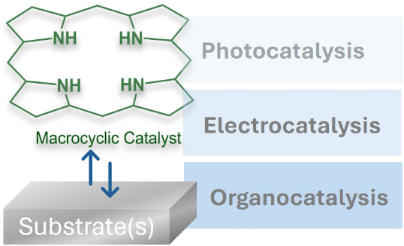
- conformational flexibility, allowing them to adopt four key conformations: 1,3-alternate, cone, partial cone, and 1,2-alternate [1][2]. Calix[4]pyrroles are one of the most studied hosts in supramolecular chemistry, finding use in applications of molecular recognition and extraction, drug delivery, ion transport


N-Glycosides of indigo, indirubin, and isoindigo: blue, red, and yellow sugars and their cancerostatic activity
Beilstein J. Org. Chem. 2024, 20, 2840–2869, doi:10.3762/bjoc.20.240
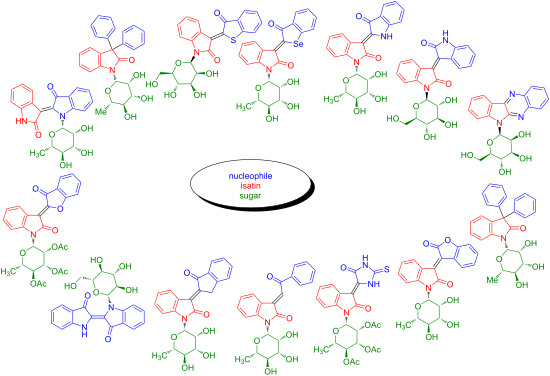
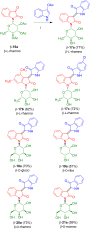
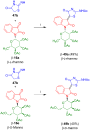
- material in Europe (Scheme 1). It is obtained by extraction and isolation of the colorless indole-O-glycoside indicane which is then hydrolyzed to give indoxyl. The latter undergoes oxidative dimerization to provide indigo. In the 19th century, syntheses of indigo were developed which made the pigment










Synthesis of benzo[f]quinazoline-1,3(2H,4H)-diones
Beilstein J. Org. Chem. 2024, 20, 2708–2719, doi:10.3762/bjoc.20.228
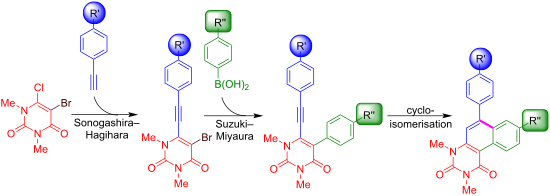
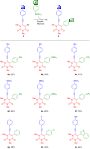
- ). Solvents for extraction and column chromatography were distilled prior employment. Synthesis of 4a–i The synthesis of 4a–f has been previously reported. Novel derivatives 4g–i were prepared according to our previously reported procedure [65]. 1,3-Dimethyl-5-phenyl-6-(phenylethynyl)pyrimidine-2,4(1H,3H




Computational design for enantioselective CO2 capture: asymmetric frustrated Lewis pairs in epoxide transformations
Beilstein J. Org. Chem. 2024, 20, 2668–2681, doi:10.3762/bjoc.20.224
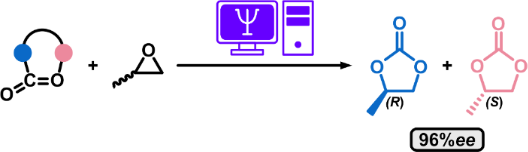
- oxygen atoms [6][7]. Carbon capture and utilisation (CCU) technologies involve the extraction of CO2 from the atmosphere of the Earth to generate value-added chemicals, which can serve as platform chemicals in other chemical processes [20][21]. This is achieved by inserting CO2 as a C1 building block


Visible-light-mediated flow protocol for Achmatowicz rearrangement
Beilstein J. Org. Chem. 2024, 20, 2493–2499, doi:10.3762/bjoc.20.213
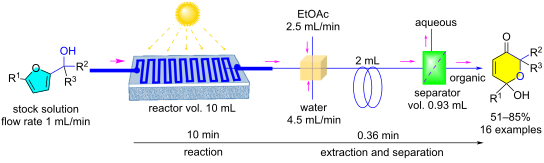
- transformations, then reaction extraction and separation, into a single process, which are typically performed individually/separately in batch methods. This enhances the overall efficiency for obtaining the desired product(s) from the reaction mixture. In continuation to our efforts on developing flow-based
- towards investigating for the selective elimination of the waste solvent using an integrated one-flow work-up procedure to generate 3a with maximum practicality. Initially, the individual stages of the liquid–liquid extraction was achieved using the droplet micro fluidic method for extracting the compound
- (see details in Supporting Information File 1, Table S2). In this context, our previously in-house-developed liquid–liquid extractor was utilized (see details in Supporting Information File 1, Figure S4) [27]. After few trials towards optimization of extraction and separation, the best yield (82%) was



Machine learning-guided strategies for reaction conditions design and optimization
Beilstein J. Org. Chem. 2024, 20, 2476–2492, doi:10.3762/bjoc.20.212

- of natural language processing (NLP) techniques to extract experimental data from unstructured text. For example, Vaucher et al. [69] combined rule-based models and deep-learning techniques to convert experimental procedures into standardized synthetic steps. They further used this data extraction
- machine-learning solutions for reaction diagram parsing [76][77], there are still some limitations. For instance, sometimes the reaction conditions are listed in tables, and certain functional groups in images are represented by abbreviations (e.g., R-groups). To achieve more complete data extraction
- , future efforts will need to employ multi-modal modeling approaches [78][79][80] that can collect information from different sources and provide robust results. Recently, Fan et al. developed the OpenChemIE toolkit [81], which integrates extraction methods from text, images, and tables, automating the


Efficient one-step synthesis of diarylacetic acids by electrochemical direct carboxylation of diarylmethanol compounds in DMSO
Beilstein J. Org. Chem. 2024, 20, 2392–2400, doi:10.3762/bjoc.20.203
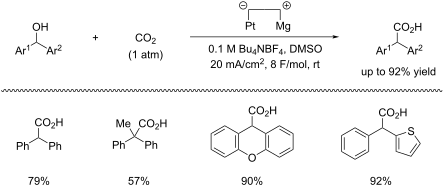
- triphenylmethanol (1n) was subjected to the electrochemical carboxylation, a small amount of carboxylic acid was obtained as a complex mixture. However, in the 1H NMR spectrum of the organic component after extraction with aqueous base, we observed a singlet at δ 5.55 ppm, which could be assigned to the methine


Asymmetric organocatalytic synthesis of chiral homoallylic amines
Beilstein J. Org. Chem. 2024, 20, 2349–2377, doi:10.3762/bjoc.20.201
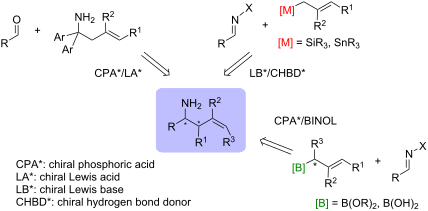
- -diaminonaphthalene derivatives 42, which after hydrolysis and extraction into toluene, were reacted with indole, 3-methylindole, 3,4-dihydroisoquinoline, and benzoyl hydrazone ethyl glyoxylate ester to afford terminal (E)-trifluoromethyl homoallylic amines 44 with up to 3 adjacent stereocentres with high to


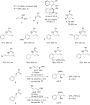


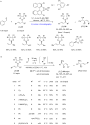


Catalysing (organo-)catalysis: Trends in the application of machine learning to enantioselective organocatalysis
Beilstein J. Org. Chem. 2024, 20, 2280–2304, doi:10.3762/bjoc.20.196
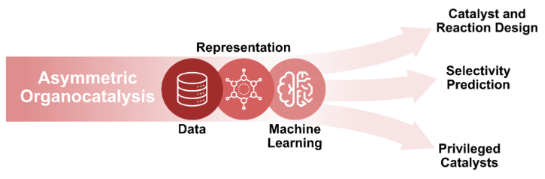
- number of experiments can be found in literature, as well as patents. Manual curation of this data is possible, but for larger amounts of data it is usually impractical. Therefore, automated extraction tools have been reported yielding the data in a structured format suitable for ML [37][38][39][40][41


Metal-free double azide addition to strained alkynes of an octadehydrodibenzo[12]annulene derivative with electron-withdrawing substituents
Beilstein J. Org. Chem. 2024, 20, 2234–2241, doi:10.3762/bjoc.20.191
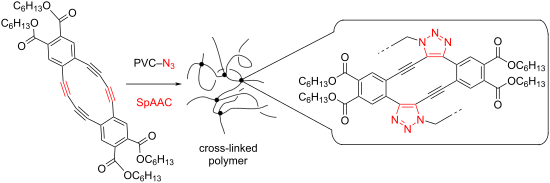
- recorded on a JASCO FT/IR-4100 spectrometer in the range from 4000 to 600 cm−1. MALDI–TOF mass spectra were measured on a Shimadzu/Kratos AXIMACFR mass spectrometer equipped with a nitrogen laser (λ = 337 nm) and pulsed ion extraction, which was operated at an accelerating potential of 20 kV. THF solutions




Electrochemical allylations in a deep eutectic solvent
Beilstein J. Org. Chem. 2024, 20, 2217–2224, doi:10.3762/bjoc.20.189
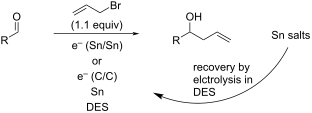
- recycled two times before incomplete conversion was noted. A more significant problem was the steady loss of DES during the product extraction stage. Using 3 mL of methoxycyclopentane in a single extraction, the amount of DES steadily decreased by roughly 0.5 mL for each recycling. This is likely due to
- partial solubility of ethylene glycol in methoxycyclopentane as ethylene glycol could be clearly seen in the 1H NMR spectrum of the crude reaction extracts. It should also be noted that the lower isolated yields most likely reflect mechanical losses during extraction and chromatographic separation as the
- starting material were recovered via extraction with methoxycyclopentane and the CC/EG used in another cycle. Through two recyclings, the reactions were similar in efficiency, although the DES became increasingly viscous as the tin byproducts built up and it became impractical to recycle the DES further




