Search results
Search for "furan" in Full Text gives 274 result(s) in Beilstein Journal of Organic Chemistry. Showing first 200.
New tandem Ugi/intramolecular Diels–Alder reaction based on vinylfuran and 1,3-butadienylfuran derivatives
Beilstein J. Org. Chem. 2025, 21, 444–450, doi:10.3762/bjoc.21.31
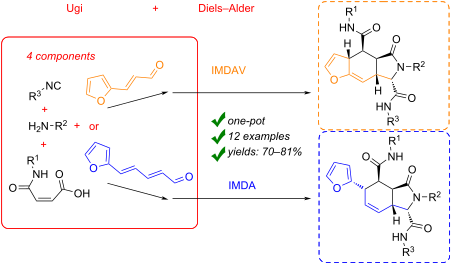
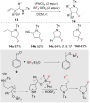
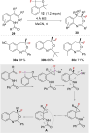
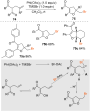
- reaction and Diels–Alder [4 + 2] cycloaddition based on vinylfuran and 1,3-butadienylfuran derivatives was designed and studied. It was found that in the case of 3-(furan-2-yl)acrylaldehyde, a one-pot Ugi reaction and intramolecular Diels–Alder vinylarene (IMDAV) reaction leads to the formation of the
- insufficiently studied furo[2,3-f]isoindole derivatives. Ugi adducts formed from (E)-3-(furan-2-yl)acrylaldehyde, maleic acid monoanilide, isonitrile, and an amine spontaneously underwent the IMDAV reaction with a high level of stereoselectivity, leading to single pairs of enantiomers of 4,4a,5,6,7,7a-hexahydro
- -3aH-furo[2,3-f]isoindole core in excellent yields. Under the same conditions, the (2E,4E)-5-(furan-2-yl)penta-2,4-dienal gives an Ugi adduct that undergoes the IMDA reaction without involving the furan core. The cycloaddition leads to the formation of 2,3,3a,4,5,7a-hexahydro-1H-isoindoles in high




Synthesis of new condensed naphthoquinone, pyran and pyrimidine furancarboxylates
Beilstein J. Org. Chem. 2025, 21, 340–347, doi:10.3762/bjoc.21.24
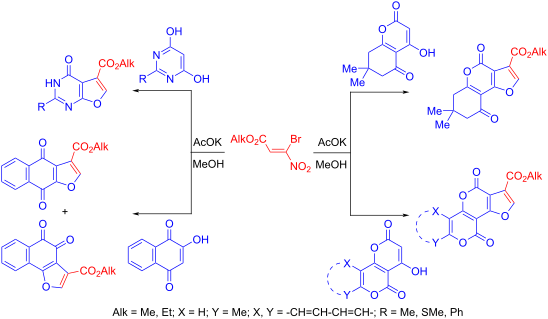
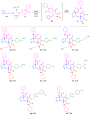
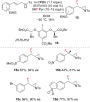
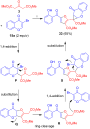
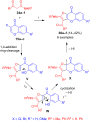
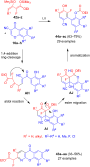
- Research Center "Kazan Scientific Center of the Russian Academy of Sciences", Arbuzov Institute of Organic and Physical Chemistry, 8 ul. Akad. Arbuzova, 420088 Kazan, Russian Federation 10.3762/bjoc.21.24 Abstract New representatives of dioxodihydronaphtho[2,3-b]furan-, furo[3,2-c][1]benzopyran-, furo[2,3
- of the synthesized compounds were proven by a set of physicochemical methods, including X-ray diffraction analysis. Keywords: CH-acids; 1-halo-1-nitroethenes; heterocyclization; nitroacrylates; X-ray diffraction analysis; Introduction The combination of the furan ring with various carbo- and
- furopyran, furocoumarin [9][10], and furopyrimidine series [11][12]. It is known that the main approaches to the synthesis of naphtho[2,3-b]furan-4,9-diones are reactions of hydroxynaphthalene-1,4-dione with ethane-1,2-diol [13], chloroacetaldehyde [14], ethenyl methyl sulfone [15], or ethenyl acetate [16


Effect of substitution position of aryl groups on the thermal back reactivity of aza-diarylethene photoswitches and prediction by density functional theory
Beilstein J. Org. Chem. 2025, 21, 242–252, doi:10.3762/bjoc.21.16
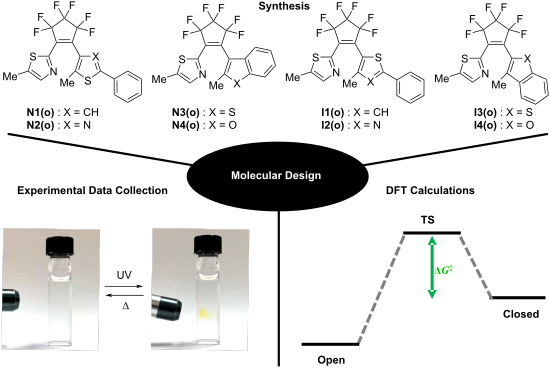
- -methylbenzo[b]furan-3-yl)perfluorocyclopentene (N4). Compound N4 was synthesized in a manner similar to a procedure from [56]. 5-Methylthiazole (0.20 g, 2.1 mmol) was dissolved in anhydrous THF (30 mL) under argon atmosphere. A 1.6 M n-BuLi hexane solution (1.4 mL, 2.3 mmol) was slowly added dropwise to the


Streamlined modular synthesis of saframycin substructure via copper-catalyzed three-component assembly and gold-promoted 6-endo cyclization
Beilstein J. Org. Chem. 2025, 21, 226–233, doi:10.3762/bjoc.21.14
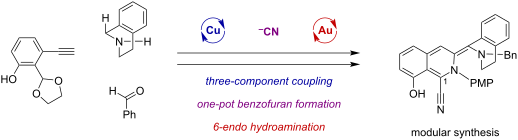
- expected to facilitate the 6-endo-dig cyclization to the distant sp-carbon on the alkyne, as demonstrated by Fujii and Ohno in their total synthesis of (−)-quinocarcin [52][53]. Secondly, the 6-endo-cyclized product 12, bearing the furan-conjugated isoquinoline-type framework, is predicted to be


Nickel-catalyzed cross-coupling of 2-fluorobenzofurans with arylboronic acids via aromatic C–F bond activation
Beilstein J. Org. Chem. 2025, 21, 146–154, doi:10.3762/bjoc.21.8
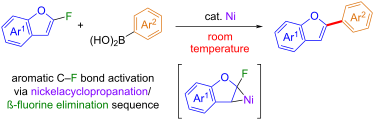
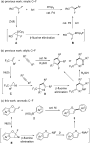
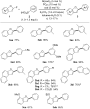
- activation of aromatic C–F bonds. Results and Discussion First, we explored optimal conditions for nickel-catalyzed defluorinative coupling using 2-fluoronaphtho[2,1-b]furan (1b) and m-tolylboronic acid (2b) as model substrates (Table 1). When 1b was reacted with 2b at 80 °C using Ni(cod)2 (10 mol %) as a
- -dimethoxyphenylboronic acid (2e), which has electron-withdrawing groups on the aromatic ring, also yielded a satisfactory result of 73%. Additionally, using 2-fluoronaphtho[2,1-b]furan (1b), the reaction with phenylboronic acid (2a) and arylboronic acids with a methyl group at the 3-position (2b) or a tert-butyl group
- purifications. Typical procedure for coupling of 2-fluorobenzofurans 1 with arylboronic acids 2: To the mixture of 2-fluoronaphtho[2,1-b]furan (1b, 56 mg, 0.30 mmol), (3-methylphenyl)boronic acid (2b, 41 mg, 0.30 mmol), Ni(cod)2 (4.2 mg, 0.015 mmol), PCy3 (8.2 mg, 0.029 mmol), 1,5-cyclooctadiene (1.8 μL, 0.015



Synthesis of acenaphthylene-fused heteroarenes and polyoxygenated benzo[j]fluoranthenes via a Pd-catalyzed Suzuki–Miyaura/C–H arylation cascade
Beilstein J. Org. Chem. 2024, 20, 3290–3298, doi:10.3762/bjoc.20.273
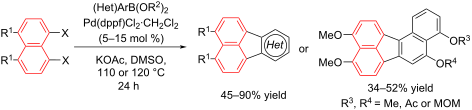
- , Ankara 06800, Türkiye 10.3762/bjoc.20.273 Abstract Acenaphthylene-fused heteroarenes with a variety of five- and six-membered heterocycles such as thiophene, furan, benzofuran, pyrazole, pyridine and pyrimidine were synthesized via an efficient Pd-catalyzed reaction cascade in good to high yields (45–90
- heterocyclic frameworks (Table 2). The acenaphthylene-fused furan and benzofuran products 15b and 15c were obtained in 54% and 86% yield, respectively, via the reactions of 1,8-diiodonaphthalene (12) with 3-furanylboronic acid and 2-benzofuranylboronic acid (Table 2, entries 1 and 2). It is important to note
- analogues via a Pd-catalyzed reaction cascade that consists of a Suzuki–Miyaura cross-coupling reaction followed by an intramolecular C–H arylation. These heterocyclic fluoranthene analogues include a variety of acenaphthylene-fused heteroarenes such as thiophene, furan, benzofuran, pyrazole, pyridine and


Hypervalent iodine-mediated intramolecular alkene halocyclisation
Beilstein J. Org. Chem. 2024, 20, 3113–3133, doi:10.3762/bjoc.20.258
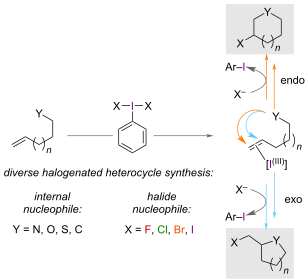
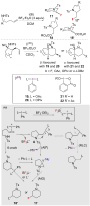
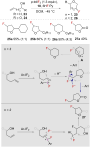
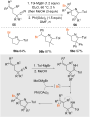
- internal oxygen nucleophile and fluoride then sequentially attack the activated alkene, to either form 5- or 6-membered furan or pyran heterocycles depending on the chain length in the substrate. The pyran ring is only formed from the alcohol starting material, presumably because the oxygen is reactive








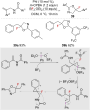


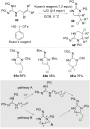
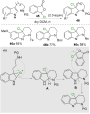

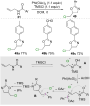








Advances in the use of metal-free tetrapyrrolic macrocycles as catalysts
Beilstein J. Org. Chem. 2024, 20, 3085–3112, doi:10.3762/bjoc.20.257
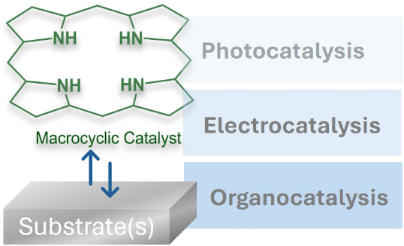
- addition of furan-based silyloxydiene synthons to a variety of achiral aldehydes using four different calix[4]pyrrole macrocycles (3, 4, 11, and 12) as organocatalysts (Figure 3) [38]. These calixpyrrole macrocycles acted as hydrogen-bond donors, activating substrate aldehydes through hydrogen-bonding
- interactions and accelerating aldol reactions. In the absence of a catalyst, no reaction between 2-(trimethylsilyloxy)furan (TMSOF, 13) and benzaldehyde (14) was observed, whereas all the tested macrocyclic compounds were found catalytically active, with 11 being the most efficient providing erythro/threo (15
- metal-free macrocycles for the C–H arylation of five-membered heteroarenes using aryldiazonium salts, with porphyrin serving as the photoredox catalyst [92]. Control experiments indicated that H2TPP (18), when irradiated with light, gave 80% yield of the C–H arylated product 77 for the reaction of furan


C–H Trifluoromethylthiolation of aldehyde hydrazones
Beilstein J. Org. Chem. 2024, 20, 2883–2890, doi:10.3762/bjoc.20.242
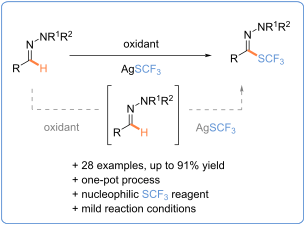
- -substituted derivatives (1l–o) were converted into the corresponding fluorinated analogs. The functionalization of the 2,4-difluorophenyl derivative (1p) and the heteroaromatic compounds such as furan (1q) as well as pyridine (1r) derivatives went smoothly, with the lower yield obtained in the case of 2r


Copper-catalyzed yne-allylic substitutions: concept and recent developments
Beilstein J. Org. Chem. 2024, 20, 2739–2775, doi:10.3762/bjoc.20.232
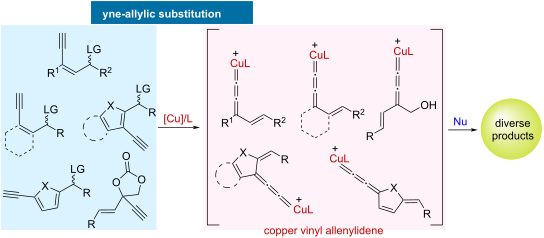
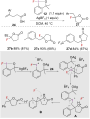
- substituted pybox ligand (Scheme 28, 26a–m). The thiophene unit of the carbonate could also be replaced by benzothiophene (Scheme 28, 26h) or furan (Scheme 28, 26m), and pyrrole (Scheme 28, 26j), phenol (Scheme 28, 26k); coumarin derivative (Scheme 28, 26n), and dibenzylamine (Scheme 28, 24a) could also








Base-promoted cascade recyclization of allomaltol derivatives containing an amide fragment into substituted 3-(1-hydroxyethylidene)tetronic acids
Beilstein J. Org. Chem. 2024, 20, 2585–2591, doi:10.3762/bjoc.20.217
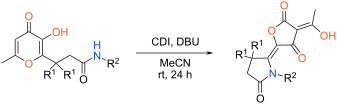
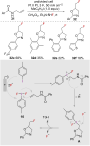
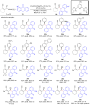
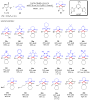
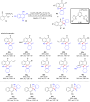
- method for the synthesis of a wide range of (3E,5E)-3-(1-hydroxyethylidene)-5-(5-oxopyrrolidin-2-ylidene)furan-2,4(3H,5H)-diones was elaborated. The advantages of the presented protocol are easily available starting compounds and simple isolation of the target products without chromatographic
- process was performed in the presence of 1,1′-carbonyldiimidazole and DBU using MeCN as a solvent. The set of various (3E,5E)-3-(1-hydroxyethylidene)-5-(5-oxopyrrolidin-2-ylidene)furan-2,4(3H,5H)-diones was synthesized employing the developed approach. The readily accessible starting materials and simple
- -ylidene)furan-2,4(3H,5H)-dione (4a). Pale yellow powder; yield 62% (0.25 g); mp 121–123 °C; 1H NMR (300 MHz, DMSO-d6) δ 7.31–7.13 (m, 5H), 4.34 (t, J = 7.5 Hz, 2H), 2.74 (t, J = 7.6 Hz, 2H), 2.56–2.48 (m, 2H in DMSO), 2.46 (s, 3H), 2.14 (t, J = 11.8 Hz, 2H), 1.64–1.54 (m, 3H), 1.41–1.09 (m, 5H); 13C NMR


Visible-light-mediated flow protocol for Achmatowicz rearrangement
Beilstein J. Org. Chem. 2024, 20, 2493–2499, doi:10.3762/bjoc.20.213
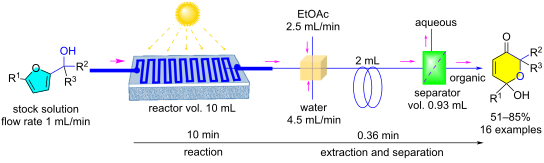
- ; photocatalyst; sunlight; Introduction The furan ring moiety is present in several natural products [1] and serves as a key precursor to 1,4-dicarbonyls [2], cyclopentanones [3], and carboxylic acids [4], in synthetic organic chemistry. Furfuryl alcohols, a family of 2-substituted furan molecules, are
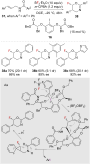
- Information File 1). This reactor was then exposed to sunlight/handmade LED to carry out the Achmatowicz rearrangement reaction. To test the model reaction's feasibility, a stock solution containing ethyl 3-(furan-2-yl)-3-hydroxypropanoate (2a)/Ru(bpy)3Cl2·6H2O/K2S2O8/ACN (2 mL)/DMSO (2 mL)/H2O (4 mL) as a
- -flow platform to provide the corresponding dihydropyranone products (3a–p) with moderate to good yields (51–85%), Figure 1. We investigated several furanol derivatives by altering the substituents at two critical positions: the hydroxymethyl carbon and the 5-position of the furan ring, that were



Facile preparation of fluorine-containing 2,3-epoxypropanoates and their epoxy ring-opening reactions with various nucleophiles
Beilstein J. Org. Chem. 2024, 20, 2421–2433, doi:10.3762/bjoc.20.206
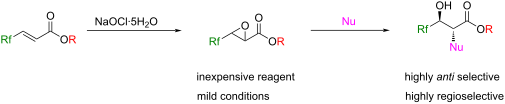
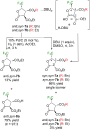
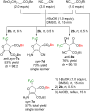
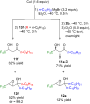
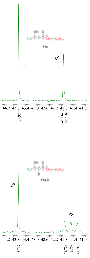
- , 1519, 1458, 1238, 1204, 1156, 1138, 1097, 1030, 822, 749 cm−1; HRMS–FAB (m/z): [M]+ calcd for C18H18F3NO4, 369.1182; found, 369.1209. General procedure for the ring opening of epoxides by enolates (GP-3). 4-Benzyl 5-ethyl anti,syn-tetrahydro-2-oxo-3-(trifluoromethyl)-furan-4,5-dicarboxylate (anti,syn
- -7a) and 4,5-diethyl anti,syn-tetrahydro-2-oxo-3-(trifluoromethyl)furan-4,5-dicarboxylate (anti,syn-7b) Diethyl malonate (0.18 mL, 1.20 mmol) was added to a flask containing 0.0673 g (0.60 mmol) of t-BuOK in DMSO (1.8 mL) under an argon atmosphere and the resultant mixture was stirred for 15 min at





Asymmetric organocatalytic synthesis of chiral homoallylic amines
Beilstein J. Org. Chem. 2024, 20, 2349–2377, doi:10.3762/bjoc.20.201
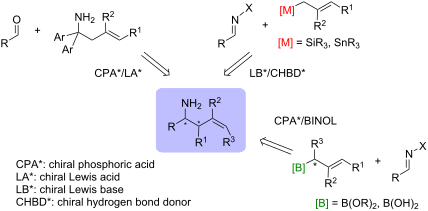
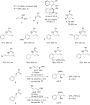
- -carboxaldehyde-derived acetal 100 (82% yield, 90% ee). 2-Methallylsilane showed universally high enantioselectivity across a range of acetal components (95–99% ee), except for a slight drop in the case of 5-bromo-2-furan (102, 86% ee) and 2-benzofuran-substituted (103, 86% ee) substrates. Regarding the silane






Heterocycle-guided synthesis of m-hetarylanilines via three-component benzannulation
Beilstein J. Org. Chem. 2024, 20, 2208–2216, doi:10.3762/bjoc.20.188
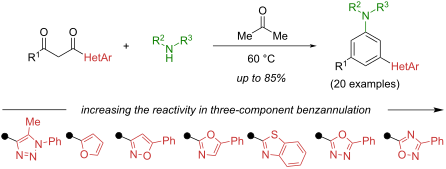
- the formation of the enamine side-product. Similar to 1,3-diketone 1b, an extremely low conversion of 1c and 1d was observed in the reaction with aniline. The isoxazol-3-yl or furan-2-yl substituents have calculated Hammett constants below 0.200 (Figure 2), thus based on the above observations, a slow
- 5). In fact, arylamine 3fa, produced from furan-substituted 1,3-diketone 1f and a 5-fold excess of benzylamine, could be prepared in 18% crude yield (after 7 days, see Supporting Information File 1, page S9). Finally, all attempts to perform the reaction with 1,2,3-triazole 1,3-diketone 1g (σm/σp


2-Heteroarylethylamines in medicinal chemistry: a review of 2-phenethylamine satellite chemical space
Beilstein J. Org. Chem. 2024, 20, 1880–1893, doi:10.3762/bjoc.20.163
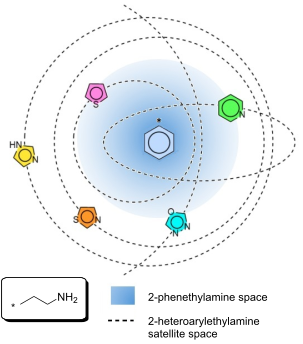
- -hydroxytryptamine (a MAO-A substrate), in a molecular docking experiment tested against serotonin (Scheme 3). A similar class of benzofuran systems with attractive binding properties are those represented by 4-amino-3-(benzo[b]furan-2-yl)butanoic acids, baclofen analogs, elaborated to elucidate the structural




The Groebke–Blackburn–Bienaymé reaction in its maturity: innovation and improvements since its 21st birthday (2019–2023)
Beilstein J. Org. Chem. 2024, 20, 1839–1879, doi:10.3762/bjoc.20.162
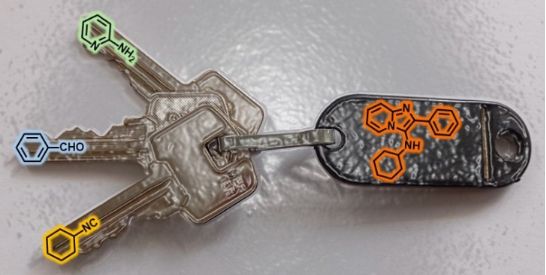
- from the dichloromethane extracts of the leaves of Caesalpinia platyloba by column chromatography, they performed a Vilsmeier–Haack formylation at the furan ring (Scheme 14) obtaining aldehyde 35 in 92% yield. This, in turn, was used as starting material in a GBB-3CR performed at room temperature to
- avoid opening of the furan ring. The authors explored the substrate scope by using different isocyanides and 2-aminoazines, obtaining 6 potentially bioactive pseudo natural products 35 in low to moderate yield (21–67%). Bräse et al. [45] reported the possibility of exploiting the GBB-3CR to synthesize a






Hetero-polycyclic aromatic systems: A data-driven investigation of structure–property relationships
Beilstein J. Org. Chem. 2024, 20, 1817–1830, doi:10.3762/bjoc.20.160
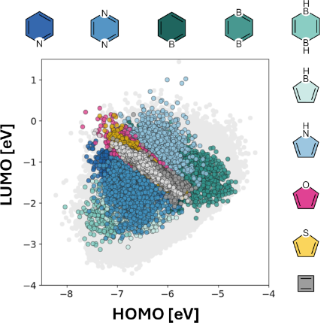
- in size, composition, and aromatic character: benzene, pyridine, pyrazine, borinine, 1,4-diborinine, 1,4-dihydro-1,4-diborinine, borole, pyrrole, furan, thiophene, and cyclobutadiene (Figure 1A). These building blocks encompass 6-, 5-, and 4-membered rings with aromatic and antiaromatic character
- of the property space covered differs noticeably. Furan, thiophene, and cyclobutadiene all cover a similar region of the property space as the baseline PBHs, which is a relatively small swath that shows a linear relationship – meaning, molecules with higher HOMOs have lower LUMOs and vice versa. In
- values than either furan or thiophene, and that 1,4-diborinine has the strongest LUMO-lowering effect of all building blocks in our library. In addition, these plots can provide further insight into the three building blocks that showed similar coverage as the cc-PBHs, namely, furan, thiophene, and


Syntheses and medicinal chemistry of spiro heterocyclic steroids
Beilstein J. Org. Chem. 2024, 20, 1713–1745, doi:10.3762/bjoc.20.152
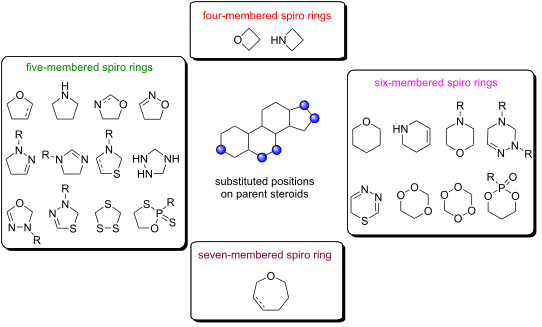
- -Spirofuran steroids Intramolecular cyclization of alcohols with allenes is a common method for obtaining 17-spirodihydro-(2H)-furan-3-ones. In 2006, Jiang et al. utilized a known reaction sequence to construct the 17-spiro heterocycle 27 from the commercially available ethylene deltenone 24 [20][21]. In this
- process, the carbonyl group at C-17 was stereoselectively attacked by α-lithio-α-methoxyallene at −78 °C to produce allene 25. A further cyclization reaction was induced by potassium tert-butoxide in the presence of catalytic dicyclohexyl-18-crown-6. The final 17-spirodihydro-(2H)-furan-3-one 27 was
- obtained in a 43% overall yield after acid hydrolysis (Scheme 8). Unsaturated spiro-2H-furan-3-ones have been synthesized using various procedures. In 2000, Lee et al. employed an intramolecular condensation reaction involving an α-ketoester derived from prednisolone precursors to produce the target spiro


Supramolecular assemblies of amphiphilic donor–acceptor Stenhouse adducts as macroscopic soft scaffolds
Beilstein J. Org. Chem. 2024, 20, 1590–1603, doi:10.3762/bjoc.20.142
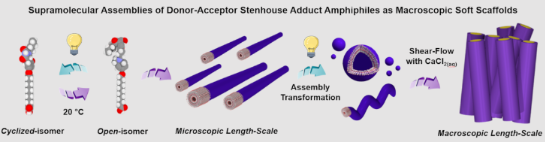
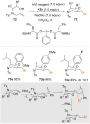
- rearrangement between a barbiturate–furan adduct 4 and compound 3n under ambient conditions in dichloromethane and hexafluoro-2-propanol (HFIP). The synthetic procedures and characterization of all newly synthesized compounds, including DA11, DA7, and DA6, are summarized in Supporting Information File 1




Sustainable tandem acylation/Diels–Alder reaction toward versatile tricyclic epoxyisoindole-7-carboxylic acids in renewable green solvents
Beilstein J. Org. Chem. 2024, 20, 1308–1319, doi:10.3762/bjoc.20.114
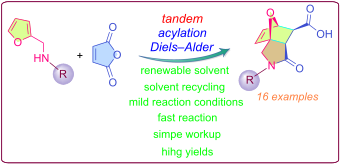
- + 2] annulation reactions [68][69][70]. This study was the first to evaluate the performances of sunflower seed oil (SSO), olive oil (OO), oleic acid (OA) and lauryl myristate (LM) as green solvents in the well-known intramolecular Diels–Alder furan (IMDAF) reaction between aminofuranes and maleic
- optimum reaction conditions, a series of reactions between N-benzyl-1-(furan-2-yl)methanamine (1a) and maleic anhydride were carried out and the results obtained are shown in Table 1. As can be seen from the table, SSO, OO, OA and LM are all excellent solvents for the IMDAF reaction and allow the
- ] cycloaddition between maleic anhydride and secondary amine occurs first, followed by the corresponding amidation (Figure 3, path II) [110]. Although IMDAF reactions involving furan systems bearing amide functionality are generally reversible [134], the formation of the addition products in high yields in this


Domino reactions of chromones with activated carbonyl compounds
Beilstein J. Org. Chem. 2024, 20, 1256–1269, doi:10.3762/bjoc.20.108
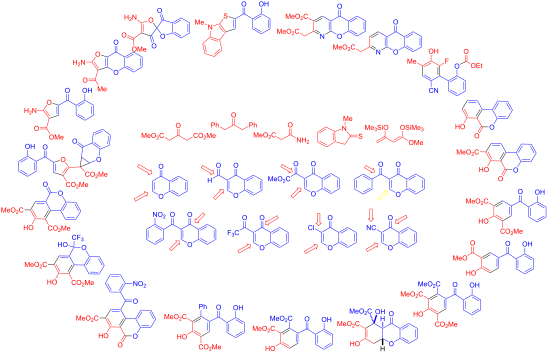
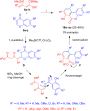
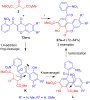
- chromones, presumably due to the electron-donating character of the methoxy group and the lower electrophilicity of the chromone. But this trend was also not general. Similar yields were obtained for ketones (R3 = Me, Ph) or esters (R3 = OMe). Treatment of 2-(salicyloyl)furan 35a with iodine in the presence









The Ugi4CR as effective tool to access promising anticancer isatin-based α-acetamide carboxamide oxindole hybrids
Beilstein J. Org. Chem. 2024, 20, 1213–1220, doi:10.3762/bjoc.20.104
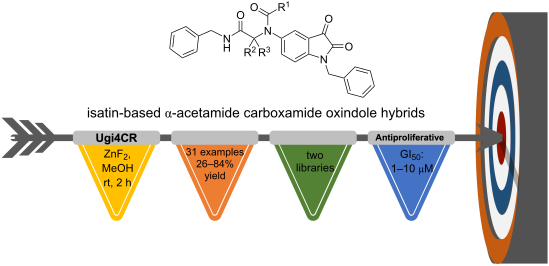
- structure–activity relationships derived from the GI50 values. The presence of a nitro group at the furan moiety enhanced the activity (8d > 8m). Presumably, the nitro group made 8d the most potent analogue bearing an aromatic amide (8c, 8e, 8g, 8i, 8l–n). For the aliphatic amides, the most potent




Kinetically stabilized 1,3-diarylisobenzofurans and the possibility of preparing large, persistent isoacenofurans with unusually small HOMO–LUMO gaps
Beilstein J. Org. Chem. 2024, 20, 1099–1110, doi:10.3762/bjoc.20.97
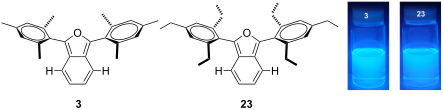
- isoelectronic π-system (i.e., the same total number of rings). Isoacenofurans show limited stability due in part to the highly reactive 1,3-carbons of the furan ring. Both 1,3-dimesitylisobenzofuran and 1,3-di(2’,4’,6’-triethylphenyl)isobenzofuran, each bearing sterically congesting ortho-alkyl groups on their
- phenyl substituents, have been synthesized and shown to adopt non-planar conformations with the ortho-alkyl groups located above and below the most reactive 1,3-carbons of the furan ring. These bulky substituents provide a strong measure of kinetic stabilization. Thus, 1,3-dimesitylisobenzofuran and 1,3
- smaller HOMO–LUMO gaps. Isoacenofurans are composed of linearly annellated benzene rings that terminate with a furan ring. Isoacenofurans and acenes possess isoelectronic π-systems when the total number of rings is the same. Unlike acenes, none of the 6-membered rings in an isoacenofuran possess an






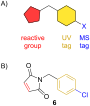
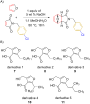
A Diels–Alder probe for discovery of natural products containing furan moieties
Beilstein J. Org. Chem. 2024, 20, 1001–1010, doi:10.3762/bjoc.20.88
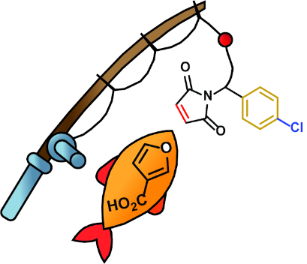
- , Indiana 47906, United States 10.3762/bjoc.20.88 Abstract Natural products (NPs) are fantastic sources of inspiration for novel pharmaceuticals, oftentimes showing unique bioactivity against interesting targets. Specifically, NPs containing furan moieties show activity against a variety of diseases
- including fungal infections, and cancers. However, it is challenging to discover and isolate these small molecules from cell supernatant. The work described herein showcases the development of a molecular probe that can covalently modify furan moieties via a [4 + 2] Diels–Alder cycloaddition, making them
- products, methylenomycin furan (MMF) hormones, and MMF derivatives. Moreover, the molecular probe has been tested in crude supernatants of various Streptomyces strains and enables identification of MMFs. Keywords: Diels–Alder reaction; furans; methylenomycin furan hormones; natural products; reactivity