


Search results
Search for "neurodegenerative diseases" in Full Text gives 28 result(s) in Beilstein Journal of Organic Chemistry.
Synthesis and biological activity of N-substituted-tetrahydro-γ-carbolines containing peptide residues
Beilstein J. Org. Chem. 2014, 10, 155–162, doi:10.3762/bjoc.10.13
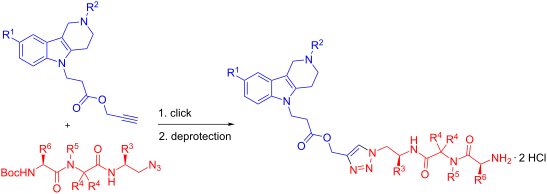
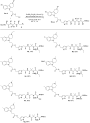
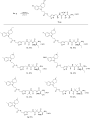
- treatment and prevention of a wide range of neurodegenerative diseases, such as Alzheimer’s dementia, Parkinsonism and the amyotrophic lateral sclerosis, is of considerable interest in modern medicinal chemistry. Mitochondrial dysfunction was found to play a crucial role in the pathogenesis of these


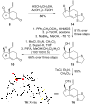
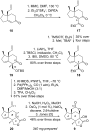
Synthesis of the tetracyclic core of Illicium sesquiterpenes using an organocatalyzed asymmetric Robinson annulation
Beilstein J. Org. Chem. 2013, 9, 1135–1140, doi:10.3762/bjoc.9.126
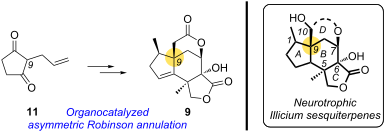
- majucin-type sesquiterpenes is described here. This strategy is based on an organocatalyzed asymmetric Robinson annulation and provides an efficient approach for a diversity-oriented synthesis of Illicium natural products that holds remarkable therapeutic potential for neurodegenerative diseases
- . Keywords: natural products; neurodegenerative diseases; neurotrophic small molecule; organocatalysis; total synthesis; Introduction Neurotrophins are a family of endogenous proteins that are vital for neuron function, survival, and regeneration [1][2][3]. As such, they have prompted intense studies toward
- the treatment of various neurodegenerative diseases including Alzheimer’s disease [4] and Parkinson’s disease [5]. Despite their unambiguous importance, approaches to neurotrophin-based drug development have encountered problems associated with their limited oral availability, insufficient delivery to


Regioselective synthesis of 7,8-dihydroimidazo[5,1-c][1,2,4]triazine-3,6(2H,4H)-dione derivatives: A new drug-like heterocyclic scaffold
Beilstein J. Org. Chem. 2012, 8, 1584–1593, doi:10.3762/bjoc.8.181
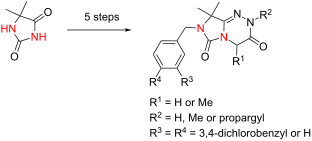
- therefore be developed for the treatment of haematological diseases, and inhibition of phosphodiesterase 10 (PDE10), which is potentially useful for the treatment of neurodegenerative diseases, especially Parkinson’s disease [11]. The scaffolds 1–4 consist of a 1,2,4-triazine core, which arises from the


Other Beilstein-Institut Open Science Activities



