


Search results
Search for "nitro" in Full Text gives 538 result(s) in Beilstein Journal of Organic Chemistry. Showing first 200.
Facile synthesis of hydantoin/1,2,4-oxadiazoline spiro-compounds via 1,3-dipolar cycloaddition of nitrile oxides to 5-iminohydantoins
Beilstein J. Org. Chem. 2025, 21, 1552–1560, doi:10.3762/bjoc.21.118

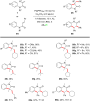
- , was observed for the spiro-compound 5l, which contains a p-nitro group in the aromatic core of the nitrile oxide fragment. This compound was obtained in excellent yield of 93% and 88% using the dropwise and diffusion mixing technique, respectively. This result may be explained by the optimal

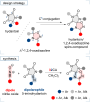


Reactions of acryl thioamides with iminoiodinanes as a one-step synthesis of N-sulfonyl-2,3-dihydro-1,2-thiazoles
Beilstein J. Org. Chem. 2025, 21, 1397–1403, doi:10.3762/bjoc.21.104
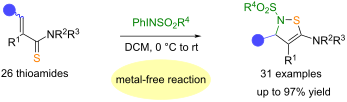
- compounds is provided by the variation of substituents in positions 2–5 of the 1,2-thiazole ring. Thus, arylsulfonyl groups containing a methyl, fluorine, chlorine, or nitro group at the aryl moiety, or a mesyl substituent were introduced into position 2 of the thiazole ring and various aryls, quinolinyl



High-pressure activation for the solvent- and catalyst-free syntheses of heterocycles, pharmaceuticals and esters
Beilstein J. Org. Chem. 2025, 21, 1374–1387, doi:10.3762/bjoc.21.102
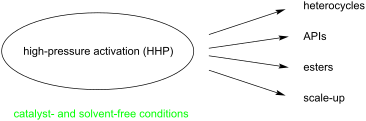
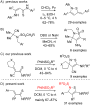
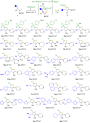
- Mannich reactions [20], lipase-catalyzed esterification [21], nitro-aldol [22], Michael [23], and aza-Michael reactions [24][25], Diels–Alder reactions [26][27] and Friedel–Crafts alkylation of indoles [28]. Many high pressure reactions were applied in natural product synthesis [29]. The high pressure


Recent advances in oxidative radical difunctionalization of N-arylacrylamides enabled by carbon radical reagents
Beilstein J. Org. Chem. 2025, 21, 1207–1271, doi:10.3762/bjoc.21.98
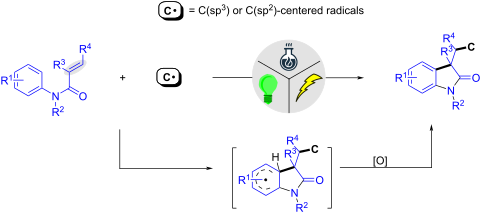
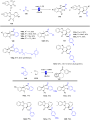
- electron-withdrawing groups on the aromatic ring were well tolerated (19a–c), although substrates with strong electron-withdrawing groups, such as nitro (–NO₂), resulted in no product (19d). Additionally, alkyl, phenyl, and benzyl substituents on the nitrogen atom of N-arylacrylamides were compatible (19e
- methoxy (-OMe) and halogens (-F, -Cl, -Br), as well as electron-withdrawing functionalities like trifluoromethyl (-CF₃) and ester groups (-CO₂Me). However, highly electron-deficient substrates, such as those bearing cyano (-CN) or nitro (-NO₂) groups, did not react. Additionally, the study explored
- -substituted acrylamides. Compounds such as N-methyl, N-ethyl, N-isopropyl, N-phenyl, and N-benzyl-substituted acrylamides were efficiently transformed into products 37a–e under the optimized conditions. However, substrates with strong electron-withdrawing groups, such as those bearing nitro substituents (37f












Enhancing chemical synthesis planning: automated quantum mechanics-based regioselectivity prediction for C–H activation with directing groups
Beilstein J. Org. Chem. 2025, 21, 1171–1182, doi:10.3762/bjoc.21.94
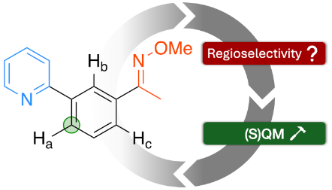
- representation is compared to all other SMILES with an added dummy atom. 5. Duplicates are removed when the directing group has equivalent resonance forms, as shown in Figure 8. The equivalent heteroatoms are detected using SMARTS patterns for nitro and carboxylate groups. For the remaining combinations of C–H


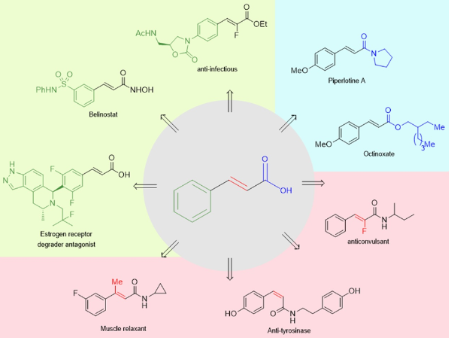
Recent advances in synthetic approaches for bioactive cinnamic acid derivatives
Beilstein J. Org. Chem. 2025, 21, 1031–1086, doi:10.3762/bjoc.21.85
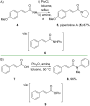
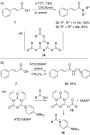
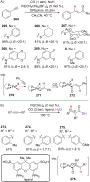
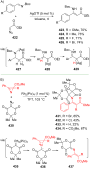
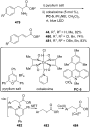
- ) reported a carboxyl group activation of cinnamic acid (7) by applying pivalic anhydride in a single step to afford the corresponding amide 8 in excellent yield (Scheme 3B) [35]. Moreover, pivalic anhydride is easier to handle than its chloride counterpart. Wang and co-workers (2022) utilized 5-nitro-4,6
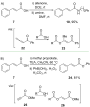
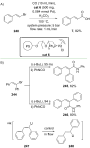
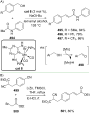
- in situ nitro reduction using Mn powder to afford the amide intermediate 42. The acid halide once again was applied for cinnamic acid amidation. Xiao and co-workers (2021) performed a transesterification and aminolysis of the tert-butyl ester 43 simply by using PCl3 through in situ generation of the
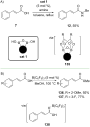
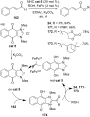
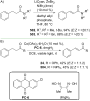
- proceeding via C–N-bond cleavage of the oxidized tertiary amine 116 (Scheme 35) [70]. Cinnamic acid (7) was activated by forming the acyl radical 118 after −OPyf group cleavage from 117. Recently, Li and co-workers (2024) studied visible-light-mediated FeCl3-catalyzed reductive transamidation of nitro








































Pd-Catalyzed asymmetric allylic amination with isatin using a P,olefin-type chiral ligand with C–N bond axial chirality
Beilstein J. Org. Chem. 2025, 21, 1018–1023, doi:10.3762/bjoc.21.83
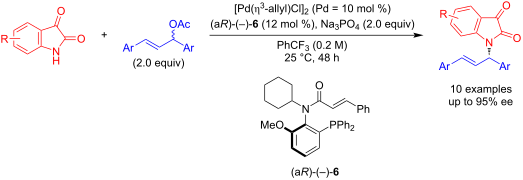
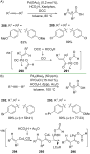
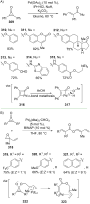
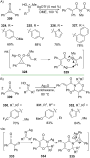
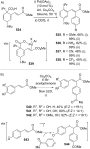
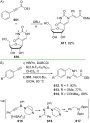
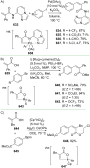
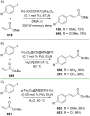
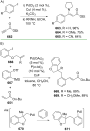
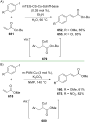
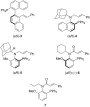
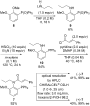
- in good yield, although with slightly decreased enantioselectivity. The introduction of the chloro group at the same position led to a moderate yield for (S)-13d, while the enantioselectivity remained high. In contrast, the reaction with the isatin derivative bearing a nitro group at the 5-position




Studies on the syntheses of β-carboline alkaloids brevicarine and brevicolline
Beilstein J. Org. Chem. 2025, 21, 955–963, doi:10.3762/bjoc.21.79

- debenzylated to brevicarine (2), isolated as a dihydrochloride salt. Müller et al. accomplished an alternative synthesis of brevicarine (2, Scheme 4) [23]. Compound 21 was obtained by treatment of nitrovinylindole 19 with N-methylpyrrole (20). Catalytic hydrogenation of the pyrrole ring and the nitro group of


Silver(I) triflate-catalyzed post-Ugi synthesis of pyrazolodiazepines
Beilstein J. Org. Chem. 2025, 21, 915–925, doi:10.3762/bjoc.21.74
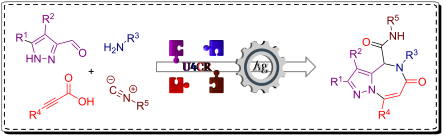
- ]. In 2015, García-Valverde and co-workers described an alternative synthesis of benzo[e][1,4]diazepines 6, exploring the nitro group of 2-nitrobenzoic acid as a masked amino group. The release was achieved through the post-Ugi reduction of the nitro group with SnCl2 triggering concomitant
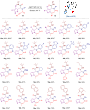
- trifluoromethyl and nitro groups. Furthermore, substrates 15m–o derived from aliphatic amines, also performed well, furnishing pyrazolodiazepines 16m–o in up to 89% yield. The structure of 16m, a representative compound of this series, was confirmed through single-crystal X-ray diffraction (scXRD) analysis




Unraveling cooperative interactions between complexed ions in dual-host strategy for cesium salt separation
Beilstein J. Org. Chem. 2025, 21, 845–853, doi:10.3762/bjoc.21.68

- , only two examples provide clear evidence of cooperative interactions based on single crystal structures [28][29], where the 18-crown-6 complexed K+ cation forms ion-dipole interactions with the carbonyl (C=O) or nitro (NO2) groups of the anion-bound receptors (KF and K2CO3). Recently, we demonstrated
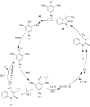
- stabilized by the binding with 18-crown-6 and three ion-dipole interactions with O=C (urea unit) and O–N (terminal nitro group). Distances of Cs–O are measured at 3.0 Å and 3.4 Å. Regarding type-(II) cesium binding, four cesium cations are observed to interact with two urea units and two nitro groups through
- receptor L. The carbonate anion is encapsulated inside the hexaurea cavity and stabilized by 12 × N–H···O hydrogen bonds. Two types of Cs+ complexations are observed, (I) one 18-crown-6-complexed Cs+ interacts with carbonyl (O=C) and nitro (-NO2) groups through three ion-dipole interactions. (II) The other


4-(1-Methylamino)ethylidene-1,5-disubstituted pyrrolidine-2,3-diones: synthesis, anti-inflammatory effect and in silico approaches
Beilstein J. Org. Chem. 2025, 21, 817–829, doi:10.3762/bjoc.21.65

- drug dexamethasone (IC50 = 13.25 ± 1.39 µM). At a concentration of 100 µM, the NO inhibition of pyrrolidine-2,3-dione derivatives 5a, 5b, and 5e was 53.65%, 50.22%, and 63.65%, respectively, as compared to 85.04% of dexamethasone. It is clear that the presence of a nitro group or halogen atom on the
- benzene ring at the 5-position of pyrrolidine-2,3-dione core in compounds 5c and 5d could relate to the lower inhibitory activity of 23.76% and 38.41% at the concentration of 100 µM, respectively, as compared to 5a and 5b. However, the existence of a nitro group on the aromatic ring attached to the 1
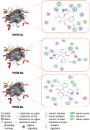
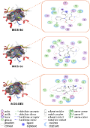
- , Trp194, Gly202, Pro350, Phe369, and Tyr489, further contributing to the stabilization of the ligand–protein complexes. More importantly, the occurrence of an electron-withdrawing group, nitro group (NO2), on the aromatic ring linked to the 1-position of the pyrrolidine-2,3-dione core may help compound 5e


Recent advances in the electrochemical synthesis of organophosphorus compounds
Beilstein J. Org. Chem. 2025, 21, 770–797, doi:10.3762/bjoc.21.61
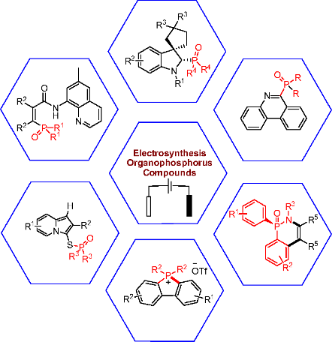
- atmosphere, indicating that anodic oxidation is the main pathway of the reaction, and oxygen may have a positive effect. (Table 3). Functional groups at the 4-position moderately reduced the reaction yield. The nitro group was incompatible in this system, likely due to its preferential reduction ability
- desired products were obtained with moderate yields for aldehydes containing strong electron-withdrawing groups, indicating that this method is suitable for forming P–C bonds. Products with nitro, chlorine, or bromine groups at the para position had higher yields compared to those with the groups at the
- corresponding phosphorylated propargyl alcohols (Scheme 19). The reaction yield showed that this method is not sensitive to electron-withdrawing or electron-donating groups at different positions on the aromatic ring. Most likely, the 3-substituted pyridine substrate and the enynes with nitro or carbonyl groups


Entry to 2-aminoprolines via electrochemical decarboxylative amidation of N‑acetylamino malonic acid monoesters
Beilstein J. Org. Chem. 2025, 21, 630–638, doi:10.3762/bjoc.21.50
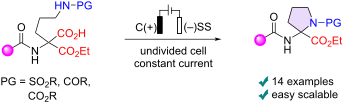
- undesired cathodic reduction. Indeed, trace amounts of 2-aminoproline derivative 6g (<4%) could be obtained by replacing SS as the cathode material with platinum that has a low overpotential for hydrogen evolution reaction [14]. To avoid the undesired cathodic reduction of the nitro group, the electrolysis



Cryptophycin unit B analogues
Beilstein J. Org. Chem. 2025, 21, 526–532, doi:10.3762/bjoc.21.40
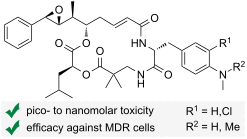
- formation and N-Boc-protection [24] provided nitroarene 5 in 40% yield over three steps. Reduction of the nitro group was performed with Pd/C and hydrogen to obtain aniline 6 in 98% yield, which served as a precursor for mono- and dimethylated unit B derivatives 7 and 8, respectively. While dimethylaniline



Synthesis of N-acetyl diazocine derivatives via cross-coupling reaction
Beilstein J. Org. Chem. 2025, 21, 490–499, doi:10.3762/bjoc.21.36
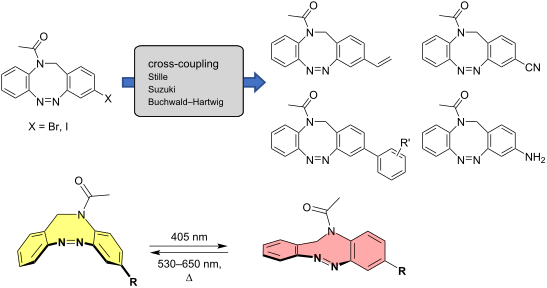
- except the preparation of the aminoaniline building block tert-butyl (2-amino-5-bromophenyl)carbamate (5), which was prepared by Boc-protection of the 5-bromo-2-nitroaniline (6) and subsequent reduction of the nitro group (see Supporting Information File 1, section II.1). Cross-coupling reactions Stille


Organocatalytic kinetic resolution of 1,5-dicarbonyl compounds through a retro-Michael reaction
Beilstein J. Org. Chem. 2025, 21, 473–482, doi:10.3762/bjoc.21.34
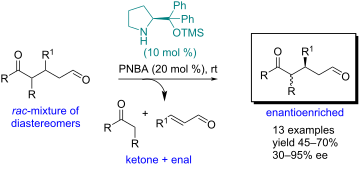
- conditions tested. Similarly, the resolution of nitro aldehydes 16 and 17, prepared by Michael addition of nitromethane to α,β-unsaturated aldehydes (entries 16 and 17, Table 5), was tested, and the same results were obtained as in the cases of the malonate derivatives. These results indicate that dicarbonyl
- compounds are better leaving groups than diesters or nitro derivatives in this type of transformation. Another possible explanation is that Michael adducts other than 1,5-dicarbonyl compounds require more robust bases to shift the equilibrium toward the retro-Michael product. It is essential to highlight


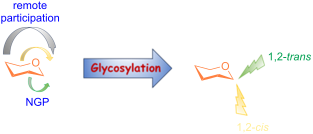
The effect of neighbouring group participation and possible long range remote group participation in O-glycosylation
Beilstein J. Org. Chem. 2025, 21, 369–406, doi:10.3762/bjoc.21.27




Synthesis, structure, ionochromic and cytotoxic properties of new 2-(indolin-2-yl)-1,3-tropolones
Beilstein J. Org. Chem. 2025, 21, 358–368, doi:10.3762/bjoc.21.26
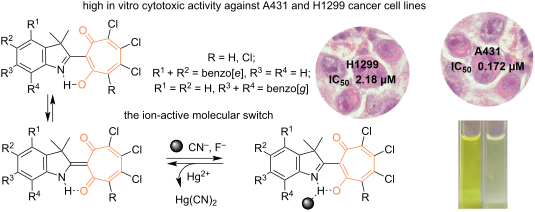
- interaction of 2,3,3-trimethylindolenine with 3,5-di(tert-butyl)-1,2-benzoquinone leads to the formation of indolo[1,2-a]indoline derivatives [23], while the presence of a nitro group in 4,6-di(tert-butyl)-3-nitro-1,2-benzoquinone the reaction with 2,3,3-trimethylindolenine leads to an o-quinone ring




Synthesis of new condensed naphthoquinone, pyran and pyrimidine furancarboxylates
Beilstein J. Org. Chem. 2025, 21, 340–347, doi:10.3762/bjoc.21.24
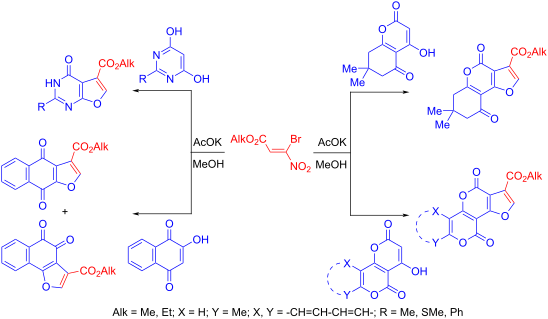
- compounds 5a, 5b, 6b, 6c, and 7a. Acknowledgements The physicochemical studies were performed on the equipment of Center for Collective Use ''Physical and chemical methods for the study of nitro compounds, coordination, biologically active substances and nanostructured materials'' at the Interdisciplinary


Facile one-pot reduction of β-nitrostyrenes to phenethylamines using sodium borohydride and copper(II) chloride
Beilstein J. Org. Chem. 2025, 21, 39–46, doi:10.3762/bjoc.21.4
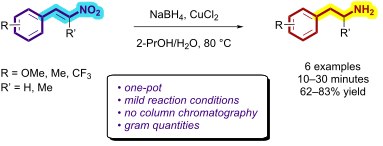
- ]. One of the most studied and inexpensive routes to synthesize substituted phenethylamines focuses on the reduction of their α,β-unsaturated nitroalkene analogue (β-nitrostyrene), where both the double bond and the nitro group need to be reduced to deliver the corresponding primary amine. Their
- -nitrostyrene (4a), precursor of most of the hallucinogenic 2C-X family (Table 1). This method was also tested on other types of scaffolds to investigate its potential general applications and effects on other substituents. As sodium borohydride per se does not reduce ester nor nitro functionalities [15][16][17
- ][18][19][20][21][22][28][29], the presence of the copper salt results in overcoming this issue and leads to isolated yields above 90% (7–9) (Scheme 2). Therefore, the NaBH4/CuCl2 system was proved to work on aromatic ester, nitro, and α,β-unsaturated nitroalkene functionalities. Our work demonstrates


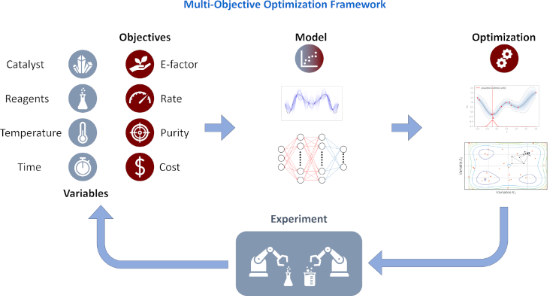
Emerging trends in the optimization of organic synthesis through high-throughput tools and machine learning
Beilstein J. Org. Chem. 2025, 21, 10–38, doi:10.3762/bjoc.21.3


Synthesis, characterization, and photophysical properties of novel 9‑phenyl-9-phosphafluorene oxide derivatives
Beilstein J. Org. Chem. 2024, 20, 3299–3305, doi:10.3762/bjoc.20.274
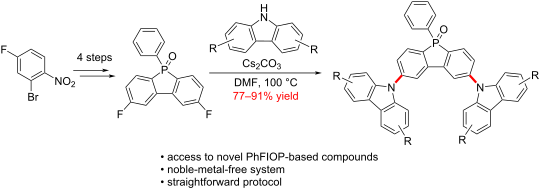
- was achieved in 5 steps starting from commercially available 2-bromo-4-fluoro-1-nitrobenzene (1, Scheme 1 and Scheme 2). For the preparation of the key intermediate 5 (Scheme 1), self-coupling of 1 in the presence of copper followed by reduction of the nitro group generated diamine compound 3 (89




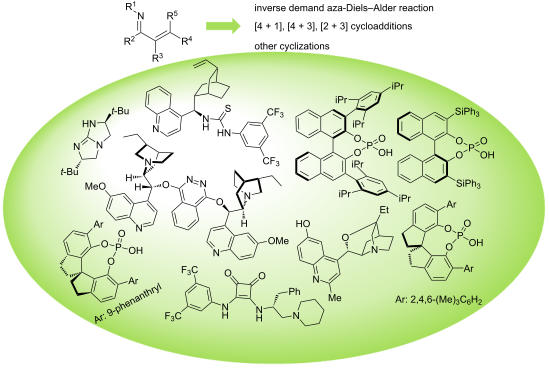
Non-covalent organocatalyzed enantioselective cyclization reactions of α,β-unsaturated imines
Beilstein J. Org. Chem. 2024, 20, 3221–3255, doi:10.3762/bjoc.20.268
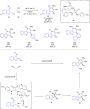
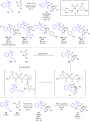
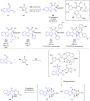
- evaluate the synthetic utility of this methodology, derivative 39e was reduced using BF3·OEt2 and Et3SiH leading to 41 in a good yield and moderate diastereoselectivity (Scheme 14). In 2017, Li’s group developed a chiral (DHQ)2PHAL-catalyzed [2 + 4] annulation reaction of cyclic 1-azadiene 14 with γ-nitro
- patterns and aryl R2 substituents led to the desired products. However, the presence of a cyclopropyl or isopropyl R2 substituent, led to a complex mixture of products (Scheme 15). In the mechanism proposed by the authors, (DHQ)2PHAL XIII provokes the deprotonation of the γ-nitro ketone at the α-position
- to the nitro group, resulting in the formation of an anionic nucleophilic specie A. The latter reacts with the cyclic 1-azadiene via stereoselective Michael addition, forming intermediate B, stabilized by π–π stacking interactions between the Ar group and the aromatic cyclic moiety of the 1-azadiene









Germanyl triazoles as a platform for CuAAC diversification and chemoselective orthogonal cross-coupling
Beilstein J. Org. Chem. 2024, 20, 3198–3204, doi:10.3762/bjoc.20.265
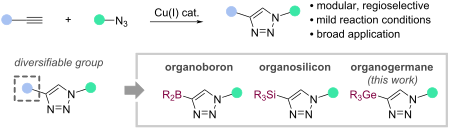
- chromene (12) were tolerated. Benzylic azides were accommodated including those bearing nitro (2), iodo (3), and boronic ester groups (5, 21). Strained rings were effective including cubane (18) and bicyclopentane (20). While 18 and 20 were isolated in lower yield, no evidence of ring opening was observed



Multicomponent reactions driving the discovery and optimization of agents targeting central nervous system pathologies
Beilstein J. Org. Chem. 2024, 20, 3151–3173, doi:10.3762/bjoc.20.261
- as nitro or azide groups, rather than protected amines. Following the Ugi-4CR, the nitro or azide group is reduced to form the amine, leading to a condensation reaction that results in the formation of the benzodiazepine ring [55]. Pertejo et al. [61] described the diastereselective synthesis of 3
- -carboxamide-1,4-benzodiazepin-5-ones when enantiopure (S)-(−)-α-methylbenzylamine and arylglyoxals were used. Thus, a reversal of diastereoselectivity was observed depending on the cyclization methodology employed, the reduction of a nitro group or the Staudinger/aza-Wittig on azide derivatives. This





