Search results
Search for "nucleophiles" in Full Text gives 608 result(s) in Beilstein Journal of Organic Chemistry. Showing first 200.
Approaches to stereoselective 1,1'-glycosylation
Beilstein J. Org. Chem. 2025, 21, 1700–1718, doi:10.3762/bjoc.21.133
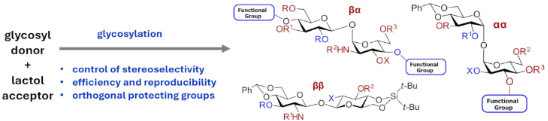
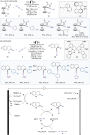
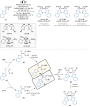
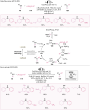
- selectivity in glycosylations with various types of nucleophiles [67][68]. This remarkable stereoselectivity has been attributed to intermolecular hydrogen bonding, which forms a transient tether between the glycosyl donor and acceptor, thereby guiding the reaction towards a preferred stereochemical outcome
- reduced reaction temperatures (−20 to −60 °C), N-phenyl trifluoroacetimidate (PTFA) donors are sufficiently stable to be used in glycosylation reactions at 0 °C or ambient temperature, while remaining reactive enough to glycosylate conformationally hindered nucleophiles in the presence of catalytic TMSOTf


Catalytic asymmetric reactions of isocyanides for constructing non-central chirality
Beilstein J. Org. Chem. 2025, 21, 1648–1660, doi:10.3762/bjoc.21.129
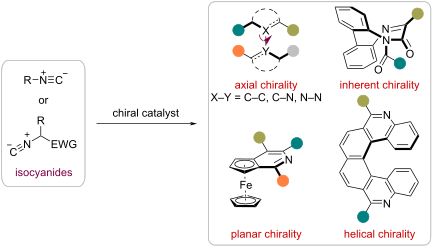
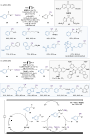
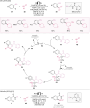
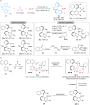
- nucleophiles in the DKR of various bridged biaryls bearing different linkages to give diverse nitrogen heterocycle-substituted atropoisomeric biaryls. In 2021, our group achieved the catalytic enantioselective DKR of biaryl lactones 46 with α-acidic isocyanides (Scheme 8a) [48]. By using Ag2CO3 and cinchonine
- lactones with carbon nucleophiles. The success lies in the tandem enantioselective ring-opening of lactones with α-acidic isocyanides, followed by a rapid cyclization driven by aromatization, overcoming the long-standing stereochemical leakage problem caused by the undesired lactol formation [45




General method for the synthesis of enaminones via photocatalysis
Beilstein J. Org. Chem. 2025, 21, 1535–1543, doi:10.3762/bjoc.21.116
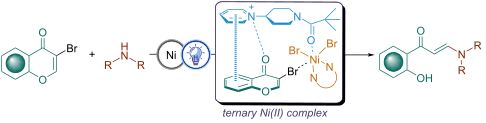
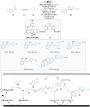
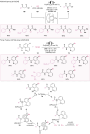
- act as both electrophiles and nucleophiles [7]. This makes enaminones very reactive, providing an excellent scaffold for organic synthesis. Thus, enaminones are valuable building blocks in the preparation of several carbocyclic [8][9][10][11], heterocyclic [12][13][14][15][16][17][18] as well as




Oxetanes: formation, reactivity and total syntheses of natural products
Beilstein J. Org. Chem. 2025, 21, 1324–1373, doi:10.3762/bjoc.21.101
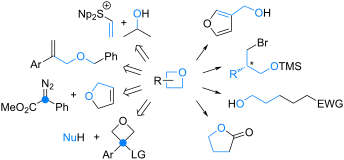
- -, particularly 2-methylideneoxetanes have become valuable intermediates in oxetane chemistry as they readily undergo a variety of chemical transformations, including ring-opening reactions with nucleophiles, epoxidations, cyclopropanations and [3 + 2] cycloadditions with nitrile oxides [51][52]. In addition
- cell membrane permeability were measured and the results suggested that these substrates might be promising bioisosteric replacements for thioesters. Five years later, the research group expanded the scope of this methodology to include alcohols as the nucleophiles (Scheme 35) [85], thus avoiding the
- years later, the group extended the scope of nucleophiles to azoles, sulphoximines (and other HN=S species), phosphites, phosphonites or secondary phosphine oxides, and developed selective reaction conditions for the alternative sulphur–fluoride exchange (SuFEx) pathway by employing hard anionic








Optimized synthesis of aroyl-S,N-ketene acetals by omission of solubilizing alcohol cosolvents
Beilstein J. Org. Chem. 2025, 21, 1201–1206, doi:10.3762/bjoc.21.97
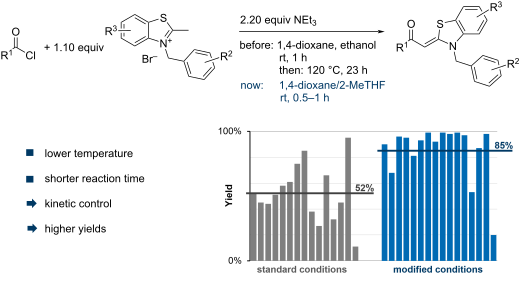
- addition, since condensations are affected by the bimolecular addition as an elementary step, special attention to the concentration of the nucleophiles has to be paid. According to Mayr’s nucleophilicity scales [8][9][10], a nucleophilicity parameter N for the specific S,N-ketene acetal intermediate 4 can


Investigations of amination reactions on an antimalarial 1,2,4-triazolo[4,3-a]pyrazine scaffold
Beilstein J. Org. Chem. 2025, 21, 1126–1134, doi:10.3762/bjoc.21.90
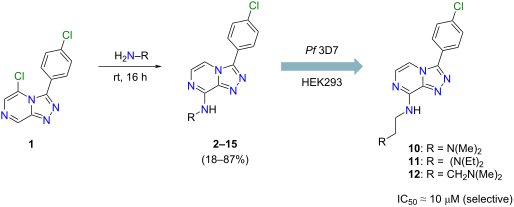
- engrafted with human erythrocytes, after oral administration of the compounds [5][9]. Triazolopyrazines halogenated on the pyrazine ring represent synthetically useful targets for elaboration of this active scaffold, and the regioselectivity of amine nucleophiles (amongst others) has been explored by Korsik
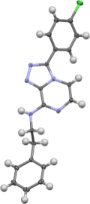
- -halogenated triazolopyrazines with amine nucleophiles, and the only likely product from reaction with primary amines at room temperature. Biological studies All compounds (1–15) were assayed for antimalarial activity against the chloroquine sensitive P. falciparum 3D7 strain, and a preliminary assessment of
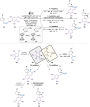
- C20H2635ClN6NaO2, 439.1620; found, 439.1616. (A) Position numbering on the pyrazine ring of 1,2,4-triazolo[4,3-a]pyrazine. (B) Illustration of ipso- and tele-substitution products for reactions of nucleophiles with 5-halogenated 1,2,4-triazolo[4,3-a]pyrazine, where X = halogen and Nuc = nucleophile. Key COSY




Pd-Catalyzed asymmetric allylic amination with isatin using a P,olefin-type chiral ligand with C–N bond axial chirality
Beilstein J. Org. Chem. 2025, 21, 1018–1023, doi:10.3762/bjoc.21.83
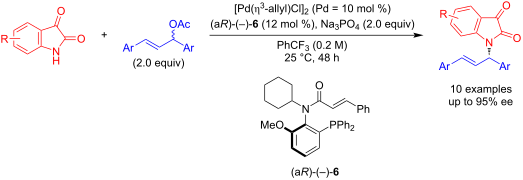
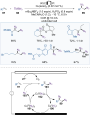
- asymmetric allylic amination of allylic esters with isatin derivatives 11 as nucleophiles. The reaction proceeds efficiently, yielding the products (S)-13 with good-to-high enantioselectivity. A scale-up reaction was also successfully conducted at a 1 mmol scale. Additionally, when malononitrile was added to
- palladium catalysts with amines as nucleophiles have been reported [14][15][16][17][18][19][20][21][22][23][24][25], there have been only a few reports on the N-substitution of isatin using asymmetric methods. Recently, Wolf’s group reported a transition-metal-catalyzed (Pd-catalyzed) asymmetric allylic
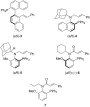
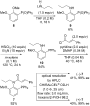
- enantioselectivity as the 0.1 mmol scale reaction (entry 14). Next, we investigated the substrate scope of the palladium-catalyzed asymmetric allylic amination of 1,3-diphenyl-2-propenyl acetate (12) with isatin derivatives 11 as nucleophiles under the optimized conditions using (aR)-(−)-6 as the ligand and Na3PO4




Recent total synthesis of natural products leveraging a strategy of enamide cyclization
Beilstein J. Org. Chem. 2025, 21, 999–1009, doi:10.3762/bjoc.21.81
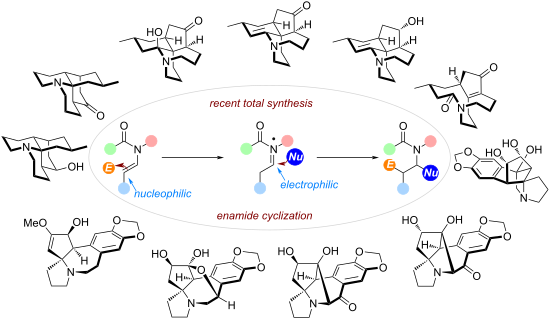
- enamides as nucleophiles, rendering them more stable than enamines. This stability is reflected in their frequent occurrence in natural products [4]. As a result, research on the synthetic applications of enamides has historically lagged behind that of enamines [5][6]. Beyond their use in hydrogenation
- cephalotaxine, cephalezomine H, (−)-cephalotaxine, (−)-cephalotine B, (−)-fortuneicyclidin A, (−)-fortuneicyclidin B, and (−)-cephalocyclidin A. Unlike enamines, tertiary enamides can participate in cyclization reactions initial as nucleophiles, and upon protonation, alkenylation, or alkylation, the resultant
- resulting iminium ion can be readily captured by a wide variety of nucleophiles, including alkenes and alkynes. These aza-Prins cyclizations have potential applications in the synthesis of natural alkaloids, as exemplified by She’s total synthesis of (−)-dihydrolycopodine and (−)-lycopodine [17]. These




Harnessing tethered nitreniums for diastereoselective amino-sulfonoxylation of alkenes
Beilstein J. Org. Chem. 2025, 21, 947–954, doi:10.3762/bjoc.21.78

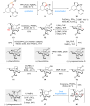
- regioselective, diastereoselective, and metal-free protocol for alkene amino-hydroxylation, which compared favorably to prior art in this area [25][26][27][28][29][30][31][32]. Naturally, we wondered if other O-nucleophiles were competent in the ring-opening of the aziridinium intermediate. Indeed, almost all


Silver(I) triflate-catalyzed post-Ugi synthesis of pyrazolodiazepines
Beilstein J. Org. Chem. 2025, 21, 915–925, doi:10.3762/bjoc.21.74
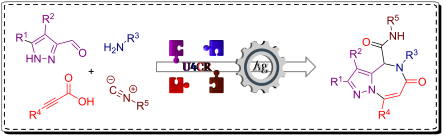
- by nitrogen nucleophiles [59][60]. When the reaction was conducted with 5 mol % of AgOTf in toluene at 80 °C for 20 hours, pyrazolo[1,5-a][1,4]diazepine 16a was obtained in 46% yield, while complete conversion of the starting material 15a was not achieved (Table 1, entry 1). Increasing the




4-(1-Methylamino)ethylidene-1,5-disubstituted pyrrolidine-2,3-diones: synthesis, anti-inflammatory effect and in silico approaches
Beilstein J. Org. Chem. 2025, 21, 817–829, doi:10.3762/bjoc.21.65

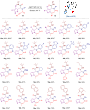
- nucleophiles [24]. Therefore, it is reasonable that the transimination reaction between 3a’–e’ and 4 preferentially takes place at the carbon atom of the imine (C=N) linkage instead of the carbonyl carbons at the 2- or 3-positions. Lastly, the covalent bond between the tetrahedral carbon atom and the


Recent advances in allylation of chiral secondary alkylcopper species
Beilstein J. Org. Chem. 2025, 21, 639–658, doi:10.3762/bjoc.21.51
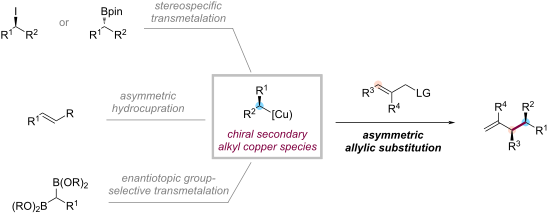
- inception (Scheme 1). Early studies were mainly focused on palladium catalysts [5][6][7][8], as demonstrated by the independent pioneering works of Tsuji and Trost in the 1960s and 1970s, respectively. While palladium catalysts demonstrated excellent reactivity with soft stabilized nucleophiles in the
- phosphoramidite ligands significantly advanced this field, with contributions from numerous research groups including Hartwig, Helmchen, Carreira, Alexakis, and You [19]. In general, soft nucleophiles that typically possess conjugate acids with pKa values less than 25 have been utilized in most Pd and Ir
- nucleophiles 5 that have conjugate acids with pKa values greater than 25 such as organolithium, organomagnesium, organozinc, and organozirconium reagents. This crucial distinction effectively expanded the scope of allylic substitution reactions beyond traditional boundaries. The evolution of copper-catalyzed




Entry to 2-aminoprolines via electrochemical decarboxylative amidation of N‑acetylamino malonic acid monoesters
Beilstein J. Org. Chem. 2025, 21, 630–638, doi:10.3762/bjoc.21.50
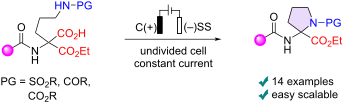
- also suitable as nucleophiles for the cyclization into 2-aminoproline and 2-aminopipecolic acid derivatives 6 (Figure 2, reaction 3). The starting disubstituted malonic esters are readily available by C-alkylation of inexpensive and readily available diethyl acetamidomalonate, followed by
- facilitated the cyclization, and the 6-membered heterocycles 6h,i could be obtained in 27% and 18% yield, respectively. In addition to sulfonamides, carbamates such as N-Boc and benzamide are also suitable as nucleophiles for the anodic decarboxylation/cyclization reaction. However, the corresponding 2
- tethered nitrogen nucleophiles such as sulfonamides, carbamates, and benzamide. The decarboxylative cyclization of a stereogenic center-containing sulfonamide proceeds with excellent diastereoselectivity (97:3 dr). The N-protected 2-aminoproline derivatives can be incorporated into dipeptides by an ester



Photocatalyzed elaboration of antibody-based bioconjugates
Beilstein J. Org. Chem. 2025, 21, 616–629, doi:10.3762/bjoc.21.49
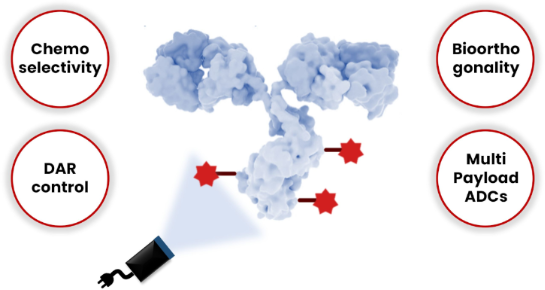
- oxygen [42]. Through energy transfer (EnT) from the ruthenium-based photocatalyst to triplet oxygen, singlet oxygen is produced in a targeted manner, which oxidizes histidine to an endoperoxide, significantly increasing its reactivity toward nucleophiles (Figure 4A). This strategy employs a


Formaldehyde surrogates in multicomponent reactions
Beilstein J. Org. Chem. 2025, 21, 564–595, doi:10.3762/bjoc.21.45
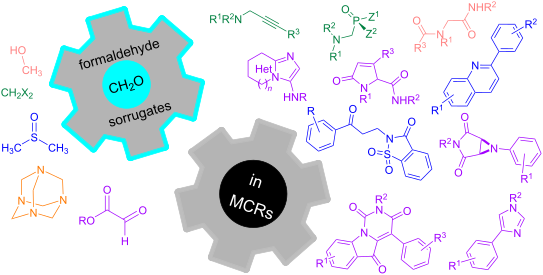
- nucleophilic species present in the reaction medium, MMS can act as a methylene source. Under hydrolysis conditions, it can be a source of formaldehyde (Scheme 5a), but with other nucleophiles, after nucleophilic addition, the sulfide group can work as a leaving group, allowing for a sequential domino process
- phosphites can also undergo an addition to the C=O bond of the carbonyl component (Abramov reaction) giving α-hydroxy phosphonates 33 as byproducts (Scheme 26a) [72]. Competition between the two nucleophiles for the electrophilic carbonyl compound depends on their relative reactivity [74][77] and this lack
- difficult to separate [86][87][88]. Probably, the high reactivity of the imines generated by formaldehyde leads to their polymerization [84] or even to the incorporation of other nucleophiles present in the reaction mixture, such as the solvent or a second molecule of the amidine component (Scheme 32) [84


Study of the interaction of 2H-furo[3,2-b]pyran-2-ones with nitrogen-containing nucleophiles
Beilstein J. Org. Chem. 2025, 21, 556–563, doi:10.3762/bjoc.21.44
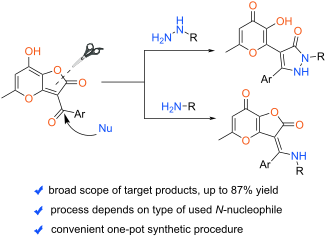
- with diverse N-nucleophiles was investigated. It was shown that the direction of the process depends on the type of employed nitrogen-containing reagent. For example, condensation with aliphatic amines leads to 2H-furo[3,2-b]pyran-2,7(3H)-diones bearing an exocyclic enamine moiety. At the same time
- pyrrolones such interaction can lead to pyridazinone systems [10][11]. Despite on the plenty of reactions with nitrogen-containing nucleophiles there is only one example of recyclization using furanone with a carbonyl group at position 3 (Scheme 1a, previous work) [6]. However, no work on this type of
- communication we investigated the interaction of substituted 2H-furo[3,2-b]pyran-2-ones 1 with nitrogen-containing nucleophiles (Scheme 1b, this work). As a result, the general approach to preparation of pyrazolones with a 3-hydroxy-4-pyranone unit was developed. It’s important to underline that both pyrazolone


Vinylogous functionalization of 4-alkylidene-5-aminopyrazoles with methyl trifluoropyruvates
Beilstein J. Org. Chem. 2025, 21, 533–540, doi:10.3762/bjoc.21.41
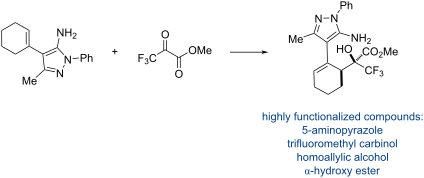
- properties along a C=C double bond [1]. This effect has been established to be very advantageous to expand the range of reactions of different functional groups that can be coupled efficiently through a conjugated π-system. In this context, the addition reaction of vinylogous nucleophiles to carbonyl
- compounds is a significant and important reaction for the selective synthesis of homoallylic alcohols in an efficient and sustainable way [2][3]. As carbonyl compounds, alkyl trifluoropyruvates [4][5] are an interesting class of compounds that have been used in addition reactions of different nucleophiles
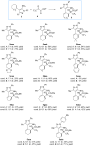
- functionalization of 5-aminopyrazoles [26], we decided to study 4-alkenyl-5-aminopyrazoles as nucleophiles in the vinylogous addition reaction to electrophiles. Herein, we report the regioselective and diastereoselective functionalization of 4-cyclohexenyl-5-aminopyrazoles using alkyl trifluoropyruvates [27][28][29



Organocatalytic kinetic resolution of 1,5-dicarbonyl compounds through a retro-Michael reaction
Beilstein J. Org. Chem. 2025, 21, 473–482, doi:10.3762/bjoc.21.34
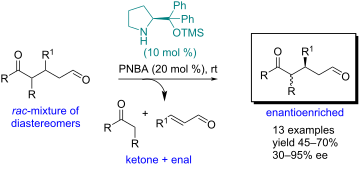
- olefins with a wide range of nucleophiles, with many organocatalyzed asymmetric examples highlighted in the literature [23][24]. We have observed that the enantioenriched 1,5-dicarbonyl Michael adducts, synthesized via organocatalyzed reaction of cinnamaldehyde with benzyl phenyl ketone, undergo


Electrochemical synthesis of cyclic biaryl λ3-bromanes from 2,2’-dibromobiphenyls
Beilstein J. Org. Chem. 2025, 21, 451–457, doi:10.3762/bjoc.21.32
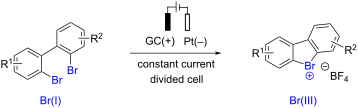
- diaryl λ3-bromanes under remarkably mild conditions with subsequent applications of the in situ-generated arynes in cycloaddition reactions [3], meta-selective reactions with oxygen and nitrogen nucleophiles [4][5], regiodivergent meta or ortho-alkynylations [6], and regioselective (di)halogenation [7


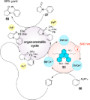
Beyond symmetric self-assembly and effective molarity: unlocking functional enzyme mimics with robust organic cages
Beilstein J. Org. Chem. 2025, 21, 421–443, doi:10.3762/bjoc.21.30
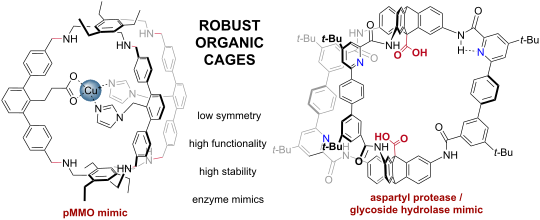
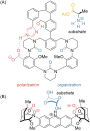
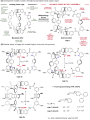
- require rethinking cavity design, but will be achieved predominantly by synthetic advances, for instance by the internal functionalization of cavities with bifunctionality – chemical groups that simultaneously activate nucleophiles and electrophiles or otherwise stabilize charged pairs. Herein, I argue




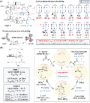
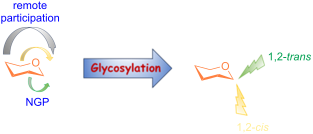
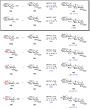
The effect of neighbouring group participation and possible long range remote group participation in O-glycosylation
Beilstein J. Org. Chem. 2025, 21, 369–406, doi:10.3762/bjoc.21.27




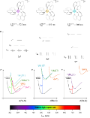
Red light excitation: illuminating photocatalysis in a new spectrum
Beilstein J. Org. Chem. 2025, 21, 296–326, doi:10.3762/bjoc.21.22

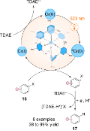
- study found that by using [Os(phen)3]2+ as the photocatalyst and 660 nm red light, the reaction exhibited greater functional group tolerance, handling a variety of electron-deficient, neutral and rich (hetero)aryl bromides 9 and primary and secondary amine-based nucleophiles 10 with minimal degradation
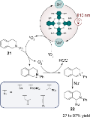
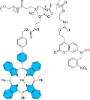
- molecular orbital (HOMO), thereby shifting the absorption of the complexes into the NIR region (around 810 nm). The authors have demonstrated the efficiency of their photocatalyst in cross-dehydrogenative coupling reactions with N-phenyltetrahydroisoquinoline 21 and diverse nucleophiles (Scheme 7). Their
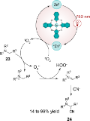
- this review hitherto. This singlet oxygen is generated by the energy transfer from the excited state of the phthalocyanin zinc complexes to molecular oxygen, allowing the oxidation of the N-phenyltetrahydroisoquinoline 21 into a reactive iminium intermediate that subsequently couples with nucleophiles







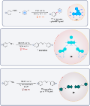








Molecular diversity of the reactions of MBH carbonates of isatins and various nucleophiles
Beilstein J. Org. Chem. 2025, 21, 286–295, doi:10.3762/bjoc.21.21
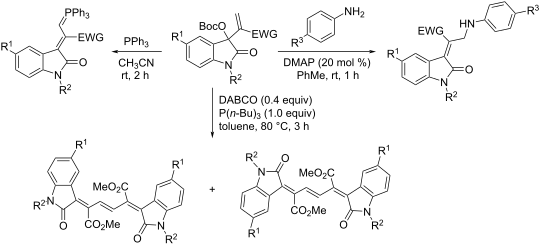
- Zi-Ying Xiao Jing Sun Chao-Guo Yan College of Chemistry & Chemical Engineering, Yangzhou University, Yangzhou 225002, China 10.3762/bjoc.21.21 Abstract In this paper, the nucleophilic substitution reactions of various N- and P-containing nucleophiles to MBH carbonates of isatins were investigated
- an indole motif with a ketone and a γ-lactam moiety occur in numerous natural substances [1][2][3][4]. Isatins have many interesting aspects in organic reactions and potential applications. The versatile reactivity of isatins used both as an electrophiles and nucleophiles and their easy availability
- - and P-containing nucleophiles to MBH carbonates of isatins and convenient synthesis of diverse functionalized 3-substituted oxindole derivatives. Results and Discussion Initially, the reaction conditions were briefly examined by using MBH nitrile of isatin 1a and p-toluidine (2a) as model reaction. It




Dioxazolones as electrophilic amide sources in copper-catalyzed and -mediated transformations
Beilstein J. Org. Chem. 2025, 21, 200–216, doi:10.3762/bjoc.21.12
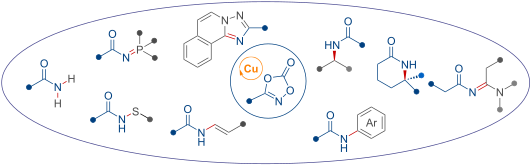
- ][58][59][60][61], and photoinduced alkylations of various nucleophiles [22][62][63][64][65][66][67][68]. Recently, these sustainable catalytic systems have gradually been applied to amidations employing dioxazolones as amide sources. To the best of our knowledge, no review article has yet covered the


Recent advances in electrochemical copper catalysis for modern organic synthesis
Beilstein J. Org. Chem. 2025, 21, 155–178, doi:10.3762/bjoc.21.9

- amounts of copper reagents. Consequently, investigation into more practical and sustainable reactions remains an area of ongoing research [10]. Conventional cross-coupling reactions typically require C(sp2)-based electrophiles and nucleophiles as coupling partners. Generally, the reaction is initiated
- identical racemic carbonyl nucleophiles to generate Cu-enolate 44 and Ni-enolate 43 simultaneously (Figure 10). The Ni-enolate 43 undergoes anodic oxidation through single-electron transfer, releasing nickel-bound α-carbonyl radical 45, whereas the copper complex 44 remains electrochemically inert under
- reactions are essential synthetic methodologies. The discovery of Chan–Lam coupling reactions, which use arylboronic acids and N-nucleophiles, provided a C–N bond-forming protocol using copper catalysis, offering a complementary method to noble transition-metal catalysis [78]. Recently, dual-catalytic