


Search results
Search for "phosphane" in Full Text gives 31 result(s) in Beilstein Journal of Organic Chemistry.
Solvent- and ligand-induced switch of selectivity in gold(I)-catalyzed tandem reactions of 3-propargylindoles
Beilstein J. Org. Chem. 2011, 7, 786–793, doi:10.3762/bjoc.7.89
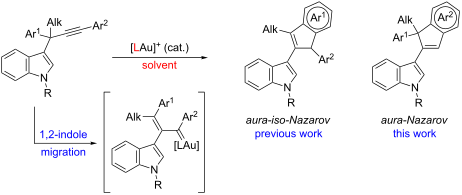
- cyclization [28][29]. The use of cationic gold complexes bearing different types of phosphane ligands always provided the iso-Nazarov product 3a as the major isomer, with a small increase in the competing Nazarov product 4a on switching the ligand to SPhos (Table 1, entries 1–4). The use of complexes bearing

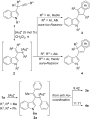


Backbone tuning in indenylidene–ruthenium complexes bearing an unsaturated N-heterocyclic carbene
Beilstein J. Org. Chem. 2010, 6, 1120–1126, doi:10.3762/bjoc.6.128
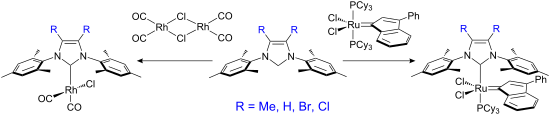
- in this field [1][2][3][4][5][6][7][8]. Mixed complexes bearing both a phosphane and a NHC ligand, so-called 2nd generation catalysts, typically display better thermal stability and activities compared to 1st generation catalysts [9][10]. Key to the success and research activity involving 2nd


Light-induced olefin metathesis
Beilstein J. Org. Chem. 2010, 6, 1106–1119, doi:10.3762/bjoc.6.127

- ) by adding a bulky phosphane ligand to the complex. Thus, a more active and soluble neutral species with the anionic ligands bound to the metal could be obtained. The same concept of arene displacement by UV radiation was used for the release of a p-cymene ligand to produce a more reactive catalytic
- species. Osmium precatalysts 11a–f did not polymerise norbornene under standard conditions. However, 5 min irradiation of a toluene solution of the complex with a 200 W Hg lamp led to active catalysts. The more active catalysts were those possessing more sterically hindered phosphane ligands. Thus
- respective yields and the required reaction times. In line with the development of ruthenium benzylidene initiators [66][67], the phosphane ligand was replaced by an N-heterocyclic carbene (NHCs) in the photoactivated precatalysts. Accordingly, Noels et al. [68][69] synthesised a range of NHC substituted


Ring opening metathesis polymerization-derived block copolymers bearing chelating ligands: synthesis, metal immobilization and use in hydroformylation under micellar conditions
Beilstein J. Org. Chem. 2010, 6, No. 28, doi:10.3762/bjoc.6.28
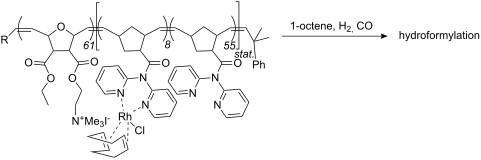
- attention. Though M1 contains a chelating ligand and can be polymerized by both Schrock and Grubbs-type initiators [15][16][17][18]. M2 is particularly problematic since it contains a quaternary ammonium moiety and has the ability to alkylate the phosphane or pyridine ligands of 1st-, 2nd-, and 3rd


A review of new developments in the Friedel–Crafts alkylation – From green chemistry to asymmetric catalysis
Beilstein J. Org. Chem. 2010, 6, No. 6, doi:10.3762/bjoc.6.6
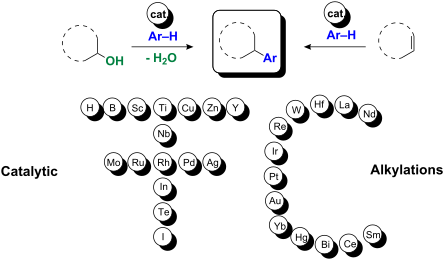
- et al. [65]. In addition to the transition metal Pt(II), catalytic amounts of hydrochloric acid were necessary to obtain the desired 2,3-annulated indoles in sufficient yields. By employing optically pure axial chiral phosphane ligands, an enantioselective version of this transformation was developed
- . using self-assembling palladium-phosphane catalysts [83]. Further procedures for the 3-benzylation and allylation of indole employing FeCl3 and InBr3 have been developed more recently by Yadav and Jana [84][85]. Both procedures are very similar and employ 10 mol% of catalyst. However, the reaction with


An exceptional P-H phosphonite: Biphenyl- 2,2'-bisfenchylchlorophosphite and derived ligands (BIFOPs) in enantioselective copper- catalyzed 1,4-additions
Beilstein J. Org. Chem. 2005, 1, No. 6, doi:10.1186/1860-5397-1-6
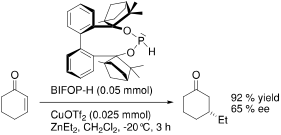
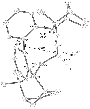
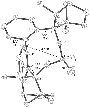
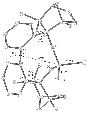
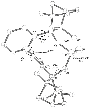
- chlorophosphite intermediates. Synthesis of biphenyl-2,2'-bisfenchol (BIFOL) based phosphane derivatives (BIFOPs). Geometries of BIFOP-systems with respect to biaryl dihedral angles (C2-C1-C1’-C2’, BAA), fenchyl-aryl dihedral angles (C1-C2-C3-O1) on the lone pair-side of phosphorus (FAA-lp) and at the substituent









Other Beilstein-Institut Open Science Activities



