


Search results
Search for "thiol–ene" in Full Text gives 28 result(s) in Beilstein Journal of Organic Chemistry.
Intramolecular bridges formed by photoswitchable click amino acids
Beilstein J. Org. Chem. 2012, 8, 884–889, doi:10.3762/bjoc.8.100
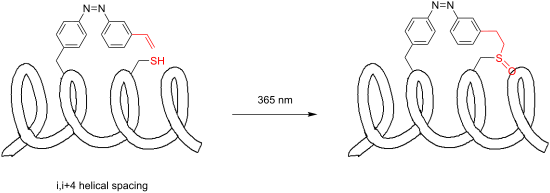
- a model peptide without a preferred conformation, it was seen that the thiol–ene click reaction takes place efficiently in both cases. Upon induction of an α-helical structure by the addition of trifluoroethanol, the thiol click reaction occurs preferentially with the i,i+4 spacing. Even in the
- ; isomerization; molecular switches; photoswitchable click amino acid; thiol–ene click; Introduction Photoswitchable bridges that are site-specifically incorporated into proteins allow the conformation and activity of proteins to be modulated by light. In contrast to common bivalent thiol reactive azobenzene
- switches [1][2][3][4][5], the PSCaa described here (Scheme 1) is an α-amino acid containing, besides an azobenzene unit, a vinyl function that can react specifically with a cysteine within a putative conformational domain of a peptide or a protein by light-induced thiol–ene click reaction [6][7][8][9]. The



2-Allylphenyl glycosides as complementary building blocks for oligosaccharide and glycoconjugate synthesis
Beilstein J. Org. Chem. 2012, 8, 597–605, doi:10.3762/bjoc.8.66
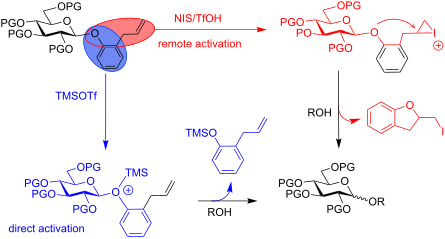
- can be reverted as needed (active–latent strategy). Direct conjugation of the AP moiety to biomolecules, monolayers, arrays, etc., should be possible by executing thiol–ene chemistry [43], ozonolysis/reductive amination [44][45][46], or other ligation protocols [47][48]. Experimental General remarks


Miniemulsion polymerization as a versatile tool for the synthesis of functionalized polymers
Beilstein J. Org. Chem. 2010, 6, 1132–1148, doi:10.3762/bjoc.6.130
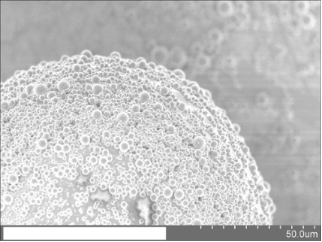
- via the thiol–ene chemistry [47]. Controlled radical polymerizations Controlled radical polymerization techniques are suitable for synthesizing polymers with a high level of architectural control. They not only allow the copolymerization with functional monomers as discussed previously for free





Other Beilstein-Institut Open Science Activities



