


Search results
Search for "adduct" in Full Text gives 611 result(s) in Beilstein Journal of Organic Chemistry. Showing first 200.
Direct trifluoroethylation of carbonyl sulfoxonium ylides using hypervalent iodine compounds
Beilstein J. Org. Chem. 2024, 20, 3182–3190, doi:10.3762/bjoc.20.263
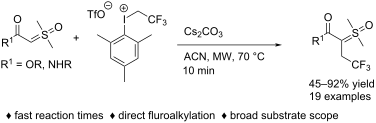
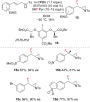
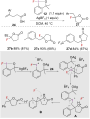
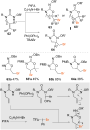
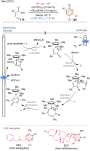
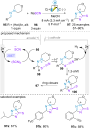
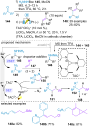
- reductive elimination (path 1) [37][38][39]. This pathway initiates by formation of a halogen bond complex between 1a and the trifuoroethyl(mesityl)iodonium ion 2a’, where adduct XB-1 is presumably in equilibrium with isomeric XB-2. Reductive elimination of the iodoarene from XB-2 would furnish B, whose


Multicomponent reactions driving the discovery and optimization of agents targeting central nervous system pathologies
Beilstein J. Org. Chem. 2024, 20, 3151–3173, doi:10.3762/bjoc.20.261
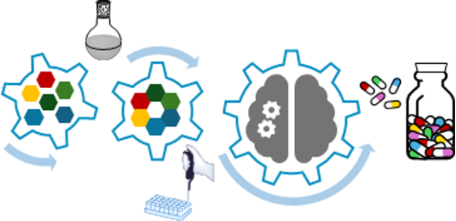
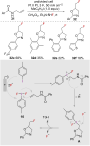
- , isocyanide, and TMSN3, after which the Ugi adduct is treated with an excess of different isocyanates resulting in the corresponding hydantoin derivatives. Finally, under microwave irradiation, the Boc group is removed under acid conditions and the benzodiazepine core is formed after ring closure (Scheme 18
- agents for central nervous system pathologies. This combination not only enhances the pace of discovery but also broadens the scope of potential treatments, underscoring the significant impact of MCRs in medicinal chemistry. Classical MCRs. Different scaffolds that can be formed with the Ugi adduct. Most


Hypervalent iodine-mediated intramolecular alkene halocyclisation
Beilstein J. Org. Chem. 2024, 20, 3113–3133, doi:10.3762/bjoc.20.258
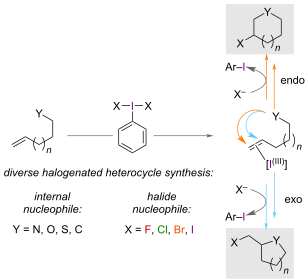
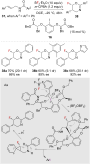
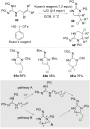
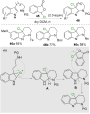
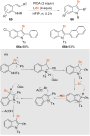
- , deuterium labelling, rearrangements on stereodefined substrates, and structural analyses (NMR and X-ray) of the reaction products. RT-NMR-derived data strongly supported a pathway of alkene activation by the iodane, as opposed to the formation of an N-I(III) adduct. The presence of 5-exo-products, with
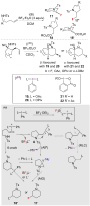
- . A mechanism for the reaction was proposed by the authors (Scheme 27), whereby a TMS-adduct A of the amide is formed, alkene activation and cyclisation from oxygen forms the cyclised intermediate B, then displacement of PhI by chloride gives the product. Chai, Jiang, Zhu and co-workers reported the



















Advances in the use of metal-free tetrapyrrolic macrocycles as catalysts
Beilstein J. Org. Chem. 2024, 20, 3085–3112, doi:10.3762/bjoc.20.257
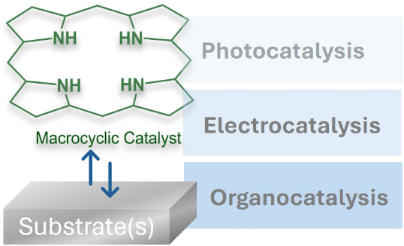
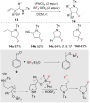
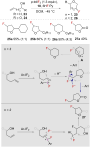
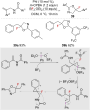
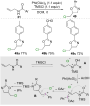
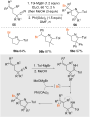
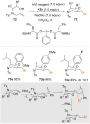
- (Table 5). DFT calculations predicted that the catalytically active species is the adduct of porphyrin and TBACl (18-I), which forms an activated complex (18-II) with the substrate followed by a ring-opening nucleophilic attack of Cl−. The electron-rich nitrogen atom in 18-III further activates
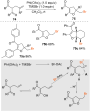
- porphyrins, and provided evidence for aryl radical formation through mass spectrometry and NMR analysis of the adduct formed from the reaction between the radical intermediate and the scavenger 2,2,6,6-tetramethyl-1-piperidin-1-oxyl (TEMPO). Furthermore, they used the catalysts for borylation of arylamines


Tailored charge-neutral self-assembled L2Zn2 container for taming oxalate
Beilstein J. Org. Chem. 2024, 20, 3007–3015, doi:10.3762/bjoc.20.250
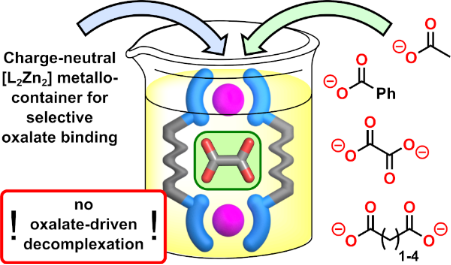
- a distinct 1:1 host–guest complex was formed (Figure 2b). The major signal at m/z of 705.1282 and its isotope pattern matches with the calculated value (705.1263) of the 1:1 complex [(C2)@L2Zn2]2‒. The m/z-signal at 1652.5394 fits to a single negatively charged TBA adduct of the 1:1 complex (Figure




Recent advances in transition-metal-free arylation reactions involving hypervalent iodine salts
Beilstein J. Org. Chem. 2024, 20, 2891–2920, doi:10.3762/bjoc.20.243

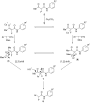
- products. The radical path was considered for the reaction mechanism as on adding TEMPO as radical scavenger the radical trapping adduct was detected by HRMS. Simultaneously with the above work, Murarka and co-workers also reported an organophotoredox-catalyzed stereoselective allylic arylation method for




Multicomponent synthesis of α-branched amines using organozinc reagents generated from alkyl bromides
Beilstein J. Org. Chem. 2024, 20, 2834–2839, doi:10.3762/bjoc.20.239
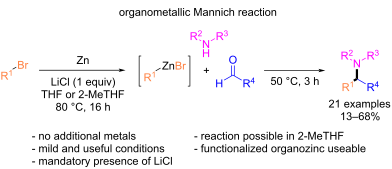
- , a secondary aniline only furnished traces of the expected product. Aliphatic aldehydes also failed to deliver the multicomponent adduct. Conclusion In conclusion, we have shown in this work that alkyl bromides can be used instead of alkyl iodides in a direct zincation–multicomponent organometallic


Synthesis of tricarbonylated propargylamine and conversion to 2,5-disubstituted oxazole-4-carboxylates
Beilstein J. Org. Chem. 2024, 20, 2827–2833, doi:10.3762/bjoc.20.238

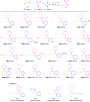
- temperature without addition of acetic acid. To address this, the reaction was performed at −78 °C, and acetic acid was added at the same temperature, yielding adduct 4a in 13% yield (Table 1, entry 2). The reaction yield was significantly influenced by the amounts of 3a and butyllithium used. The yield of 4a
- 3) [13][14]. To a dry THF solution of adduct 4a, butyllithium was added, and the reaction mixture was stirred at −78 °C for 5 min. Following the addition of acetic acid, the reaction mixture was concentrated and subjected to silica gel column chromatography, resulting in the isolation of ethyl 5
- -butoxide was observed, suggesting that lithium ions activate for the ring closure. Under the conditions in Table 3, entry 3, adduct 4 underwent ring formation. This reaction was not influenced by the bulkiness of the substituent on the alkynyl group, yielding the corresponding oxazoles 5b–d (Table 3


Access to optically active tetrafluoroethylenated amines based on [1,3]-proton shift reaction
Beilstein J. Org. Chem. 2024, 20, 2776–2783, doi:10.3762/bjoc.20.233
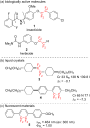
- published that the asymmetric conjugate addition of 4-methylphenylboronic acid towards (E)-5-bromo-4,4,5,5-tetrafluoro-1-phenyl-2-penten-1-one (8) in the presence of a rhodium catalyst coordinated with (S)-BINAP gave the corresponding Michael adduct 9 in 94% enantiomeric excess (reaction 2, Scheme 1) [22
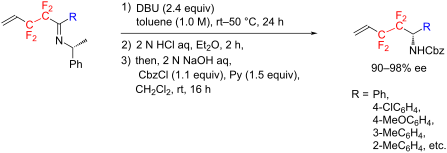
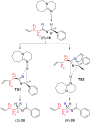
- at room temperature for 24 h gave the corresponding [1,3]-proton shift adduct (S)-20b in 31% yield (Table 1, entry 1). In this case, the HF-elimination product 21b was also obtained in 16% [37], and the starting material was recovered in 53%. As shown in entries 2–7 of Table 1, the reactions in



Interaction of a pyrene derivative with cationic [60]fullerene in phospholipid membranes and its effects on photodynamic actions
Beilstein J. Org. Chem. 2024, 20, 2732–2738, doi:10.3762/bjoc.20.231

- the 1O2 adduct of 4-oxo-TEMP (4-oxo-TEMPO) were observed in the dispersion of catC60-lip ([catC60] = 5 µM) in PBS(–) showing an evidence of energy transfer reaction by the photoexcited catC60 (Figure 5a(ii)). In the presence of electron donor (NADH) under photoirradiation, •OH generation was observed
- as a •OH adduct of DMPO (DMPO-OH, Figure 5b(ii)) revealing that electron transfer reaction was also occurring. Using DEPMPO as a spin trapping reagent, detection of O2•– was tried and some radical adducts were detected, but without being clearly identified (Figure 5c(i), (ii)). The reason of the
- inability of O2•– detection is not known at present. Upon addition of dimethyl sulfoxide (DMSO) to this system, an adduct of DEPMPO and •CH3 (DEPMPO-CH3), which was presumably generated from the reaction of •OH and DMSO, was clearly observed, further confirming the generation of •OH (Figure 5b(iii)). At the


5th International Symposium on Synthesis and Catalysis (ISySyCat2023)
Beilstein J. Org. Chem. 2024, 20, 2704–2707, doi:10.3762/bjoc.20.227
- novel lipophilic cinchona squaramide organocatalyst. This organocatalyst was evaluated in a benchmark Michael addition of acetylacetone to trans-β-nitrostyrene, yielding the Michael adduct with high yield and enantioselectivity. The hydrophobic chain of the catalyst allowed the organocatalyst to be

Computational design for enantioselective CO2 capture: asymmetric frustrated Lewis pairs in epoxide transformations
Beilstein J. Org. Chem. 2024, 20, 2668–2681, doi:10.3762/bjoc.20.224
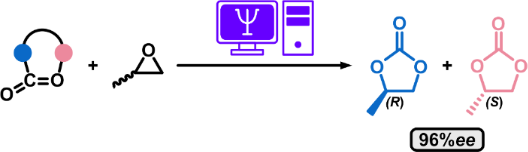
- = 5.47·104 s−1 for capturing CO2 and k2 = 4.85·10−12 s−1 for capturing the epoxide. Despite the FLP–CO2 adduct being less thermodynamically stable than the FLP–epoxide adduct (−10.1 kcal·mol−1 vs −44.8 kcal·mol−1), the lower activation barrier for the capture of CO2 and the temperature considered (273.0
- K) suggest a kinetically controlled reaction. To further shift the chemical equilibrium toward CO2 capture, increasing steric hindrance at the epoxide was explored by introducing bulky substituents into the scaffold. This resulted in an increase in activation barriers for adduct formation. Including
- differences in energy between the stationary points, the better the exploration of the catalytic space. To determine the set of scaffolds to be used for volcano plot analysis, the CO2–FLP adduct of each of the fourteen scaffolds was optimised (Figure 3). Based on the stability of the optimised adducts


The scent gland composition of the Mangshan pit viper, Protobothrops mangshanensis
Beilstein J. Org. Chem. 2024, 20, 2644–2654, doi:10.3762/bjoc.20.222
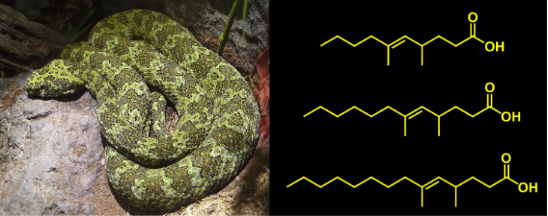
- derivatization products by GC–MS. Failure of DMDS derivatization on unsaturated isoprenoids has been reported [21]. It has been suggested that steric hindrance of trisubstituted double bonds results in little or no adduct formation [21]. Another method for elucidating double bond positions is the formation of


A review of recent advances in electrochemical and photoelectrochemical late-stage functionalization classified by anodic oxidation, cathodic reduction, and paired electrolysis
Beilstein J. Org. Chem. 2024, 20, 2500–2566, doi:10.3762/bjoc.20.214
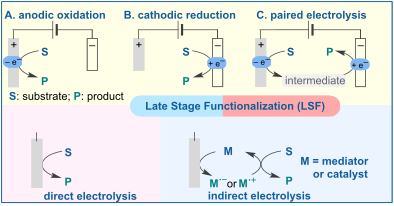
- then attacked by the nucleophilic amidosulfinate, which also functions as an electrolyte. The amidosulfinate is generated through the formation of a Lewis acid–base adduct. A subsequent oxidation step, accompanied by deprotonation, yields the sulfonamide product. SO2 captures the excess electrons via


























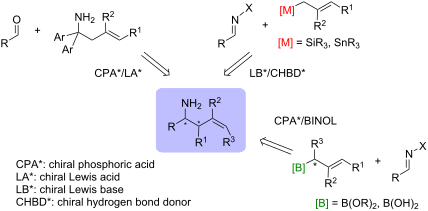
Asymmetric organocatalytic synthesis of chiral homoallylic amines
Beilstein J. Org. Chem. 2024, 20, 2349–2377, doi:10.3762/bjoc.20.201
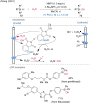
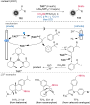
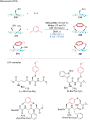
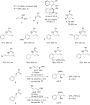
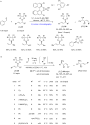
- , the latter acting as a catalytically active species. After the addition of 1 equiv of imine 73 at −40 °C, proton Ha of 72 shifted upfield which was close to what was observed in the TfOH adduct 71, and which supported the formation of intermediate 74. The authors estimated the equilibrated ratio






Improved deconvolution of natural products’ protein targets using diagnostic ions from chemical proteomics linkers
Beilstein J. Org. Chem. 2024, 20, 2323–2341, doi:10.3762/bjoc.20.199
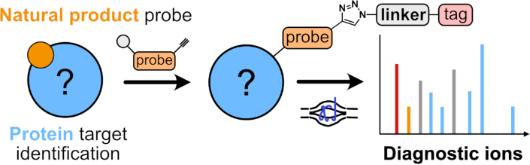
- interrupted CuAAC mechanism [65]. The thiotriazole product of this reaction, which is indistinguishable in the protein-level downstream analysis, is formed by coupling between protein free thiol groups and the triazole–copper adduct (Figure 4). However, its formation can be avoided by eliminating the free




Stereoselective mechanochemical synthesis of thiomalonate Michael adducts via iminium catalysis by chiral primary amines
Beilstein J. Org. Chem. 2024, 20, 2313–2322, doi:10.3762/bjoc.20.198
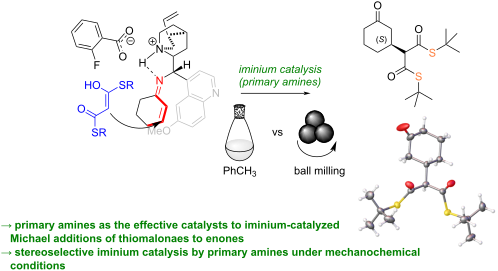
- center in proximity to the reactive moiety of the covalent substrate adduct to the catalyst contributes to the efficient transfer of chirality to the resulting product, even in the distant position of the 1,6-conjugated system [39]. For these reasons, iminium catalysis using primary amines appears to be
- product with 93% ee after 24 h, while the bifunctional primary amine-thiourea catalysts (system B) required 4 days to provide an adduct with similar enantioselectivity. Prolonged reaction time is in general the innate nature of organocatalytic reactions employing iminium activation approaches. With the
- impressive boost of the reaction rate in the ball mill was observed (3 h vs 4 days), the stereochemical outcome suffered giving the desired adduct with 59% ee instead of 94% ee in solution. Owing to the introduction of an additional functional group in the form of a thiourea moiety does not entail a


Metal-free double azide addition to strained alkynes of an octadehydrodibenzo[12]annulene derivative with electron-withdrawing substituents
Beilstein J. Org. Chem. 2024, 20, 2234–2241, doi:10.3762/bjoc.20.191
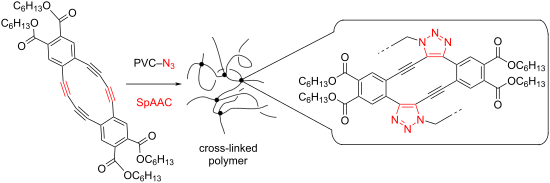
- indicates that the formed double azide adduct is 6a, which is consistent with our previous report [18]. The double azide addition was further investigated by changing the reaction temperature. The rate constant was determined by the temperature-dependent 1H NMR spectra in CDCl3. The reaction kinetics
- outer side (in-out-ts), but the thermodynamically stable final product is a regioselective “in-in” adduct, i.e., compound 6a. Optical properties Absorption and emission spectra of 6a were measured in CH2Cl2 (Figure 5). The conjugation is changed and a highly-twisted macrocyle forms by the double azide
- were almost independent of solvents. For example, the λem in CHCl3 and THF was 514 nm (Figure S11 in Supporting Information File 1). The double benzyl azide adduct of DBA-OHex displayed similar absorption and emission spectra with a λmax of 247 nm and λem of 539 nm in CH2Cl2. Since the Stokes shift of




Selective hydrolysis of α-oxo ketene N,S-acetals in water: switchable aqueous synthesis of β-keto thioesters and β-keto amides
Beilstein J. Org. Chem. 2024, 20, 2225–2233, doi:10.3762/bjoc.20.190

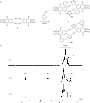
- form adduct I', which is then transformed into intermediate II' by elimination of ethanethiolate. Subsequently, β-keto amide 3a is obtained when II' releases H+. Conclusion In summary, we have successfully developed an environmentally friendly method for the selective aqueous synthesis of β-keto



Efficacy of radical reactions of isocyanides with heteroatom radicals in organic synthesis
Beilstein J. Org. Chem. 2024, 20, 2114–2128, doi:10.3762/bjoc.20.182
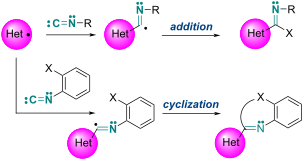
- -Addition of molecular bromine to phenyl isocyanide was reported by E. Kühle et al. to afford the corresponding 1,1-adduct (PhN=CBr2) [23]. Since dichloro compounds (RN=CCl2) [24] are the imino derivatives of highly toxic phosgene (O=CCl2), reactions using them as key intermediates are not safe synthetic
- ]. In the case of aromatic isocyanides, the 1,1-addition reaction is probably more likely to proceed because the C–N double bond of the 1,1-addition product 4 (R = Ar, E = PhS) is conjugated to the aromatic ring, which stabilizes it compared to the corresponding adduct with aliphatic isocyanides
- to give the corresponding 1,1-adduct (Et2P–C(=NPh)–GeEt3, 13) in 46% yield [40]. Similarly, Me2N-SnMe3 was known to add to p-tolyl isocyanide to give Me2N–C(=N–C6H4–p-Me)–SnMe3 (14) in good yield [41]. However, the authors did not specify whether the addition reactions proceeded by a radical or ionic


From perfluoroalkyl aryl sulfoxides to ortho thioethers
Beilstein J. Org. Chem. 2024, 20, 2108–2113, doi:10.3762/bjoc.20.181
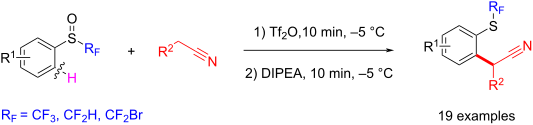
- 1h–j proved also efficient for this rearrangement giving rise to the corresponding thioethers 2h–j in good NMR yields and lower isolated yield in the case of the more volatile adduct 2i. Finally, trifluoromethyl selenoxide 1k was tested as a substrate, and the rearranged product was obtained in a low



Multicomponent syntheses of pyrazoles via (3 + 2)-cyclocondensation and (3 + 2)-cycloaddition key steps
Beilstein J. Org. Chem. 2024, 20, 2024–2077, doi:10.3762/bjoc.20.178




Diastereoselective synthesis of highly substituted cyclohexanones and tetrahydrochromene-4-ones via conjugate addition of curcumins to arylidenemalonates
Beilstein J. Org. Chem. 2024, 20, 2016–2023, doi:10.3762/bjoc.20.177
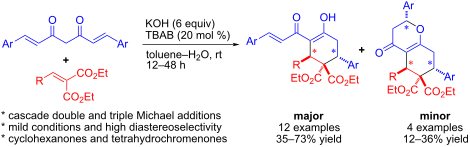
- in most cases. A triple Michael adduct, tetrahydrochromen-4-one, is also formed as a side product in a few cases with excellent diastereoselectivity. Keywords: arylidenemalonates; curcumins; cyclohexanones; diastereoselective synthesis; Michael reaction; tetrahydrochromenones; Introduction There is
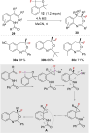
- to the increase in electron density at the carbon β to the ester group thus inhibiting the Michael addition of curcumin (Table 2, entry 4). Arylidenemalonate 2e, bearing a weakly electron-donating substituent, reacted with 1a to afford the double Michael adduct 3e in moderate yield (46%), and the
- triple Michael adduct 4e was not detected (Table 2, entry 5). Bulky 1-naphthyl analog 2f delivered the double Michael adduct 3f as the only product in a very good yield (73%, Table 2, entry 6). Heteroarylidenemalonate 2g also reacted well with 1a, affording 3g in 54% yield (Table 2, entry 7


Harnessing the versatility of hydrazones through electrosynthetic oxidative transformations
Beilstein J. Org. Chem. 2024, 20, 1988–2004, doi:10.3762/bjoc.20.175
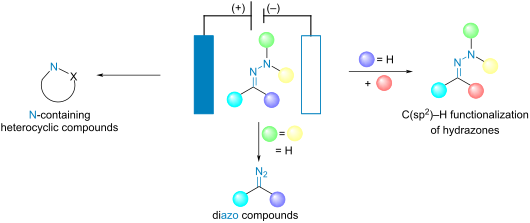
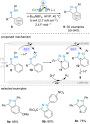
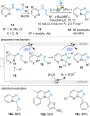
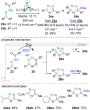
- absence of an electrical current, thus allowing the addition of in situ-generated HCN to the hydrazone 155. After addition of a second equivalent of sodium cyanide, the resulting HCN adduct 156 was electrolyzed under constant current to form diazene 157, which subsequently underwent addition of methanol









1,2-Difluoroethylene (HFO-1132): synthesis and chemistry
Beilstein J. Org. Chem. 2024, 20, 1955–1966, doi:10.3762/bjoc.20.171

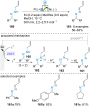
- reacted with hexachlorocyclopentadiene at 200–220 °C within 3–4 days, forming 5,6-endo,endo-difluoro-1,2,3,4,7,7-hexachlorobicyclo[2.2.1]-2-heptene (Scheme 20) in 66% yield. At the same time, (E)-1,2-difluoroethylene, which formed the endo,exo-adduct, reacted much slower, and completion of the reaction





