


Search results
Search for "in silico" in Full Text gives 63 result(s) in Beilstein Journal of Organic Chemistry.
Chemical probes for competitive profiling of the quorum sensing signal synthase PqsD of Pseudomonas aeruginosa
Beilstein J. Org. Chem. 2016, 12, 2784–2792, doi:10.3762/bjoc.12.277
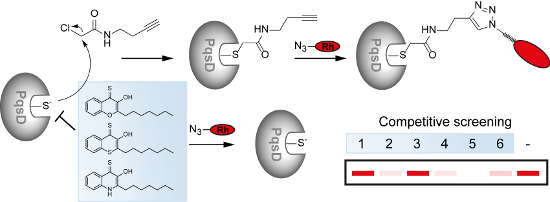
- deprotonation by His257 [23]. Our results may also partially explain the potent inhibition of a PqsD inhibitor described in the literature which was discovered in silico and had been equipped with an α-chloroacetyl group [24]. Inhibition of PqsD has been proposed as promising antivirulence strategy leading to
- disruption of AQ signaling and thereby to global down-regulation of virulence factor production [11]. Consequently, PqsD has become a highly attractive target and a great amount of work pioneered by the Hartmann group has resulted in inhibitor discovery using a combination of in vitro assay, in silico



A non-canonical peptide synthetase adenylates 3-methyl-2-oxovaleric acid for auriculamide biosynthesis
Beilstein J. Org. Chem. 2016, 12, 2766–2770, doi:10.3762/bjoc.12.274
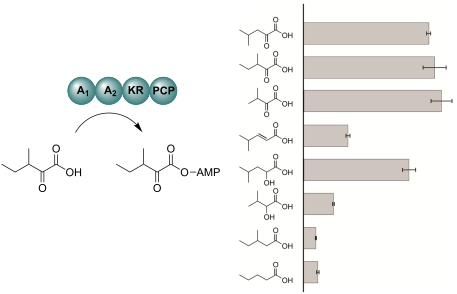
- requirements of the monomers to be recognised and incorporated to form the product [15][16]. In silico tools to identify the nonribosomal code, namely PKS/NRPS Analysis [17] and NRPSpredictor2 [18], are often accurate for the analysis of bacterial NRPSs. Yet, in our case, none retrieved any result after the


Computational methods in drug discovery
Beilstein J. Org. Chem. 2016, 12, 2694–2718, doi:10.3762/bjoc.12.267
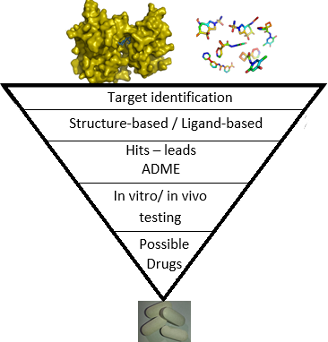
- in silico tools is greater than ever before and has advanced pharmaceutical research. Here we present an overview of computational methods used in different facets of drug discovery and highlight some of the recent successes. In this review, both structure-based and ligand-based drug discovery
- complementary approach to HTS is the use of virtual (i.e., in silico) HTS. Computer-aided drug discovery and design not only reduces the costs associated with drug discovery by ensuring that best possible lead compound enters animal studies, but it may also reduce the time it takes for a drug to reach the
- scale in silico screening of drug molecules in databases of small molecule compounds for a target of interest. Here a target is “screened” against a library of drug-like molecules and binding affinities of the ligands to the target are estimated using the scoring functions described previously. In



Marine-derived myxobacteria of the suborder Nannocystineae: An underexplored source of structurally intriguing and biologically active metabolites
Beilstein J. Org. Chem. 2016, 12, 969–984, doi:10.3762/bjoc.12.96
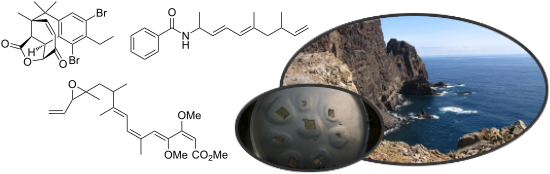
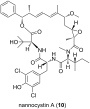
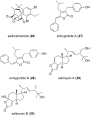
- metabolites. A most unusual structural type is represented by salimabromide from Enhygromyxa salina. In silico analyses were carried out on the available genome sequences of four bacterial members of the Nannocystineae, revealing the biosynthetic potential of these bacteria. Keywords: Enhygromyxa; genome
- genome mining. Thus, knowledge derived from bioinformatic analysis of microbial genomes paved the way to gain detailed insights into bacterial secondary metabolism. Since then, in silico methods for genome mining have enormously advanced and effective experimental approaches for connecting genomic and






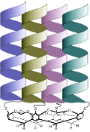
From steroids to aqueous supramolecular chemistry: an autobiographical career review
Beilstein J. Org. Chem. 2016, 12, 684–701, doi:10.3762/bjoc.12.69





Correction: Effective in silico prediction of new oxazolidinone antibiotics: force field simulations of the antibiotic–ribosome complex supervised by experiment and electronic structure methods
Beilstein J. Org. Chem. 2016, 12, 608–610, doi:10.3762/bjoc.12.59
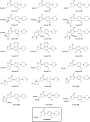
Effective in silico prediction of new oxazolidinone antibiotics: force field simulations of the antibiotic–ribosome complex supervised by experiment and electronic structure methods
Beilstein J. Org. Chem. 2016, 12, 415–428, doi:10.3762/bjoc.12.45
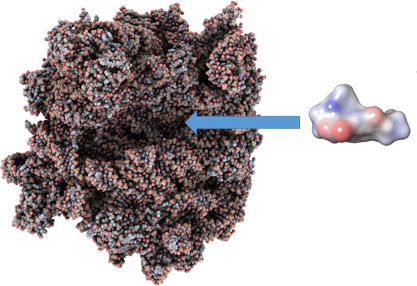
- ) [12]. As a starting structure for our in silico study, we focused on the latter one (PDB code: 3CPW). This crystal structure was determined in the presence of CCA-N-acetylphenylalanine (CCA-N-Phe), an analogue of the portion of aminoacyl and peptidyl tRNAs interacting most strongly with the 50S
- force field method evaluation is therefore a prerequisite for any meaningful in silico study, especially of processes that involve molecular recognition by DNA/RNA hosts [26]. Though there are many success stories in the literature, it is not all it's cracked up to be in the euphoric 1990s, when
- , focusing on the realistic description of all enthalpic contributions. Since the whole ribosomal system is by far too complex for any systematic all atom in silico study, we – in a first step – constructed a truncated model of the ribosome, followed by a thorough conformational search of Linezolid and its


Chromatographically separable rotamers of an unhindered amide
Beilstein J. Org. Chem. 2014, 10, 701–706, doi:10.3762/bjoc.10.63
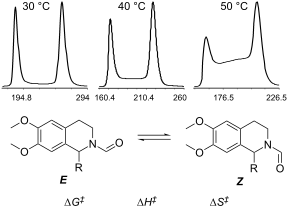
- analysis. Computational studies The rotational barrier was also studied in silico. Therefore, a conformational analysis of 4 was performed using the systematic algorithm to search conformers as implemented in Spartan’10 with the semi-empirical PM6 level of theory [17][18]. All 2111 resulting conformers
- . While in their case only a small energy difference between the E- and the Z-ground states was predicted in silico and confirmed experimentally, our DFT results deviate more significantly from the HPLC and NMR data which show the E-form and not the Z-form to be lower in energy by 0.6–0.8 kJ/mol. The


![[Graphic 2]](/bjoc/content/inline/1860-5397-10-63-i3.png?max-width=637&scale=1.18182) ) in 4 (BP-D3/def2-SVP).
) in 4 (BP-D3/def2-SVP).

Recent progress in the discovery of small molecules for the treatment of amyotrophic lateral sclerosis (ALS)
Beilstein J. Org. Chem. 2013, 9, 717–732, doi:10.3762/bjoc.9.82
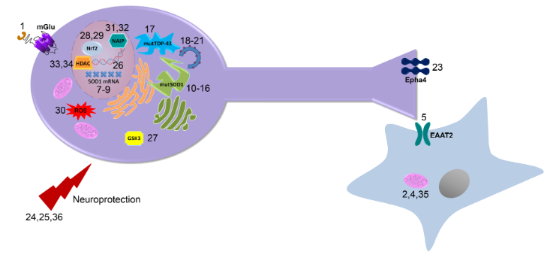
- cavities that could be filled to enhance protein stability. When these cavities were filled by genetic mutagenesis of the SOD1 protein, enhanced dimer stability was detected [36]. An in silico screen was performed to identify compounds with the potential to bind at the dimer interface and the top 100 hits
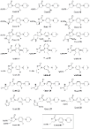
- protein aggregation. Top: selected compounds identified in high-throughput screening. Bottom: advanced compounds. Compounds identified by Nowak and co-workers [37] in silico that selectively bind SOD1 over human plasma and inhibit A4V-SOD1 aggregation


Exploring chemical diversity via a modular reaction pairing strategy
Beilstein J. Org. Chem. 2012, 8, 1293–1302, doi:10.3762/bjoc.8.147
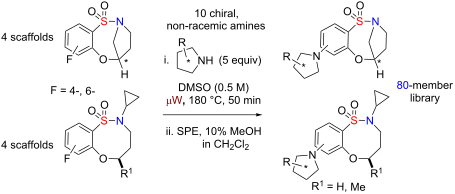
- identical conditions, thus attempts were not made to optimize the conditions further for individual substrates. Library design An 80-member, full matrix library was designed by using in silico analysis [38]. Eight benzoxathiazocine 1,1-dioxide scaffolds 1–8 were designed, of which library I (1–4) was
- products with undesirable in silico properties (see Supporting Information File 1 for full in silico data and detailed information on the calculations). These metric filters included standard Lipinski’s rule of five parameters (molecular weight <500, ClogP <5.0, number of H-acceptors <10, and number of H
- both libraries I and II demonstrated that the primary objectives set out in the library design were achieved; final masses ranged between 18–127 mg and the average final mass was 68 mg (original target being 50 mg). In silico analysis of chemical diversity and drug-likeness In silico analysis of the


Synthesis and in silico screening of a library of β-carboline-containing compounds
Beilstein J. Org. Chem. 2012, 8, 1048–1058, doi:10.3762/bjoc.8.117
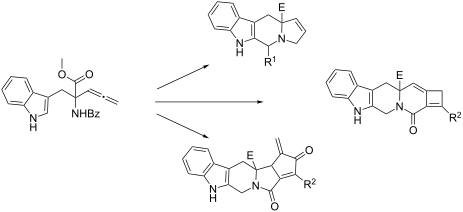
- NIH Molecular Repository (MLSMR) and may target proteins such as histone deacetylase 4, endothelial nitric oxide synthase, 5-hydroxytryptamine receptor 6 and mitogen-activated protein kinase 1. These in silico screening results aim to add value to the β-carboline library of compounds for those
- interested in probes of these targets. Keywords: β-carboline; biological activity; chemical diversity; diversity-oriented synthesis; in silico screening; Introduction Identification of a comprehensive set of small organic molecules capable of selectively modifying the function of biological targets
- maximally diverse chemical space. The synthesis of a modified subset of this virtual compound library is described within, where modifications were mainly driven by studies of compound stability. Furthermore, a high throughput, in silico screening analysis of this library identified a number of potential


The use of glycoinformatics in glycochemistry
Beilstein J. Org. Chem. 2012, 8, 915–929, doi:10.3762/bjoc.8.104
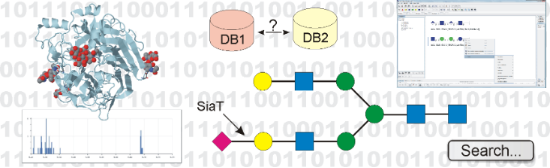
- used to create models of carbohydrate chains. The latter program can also perform in silico glycosylation by adding the glycan chains to a protein 3D structure, and provides input files for the AMBER [94][95] modeling programs using the GLYCAM force field [99]. Glycan 3D structures calculated by Sweet
- peaks that are observed in a spectrum are compared to theoretically derived fragment masses that are computed from glycan structures stored in a carbohydrate database. This approach, however, is limited by the content of the database that provides the templates for in silico fragmentation, which means

An easily accessible sulfated saccharide mimetic inhibits in vitro human tumor cell adhesion and angiogenesis of vascular endothelial cells
Beilstein J. Org. Chem. 2012, 8, 787–803, doi:10.3762/bjoc.8.89
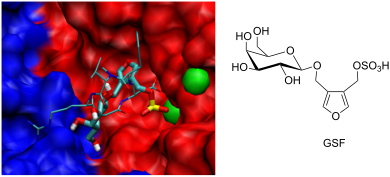
- {[(β-D-galactopyranosyl)oxy]methyl}furan (BGF) nor methyl β-D-galactopyranoside nor 3,4-bis(hydroxymethyl)furan, which were used as controls, eliciting comparable biological activity. In silico modeling experiments, in which binding of GSF to the extracellular domain of the integrin αvβ3 was determined
- (hydroxymethyl)furan and benzoylated galactose imidate, is nontoxic and antagonizes cell physiological processes in vitro that are important for the dissemination and growth of tumor cells in vivo. Keywords: angiogenesis; biomimetic synthesis; carbohydrates; in silico blind docking; melanoma cells
- [25] created a β-D-mannose-containing inhibitor of α4β1 based on in silico modeled structures. In silico analysis of GSF interaction with integrins Our data showing similar inhibition of melanoma cell attachment to fibronectin by GSF as by the combined integrin ligand peptides, also points to an





