


Search results
Search for "reactive oxygen species" in Full Text gives 56 result(s) in Beilstein Journal of Organic Chemistry.
Synthesis and biological activity of N-substituted-tetrahydro-γ-carbolines containing peptide residues
Beilstein J. Org. Chem. 2014, 10, 155–162, doi:10.3762/bjoc.10.13
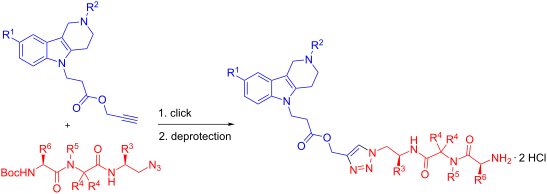
- ] (Figure 1). These peptides were found to scavenge hydrogen peroxide and peroxynitrite and inhibit lipid peroxidation in vitro. By reducing mitochondrial reactive oxygen species, they inhibit MPT and cytochrome c release, thus protecting cells from oxidative cell death [11]. We expected that the


Studies on the photodegradation of red, green and blue phosphorescent OLED emitters
Beilstein J. Org. Chem. 2013, 9, 2088–2096, doi:10.3762/bjoc.9.245
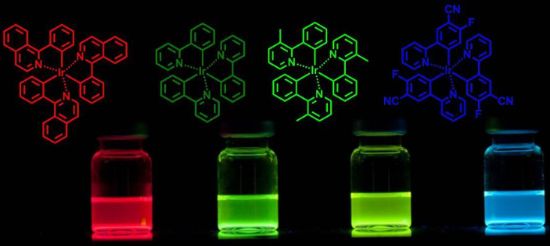
- , possibly competing with the above mentioned reactive oxygen species-induced degradation route may proceed via the excited state of the emitter molecule. This might be due to instability of the excited molecule itself, via interaction of the excited molecule with its local environment or even other excited
- exclusion of oxygen, however, the degradation is suppressed significantly. Therefore, reactive oxygen species are likely responsible for the decomposition of Ir(piq)3. Experiments in deuterated benzene under atmospheric conditions support this assumption showing more than 80% decrease in the complex
- that the emitters can be very susceptible to singlet oxygen-induced degradation depending on their structure. This pathway was identified as the predominant degradation mechanism for the red emitting Ir(piq)3. Ir(Me-ppy)3 also showed sensitivity towards reactive oxygen species and an oxidized


Amyloid-β probes: Review of structure–activity and brain-kinetics relationships
Beilstein J. Org. Chem. 2013, 9, 1012–1044, doi:10.3762/bjoc.9.116
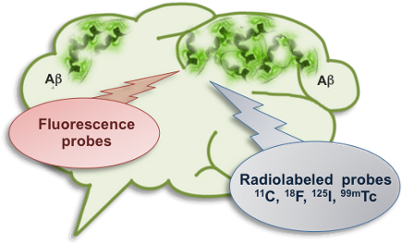
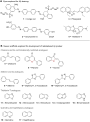
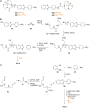
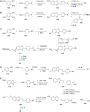
- neurons and acetylcholine (ACh) levels, plaques caused by aggregation of the protein fragment amyloid-β (Aβ), tangles associated with irregular phosphorylation of tau protein, inflammation and increased oxidative stress from reactive oxygen species (ROS), as well as dyshomeostasis and





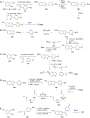


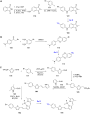


Synthesis of meso-substituted dihydro-1,3-oxazinoporphyrins
Beilstein J. Org. Chem. 2013, 9, 496–502, doi:10.3762/bjoc.9.53
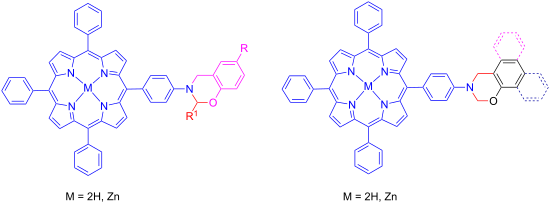
- tissue, and efficiency in generating reactive oxygen species by the absorption of photons in the visible or near IR region make them ideal candidates for developing effective photodynamic agents. These findings have encouraged researchers to design and synthesize potential targeting anticancer drugs


Fine-tuning alkyne cycloadditions: Insights into photochemistry responsible for the double-strand DNA cleavage via structural perturbations in diaryl alkyne conjugates
Beilstein J. Org. Chem. 2011, 7, 813–823, doi:10.3762/bjoc.7.93
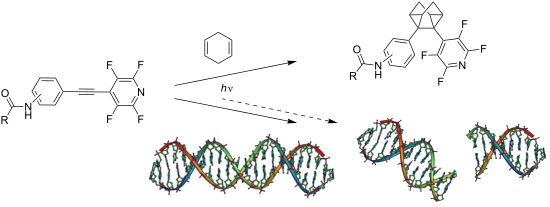
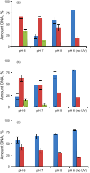
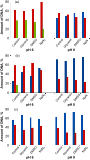
- . The observed scavenger effects suggest different DNA damage mechanisms for the three lysine conjugates: Guanine oxidation and/or base alkylation for conjugate 1, guanine oxidation and generation of reactive oxygen species for conjugate 6, and guanine oxidation for conjugate 7. Cell proliferation assay



Effect of transannular interaction on the redox- potentials in a series of bicyclic quinones
Beilstein J. Org. Chem. 2006, 2, No. 26, doi:10.1186/1860-5397-2-26
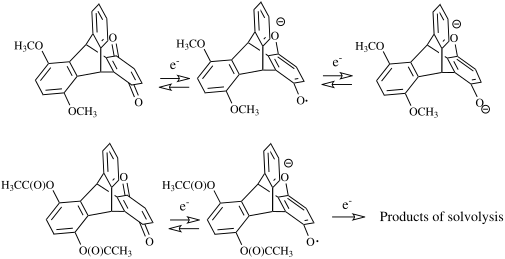
- to the free radical redox-processes, involving triptycene-quinones and reactive oxygen species [2]. Better understanding of the transannular influence of a substituent on the redox-potentials of bicyclo[2.2.2]octane-derived quinones will help in the design of new compounds with controlled biological


Other Beilstein-Institut Open Science Activities



