


Search results
Search for "stimuli-responsive" in Full Text gives 59 result(s) in Beilstein Journal of Organic Chemistry.
Liquid-crystalline nanoparticles: Hybrid design and mesophase structures
Beilstein J. Org. Chem. 2012, 8, 349–370, doi:10.3762/bjoc.8.39
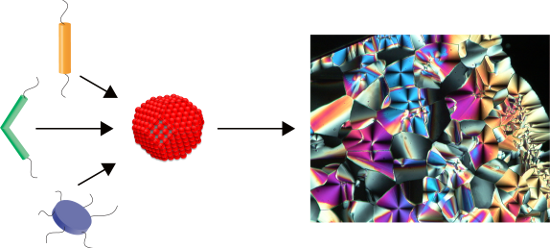
- factors, such as applied magnetic and electric fields and surface effects, all of which lend these materials towards their use in stimuli-responsive advanced materials [24]. What follows is a brief introduction to some of the salient points in LC science, but a thorough introduction to the theory and


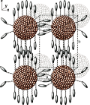


![[Graphic 5]](/bjoc/content/inline/1860-5397-8-39-i5.png?max-width=637&scale=1.18182) phase of Au@C12/13 recorded with the beam (a) parallel to the
phase of Au@C12/13 recorded with the beam (a) parallel to the ![[Graphic 6]](/bjoc/content/inline/1860-5397-8-39-i6.png?max-width=637&scale=1.18182) pla...
pla...


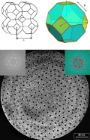
![[Graphic 8]](/bjoc/content/inline/1860-5397-8-39-i8.png?max-width=637&scale=1.18182) symmetry composed of truncated octahedrons. Top right:...
symmetry composed of truncated octahedrons. Top right:...


The interplay of configuration and conformation in helical perylenequinones: Insights from chirality induction in liquid crystals and calculations
Beilstein J. Org. Chem. 2012, 8, 155–163, doi:10.3762/bjoc.8.16
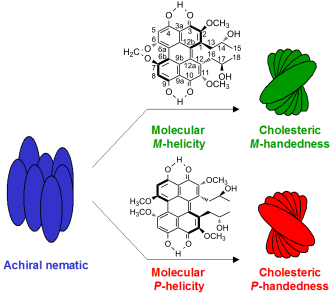
- Programme (PRIN 2009, grant 2009N5JH4F_002 “Stimuli responsive liquid crystalline phases and supramolecular systems”). Computational resources and assistance were provided by the “Laboratorio Interdipartimentale di Chimica Computazionale” (LICC) at the Dipartimento di Scienze Chimiche of the University of


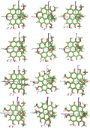
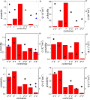
Chiral recognition of ephedrine: Hydrophilic polymers bearing β-cyclodextrin moieties as chiral sensitive host molecules
Beilstein J. Org. Chem. 2011, 7, 1516–1519, doi:10.3762/bjoc.7.177
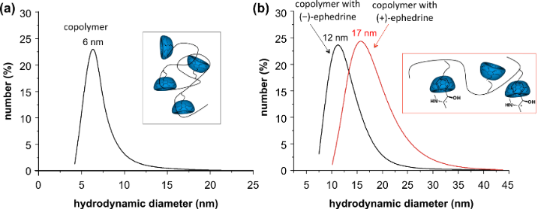
- ; stimuli-responsive polymer; Findings Chiral recognition is an important topic in medical and pharmaceutical applications. The sheer number of publications dealing with chiral and molecular recognition systems underlines the importance of finding reliable recognition systems [1][2][3][4][5]. Particularly


Hyperbranched polyethylenimine bearing cyclodextrin moieties showing temperature and pH controlled dye release
Beilstein J. Org. Chem. 2011, 7, 1130–1134, doi:10.3762/bjoc.7.130
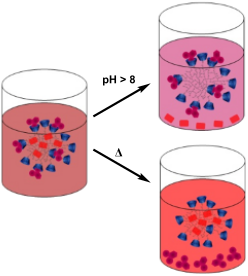
- : anthraquinone; cyclodextrin; drug delivery; polyethylenimine; release; Introduction The development of novel materials and their use as drug delivery systems has gained increased interest in the last few decades [1][2][3]. In this context, certain stimuli responsive behaviors are required [4][5]. Hence, the


Synthesis and self-assembly of 1-deoxyglucose derivatives as low molecular weight organogelators
Beilstein J. Org. Chem. 2011, 7, 234–242, doi:10.3762/bjoc.7.31
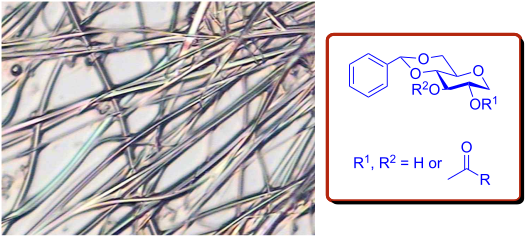
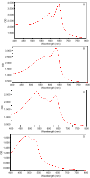
- polymerized diacetylene gels were dark blue with long wavelengths absorptions, these compounds may be useful as advanced stimuli responsive materials. Experimental General methods and materials Materials and instrumentation. General chemicals and reagents were purchased from Aldrich, or VWR. The diacetylene





Chiral recognition of macromolecules with cyclodextrins: pH- and thermosensitive copolymers from N-isopropylacrylamide and N-acryloyl-D/L-phenylalanine and their inclusion complexes with cyclodextrins
Beilstein J. Org. Chem. 2011, 7, 204–209, doi:10.3762/bjoc.7.27
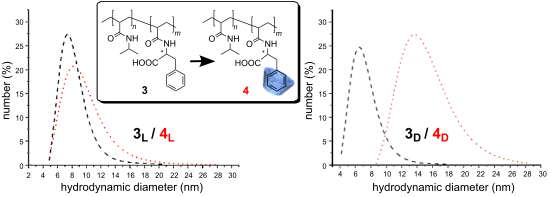
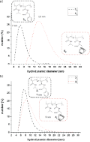
- soluble stimuli-responsive polymers bearing phenylalanine moieties via host-guest interaction with β-cyclodextrin and randomly-methylated-β-cyclodextrin (RAMEB-CD). We synthesised N-acryloyl-D/L-phenylalanine monomers (2D, 2L) which were then copolymerised under free radical conditions with N
- of the side groups of copolymers 3D and 3L and their solubility behaviour were investigated by dynamic light scattering and 2D NMR spectroscopy, respectively. Keywords: amino acid; chiral recognition; cyclodextrins; LCST; stimuli-responsive polymers; Introduction Chiral recognition has attracted


Towards racemizable chiral organogelators
Beilstein J. Org. Chem. 2010, 6, 960–965, doi:10.3762/bjoc.6.107
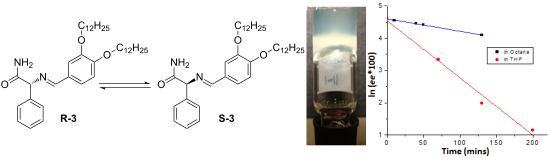
- macroscopic behavior. Most of the earliest stimuli-responsive gels undergo a UV-induced transformation, which can be reversed by visible light. For example, Shinkai and coworkers demonstrated that trans-cis isomerization of gelator compounds by UV/visible light could induce a gel-sol transition [6]. Feringa


Hybrid biofunctional nanostructures as stimuli-responsive catalytic systems
Beilstein J. Org. Chem. 2010, 6, 922–931, doi:10.3762/bjoc.6.98
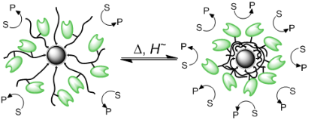


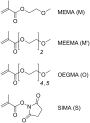


![[Graphic 1]](/bjoc/content/inline/1860-5397-6-98-i6.png?max-width=637&scale=0.1536366) ).
).


Novel multi-responsive P2VP-block-PNIPAAm block copolymers via nitroxide-mediated radical polymerization
Beilstein J. Org. Chem. 2010, 6, 756–765, doi:10.3762/bjoc.6.89
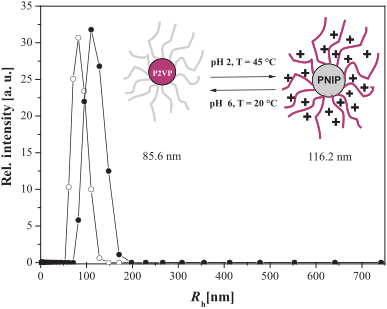
- delivery systems. Keywords: block copolymers; N-isopropylacrylamide; nitroxide-mediated radical polymerization; stimuli-responsive polymers; 2-vinylpyridine; Introduction Functional polymers have attracted much attention because of their technological and scientific importance. Polymers, which respond


Other Beilstein-Institut Open Science Activities



