


Search results
Search for "toxin" in Full Text gives 53 result(s) in Beilstein Journal of Organic Chemistry.
Synthetic glycopeptides and glycoproteins with applications in biological research
Beilstein J. Org. Chem. 2012, 8, 804–818, doi:10.3762/bjoc.8.90
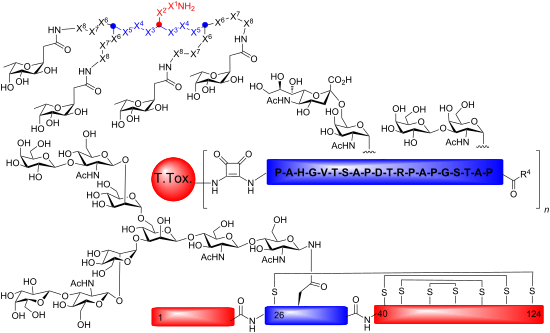
- microbe and lectin binding studies, glycopeptide based glycoclusters/dendrimers were applied, employing linear peptide backbones, cyclic peptide scaffolds or multi-lysine scaffolds [106][107][108][109][110][111][112][113][114][115][116][117][118]. The pentavalent cholera toxin protein secreted by Vibrio
- cholerae, causes severe diarrhea and massive dehydration upon binding and entrance into the intestinal epithelial cells [119]. The AB5-type toxin consists of one toxic ADP-ribosyltransferase and five lectin subunits that bind to the gangloside GM1 ligands on the epithelial cell surface [120]. The cholera
- -toxin–GM1 complex is one of the most well characterized protein–carbohydrate interactions [95][96][97][98][99]. Development of inhibitors targeting the cholera-toxin protein–carbohydrate binding events is a novel strategy for disease prevention and therapy as well as for detection of the toxin in


Natural product biosyntheses in cyanobacteria: A treasure trove of unique enzymes
Beilstein J. Org. Chem. 2011, 7, 1622–1635, doi:10.3762/bjoc.7.191
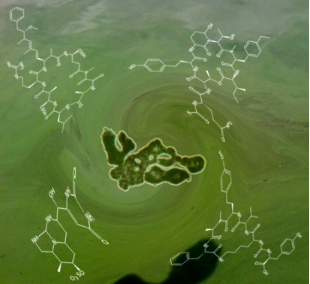
- irritations and are implicated in the so-called “swimmers itch”. The compounds are also potent tumor promoters, which operate by competitively binding to protein kinase C (PKC). The characteristic indolactam ring of the toxin is synthesized by the bimodular NRPS LtxA [48]. The resulting dipeptide is tethered


Synthesis of phosphonate and phostone analogues of ribose-1-phosphates
Beilstein J. Org. Chem. 2009, 5, No. 37, doi:10.3762/bjoc.5.37
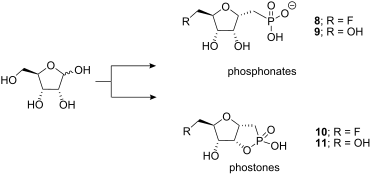
- bacterium Streptomyces cattleya as part of its defense strategy since 4-fluorothreonine (2) has antibiotic activity and fluoroacetate (1) is a toxin [1]. The biosynthetic pathway from fluoride ion to these fluorometabolites has largely been elucidated and is summarised in Scheme 1 [2]. The first committed


Other Beilstein-Institut Open Science Activities



