Search results
Search for "alcohols" in Full Text gives 873 result(s) in Beilstein Journal of Organic Chemistry. Showing first 200.
Recent advances in transition-metal-free arylation reactions involving hypervalent iodine salts
Beilstein J. Org. Chem. 2024, 20, 2891–2920, doi:10.3762/bjoc.20.243



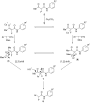


Mechanochemical difluoromethylations of ketones
Beilstein J. Org. Chem. 2024, 20, 2799–2805, doi:10.3762/bjoc.20.235
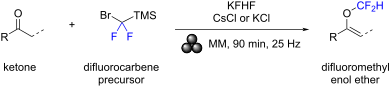
- the gas phase than in solution [32][33], it has remained a challenge to control such reactions. Our group has recently reported a mechanochemical difluoromethylation of primary, secondary, and tertiary alcohols [34], yielding products with difluoromethoxy groups, which are promising organofluorine
- compounds [35][36][37][38]. Notably, also sterically hindered alcohols, which are typically less reactive in solution, could be applied under solvent-free conditions in a ball mill [39], which was attributed to a better accessibility of the difluorocarbene in the mechanochemical environment [40]. Motivated
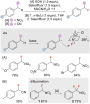
- reaction conditions were chosen based on those reported by Ni, Hu and co-workers for the difluoromethylation of alcohols in solution [39]. The two activators KFHF and KOAc were investigated in a dichloromethane/water mixture at room temperature for 10 h. In both cases, the yield of 3a was negligible (with


Access to optically active tetrafluoroethylenated amines based on [1,3]-proton shift reaction
Beilstein J. Org. Chem. 2024, 20, 2776–2783, doi:10.3762/bjoc.20.233
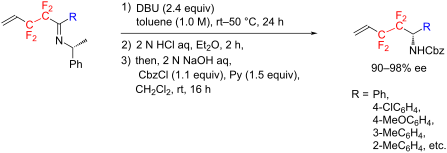
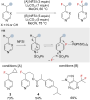
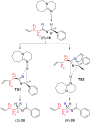
- diastereomers 12 and 13 are often easily separable, and each diastereomer of optically active alcohols or amines can be obtained with an excellent optical purity (reactions 3 and 4 in Scheme 1). To the best of our knowledge, these are the only four works for the preparation of optically active substances having



Synthesis of fluoroalkenes and fluoroenynes via cross-coupling reactions using novel multihalogenated vinyl ethers
Beilstein J. Org. Chem. 2024, 20, 2691–2703, doi:10.3762/bjoc.20.226

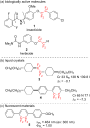
- fluorine-containing building blocks have been developed [21][22][23][24][25]. Jubault and Poisson et al. reported SN2’ reactions of hydride or alcohols to electrophilic fluorine-containing alkenes gave the corresponding fluoroalkenes (Scheme 1B) [21]. In recent years, many fluorine-containing coupling


Transition-metal-free decarbonylation–oxidation of 3-arylbenzofuran-2(3H)-ones: access to 2-hydroxybenzophenones
Beilstein J. Org. Chem. 2024, 20, 2655–2667, doi:10.3762/bjoc.20.223
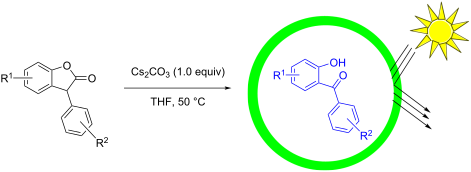
- synthetic route. Results and Discussion Initially, 3-arylbenzofuran-2(3H)-ones 3aa–ma were prepared following a SbCl3-catalyzed Friedel–Crafts alkylation of phenols 1a–m with benzylic alcohols 2a–d, earlier reported by us (Scheme 1) [21][22][23]. All the synthesized 3-arylbenzofuran-2(3H)-ones were




The scent gland composition of the Mangshan pit viper, Protobothrops mangshanensis
Beilstein J. Org. Chem. 2024, 20, 2644–2654, doi:10.3762/bjoc.20.222
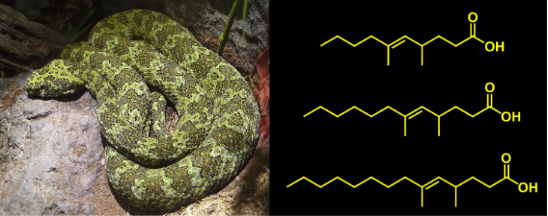
- -hexadecylglycerol, as well as other common long-chain alcohols and amides. Although a general defensive function has been proposed for snake abdominal scent glands, the specific chemistry and moderate amounts of acids reported here may suggest a function in chemical signaling for the Mangshan pit viper. In addition
- (see, e.g., [1][2]). Comparative analysis of SGS through GC–MS has revealed an assortment of lipids (reviewed in [2]), such as cholesterol [3][4][5][6][7][8], carboxylic acids [4][5][7][8][9][10][11][12], alcohols [8], 1-O-monoalkylglycerols [6][8], and others [13]. Nitrogen-containing compounds
- components, carboxylic acids, alcohols, glycerol ethers, amides, and volatile compounds such as phenol, benzaldehyde, or indole were present (Figure 1 and Table 1). While some of these compounds were easily identified, a group of diketopiperazines (DKPs) and a series of unknown putative carboxylic acids (A–F


A review of recent advances in electrochemical and photoelectrochemical late-stage functionalization classified by anodic oxidation, cathodic reduction, and paired electrolysis
Beilstein J. Org. Chem. 2024, 20, 2500–2566, doi:10.3762/bjoc.20.214
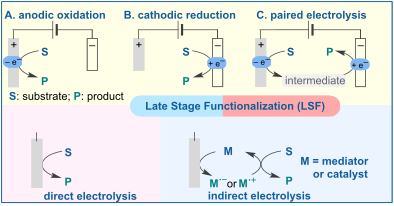
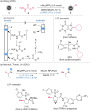
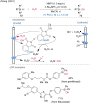
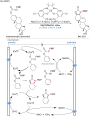
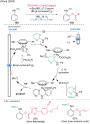
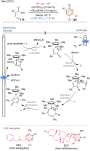
- activate alcohols presents a significant synthetic challenge. The carbazate substrates are easily prepared from ubiquitous alcohol precursors. The first stage of the transformation involves the sequential anodic oxidation of the carbazate and subsequent deprotonation to form a diazenecarboxylate. Further
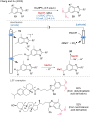
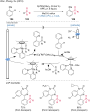
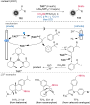
- method for the formation of C–S bonds [25]. This method achieves the difunctionalization of a carbon atom by reacting isocyanide 2-isocyanoacetate with a thiophenol and an alcohol. The scope is very broad for thiophenols, alcohols, and isocyanides, and even alkyl thiols are compatible. In addition to
- aliphatic alcohols, benzyl alcohols are also suitable reagents. Numerous LSF examples and upscaling were demonstrated. The mechanism involves two anodic oxidations: first, the thiophenol is oxidized at the anode, forming a sulfur radical that attacks the isocyanide. The newly formed carbon radical is then
























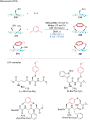


Visible-light-mediated flow protocol for Achmatowicz rearrangement
Beilstein J. Org. Chem. 2024, 20, 2493–2499, doi:10.3762/bjoc.20.213
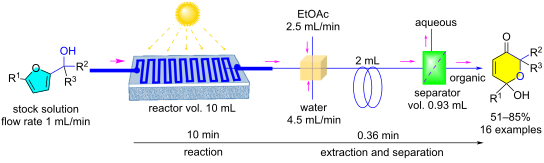
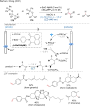
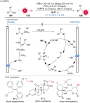
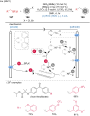
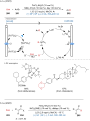
- and development of a visible light-assisted modular photo-flow reactor with a seamlessly integrated post-synthetic work-up procedure enabling the efficient synthesis of dihydropyranones from furfuryl alcohols. The reaction uses sun light as green energy source, and the novel photo-flow reactor
- platform developed with an integrated system enabling a downstream process in a time and labor-efficient manner which facilitates the Achmatowicz rearrangement, resulting in a fast (10 min) formation of the dihydropyranone products. Keywords: Achmatowicz reaction; flow chemistry; furfuryl alcohols
- ; photocatalyst; sunlight; Introduction The furan ring moiety is present in several natural products [1] and serves as a key precursor to 1,4-dicarbonyls [2], cyclopentanones [3], and carboxylic acids [4], in synthetic organic chemistry. Furfuryl alcohols, a family of 2-substituted furan molecules, are

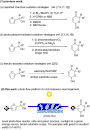


Photoredox-catalyzed intramolecular nucleophilic amidation of alkenes with β-lactams
Beilstein J. Org. Chem. 2024, 20, 2461–2468, doi:10.3762/bjoc.20.210
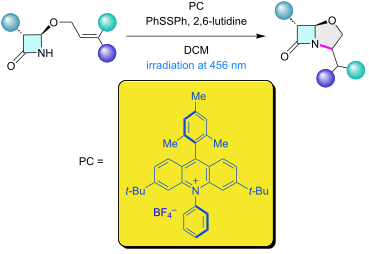
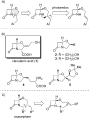
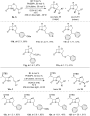
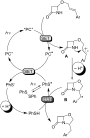
- containing an alkene group was readily synthesized starting from commercially available 4-acetoxy-2-azetidinone (6) by nucleophilic displacement of the 4-acetoxy group with allylic alcohols promoted by Zn(OAc)2 (see compounds 8a–h, Scheme 1) [45]. Similarly, enantiopure derivatives 10c–f were synthesized




Efficient one-step synthesis of diarylacetic acids by electrochemical direct carboxylation of diarylmethanol compounds in DMSO
Beilstein J. Org. Chem. 2024, 20, 2392–2400, doi:10.3762/bjoc.20.203
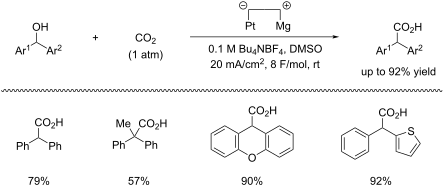
- ][9][10][11], yielding phenylacetic acids. For example, Troupel et al. successfully performed electrochemical reduction of benzyl ethers and several esters such as acetate, trifluoroacetate, benzoate, and dibenzyl carbonate derived from benzyl alcohols, including 1-phenylethanol compounds, in the
- contrast, little attention has been paid to electrochemical direct carboxylation of benzyl alcohols, although it is a more straightforward and simple protocol toward phenylacetic acids. In 2015, we reported an electrochemical direct carboxylation of benzyl alcohols having an electron-withdrawing group on
- the phenyl ring [17]. To the best of our knowledge, this is the first report on electrochemical carboxylation of benzyl alcohols. Only benzyl alcohols having an electron-withdrawing group, such as cyano or ester in the ortho- or para-position of the phenyl ring, were efficiently carboxylated by


Asymmetric organocatalytic synthesis of chiral homoallylic amines
Beilstein J. Org. Chem. 2024, 20, 2349–2377, doi:10.3762/bjoc.20.201
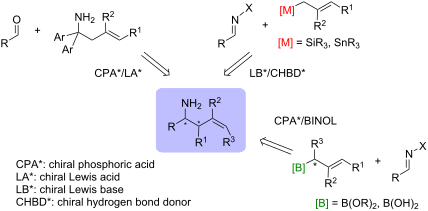
- of racemic, configurationally stable sec-allylboronates (±)-35 (Scheme 8A). Using 2.5 equivalents of racemic boronate 35, the reaction with aldehydes produced enantioenriched Z-homoallylic alcohols 36. While this protocol was effective for aldehydes, it proved challenging to perform it with N






Hydrogen-bond activation enables aziridination of unactivated olefins with simple iminoiodinanes
Beilstein J. Org. Chem. 2024, 20, 2305–2312, doi:10.3762/bjoc.20.197
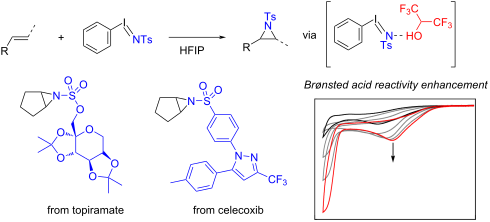
- product. Such a process would account for the simultaneous stereochemical scrambling observed and the lack of radical trapping noted. Conclusion In conclusion, we describe the activation of simple iminoiodinane reagents by fluorinated alcohols, such as HFIP. While most iminoiodinane reagents do not engage


Catalysing (organo-)catalysis: Trends in the application of machine learning to enantioselective organocatalysis
Beilstein J. Org. Chem. 2024, 20, 2280–2304, doi:10.3762/bjoc.20.196
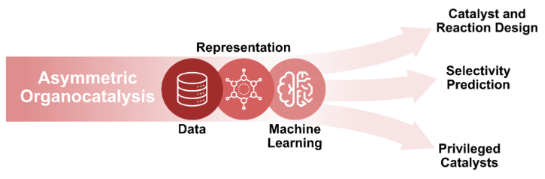
- enantioselectivities of a kinetic resolution of benzyl alcohols and an enantiodivergent fluorination of allylic alcohols, observing good correlations for both reactions. Since then, the proposed NCI descriptors have been successfully applied to multiple different reactions, such as an allenoate Claisen rearrangement
- mechanistic breaks in Hammett plots. However, deliberate data set design to systematically cover the relevant chemical space can aid in detecting outliers and aid in creating more relevant models, as demonstrated by Neel et al. for an enantiodivergent fluorination of allylic alcohols, catalysed by a CPA as
- additions to imines, comprising alcohols, thiols, phosphonates, diazoacetamides, peroxides, benzothiazolines and more as nucleophiles. Apart from reactant classes, the reactions also vary in additives, and solvent among others. Since these reactions all adhere to the same mechanism of enantioinduction, the


Cell-free protein synthesis with technical additives – expanding the parameter space of in vitro gene expression
Beilstein J. Org. Chem. 2024, 20, 2242–2253, doi:10.3762/bjoc.20.192
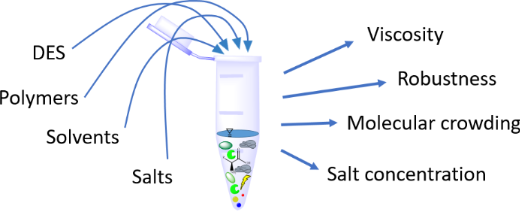
- alcohols, polyols, polyions or polymers, has a positive effect on protein stability and the soluble fraction expressed with CFPS [17]. The variable composition of CFPS systems with a high number of ingredients and possible reaction conditions [13] thus opens a large parameter space. In addition, non

Selective hydrolysis of α-oxo ketene N,S-acetals in water: switchable aqueous synthesis of β-keto thioesters and β-keto amides
Beilstein J. Org. Chem. 2024, 20, 2225–2233, doi:10.3762/bjoc.20.190

- ][62][63][64], we conducted research on their organic reactions in water and reported some good results, such as thioacetalization using ketene dithioacetals as odorless thiol equivalent [65], Friedel–Crafts alkylation of cyclic ketene dithioacetals with alcohols [66], the hydrolysis of chain α-oxo

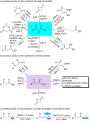


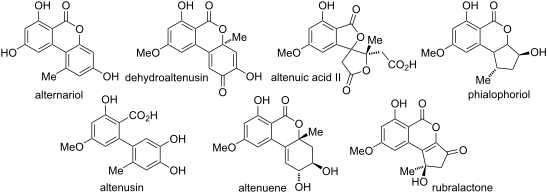
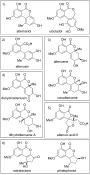
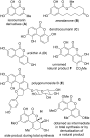
Natural resorcylic lactones derived from alternariol
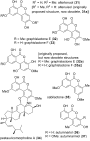
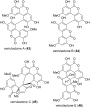
Beilstein J. Org. Chem. 2024, 20, 2171–2207, doi:10.3762/bjoc.20.187






Multicomponent syntheses of pyrazoles via (3 + 2)-cyclocondensation and (3 + 2)-cycloaddition key steps
Beilstein J. Org. Chem. 2024, 20, 2024–2077, doi:10.3762/bjoc.20.178

- iodoalkanes 89. Subsequent reaction with acylsilanes 90 leads to alcohols, which react by Brook rearrangement to enoxysilanes and form the intermediate 92. Following a Michael addition/cyclocondensation with methylhydrazine, 4-fluoropyrazoles 91 are regioselectively formed (Scheme 32) [115]. Bouillon




Regioselective alkylation of a versatile indazole: Electrophile scope and mechanistic insights from density functional theory calculations
Beilstein J. Org. Chem. 2024, 20, 1940–1954, doi:10.3762/bjoc.20.170
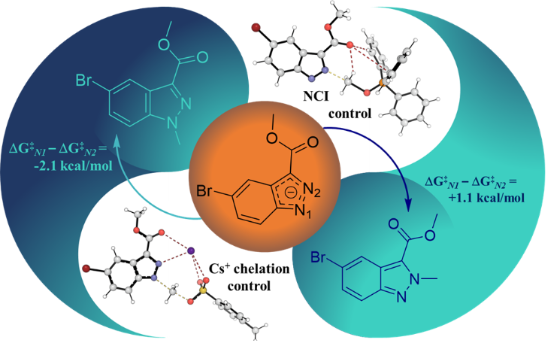
- indazoles would provide greater synthetic utility for this valuable heterocycle. These examples suggest a common intermediate such as methyl 5-bromo-1H-indazole-3-carboxylate (6) could be used to generate such compounds. An alkylation strategy that uses the vast array of commercially available alcohols as
- alcohols, react with 6 under different reaction conditions. In this paper, we report a concise and efficient approach to prepare N1- and N2-substituted analogs with high selectivity and excellent yields (>84%) from the same substrates: alcohols and 5-bromo-1H-indazole-3-carboxylate (6). Results and
- promising yield results of P1, we next explored the scope of this transformation using a variety of alcohols (13a–q, Table 3) and report their regioselectivity as determined by crude LC–MS. Sulfonates 14a–q were prepared as described above or purchased (see Supporting Information File 1). The subsequent


Access to 2-oxoazetidine-3-carboxylic acid derivatives via thermal microwave-assisted Wolff rearrangement of 3-diazotetramic acids in the presence of nucleophiles
Beilstein J. Org. Chem. 2024, 20, 1894–1899, doi:10.3762/bjoc.20.164

- were carried out using microwave activation. We then introduced various aromatic and aliphatic amines as well as alcohols and mercaptans into the reaction. In order to demonstrate the structural diversity of the compounds obtained, a wide range of diazotetramic acids 1 of different structures was used
- the lower stability of the less-substituted β-lactam derivatives under thermolysis conditions. Additional alkyl substituents sterically shield the ring and prevent an unwanted nucleophilic attack leading to product degradation. In reactions with alcohols and mercaptans, the corresponding esters 3k–n,r
- the exocyclic carbonyl group by preformed ring contraction and interaction of the intermediate ketene with the selected nucleophile. Various aromatic and aliphatic amines as well as alcohols and thiols can be used as nucleophiles. 5-Monosubstituted diazotetramic acids give exclusively trans


The Groebke–Blackburn–Bienaymé reaction in its maturity: innovation and improvements since its 21st birthday (2019–2023)
Beilstein J. Org. Chem. 2024, 20, 1839–1879, doi:10.3762/bjoc.20.162
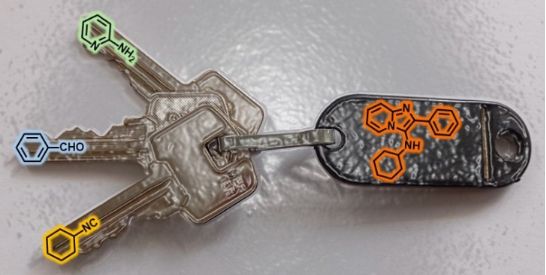
- aldehydic component has been generated in situ through Fe3O4-mediated aerobic oxidation of benzyl alcohols. Magnetic nanoparticles were supported by Shaabani and Farhid on spent coffee ground and served also as catalyst for the GBB reaction, although the role of coffee ground was not clearly explained [33
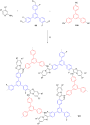
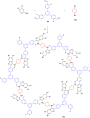
- underwent cyclization and dehydration to produce linked polyheterocyclic indoles 75. The authors managed to prepare five adducts in 15–33% yield. Another mechanistic scenario occurred at higher temperature (Scheme 25, conditions b). The secondary amine of diol 73 substituted both secondary alcohols to






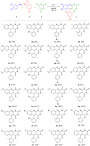
A facile three-component route to powerful 5-aryldeazaalloxazine photocatalysts
Beilstein J. Org. Chem. 2024, 20, 1831–1838, doi:10.3762/bjoc.20.161
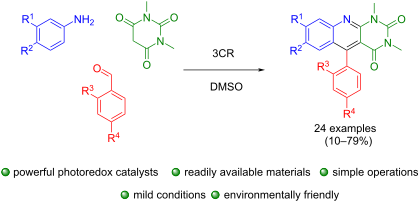
- (1H,3H)-dione) by refluxing with thionyl chloride [20][23]. However, the preparation of partially hydrogenated 5,10-dihydropyrimido[4,5-b]quinolinediones has been repeatedly reported by one-pot condensation of substituted anilines, aldehydes and barbituric acids, usually in protic solvents (alcohols




Syntheses and medicinal chemistry of spiro heterocyclic steroids
Beilstein J. Org. Chem. 2024, 20, 1713–1745, doi:10.3762/bjoc.20.152
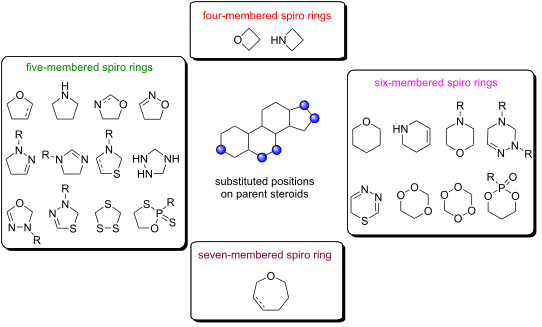
- preparing spiro α-methylene-β-lactones from different steroidal propargylic alcohols [13]. The procedure involves a one-pot Pd-catalyzed cyclocarbonylation of alkynols using 5 mol % of Pd(CH3CN)2Cl2 as a catalyst precursor and 30 mol % of 2-(dibutyl)phosphine-1-(2,6-diisopropylphenyl)-1H-imidazole as
- -Spirofuran steroids Intramolecular cyclization of alcohols with allenes is a common method for obtaining 17-spirodihydro-(2H)-furan-3-ones. In 2006, Jiang et al. utilized a known reaction sequence to construct the 17-spiro heterocycle 27 from the commercially available ethylene deltenone 24 [20][21]. In this
- (110a and 110b, respectively). These protected compounds were subjected to alkynylation using 4-THPO-1-butyne on the carbonyl group at C-17, yielding steroids 111. Subsequent catalytic hydrogenation of the triple bonds, followed by deprotection of the alcohols from their THP ether groups and oxidation


Oxidation of benzylic alcohols to carbonyls using N-heterocyclic stabilized λ3-iodanes
Beilstein J. Org. Chem. 2024, 20, 1677–1683, doi:10.3762/bjoc.20.149
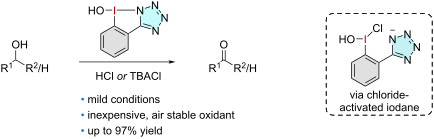
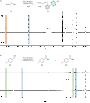
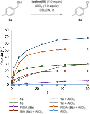
- iodanes (NHIs) as suitable reagents for the mild oxidation of activated alcohols. Two different protocols, both involving activation by chloride additives, were used to synthesize benzylic ketones and aldehydes without overoxidation in up to 97% yield. Based on MS experiments an activated hydroxy(chloro
- )iodane is proposed as the reactive intermediate. Keywords: alcohol oxidation; hypervalent iodine; N-heterocycles; Introduction The oxidation of alcohols to aldehydes and ketones is an essential transformation in organic chemistry [1][2]. Generating aldehydes is particularly challenging as they are
- mild oxidation of primary and secondary benzylic alcohols to aldehydes and ketones as an alternative to λ5-iodanes. Results and Discussion Initially, we investigated a variety of pyrazole-, triazole-, and oxazole-substituted hydroxy-NHIs previously developed by our group [25]. However, none of them




New triazinephosphonate dopants for Nafion proton exchange membranes (PEM)
Beilstein J. Org. Chem. 2024, 20, 1623–1634, doi:10.3762/bjoc.20.145

- were used as received, without further purification. Solvents and air-sensitive reagents were distilled under a dry nitrogen atmosphere. Dry THF was distilled from sodium benzophenone ketyl. A Nafion N115 film was acquired from FuelCell Store and a 20 wt % mixture in lower aliphatic alcohols and water




Benzylic C(sp3)–H fluorination
Beilstein J. Org. Chem. 2024, 20, 1527–1547, doi:10.3762/bjoc.20.137

- nucleophiles, including water to give benzylic alcohols, or methanol to give methoxy products. Musacchio and co-workers reported a similar approach for benzylic fluorination (Figure 33) [84], which followed a similar mechanistic blueprint to that reported by the Doyle group. Using tert-butoxide radicals