


Search results
Search for "analogues" in Full Text gives 929 result(s) in Beilstein Journal of Organic Chemistry. Showing first 200.
Tunable full-color dual-state (solution and solid) emission of push–pull molecules containing the 1-pyrindane moiety
Beilstein J. Org. Chem. 2024, 20, 3016–3025, doi:10.3762/bjoc.20.251

- dimethylene bridge in arylidene derivatives of pyrindane 1 led to an increase in the emission quantum yield and caused an appearance of solid-state photoluminescence, in contrast to the previously synthesized analogues (stilbazoles A, Figure 1) without such a bridge (Tables S3 and S4, Supporting Information


4,6-Diaryl-5,5-difluoro-1,3-dioxanes as chiral dopants for liquid crystal compositions
Beilstein J. Org. Chem. 2024, 20, 2940–2945, doi:10.3762/bjoc.20.246
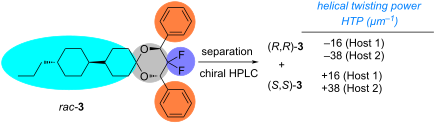
- found in some natural products [34] with some fluorinated analogues [35][36], this motif is rarely found in LCs [37][38][39]. Based on these observations and literature data, we embarked in the synthesis and evaluation of enantiomerically pure acetals derived from anti-2,2-difluoro-1,3-diols as
- two achiral nematic host mixtures (Host 1 and Host 2 from Merck) (Table 1). (R,R)-3 and (S,S)-3 with a more liquid crystal-like shape have higher HTP [16 µm−1 (Host 1), 38 µm−1 (Host 2)] than the dimethylacetal analogues (R,R)-4 and (S,S)-4 [8 µm−1 (Host 1), 15 µm−1 (Host 2)]. The difference between
- the two nematic host mixtures is their polarity: whereas Host 1 is only moderately polar (Δε = 4.0), the mixture Host 2 was developed for Blue Mode LCD application and is extremely polar. As compared to chiral dopants depicted in Figure 1, HTPs are lower and closest analogues for comparison could be


N-Glycosides of indigo, indirubin, and isoindigo: blue, red, and yellow sugars and their cancerostatic activity
Beilstein J. Org. Chem. 2024, 20, 2840–2869, doi:10.3762/bjoc.20.240
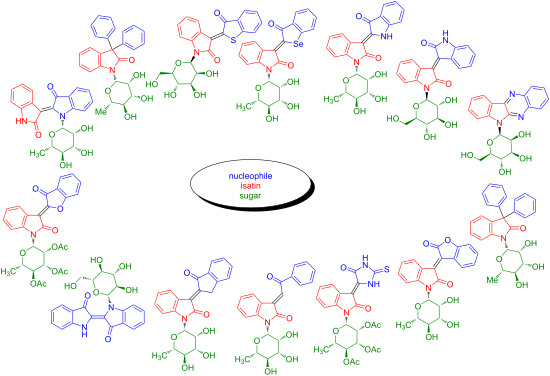
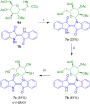
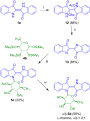
- containing the sugar moiety attached to the amine-type nitrogen are less stable than the corresponding compounds containing the sugar moiety attached to the amide-type nitrogen atom. Unfortunately, the synthesis of β-31a was not a general method for the synthesis of indirubin-N-glycosides. Analogues of
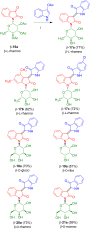
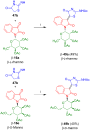
- stirred for 6 h at 20 °C to give E-β-46a. Likewise, rhamnosides E-β-46b–e, mannosides E-β-46f–i, glucosides E-β-46j,k, and galactosides E-β-46l,m were prepared. 3-Alkylideneoxindole-N-glycososides 46 can be regarded as analogues of indirubin-N-glycosides completely missing the nitrogen atom of the indoxyl
- deprotection with NaOMe afforded β-81a in 98% yield. Likewise, rhamnosides β-81b,c mannosides β-81d–f, and glucoside β-80g were obtained in good yields. Some products exhibited weak cytotoxic activity against human ceratinocytes (HaCaT). However, in contrast to many indirubin-N-glycosides and their analogues










Investigation of a bimetallic terbium(III)/copper(II) chemosensor for the detection of aqueous hydrogen sulfide
Beilstein J. Org. Chem. 2024, 20, 2818–2826, doi:10.3762/bjoc.20.237

- are highly selective to HS−(aq) ions and are thus suitable for environmental or biological studies where interfering anions may be present. Gaseous H2S studies of [Tb.1·3Cu]3+ We aimed to further investigate the luminescence response of Tb3+ analogues upon exposure to hydrogen sulfide gas, building
- upon our previously reported findings. Our earlier work demonstrated an increase in europium luminescence with a LoD of 100 ppb and 665 ppb for two Eu analogues [Eu(triazole-DPA)3·3Cu]3+ [16] and [Eu(DO2A)DPA·Cu]+ [17], while the [Tb(DO2A)DPA·Cu]+ analogue [17] exhibited no significant change in
- emission spectrum, unlike that observed with the europium(III) analogue. This result suggests potential variations in the luminescence response among terbium(III) analogues and highlights the complexity of the interaction between lanthanide complexes and gaseous H2S, and understanding the nuances of this


C–C Coupling in sterically demanding porphyrin environments
Beilstein J. Org. Chem. 2024, 20, 2784–2798, doi:10.3762/bjoc.20.234
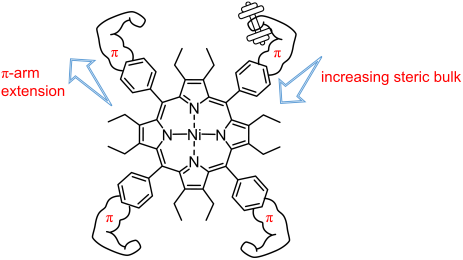
- . Functionalization at the meso-phenyls’ ortho- position was not manageable and more research is needed to optimize conditions. Comparing the yields in coupling of borylated porphyrins and the halogenated analogues revealed a greater yield, when the polarity of the reaction was reversed; however, due to tedious


5th International Symposium on Synthesis and Catalysis (ISySyCat2023)
Beilstein J. Org. Chem. 2024, 20, 2704–2707, doi:10.3762/bjoc.20.227
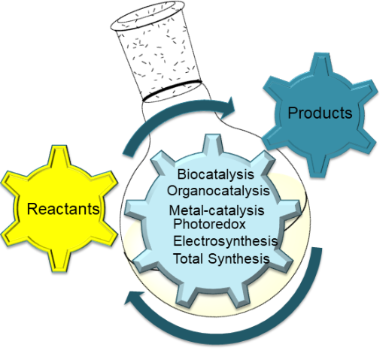
- -dihydro-1H-pyrroles using aryldiazonium salts and (S)-PyraBox, followed by sequential Jones oxidation. They showcased their methodology by preparing both (R)-rolipram and (R)-baclofen hydrochloride. Tóth et al. reported the design and synthesis of new analogues of HeE1-2Tyr, a nonnucleoside SARS-CoV-2

Applications of microscopy and small angle scattering techniques for the characterisation of supramolecular gels
Beilstein J. Org. Chem. 2024, 20, 2608–2634, doi:10.3762/bjoc.20.220

- increases, and techniques develop at a rapid pace [10][11][52][53]. SAS techniques include small angle X-ray scattering (SAXS), small angle neutron scattering (SANS), and their wide angle (WAXS) and ultra-small angle (USAXS and USANS, respectively) analogues have various advantages and drawbacks compared to


A review of recent advances in electrochemical and photoelectrochemical late-stage functionalization classified by anodic oxidation, cathodic reduction, and paired electrolysis
Beilstein J. Org. Chem. 2024, 20, 2500–2566, doi:10.3762/bjoc.20.214
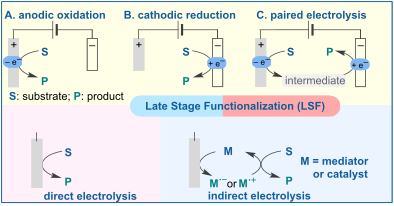
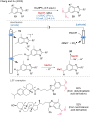
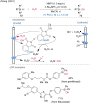
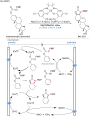
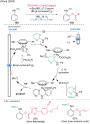
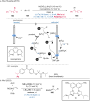
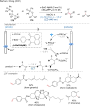
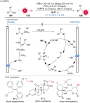
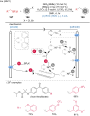
- triacetoxylates, including the LSF of bioactive compound analogues (Scheme 50). The mechanism involves the photoexcitation of TAC+, which facilitates the selective oxidation of C–H bonds in alkylarenes. This process efficiently forms multiple C–O bonds while minimizing the risk of overoxidation. The versatility
- and mildness of this method were demonstrated by successfully applying it to various substrates, including bioactive compound analogues. This advancement highlights the potential of electrophotocatalysis in achieving complex transformations in organic synthesis, particularly in the selective


























Synthesis and conformational analysis of pyran inter-halide analogues of ᴅ-talose
Beilstein J. Org. Chem. 2024, 20, 2442–2454, doi:10.3762/bjoc.20.208
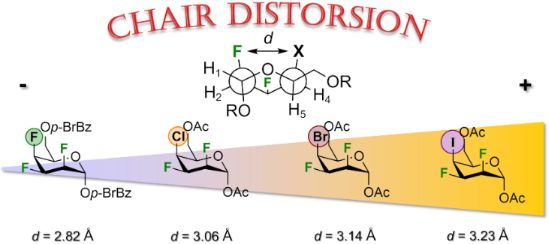
- Olivier Lessard Mathilde Grosset-Magagne Paul A. Johnson Denis Giguere Département de Chimie, 1045 av. De la Médecine, Université Laval, Québec City, Qc, G1V 0A6, PROTEO, Canada 10.3762/bjoc.20.208 Abstract In this work, we describe the synthesis of halogenated pyran analogues of ᴅ-talose using a
- halo-divergent strategy from known 1,6-anhydro-2,3-dideoxy-2,3-difluoro-β-ᴅ-mannopyranose. In solution and in the solid-state, all analogues adopt standard 4C1-like conformations despite 1,3-diaxial repulsion between the F2 and the C4 halogen. Moreover, the solid-state conformational analysis of
- and nonbonding interactions for the halogen at C4. Finally, density functional theory (DFT) calculations corroborate the preference of talose analogues to adopt a 4C1-like conformation and a natural bonding orbital (NBO) analysis demonstrates the effects of hyperconjugation from C–F antibonding


Asymmetric organocatalytic synthesis of chiral homoallylic amines
Beilstein J. Org. Chem. 2024, 20, 2349–2377, doi:10.3762/bjoc.20.201
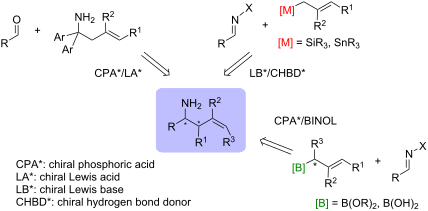
- . The limitations in the scope of this methodology include a poor stereoselectivity achieved with 5-membered cyclic 2,3-disubstituted silanes in contrast to the 6-membered analogues (53). A lower efficiency was recorded with 2-substituted allylsilanes bearing either a halogen or an alkyl group with
- analogues, a novel tetrakis-triazole-based H-bond donor catalyst 111 was identified as most promising. Among different nucleophilic allylating reagents, 2-methallyltributyltin (107) emerged as optimal in terms of reactivity and enantioselectivity. It was speculated that the enantioinduction is realised via






Tandem diazotization/cyclization approach for the synthesis of a fused 1,2,3-triazinone-furazan/furoxan heterocyclic system
Beilstein J. Org. Chem. 2024, 20, 2342–2348, doi:10.3762/bjoc.20.200

- Information File 1 for details) [43]. As expected, amides 5 also undergo tandem diazotization/azo coupling reaction to form the target [1,2,5]oxadiazolo[3,4-d][1,2,3]triazin-7(6H)-ones 7. It should also be noted, that compounds 7 were obtained in similar yields as the corresponding furoxan analogues


Improved deconvolution of natural products’ protein targets using diagnostic ions from chemical proteomics linkers
Beilstein J. Org. Chem. 2024, 20, 2323–2341, doi:10.3762/bjoc.20.199
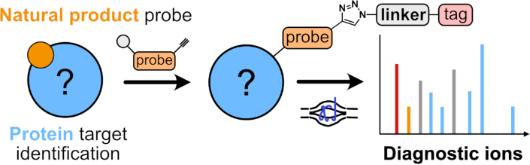
- a probe either directly in living cells or in cell lysates utilizes a linker with biotin (Figure 8A). This approach led for example to the identification of protein targets of the synthetic pyrethrin analogues cerulenin, hypothemicin, fimbrolide, and eupalmerin acetate [89][90][91][92]. The biotin


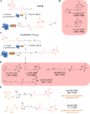


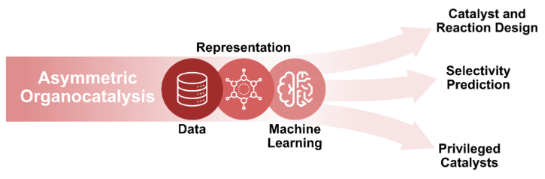
Catalysing (organo-)catalysis: Trends in the application of machine learning to enantioselective organocatalysis
Beilstein J. Org. Chem. 2024, 20, 2280–2304, doi:10.3762/bjoc.20.196


Novel truxene-based dipyrromethanes (DPMs): synthesis, spectroscopic characterization and photophysical properties
Beilstein J. Org. Chem. 2024, 20, 2163–2170, doi:10.3762/bjoc.20.186
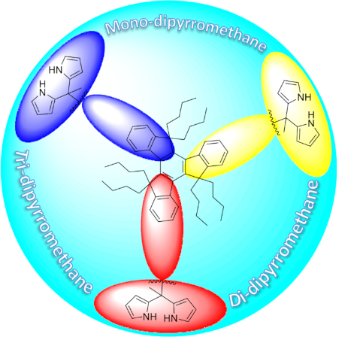
- plethora of hetero-analogues of both truxene and isotruxene have been reported with altered physiochemical properties [30][34][35]. To our best knowledge, derivatizations of the truxene core with heterocycles are limited [33][36][37][38] and needs to be explored for diverse promising applications. Keeping


O,S,Se-containing Biginelli products based on cyclic β-ketosulfone and their postfunctionalization
Beilstein J. Org. Chem. 2024, 20, 2143–2151, doi:10.3762/bjoc.20.184
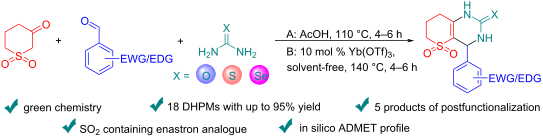
- -alkyl/aryl-substituted analogues, and aldehyde component switch to heteroaromatic (2-pyridinaldehyde) and aliphatic (iPrCHO, cinnamaldehyde). Unfortunately, we failed in both replacements and were unable to obtain any reasonable products. The list of unsuccessful reagents is shown in Figure S7 (see
- ]. We hope that compound 2r and its analogues obtained in this work can be further deeply studied by in silico and in vitro methods to discover the compound most suitable for clinical trials. The structures of the synthesized compounds 2a–r were confirmed by spectral data. The 1H NMR spectra of the



Access to 2-oxoazetidine-3-carboxylic acid derivatives via thermal microwave-assisted Wolff rearrangement of 3-diazotetramic acids in the presence of nucleophiles
Beilstein J. Org. Chem. 2024, 20, 1894–1899, doi:10.3762/bjoc.20.164

- (azetidin-2-one) scaffold to medicinal chemistry and drug design is self-evident. This four-membered heterocycle is a key fragment of many antibiotics [1], including penicillin and its analogues, as well as other pharmacologically important molecules [2]. Therefore, the search for new efficient and
- . It can be observed that the 5-monosubstituted diazo derivatives, and especially those with no substituents in position 5, form the target products in lower, often moderate yields (see products 3i,j,n and 3r,s,t) compared to the 5,5-disubstituted (spirocyclic) analogues. This result may be related to


2-Heteroarylethylamines in medicinal chemistry: a review of 2-phenethylamine satellite chemical space
Beilstein J. Org. Chem. 2024, 20, 1880–1893, doi:10.3762/bjoc.20.163
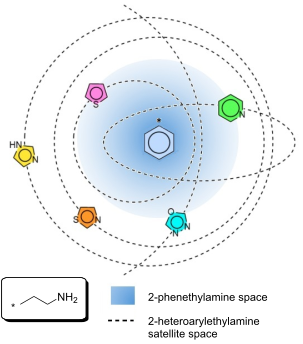
- better inhibitory data than for the aforementioned furyl analogues (Scheme 4). The authors suggested the replacement of furyl by a more polarizable aromatic ring such as thienyl as prospective origin of the observed IC50 downward shift. Berthelot et al. [23][24] expanded their studies on GABAB inhibitors
- of this aromatic ring. Molecular docking studies combined with in vitro studies showed that only the thiophene-based phenethylamine derivative 30 possesses a weak hCA I/II activity compared with analogues lacking the 2-aminoethyl moiety. Carrol et al. [31][32] explored bupropion analogues for their
- approximately 15-fold more active than histamine (Scheme 9). Gannellin et al. [51] performed a discrete H3 SAR study starting from compound 51 and investigated the effect of the position of the methyl group on the agonist activity. Analogues 50 and 53, having the methyl group in the aminoethyl side chain




The Groebke–Blackburn–Bienaymé reaction in its maturity: innovation and improvements since its 21st birthday (2019–2023)
Beilstein J. Org. Chem. 2024, 20, 1839–1879, doi:10.3762/bjoc.20.162
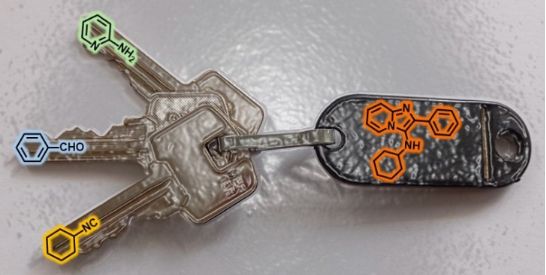
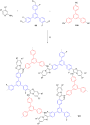
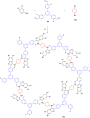
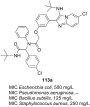
- derivatization, allowed the obtainment of 18 in high yield under relatively mild conditions, and was extended to the synthesis of 23 analogues, all in high yields (>86%). The catalyst could be recovered from the reaction medium by precipitation and reused up to five times without loss in activity. In 2020, Tyagi






A facile three-component route to powerful 5-aryldeazaalloxazine photocatalysts
Beilstein J. Org. Chem. 2024, 20, 1831–1838, doi:10.3762/bjoc.20.161
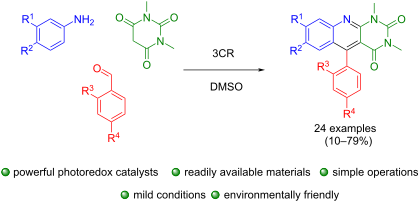
- Discussion Regarding the synthesis of 5-aryldeazaalloxazines 2 (5-arylpyrimido[4,5-b]quinoline-2,4(1H,3H)-diones), the data in the literature are quite limited, and the known methodology describes the dehydrogenation of initially formed 5,10-dihydro analogues (5-aryl-5,10-dihydropyrimido[4,5-b]quinoline-2,4




Syntheses and medicinal chemistry of spiro heterocyclic steroids
Beilstein J. Org. Chem. 2024, 20, 1713–1745, doi:10.3762/bjoc.20.152
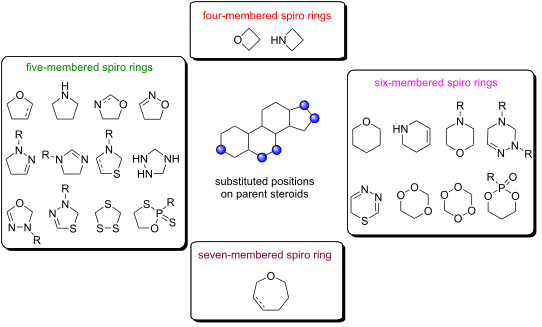
- 2) [11]. In 2011, during the synthesis of cyclopamine analogues, the research group constructed a spirooxetane ring on an estrane backbone. The reaction of the spirooxirane of estrane derivative 3 with the anion of TBDPS-protected pentyn-5-ol introduced the pentynyl group, which upon removal of the


Chemo-enzymatic total synthesis: current approaches toward the integration of chemical and enzymatic transformations
Beilstein J. Org. Chem. 2024, 20, 1693–1712, doi:10.3762/bjoc.20.151
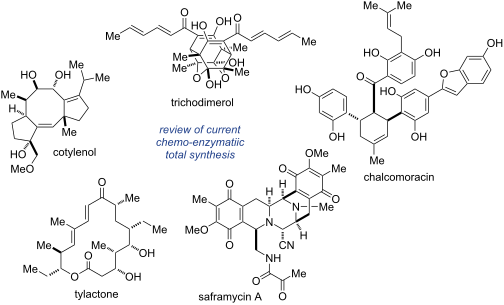
- ), trichodimerol (2), chalcomoracin (3), tylactone (4), and saframycin A (5), as well as a number of analogues of these natural products (Scheme 1). The overview of all five natural products begins with a description of the well-studied biosynthetic strategies evolved by microorganisms and plants. Biosynthetic


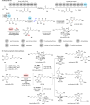
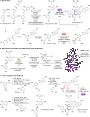


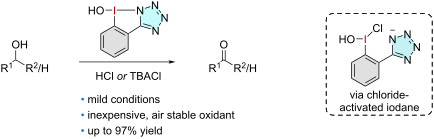
Oxidation of benzylic alcohols to carbonyls using N-heterocyclic stabilized λ3-iodanes
Beilstein J. Org. Chem. 2024, 20, 1677–1683, doi:10.3762/bjoc.20.149
- isolated in a high yield of 84% with reisolation of the 5-(2-iodophenyl)-1H-tetrazole (6) in 90% yield. Other para-halogenated benzaldehydes 4b–f were isolated in good yields of up to 88%. ortho-Substitution led to a lower yield of the iodinated product 4g (43%) compared to the para-iodinated analogues 4d




Methyltransferases from RiPP pathways: shaping the landscape of natural product chemistry
Beilstein J. Org. Chem. 2024, 20, 1652–1670, doi:10.3762/bjoc.20.147
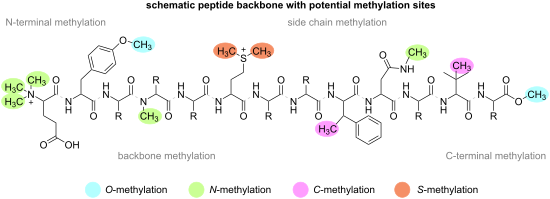
- analogues [48][49][50][51][52]. The PURE system is a well-established method for rapidly expressing functional proteins. However, synthesising peptides with unnatural amino acids remains a labour-intensive process. tRNAs charged with unnatural or modified amino acids cannot be easily replenished within the
- Epichloë. Epichloëcyclins A–E are cyclic heptameric peptides, all produced from the same precursor GigA. They carry a dimethylated lysine residue; this modification is installed as a final step in the biosynthesis by GigC. Genome mining showed that analogues of the GigA precursor are widespread in fungal




Polymer degrading marine Microbulbifer bacteria: an un(der)utilized source of chemical and biocatalytic novelty
Beilstein J. Org. Chem. 2024, 20, 1635–1651, doi:10.3762/bjoc.20.146
- . Their structures differ from common parabens by the presence of an acetamide group ortho to the phenolic hydroxy group [14]. They exhibited weak activity against E. coli and methicillin-sensitive Staphylococcus aureus (MSSA). The three analogues 15–17 (Figure 6) with different ester chain lengths were
- the growth of T. cruzi epimastigotes with an IC50 value of 4.1 μM, which is more potent than the approved drug benznidazole (IC50 = 20 μM) [7]. Concomitant with Igarashi, we reported the isolation of 27 from a sponge-derived Microbulbifer sp. MLAF003 [4]. Three analogues (28–30, Figure 10) were




Photoswitchable glycoligands targeting Pseudomonas aeruginosa LecA
Beilstein J. Org. Chem. 2024, 20, 1486–1496, doi:10.3762/bjoc.20.132
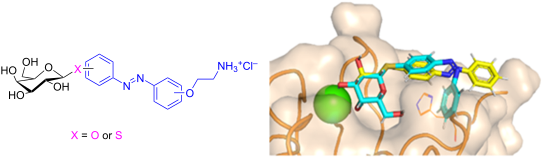
- -binding pocket, with the β-linked aromatic aglycons having five-fold higher affinity compared to aliphatic analogues [33][34]. Beside β-O-aryl galactosides, enzymatically more stable β-S-aryl galactosides have also been successfully developed as monovalent LecA ligands (Figure 1A) [30][35]. Since





