Search for "biomass" in Full Text gives 80 result(s) in Beilstein Journal of Organic Chemistry.
Beilstein J. Org. Chem. 2013, 9, 2434–2445, doi:10.3762/bjoc.9.281
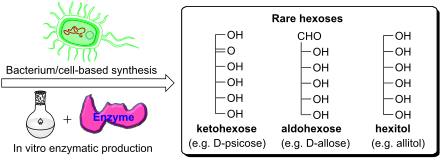
Graphical Abstract
Scheme 1: Synthesis of D-tagatose from D-galactose using L-arabinose isomerase.
Scheme 2: Synthesis of D-psicose from D-fructose using D-tagatose 3-epimerase/D-psicose 3-epimerase.
Figure 1: The active site in D-psicose 3-epimerase (DPEase) in the presence of D-fructose, showing the metal ...
Scheme 3: Enzymatic synthesis of D-psicose using aldolase FucA.
Scheme 4: Proposed pathway of the D-sorbose synthesis from galactitol or L-glucitol.
Scheme 5: Simultaneous enzymatic synthesis of D-sorbose and D-psicose.
Scheme 6: Biosynthesis of L-tagatose.
Scheme 7: Preparative-scale synthesis of L-tagatose and L-fructose using aldolase.
Scheme 8: Biosynthesis of L-fructose.
Scheme 9: Preparative-scale synthesis of L-fructose using aldolase RhaD.
Scheme 10: Chemoenzymatically synthesis of 1-deoxy-L-fructose [8].
Scheme 11: Potential enzymes (isomerases) for the bioconversion of D-psicose to D-allose.
Scheme 12: Three-step bioconversion of D-glucose to D-allose.
Scheme 13: Biosynthesis of L-glucose.
Scheme 14: Enzymatic synthesis of L-talose and D-gulose.
Scheme 15: Enzymatic synthesis of L-galactose.
Scheme 16: Enzymatic synthesis of L-fucose.
Scheme 17: Synthesis of allitol from D-fructose using a multi-enzyme system.
Scheme 18: Biosynthesis of D-talitol via C-2 reduction of rare sugars.
Scheme 19: Biosynthesis of L-sorbitol via C-2 reduction of rare sugars.
Beilstein J. Org. Chem. 2013, 9, 602–607, doi:10.3762/bjoc.9.65
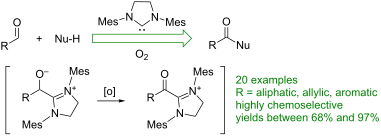
Graphical Abstract
Scheme 1: NHC/mpg-C3N4-catalysed aerobic oxidation of aldehydes.
Scheme 2: Oxidation of 4-nitrobenzaldehyde with different NHC-salts as precatalysts.
Figure 1: Oxidation of cyclohexanecarbaldehyde to cyclohexanecarboxylic acid under aerobic conditions with an...
Figure 2: Oxidation of various aldehydes under the optimized conditions: a2 equiv K2CO3 was used instead of D...
Scheme 3: Proposed mechanism for the aerobic oxidation.
Beilstein J. Org. Chem. 2012, 8, 283–289, doi:10.3762/bjoc.8.30
Graphical Abstract
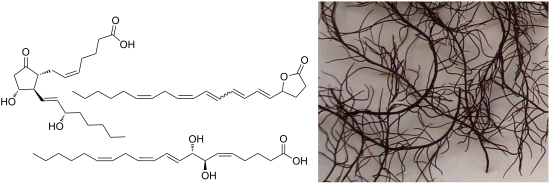
Figure 1: UPLC–ESIMS-based metabolic profiles of Gracilaria vermiculophylla (A) and Gracilaria chilensis (B) ...
Scheme 1: 5-((1E,3,5E,7Z,10Z)-hexadeca-1,3,5,7,10-pentaenyl)dihydrofuran-2(3H)-one (5) with 1H–1H COSY (bold ...
Scheme 2: Suggested pathway for the biosynthesis of 5.
Figure 2: Relative risk (mean ± 95% confidence interval) of Echinolittorina peruviana attachment on surfaces ...
Beilstein J. Org. Chem. 2011, 7, 442–495, doi:10.3762/bjoc.7.57
Graphical Abstract
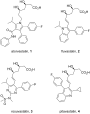
Figure 1: Structures of atorvastatin and other commercial statins.
Figure 2: Structure of compactin.
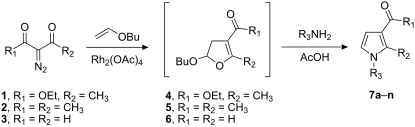
Scheme 1: Synthesis of pentasubstituted pyrroles.
Scheme 2: [3 + 2] Cycloaddition to prepare 5-isopropylpyrroles.
Scheme 3: Regiospecific [3 + 2] cycloaddition to prepare the pyrrole scaffold.
Scheme 4: Formation of the pyrrole core of atorvastatin via [3 + 2] cycloaddition.
Scheme 5: Formation of pyrrole 33 via the Paal–Knorr reaction.
Scheme 6: Convergent synthesis towards atorvastatin.
Figure 3: Binding pocket of sunitinib in the TRK KIT.
Scheme 7: Synthesis of sunitinib.
Scheme 8: Alternative synthesis of sunitinib.
Scheme 9: Key steps in the syntheses of sumatriptan and zolmitriptan.
Scheme 10: Introduction of the N,N-dimethylaminoethyl side chain.
Scheme 11: Japp–Klingemann reaction in the synthesis of sumatriptan.
Scheme 12: Synthesis of the intermediate sulfonyl chlorides 62 and 63.
Scheme 13: Alternative introduction of the sulfonamide.
Scheme 14: Negishi-type coupling to benzylic sulfonamides.
Scheme 15: Heck reaction used to introduce the sulfonamide side chain of naratriptan.
Scheme 16: Synthesis of the oxazolinone appendage of zolmitriptan.
Scheme 17: Grandberg indole synthesis used in the preparation of rizatriptan.
Scheme 18: Improved synthesis of rizatriptan.
Scheme 19: Larock-type synthesis of rizatriptan.
Scheme 20: Synthesis of eletriptan.
Scheme 21: Heck coupling for the indole system in eletriptan.
Scheme 22: Attempted Fischer indole synthesis of elatriptan.
Scheme 23: Successful Fischer indole synthesis for eletriptan.
Scheme 24: Mechanistic rationale for the Bischler–Möhlau reaction.
Scheme 25: Bischler-type indole synthesis used in the fluvastatin sodium synthesis.
Scheme 26: Palladium-mediated synthesis of ondansetron.
Scheme 27: Fischer indole synthesis of ondansetron.
Scheme 28: Optimised Pictet–Spengler reaction towards tadalafil.
Figure 4: Structures of carvedilol 136 and propranolol 137.
Scheme 29: Synthesis of the carbazole core of carvedilol.
Scheme 30: Alternative syntheses of 4-hydroxy-9H-carbazole.
Scheme 31: Convergent synthesis of etodolac.
Scheme 32: Alternative synthesis of etodolac.
Figure 5: Structures of imidazole-containing drugs.
Scheme 33: Synthesis of functionalised imidazoles towards losartan.
Scheme 34: Direct synthesis of the chlorinated imidazole in losartan.
Scheme 35: Synthesis of trisubstituted imidazoles.
Scheme 36: Preparation of the imidazole ring in olmesartan.
Scheme 37: Synthesis of ondansetron.
Scheme 38: Alternative route to ondansetron and its analogues.
Scheme 39: Proton pump inhibitors and synthesis of esomeprazole.
Scheme 40: Synthesis of benzimidazole core pantoprazole.
Figure 6: Structure of rabeprazole 194.
Scheme 41: Synthesis of candesartan.
Scheme 42: Alternative access to the candesartan key intermediate 216.
Scheme 43: .Medicinal chemistry route to telmisartan.
Scheme 44: Improved synthesis of telmisartan.
Scheme 45: Synthesis of zolpidem.
Scheme 46: Copper-catalysed 3-component coupling towards zolpidem.
Figure 7: Structure of celecoxib.
Scheme 47: Preparation of celecoxib.
Scheme 48: Alternative synthesis of celecoxib.
Scheme 49: Regioselective access to celecoxib.
Scheme 50: Synthesis of pazopanib.
Scheme 51: Syntheses of anastrozole, rizatriptan and letrozole.
Scheme 52: Regioselective synthesis of anastrozole.
Scheme 53: Triazine-mediated triazole formation towards anastrozole.
Scheme 54: Alternative routes to 1,2,4-triazoles.
Scheme 55: Initial synthetic route to sitagliptin.
Figure 8: Binding of sitagliptin within DPP-IV.
Scheme 56: The process route to sitagliptin key intermediate 280.
Scheme 57: Synthesis of maraviroc.
Scheme 58: Synthesis of alprazolam.
Scheme 59: The use of N-nitrosoamidine derivatives in the preparation of fused benzodiazepines.
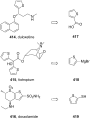
Figure 9: Structures of itraconazole, ravuconazole and voriconazole.
Scheme 60: Synthesis of itraconazole.
Scheme 61: Synthesis of rufinamide.
Scheme 62: Representative tetrazole formation in valsartan.
Figure 10: Structure of tetrazole containing olmesartan, candesartan and irbesartan.
Scheme 63: Early stage introduction of the tetrazole in losartan.
Scheme 64: Synthesis of cilostazol.
Figure 11: Structure of cefdinir.
Scheme 65: Semi-synthesis of cefdinir.
Scheme 66: Thiazole syntheses towards ritonavir.
Scheme 67: Synthesis towards pramipexole.
Scheme 68: Alternative route to pramipexole.
Scheme 69: Synthesis of famotidine.
Scheme 70: Efficient synthesis of the hyperuricemic febuxostat.
Scheme 71: Synthesis of ziprasidone.
Figure 12: Structure of mometasone.
Scheme 72: Industrial access to 2-furoic acid present in mometasone.
Scheme 73: Synthesis of ranitidine from furfuryl alcohol.
Scheme 74: Synthesis of nitrofurantoin.
Scheme 75: Synthesis of benzofuran.
Scheme 76: Synthesis of amiodarone.
Scheme 77: Synthesis of raloxifene.
Scheme 78: Alternative access to the benzo[b]thiophene core of raloxifene.
Scheme 79: Gewald reaction in the synthesis of olanzapine.
Scheme 80: Alternative synthesis of olanzapine.
Figure 13: Access to simple thiophene-containing drugs.
Scheme 81: Synthesis of clopidogrel.
Scheme 82: Pictet–Spengler reaction in the preparation of tetrahydrothieno[3,2-c]pyridine (422).
Scheme 83: Alternative synthesis of key intermediate 422.
Figure 14: Co-crystal structures of timolol (left) and carazolol (right) in the β-adrenergic receptor.
Scheme 84: Synthesis of timolol.
Scheme 85: Synthesis of tizanidine 440.
Scheme 86: Synthesis of leflunomide.
Scheme 87: Synthesis of sulfamethoxazole.
Scheme 88: Synthesis of risperidone.
Figure 15: Relative abundance of selected transformations.
Figure 16: The abundance of heterocycles within top 200 drugs (5-membered rings).
Beilstein J. Org. Chem. 2008, 4, No. 45, doi:10.3762/bjoc.4.45