Search results
Search for "functionalization" in Full Text gives 800 result(s) in Beilstein Journal of Organic Chemistry. Showing first 200.
Effect of substitution position of aryl groups on the thermal back reactivity of aza-diarylethene photoswitches and prediction by density functional theory
Beilstein J. Org. Chem. 2025, 21, 242–252, doi:10.3762/bjoc.21.16
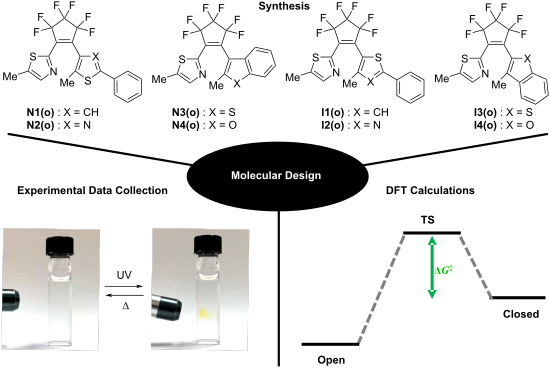
- replacing the rotor pyridyl group of a hydrazone switch with a phenyl group afforded long-lived negative photochromic compounds [49]. In addition, Hecht and co-workers reported that the thermal stability of indigos can be tuned by N-functionalization [50][51]. They revealed that the introduction of electron


Visible-light-promoted radical cyclisation of unactivated alkenes in benzimidazoles: synthesis of difluoromethyl- and aryldifluoromethyl-substituted polycyclic imidazoles
Beilstein J. Org. Chem. 2025, 21, 234–241, doi:10.3762/bjoc.21.15
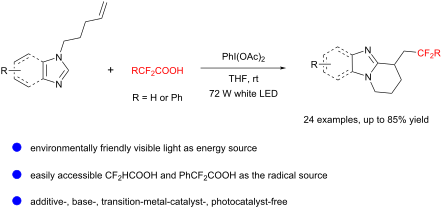
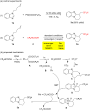
- substituted with halogen atoms (–F, –Cl, –Br) were also suitable for this transformation, efficiently giving the desired products in yields of 65–80% (3b, 3e–g), thus facilitating further functionalization possibilities. Notably, substrates with substituents at the sterically hindered 7-position of the


Recent advances in electrochemical copper catalysis for modern organic synthesis
Beilstein J. Org. Chem. 2025, 21, 155–178, doi:10.3762/bjoc.21.9

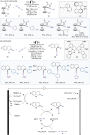
- catalysis to organic synthesis, focusing on recent developments in Cu-catalyzed electrochemical reaction categorized into four types: 1) C–H functionalization, 2) olefin addition, 3) decarboxylative functionalization, and 4) coupling reactions (Figure 3). This review aims to provide insight into the
- potential of copper-based electrochemical methodologies while also inspiring future research in this rapidly growing field. Review C–H Functionalization Site- and chemoselective C–H functionalization has emerged as a powerful platform for the formation of new C–C and C–heteroatom bonds, offering an
- functionalization of highly complex and diverse molecules, such as those of pharmaceuticals and natural products, has provided new retrosynthetic disconnections for complex compounds, contributing to improved resource efficiency [41][42][43][44][45][46]. Recently, the merging of C–H activation and electrochemistry








Nickel-catalyzed cross-coupling of 2-fluorobenzofurans with arylboronic acids via aromatic C–F bond activation
Beilstein J. Org. Chem. 2025, 21, 146–154, doi:10.3762/bjoc.21.8
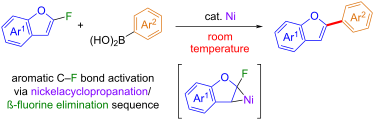
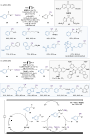
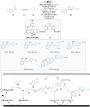
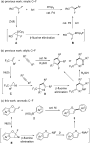
- organic chemistry owing to their high bond dissociation energy compared to other aromatic C–X (X = Cl, Br, I) bonds [1][2][3][4][5][6][7]. This activation is essential for the late-stage functionalization of stable C–F bonds in complex molecules with reactive functional groups, providing an orthogonal



Cu(OTf)2-catalyzed multicomponent reactions
Beilstein J. Org. Chem. 2025, 21, 122–145, doi:10.3762/bjoc.21.7

- to multiple C–C bonds generates extended carbon radicals capable of giving further functionalization. Regarding the ionic mechanism, the key step generally comprises the complexation with the unsaturated substrate leading to activation of the alkenyl/alkynyl moiety towards a nucleophilic attack. In
- multicomponent synthesis of acyclic and heteropolycyclic systems under copper(II) triflate catalysis are reported. Using alkenes and alkynes as substrates, various types of reactions were considered, including hydroamination, condensation, cross-coupling, C–H functionalization, cycloaddition, aza-Diels–Alder






Recent advances in organocatalytic atroposelective reactions
Beilstein J. Org. Chem. 2025, 21, 55–121, doi:10.3762/bjoc.21.6


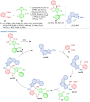


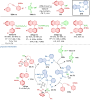


Reactivity of hypervalent iodine(III) reagents bearing a benzylamine with sulfenate salts
Beilstein J. Org. Chem. 2024, 20, 3281–3289, doi:10.3762/bjoc.20.272
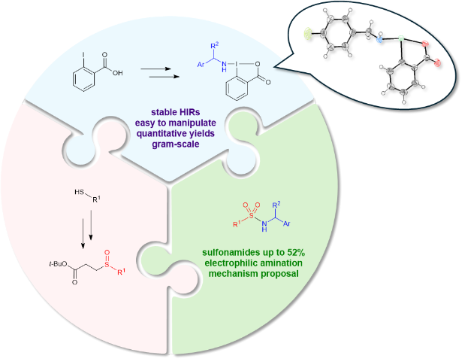
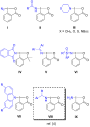
- the functionalization of BBX reagents. (Benzylamino)benziodoxolones, BBXs 2, were prepared according to our reported procedure, via reaction with previously silylated benzylamines (Scheme 2) [4]. Using this methodology, a total of four benziodoxolones (including the new p-fluorobenzylamine



Giese-type alkylation of dehydroalanine derivatives via silane-mediated alkyl bromide activation
Beilstein J. Org. Chem. 2024, 20, 3274–3280, doi:10.3762/bjoc.20.271
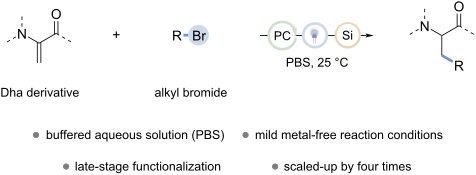
- functionalization (LSF) of peptide scaffolds. α,β-Unsaturated amino acids like dehydroalanine (Dha) derivatives have emerged as particularly useful structures, as the electron-deficient olefin moiety can engage in late-stage functionalization reactions, like a Giese-type reaction. Cheap and widely available
- , forming a new C(sp3)–C(sp3) bond. The reaction can be performed in a phosphate-buffered saline (PBS) solution and shows post-functionalization prospects through pathways involving classical peptide chemistry. Keywords: dehydroalanine; Giese-type reaction; hydroalkylation; photocatalysis; water
- pathway for the functionalization of an electron-deficient olefin is the Giese reaction (Figure 1) [6][7]. This reaction involves the hydroalkylation of the olefin via radical addition (RA), followed by either hydrogen-atom transfer (HAT) or single-electron transfer (SET) and protonation. Traditionally



Controlled oligomerization of [1.1.1]propellane through radical polarity matching: selective synthesis of SF5- and CF3SF4-containing [2]staffanes
Beilstein J. Org. Chem. 2024, 20, 3134–3143, doi:10.3762/bjoc.20.259
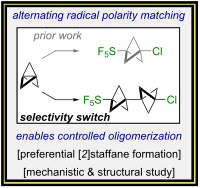
- . Over the course of this study, we also found that the SF5- and CF3SF4-containing [2]staffanes reported herein are structurally interesting in their own right. Future work will examine potential applications of 2 and 3 and explore tactics for C–Cl bond functionalization. (Top) highlighting selectivity


Advances in the use of metal-free tetrapyrrolic macrocycles as catalysts
Beilstein J. Org. Chem. 2024, 20, 3085–3112, doi:10.3762/bjoc.20.257
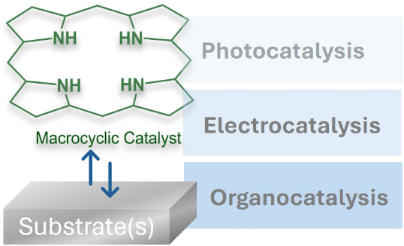
- , photocatalysts, and electrocatalysts are presented here. The effect of macrocyclic structural modifications such as their functionalization with different substituents, distortion from planarity, conformational flexibility and rigidity towards catalytic activity are presented, highlighting the potential of these
- [48]. Therefore, most of the work involving metal-free porphyrins is limited to investigations on N–H tautomerization and protonation–deprotonation studies [49][50][51][52]. However, there are several chemical tools to convert the planar geometry of porphyrins to nonplanar, such as functionalization
- evolution reaction (OER). There are several reviews focusing on the relationship between metallo-catalyst structures and HER, OER, and ORR performance/mechanisms, selection of the central metal ion, and peripheral functionalization of the catalysts [106][107][108][109]. This review summarizes recent


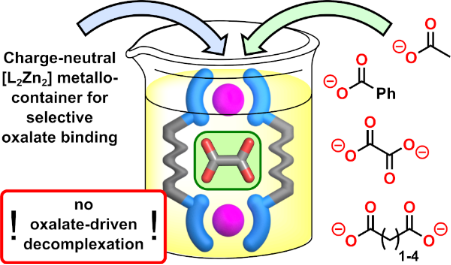
Tailored charge-neutral self-assembled L2Zn2 container for taming oxalate
Beilstein J. Org. Chem. 2024, 20, 3007–3015, doi:10.3762/bjoc.20.250
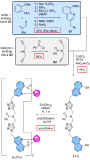
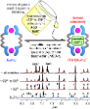
- previously reported methods. Building block S2, based on dipropargylamine, is synthesized via a Schotten–Baumann reaction with benzoyl chloride, resulting in the flexible dialkyne backbone with a yield of 95%. The functionalization was envisioned to enhance the solubility of the ligand as we usually have




Advances in radical peroxidation with hydroperoxides
Beilstein J. Org. Chem. 2024, 20, 2959–3006, doi:10.3762/bjoc.20.249
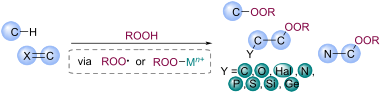
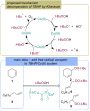
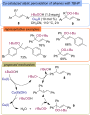
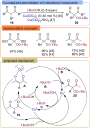
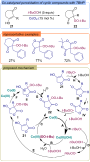
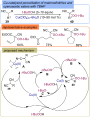
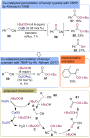
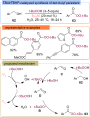
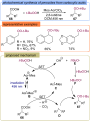
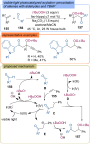
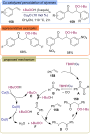
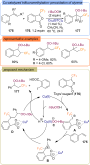
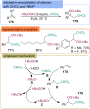
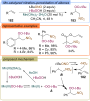
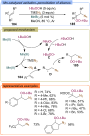
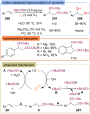
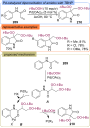
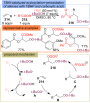
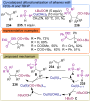
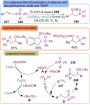
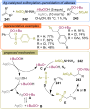
- the radical Kharasch-type functionalization of organic molecules with OOR fragment including free-component radical couplings. The discussion has been structured by the type of the substrate of radical peroxidation: C(sp3)–H substrates; aromatic systems; compounds with unsaturated C–C or C–Het bonds
- . Keywords: C–H functionalization; oxidation; peroxidation; radical reactions; TBHP; Introduction Organic peroxides are used in many different areas of human activities. The traditional and most developed field is the use of peroxides as initiators in the polymerization process for the production of a wide
- broad, the present review mainly focused on radical and metal-catalyzed functionalization of C–H bonds or unsaturated bond with hydroperoxides (Scheme 2). The aim of this review is to cover recent studies in which alkylperoxy radicals have been used for the peroxidation of C(sp3) and C(sp2) sites































Recent advances in transition-metal-free arylation reactions involving hypervalent iodine salts
Beilstein J. Org. Chem. 2024, 20, 2891–2920, doi:10.3762/bjoc.20.243

- group from position 4, and then regioselective vicinal functionalization of the generated aryne. The method's compatibility with halide-substituted aryl compounds enhances its versatility and practicality. Moreover, the completion of reaction within a mere 40 minutes at room temperature underscores its
- trifluoromethanesulfonate (TMSOTf). This synthesis was conducted in a mixture of 2,2,2-trifluoroethanol (TFE) and dichloromethane [78]. The synthesized naproxen-containing diaryliodonium salt 67 was further used to modify the aromatic ring of naproxen methyl ester 68 (Scheme 27). Various functionalization reactions which
- , transition metal-free conditions, and the presence of a C–I bond in the product, allowing for further functionalization through various coupling reactions, making the reaction method highly attractive. In 2022, Dohi and colleagues emphasized the high reactivity of TMP-iodonium acetates in the O-arylation of




C–H Trifluoromethylthiolation of aldehyde hydrazones
Beilstein J. Org. Chem. 2024, 20, 2883–2890, doi:10.3762/bjoc.20.242
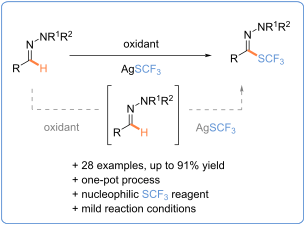
- ). Mechanistic investigations revealed that AgSCF3 was the active species in the transformation. Keywords: C–H bond functionalization; C–S bond formation; hydrazones; synthetic method; trifluoromethylthiolation; Introduction Fluorinated molecules are of paramount importance [1][2][3][4][5][6][7][8][9][10][11
- various transformations [54][55][56][57][58][59][60][61][62][63][64]. In consequence, a large number of transition-metal-catalyzed or radical-mediated processes for C–H functionalization of aldehyde hydrazones has flourished over the years. An ideal scenario for a direct and sustainable synthetic route
- towards trifluoromethylthiolated hydrazones will be the direct C–H functionalization of the corresponding aldehyde hydrazone, an uncharted transformation to date. Forging a C–S bond by the direct C–H-bond functionalization of hydrazones is still underdeveloped. Except for transformations leading to the


Mechanochemical difluoromethylations of ketones
Beilstein J. Org. Chem. 2024, 20, 2799–2805, doi:10.3762/bjoc.20.235
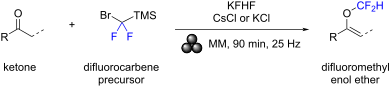
- difluoromethyl enol ethers, which have the potential for further functionalization. Overview over difluoromethyl enol ether syntheses from acyclic and cyclic 1,3-diones (A), acyclic ketones (B), and cyclic ketones (C). Attempted difluoromethylation of 1a in solution. The reactions were performed on a 0.2 mmol


C–C Coupling in sterically demanding porphyrin environments
Beilstein J. Org. Chem. 2024, 20, 2784–2798, doi:10.3762/bjoc.20.234
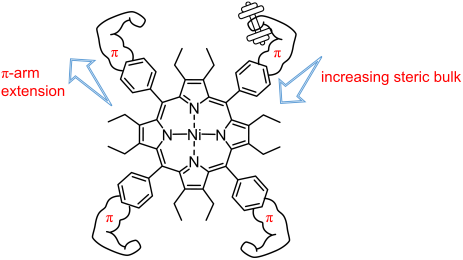
- acids. We report on palladium-catalyzed coupling attempts on the ortho-, meta-, and para-meso-phenyl position of sterically demanding dodecasubstituted saddle-shaped porphyrins. While para- and meta-substitutions could be achieved, ortho-functionalization in these systems remains elusive. Furthermore
- ] and almost planar [19] dodecasubstituted porphyrins have been reported. Despite the increasing interest in the chemical and physical properties of nonplanar porphyrins only limited synthetic methods are available for the functionalization of these macrocycles [6]. An attractive approach to accomplish
- . Functionalization at the meso-phenyls’ ortho- position was not manageable and more research is needed to optimize conditions. Comparing the yields in coupling of borylated porphyrins and the halogenated analogues revealed a greater yield, when the polarity of the reaction was reversed; however, due to tedious


5th International Symposium on Synthesis and Catalysis (ISySyCat2023)
Beilstein J. Org. Chem. 2024, 20, 2704–2707, doi:10.3762/bjoc.20.227
- organocatalyst for the gram-scale enantioselective synthesis of (S)-baclofen”, an interesting approach to recycling the very useful cinchona squaramide organocatalysts was described. This approach involved functionalization of the organocatalyst with a lipophilic linker (octadecyl side chains), resulting in a

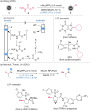
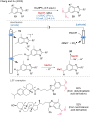
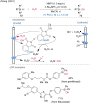
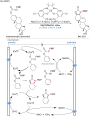
A review of recent advances in electrochemical and photoelectrochemical late-stage functionalization classified by anodic oxidation, cathodic reduction, and paired electrolysis
Beilstein J. Org. Chem. 2024, 20, 2500–2566, doi:10.3762/bjoc.20.214
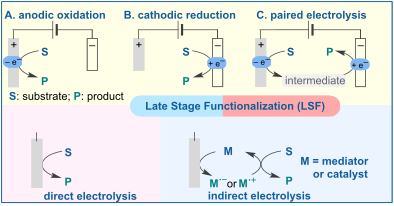
- , 52074, Aachen, Germany 10.3762/bjoc.20.214 Abstract With the resurgence of electrosynthesis in organic chemistry, there is a significant increase in the number of routes available for late-stage functionalization (LSF) of drugs. Electrosynthetic methods, which obviate the need for hazardous chemical
- representative examples to illustrate the potential of electrochemistry or photoelectrochemistry for the LSF of valuable molecular scaffolds. Keywords: electrochemistry; late-stage functionalization; paired electrolysis; pharmaceutical drugs; photoelectrochemistry; Introduction Organic electrochemistry is
- achieved compared to many classical methods. In light of the general trend towards more chemoselective protocols with broader functional group compatibility, there has been a growing interest in exploring the potential of electrosynthesis for the late-stage functionalization of complex scaffolds
















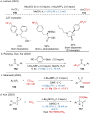


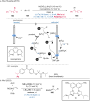


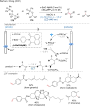


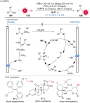
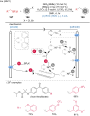
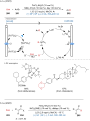


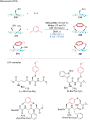


Visible-light-mediated flow protocol for Achmatowicz rearrangement
Beilstein J. Org. Chem. 2024, 20, 2493–2499, doi:10.3762/bjoc.20.213
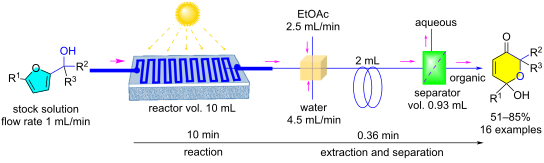
- Achmatowicz rearrangement substrates for accessing highly decorated dihydropyranones [5]. In recent years, several groundbreaking approaches for the synthesis of dihydropyranones have been described by diverse groups of researchers [6]. These techniques do not require any pre-functionalization of non
- OH). The Achmatowicz product is formed by addition of water to oxocarbenium intermediate A followed by elimination of L. Conclusion In conclusion, an integrated continuous PFR platform for photocatalytic functionalization of furfuryl alcohols to dihydropyranones through an Achmatowicz rearrangement



Photoredox-catalyzed intramolecular nucleophilic amidation of alkenes with β-lactams
Beilstein J. Org. Chem. 2024, 20, 2461–2468, doi:10.3762/bjoc.20.210
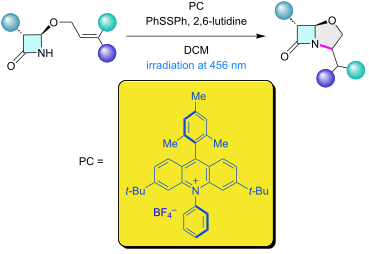
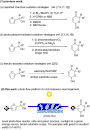
- ; Introduction Access to nitrogen radicals for the functionalization of alkenes is a field under active investigation [1][2][3][4], as it gives the possibility to directly introduce nitrogen into an alkyl chain (alkene carboamination) to obtain valuable nitrogen-containing molecules [5][6]. Among several N
- functionalization of amides with alkenes under photoredox conditions. Another viable approach for amide functionalization through photoredox catalysis involves the nucleophilic addition, in the presence of base, of an amide to a radical cation obtained by oxidation of an unfunctionalized alkene moiety (Figure 1A
- functionalization of amides with alkenes under oxidative conditions, the oxidation potential of the alkene plays a pivotal role in the oxidation to a radical cation through photoredox catalysis [26]. Alkenes that are less functionalized possess a higher oxidation potential, necessitating the use of potent




Synthesis, electrochemical properties, and antioxidant activity of sterically hindered catechols with 1,3,4-oxadiazole, 1,2,4-triazole, thiazole or pyridine fragments
Beilstein J. Org. Chem. 2024, 20, 2378–2391, doi:10.3762/bjoc.20.202
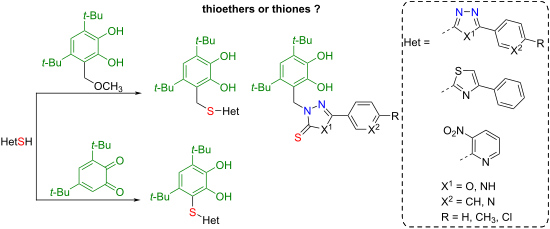
- neuroprotective, antihypoxic effects, act as antiparkinsonian agents [3][4][5], exhibit antitumor and antibacterial activity [6][7][8], possess antioxidant properties for regulating free radical processes [9][10][11]. The functionalization of polyphenolic compounds by introducing various substituents or




Hydrogen-bond activation enables aziridination of unactivated olefins with simple iminoiodinanes
Beilstein J. Org. Chem. 2024, 20, 2305–2312, doi:10.3762/bjoc.20.197
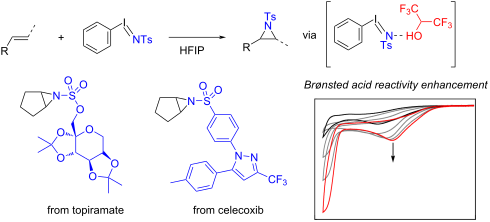
- the combination of synthetically tunable iodine-centered electrophilicity and the diversity of substrate functionalization mechanisms that can be accessed [1][2]. Large families of iodine(III)- and iodine(V)-based reagents have been developed – including iodobenzene diacetate (PhI(OAc)2, PIDA
- ), Koser’s reagent (PhI(OH)OTs), Zhdankin’s reagent (C6H4(o-COO)IN3, ABX), and Dess–Martin periodinane (DMP) – and find application in an array of synthetically important transformations including olefin difunctionalization, carbonyl desaturation, alcohol oxidation, and C–H functionalization [3][4


Deuterated reagents in multicomponent reactions to afford deuterium-labeled products
Beilstein J. Org. Chem. 2024, 20, 2270–2279, doi:10.3762/bjoc.20.195
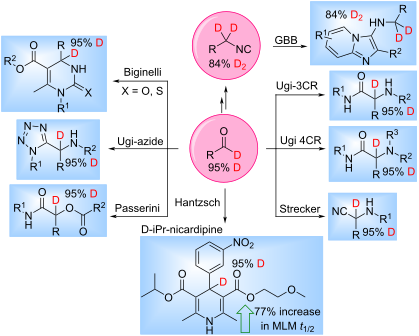
- flexibility [8]. Indeed, early incorporation of deuterium during hit generation may negate the need for late-stage C–H functionalization which often requires strong external oxidants or affords products with significantly lower biological activity [25][26][27]. Thus, eight MCRs were evaluated for D-reagent


Heterocycle-guided synthesis of m-hetarylanilines via three-component benzannulation
Beilstein J. Org. Chem. 2024, 20, 2208–2216, doi:10.3762/bjoc.20.188
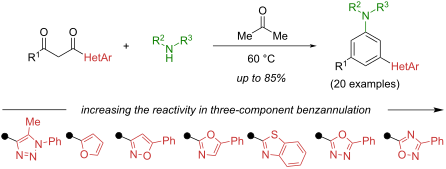
- mainly via metal-catalyzed C–N or C–C bond formation. Despite recent advances in the area of remote C–H functionalization, this strategy still requires some pre-functionalization of the starting material or the use of directing groups [28][29][30][31][32]. An alternative strategy is based on aromatic


From perfluoroalkyl aryl sulfoxides to ortho thioethers
Beilstein J. Org. Chem. 2024, 20, 2108–2113, doi:10.3762/bjoc.20.181
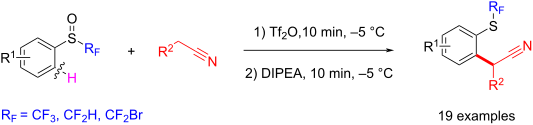
- -pot two-step protocol. Several aryl-SCF3 compounds are reported by variation of the nitrile or of the trifluoroalkyl sulfoxide starting material. The variation of the perfluoroalkyl chain was also possible. Keywords: ortho functionalization; rearrangement; sulfoxide; Introduction Since decades
- study, many research groups described a strategy for ortho-C–H functionalization of aryl sulfoxides with various nucleophiles via a cascade reaction of interrupted Pummerer reaction/sigmatropic rearrangement (Scheme 1a) [6][7][8][9][10][11]. A large range of nucleophiles, such as phenols [12][13][14][15