


Search results
Search for "substitution" in Full Text gives 1510 result(s) in Beilstein Journal of Organic Chemistry. Showing first 200.
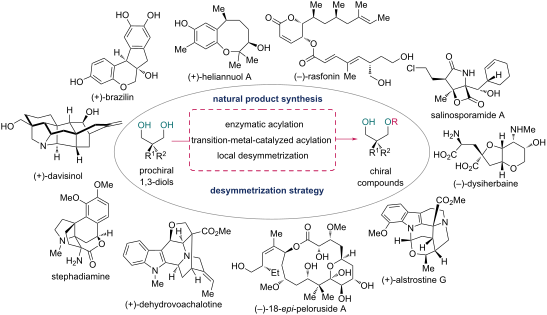
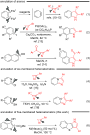
Enantioselective desymmetrization strategy of prochiral 1,3-diols in natural product synthesis
Beilstein J. Org. Chem. 2025, 21, 1932–1963, doi:10.3762/bjoc.21.151
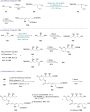
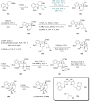
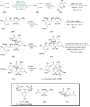
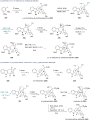
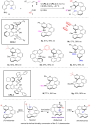
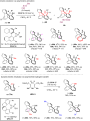
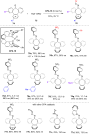
- favored complexation, while the phenyl substitution at C4 promoted a stable coordination-bond formation. Alternatively, (S)-130 could be furnished using Cu complex 129 in the desymmetrization step with comparable efficiency (98% yield and 91% ee), and was likewise transformed into 131 in four steps
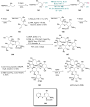
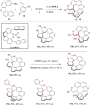
- diol 158, the ligand with only isopropyl substitution at C4 proved effective with suitable size for the substrate–catalyst coordination. A subsequent two-step sequence enabled the sythesis of olefinic carbamate 161 from benzoate 160. Treatment of 161 with Hg(CF3CO2)2 induced mercuriocyclization
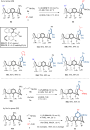
- , affording monobenzoate 169 in 97% yield with 96% ee. For 2-alkyl-substituted glycerols like triol 167, complex 168 is the most efficient catalyst as the BOX ligand with a benzyl substitution at C4 provided an appropriate size for the catalyst–substrate coordination [58]. The intermediate 169 was transformed










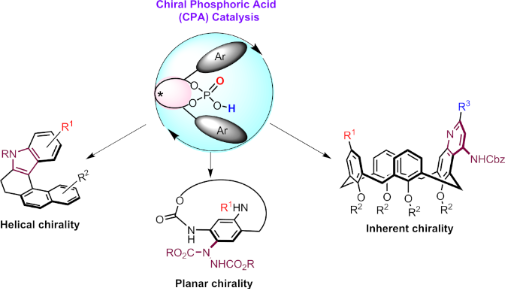
Chiral phosphoric acid-catalyzed asymmetric synthesis of helically chiral, planarly chiral and inherently chiral molecules
Beilstein J. Org. Chem. 2025, 21, 1864–1889, doi:10.3762/bjoc.21.145
- good yield and excellent enantioselectivity (Scheme 5). Notably, two distinct oxidative aromatization methods have been developed to yield diverse heterohelicene products. For instance, using DDQ as an oxidant selectively delivered hetero[7]helicenes 19 with monoamido substitution at the peri-positions
- , while utilizing MnO2 as an oxidant selectively yielded heterohelicenes 20 with bisamido substitution at the peri-positions. In 2024, Zhou, Chen and co-workers disclosed an efficient method for the asymmetric synthesis of indolohelicenoids through a sequential enantioselective annulation, followed by an
- the 1,3-phenyl rings (see 53d) or 1,3-diamino substitution (see 53e) on the calix[4]arene scaffold were also amenable to this method, which yielded a series of structurally diverse novel quinoline-containing inherently chiral calix[4]arenes. Moreover, by using CPA 4 as the optimal catalyst, the










Systematic pore lipophilization to enhance the efficiency of an amine-based MOF catalyst in the solvent-free Knoevenagel reaction
Beilstein J. Org. Chem. 2025, 21, 1854–1863, doi:10.3762/bjoc.21.144
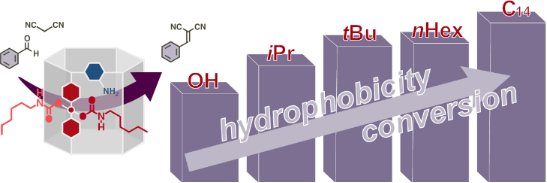
- substitution, to isopropyl, then tert-butyl, subsequent increases in lipophilicity with n-hexyl and tetradecyl resulted in decreased conversions; a trend that can be more clearly perceived in Figure 4A. The combined dodecane-free results led us to speculate that it would be better to remove solvent as a


Photoswitches beyond azobenzene: a beginner’s guide
Beilstein J. Org. Chem. 2025, 21, 1808–1853, doi:10.3762/bjoc.21.143
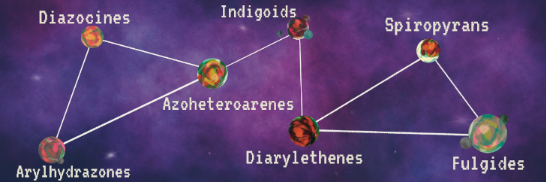
- ). Shining light will bring the molecule to a generic excited state (which is different for different photoswitch classes and substitution patterns and will not be treated in detail), which can then relax back to the ground state in either of the two wells. In cases where the two absorption spectra of the
- the time within 50% of the metastable isomer is thermally converted to the stable one [3]. It depends on the photoswitch class, solvent, substitution pattern, and temperature. For some photoswitch classes, proton exchange and intramolecular hydrogen bonds are known to accelerate the thermal relaxation
- Azoheteroarenes are azoswitches of which at least one aromatic ring is a heteroarene (Figure 3). The variety of heterocycles and substitution patterns that can be used gives rise to a considerable number of variants covering all the UV and visible spectrum and with thermal Z-isomer lifetimes that span from




Thermodynamics and polarity-driven properties of fluorinated cyclopropanes
Beilstein J. Org. Chem. 2025, 21, 1742–1747, doi:10.3762/bjoc.21.137
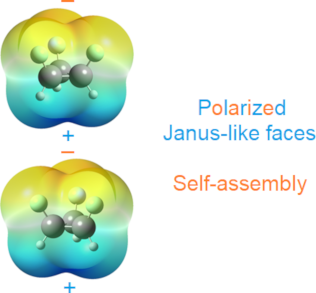
- substitution is endothermic and, therefore, destabilizing [8]. This destabilization was attributed to the greater s-character of the orbital involved in bonding to the substituent. In contrast, our calculations at the B3LYP-GD3BJ/6-311++G(d,p) level revealed that the reactions leading to the fluorinated


3,3'-Linked BINOL macrocycles: optimized synthesis of crown ethers featuring one or two BINOL units
Beilstein J. Org. Chem. 2025, 21, 1719–1729, doi:10.3762/bjoc.21.134
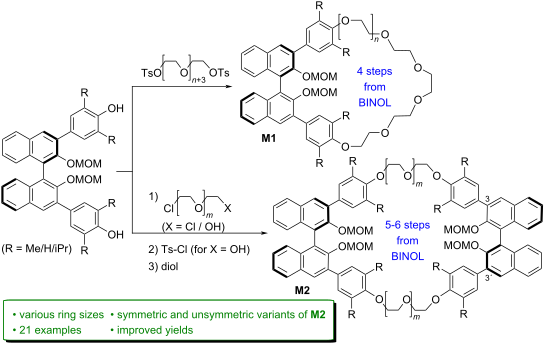
- ]. For the synthesis of macrocycles M2 with two BINOL units, we relied on the monoiodide 12, which was first reacted in a two-fold Suzuki coupling to install the first linker, followed by silyl deprotection and introduction of the second linker via nucleophilic substitution [51]. Both procedures require
- . Yields for the macrocyclization step depended strongly on ring size and substitution pattern and ranged from 11–74%. Second, we could use Me/H/iPr-2 as starting materials for bis-BINOL macrocycles. Attachment of ethylene glycol chains with suitable leaving groups (tosylate or chloride), followed by


Continuous-flow-enabled intensification in nitration processes: a review of technological developments and practical applications over the past decade
Beilstein J. Org. Chem. 2025, 21, 1678–1699, doi:10.3762/bjoc.21.132
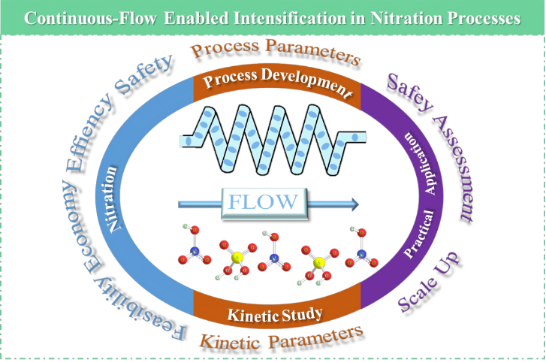
- aliphatic counterparts) due to their predictable electrophilic substitution mechanisms and relatively mild reaction conditions, which enable superior controllability and regioselectivity. Unlike aromatic nitrations that predominantly follow ionic mechanisms, aliphatic systems governed by free radical
- •NO2 radical substitution mechanism during the HNO3-mediated nitration of arylboronic acids, providing mechanistic justification for this synthetically valuable transformation [58]. Parallel evidence came from Plouffe and colleagues microreactor studies on salicylic acid nitration, where kinetics
- dehydration. This electrophilic species subsequently engages in an aromatic electrophilic substitution, with reaction kinetics heavily influenced by the electronic nature of substituents and acid strength. Table 2 analyzes studies in the literature that utilize the flow-chemistry technology to investigate the



Structural analysis of stereoselective galactose pyruvylation toward the synthesis of bacterial capsular polysaccharides
Beilstein J. Org. Chem. 2025, 21, 1671–1677, doi:10.3762/bjoc.21.131

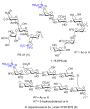
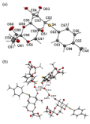
- the foundational work of Kulkarni, Codée, Boons, and other outstanding groups in their studies on zwitterionic polysaccharides [7][8][9][10][11][12]. Pyruvylation of carbohydrate diols is commonly achieved through acetal substitution in the presence of acid during chemical synthesis. In this process


3-Aryl-2H-azirines as annulation reagents in the Ni(II)-catalyzed synthesis of 1H-benzo[4,5]thieno[3,2-b]pyrroles
Beilstein J. Org. Chem. 2025, 21, 1595–1602, doi:10.3762/bjoc.21.123
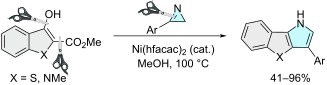
- 3-aryl-2H-azirines with different substitution patterns of the aryl group (Scheme 2). As the presented data show, the reaction is insensitive to the electronic effects of substituents in the aryl group and, in the majority of cases, gives very high yields of annulation products. The introduction of



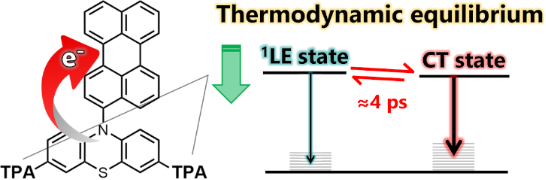
Thermodynamic equilibrium between locally excited and charge transfer states in perylene–phenothiazine dyads
Beilstein J. Org. Chem. 2025, 21, 1577–1586, doi:10.3762/bjoc.21.121
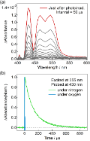
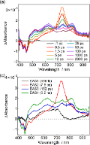
- than that of the LE band of the Pe moiety in other compounds. This suggests that the phenyl spacer effectively suppressed the CT interaction. It is noted that the substitution of the TPA group increases the relative amplitude of the CT emission band. On the other hand, it was found that the intensity
- absorption spectra and dynamics observed were generally similar to those of Pe–PTZ(TPA)2 (Supporting Information File 1, Figure S29c). However, the broad band between 700–800 nm is split into two peaks at 720 and 790 nm, likely due to asymmetric substitution of a single TPA group. The time constants of




pH-Controlled isomerization kinetics of ortho-disubstituted benzamidines: E/Z isomerism and axial chirality
Beilstein J. Org. Chem. 2025, 21, 1568–1576, doi:10.3762/bjoc.21.120
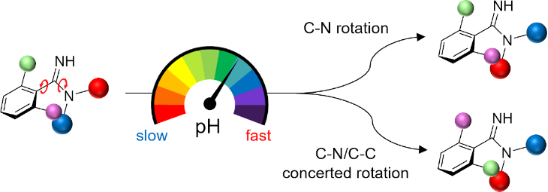
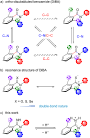
- substitution of an ortho-disubstituted benzamide (DiBA) increases the rotational barrier of the C–N and C–N/C–C concerted rotation (Figure 1a,b) [20]. The observation can be explained mainly by the double-bond nature of the chalcogen amide C–N bond, which is attributed to a zwitterionic resonance structure of
- formal substitution of the carbonyl oxygen atom of DiBA to an NH group, could act as a pH-responsive molecular switch (Figure 1c). Namely, the double-bond nature of an amidine moiety can be altered by the protonation of the amidine nitrogen atom. This suggests the possibility of controlling the rate of C
- usefulness of the single-atom substitution strategy on DiBA. By replacing the oxygen atom of DiBA with a nitrogen atom (and thus NH), which has been shown to be photo-responsive when replaced with sulfur or selenium, the pH-responsive property was acquired. Such minimal changes in physical properties can be



Facile synthesis of hydantoin/1,2,4-oxadiazoline spiro-compounds via 1,3-dipolar cycloaddition of nitrile oxides to 5-iminohydantoins
Beilstein J. Org. Chem. 2025, 21, 1552–1560, doi:10.3762/bjoc.21.118

- (Figure 3b, red ring) than 4-NO2 or 4-Cl substituents (IC50 of 5h was lower than 5l and 5f). The presence of a methoxy group in the imine aromatic core (blue ring) also had a significant impact on cytotoxicity. This can be concluded from the results obtained for compounds 5f and 5g: the substitution of



Azide–alkyne cycloaddition (click) reaction in biomass-derived solvent CyreneTM under one-pot conditions
Beilstein J. Org. Chem. 2025, 21, 1544–1551, doi:10.3762/bjoc.21.117
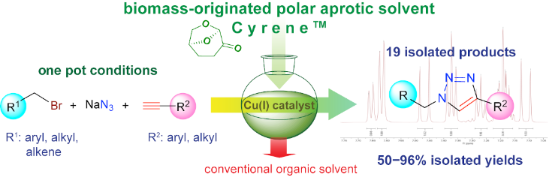
- , a wide range of organic reactions, e.g., urea and amide formation [32][33], amide coupling [34], aldol condensation [35], C–H difluoromethylation [36], aromatic substitution [37], and MOFs synthesis [38] were demonstrated in CyreneTM. Very recently, Fasano and Citarella first reported a CuAAC


Azobenzene protonation as a tool for temperature sensing
Beilstein J. Org. Chem. 2025, 21, 1528–1534, doi:10.3762/bjoc.21.115
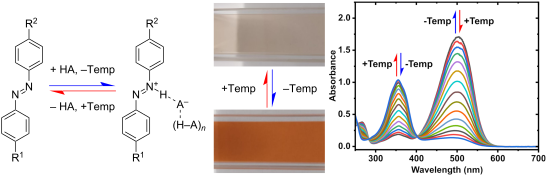
- Due to the lone pairs on their nitrogen atoms, azobenzenes are weak bases. Their basicity can be increased by electron-donating substituents on the benzene rings. para-Alkoxy substitution effectively increases the electron density at the azo-nitrogens without introducing additional protonation sites
- . We opted for methoxy substitution on one or both benzene rings as the simplest alkoxy substituent. The protonation of azobenzene (1), 4-methoxyazobenzene (2), and 4,4'-dimethoxyazobenzene (3) is schematized in Figure 1A. In the presence of a strong acid, these compounds form an equilibrium of neutral


Ambident reactivity of enolizable 5-mercapto-1H-tetrazoles in trapping reactions with in situ-generated thiocarbonyl S-methanides derived from sterically crowded cycloaliphatic thioketones
Beilstein J. Org. Chem. 2025, 21, 1508–1519, doi:10.3762/bjoc.21.113
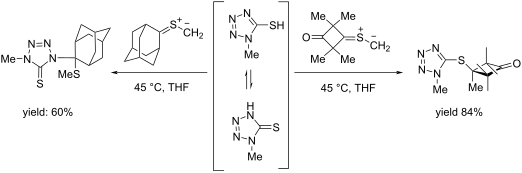
- the substitution pattern of both substrates, i.e., substituent Ar in the starting cyclopropane 3 and the R–N(1) moiety in the tetrazole derivative 4 [15]. Taking into account the known and widely documented importance of enolizable 5-mercapto-1H-tetrazoles as important bioisosters [17][18][19][20][21
- , ensuring that no additional symmetry elements were omitted during structure refinement. The obtained data undoubtedly confirmed the anticipated structures and their experimental characterizations. Thioaminal 9i and dithioacetal 10i differ significantly in the substitution of the tetrazole ring. This
- instances, depending on the substitution pattern, thermodynamically less stable thioaminals 9 underwent thermal isomerization in CDCl3 solution yielding the corresponding dithioacetals 10. Comparison of the results obtained with dispiro-substituted thiocarbonyl S-methanides 4c (less hindered) and 4d (more


Highly distinguishable isomeric states of a tripodal arylazopyrazole derivative on graphite through electron/hole-induced switching at ambient conditions
Beilstein J. Org. Chem. 2025, 21, 1496–1507, doi:10.3762/bjoc.21.112
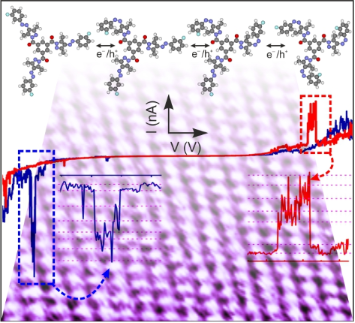
- surface at ambient conditions. The fluorine substitution is chosen in FNAAP for its better photoisomerization efficiency (in solution as well as in solid state) and higher molecular stability [29]. Possible photoisomers of FNAAP, EEE, EEZ, EZZ and ZZZ are shown in Figure 1. FNAAP molecules assemble into



Photoredox-catalyzed arylation of isonitriles by diaryliodonium salts towards benzamides
Beilstein J. Org. Chem. 2025, 21, 1480–1488, doi:10.3762/bjoc.21.110
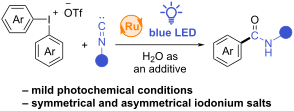
- for unsymmetrical iodonium salts. Therefore, we moved to these to test the selectivity of aryl transfer under the established conditions. Since iodonium salts are prone to repeat the selectivity pattern of nucleophilic substitution in photoredox processes [35][36][37][38][39][40][41], we evaluated


Copper catalysis: a constantly evolving field
Beilstein J. Org. Chem. 2025, 21, 1477–1479, doi:10.3762/bjoc.21.109
- substitution reactions [1]. In particular, the authors elaborate the concept and recent developments in this field, which allows access to enantioenriched chiral enynes. Interestingly, the article also illustrates the effects of the copper salt and the ligand employed, as well as the influence of the substrate
- substitution pattern on the regioselectivity and stereoselectivity of the reactions. A Review article by Papis and co-workers discusses various copper(II) triflate-catalyzed multicomponent reaction types [2]. Therein, the synthesis of cyclic and acyclic compounds, as well as three-component and four-component
- community in that it elegantly reviews recent advances in allylation reactions of copper-catalyzed asymmetric allylic substitution reactions of chiral secondary alkylcopper species [5]. In summary, the contribution includes stereospecific transmetalations of organolithium and -boron compounds, copper
Wittig reaction of cyclobisbiphenylenecarbonyl
Beilstein J. Org. Chem. 2025, 21, 1454–1461, doi:10.3762/bjoc.21.107
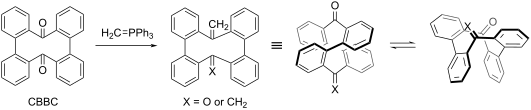
- nucleophilic substitution of the thus generated alkoxide to form an oxygen-containing five-membered ring. At least, density functional theory (DFT) calculations support that the nucleophilic attack of methylenetriphenylphosphorane to the exo-methylene unit is slightly favorable over reaction with the carbonyl



Advances in nitrogen-containing helicenes: synthesis, chiroptical properties, and optoelectronic applications
Beilstein J. Org. Chem. 2025, 21, 1422–1453, doi:10.3762/bjoc.21.106
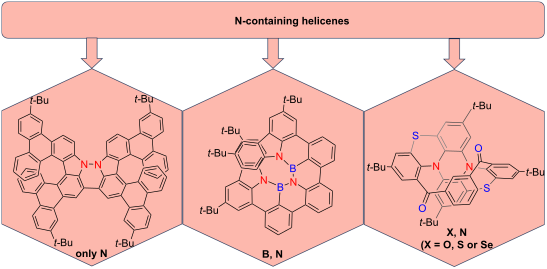
- sensitivity of chiral excited-state properties to heteroatom substitution within the helicene framework. Extending this design principle, the group reported a double N,S-hetero[5]helicene 58 constructed from two benzo[b]phenothiazine units in 2023 [73]. Compared to the N,O-analogue 57b, this new compound
- two π-extended hetero[6]helicenes – 61a and 61b – incorporating thiadiazole and selenadiazole moieties, respectively [76]. Substitution of sulfur with selenium enhanced intermolecular interactions and led to a notable reduction in the optical bandgap, highlighting the effectiveness of heteroatom

Tautomerism and switching in 7-hydroxy-8-(azophenyl)quinoline and similar compounds
Beilstein J. Org. Chem. 2025, 21, 1404–1421, doi:10.3762/bjoc.21.105
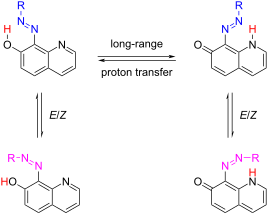
- on the substitution in the 7OHQ moiety. The relative energies of K in respect of E under various substitution in 7OHQ are collected in Tables S3 (Supporting Information File 1) and the directions of change are illustrated in Figure 8a. It seems that substitution on positions 2 (with exception of a
- substitution in the 7OHQ part of 1 is illustrated in Figure 8b–d and the corresponding values are collected in Table S4, Supporting Information File 1. In 1 all three criteria for clean switching are not fulfilled and it is interesting to see how the substitution can change the situation. In respect of ΔE(K-E
- on position 4 lead to changes in the desired direction. The substitution on positions 5 and 6 leads to strong stabilization of KE, which is not needed. The cyano group on position 5 destabilizes KE strongly. The value of ΔE(KK-K) has also to be larger than 2 and, as seen from Figure 8d, it cannot be




Oxetanes: formation, reactivity and total syntheses of natural products
Beilstein J. Org. Chem. 2025, 21, 1324–1373, doi:10.3762/bjoc.21.101
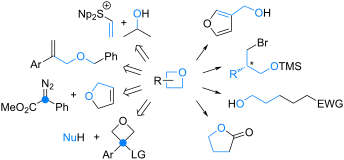
- discussed in more detail and illustrated by specific examples. 1.1 C–O bond-forming cyclisations 1.1.1 Intramolecular Williamson etherifications: Discovered by Alexander Williamson in 1850, this reaction is an SN2 substitution in which a leaving group, typically a halide or sulphonate ester, is displaced by
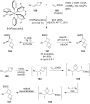
- methods for oxetane synthesis, mainly due to its practicality and versatility. 1.1.1.1 Substitution of a leaving group: In 2017, Moody et al. developed a new route towards spiro-oxetanes 8 utilising a combination of 1,4-C–H insertion and Williamson etherification (Scheme 3) [38]. The methodology commences
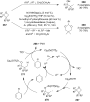
- and colleagues published a one-step synthesis of spirooxindole 2,2-disubstituted oxetanes 11 via an unprecedented addition/substitution cascade (Scheme 4) [39]. The protocol reacts readily available 3-hydroxyindolinones 9 with phenyl vinyl selenone (10) in aqueous KOH at room temperature and gives








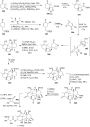
Recent advances and future challenges in the bottom-up synthesis of azulene-embedded nanographenes
Beilstein J. Org. Chem. 2025, 21, 1272–1305, doi:10.3762/bjoc.21.99
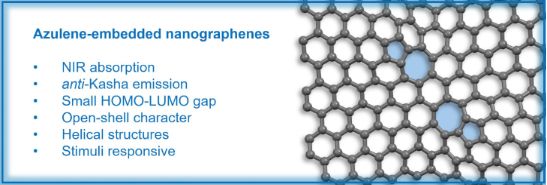
- easily adapted to more modular approaches, limiting the variety of possible substitution patterns. This is why more modern approaches continue to be developed. Modern approaches to azulene-embedded nanographenes Modern synthetic approaches have greatly benefited from the discovery of palladium-catalysed
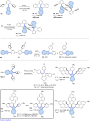
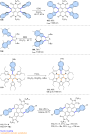
- bathochromically shifted compared to isomeric terrylenebisimide (λmax = 650 nm) [86] and even larger rylene bisimides like hexarylenebisimide (λmax = 953 nm) [87]. Bisimide 129 might be regioselectivily brominated using NBS, yielding PAH 130 in 80%. The bromide 130 undergoes nucleophilic substitution with
- methoxide or morpholine, giving the corresponding substitution products 131 and 132 in 60% and 74%, respectively. Very recently, during revision of this work, Aratani and co-workers reported the use of this strategy in the synthesis of two azulene-embedded isomers of perylene monoimide [88]. Cyclization of




Recent advances in oxidative radical difunctionalization of N-arylacrylamides enabled by carbon radical reagents
Beilstein J. Org. Chem. 2025, 21, 1207–1271, doi:10.3762/bjoc.21.98
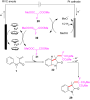
- . This alkyl radical then adds across the C–C double bond in the enyne, forming an alkyl radical intermediate B, which reacts with the C–C triple bond to generate a vinyl radical intermediate C. Depending on the substitution effect at the 3-position of the acrylamide moiety, the intermediate undergoes
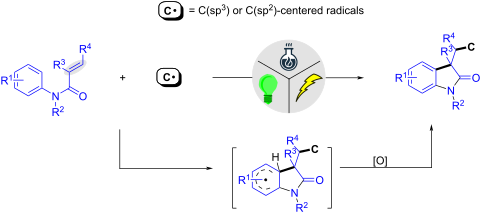
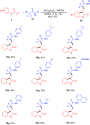
- substrate scope was extensively explored, demonstrating compatibility with various N-arylacrylamides and perfluoroalkyl iodides. N-Arylacrylamides with electron-donating and electron-withdrawing substituents (80a–e), as well as different substitution patterns on the aromatic ring, gave good to excellent
- cation B and an α-carbon radical A. The α-carbon radical A then undergoes intermolecular radical addition to the acrylamide, forming a new carbon-centered radical intermediate C, which subsequently undergoes intramolecular cyclization to yield the oxindole product 88a via homolytic aromatic substitution






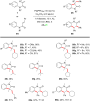


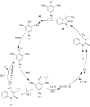


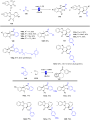


Synthesis of β-ketophosphonates through aerobic copper(II)-mediated phosphorylation of enol acetates
Beilstein J. Org. Chem. 2025, 21, 1192–1200, doi:10.3762/bjoc.21.96
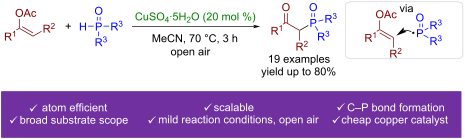
- substitution pattern in the aryl ring does not have a significant effect on the yield of 3 for both acceptor and donor derivatives, which shows the versatility of the developed protocol. However, among halogen-containing derivatives, higher yields were observed for bromine-substituted ones (products 3i and 3l





