


Search results
Search for "amine" in Full Text gives 1233 result(s) in Beilstein Journal of Organic Chemistry. Showing first 200.
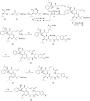
Entry to 2-aminoprolines via electrochemical decarboxylative amidation of N‑acetylamino malonic acid monoesters
Beilstein J. Org. Chem. 2025, 21, 630–638, doi:10.3762/bjoc.21.50
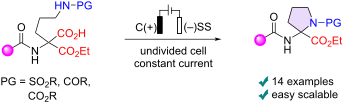
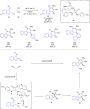
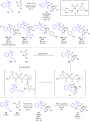
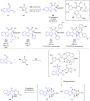
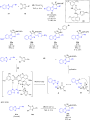
- [7][8] (Figure 2, reactions 1 and 2, respectively). Results and Discussion N-Acetylamino malonic acid monoester 9a possessing a tosyl-protected tethered amine was selected as a model substrate for the development of the intramolecular amidation under Hofer–Moest conditions. The acid 9a was prepared



Formaldehyde surrogates in multicomponent reactions
Beilstein J. Org. Chem. 2025, 21, 564–595, doi:10.3762/bjoc.21.45
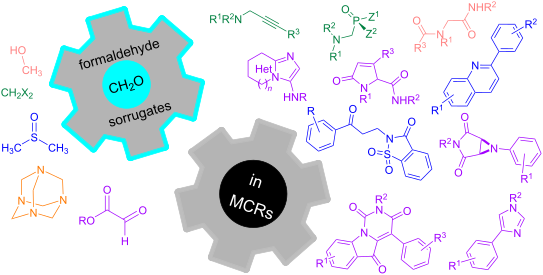
- the alkene moiety of the amine. The resulting stabilized carbocation 15 is then captured by formaldehyde (generated in situ from DMSO) leading to an intermediate oxocarbenium 16 that undergoes a cyclization to obtain the sulfenylated oxazinane derivative 13. In isotope labelling experiments using DMSO
- available from the reaction between aldehydes and amines (primary or secondary), the reaction is called AAA coupling: amine–aldehyde–alkyne coupling (Scheme 19). In this context, the use of formaldehyde as a C1 building block is suitable despite the unstable aminol intermediate. There are several examples
- . These are the basis for the AHA coupling: amine–haloalkane–alkyne coupling for the synthesis of propargylamines by the activation of both C–H and C–X bonds by metal catalysis (Scheme 20). In general, the activation of both CH and CX bonds is accomplished by homogeneous metal catalysis with CuCl being


Study of the interaction of 2H-furo[3,2-b]pyran-2-ones with nitrogen-containing nucleophiles
Beilstein J. Org. Chem. 2025, 21, 556–563, doi:10.3762/bjoc.21.44
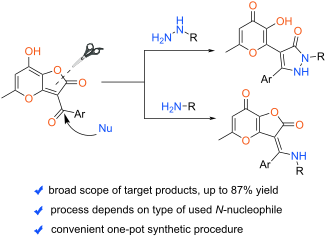
- that, the use of 3-fold excess of amine 2a led to the same results. Apparently, the stability of salt 3a is connected with high acidity of the starting furanone 1a and its recovery is only possible under the action of strong acids (HCl, H2SO4). Further, we investigated the chemical behavior of
- intramolecular hydrogen bond between the NH-unit and the carbonyl group. The presented results indicate that the reaction of the aliphatic amine doesn’t lead to recyclization of the studied heterocyclic system. Further, we hypothesized that synthesis of the enamine 4a can be realized in one-pot variant without
- isolation of intermediate salt 3a. Indeed, the reflux of starting compound 1a with amine 2a in AcOH for 24 h led to formation of product 4a with 62% yield. Using various furanones 1 and amines we attempted to synthesize analogues of compound 4a based on the above procedure. It was found that the presence of


Asymmetric synthesis of β-amino cyanoesters with contiguous tetrasubstituted carbon centers by halogen-bonding catalysis with chiral halonium salt
Beilstein J. Org. Chem. 2025, 21, 547–555, doi:10.3762/bjoc.21.43
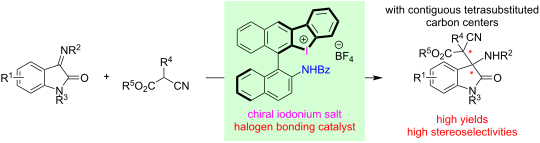
- -workers developed chiral amine 1 with an electron-deficient iodine atom, which catalyzed the Mannich reaction in excellent yields and enantioselectivities [17]. In 2020, Huber and co-workers reported the bis(iodoimidazolium) 2-catalyzed Mukaiyama–aldol reaction of carbonyl compounds with enol silyl ethers


Vinylogous functionalization of 4-alkylidene-5-aminopyrazoles with methyl trifluoropyruvates
Beilstein J. Org. Chem. 2025, 21, 533–540, doi:10.3762/bjoc.21.41
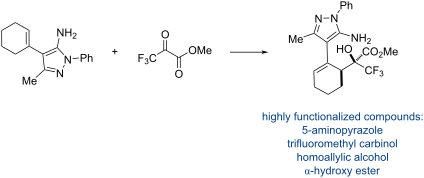
- -aminopyrazole 2. Compounds 3ab and 3ad were obtained in a comparable yield (54 and 46%) from 1,3-dimethyl-1H-pyrazol-5-amine (2b) or 3-methyl-1-(p-tolyl)-1H-pyrazol-5-amine (2d). On the other hand, 1,3-diphenyl-1H-pyrazol-5-amine (2c) provided the corresponding product 3ac in much lower yield (16%). If a tert


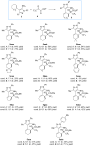

Cryptophycin unit B analogues
Beilstein J. Org. Chem. 2025, 21, 526–532, doi:10.3762/bjoc.21.40
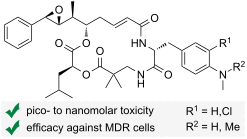
- of, firstly, m-chloro-p-(methylamino) derivative 1 to dissect the structure–activity relationship between the primary (IC50(CCRF-CEM) = 0.58 nM), secondary, and tertiary amine (IC50(CCRF-CEM) = 54 pM) derivatives [20]. Secondly, p-(dimethylamino) derivative 2 was synthesised to investigate the effect
- formate, and thirdly ring closure to obtain the epoxides 26 and 2 in 89% and 14% yield over three steps each, respectively. While the synthesis of tertiary amine 2 was finished, final Alloc cleavage from 26 under Tsuji–Trost-like conditions [19] provided secondary amine 1 in 74% yield. The cytotoxicity of
- values of the primary (IC50 (CCRF-CEM) = 580 pM) and tertiary (IC50 (CCRF-CEM) = 54 pM) amine derivatives (Figure 1B) [20][35], showing a strict increase in cytotoxicity with increasing degree of aniline methylation. The same trend was also observed for unit D derivatives modified with amino groups [19



Synthesis of the aggregation pheromone of Tribolium castaneum
Beilstein J. Org. Chem. 2025, 21, 510–514, doi:10.3762/bjoc.21.38
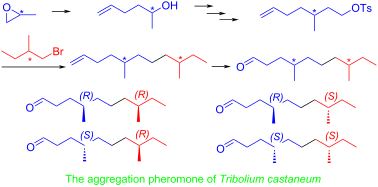
- -amine reduction and tosylation from diethyl (S)-2-(hex-5-en-2-yl)malonate ((S)-6). The stereocenter in geminal ester (S)-6 could be derived from (R)-2-methyloxirane ((R)-2) via a ring-opening reaction and a stereospecific inversion of the chiral secondary tosylate (R)-5. Following the similar procedure


Synthesis of N-acetyl diazocine derivatives via cross-coupling reaction
Beilstein J. Org. Chem. 2025, 21, 490–499, doi:10.3762/bjoc.21.36
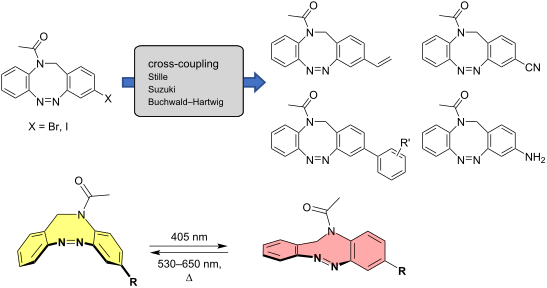
- . Using diphenylamine as a more electron-rich amine resulted in the formation of diphenylamino-substituted N-acetyl diazocine 20 in a significantly lower yield of 25% starting from the bromide 2 and 47% starting from the iodo precursor 3 (Table 5). Deprotection of carbamate 19 with trifluoroacetic acid
- (9) in ortho- and para-positions. The increase is even stronger if electron-withdrawing pyridine- (14), cyano- (23) or the strong +M amino substituents (21) are attached to the N-acetyl diazocine in meta-position. In contrast to the extended half-life of the unsubstituted amine 21 the Boc-protected
- 19 and the diphenyl-substituted amine 20 show half-lives not significantly longer than the parent N-acetyl diazocine 1. Given the water solubility and the excellent switching behavior of parent 1 in aqueous media [3][13][20], the photochemical properties of water-soluble substituted N-acetyl


Synthesis of electrophile-tethered preQ1 analogs for covalent attachment to preQ1 RNA
Beilstein J. Org. Chem. 2025, 21, 483–489, doi:10.3762/bjoc.21.35
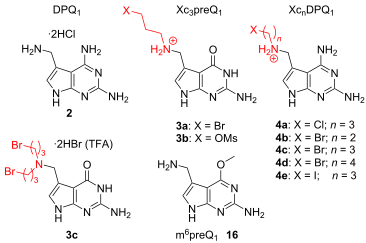
- were required to obtain the corresponding mesylate 3b. Similar to 11, compound 12 was isolated as its trifluoroacetate salt. Selective Boc protection of the aliphatic amine gave 13, which was selectively O-mesylated to give compound 14. Compound 14 was found to slowly undergo intramolecular cyclization
- by displacement of the mesyl group to give a six-membered cyclic carbamate, a reactivity that has been described earlier [34]. Thus, care was taken to quickly isolate compound 14 and use it immediately in the next step. Deblocking of the secondary amine by treatment with trifluoroacetic acid afforded
- 3b in almost quantitative yield. The bis(3-bromopropyl)-modified ligand 3c was generated by heating preQ1 together with bis(3-hydroxypropyl)amine. It is noteworthy that the amine exchange reaction is thought to proceed via a purine methide intermediate [11]. Subsequent treatment of the diol with


Photomechanochemistry: harnessing mechanical forces to enhance photochemical reactions
Beilstein J. Org. Chem. 2025, 21, 458–472, doi:10.3762/bjoc.21.33
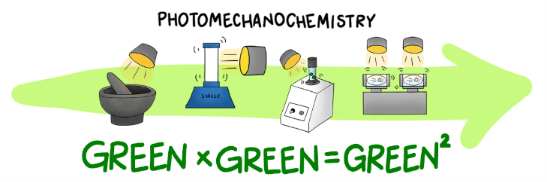
- (12.3, 0.2 mmol), tosyl chloride (12.4, 2 equiv), and tris(4-methoxyphenyl)amine (10 mol %) was milled in the presence of 100 wt % of SAOED at 30 Hz for 3 h, sulfone 12.5 was obtained in 89% yield after isolation. The synthesis of 12.5 was scaled up to 15 mmol scale, obtaining the desired product in a




New tandem Ugi/intramolecular Diels–Alder reaction based on vinylfuran and 1,3-butadienylfuran derivatives
Beilstein J. Org. Chem. 2025, 21, 444–450, doi:10.3762/bjoc.21.31
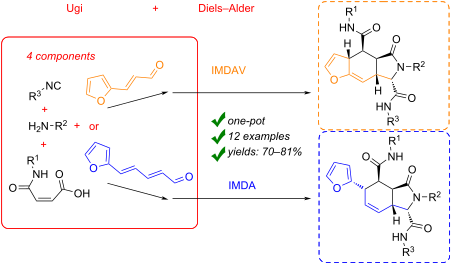
- insufficiently studied furo[2,3-f]isoindole derivatives. Ugi adducts formed from (E)-3-(furan-2-yl)acrylaldehyde, maleic acid monoanilide, isonitrile, and an amine spontaneously underwent the IMDAV reaction with a high level of stereoselectivity, leading to single pairs of enantiomers of 4,4a,5,6,7,7a-hexahydro




Beyond symmetric self-assembly and effective molarity: unlocking functional enzyme mimics with robust organic cages
Beilstein J. Org. Chem. 2025, 21, 421–443, doi:10.3762/bjoc.21.30
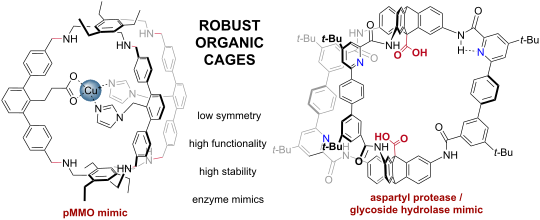
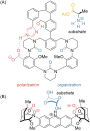
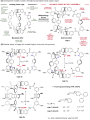
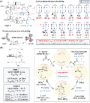
- structures would require fewest augmentations. Otte has levied similar techniques to generate soluble amine-based organic cages with the same symmetry possibilities, using the three edge pieces to provide internal vectors to generate “catalytic triad” mimics [42][43][44]. Synthesis of robust organic cages
- reductive amination to stabilize imine cages, and the resulting amine cages gain solubility from increased flexibility at the cost of losing some structural rigidity [42][43][44]. Metastable conformations – programming cavity shape and symmetry: Unlike non-covalent/dative assemblies, covalently linked cages




Identification and removal of a cryptic impurity in pomalidomide-PEG based PROTAC
Beilstein J. Org. Chem. 2025, 21, 407–411, doi:10.3762/bjoc.21.28
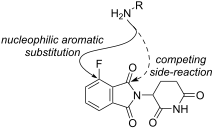
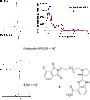
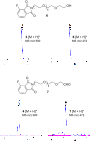
- drug”) class of PROTAC molecules with a PEG linker is frequently used to promote targeted protein degradation. The standard protocol for their synthesis involves nucleophilic aromatic substitution of 4-fluorothalidomide with a PEG-amine. We report herein the identification of a commonly ignored




The effect of neighbouring group participation and possible long range remote group participation in O-glycosylation
Beilstein J. Org. Chem. 2025, 21, 369–406, doi:10.3762/bjoc.21.27
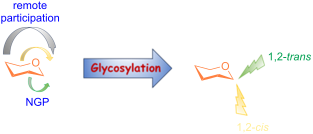
- neighbouring group participation for the formation of the acetoxonium ion intermediate was more favourable in the locked systems like o-substituted benzoyl groups instead of aliphatic protections. Many protecting groups have been developed for the protection of the amine functionality of nucleosides like 2




Red light excitation: illuminating photocatalysis in a new spectrum
Beilstein J. Org. Chem. 2025, 21, 296–326, doi:10.3762/bjoc.21.22

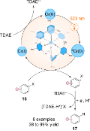
- study found that by using [Os(phen)3]2+ as the photocatalyst and 660 nm red light, the reaction exhibited greater functional group tolerance, handling a variety of electron-deficient, neutral and rich (hetero)aryl bromides 9 and primary and secondary amine-based nucleophiles 10 with minimal degradation
- ). The mechanism of the reaction presented by the authors involves two different catalytic cycles as presented in Scheme 3c. After excitation of the osmium complex 13, this latter is reduced via the use of a tertiary amine to give the active species 14 able to oxidize the formed nickel complex 15 in the
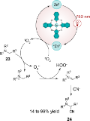
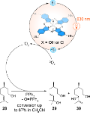
- light (λ = 750 nm), followed by triplet energy transfer to molecular oxygen, generating singlet oxygen as the active species. Similarly as in the case of the Furuyama et al. study, the singlet oxygen subsequently oxidizes the amine substrate to an iminium ion, which reacts with a cyanide nucleophile to















Molecular diversity of the reactions of MBH carbonates of isatins and various nucleophiles
Beilstein J. Org. Chem. 2025, 21, 286–295, doi:10.3762/bjoc.21.21
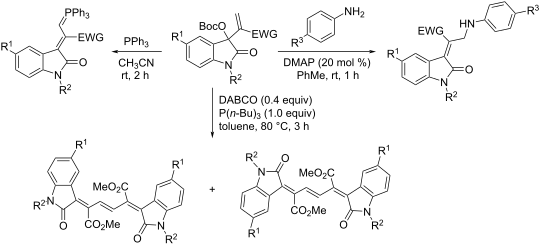
- substitution products 5a–n in high yields (Scheme 2). The substituents showed a marginal effect on the yields. In addition, a secondary arylamine such N-methylaniline and aliphatic amine (n-butylamine) also gave the expected products 5m and 5n in satisfactory yields. It should be pointed out that no base
- crystal structure of compound 8a. Reaction of arylamines and MBH carbonates of isatins. Reaction conditions: MBH carbonate of isatin (0.1 mmol), aromatic amine (0.1 mmol), DMAP (0.02 mmol, 20 mol %), toluene (5.0 mL), rt, 1 h; yields refer to isolated yields. Reaction of arylamines and MBH maleimides of
- isatins. Reaction conditions: MBH maleimide of isatin (0.1 mmol), aromatic amine (0.1 mmol), toluene (5.0 mL), 65 °C, 1 h; yields refer to isolated yields. Reactions of MBH carbonates of isatins and triphenylphosphine. Reaction conditions: MBH carbonate of isatin (0.1 mmol), triphenylphosphine (0.1 mmol




Dioxazolones as electrophilic amide sources in copper-catalyzed and -mediated transformations
Beilstein J. Org. Chem. 2025, 21, 200–216, doi:10.3762/bjoc.21.12
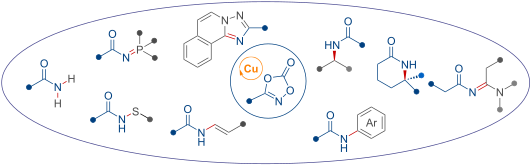
- dioxazolone 7. Subsequently, nitrene insertion of INT-12 into the Cu–C bond, forms INT-13, which then undergoes isomerization and protodemetalation, followed by catalyst regeneration, as suggested by the DFT calculations. Finally, the nucleophilic addition of the amine to the electrophilic intermediate INT-15


Recent advances in electrochemical copper catalysis for modern organic synthesis
Beilstein J. Org. Chem. 2025, 21, 155–178, doi:10.3762/bjoc.21.9

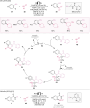
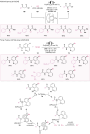
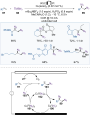
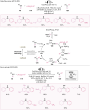
- the product are accessible by adjusting the two distinct chiral catalysts. C–N Bond formation In 2018, Mei et al. developed the electrochemical C–H amination of arenes with amine electrophiles using copper catalysis, which provided a step-economical approach for the synthesis of aromatic amines by
- Figure 11. Initially, the Cu(II) catalyst 50 coordinates with substrate 47 and amine electrophile 48 to generate Cu(II) intermediate 51, which is then oxidized by the iodine radical to form Cu(III) complex 52. Cu(III) complex 52 undergoes electron transfer to produce radical cation intermediate 53
- . Subsequent intramolecular amine transfer to the radical cation intermediate 53, followed by ligand exchange, yields amination product 49 and Cu(I) species 55. Cu(II) catalyst 50 is regenerated by anodic oxidation, thereby completing the catalytic cycle. In 2019, Nicholls et al. reported a Cu-catalyzed



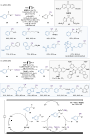
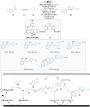
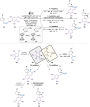
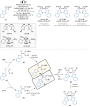





Cu(OTf)2-catalyzed multicomponent reactions
Beilstein J. Org. Chem. 2025, 21, 122–145, doi:10.3762/bjoc.21.7

- counteranion. The use of a carbamate among the substrates instead of the amine allowed the synthesis of propargylcarbamates 11. This reaction, effective only for the aromatic aldehydes, did not require other co-catalysts or ligands (Scheme 8) [21]. Three-component reactions of alkynes, alkyltrifluoroborates
- Pd-catalyzed cross-coupling reactions, allowing the formation of C–C and C–N bonds in the o-position of the aryl chalcogen compounds. α-Aminophosphonates 14 were the result of a one-pot condensation of an aldehyde, a primary amine and phosphite P(OMe)3 with copper triflate acting as Lewis acid
- reaction between the anhydride and the amine suggested the subsequent reaction with the ketone to give an imine intermediate XXIV. This latter can undergo intramolecular nucleophilic attack affording the quinazolinone derivative 26 (Scheme 20) [37]. Polysubstituted pyrroles 27 were obtained in a cascade






Recent advances in organocatalytic atroposelective reactions
Beilstein J. Org. Chem. 2025, 21, 55–121, doi:10.3762/bjoc.21.6






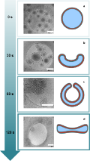
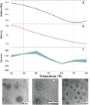
Hot shape transformation: the role of PSar dehydration in stomatocyte morphogenesis
Beilstein J. Org. Chem. 2025, 21, 47–54, doi:10.3762/bjoc.21.5
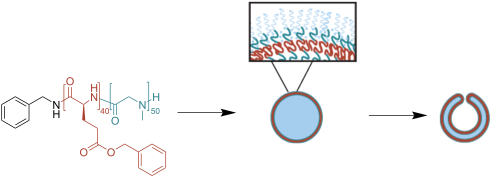
- glutamate) (PBLG) as the hydrophobic block, which was done to prevent ending on a primary amine in the final product which could disrupt self-assembly due to its ionizable nature. Subsequently, PBLG served as a macroinitiator for the polymerization of sarcosine NCA, yielding the final polymer with high


Facile one-pot reduction of β-nitrostyrenes to phenethylamines using sodium borohydride and copper(II) chloride
Beilstein J. Org. Chem. 2025, 21, 39–46, doi:10.3762/bjoc.21.4
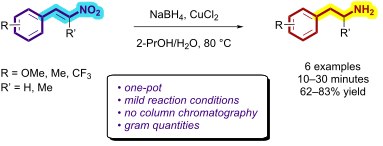
- ]. One of the most studied and inexpensive routes to synthesize substituted phenethylamines focuses on the reduction of their α,β-unsaturated nitroalkene analogue (β-nitrostyrene), where both the double bond and the nitro group need to be reduced to deliver the corresponding primary amine. Their
- precipitated under stirring with an excess of 2 N HCl in diethyl ether solution and the vessel was cooled to 5 °C. The solid was filtered, washed with cold diethyl ether, and dried under reduced pressure as the amine hydrochloride salt. (II) An excess of 4 N HCl in dioxane solution was added and the filtrate
- was stirred for 30 minutes. The residue was concentrated under reduced pressure, suspended in dry cold acetone, and stirred vigorously for 1 hour. The suspension was filtered and washed with a minimum amount of cold acetone to deliver the product as hydrochloride salt. 2-Phenylethan-1-amine


Reactivity of hypervalent iodine(III) reagents bearing a benzylamine with sulfenate salts
Beilstein J. Org. Chem. 2024, 20, 3281–3289, doi:10.3762/bjoc.20.272
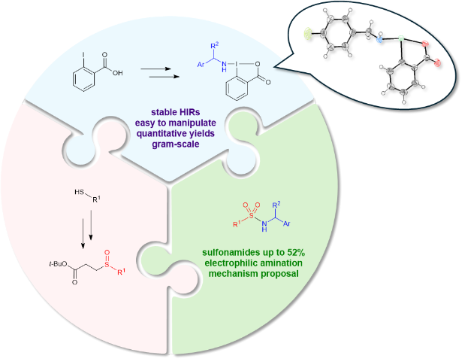
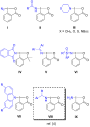
- benziodoxol(on)es can be found in the literature, including reagents featuring cyclic aliphatic amine moieties (III) [15], phthalimidates (IV) [16], and carbazoles (VII) [19]. Minakata and co-workers proposed an innovative approach for transferring imine groups using iodane-containing (diarylmethylene)amino
- groups (V), which proved to be useful in the transfer of imine radicals [17]. Bolm et al. contributed also to this topic by introducing a sulfoximidoyl-containing benziodoxolone (VI) [18]. Recently, our group disclosed the first HIRs bearing a primary amine moiety, the benzylamine benziodoxolone reagent
- benziodoxolone was generated in situ, via a reaction of chlorobenziodoxolone with sulfinate salts, followed by the addition of amines or hydrazines, respectively. On the follow-up on our research, we envisaged to extend the diversity of BBX reagents as electrophilic amine reagents and investigated their



Non-covalent organocatalyzed enantioselective cyclization reactions of α,β-unsaturated imines
Beilstein J. Org. Chem. 2024, 20, 3221–3255, doi:10.3762/bjoc.20.268
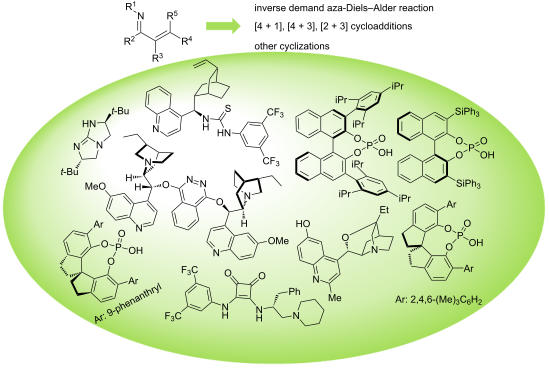
- -raising activation (amine-based catalysis and N-heterocyclic carbenes), and iii) LUMO-lowering and HOMO-raising activation (bifunctional thioureas and squaramides). Due to the ubiquitous nature of non-covalent interactions in organic systems, they can play a decisive role in asymmetric transformations [15
- Michael addition product was obtained with low diastereoselectivity. The mechanism is described in Scheme 4: the bifunctional squaramide activates the azadiene through hydrogen bonding while the malononitrile is deprotonated by the tertiary amine present in the backbone of the catalyst, establishing
- hydrogen bonding with the protonated tertiary amine. Then, a Michael addition of malononitrile to the azadiene takes place to obtain exclusively the (S)-intermediate A. Subsequently an intramolecular nucleophilic addition of the nitrile leads to the intermediate B, which undergoes tautomerization to



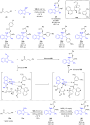


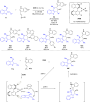


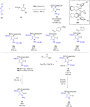


Discovery of ianthelliformisamines D–G from the sponge Suberea ianthelliformis and the total synthesis of ianthelliformisamine D
Beilstein J. Org. Chem. 2024, 20, 3205–3214, doi:10.3762/bjoc.20.266
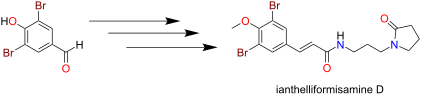
- commercially available primary amine, 1-(3-aminopropyl)pyrrolidin-2-one completed the total synthesis of the natural product in an overall yield of 1.5%. The NMR data comparison of the natural product and our synthetic compound was essentially identical. Due to our interest in the identification of potential
- –activity relationship data, leading to speculation over the moieties responsible for their antibiotic effects. A reduction in the number of amines in the polymeric chain and the absence of a primary amine was noted to decrease bioactivity by Xu et al. [7]. Research reported by Khan et al. in 2014 [9] also


![[Graphic 1]](/bjoc/content/inline/1860-5397-20-266-i2.svg?max-width=637&scale=1.18182)
![[Graphic 2]](/bjoc/content/inline/1860-5397-20-266-i3.svg?max-width=637&scale=1.18182)
![[Graphic 3]](/bjoc/content/inline/1860-5397-20-266-i4.svg?max-width=637&scale=1.18182)

![[Graphic 4]](/bjoc/content/inline/1860-5397-20-266-i5.svg?max-width=637&scale=1.18182)
![[Graphic 5]](/bjoc/content/inline/1860-5397-20-266-i6.svg?max-width=637&scale=1.18182)




