Search results
Search for "coupling" in Full Text gives 2090 result(s) in Beilstein Journal of Organic Chemistry. Showing first 200.
Formal synthesis of a selective estrogen receptor modulator with tetrahydrofluorenone structure using [3 + 2 + 1] cycloaddition of yne-vinylcyclopropanes and CO
Beilstein J. Org. Chem. 2025, 21, 1639–1644, doi:10.3762/bjoc.21.127
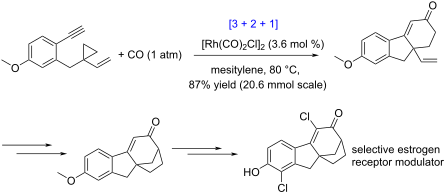
- the 6/5/5 skeleton, and a Heck coupling reaction constructing the [3.2.1] framework, are the two key reactions in this 11-step synthesis. Keywords: [3 + 2 + 1] cycloaddition; selective estrogen receptor modulators; synthesis; tetrahydrofluorenone; Introduction Estrogen receptors (ERs) [1][2] are
- alkyne moiety is installed via Sonogashira coupling reaction using aryl iodide 5. The cyclopropyl ring in 5 can be introduced via an SN2 reaction of compound 2 with tert-butyl cyclopropanecarboxylate (3). Scheme 5 summarizes the final successful execution of this route. The starting material 2 is a known
- % yield with a cyclopropyl group. Then reducing the carboxylate group in 4 with DIBAL-H afforded alcohol 5 in 67% yield. Next, Sonogashira coupling reaction between 5 and trimethylsilylacetylene generated 6 with an alkyne moiety quantitatively. After that, the hydroxy group in 6 was oxidized into a


On the aromaticity and photophysics of 1-arylbenzo[a]imidazo[5,1,2-cd]indolizines as bicolor fluorescent molecules for barium tagging in the study of double-beta decay of 136Xe
Beilstein J. Org. Chem. 2025, 21, 1627–1638, doi:10.3762/bjoc.21.126
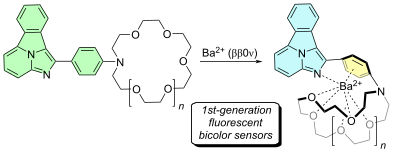
- -crown-6, namely the 1,4,7,10,13-pentaoxa-16-azacyclooctadecane moiety. We next investigated the coupling between the two components of the sensor gathered in Figure 2 at the free and Ba2+-bound states, namely the aza-crown ether-Ba2+-para-phenylene and the benzo[a]imidazo[5,1,2-cd]indolizine components


Synthesis of optically active folded cyclic dimers and trimers
Beilstein J. Org. Chem. 2025, 21, 1603–1612, doi:10.3762/bjoc.21.124

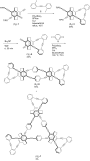
- –Hagihara cross-coupling [37][38] of (Sp)-1 with diiodotolane 2 afforded the corresponding ribbon-shaped compound (Sp)-3 in 39% isolated yield. Triisopropylsilyl (TIPS) groups in (Sp)-3 were removed using Bu4NF to afford diyne (Sp)-4 as a monomer in 45% isolated yield. The reaction of (Sp)-4 with



Chemical synthesis of glycan motifs from the antitumor agent PI-88 through an orthogonal one-pot glycosylation strategy
Beilstein J. Org. Chem. 2025, 21, 1587–1594, doi:10.3762/bjoc.21.122

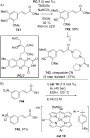
- in mannosyl PVB 8 (1.0 equiv) in the presence of TMSOTf as catalyst proceeded smoothly at 0 °C to room temperature, affording the α-Man-(1→3)-Man PVB disaccharide. The further coupling of the above PVB disaccharide with the poorly reactive 2-OH in mannoside 9 (0.9 equiv) under activation with NIS and
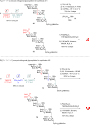
- motif from PI-88. Finally, the synthesis of the monophosphorylated hexasaccharide 4 was studied (Scheme 4). Orthogonal one-pot coupling of Man PTFAI 5 (1.1 equiv), Man ABz 7 (1.0 equiv), PVB 8 (0.9 equiv), and α-Man-(1→3)-α-Man-(1→2)-α-Man trisaccharide 16 (0.8 equiv) proceeded uneventfully



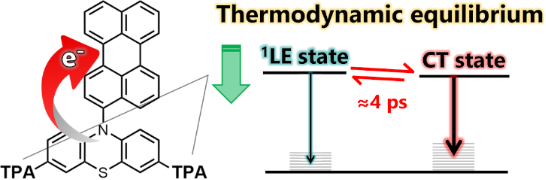
Thermodynamic equilibrium between locally excited and charge transfer states in perylene–phenothiazine dyads
Beilstein J. Org. Chem. 2025, 21, 1577–1586, doi:10.3762/bjoc.21.121
- -catalyzed cross-coupling reactions between bromo-substituted perylene or phenothiazine precursors and appropriate donor or linker units, followed by purification via column chromatography and gel permeation chromatography (Figures S18–S21 in Supporting Information File 1). The details of the syntheses are
- coupling in the ground state, consistent with the π-orthogonal molecular design. The introduction of electron-donating TPA groups raises the HOMO energy levels, while the LUMO levels remain relatively unaffected, thereby reducing the HOMO–LUMO gaps. The presence of phenyl spacers in Pe–Ph–PTZ(TPA)2 lowers
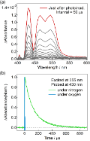
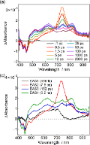
- absorption tails were ascribed to the CT transitions between the PTZ to Pe moieties. Pe–Ph–PTZ(TPA)2 exhibited a less pronounced tailing, likely due to the increased spatial separation between the donor and the acceptor by a phenyl spacer, reducing electronic coupling. TD-DFT calculations indicated that, in




Synthesis of an aza[5]helicene-incorporated macrocyclic heteroarene via oxidation of an o-phenylene-pyrrole-thiophene icosamer
Beilstein J. Org. Chem. 2025, 21, 1561–1567, doi:10.3762/bjoc.21.119
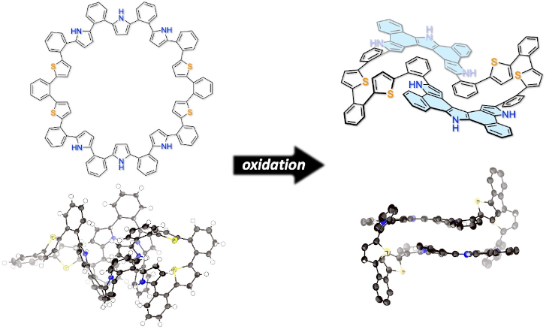
- in detail. Keywords: cyclophane; fluorescence; heterohelicene; intramolecular oxidative coupling; Introduction Conjugated macrocyclic polyarenes have attracted significant attention due to their stimuli-responsive optoelectronic properties, dynamic structural changes, and host–guest interactions [1
- largest macrocycle ever synthesized is a dodecameric hybrid array of 1,2-phenylene, 2,5-thienylene, and 2,5-pyrrolylene units [22][23]. The intramolecular oxidative coupling of these arrays afforded heterohelicene-incorporated macrocycles D and E, depending on the relative arrangements of the pyrrole and
- hybrid decamer 3 in a previous report [26], via a Suzuki–Miyaura cross-coupling reaction between dibromo precursor 1 and borylated precursor 2 (Scheme 1). The resulting mixture was successfully separated by column chromatography on silica using CH2Cl2/n-hexane as an eluent to give icosamer 4 in 6% yield


Azide–alkyne cycloaddition (click) reaction in biomass-derived solvent CyreneTM under one-pot conditions
Beilstein J. Org. Chem. 2025, 21, 1544–1551, doi:10.3762/bjoc.21.117
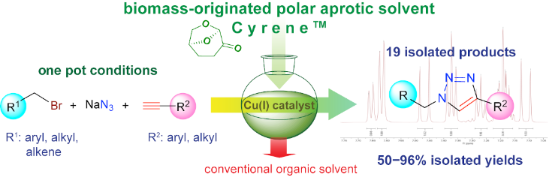
- important transformation exhibiting higher chemical and environmental safety. Keywords: alternative solvent; click chemistry; cycloaddition; CyreneTM; 1,2,3-triazoles; Introduction In the past few decades, transition-metal-catalyzed coupling and addition reactions have represented one of the most powerful
- , a wide range of organic reactions, e.g., urea and amide formation [32][33], amide coupling [34], aldol condensation [35], C–H difluoromethylation [36], aromatic substitution [37], and MOFs synthesis [38] were demonstrated in CyreneTM. Very recently, Fasano and Citarella first reported a CuAAC
- results reported by Citarella et al. [39], excellent functional group tolerance was verified and the isolated yields are in the same range as reported by Citarella et al. (for 3a, 90% [39] and 87% [39]). It should be noted that no Cu-catalyzed Glaser-coupling of acetylenes [45] was observed, indicating


Highly distinguishable isomeric states of a tripodal arylazopyrazole derivative on graphite through electron/hole-induced switching at ambient conditions
Beilstein J. Org. Chem. 2025, 21, 1496–1507, doi:10.3762/bjoc.21.112
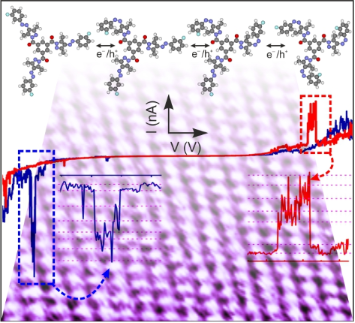
- molecules on graphite [38][39][43] and ultra-thin insulating surfaces [44] is known due to the weak electronic coupling between the molecule and the graphite/insulator surface. We propose that when a sample voltage is applied to the FNAAP adlayer on graphite, they are instantaneously negatively/positively
- electronic coupling between molecules and the metal. We are unable to predict the exact number of charges in the molecule while switching, but what we could demonstrate is that charging can lead to a reduction in the HOMO–LUMO gap, as observed in the experiment. Thus, we propose that the reduction in the



Heterologous biosynthesis of cotylenol and concise synthesis of fusicoccane diterpenoids
Beilstein J. Org. Chem. 2025, 21, 1489–1495, doi:10.3762/bjoc.21.111
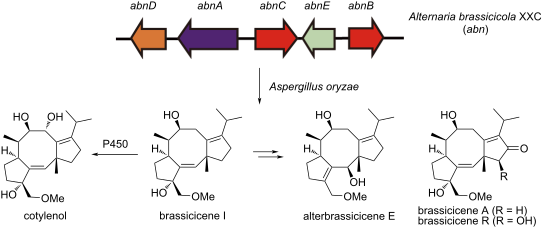
- ][23][24][25][26]. Most of these synthetic approaches rely on similar strategies, i.e., coupling of the A ring and the C ring followed by the formation of the B ring. Additionally, the semisynthesis of analogues of 1 has been reported and led to the discovery of ISIR-050 (4), which shows higher


Copper catalysis: a constantly evolving field
Beilstein J. Org. Chem. 2025, 21, 1477–1479, doi:10.3762/bjoc.21.109
- , decarboxylative functionalizations, and Chan–Lam coupling reactions. In doing so, the authors point out the combination of transition-metal catalysis and electrochemistry as an efficient, sustainable method for the oftentimes challenging formation of C–C and C–heteroatom bonds in complex molecules. Another Review
- cross-coupling reactions of bifunctional boryl- and germyl-containing compounds. On the other hand, a Full Research Paper presented by Lee and co-workers introduces a highly regioselective formal hydrocyanation method of allenes [7]. The strategy is based on a copper-catalyzed hydroalumination of
Microwave-enhanced additive-free C–H amination of benzoxazoles catalysed by supported copper
Beilstein J. Org. Chem. 2025, 21, 1462–1476, doi:10.3762/bjoc.21.108
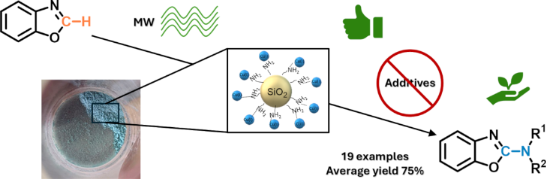
- , and the huge overall economic impact of these processes. Inspired by the logic behind cross-dehydrogenative C–C-coupling methods [15], the direct C–H amination has been developed as a more straightforward, economical and environmentally friendly reaction, compared to its counterparts (such as the
- ][44] and sulfamoyl chlorides [32] can perform the coupling under basic conditions, the need for the activation of the amine as an electrophilic agent generates additional waste. This reduces atom economy and indicates lower reaction efficiency. Acid-catalysed protocols have also been specifically



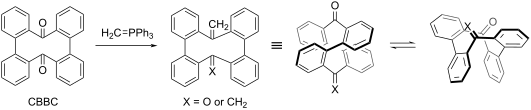
Wittig reaction of cyclobisbiphenylenecarbonyl
Beilstein J. Org. Chem. 2025, 21, 1454–1461, doi:10.3762/bjoc.21.107
- in THF at 65 °C, which are typical conditions for the McMurry coupling (Scheme 2) [24][25]. This reaction afforded an internally functionalized DBC derivative 6 in 60% yield, which adopts an unsymmetric structure with methyl and hydroxy groups on the central carbon atoms. The structure of compound 6



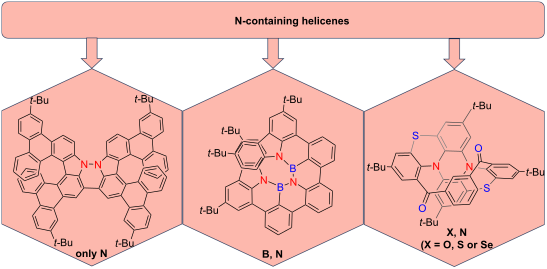
Advances in nitrogen-containing helicenes: synthesis, chiroptical properties, and optoelectronic applications
Beilstein J. Org. Chem. 2025, 21, 1422–1453, doi:10.3762/bjoc.21.106
- [5]helicene (compound 57b) by coupling two 12H-benzo[b]phenoxazine (BPO) units and systematically compared it to its N,N-analogue (compound 57a) derived from 13H-dibenzo[b,i]phenoxazine (DBPO) scaffolds [72] (Table 19). Compound 57b was obtained in significantly higher yield and, like compound 57a
- double aza-oxa[7]helicene via oxidative coupling followed by dehydrative cyclization [85]. The resulting meso-isomer (P,M)-71 emerged as the major product, exhibiting dual emission bands at 415 and 440 nm and solvent-independent absorption at 407 nm. Expanding the structural diversity, the group

Tautomerism and switching in 7-hydroxy-8-(azophenyl)quinoline and similar compounds
Beilstein J. Org. Chem. 2025, 21, 1404–1421, doi:10.3762/bjoc.21.105
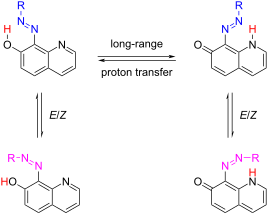
- 5 mm tubes. The corresponding operating frequencies were 500.13 MHz and 125.77 MHz, respectively. The chemical shifts are quoted in parts per million (ppm) with an accuracy of 0.01 ppm. The coupling constants (J) are described in Hz and determined with an accuracy of 0.1 Hz. To describe the spin
- )quinolin-7-ol (2) Diazotization of pentafluoroaniline has been recommended to be carried out in nonaqueous media or concentrated mineral acid, otherwise the coupling product always contains a hydroxy group on the perfluorophenyl ring at the position para to the azo group. It appears that when solutions of




N-Salicyl-amino acid derivatives with antiparasitic activity from Pseudomonas sp. UIAU-6B
Beilstein J. Org. Chem. 2025, 21, 1388–1396, doi:10.3762/bjoc.21.103
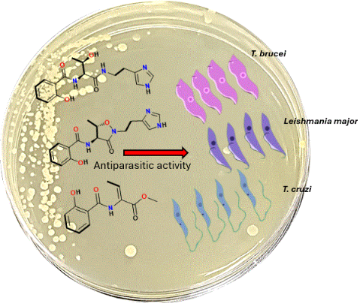
- signal at δH 8.97 (s, H-18), δH 7.41 (s, H-20) and a quaternary carbon (C-16) assigned at δC 131.4 that reminiscences a histamine subunit absent in compound 1. This observation was supported by the 1H-1H COSY spectrum that displayed a cross-peak coupling of H2-14 to both carboxamide protons H-13 and H2


Oxetanes: formation, reactivity and total syntheses of natural products
Beilstein J. Org. Chem. 2025, 21, 1324–1373, doi:10.3762/bjoc.21.101
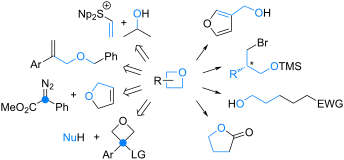
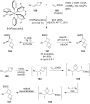
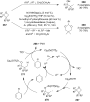
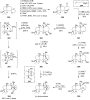
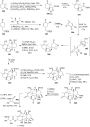
- ) [48]. Good yields were obtained only when CuI was used in combination with 1,10-phenanthroline as a ligand, and this intramolecular Ullmann-type coupling was found to be compatible with primary, secondary and tertiary alcohols, with secondary alcohols exhibiting the following order of reactivity
- transformation of alkenylstannanes into acetylated acyloins, Fürstner et al. [49] reported the synthesis of two 2-alkylideneoxetanes 57 via an unexpected Cu-catalysed intramolecular cross-coupling of hydroxyvinylstannanes 56 (Scheme 15). Besides the good yields, the stannane substrates were also readily prepared
- by trans-hydrostannation [50] of the corresponding alkyne precursors, so this report potentially introduced a new method for oxetane synthesis through an intramolecular Chan–Lam-type coupling. Due to the high reactivity of the exocyclic enol ether induced by the ring strain, 2-alkylidene








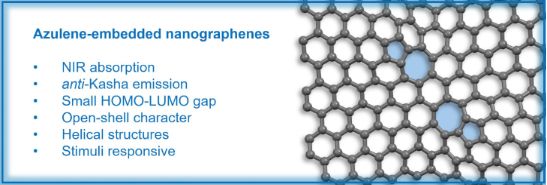
Recent advances and future challenges in the bottom-up synthesis of azulene-embedded nanographenes
Beilstein J. Org. Chem. 2025, 21, 1272–1305, doi:10.3762/bjoc.21.99
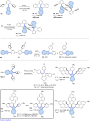
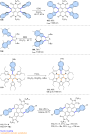
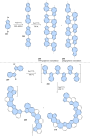
- cross-coupling reactions, such as the Suzuki sp2–sp2 coupling or Sonogashira sp2–sp coupling. These reactions enable the modular construction of complex precursors, which can then be transformed into azulene-embedded PAHs in the final step. Two main synthetic strategies are commonly employed: 1) The
- , the synthesis of more complex molecules may require elements of both strategies. Construction of the azulene moiety in the final step Oxidation of partially saturated precursors: With modern cross-coupling reactions providing access to larger precursors, a synthetic strategy involving the
- exceptionally high yield (97%). A Suzuki cross-coupling reaction between 47 and 45 gave compound 48 which was subjected to a final Scholl oxidation using DDQ. The target compound 49, containing two azulene subunits, was obtained in a relatively low yield (16%). Analysis of NICS values for 49 revealed similar




Recent advances in oxidative radical difunctionalization of N-arylacrylamides enabled by carbon radical reagents
Beilstein J. Org. Chem. 2025, 21, 1207–1271, doi:10.3762/bjoc.21.98
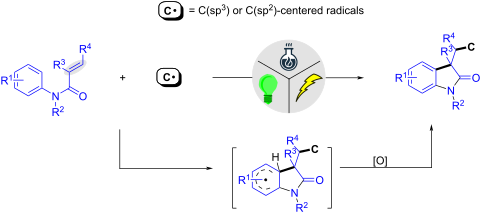
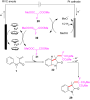
- -coupling, using Cp2Fe-catalyzed electrochemical oxidation. This method leveraged the selective activation of the acidic α-C–H bond within the 1,3-dicarbonyl moiety to generate a carbon-centered radical, which was crucial for the subsequent cyclization. The reaction was carried out under reflux conditions
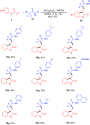
- (4CzIPN), leading to either the reduction of sulfoxonium ylides to hydrocarbons or their participation in radical coupling with alkenes for carboarylation reactions. The reactions were carried out under mild, room temperature conditions using a DCM/H2O 1:2 solvent system. Various reaction conditions were
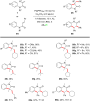
- enables the generation of alkyl radicals from alkyl chlorides, thus broadening the scope of substrates available for cross-coupling reactions. The substrate scope was thoroughly investigated, demonstrating broad compatibility with various N-methyl-N-phenylmethacrylamides and unactivated alkyl chlorides












Synthesis of β-ketophosphonates through aerobic copper(II)-mediated phosphorylation of enol acetates
Beilstein J. Org. Chem. 2025, 21, 1192–1200, doi:10.3762/bjoc.21.96
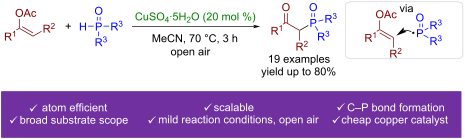
- ) salts, including halides, nitrate, tetrafluoroborate, or perchlorate, were much less effective or completely inert. Keywords: C–P coupling; copper; enol acetates; β-ketophosphonates; phosphorylation; Introduction The construction of C–P bonds is a highly important task in key areas of modern chemistry
- precursors of α-substituted carbonyl compounds that have been recently applied as coupling partners for radical functionalization with the formation of C–C [63][64][65][66] and C–Het [67][68][69][70] bonds. The ready availability of enol acetates from the corresponding carbonyl compounds in just one
- ). Coupling constants are reported in Hertz (Hz). FTIR spectra were recorded on a Bruker Alpha instrument. High-resolution mass spectra (HRMS) were measured on a Bruker maXis instrument using electrospray ionization (ESI). The measurements were performed in a positive ion mode (interface capillary voltage


Enhancing chemical synthesis planning: automated quantum mechanics-based regioselectivity prediction for C–H activation with directing groups
Beilstein J. Org. Chem. 2025, 21, 1171–1182, doi:10.3762/bjoc.21.94
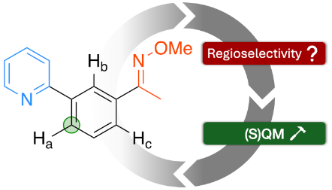
- and carboxylic acid. The palladacycle intermediate can undergo further (coupling) reactions and form a variety of products via reductive elimination. In previous studies, the rate- and regioselectivity-controlling step was identified as the formation of the palladacycle [5][6][7]. The regioselectivity


Synthetic approach to borrelidin fragments: focus on key intermediates
Beilstein J. Org. Chem. 2025, 21, 1135–1160, doi:10.3762/bjoc.21.91
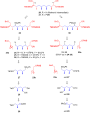
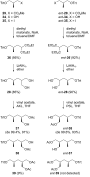
- %). Treatment of both 41 and ent-41 with acidic resin (Amberlyst-15), followed by protection of the resultant primary alcohol with TIPSOTf in the presence of 2,4,6-collidine provided the anticipated compounds 27 (97%) and ent-27 (95%). With 27 and ent-27 in hand, the next step was to perform the coupling of
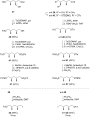
- these sulfones with epoxides 23b and 23a, respectively. Following the literature procedure for a similar reaction, using n-butyllithium in the presence of BF3·Et2O at −78 °C, the coupling reaction unfortunately resulted in the decomposition of the reactants (Scheme 4). The authors hypothesized that the
- the late stage coupling with 137 was prepared from the known lactone 138 (Scheme 21). Following a literature procedure, compound 139 was obtained from lactone 138 and subsequently treated with CrO3 to yield ketone 140 in 90% yield [55]. The ketone moiety of this compound was then reacted with a Wittig








A versatile route towards 6-arylpipecolic acids
Beilstein J. Org. Chem. 2025, 21, 1104–1115, doi:10.3762/bjoc.21.88
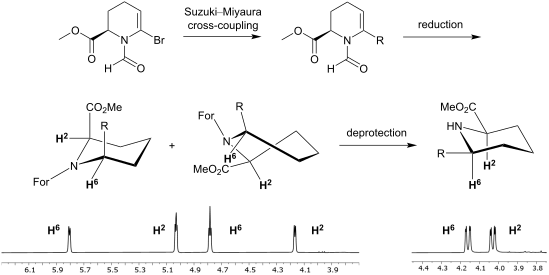
- aryl modifications in C6 position by utilising the chiral pool of a non-proteinogenic amino acid in combination with transition metal-catalysed cross-coupling reactions. Moreover, we present an in-depth NMR analysis of the key intermediate steps, which illustrates the conformational constraints in
- accordance with coupling constants and resulting dihedral angles. Keywords: conformational restraints; dihedral angle NMR; half-chair conformation; modified amino acids; pipecolic acid; stereoselective hydrogenation; Suzuki–Miyaura cross-coupling; Introduction Non-proteinogenic amino acids play an
- structure of pipecolic acid is rather challenging and often necessitates early-stage derivatization followed by the formation of the six-membered ring [29][30][31][32]. An alternative is to utilise derivatization reactions such as Suzuki–Miyaura [33] or Sonogashira–Hagihara [34] cross-coupling reactions on





Recent advances in synthetic approaches for bioactive cinnamic acid derivatives
Beilstein J. Org. Chem. 2025, 21, 1031–1086, doi:10.3762/bjoc.21.85
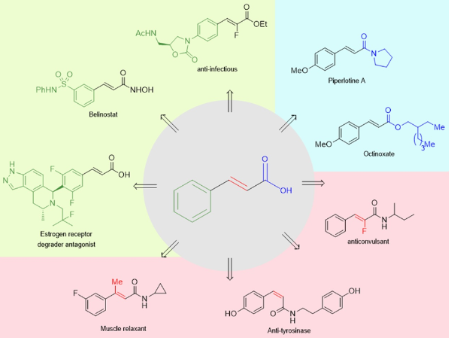
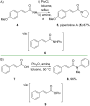
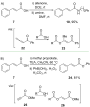
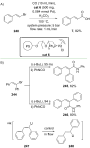
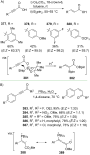
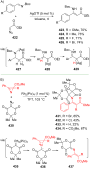
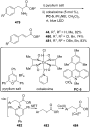
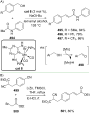
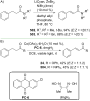
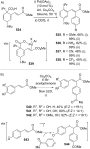
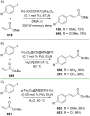
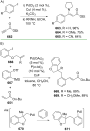
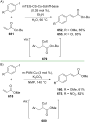
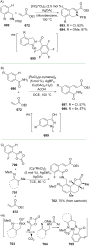
- construction, alkyne hydrogenation, ylide and carbene reaction, metathesis, E/Z isomerization, and other methods, including Cα and Cβ functionalizations. Preparing various functional group-tethered aromatic groups can be achieved by directly installing an aromatic group via cross-coupling reactions and other
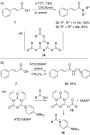
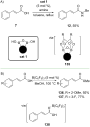
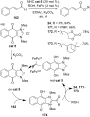
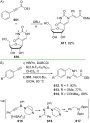
- -dithiocyanatopyrimidine (NDTP) as the coupling reagent for cinnamic acid amidation with swift reaction time (Scheme 4) [22]. The reaction of cinnamic acid (7) with NDTP resulted in the active acyl thioester 11 followed by a reaction with an amine to give the corresponding amide 10. The byproduct of the coupling reagent
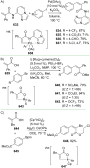
- the electrophilic triazinedione, releasing DMAP to give ester 15 which reacts with DMAP to afford the active N-acylpyridinium species 16. In addition, N-(3-dimethylaminopropyl)-N’-ethylcarbodiimide hydrochloride (EDC·HCl), a common coupling reagent, has been applied for a continuous flow








































Synthesis of pyrrolo[3,2-d]pyrimidine-2,4(3H)-diones by domino C–N coupling/hydroamination reactions
Beilstein J. Org. Chem. 2025, 21, 1010–1017, doi:10.3762/bjoc.21.82
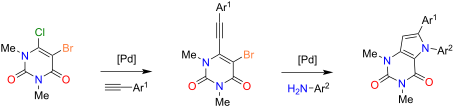
- Abstract A variety of pyrrolo[3,2-d]pyrimidine-2,4(3H)-diones were prepared by a combination of Sonogashira reaction and subsequent cyclization by domino C–N coupling/hydroamination reaction. The optical properties (UV–vis absorption and fluorescence) depend on the substitution pattern of the compounds
- pyrrolopyrimidine derivatives. The envisioned methodology combines a Sonogashira–Hagihara reaction and a one-pot process comprising a Buchwald–Hartwig coupling reaction followed by a hydroamination [23][24]. Results and Discussion The bromination of 6-chloro-1,3-dimethyluracil (1) afforded, following a known
- obtained for product 3e derived from 3-tolylacetylene. However, the yield for compound 3f dropped to 60% because of the more sterically hindered 2-tolylacetylene. The domino C–N cross-coupling/hydroamination reaction of 3a–h with various anilines was studied next (Scheme 2) [28][29]. The conditions were



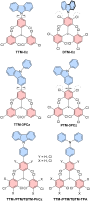
On the photoluminescence in triarylmethyl-centered mono-, di-, and multiradicals
Beilstein J. Org. Chem. 2025, 21, 964–998, doi:10.3762/bjoc.21.80
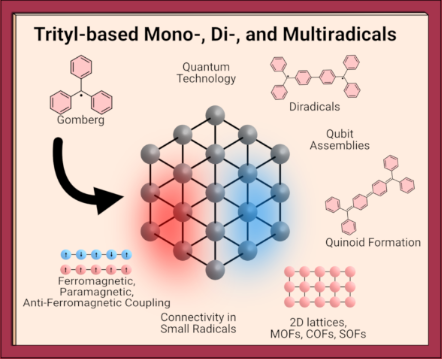
- iodine should break the symmetry; however, no effect on the absorption spectra and especially on the lower energy |D1⟩ transition has been reported [45]. Interestingly, substitution of one of the para-chlorines in TTM by iodine (I-TTM) has been reported to enable Pd-catalyzed cross-coupling, allowing
- bromine substitution decreases the spin–lattice relaxation time T1 of the radical electron. This is due to increased spin–orbit coupling in the brominated species. By contrast, the phase memory time Tm becomes longer for successively brominated radicals, visible from the concurrent spectral broadening in
- borrowing from higher excited states. While first hypotheses suggested a vibronic coupling between the D1 and D2 states on the TTM moiety [19], recent calculations propose vibronic intensity borrowing from higher excited states as high as D7, which represent LE states with high oscillator strengths that are