Search results
Search for "elimination" in Full Text gives 910 result(s) in Beilstein Journal of Organic Chemistry. Showing first 200.
Homogeneous continuous flow nitration of O-methylisouronium sulfate and its optimization by kinetic modeling
Beilstein J. Org. Chem. 2024, 20, 2408–2420, doi:10.3762/bjoc.20.205
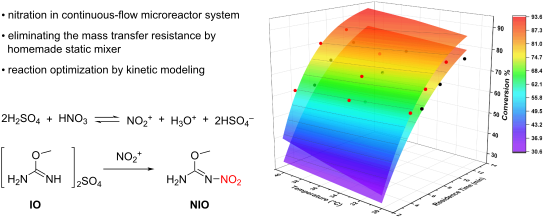
- continuous flow nitrification system, leading to better elimination of the effects of mass and heat transfer [11]. Kinetic modeling is a classical approach to chemical reaction optimization, where the effects of various reaction parameters on the results are effectively quantified by mathematical formulas
- reaction system. Therefore, it is feasible to model homogeneous nitrification and optimize the reaction in a continuous flow system based on NO2+. An important prerequisite for kinetic modeling is the elimination of issues related to mass and heat transfer. The effect of mass transfer resistance is greater
- the elimination of mass transfer limitations. The improved mixing efficiency can be attributed to the mixer’s design features, such as its double reverse rotating vortex [27][28], large specific surface area [29], and the incorporation of obstacles within the flow channel [30][31]. Determining


![[Graphic 1]](/bjoc/content/inline/1860-5397-20-205-i17.svg?max-width=637&scale=1.18182)


Asymmetric organocatalytic synthesis of chiral homoallylic amines
Beilstein J. Org. Chem. 2024, 20, 2349–2377, doi:10.3762/bjoc.20.201
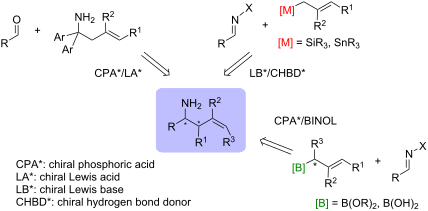
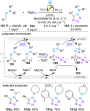
- excellent enantioselectivities (89–98% ee) and low to moderate yields (48–72%). The homologation step proceeds via the stereoretentive 1,2-migration of the vinyl group from the tetracoordinated boron to the highly electrophilic carbon of the diazomethane, concerted with the elimination of the nitrogen
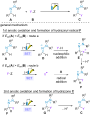
- formed in this process abstracts the γ-CH proton of the CF3-imine (136 → 141), facilitating its nucleophilic attack on the isatin cation (141 + 142 → 143), followed by elimination of the catalyst 138, which completes the cycle liberating 139 (Scheme 29). Overall, this methodology represents a convenient
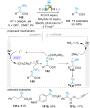
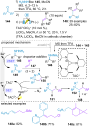
- catalyses the methylene group transfer, resulting in azonia-[3,3]-sigmatropic rearrangement, followed by regeneration of methylene imine by an elimination step [47]. The reaction proceeded in toluene at 80 °C with 20 mol % of the CPA catalyst 151 over 20 hours resulting in low to moderate






Stereoselective mechanochemical synthesis of thiomalonate Michael adducts via iminium catalysis by chiral primary amines
Beilstein J. Org. Chem. 2024, 20, 2313–2322, doi:10.3762/bjoc.20.198
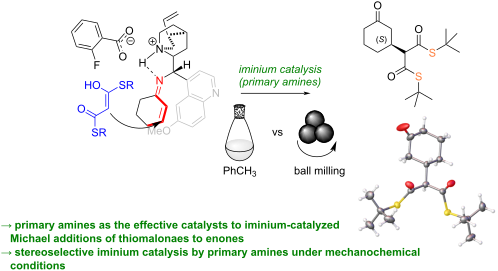
- adduct. Hence, after 24 hours up to 9% of sulfa-adduct was formed (see Supporting Information File 1 for details). Unfavorable in this case is the formation of ketene via thiol elimination [40], leading to the formation of a mixture of products where the thia-Michael adduct predominates over the desired


Selective hydrolysis of α-oxo ketene N,S-acetals in water: switchable aqueous synthesis of β-keto thioesters and β-keto amides
Beilstein J. Org. Chem. 2024, 20, 2225–2233, doi:10.3762/bjoc.20.190

- carbocation of I produces intermediate II, which converts into intermediate III through a deprotonation–protonation process. Finally, the elimination of PhNH2 from intermediate III occurs to afford the desired product 2a. In the presence of NaOH, the Michael addition between 1a and base initially occurs to
- form adduct I', which is then transformed into intermediate II' by elimination of ethanethiolate. Subsequently, β-keto amide 3a is obtained when II' releases H+. Conclusion In summary, we have successfully developed an environmentally friendly method for the selective aqueous synthesis of β-keto



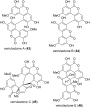
Natural resorcylic lactones derived from alternariol
Beilstein J. Org. Chem. 2024, 20, 2171–2207, doi:10.3762/bjoc.20.187
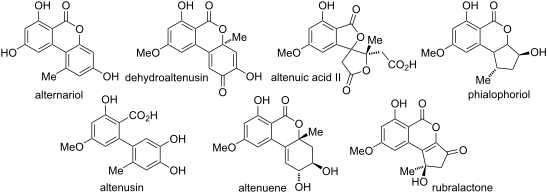

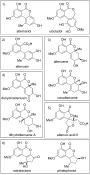
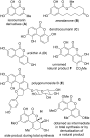


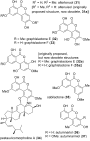



Efficacy of radical reactions of isocyanides with heteroatom radicals in organic synthesis
Beilstein J. Org. Chem. 2024, 20, 2114–2128, doi:10.3762/bjoc.20.182
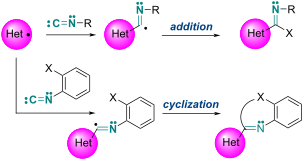
- isocyanides forms boron-substituted imidoyl radical intermediates and rapid β-scission then causes elimination of the substituents on the nitrogen (Scheme 12) [53]. Radical cyclization via formation of imidoyl radical species In the former chapter, we discussed 1,1-addition reactions of typical element


Multicomponent syntheses of pyrazoles via (3 + 2)-cyclocondensation and (3 + 2)-cycloaddition key steps
Beilstein J. Org. Chem. 2024, 20, 2024–2077, doi:10.3762/bjoc.20.178

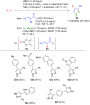
- carbonyl compounds represent a standard approach for synthesizing pyrazolines, which readily oxidize to aromatic pyrazoles in the presence of ambient atmosphere. On the other hand, if good leaving groups are bound to the hydrazine, such as in tosylhydrazine, elimination directly yields aromatic pyrazoles
- . In cases where the α,β-unsaturated carbonyl compounds contain a heteroatom in the β-position, aromatization is triggered by elimination under redox-neutral conditions. Tasch et al. successfully coupled aryl halides with α-bromocinnamaldehyde (51) using a Masuda borylation Suzuki cross-coupling (MBSC
- and elimination to give the corresponding pyrazoles 52 (Scheme 15) [70]. The cross-coupling introduced various aryl substituents at position 4. Furthermore, using 1,4-diiodobenzene as a starting material allows access to bispyrazole derivatives. According to Beller [71], using bisadamantyl-type




Harnessing the versatility of hydrazones through electrosynthetic oxidative transformations
Beilstein J. Org. Chem. 2024, 20, 1988–2004, doi:10.3762/bjoc.20.175
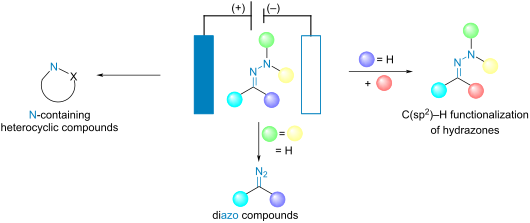
- reaction initiated with anodic formation of iodine. The latter would react with hydrazone 83 to form the zwitterionic species 86 under basic conditions. Subsequent formal (3 + 2)-cycloaddition with the quinoline 84 formed fused system 87 which underwent elimination of iodide and sulfinic acid to furnish
- generate the α-iodo ketone-derived NH-tosylhydrazone 92 and ultimately the azadiene 93 upon elimination of HI. In agreement with a previous report [63], further formal (4 + 1) cycloaddition with S8 followed by elimination of S7 and sulfinic acid gave rise to the aromatic cycle 91 (Scheme 17) [64]. The
- hydrazone through the in situ generation of iodonium as oxidant while the latter would facilitate the deprotonation of iodoammonium 162 and the elimination of HI from N-iodo intermediate 163. The best yields were obtained with aromatic ketone-derived hydrazones (Scheme 33) [83]. Conclusion Given the rich









1,2-Difluoroethylene (HFO-1132): synthesis and chemistry
Beilstein J. Org. Chem. 2024, 20, 1955–1966, doi:10.3762/bjoc.20.171

- converted into polyfluorinated olefins RFCF=CFH by HI elimination. Cyclization reactions Carbocyclizations: A series of articles devoted to structural investigations of 1,2-difluorocyclopropanes was published [96][97][98]. For this purpose, cis- and trans-1,2-difluorocyclopropanes were synthesized by liquid


Solvent-dependent chemoselective synthesis of different isoquinolinones mediated by the hypervalent iodine(III) reagent PISA
Beilstein J. Org. Chem. 2024, 20, 1914–1921, doi:10.3762/bjoc.20.167
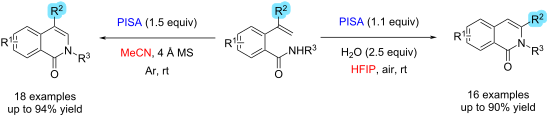
- then undergoes a proton shift to provide intermediate B. Intermediate B collapses via reductive elimination to give nitrenium ion C, along with the release of iodobenzene and sulfamate. Finally, nucleophilic attack of the olefin moiety of C on the electrophilic nitrogen atom, followed by the
- migration and reductive elimination, along with the release of iodobenzene and sulfamic acid. Cyclization of protonated G takes place to afford the intermediate H. Finally, release of water and β-proton elimination produces the rearranged product 3a (Scheme 8). Conclusion In summary, we reported the




The Groebke–Blackburn–Bienaymé reaction in its maturity: innovation and improvements since its 21st birthday (2019–2023)
Beilstein J. Org. Chem. 2024, 20, 1839–1879, doi:10.3762/bjoc.20.162
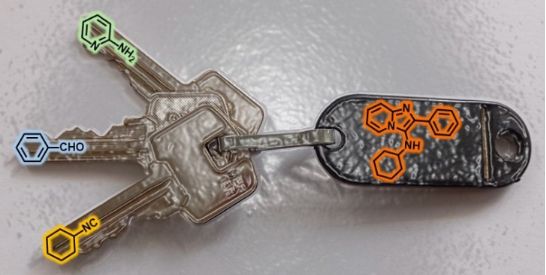
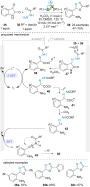
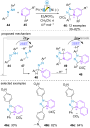
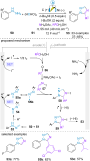
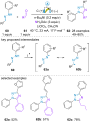
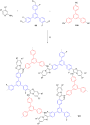
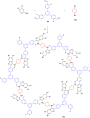
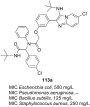
- elimination of III, underwent intramolecular cyclization to deliver the desired products 85. The scope of reaction showed that higher yield (57–90%) of 85 were obtained when benzaldehydes 83 were equipped with electron-donating groups (R1) and when bulky groups, such as 1-adamantyl or t-Bu (R4), were






Oxidative fluorination with Selectfluor: A convenient procedure for preparing hypervalent iodine(V) fluorides
Beilstein J. Org. Chem. 2024, 20, 1785–1793, doi:10.3762/bjoc.20.157
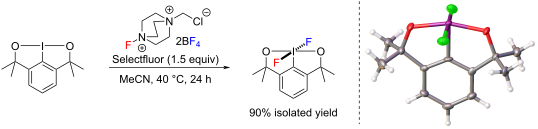
- ] reacted a perfluorinated iodine(III) compound with XeF2 and postulated the formation of a (perfluoroalkyl)iodine(V) difluoride intermediate which underwent a reductive elimination to afford perfluorinated products (Scheme 2C). In 2019 Togni reported a safer route to a range of acyclic iodine(V) fluorides
- to a trans-configuration because of the bicyclic carbon skeleton. Trifluoroiodane 3, on the other hand, has both trans- and cis-configurations of the fluorine ligands which could play a key role in the reductive elimination step in the fluorination of phenylmagnesium bromide. Trifluoroiodane 3 also


Ugi bisamides based on pyrrolyl-β-chlorovinylaldehyde and their unusual transformations
Beilstein J. Org. Chem. 2024, 20, 1773–1784, doi:10.3762/bjoc.20.156
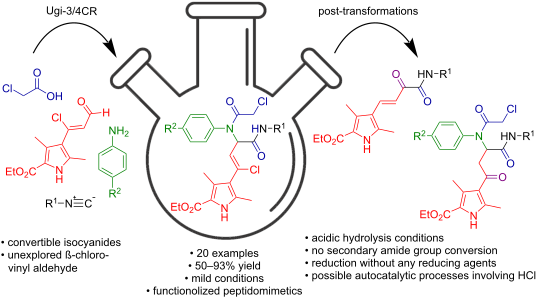
- heterylidenepyruvic acid. An optimized synthetic protocol for this transformation was elaborated and a plausible sequence involving the elimination of the 2-chloroacetamide moiety and the conversion of the β-chlorovinyl fragment into a vinyl one is provided. Keywords: convertible isocyanides; multicomponent reaction
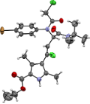
- attempt to apply a well-documented approach for the subsequent synthesis of peptide-containing carboxylic acids by acid hydrolysis of the convertible isocyanide moiety in the Ugi bisamides proceeded in an unexpected manner: their treatment with acids led to elimination of the 2-chloroacetamide moiety and




Oxidation of benzylic alcohols to carbonyls using N-heterocyclic stabilized λ3-iodanes
Beilstein J. Org. Chem. 2024, 20, 1677–1683, doi:10.3762/bjoc.20.149
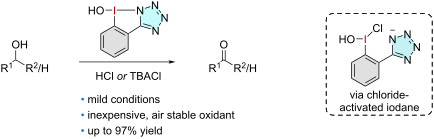
- the alkyl hypochlorite IIa. The second mechanism (path b) requires a direct ligand exchange of I-OH with the alcohol and subsequent β-elimination of the alkoxy(hydroxy)iodane IIb to form the desired aldehyde 4. Conclusion In conclusion, this study has successfully introduced N-heterocycle-stabilized
- was investigated, potentially leading to the formation of a hydroxy(chloro)iodane intermediate. This intermediate either liberates hypochlorous acid as the terminal oxidant or undergoes a direct ligand exchange with the alcohol, followed by oxidative elimination to form the aldehyde. Thus, these




Polymer degrading marine Microbulbifer bacteria: an un(der)utilized source of chemical and biocatalytic novelty
Beilstein J. Org. Chem. 2024, 20, 1635–1651, doi:10.3762/bjoc.20.146
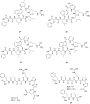
- homo- and heteropolymeric forms. The 1,4-O-linkage in alginate is cleaved by alginate lyases, in a β-elimination manner (Figure 3). Alginate lyases can be either endolyases, or exolyases with preference for polyM or polyG present in the alginate matrix [110]. Alginate lyases have been isolated from




Benzylic C(sp3)–H fluorination
Beilstein J. Org. Chem. 2024, 20, 1527–1547, doi:10.3762/bjoc.20.137

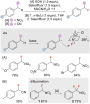
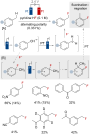
- predominately considered to be stable to isolation conditions, secondary and tertiary suffer from the elimination of HF, especially in the presence of silica gel or glass vessels. Therefore, benzyl fluorides have been derivatised, for example in C–O, C–N and C–C bond-forming reactions [18][19][20], thereby also
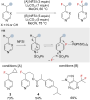
- pervasive in organic synthesis and can also be used to efficiently fluorinate benzylic C(sp3)–H bonds. The general blueprint for this transformation follows a metal insertion into the C(sp3)–H bond followed by C–F reductive elimination [11][22][38]. In 2006, Sanford and co-workers published a seminal and
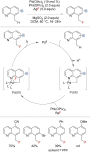
- palladacycle intermediate, defining the stereochemical outcome. Subsequent oxidation to the Pd(IV)–F species, which triggered reductive elimination, afforded the fluorinated product. The non-innocent behaviour of the isobutyrylnitrile co-solvent aided in stabilising the palladacycle through occupying the








Electrophotochemical metal-catalyzed synthesis of alkylnitriles from simple aliphatic carboxylic acids
Beilstein J. Org. Chem. 2024, 20, 1497–1503, doi:10.3762/bjoc.20.133
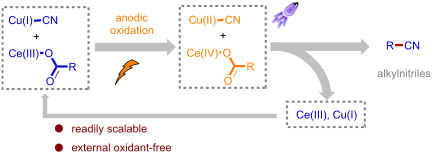
- then extrude CO2 to generate the alkyl radical. Concurrently, Cu(II)–CN species are produced in the presence of cyanide anion through anodic oxidation. At this stage, Cu(II)–CN species are believed to capture alkyl radicals and the product would be readily generated via reductive elimination from the


Bioinformatic prediction of the stereoselectivity of modular polyketide synthase: an update of the sequence motifs in ketoreductase domain
Beilstein J. Org. Chem. 2024, 20, 1476–1485, doi:10.3762/bjoc.20.131
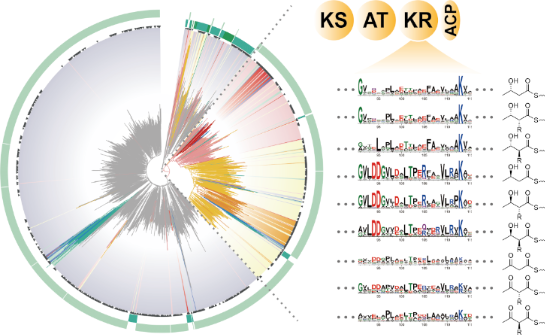
- obscured by the following dehydration by the DH domain. It is widely believed that an α,β-trans (E) double bond is generated from a ᴅ-β-hydroxy intermediate produced by a B-type KR, whereas a cis (Z) double bond is from an ʟ-β-hydroxy intermediate generated by an A-type KR via syn elimination [21]. However
- , based on the syn-elimination mechanism, the ʟ-α-methyl,ʟ-β-hydroxy substrate produced by A2-type KR can also result in a trans (E) double bond [18][22], and some DH domains are reported to have epimerase activity on the α-substitution [23]. Thus, the stereochemical outcomes of KRs in γ- and δ-modules
- been investigated in several DH domains, which all follow the syn-elimination mechanism [5][21][33]. Based on the product configuration, we classified DHs into two types, E-type DHs (trans-double bond) and Z-type DHs (cis-double bond) and analyzed sequence logos of the DH-associated KRs. The sequence


Synthesis of 2-benzyl N-substituted anilines via imine condensation–isoaromatization of (E)-2-arylidene-3-cyclohexenones and primary amines
Beilstein J. Org. Chem. 2024, 20, 1468–1475, doi:10.3762/bjoc.20.130
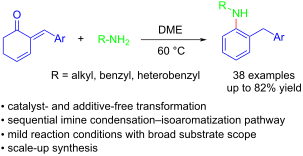
- study began with the preparation of the (E)-2-arylidene-3-cyclohexenones 2 via DMAP-catalyzed elimination reaction of 2-cyclohexenone-MBH alcohols 1 and di-tert-butyl dicarbonate [22] as depicted in Scheme 2. Starting materials 2 were prepared in moderate to high yields. Next, we chose (E)-2


Challenge N- versus O-six-membered annulation: FeCl3-catalyzed synthesis of heterocyclic N,O-aminals
Beilstein J. Org. Chem. 2024, 20, 1412–1420, doi:10.3762/bjoc.20.123
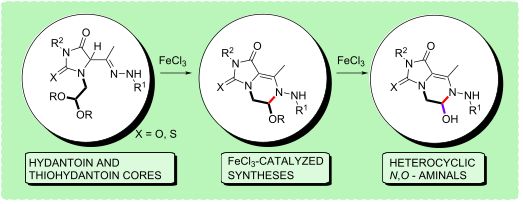
- catalytic cycle. Similar to what was previously observed, the elimination of the trichloro(alkoxy)ferrate(III) anion from intermediate C provides the iminium ion D, susceptible to nucleophilic attack by a water molecule present in the reaction medium, leading to the carbinolamines 6. This latter synthesis




Synthesis of substituted triazole–pyrazole hybrids using triazenylpyrazole precursors
Beilstein J. Org. Chem. 2024, 20, 1396–1404, doi:10.3762/bjoc.20.121
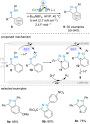
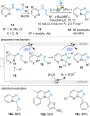
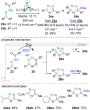
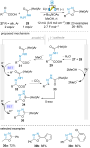
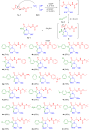
- accessed from the respective amines or organohalides (5 and 6, Scheme 1) [14][16][17][18]. Few examples of triazole–pyrazole hybrids, such as 13, have also been synthesized through a modified Sakai reaction [19], a reaction cascade involving the elimination of an azole [20] or in the n-butyllithium




Generation of alkyl and acyl radicals by visible-light photoredox catalysis: direct activation of C–O bonds in organic transformations
Beilstein J. Org. Chem. 2024, 20, 1348–1375, doi:10.3762/bjoc.20.119
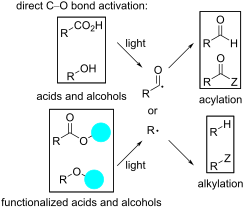
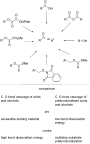
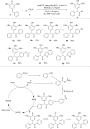
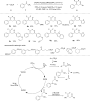
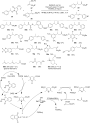
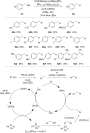
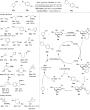
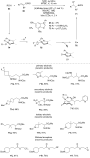
- electron density, which facilitates a π–π interactions with the aryl iodide system and ultimately results in the production of an electron donor–acceptor (EDA) complex 21. Photoexcitation of this EDA complex furnishes an aryl iodide radical anion and a radical cation complex 22. Then, the elimination of
- excited-state photocatalyst oxidizes the cesium alkyl oxalate via SET, followed by elimination of two carbon dioxide molecules, generating a tertiary alkyl radical that easily combines with an electron-deficient alkene, providing the product. This protocol was well compatible with a wide range of acceptor
- mechanism involves C–O bond activation of tertiary oxalates. It requires [Ir(dF(CF3)ppy)2(dtbbpy)]PF6 and NiCl2⋅DME along with dtbbpy ligand. The reaction commences with single-electron oxidation of cesium oxalate initiated by *[Ir(III)] photocatalyst. This transfer leads to the elimination of two CO2








Rhodium-catalyzed homo-coupling reaction of aryl Grignard reagents and its application for the synthesis of an integrin inhibitor
Beilstein J. Org. Chem. 2024, 20, 1341–1347, doi:10.3762/bjoc.20.118
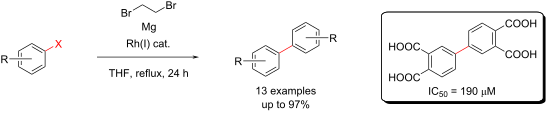
- elimination of ethylene. Further transmetalation between the complex 8 and another Grignard reagent gives Rh(III)–bis(aryl) complex 9. Finally, reductive elimination affords the desired homo-coupling product 3 and regenerates the Rh catalyst. We did not identify any cross-coupling products such as (2
- -bromoethyl)arenes or styrenes in this reaction. Unfortunately, we have not clarified the reason why a cross-coupling reaction did not proceed. At this stage, we speculate that the elimination rate of ethylene and reductive elimination rate of 3 might be fast in this reaction. Medicinal chemistry application


Oxidative hydrolysis of aliphatic bromoalkenes: scope study and reactivity insights
Beilstein J. Org. Chem. 2024, 20, 1286–1291, doi:10.3762/bjoc.20.111
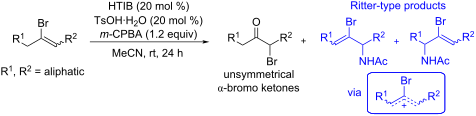
- side products is proposed through path b (Scheme 3). The elimination of α-proton on the side chain of dialkyl bromoalkenes results in iodonium intermediate D, which on the expulsion of PhI gives a mixture of the allylic carbocation E, which ultimately gets trapped by MeCN in the presence of H2O, giving


Mechanistic investigations of polyaza[7]helicene in photoredox and energy transfer catalysis
Beilstein J. Org. Chem. 2024, 20, 1236–1245, doi:10.3762/bjoc.20.106
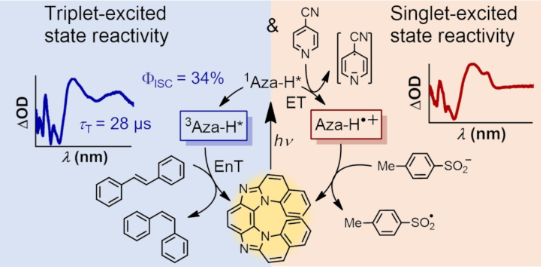
- its photochemical reactivity. The main reaction class catalyzed by excited-state polyazahelicene Aza-H so far is the redox-neutral addition of sulfinates and cyanopyridines, under elimination of cyanide, to styrenes in a three-component reaction. The proposed mechanism was derived from the redox