


Search results
Search for "intermediate" in Full Text gives 2228 result(s) in Beilstein Journal of Organic Chemistry. Showing first 200.
Photoswitches beyond azobenzene: a beginner’s guide
Beilstein J. Org. Chem. 2025, 21, 1808–1853, doi:10.3762/bjoc.21.143
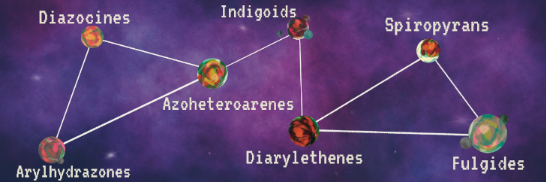
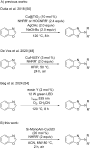
- -nitrobenzyl bromide (47) with 50 or with 52, after its reduction with NaBH4. The intermediate products are then treated with lead in a buffered basic environment to get the final product in low yield accompanied by two by-products, 54a,b. For the O-heterodiazocine, reduction with triphenylphosphine and a




Fe-catalyzed efficient synthesis of 2,4- and 4-substituted quinolines via C(sp2)–C(sp2) bond scission of styrenes
Beilstein J. Org. Chem. 2025, 21, 1799–1807, doi:10.3762/bjoc.21.142
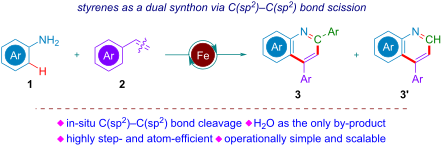
- the FeIII species. An alternative mechanism involving a concerted [4 + 2] cycloaddition between the aza-butadiene moiety in II and the alkene, leading to intermediate IV, cannot be ruled out. Conclusion In summary, we have successfully developed a highly efficient method for the oxidative C–C bond


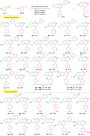


Synthesis of chiral cyclohexane-linked bisimidazolines
Beilstein J. Org. Chem. 2025, 21, 1786–1790, doi:10.3762/bjoc.21.140
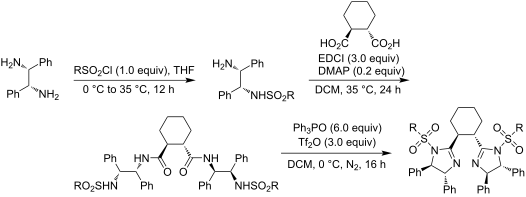
- nucleophilically attacks the phosphonium in A to generate intermediate B by loss of triphenylphosphine oxide and triflic acid. The nucleophilic sulfonamide in B intramolecularily attacks the generated imine moiety in B to form intermediate C, in which triflic acid may protonate the imine moiety in B to assist the
- nucleophilic attack. Intermediate C further transforms to imidazoline product 5 by loss of triphenylphosphine oxide and triflic acid. Conclusion Both chiral bisoxazolines and bisimidazolines are efficient and widely applied chiral ligands in metal-catalyzed asymmetric organic reactions. Several chiral


Preparation of a furfural-derived enantioenriched vinyloxazoline building block and exploring its reactivity
Beilstein J. Org. Chem. 2025, 21, 1737–1741, doi:10.3762/bjoc.21.136

- ][24] (Scheme 1). The proposed strategy relied on the N-deprotection of the intermediate ester 3d inducing O-to-N rearrangement to form amide 5 as a precursor of vinyloxazoline 6. For this purpose, Alloc (allyloxycarbonyl) turned out to be a suitable N-protecting group as it was compatible with the
- oxidation in methanol in batch electrolysis conditions, providing unsaturated esters S-3d and R-3d, respectively (Scheme 2). The previously used one-reactor two-step conditions were found to be productive for the electrosynthesis of S-3d, requiring the addition of acetic acid for the intermediate spiroketal
- -wise process [22]. The first step involves addition of the oxazoline nitrogen to TsNCO leading to a zwitterionic intermediate A, which undergoes 1,4-conjugate addition forming a cyclic intermediate B. Subsequently, the electron-rich double bond in intermediate B reacts with a second equivalent of TsNCO


Convenient alternative synthesis of the Malassezia-derived virulence factor malassezione and related compounds
Beilstein J. Org. Chem. 2025, 21, 1730–1736, doi:10.3762/bjoc.21.135
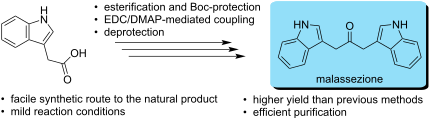
- advisable to stockpile the penultimate synthetic intermediate 23 and subsequently conduct the deprotection on the smaller scale. Conclusion Overall, we have developed a facile synthesis of the natural product malassezione, utilizing an EDC-mediated coupling of N-Boc-protected indole-3-acetic acid. The use


Approaches to stereoselective 1,1'-glycosylation
Beilstein J. Org. Chem. 2025, 21, 1700–1718, doi:10.3762/bjoc.21.133
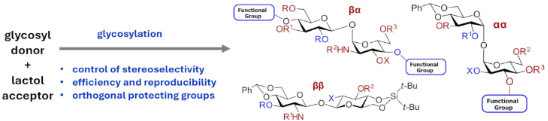
- configuration has been explained by the formation of a picolinium adduct, resulting from the trapping of the acidic by-product TMSOTf by the pyridine moiety of the picoloyl group during glycosylation [69]. The resulting intermediate, a picolinium-stabilized TMS-glycoside, exhibits high configurational stability


Structural analysis of stereoselective galactose pyruvylation toward the synthesis of bacterial capsular polysaccharides
Beilstein J. Org. Chem. 2025, 21, 1671–1677, doi:10.3762/bjoc.21.131

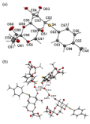
- Program, Taiwan International Graduate Program (TIGP), Academia Sinica, Taipei 115, Taiwan 10.3762/bjoc.21.131 Abstract Pyruvate ketal is a biologically essential moiety due to its key role as an intermediate in metabolic pathways, serving as a key precursor for the synthesis of various essential
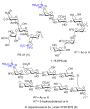
- to synthesize a pyruvate ketal-containing PS A1 precursor associated with the commensal anaerobic bacteria capsule (Scheme 1) [7][8][9][10][11]. The target structure was β-ᴅ-Galf-(1→3)-α-ᴅ-Gal-(1→3)-β-ᴅ-Gal. This molecule acts as a critical intermediate for synthesizing various O4-linked PS A1


Influence of the cation in hypophosphite-mediated catalyst-free reductive amination
Beilstein J. Org. Chem. 2025, 21, 1661–1670, doi:10.3762/bjoc.21.130
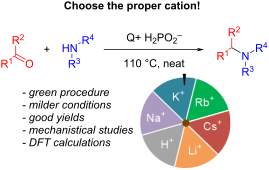
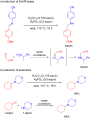
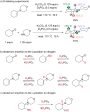
- reaction medium, thereby preventing their reduction. This fact and the result of the control experiment where Schiff base was used as a starting material (Scheme 3a) demonstrated that Schiff base was not an intermediate in the developed reaction. The reactions between carbonyl compounds and secondary
- amines proceeded forming products in moderate to high yields. In this process enamine can be the intermediate. Therefore, enamine was tested in the control experiment and the corresponding product was obtained in moderate yield (49%). To validate the experiment with enamine the reductive amination with
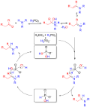
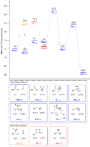
- equal amounts of the corresponding carbonyl compound and amine was carried out and the product was obtained in 69% yield (Scheme 3b). Therefore, enamine could be considered as an intermediate or resting state of the reaction, but more likely the real intermediate is an iminium cation or hemiaminal. To


Formal synthesis of a selective estrogen receptor modulator with tetrahydrofluorenone structure using [3 + 2 + 1] cycloaddition of yne-vinylcyclopropanes and CO
Beilstein J. Org. Chem. 2025, 21, 1639–1644, doi:10.3762/bjoc.21.127
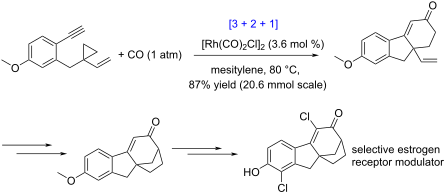
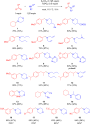
- is the retrosynthetic analysis for the key intermediate 1, which can reach the final compound VI via chlorination and demethylation [19]. Target molecule 1 can be accessed by decarboxylation reaction from compound 13, prepared by an intramolecular Heck reaction between the β-ketoester and the vinyl


Transition-state aromaticity and its relationship with reactivity in pericyclic reactions
Beilstein J. Org. Chem. 2025, 21, 1613–1626, doi:10.3762/bjoc.21.125
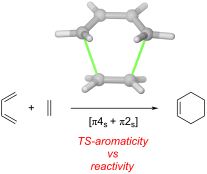
- ) of the butadiene + ethylene reaction proceeds with a lower barrier (up to 7 kcal/mol) than the corresponding stepwise pathway leading to a diradical intermediate (Scheme 1a) [19][20]. Similar preferences for concerted pathways over stepwise mechanisms were also found for dipolar cycloadditions and
- [81]. From a mechanistic point of view, this process involves the initial formation of a bent-allene intermediate, which leads to the final reaction product via hydrogen shifts (Scheme 2) [82]. The so-called Bergman cyclization of cis-3-hexene-1,5-diynes [83][84], which is suggested to proceed through


3-Aryl-2H-azirines as annulation reagents in the Ni(II)-catalyzed synthesis of 1H-benzo[4,5]thieno[3,2-b]pyrroles
Beilstein J. Org. Chem. 2025, 21, 1595–1602, doi:10.3762/bjoc.21.123
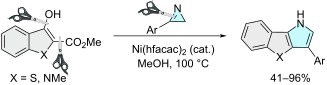
- intermediate formation of free radical species [9]. A similar reaction of N-acetyl substituted indole 9c produced [3 + 2] cycloaddition products 12 in even lower yield (4%). However, the main reaction product turned out to be unstable compound 13, which, nevertheless, was isolated in 40% yield as a single
- mechanisms of the formation of azirindine 16 under Ni(II)- and Cu(I)-catalysis. Oxidative dimerization of non-aromatic cyclic enols has been previously observed in their reactions with 3-arylazirines catalyzed by Cu(I) and Cu(II) complexes and was attributed to the recombination of intermediate free radicals



Facile synthesis of hydantoin/1,2,4-oxadiazoline spiro-compounds via 1,3-dipolar cycloaddition of nitrile oxides to 5-iminohydantoins
Beilstein J. Org. Chem. 2025, 21, 1552–1560, doi:10.3762/bjoc.21.118

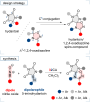
- bioactive fragments into a single molecule through a spacer. An alternative strategy of combining heterocyclic pharmacophores is to incorporate them into a spiro-jointed structure that lacks any intermediate link between the active parts [17]. Despite the fact that these strategies share numerous



General method for the synthesis of enaminones via photocatalysis
Beilstein J. Org. Chem. 2025, 21, 1535–1543, doi:10.3762/bjoc.21.116
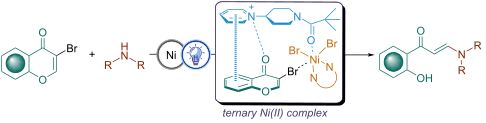
- -mediated reaction for the synthesis of enaminones from 3-bromochromones (Scheme 1D). Initially, a Ni(II)-catalyzed hydroamination protocol affords the intermediate 2-amino-3-bromochromanones, which upon photocatalytic dehalogenation and subsequent opening of the heterocyclic ring provide the corresponding
- semipreparative scale for the reaction of 3-bromochromone (7a, 5.0 mmol) to afford enaminone 9a in a 68% isolated yield (Scheme 3). In terms of the reaction mechanism, TEMPO completely inhibited the reaction, implying the possibility of a radical intermediate in the reaction (Scheme 4A). Moreover, the TEMPO




Ambident reactivity of enolizable 5-mercapto-1H-tetrazoles in trapping reactions with in situ-generated thiocarbonyl S-methanides derived from sterically crowded cycloaliphatic thioketones
Beilstein J. Org. Chem. 2025, 21, 1508–1519, doi:10.3762/bjoc.21.113
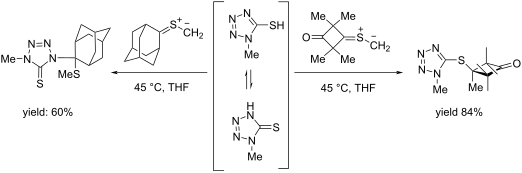
- terminal S‒CH2 position, leading to the formation of the sulfonium cation 11 and the delocalized heterocyclic anion 12 (Scheme 6). In the next step, competitive addition of both intermediate species yields either thioaminals 9 or dithioacetals 10. However, a slow isomerization of the thermodynamically less


Heterologous biosynthesis of cotylenol and concise synthesis of fusicoccane diterpenoids
Beilstein J. Org. Chem. 2025, 21, 1489–1495, doi:10.3762/bjoc.21.111
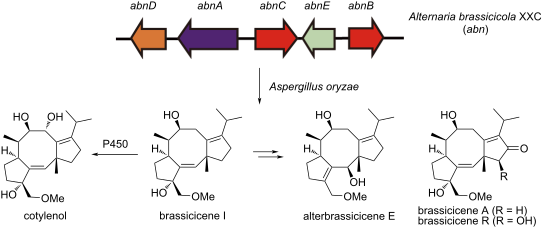
- pathway of brassicicenes in Aspergillus oryzae and harnessing the promiscuity of a cytochrome P450 from the biosynthesis of fusicoccin A (Figure 1b). A key intermediate, brassicicenes I (5), was further used to achieve the collective synthesis of alterbrassicicene E (6), brassicicenes A (7) and R (8
- cotylenin A and cotylenol (Figure 3a). Oxidation of brassicicene I with Dess–Martin reagent afforded intermediate 9 in 92% yield. The tertiary hydroxy group of compound 9 was further protected with a TMS group to provide compound 10 in 90% yield, a key intermediate in the synthesis of cotylenol and
- oxaziridine [25], furnishing intermediate 18 in 72% yield. After deprotection of the TBS and TES groups, brassicicene R (8) was obtained in 70% yield. Therefore, alterbrassicicene E (6) and brassicicenes A (7) and R (8) were synthesized from brassicicene I over 4 or 5 chemical steps. Conclusion In summary


Photoredox-catalyzed arylation of isonitriles by diaryliodonium salts towards benzamides
Beilstein J. Org. Chem. 2025, 21, 1480–1488, doi:10.3762/bjoc.21.110
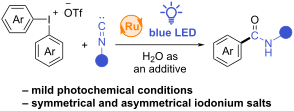
- resulting aryl radical is subsequently captured by an isonitrile molecule, forming an imidoyl radical intermediate X1. The intermediate X1 facilitates the reduction of the Ru(III) species back to Ru(II) thereby completing the photoredox cycle, with the formation of the cationic intermediate X2. We propose


Microwave-enhanced additive-free C–H amination of benzoxazoles catalysed by supported copper
Beilstein J. Org. Chem. 2025, 21, 1462–1476, doi:10.3762/bjoc.21.108
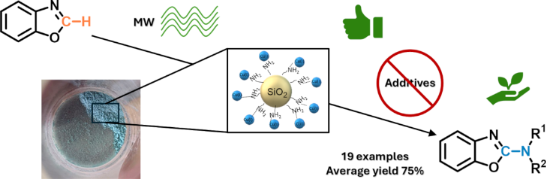
- with the vessel pressurised under nitrogen (Table 2, entry 7). Under these conditions, the yield was 58%, demonstrating the superiority of an open vessel in a multimode cavity for this reaction. Since Cu salts facilitate both the nucleophilic attack of piperidine on benzoxazole to form the intermediate
- contrast, the presence of Cu facilitated the conversion of the intermediate to the desired aromatic benzoxazole 2a, demonstrating copper’s dual role as a Lewis acid in enhancing nucleophilic attack, and as an efficient catalyst for ring-closing oxidative rearomatisation. Of the conditions tested, the use
- of CuCl2 in toluene showed limited effectiveness, achieving 82% conversion but only a 28% yield of the final product. The remaining resulting mixture included 35% of the intermediate 2a-o and 19% of the hydrolysed product 2a-o-hydrol. However, the reaction performance in acetonitrile improved



Tautomerism and switching in 7-hydroxy-8-(azophenyl)quinoline and similar compounds
Beilstein J. Org. Chem. 2025, 21, 1404–1421, doi:10.3762/bjoc.21.105
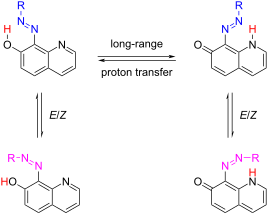
- , populating both KE and KK, which undergo ground-state PT to E and K, respectively. Therefore, it is crucial to have the intermediate keto tautomers KE and KK higher in energy in the ground state, comparing to the paired terminal E and K, respectively, in order to provide efficient switching. The additional




Oxetanes: formation, reactivity and total syntheses of natural products
Beilstein J. Org. Chem. 2025, 21, 1324–1373, doi:10.3762/bjoc.21.101
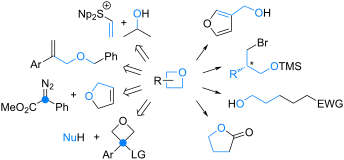
- /RPC mechanism starts with a single-electron oxidation of the cobalt catalyst followed by a reaction with the siloxane to generate a cobalt–hydride complex. Subsequent hydride transfer to the alkene produces radical pair 23 which collapses to alkylcobalt intermediate 24. Another single-electron
- intramolecular E2 elimination. Finally, the importance and power of the intramolecular Williamson etherification has also been demonstrated by the kilogram-scale synthesis of oxetane intermediate 41, which is a key intermediate in the preparation of the previously mentioned IDO1 inhibitor 2 (Scheme 9) [16
- , and 6-endo cyclization pathways – this may be attributed to precoordination of the Cu(I) catalyst to the alkoxide, which facilitates oxidative addition into the C–Br bond and results in the formation of a favorable five-membered Cu-containing intermediate [48]. Ten years later, while developing the








Recent advances in amidyl radical-mediated photocatalytic direct intermolecular hydrogen atom transfer
Beilstein J. Org. Chem. 2025, 21, 1306–1323, doi:10.3762/bjoc.21.100
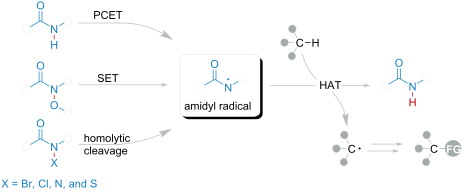
- it into the byproduct 46 and generating a carbon-centered radical 62. Species 62 is trapped by heteroarene 60, leading to the formation of the intermediate 63. This intermediate 63 undergoes SET and proton transfer with the assistance of O-anion 64 and the Br-5CzBN+• radical cation, delivering the
- abstracts a hydrogen atom from substrate 1 through HAT, producing an α-amido-acridinyl radical intermediate 92 and a substrate-derived carbon-centered radical 4. Radical 4 undergoes regioselective addition to the acceptor, forming transient radical adduct 93. A concomitant SET from 92 to 93 generates a






Recent advances and future challenges in the bottom-up synthesis of azulene-embedded nanographenes
Beilstein J. Org. Chem. 2025, 21, 1272–1305, doi:10.3762/bjoc.21.99
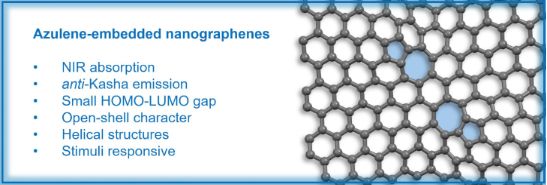
- -known Ziegler–Hafner azulene synthesis [35]. The key step in this method involves the synthesis of the intermediate pentafulvene, which is subsequently cyclized to yield the target azulene. An example of this strategy is the synthesis of the azulene-embedded isomer of benzo[a]pyrene which was reported
- acenes from anthracene to pentacene (57a–d) in rather low yields (16–38%). The synthetic pathway leading to the hexacene isomer 60 was more complex due to the high reactivity of intermediate pentacenes. Instead, pentacene-6,13-dione 58 was subjected to the reaction with di-n-butylacetylene (56) giving
- constructed by condensation of dialdehyde 160 with compounds 161–163 yielding diketones 164–166. Next, diketones 164–166 were subjected to nucleophilic addition reaction by lithiated triisopropylsilyl (TIPS) acetylene, followed by SnCl2-mediated reduction of the intermediate diols. Finally, azulene-embedded




Recent advances in oxidative radical difunctionalization of N-arylacrylamides enabled by carbon radical reagents
Beilstein J. Org. Chem. 2025, 21, 1207–1271, doi:10.3762/bjoc.21.98
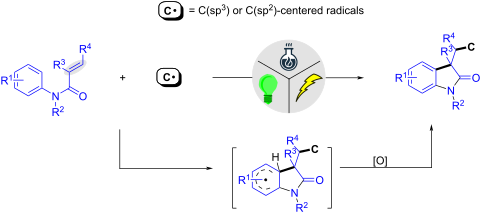
- radical A. This is followed by the conversion of a substrate containing C(sp3)–H bonds adjacent to an oxygen atom into an alkyl radical intermediate B. The alkyl radical intermediate then adds to the C=C bond of N-arylacrylamide, generating a second alkyl radical intermediate C, which undergoes
- intramolecular cyclization to form a benzene ring radical intermediate D. Finally, hydrogen abstraction from the radical intermediate by Fe3+(OH) leads to the formation of oxindole compounds 5. A similar reaction was reported by Liang’s group in the same year, as shown in Scheme 4. The study introduced a metal
- intermediate 12. Subsequent intramolecular cyclization and oxidative aromatization lead to the final isoxazoline-featured oxindole 9. In 2017, Li’s group reported an oxidative divergent bicyclization of 1,n-enynes through α-C(sp3)–H functionalization of alkyl nitriles using a Sc(OTf)3 and Ag2O system (Scheme 7












Optimized synthesis of aroyl-S,N-ketene acetals by omission of solubilizing alcohol cosolvents
Beilstein J. Org. Chem. 2025, 21, 1201–1206, doi:10.3762/bjoc.21.97
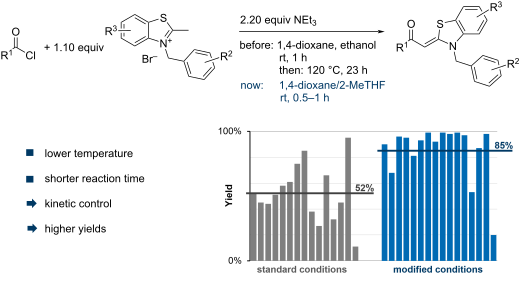
- deprotonation, followed by chloride elimination/neutralization from the zwitterionic tetrahedral intermediate 5 to give the target molecule 1. The standard protocol for the synthesis of (hetero)aroyl-S,N-ketene acetals 8 from (hetero)aroyl chlorides 6 and 2-methylbenzothiazolium salts 7 employs a twofold excess
- of an amine base in a binary 1,4-dioxane/ethanol mixture. Ethanol was used as a cosolvent to ensure solubility of the polar intermediate according to the mechanistic rationale (Scheme 2) [5][6]. Although, a broad scope of diversely substituted (hetero)aroyl-S,N-ketene acetals 8 was obtained (111
- addition, since condensations are affected by the bimolecular addition as an elementary step, special attention to the concentration of the nucleophiles has to be paid. According to Mayr’s nucleophilicity scales [8][9][10], a nucleophilicity parameter N for the specific S,N-ketene acetal intermediate 4 can


Synthesis of β-ketophosphonates through aerobic copper(II)-mediated phosphorylation of enol acetates
Beilstein J. Org. Chem. 2025, 21, 1192–1200, doi:10.3762/bjoc.21.96
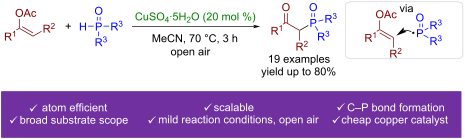
- radicals and product 3 can be described by several pathways. The direct oxidation of 2 by Cu(II) A leads to the formation of P-centered radical E and Cu(I) B. Under air atmosphere, the formed Cu(I) species B can react with molecular oxygen resulting in the formation of peroxycopper intermediate C [75][76
- hydroperoxide transfer from copper complex D with the formation of intermediate H and, therefore, regenerating Cu(I) B. Alternatively, the latter can be formed by oxidation of benzylic radical G with the formation of carbocation I. However, given that in the absence of oxygen the β-ketophosphonate was formed


Enhancing chemical synthesis planning: automated quantum mechanics-based regioselectivity prediction for C–H activation with directing groups
Beilstein J. Org. Chem. 2025, 21, 1171–1182, doi:10.3762/bjoc.21.94
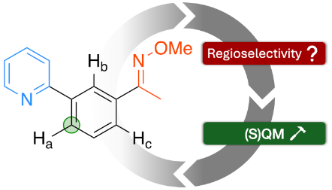
- directing group facilitates this step as it stabilizes the complex through coordination to the Pd atom, thereby lowering the reaction barrier. A depiction of the CMD step is shown in Figure 1. Upon C–H bond breaking, the Pd atom moves into the plane of the aromatic ring, forming a palladacycle intermediate
- and carboxylic acid. The palladacycle intermediate can undergo further (coupling) reactions and form a variety of products via reductive elimination. In previous studies, the rate- and regioselectivity-controlling step was identified as the formation of the palladacycle [5][6][7]. The regioselectivity
- be predicted by calculation and comparison of the relative energies of the proceeding palladacycle intermediate, as postulated in the Bell–Evans–Polanyi (BEP) principle [10][11]. Focussing on the intermediates allows for easier automation of the calculations since a minimum instead of a saddle point





