Search results
Search for "preparation" in Full Text gives 2117 result(s) in Beilstein Journal of Organic Chemistry. Showing first 200.
Orthogonal photoswitching of heterobivalent azobenzene glycoclusters: the effect of glycoligand orientation in bacterial adhesion
Beilstein J. Org. Chem. 2025, 21, 736–748, doi:10.3762/bjoc.21.57
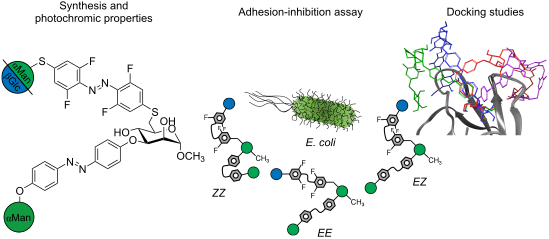
- potency as inhibitors of Man-specific bacterial adhesion investigated. Results and Discussion Synthesis For the preparation of the homobivalent glycocluster 6αMan3αMan 2, the known mannosyl thioacetate 7 [31] was prepared from the trichloroacetimidate 6 [32] and thioacetic acid in an α-selective reaction


Recent advances in allylation of chiral secondary alkylcopper species
Beilstein J. Org. Chem. 2025, 21, 639–658, doi:10.3762/bjoc.21.51
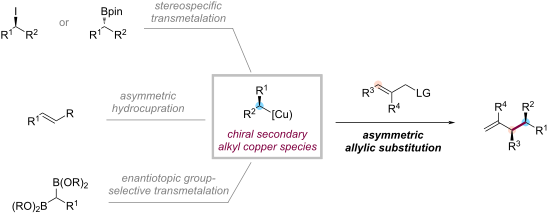
- , including non-toxicity, bench-stability, structural diversity, straightforward preparation, and broad commercial availability. Significant contributions include Sawamura's work with alkyl–9-BBN [32][33][34][35][36][37] as a nucleophile. These developments have collectively transformed copper-catalyzed AAA
- (+)-lasiol was achieved through a highly selective SN2 substitution (SN2/SN2' = >99:1, dr = 98:2, 99% ee), while the preparation of (+)-13-norfaranal and (+)-faranal showcased the versatility of the methodology in constructing more complex terpene frameworks. These successful applications in natural product




Entry to 2-aminoprolines via electrochemical decarboxylative amidation of N‑acetylamino malonic acid monoesters
Beilstein J. Org. Chem. 2025, 21, 630–638, doi:10.3762/bjoc.21.50
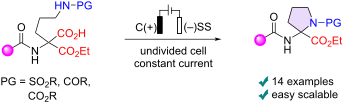
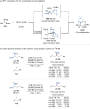
- mM concentration, respectively, in 5:1 MeCN/H2O (0.1 M Et4N–BF4). B) Anodic oxidation of pyrrolidine 6a. Plausible mechanism for formation of pyrrolidine 6a and hemiaminal 10a. Preparation of malonic acid monoester 9a. Electrolysis of acid 9d in deuterated solvents. Scope of the decarboxylative



Semisynthetic derivatives of massarilactone D with cytotoxic and nematicidal activities
Beilstein J. Org. Chem. 2025, 21, 607–615, doi:10.3762/bjoc.21.48
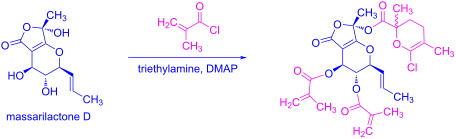
- ]. Semisynthesis of massarilactone D derivatives Preparation of compound 2 Massarilactone D (1, 15 mg, 0.062 mmol) was dissolved in CH2Cl2 (10 mL). Triethylamine (20 μL) and methacryloyl chloride (30 μL, 0.31 mmol) were added to the solution. After adding a catalytic amount of 4-dimethylaminopyridine, the reaction
- (C-4a), 83.7 (C-2), 82.3 (C-2'), 69.9 (C-3), 62.3 (C-4), 31.4 (C-3'), 26.0 (C-4'), 25.1 (Me-2'), 23.5 (C-11), 18.3 (Me-2''), 18.2 (Me-5'), 18.1 (C-10, Me-2'''); HRESIMS (m/z): [M + Na]+ calcd for C27H31O10NaCl+, 573.1498; found, 573.1495. Preparation of compounds 3 and 4 Massarilactone D (1, 15 mg
- '''), 129.3 (C-5', C-9'), 124.2 (C-8), 117.9 (C-2', C-2'', C-2'''), 100.9 (C-7), 99.3 (C-4a), 83.2 (C-2), 69.7 (C-3), 62.2 (C-4), 23.6 (C-11), 18.2 (C-10); HRESIMS (m/z): [M + H]+ calcd for C38H32O9+, 633.2119; found, 633.2077. Preparation of compound 5 Massarilactone D (1, 15 mg, 0.062 mmol) was dissolved in


Study of the interaction of 2H-furo[3,2-b]pyran-2-ones with nitrogen-containing nucleophiles
Beilstein J. Org. Chem. 2025, 21, 556–563, doi:10.3762/bjoc.21.44
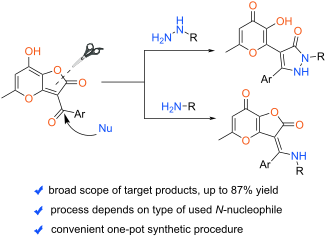
- unambiguously confirmed by X-ray diffraction. Keywords: allomaltol; enamines; 2H-furo[3,2-b]pyran-2-ones; pyrazol-3-ones; recyclization; Introduction Substituted furan-2(5H)-ones (butenolides) are widely used as precursors for the preparation of diverse types of heterocyclic compounds possessing various
- communication we investigated the interaction of substituted 2H-furo[3,2-b]pyran-2-ones 1 with nitrogen-containing nucleophiles (Scheme 1b, this work). As a result, the general approach to preparation of pyrazolones with a 3-hydroxy-4-pyranone unit was developed. It’s important to underline that both pyrazolone
- elaborated above for the preparation of enamines 4. Interaction of starting compound 1a with hydrazine was performed using acetic acid as a solvent at reflux for 8 h. As a result, the appropriate pyrazolone 10a, unsubstituted at both nitrogen atoms, was obtained with 73% yield (Scheme 5b). Based on the


Asymmetric synthesis of β-amino cyanoesters with contiguous tetrasubstituted carbon centers by halogen-bonding catalysis with chiral halonium salt
Beilstein J. Org. Chem. 2025, 21, 547–555, doi:10.3762/bjoc.21.43
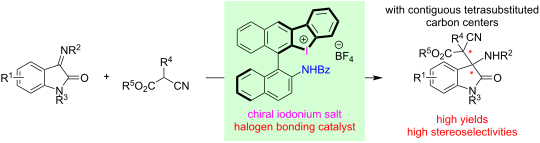
- excellent enantioselectivities (Figure 1c). Despite these successful examples, the construction of only one stereocenter has been reported to date. The Mannich reaction has great importance because of its utility in the preparation of useful chiral molecules such as amines [36], amino acids [37], and amino


Binding of tryptophan and tryptophan-containing peptides in water by a glucose naphtho crown ether
Beilstein J. Org. Chem. 2025, 21, 541–546, doi:10.3762/bjoc.21.42
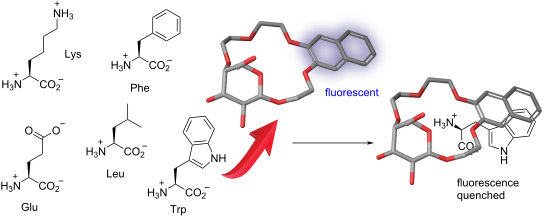
- fluorescence measurements in H2O. Binding affinities of receptor 1 to peptides 2–8 determined by ITC experiments and fluorescence measurements in H2O. Supporting Information Supporting Information File 16: Materials and instruments, synthetic protocols for preparation of peptides 2–8, details of ITC, and


Synthesis of the aggregation pheromone of Tribolium castaneum
Beilstein J. Org. Chem. 2025, 21, 510–514, doi:10.3762/bjoc.21.38
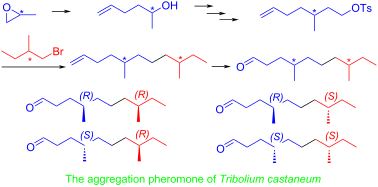
- for (4R,8R)-1, the other constituents of the aggregation pheromone (4R,8S)-1, (4S,8R)-1 and (4S,8S)-1 could be prepared. Based on the retrosynthetic analysis of the aggregation pheromone (4R,8R)-1, our synthesis began with the preparation of chiral tosylate (S)-10 (Scheme 2). The ring-opening reaction


Synthesis of N-acetyl diazocine derivatives via cross-coupling reaction
Beilstein J. Org. Chem. 2025, 21, 490–499, doi:10.3762/bjoc.21.36
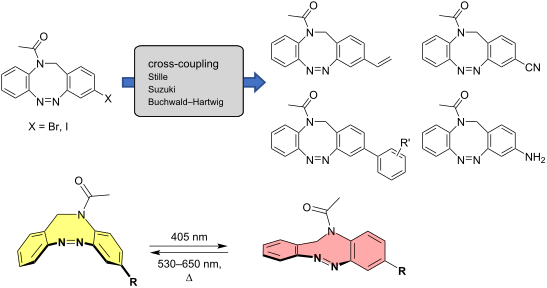
- except the preparation of the aminoaniline building block tert-butyl (2-amino-5-bromophenyl)carbamate (5), which was prepared by Boc-protection of the 5-bromo-2-nitroaniline (6) and subsequent reduction of the nitro group (see Supporting Information File 1, section II.1). Cross-coupling reactions Stille


Organocatalytic kinetic resolution of 1,5-dicarbonyl compounds through a retro-Michael reaction
Beilstein J. Org. Chem. 2025, 21, 473–482, doi:10.3762/bjoc.21.34
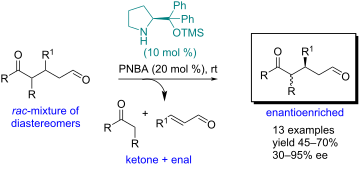
- enantiocontrol [34][35][36][37][38][39]. In our studies on the organocatalytic enantioselective synthesis of 1,5-ketoaldehydes [40], we found that the prolinol derivative A is an outstanding catalyst for the enantioselective preparation of these adducts (Scheme 2). We are currently investigating whether this


New tandem Ugi/intramolecular Diels–Alder reaction based on vinylfuran and 1,3-butadienylfuran derivatives
Beilstein J. Org. Chem. 2025, 21, 444–450, doi:10.3762/bjoc.21.31
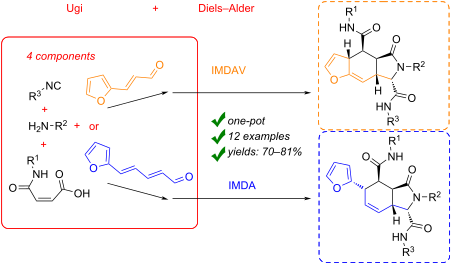
- managed to carry out these two tandem reactions in one-pot, and, thus, proposed a new variant of the Ugi/Diels–Alder tandem reaction, which is highly variable and promising for implementation in combinatorial synthesis. State of the art of Ugi/Diels–Alder reaction based on furan. Preparation of 4,4a




Synthesis of new condensed naphthoquinone, pyran and pyrimidine furancarboxylates
Beilstein J. Org. Chem. 2025, 21, 340–347, doi:10.3762/bjoc.21.24
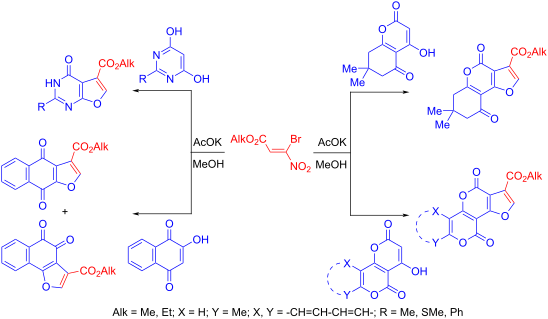
- ]. In addition, we have previously demonstrated the effective use of alkyl 3-bromo-3-nitroacrylates in the preparation of condensed furancarboxylates using potassium acetate as a catalyst [28][29][30]. The present study is aimed at developing methods for the synthesis of a wide range of condensed


Antibiofilm and cytotoxic metabolites from the entomopathogenic fungus Samsoniella aurantia
Beilstein J. Org. Chem. 2025, 21, 327–339, doi:10.3762/bjoc.21.23
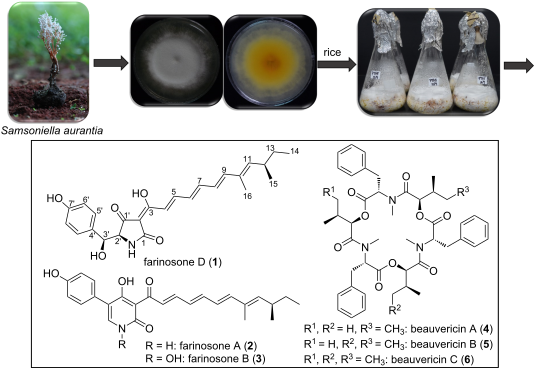
- cytotoxicity assays. The authors also acknowledge W. C. Sum for her eminent support with the fungal extract preparation. Funding This research benefited from the European Union’s H2020 Research and Innovation Staff Exchange program (MSCA-RISE grant no. 101008129, Acronym: MYCOBIOMICS) and from the Southeast


Synthesis and characterizations of highly luminescent 5-isopropoxybenzo[rst]pentaphene
Beilstein J. Org. Chem. 2025, 21, 270–276, doi:10.3762/bjoc.21.19
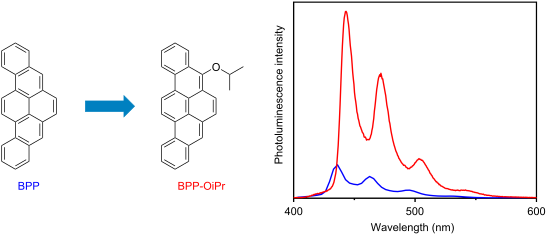
- literature. During our attempt to scale up the preparation of BPP 2 through the "DPEX" reaction, we unexpectedly obtained a 5-isopropoxy-substituted derivative of BPP (BPP-OiPr 3) (Scheme 1), whose structure was proven by NMR, mass spectrometry, and X-ray crystallography. In this work, we optimized the
- and photonics [32][33][34][35]. However, precise preparation and shape control over organic crystals are still elusive targets [36]. We carried out SEM analysis of crystals of BPP-OiPr 3 obtained by slow evaporation of its solution in a mixture of dichloromethane and n-hexane (Figure 3). The formation




Synthesis of disulfides and 3-sulfenylchromones from sodium sulfinates catalyzed by TBAI
Beilstein J. Org. Chem. 2025, 21, 253–261, doi:10.3762/bjoc.21.17
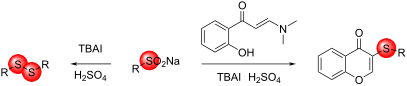
- [48][49]. However, some of the previously reported methods have limitations such as the use of strong oxidants, expensive reagents/catalysts, and lengthy work-up procedures, so there is still a need for simpler and more environmentally friendly methods for the preparation of 3-sulfenylchromones. In




Dioxazolones as electrophilic amide sources in copper-catalyzed and -mediated transformations
Beilstein J. Org. Chem. 2025, 21, 200–216, doi:10.3762/bjoc.21.12
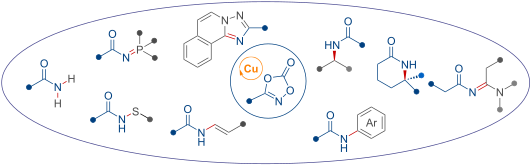
- on both thiols and dioxazolones were well tolerated in late-stage functionalizations, representing excellent chemoselectivity (20e–g). This copper-catalyzed conjugative strategy allows for the modular preparation of biologically relevant N-acyl sulfenamides. Based on several mechanistic experiments
- reaction time of 30 min. Preparation of N-arylamides from dioxazolones and boronic acids using a copper salt. Copper-catalyzed preparation of N-acyl iminophosphoranes from dioxazolones. Copper-catalyzed synthesis of N-acyl sulfenamides. a1.0 equiv of 18 and 2.0 equiv of 19 were used. b2.0 equiv of 18 and
- 1.0 equiv of 19 were used. Copper-catalyzed asymmetric hydroamidation of vinylarenes. a4 mol % + 2 mol % catalyst was used. b4 mol % + 4 mol % catalyst was used. cSlow addition of the amide electrophile solution. Copper-catalyzed anti-Markovnikov hydroamidation of alkynes. Copper-catalyzed preparation


Cu(OTf)2-catalyzed multicomponent reactions
Beilstein J. Org. Chem. 2025, 21, 122–145, doi:10.3762/bjoc.21.7

- the initial formation of imine XII and enamine XIII, reacting each other in a mechanism that involved two Mannich-type reactions (Scheme 15) [32]. Activation of terminal alkynes with Cu(OTf)2 is the key step for the preparation of furoquinoxalines 22 from o-phenylenediamine and ethyl glyoxylate
- reaction is facilitated under microwave irradiation and can be extended to the preparation of an imidazo-fused (benzo)thiazole skeleton 34 starting from (benzo)thiazol-2-ones instead of pyridin-2-ones. Moreover, the Cu(OTf)2 in [bmim]BF4 can be recovered and reused for multiple processes. The key step of
- cascade reaction for the preparation of α-alkoxy-N-alkyltriazoles 44 that was developed starting from aliphatic aldehydes, alcohols, TMSN3 as azide source and alkynes (Scheme 33) [52]. The reaction occurs under mild conditions in acetonitrile at room temperature but is inhibited when using aromatic






Recent advances in organocatalytic atroposelective reactions
Beilstein J. Org. Chem. 2025, 21, 55–121, doi:10.3762/bjoc.21.6
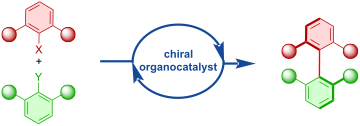
- discovery and medicine [4]. However, a lack of reliable synthetic methods for their preparation hindered the broader application of axially chiral compounds. In recent decades, there has been increased interest in the catalytic syntheses of axially chiral compounds by catalytic [5][6], especially
- kinetic resolution through a Pictet–Spengler reaction, enabled the preparation of axially chiral 8-aryltetrahydroisoquinolines 108 starting from aminobiaryl scaffolds 107 and paraformaldehyde (Scheme 34) [59]. For most substrates, excellent enantioselectivities and moderate to excellent yields were
- , stabilized with an acceptor hydrogen bond to the chiral phosphoric acid. Chen et al. developed an organocatalytic atroposelective preparation of arylquinones 127 and 130 utilizing CPA enantiomers (R)-C23 and (S)-C23 (Scheme 38) [66]. In one case quinones 125 were reacted with 2-naphthols 126 and after






Facile one-pot reduction of β-nitrostyrenes to phenethylamines using sodium borohydride and copper(II) chloride
Beilstein J. Org. Chem. 2025, 21, 39–46, doi:10.3762/bjoc.21.4
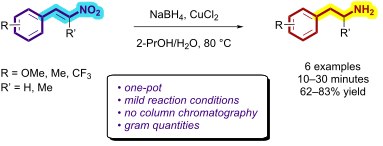
- = 0 by UPLC-MS investigation. Brief comparison between the main traditional synthetic routes for the preparation of substituted phenethylamines from β-nitrostyrene scaffolds and our work. Additional products obtained via this method: nitrobenzene and methyl benzoate are reduced in excellent yields


Emerging trends in the optimization of organic synthesis through high-throughput tools and machine learning
Beilstein J. Org. Chem. 2025, 21, 10–38, doi:10.3762/bjoc.21.3
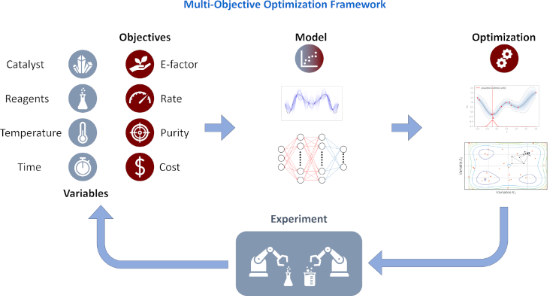
- selection, a dispensing module for solids and liquids, a reaction module capable of heating and stirring, a sample preparation module, and a LC–MS characterization module (Figure 2d). The efficiency of the system has been demonstrated in three reactions types, namely Suzuki–Miyaura coupling, Buchwald


Synthesis, characterization, and photophysical properties of novel 9‑phenyl-9-phosphafluorene oxide derivatives
Beilstein J. Org. Chem. 2024, 20, 3299–3305, doi:10.3762/bjoc.20.274
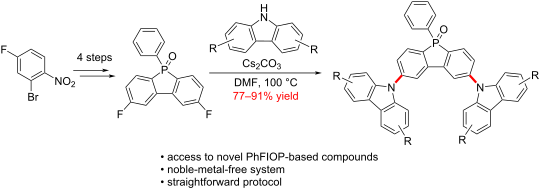
- was achieved in 5 steps starting from commercially available 2-bromo-4-fluoro-1-nitrobenzene (1, Scheme 1 and Scheme 2). For the preparation of the key intermediate 5 (Scheme 1), self-coupling of 1 in the presence of copper followed by reduction of the nitro group generated diamine compound 3 (89
- room temperature. (a) PL spectra of the PhFlOP-based emitters 7 measured in toluene at room temperature. (b) PL spectra of 7-H measured in different solvents at room temperature. Preparation of key intermediate 5. Synthesis of PhFlOP-based molecules 7. Crystal data and structural parameters for 7-H




Synthesis of acenaphthylene-fused heteroarenes and polyoxygenated benzo[j]fluoranthenes via a Pd-catalyzed Suzuki–Miyaura/C–H arylation cascade
Beilstein J. Org. Chem. 2024, 20, 3290–3298, doi:10.3762/bjoc.20.273
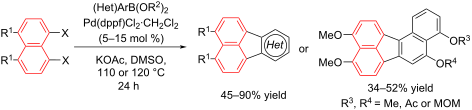
- free naphthol group in high yield (91%). We next turned our attention to the synthesis of benzo[j]fluoranthene 28, which is structurally related to 23, but with a free -OH group at a different position (Scheme 4). Our synthetic sequence commenced with the preparation of the known bromonaphthol 29 in


Reactivity of hypervalent iodine(III) reagents bearing a benzylamine with sulfenate salts
Beilstein J. Org. Chem. 2024, 20, 3281–3289, doi:10.3762/bjoc.20.272
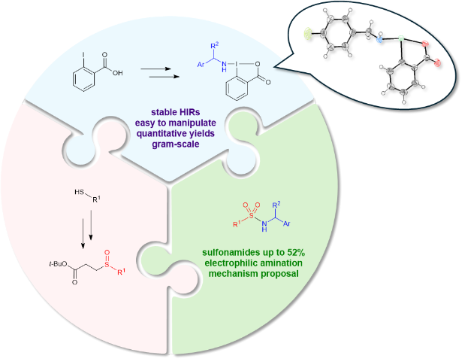
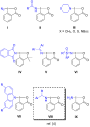
- first report from Zhdankin and co-workers in 1994, described the preparation of azidobenziodoxolone, ABX (I), a reagent widely used in oxidative azide transfer reactions [21]. Years later, Zhdankin’s group also reported the synthesis of amidobenziodoxolone (II) [14]. Other examples of N-containing
- a central theme of the work carried out by our research group in recent years, focusing on the formation of the S–N bond by applying the umpolung reactivity of HIRs, in particular in the preparation of sulfonamides and sulfonyl hydrazides [22][23]. In both approaches, a sulfonyl-containing
- formed by carboxylic acids, enhancing its versatility and effectiveness in drug design [27]. Traditional sulfonamide preparation involves combining sulfonyl chlorides and amines [25][28][29]. Despite the efficiency of traditional methods, challenges still remain, e.g., use of harsh conditions, like



Giese-type alkylation of dehydroalanine derivatives via silane-mediated alkyl bromide activation
Beilstein J. Org. Chem. 2024, 20, 3274–3280, doi:10.3762/bjoc.20.271
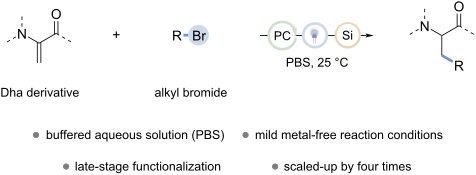
- -protected Michael acceptor, derived from proline, allowed for preparation of compound 27 with a 35% yield in 4 hours without control of diastereoselectivity (dr = 1:1). Finally, to prove that the optimized reaction also works at a larger scale, the model reaction was carried out on a 2.2 mmol scale (Figure



Efficient synthesis of fluorinated triphenylenes with enhanced arene–perfluoroarene interactions in columnar mesophases
Beilstein J. Org. Chem. 2024, 20, 3263–3273, doi:10.3762/bjoc.20.270
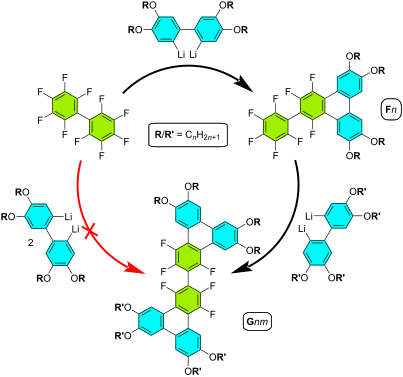
- been studied in various solutions and thin film: G66 emitted green light in solution with an absolute photoluminescent quantum yield of ca. 33%. Results and Discussion Synthesis and characterization We have recently generalized a very efficient “palladium-free” synthesis for the preparation of a
- derivatives: the in situ prepared 2Li-BP5/6 was reacted with F5/6 to yield the symmetrical discotic dimers, G55/G66 respectively, in an average yield of 42–45% (Scheme 1). The reaction of 2Li-BP8 with F4 was also successfully tested, and allowed the preparation of the unsymmetrical discotic dimer G48
- . This documentation describes the methodologies employed for their preparation, the analytical techniques used to confirm their structures, and the data obtained confirming their identities [49]. Two additional compounds were synthesized to complete this study: the derivative with no alkoxy chains (F