


Search results
Search for "sulfonamides" in Full Text gives 105 result(s) in Beilstein Journal of Organic Chemistry.
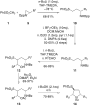
Diastereoselective functionalisation of benzo-annulated bicyclic sultams: Application for the synthesis of cis-2,4-diarylpyrrolidines
Beilstein J. Org. Chem. 2009, 5, No. 69, doi:10.3762/bjoc.5.69
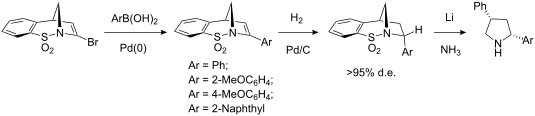
- place to afford cis-2,4-diaryl-substituted pyrrolidines 35–37. Keywords: cyclic sulfonamides; diastereoselective alkene functionalisation; double reduction; Pd-mediated cross coupling; Introduction Substituted pyrrolidine ring systems represent a common structural motif in a range of biologically
- active compounds, including pharmaceutical agents and natural products. In relation to these general targets, we have recently developed a method that enables the construction of aryl-substituted pyrrolidines, featuring the double reduction of cyclic aromatic sulfonamides [1][2][3][4]. As illustrated in
- preparation of 2,4-diaryl-substituted pyrrolidines from more readily available, albeit racemic, substrates. Results and Discussion Bicyclic aromatic cyclic sulfonamides 5a and 5b were formed according to the 3-step sequence previously described [1][2][3][10]. Originally, inclusion of triphenylphosphine was


Enantiospecific synthesis of [2.2]paracyclophane- 4-thiol and derivatives
Beilstein J. Org. Chem. 2009, 5, No. 9, doi:10.3762/bjoc.5.9
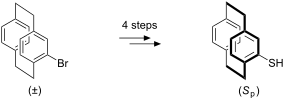
- ]paracyclophane compounds; aryl sulfonylation and the related sulfenylation facilitates the synthesis of sulfonic acids, sulfonamides and protected thiols [24][25][26] whilst directed metallation has allowed the formation of various sulfides [27][28][29][30]. Very few methodologies allow the synthesis of simple


N-Arylation of amines, amides, imides and sulfonamides with arylboroxines catalyzed by simple copper salt/EtOH system
Beilstein J. Org. Chem. 2008, 4, No. 40, doi:10.3762/bjoc.4.40
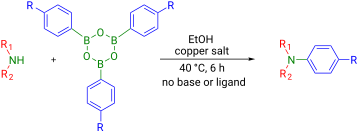
- , imides and sulfonamides catalyzed by a copper salt/EtOH system has been developed. In the absence of a base or additive the corresponding N-arylation products were obtained in moderate to excellent yields. Keywords: N-arylation; arylboroxine; copper salt; cross-coupling; ethanol; Introduction The
- ). Furthermore, we expand the substrate scope of this reaction: a variety of amines, amides, imides and sulfonamides with arylboroxine can also participate in this catalytic system to give the corresponding N-arylation products in moderate to excellent yields. To the best of our knowledge, N-arylation of NH
- reaction. In an endeavor to expand the scope of the above methodology, the catalytic system was also applied to imides, amines, amides and sulfonamides. Such coupling was found to give the desired N-arylation products in moderate yields, as shown in Table 5, except for sulfonamide, which afforded the


The enantiospecific synthesis of (+)-monomorine I using a 5-endo- trig cyclisation strategy
Beilstein J. Org. Chem. 2007, 3, No. 39, doi:10.1186/1860-5397-3-39
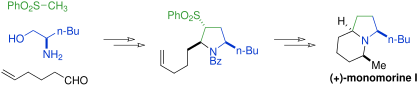
- tosyl moiety as the nitrogen-protecting group (PG) and resulted in a succinct synthesis of alkenes of the type 4 (X = NTs; Scheme 1). [15] Disappointingly, all attempts to ring-close the sulfonamides proved fruitless, and it was found that desulfonylation was necessary before cyclisation could be




Synthesis of sulfonimidamides from sulfinamides by oxidation with N-chlorosuccinimide
Beilstein J. Org. Chem. 2007, 3, No. 25, doi:10.1186/1860-5397-3-25
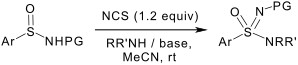
- % yield. Conclusion A convenient alternative procedure for the synthesis of sulfonimidamides from sulfinamides and various amines and sulfonamides using N-chlorosuccinimide as halogenating agent has been developed. Introduction Sulfonimidamides 3 are derivatives of sulfonic acid and analogous of
- sulfonamides, in which one oxygen has been replaced by a nitrogen group. They are known since 1962,[1] and a number of recent investigations focussed on both their reactivity and application in organic synthesis, such as nitrogen sources for metal-catalyzed nitrene transfer reactions, [2][3][4][5] and their


Other Beilstein-Institut Open Science Activities



