Search results
Search for "13C" in Full Text gives 2038 result(s) in Beilstein Journal of Organic Chemistry. Showing first 200.
Synthesis of fluorinated acid-functionalized, electron-rich nickel porphyrins
Beilstein J. Org. Chem. 2024, 20, 2954–2958, doi:10.3762/bjoc.20.248
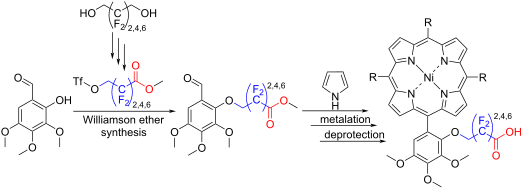
- Information File 42: Experimental procedures, characterization data of all products, and copies of 1H, 13C, and 19F NMR spectra. Acknowledgements We thank Dr. Claus Bier for the help with the HPLC–ESIMS measurements.


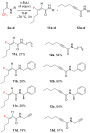
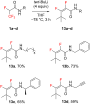
gem-Difluorovinyl and trifluorovinyl Michael acceptors in the synthesis of α,β-unsaturated fluorinated and nonfluorinated amides
Beilstein J. Org. Chem. 2024, 20, 2946–2953, doi:10.3762/bjoc.20.247
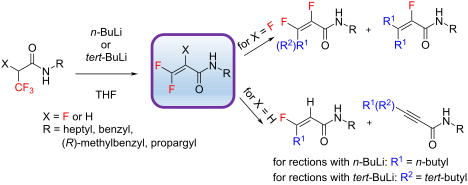
- experimental procedures, DFT calculations, characterization data, and copies of 1H, 13C, 19F NMR and 1H−13C HSQC spectra. Acknowledgements The calculations were performed in the Poznan Supercomputing and Networking Center.




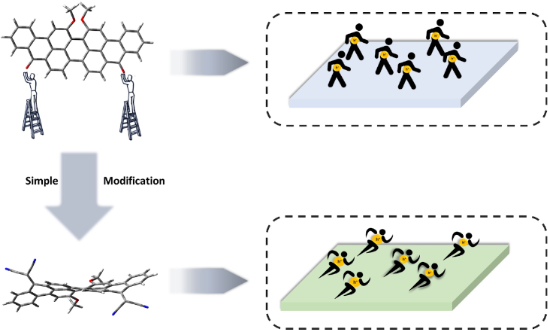
The charge transport properties of dicyanomethylene-functionalised violanthrone derivatives
Beilstein J. Org. Chem. 2024, 20, 2921–2930, doi:10.3762/bjoc.20.244
- solid (440 mg, 60%). 1H NMR (400 MHz, CDCl3) δ 8.79 (d, J = 8.0 Hz, 2H), 8.65 (d, J = 8.1 Hz, 2H), 8.56 (d, J = 7.6 Hz, 2H), 8.40 (d, J = 7.8 Hz, 2H), 8.30 (s, 2H), 7.82 (t, J = 7.6 Hz, 2H), 7.62 (t, J = 7.4 Hz, 2H), 4.05 (m, 4H), 1.77 (m, 2H), 1.38 (m, 16H), 0.93–0.51 (m, 12H); 13C NMR (100 MHz, CDCl3
- (br, 4H), 1.94–1.80 (m, 4H), 1.34 (d, J = 90.2 Hz, 20H), 0.82 (d, J = 6.9 Hz, 6H); 13C NMR (100 MHz, CDCl3) δ 183.2, 156.3, 135.6, 134.5, 133.2, 131.0, 129.4, 128.6, 128.3, 127.7, 127.5, 127.1, 123.6, 123.2, 122.7, 117.2, 113.5, 69.8, 31.9, 29.9, 29.6, 29.5, 26.2, 22.8, 14.2; HRESIMS (m/z): [M + Na
- Hz, 2H), 8.57 (d, J = 7.7 Hz, 2H), 8.39 (d, J = 8.0 Hz, 2H), 8.30 (s, 2H), 7.81 (t, J = 7.4 Hz, 2H), 7.62 (t, J = 7.6 Hz, 2H), 4.26 (s, 4H), 1.92–1.72 (m, 4H), 1.55–1.02 (m, 36H), 0.86 (t, J = 6.8 Hz, 6H); 13C NMR (100 MHz, CDCl3) δ 183.2, 156.4, 135.6, 134.5, 133.2, 131.1, 129.5, 128.6, 128.3, 127.8


Synthesis of pyrrole-fused dibenzoxazepine/dibenzothiazepine/triazolobenzodiazepine derivatives via isocyanide-based multicomponent reactions
Beilstein J. Org. Chem. 2024, 20, 2870–2882, doi:10.3762/bjoc.20.241
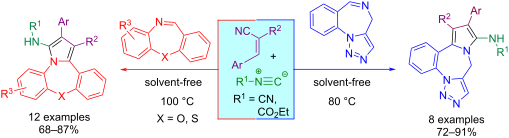
- product compared to the substitution of phenyl (Scheme 4, 6c). Furthermore, n-butyl isocyanide was used to increase the variety of products and the n-butyl-substituted products 6f–h were obtained with 72–78% yield . All the products were characterized by 1H NMR, 13C NMR, and infrared spectroscopy, and
- . The signal at δ = 3.42 is the NH group. All the protons of the aromatic rings are located from δ = 7.10 to 7.99. In its 13C NMR spectrum, all of the carbon signals appear at δ = 158.3, 152.5, 134.7, 134.2, 133.9, 133.2, 130.8, 130.4, 129.2, 129.1, 129.0 128.9, 128.4, 127.4, 125.8, 122.6, 121.1, 120.6
- δ = 4.65 and δ = 5.84 ppm corresponding to hydrogen I and hydrogen II. Remarkably, at higher temperatures (85 °C), the rapid inversion of the seven-membered ring results in it being observed as a single structure on the 1H NMR time scale (see Figure 3, spectrum F) [19][47][48]. Furthermore, 13C NMR






Synthesis of tricarbonylated propargylamine and conversion to 2,5-disubstituted oxazole-4-carboxylates
Beilstein J. Org. Chem. 2024, 20, 2827–2833, doi:10.3762/bjoc.20.238

- . Ltd. and purified by distillation. 1H and 13C{1H} NMR spectra were recorded on a JEOL JMN-ECZ400S spectrometer (400 MHz and 100 MHz, respectively) using TMS as internal standard. The assignments of the 13C{1H} NMR signals were reaffirmed by DEPT experiments. IR spectra were recorded with a JASCO FT/IR
- MHz, CDCl3, δ) 7.78 (d, J = 8.0 Hz, 2H), 7.65 (br s, 1H), 7.48 (d, J = 8.0 Hz, 2H), 7.32–7.25 (m, 5H), 4.37 (q, J = 7.2 Hz, 4H), 2.40 (s, 3H), 1.35 (t, J = 7.2 Hz, 6H); 13C{1H} NMR (100 MHz, CDCl3, δ) 165.6 (C), 165.3 (C), 142.8 (C), 130.2 (C), 129.4 (CH), 128.9 (CH), 128.2 (CH), 127.5 (CH), 122.0 (C
- , 92.2 mg, 0.29 mmol, 82% yield) as colorless oil. 1H NMR (400 MHz, CDCl3, δ) 7.88 (d, J = 8.4 Hz, 2H), 7.35–7.22 (m, 7H), 4.45 (s, 2H), 4.42 (q, J = 7.2 Hz, 2H), 2.39 (s, 3H), 1.40 (t, J = 7.2 Hz, 3H); 13C{1H} NMR (100 MHz, CDCl3, δ) 162.0 (C), 160.7 (C), 157.6 (C), 141.8 (C), 136.4 (C), 129.4 (CH


Synthesis and antimycotic activity of new derivatives of imidazo[1,2-a]pyrimidines
Beilstein J. Org. Chem. 2024, 20, 2806–2817, doi:10.3762/bjoc.20.236
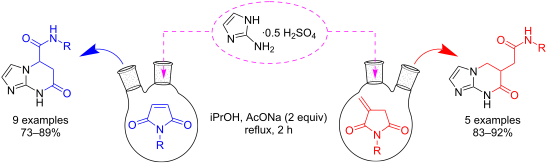
- imidazole nucleophilic center not involved in the first step. This process leads to the formation of alternative final products: imidazo[1,2-a]imidazoles 10 and 12, imidazo[1,5-a]pyrimidines 4, 5, 11 and 14, and imidazo[1,2-a]diazines 13 and 15. The analysis of the spectral data (1H and 13C NMR, 2D NMR
- unambiguous assignment of the signals for the methine and methylene groups of compounds 4 and 5 was carried out based on the correlations found in the NOESY 1H,1H and HMBC 1H,13C spectra. As an example, the key correlation interactions for compounds 4d and 5d are depicted in Figure 3. Thus, in the NOESY


C–C Coupling in sterically demanding porphyrin environments
Beilstein J. Org. Chem. 2024, 20, 2784–2798, doi:10.3762/bjoc.20.234
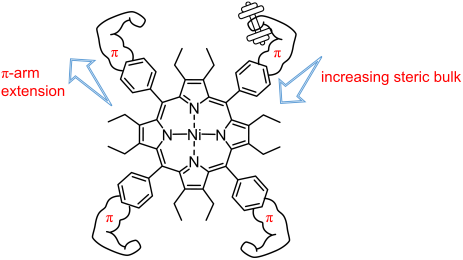
- the existence of this structure in solution was obtained from VT-NMR studies (Figure S51 and Figure S52 in Supporting Information File 1), with asymmetry observed in the β-ethyl CH3 resonances δH = 0.58 and 0.73 ppm and peak broadening in both the aromatic region and the {1H}13C NMR spectra
- borylation of porphyrin 13 to yield 46. Mean geometrical parameters of OET-meta/para-ArylPP and out-of-plane and in-plane distortion magnitudes. Supporting Information Supporting Information File 9: Experimental methods, synthetic procedures, 1H, 11B and 13C NMR, VT-NMR, UV–vis, IR, HRMS (m/z)-APCI and HRMS


Access to optically active tetrafluoroethylenated amines based on [1,3]-proton shift reaction
Beilstein J. Org. Chem. 2024, 20, 2776–2783, doi:10.3762/bjoc.20.233
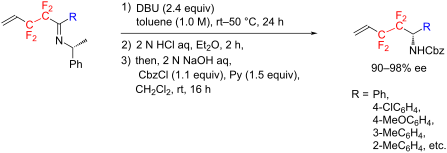
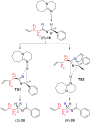
- reaction mechanism. Investigation of the reaction conditions. Supporting Information Supporting Information File 3: Full experimental details, 1H, 13C, 19F NMR spectra of 16a–g and 23a–g, and HPLC charts of racemic as well as chiral compounds 23a–g. Supporting Information File 4: Crystallographic



Copper-catalyzed yne-allylic substitutions: concept and recent developments
Beilstein J. Org. Chem. 2024, 20, 2739–2775, doi:10.3762/bjoc.20.232
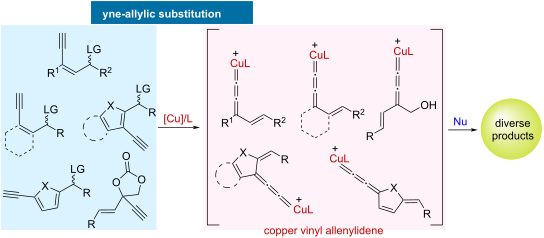
- shuttling (Scheme 53, 51a–k). Furthermore, they established a Cu-catalyzed asymmetric multicomponent reaction for yne-allylic substitution, seamlessly integrating 13C-labeled CO2 into enantiomerically pure products (Scheme 54, 51a, 51c, 51f, 51g). This methodology enabled the synthesis of diverse, high


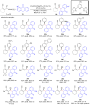


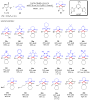


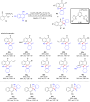


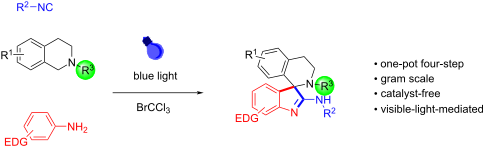
Synthesis of spiroindolenines through a one-pot multistep process mediated by visible light
Beilstein J. Org. Chem. 2024, 20, 2722–2731, doi:10.3762/bjoc.20.230
- laboratory, and the results will be reported in due course. Experimental General methods 1H, 13C and 19F NMR spectra were recorded on a JEOL 400 spectrometer (at 400 MHz, 101 MHz and 376 MHz, respectively). Unless otherwise stated, NMR spectra were recorded using residual solvent as the internal standard; 1H
- NMR: TMS = 0.00; (CD3)2SO = 2.50; and 13C NMR: CDCl3 = 77.16; (CD3)2SO = 39.52. Data for 1H NMR spectra are reported as follows: chemical shift (δ ppm), multiplicity, coupling constants (Hz) and integration. Data for 13C NMR spectra are reported in terms of chemical shift (δ ppm). Interpretation of
- without further purification. Graphene oxide (GO) was purchased from Graphenea. All products were characterized by 1H,13C, 19F (when fluorine is present) NMR, IR and HRMS. General procedure for the one-pot synthesis of spiro[indole-isoquinoline] 3a: A solution of N-phenyltetrahydroisoquinoline (1 equiv





Synthesis of benzo[f]quinazoline-1,3(2H,4H)-diones
Beilstein J. Org. Chem. 2024, 20, 2708–2719, doi:10.3762/bjoc.20.228
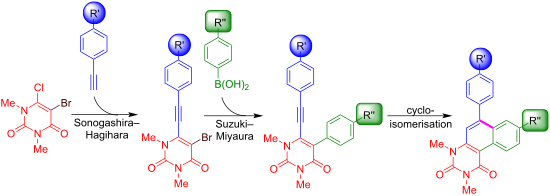
- , bathochromically shifted absorption and emission spectra with elevated extinction coefficients and quantum yields up to 71%. Further studies will be directed to the synthesis to polycyclic, π-conjugated uracil derivatives. Experimental General information Nuclear magnetic resonance spectra (1H/13C/19F NMR) were
- –7.41 (m, 2H), 7.41–7.36 (m, 2H), 7.34–7.29 (m, 2H), 7.24–7.21 (m, 2H), 3.71 (s, 3H), 3.45 (s, 3H); 13C {1H} NMR (126 MHz, chloroform-d) δ 162.1, 151.6, 134.3, 133.2, 131.9, 130.9, 130.5, 128.7, 128.3, 128.0, 120.7, 119.0, 104.2, 81.0, 34.6, 28.7; EIMS (70 eV) m/z (%): 315 (100, M+), 258 (26), 230 (67
- ) δ −113.3, −106.3; 13C {1H} NMR (126 MHz, chloroform-d) δ 163.9 (d, J = 253.7 Hz), 162.7 (d, J = 247.8 Hz), 162.0, 151.5, 134.3, 134.1 (d, J = 9.0 Hz), 132.8 (d, J = 8.2 Hz), 129.1 (d, J = 3.3 Hz), 117.9, 116.6 (d, J = 3.6 Hz), 116.4 (d, J = 22.4 Hz), 115.1 (d, J = 21.6 Hz), 103.3, 80.7, 34.7, 28.7




Synthesis of fluoroalkenes and fluoroenynes via cross-coupling reactions using novel multihalogenated vinyl ethers
Beilstein J. Org. Chem. 2024, 20, 2691–2703, doi:10.3762/bjoc.20.226

- and 3 as new fluorine-containing building blocks. Experimental General information 1H NMR, 19F NMR, and 13C NMR spectra were recorded on JEOL ECZ 400S spectrometers. Chemical shifts of 1H NMR are reported in ppm from tetramethylsilane (TMS) as an internal standard. Chemical shifts of 13C NMR are
- purified by column chromatography and preparative TLC (hexane only), and obtained in 96% yield (122.0 mg) as a pale yellow oil; 1H NMR (400 MHz, CDCl3) δ 7.04–7.22 (m, 2H), 7.26–7.50 (m, 6H), 7.55–7.69 (m, 2H); 13C NMR (100 MHz, CDCl3) δ 101.4 (d, J = 30.9 Hz), 102.5 (d, J = 48.0 Hz), 116.5 (d, J = 3.8 Hz
- , J = 8.0 Hz, 2H), 7.07–7.15 (m, 2H), 7.16–7.23 (m, 1H) , 7.33–7.42 (m, 1H); 13C NMR (100 MHz, CDCl3) δ −0.36, −0.26, 85.2 (d, J = 44.8 Hz), 85.6 (d, J = 53.3 Hz), 94.5 (d, J = 47.8 Hz), 94.6 (d, J = 43.5 Hz), 103.7 (d, J = 63.4 Hz), 103.8 (d, J = 66.3 Hz), 117.2, 117.3, 125.2, 125.3, 130.0, 130.1


Transition-metal-free decarbonylation–oxidation of 3-arylbenzofuran-2(3H)-ones: access to 2-hydroxybenzophenones
Beilstein J. Org. Chem. 2024, 20, 2655–2667, doi:10.3762/bjoc.20.223
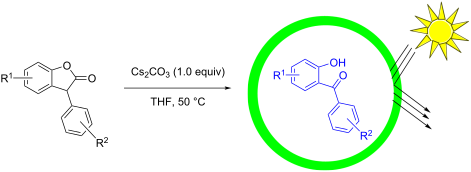
- characterized using 1H NMR, 13C NMR, FTIR spectroscopy, and elemental analysis. Next, in a model experiment, we carried out the decarbonylation–oxidation reaction of 5-methyl-3-phenylbenzofuran-2(3H)-one (3ba) using different bases in different solvents (Table 1) under open atmospheric conditions. In the
- over anhydrous Na2SO4. FTIR spectra were recorded as films with a Bruker Tensor II spectrophotometer. The 1H and 13C NMR spectra were recorded with a Varian 500 MHz NMR spectrometer, and were processed using Bruker TOPSPIN software. Melting points (mp) were measured on a Büchi B-540 apparatus. X-ray
- File 10: Characterization data of compounds 3aa–ma, 4aa–ma, and 5. 1H and 13C NMR spectra of 3aa–ma, 4aa–ma, and 5; single crystal data of 4ja, 4fb, and 4ma; UV–vis absorption spectra and optical properties of 4aa–ma. Acknowledgements The authors acknowledge Dr. Sudip Gorai, BARC, for his help in




The scent gland composition of the Mangshan pit viper, Protobothrops mangshanensis
Beilstein J. Org. Chem. 2024, 20, 2644–2654, doi:10.3762/bjoc.20.222
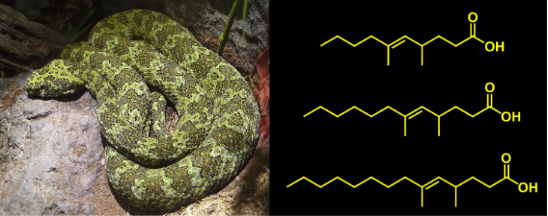
- ) and C-6-methyl (1.56 ppm) and was assigned as the E-diastereomer. This assignment is further supported by the 13C NMR spectra. The major diastereomer shows C-7 at 39.7 ppm, a typical value for (E)-configured aliphatic chains with allylmethyl groups [29], while the (Z)-isomers show values around 30 ppm
- column chromatography [28]. Yellow oil: 1.95 g (45% over 2 steps); 1H NMR (CDCl3, 300 MHz) δ 9.64 (s, 1H), 3.68 (s, 3H), 2.40 (m, 3H), 2.07 (m, 1H), 1.70 (m, 1H), 1.13 (d, J = 7 Hz, 3H); 13C NMR (CDCl3, 75 MHz) δ 200.9, 173.4, 51.6, 45.5, 31.2, 25.3, 13.2; EIMS (70 eV) m/z (%): 116 (10), 113 (15), 112
- (18%); 1H NMR (CDCl3, 500 MHz) δ 4.83 (d, J = 12 Hz, 1H), 3.65 (s, 3H), 2.40–2.30 (m, 1H), 2.3–2.2 (m, 2H), 2.05–1.90 (m, 2H), 1.66 (d, J = 13 Hz, 1.2H), 1.56 (d, J = 13 Hz, 1.8H), 1.38–1.21 (m, 10H), 0.93 (d, J = 7 Hz, 1.2H), 0.93 (d, J = 1.8 Hz, 1.8H), 0.88 (t, J = 14 Hz, 3H); 13C NMR (CDCl3, 125


Efficient modification of peroxydisulfate oxidation reactions of nitrogen-containing heterocycles 6-methyluracil and pyridine
Beilstein J. Org. Chem. 2024, 20, 2599–2607, doi:10.3762/bjoc.20.219
- classes. Experimental 1H and 13C NMR spectra were recorded on a Bruker Avance III 500 MHz spectrometer at 500.13 MHz (1H) and 125.73 MHz (13C) with 5 mm QNP sensors at a constant sample temperature of 298 K. The solvents were DMSO-d6, D2O, CDCl3 and the internal standard was SiMe4. Chemical shifts in the
- 13C and 1H NMR spectra are given in parts per million (ppm). Elemental analyses were performed on a CHNS Euro-EA 3000 automatic analyzer. Melting points were determined on combinated Boetius tables. IR spectra were obtained on an IR Prestige-21 Shimadzu spectrophotometer in KBr pellets. Freshly


Synthesis and cytotoxicity studies of novel N-arylbenzo[h]quinazolin-2-amines
Beilstein J. Org. Chem. 2024, 20, 2592–2598, doi:10.3762/bjoc.20.218
- bromides and other reagents were used as they were received from commercial suppliers, unless otherwise noted. THF and Et2O were dried over sodium-benzophenone and distilled prior to use. 1H NMR spectra were recorded at 300 and 400 MHz, and 13C NMR spectra at 75 and 100 MHz, in CDCl3 or DMSO-d6 using TMS
- , filtered and dried to get compound 3 as a brown colored solid (63% yield). 1H NMR (400 MHz, DMSO-d6, δ ppm) 9.06 (s, 1H), 8.91 (d, J = 8.0 Hz, 1H), 7.93 (d, J = 7.6 Hz, 1H), 7.76–7.64 (m, 3H), 7.56 (d, J = 8.8 Hz, 1H), 6.99 (br s, 2H); 13C NMR (75 MHz, DMSO-d6, δ ppm) 162.18, 161.31, 152.03, 136.05, 130.07
- , 129.07, 128.36, 126.72, 124.51, 124.38, 122.67, 116.44; 1H-13C NMR ((300, 75) MHz, DMSO-d6, δ ppm) (9.09 161.23), (8.95 124.31), (7.95 128.17), (7.76 129.93), (7.69 126.77), (7.61 124.66), (7.58 122.55); FTIR (KBr 1%, cm−1) ν̃: 3440, 3316, 3192, 1625, 1611, 1598, 1571, 1496, 1471, 1460, 1410, 801, 763


Base-promoted cascade recyclization of allomaltol derivatives containing an amide fragment into substituted 3-(1-hydroxyethylidene)tetronic acids
Beilstein J. Org. Chem. 2024, 20, 2585–2591, doi:10.3762/bjoc.20.217
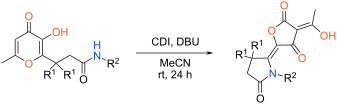
- formation of various unidentified byproducts. The obtained tetronic acids 4 are solid crystalline compounds, whose structure was proved by 1H, 13C NMR spectroscopy and high-resolution mass spectrometry. The 1H NMR spectra of the synthesized products contain characteristic signals of protons of the methyl
- solvent signals (DMSO-d6: 2.50 ppm (1H NMR) and 39.52 ppm (13C NMR)). High-resolution mass spectra (HRMS) were obtained on a Bruker micrOTOF II instrument using electrospray ionization (ESI). The melting points were determined on a Kofler hot stage apparatus. A magnetic stirrer IKA C-MAG HS 7 was used for
- -ylidene)furan-2,4(3H,5H)-dione (4a). Pale yellow powder; yield 62% (0.25 g); mp 121–123 °C; 1H NMR (300 MHz, DMSO-d6) δ 7.31–7.13 (m, 5H), 4.34 (t, J = 7.5 Hz, 2H), 2.74 (t, J = 7.6 Hz, 2H), 2.56–2.48 (m, 2H in DMSO), 2.46 (s, 3H), 2.14 (t, J = 11.8 Hz, 2H), 1.64–1.54 (m, 3H), 1.41–1.09 (m, 5H); 13C NMR


Transition-metal-free synthesis of arylboronates via thermal generation of aryl radicals from triarylbismuthines in air
Beilstein J. Org. Chem. 2024, 20, 2577–2584, doi:10.3762/bjoc.20.216
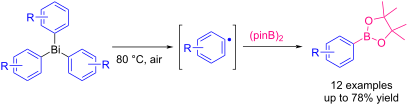
- without further purification. All solvents were used without distillation. Triarylbismuthines 1 were synthesized according to the previously reported procedures [62]. 1H, 13C{1H}, and 11B NMR spectra were recorded in CDCl3 using a Bruker AVANCE III HD 500 spectrometer at 500, 126, and 160 MHz
- , respectively. 1H chemical shifts are reported in ppm relative to Me4Si using the solvent residual as the internal standard (δ = 7.26 ppm for chloroform). 13C chemical shifts are reported in ppm relative to Me4Si, referenced to the resonances of CDCl3 (δ = 77.2 ppm). 11B chemical shifts are reported in ppm
- File 138: Investigation of the boron residue in the crude mixture by 11B NMR measurement, characterization data of the compounds, and copies of 1H NMR and 13C{1H} NMR spectra. Acknowledgements We acknowledged Dr. Tran Dat Phuc and Mr. Soichiro Mita (Osaka Prefecture University) for their initial



Anion-dependent ion-pairing assemblies of triazatriangulenium cation that interferes with stacking structures
Beilstein J. Org. Chem. 2024, 20, 2567–2576, doi:10.3762/bjoc.20.215
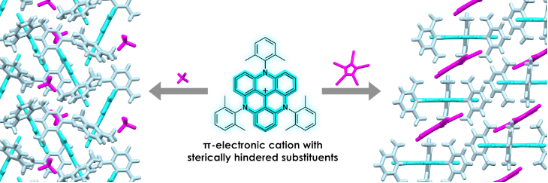
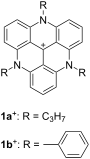
- assemblies, 2+-BF4− was further treated with NaPF6, LiB(C6F5)4, and NaPCCp for the ion-pair metathesis to afford ion pairs 2+-X− (X− = PF6−, B(C6F5)4−, and PCCp−) in 44–68% yields. The obtained ion pairs were characterized using 1H, 13C, and 19F nuclear magnetic resonance (NMR) and matrix-assisted laser
- , 0.209 mmol, 19%) as a red solid. Rf 0.33 (MeOH/EtOAc/CH2Cl2 1:2:8); 1H NMR (600 MHz, CDCl3, 20 °C) δ (ppm) 7.68 (t, J = 8.4 Hz, 3H, TATA-H), 7.51 (t, J = 7.8 Hz, 3H, Ar-H), 7.44 (d, J = 7.8 Hz, 6H, Ar-H), 6.37 (d, J = 8.4 Hz, 6H, TATA-H), 2.10 (s, 18H, CH3); 13C NMR (151 MHz, CDCl3, 20 °C) δ (ppm
- , TATA-H), 2.11 (s, 18H, CH3); 13C NMR (151 MHz, CDCl3, 20 °C) δ (ppm) 142.40, 140.77, 138.59, 136.46, 135.03, 130.73, 130.69, 110.66, 106.15, 17.61; 19F NMR (564 MHz, CDCl3, 20 °C) δ (ppm) −77.26 (d, J = 712 Hz, 6F); UV–vis (CH3CN), λmax, nm (ε, 105 M−1 cm−1): 272 (1.30), 337 (0.07), 349 (0.09), 523



Visible-light-mediated flow protocol for Achmatowicz rearrangement
Beilstein J. Org. Chem. 2024, 20, 2493–2499, doi:10.3762/bjoc.20.213
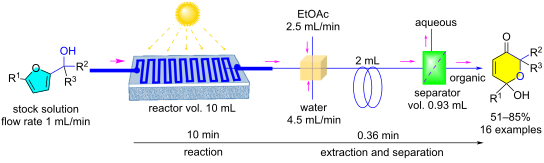
- corresponding products (3o, 3p) in good yields. All the products obtained were characterized by 1H NMR, 13C NMR and mass spectrometry techniques. A plausible catalytic cycle has been postulated based on a literature study [13], and is shown in Figure 2. With the exposure of photocatalyst to sunlight/LED light



Facile preparation of fluorine-containing 2,3-epoxypropanoates and their epoxy ring-opening reactions with various nucleophiles
Beilstein J. Org. Chem. 2024, 20, 2421–2433, doi:10.3762/bjoc.20.206
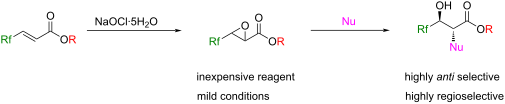
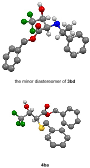
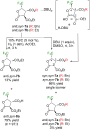
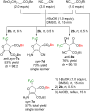
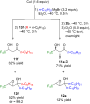
- . However, the comparison of their specific region of the 13C NMR charts and sharp peaks readily led us to qualitative understanding of the high purity of 11a-D possibly as a single diastereomer (Figure 3). Conclusion As described above, we have succeeded in the facile preparation of 2,3-epoxyesters 2 with
- column chromatography using AcOEt/Hex 1:20 as an eluent, 0.2117 g (0.86 mmol) of the title compound (86% yield) were isolated. Rf 0.52 (Hex/AcOEt 5:1); 1H NMR (300.40 MHz, CDCl3) δ 3.71–3.76 (m, 2H), 5.21 (d, J = 12.3 Hz, 1H), 5.28 (d, J = 12.3 Hz, 1H), 7.34–7.44 (m, 5H); 13C NMR (75.45 MHz, CDCl3) δ
- –6.81 (m, 4H), 7.26–7.36 (m, 5H); 13C NMR (75.45 MHz, acetone-d6) δ 55.5, 59.3, 67.9, 70.0 (q, J = 30.2 Hz), 114.8, 117.7, 124.1 (q, J = 283.5 Hz), 128.5, 128.6, 128.7, 134.4, 139.5, 154.3, 170.2; 19F NMR (282.65 MHz, CDCl3) δ −76.83 (d, J = 9.0 Hz); IR (KBr) ν: 3454, 3315, 2955, 2924, 2854, 2360, 1741





Efficient one-step synthesis of diarylacetic acids by electrochemical direct carboxylation of diarylmethanol compounds in DMSO
Beilstein J. Org. Chem. 2024, 20, 2392–2400, doi:10.3762/bjoc.20.203
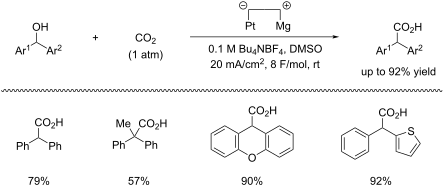
- a novel, efficient, facile, and green organic method. Experimental General information 1H (400 MHz) and 13C (100 MHz) NMR spectra were recorded in CDCl3 or DMSO-d6 with a JEOL JNM-ECS400 FT NMR spectrometer. The chemical shifts δ are given in ppm with tetramethylsilane (δ 0 ppm) or DMSO (δ 2.50 ppm
- ) for 1H and CDCl3 (δ 77.0 ppm) or DMSO-d6 (δ 39.5 ppm) for 13C as internal references. J values are in Hz. Peak multiplicities are given as follows: s, singlet; d, doublet; t, triplet; q, quartet; m, multiplet; br, broad. Reagents and solvents, including anhydrous DMSO, are commercially available and
- ) [36], and phenyl(thiophen-2-yl)acetic acid (2l) [30] are known compounds, and their spectral data were good agreement with previously reported values. Spectral data of the products 2 Diphenylacetic acid (2a): 1H NMR (400 MHz, CDCl3, δ) 5.05 (s, 1H), 7.25–7.34 (m, 10H); 13C NMR (100 MHz, CDCl3, δ) 56.9


Synthesis, electrochemical properties, and antioxidant activity of sterically hindered catechols with 1,3,4-oxadiazole, 1,2,4-triazole, thiazole or pyridine fragments
Beilstein J. Org. Chem. 2024, 20, 2378–2391, doi:10.3762/bjoc.20.202
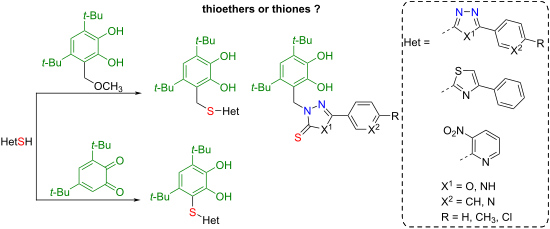
- , compounds 6–9 are products of alkylation of the nitrogen atom of the heterocycle. Thiones 6–9 were obtained in 40–79% yield (Scheme 1,b). The structures of synthesized compounds were confirmed by the spectral methods IR-, 1H NMR, 13C{1H} NMR spectroscopy (Figures S1–S18 in Supporting Information File 1




Tandem diazotization/cyclization approach for the synthesis of a fused 1,2,3-triazinone-furazan/furoxan heterocyclic system
Beilstein J. Org. Chem. 2024, 20, 2342–2348, doi:10.3762/bjoc.20.200

- , indicating that the developed tandem protocol does not depend on the presence of the N-oxide moiety in the parent heterocycle. All synthesized triazinones 1 and 7 were fully characterized by IR, 1H and 13C NMR spectroscopy, and high-resolution mass spectrometry. The structure of compounds 1b and 7h was
- . Supporting Information Supporting Information File 96: Experimental procedures, characterization data of all products, copies of 1H, 13C NMR, 15N spectra of new compounds, DSC curves,X-ray crystallographic data and copies of IR spectra. Acknowledgements The crystal structure determination was performed at


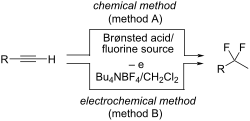
gem-Difluorination of carbon–carbon triple bonds using Brønsted acid/Bu4NBF4 or electrogenerated acid
Beilstein J. Org. Chem. 2024, 20, 2261–2269, doi:10.3762/bjoc.20.194
- of spectra of 1H NMR and 13C NMR. Acknowledgements We are grateful for Kindai University Joint Research Center for use of facilities. Funding This work was supported in part by JSPS KAKENHI Grants JP20K05588 (Grant-in-Aid for Scientific Research (C)). We appreciate 2021 Kindai University Research