


Search results
Search for "LED" in Full Text gives 2073 result(s) in Beilstein Journal of Organic Chemistry. Showing first 200.
Gold extraction at the molecular level using α- and β-cyclodextrins
Beilstein J. Org. Chem. 2025, 21, 1116–1125, doi:10.3762/bjoc.21.89
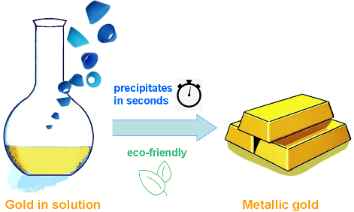
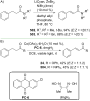
- , led to the quick formation of co-precipitates when added to aqueous solutions of β-CD and KAuBr4 (both at 5 mM): dibutyl carbitol, isopropyl ether, chloroform, dichloromethane, hexane, benzene, and toluene [51]. The most effective one was dibutyl carbitol (DBC), which caused 99.7% precipitation when


A versatile route towards 6-arylpipecolic acids
Beilstein J. Org. Chem. 2025, 21, 1104–1115, doi:10.3762/bjoc.21.88
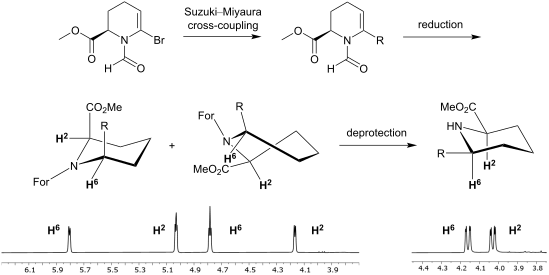
- to reduce the arylated N-formyl enamine moiety in 3 remained unsuccessful. We also aimed at improving conversion and yield by first testing different bases and catalysts [42][43]. DMF, a well-established solvent for cross-coupling reactions, led to lower degradation of the bromide 2 compared to other





Supramolecular assembly of hypervalent iodine macrocycles and alkali metals
Beilstein J. Org. Chem. 2025, 21, 1095–1103, doi:10.3762/bjoc.21.87
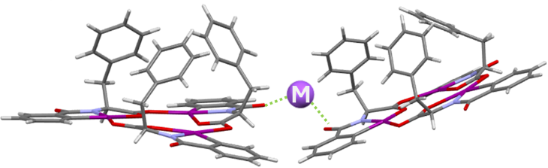
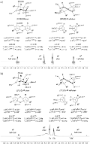
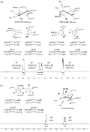
- investigate the association of HIMs with metal cations. NMR titration of HIM 1 with LiBArF20 led to distinct shifting of signals with the successive addition of salt. Figure 4 shows a titration of 1 with increasing equivalents of LiBArF20. The most dramatic changes included the aromatic proton multiplet at


Recent advances in synthetic approaches for bioactive cinnamic acid derivatives
Beilstein J. Org. Chem. 2025, 21, 1031–1086, doi:10.3762/bjoc.21.85
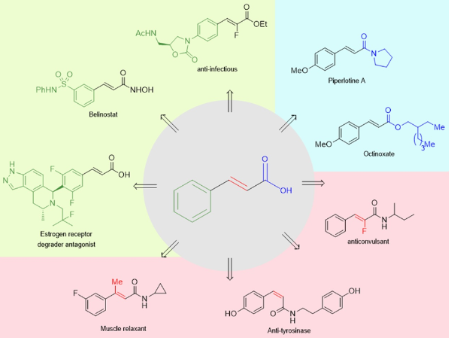
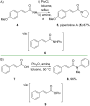
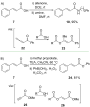
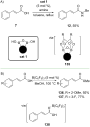
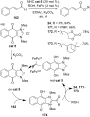
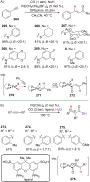
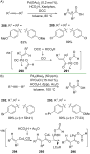
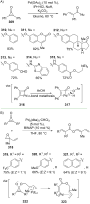
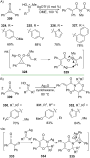
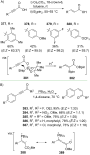
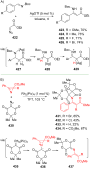
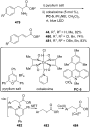
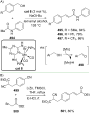
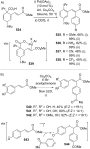
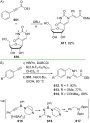
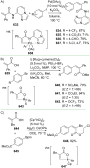
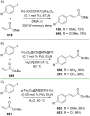
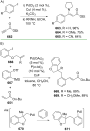
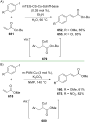
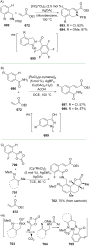
- other hand, Fan and co-workers (2020) prepared α-amidoketone 71 by employing vinyl azide and cinnamic acid (7) in good yield via cascade reaction (Scheme 23B) [58]. The thermal decomposition of the azide led to the generation of the reactive azirine intermediate 72. Moreover, Li and co-workers (2020
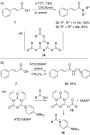
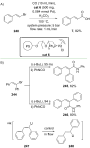
- ion 105 formation via its reaction with acetonitrile. Kokotos and co-workers (2023) prepared Weinreb amide 107 mediated by sunlight or LED 370 nm from cinnamic acid (7) via light-activated DMAP 108, leading to electrophilic iminium 109 formation (Scheme 33) [28]. On the other hand, Gilmour and co








































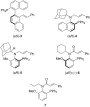
Pd-Catalyzed asymmetric allylic amination with isatin using a P,olefin-type chiral ligand with C–N bond axial chirality
Beilstein J. Org. Chem. 2025, 21, 1018–1023, doi:10.3762/bjoc.21.83
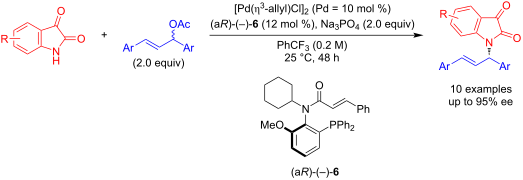
- (Table 1, entry 5). Other potassium salts such as K3PO4 led to a low yield of the product (Table 1, entry 6). Meanwhile, when Na3PO4 was tested, the yield decreased, but the enantioselectivity improved to 88% ee (Table 1, entry 7). With Na3PO4 as the optimum base, which showed the highest
- in good yield, although with slightly decreased enantioselectivity. The introduction of the chloro group at the same position led to a moderate yield for (S)-13d, while the enantioselectivity remained high. In contrast, the reaction with the isatin derivative bearing a nitro group at the 5-position
- yields with high enantioselectivities. Conversely, the isatin derivative bearing a methoxy group at the 6-position led to a decreased yield for (S)-13j, though the enantioselectivity remained high. Additionally, we tested the reaction using an isatin derivative with a chloro group at the 7-position and




Synthesis of pyrrolo[3,2-d]pyrimidine-2,4(3H)-diones by domino C–N coupling/hydroamination reactions
Beilstein J. Org. Chem. 2025, 21, 1010–1017, doi:10.3762/bjoc.21.82
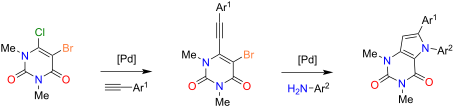
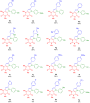
- absorption band. With respect to the phenyl group attached to the pyrrole nitrogen, the presence of the electron-withdrawing CF3 group led to a slight hypsochromic shift (4j). In the case of compound 4l, containing a 4-trifluoromethylphenyl group attached to the nitrogen, no significant shift of the
- wavelengths. However, this shoulder was less distinct for compounds 4m and 4j and not detectable for 4k and 4l, containing the N,N-dimethylaminophenyl group. In contrast to the absorption spectra, in the case of the emission spectra, the presence of a thienyl substituent (compound 4m) led to a hypsochromic
- . Electron-donating N,N-dimethylaminophenyl substituents led to bathochromically shifted absorption and emission spectra accompanied by strongly elevated fluorescence quantum yields (up to 83%). Further studies will be devoted to the synthesis of novel polycyclic uracil derivatives with potential biological



Recent total synthesis of natural products leveraging a strategy of enamide cyclization
Beilstein J. Org. Chem. 2025, 21, 999–1009, doi:10.3762/bjoc.21.81
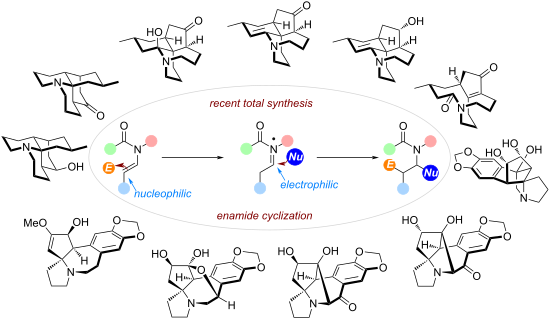
- the terminal alkene and the conformational strain of forming a bridge[3.2.1]bicycle might be responsible for a selective 6-exo-trig cyclization. From tricyclic compound 4, anti-Markovnikov oxidation catalyzed by palladium led to the formation of aldehyde 5. When treated with p-TsOH, the intramolecular




Studies on the syntheses of β-carboline alkaloids brevicarine and brevicolline
Beilstein J. Org. Chem. 2025, 21, 955–963, doi:10.3762/bjoc.21.79

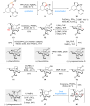
- salt for further confirming their structures. A new synthesis of the related alkaloid brevicolline was also attempted from the same intermediate. However, after successful coupling of β-carboline with N-methylpyrrole, the trials to saturate the pyrrole ring under various conditions led to unexpected
- , versatile key triflate intermediate 3, which allowed the introduction of substituents attached by a C–C bond to position 4 of the β-carboline scaffold by cross-coupling reactions. Sonogashira reaction of compound 3 with N-(3-butynyl)phthalimide (4) led to coupled compound 5. Cleavage of the phthalimide


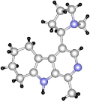
Study of tribenzo[b,d,f]azepine as donor in D–A photocatalysts
Beilstein J. Org. Chem. 2025, 21, 935–944, doi:10.3762/bjoc.21.76

- previously reported by Zysman-Colman and co-workers [19]. Compound 5d showed the best performance with a 27% calculated NMR yield (20%, isolated yield) (Table 3, entry 3), while the azepine derivatives 5a and 5b led the transformation at 13 and 8%, respectively (Table 3, entries 1 and 2). However, these

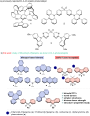


A convergent synthetic approach to the tetracyclic core framework of khayanolide-type limonoids
Beilstein J. Org. Chem. 2025, 21, 926–934, doi:10.3762/bjoc.21.75
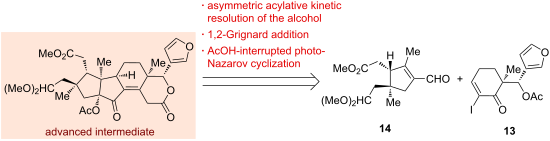
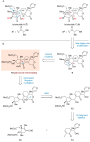
- .) of 24 led only to epimerization at C10 or slow decomposition of the starting material (see Supporting Information File 1, Table S1). Pleasingly, treating 24 with HMDS and TMSI regioselectively generated the expected TMS enol ether [46], which underwent a Li/Si exchange in the presence of MeLi
- stage was set for the construction of the target skeleton through a 1,2-addition (Scheme 4). Preliminary trials to generate organometallic species via Li/I exchange under various conditions (n-BuLi, t-BuLi, or t-BuLi in combination with CeCl3 or MgBr2) led to rapid decomposition, likely due to inherent
- Nazarov cyclization under a variety of conditions (Table 1). Initial trials under acid-mediated Nazarov conditions (AlCl3, BF3·Et2O and Me2AlCl) led to complete decomposition, while the exposure to AcOH resulted in recovery of the starting material (Table 1, entries 1–4). Recognizing the limitations of




Silver(I) triflate-catalyzed post-Ugi synthesis of pyrazolodiazepines
Beilstein J. Org. Chem. 2025, 21, 915–925, doi:10.3762/bjoc.21.74
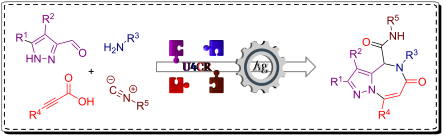
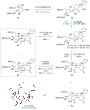
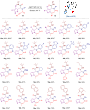
- reduction with LiAlH₄, which led to a further decrease in the degree of unsaturation of the pyrazolodiazepine core, while the more sterically hindered exocyclic amide moiety remained intact. However, both reactions were accompanied by partial epimerization, and careful kinetic control was therefore required




Cu–Bpin-mediated dimerization of 4,4-dichloro-2-butenoic acid derivatives enables the synthesis of densely functionalized cyclopropanes
Beilstein J. Org. Chem. 2025, 21, 877–883, doi:10.3762/bjoc.21.71
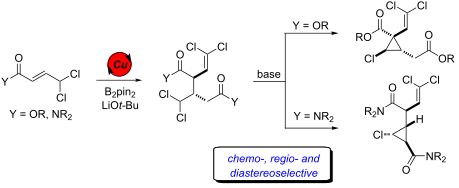
- bearing aromatic and aliphatic substituents efficiently provided the allylboration product (Scheme 1a), the use of ester derivative 1 under same reaction conditions led to the formation of an unexpected product arising from the coupling of two dichloride molecules with no alkyne incorporation (Scheme 1b
- , entry 2), although the use of sub-stoichiometric amounts led to a significant decrease in reaction yield (Table 1, entry 3). We also tried to reduce the amount of base, but this caused a drop in the reaction efficiency (Table 1, entry 4). Evaluation of different bases demonstrated the important role of
- the base metal cation. Gratifyingly, we observed that the use of LiOt-Bu led to the formation of product 2 as a single diastereomer (Table 1, entry 5). A slightly lower diastereoselectivity was observed when KOt-Bu was used, which also gave rise to 2 in diminished yield (Table 1, entry 6). The nature


Data accessibility in the chemical sciences: an analysis of recent practice in organic chemistry journals
Beilstein J. Org. Chem. 2025, 21, 864–876, doi:10.3762/bjoc.21.70

- exist in several disciplines. For example: the ‘Bermuda Principles’ in genomics [4][5], the Omics Discovery Index in biomedical science [6], access to sky survey data in astronomy [7], and commitments to data sharing in Earth and environmental sciences [8]. Sharing has led to the development of tools
- primary data were not deposited in a public repository (Figure 5a). Except for one example from Synthesis, data of any type had only been shared to a public repository when published in one of the four ACS journals. 95% of these used Figshare [40], (Figure 5b), and this is entirely publisher-led behavior
- article cited or linked?’ assesses if it is possible to trace data back to the original publication where the methods used to generate those data are described. 76% of primary data had a citation, however, publisher-led copying of SI files to Figshare positively distorts this proportion, as the repository





Light-enabled intramolecular [2 + 2] cycloaddition via photoactivation of simple alkenylboronic esters
Beilstein J. Org. Chem. 2025, 21, 854–863, doi:10.3762/bjoc.21.69
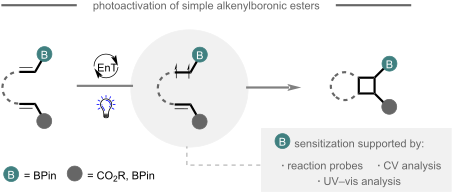
- state catalyst are not operational (see Supporting Information File 1 for full details), providing support for an EnT mechanism, while exposing the Z-isomer (Z)-1a to the model reaction conditions, led to the generation of a similar photostationary state equilibrium of isomers, characteristic of an EnT



Unraveling cooperative interactions between complexed ions in dual-host strategy for cesium salt separation
Beilstein J. Org. Chem. 2025, 21, 845–853, doi:10.3762/bjoc.21.68

- cations within a single molecule, have facilitated advancements in ion-pair recognition. This progress has led to the development of ion separation utilizing ion-pair receptors [16][17][18][19][20], which eliminate the need for auxiliary reagents to balance overall charges compared to the use of
- ]. According to our previous results, the binding affinity of L with chloride, sulfate and phosphate is determined to be 2.2 × 10² M−1, 9.9 × 10⁴ M−1, and 3.8 × 10⁶ M−1, respectively (in DMSO) [31]. Such strong anion binding affinity has led to selective extraction of sulfate and phosphate from basic aqueous


Chitosan-supported CuI-catalyzed cascade reaction of 2-halobenzoic acids and amidines for the synthesis of quinazolinones
Beilstein J. Org. Chem. 2025, 21, 839–844, doi:10.3762/bjoc.21.67
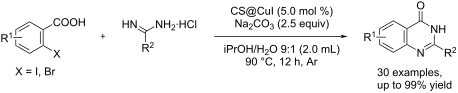
- nonprotonated solvents such as THF and toluene were used, the yields were relatively low (Table 1, entries 1 and 2, 39 and 27% yields), indicating poor catalytic activity in these solvents. In contrast, using proton solvents (MeOH, iPrOH and H2O) led to improved yields (Table 1, entries 3−5, 51−60% yields


Substituent effects in N-acetylated phenylazopyrazole photoswitches
Beilstein J. Org. Chem. 2025, 21, 830–838, doi:10.3762/bjoc.21.66

- * transition, while the weaker n→π* band shows absorption maxima in the range of 410–451 nm in CH3CN. The introduction of methyl and acyl groups on one nitrogen of the pyrazole ring led to a hyperchromic effect and a minor bathochromic shift. Also, the introduction of an EDG or EWG on the R position led to
- hyperchromic effects compared for NH- and NMe-PAP-H. Photochemical isomerization Upon irradiation with a 365 nm LED (exemplarily displayed for NMe-PAP-CN in Figure 2), we observed a decrease of the π→π* band for the E isomers. Simultaneously the π→π* bands around 253–369 nm and the n→π* bands around 426–457
- , while for NMe-PAP-CN 146 nm and for NH-PAP-CN 102 nm are found. Subsequent illumination with a 445 nm LED led to the formation of the E isomer, which is accompanied by an increase of its π→π* band until reaching the PSS445. However, judging from the intensity of the E isomers’ π→π* band, the


Synthesis and photoinduced switching properties of C7-heteroatom containing push–pull norbornadiene derivatives
Beilstein J. Org. Chem. 2025, 21, 807–816, doi:10.3762/bjoc.21.64
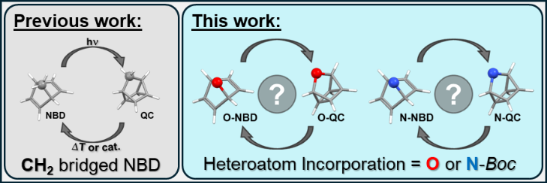
- ) derivatives. Push–pull substitution on the 2 and 3 position as well as introduction of oxygen or nitrogen at position 7 of the NBD scaffold have led to the development of a new family of photoswitches. We studied the potential conversion of norbornadiene to quadricyclane (QC) isomers. As main investigation
- explored. For instance, incorporation of a C2H4 moiety into the bridge led to the formation of [2.2.2]-bicyclooctadiene derivatives with increased storage capacities but significantly reduced half-lifes compared to analogues NBD derivatives [23][24]. Additionally, introduction of one or more heteroatoms at
- observed π–π* absorption from λπ–π* = 294 nm to 298 nm was found. Prolonged irradiation up to 660 s led to a complete change in the overall absorption properties with maxima at λ = 348 nm and 297 nm and an absorption shoulder at λ = 228 nm suggesting photodecomposition. Next, NMR monitoring of the


Regioselective formal hydrocyanation of allenes: synthesis of β,γ-unsaturated nitriles with α-all-carbon quaternary centers
Beilstein J. Org. Chem. 2025, 21, 800–806, doi:10.3762/bjoc.21.63
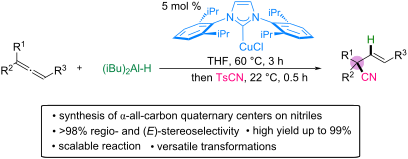
- , achieving yields of 93% and 87%, respectively. When the catalyst loading was reduced to 3 mol % for the reaction of allene 4b, the hydroalumination did not reach full conversion even with an extended reaction time (6 h vs 3 h). As a result, the incomplete hydroalumination led to a side reaction between the




Recent advances in the electrochemical synthesis of organophosphorus compounds
Beilstein J. Org. Chem. 2025, 21, 770–797, doi:10.3762/bjoc.21.61
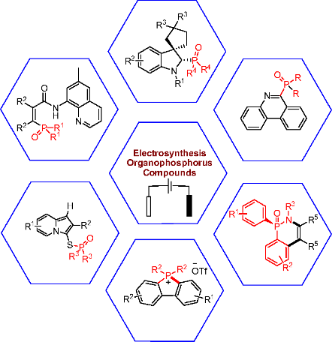
- of organic compounds. In recent years, many advances have been made in this field of research, and researchers have been able to synthesize many compounds and confirm various uses for chemical compounds in this field. The significant progress in this field of research led to the name of this field as
- shape and contact area of the electrodes led to different reaction outcomes. Spirocyclic indolines have broad applications in medicine. The phosphorylated structures of indolines have also played a significant role in synthesis and industry. In 2023, Mo et al. [48] reported the electrochemical synthesis
- reaction yield slightly decreased, and the formation of the Boc-deprotected product increased. When the reaction was performed in acetonitrile without THF, a greater quantity of the Boc-deprotected product was produced, which led to its degradation. This can be attributed to the Boc-deprotected compound


Development and mechanistic studies of calcium–BINOL phosphate-catalyzed hydrocyanation of hydrazones
Beilstein J. Org. Chem. 2025, 21, 755–765, doi:10.3762/bjoc.21.59
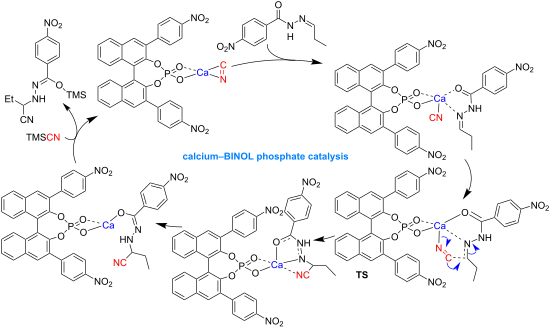
- the computational investigation, could not be isolated either – probably due to its high sensitivity to hydrolysis. However, a 2D 1H-15N NMR correlation spectrum showed no interactions of hydrogen nuclei in silicon-bound methyl groups and any of the nitrogens in the product. This led us to conclude
- hydrocyanation reaction of hydrazones, towards precursors of α-hydrazino acids. Model achiral catalyst 4, pre-formed by reaction of Ca(OiPr)2 and biphenyl phosphate 3, led to racemic product 2 in nearly full conversion in different reaction times, depending on the amount of catalyst used. Biphenyl phosphate 3


Copper-catalyzed domino cyclization of anilines and cyclobutanone oxime: a scalable and versatile route to spirotetrahydroquinoline derivatives
Beilstein J. Org. Chem. 2025, 21, 749–754, doi:10.3762/bjoc.21.58
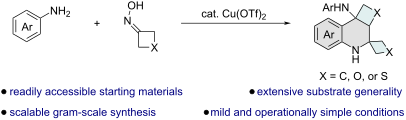
- demonstrated excellent compatibility with the protocol, affording the desired products 3ba–ea in good yields. However, the introduction of strong electron-withdrawing groups, such as trifluoromethoxy, ester, and acetyl, at the para-position of the benzene ring (1f–h) led to a noticeable decrease in the yields


Orthogonal photoswitching of heterobivalent azobenzene glycoclusters: the effect of glycoligand orientation in bacterial adhesion
Beilstein J. Org. Chem. 2025, 21, 736–748, doi:10.3762/bjoc.21.57
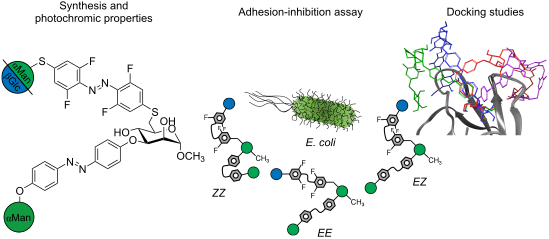
- glycophotoswitches in their different isomeric states led to new insights into the role of ligand orientation in carbohydrate recognition. The experimental results were underpinned by molecular modeling. Keywords: azobenzene glycoconjugates; carbohydrate recognition; docking; FimH; orthogonal photoswitching
- (Scheme 2B). Photochromic properties Irradiation of the glycoazobenzene-functionalized mannosides 6αMan 3, 6βGlc 4, and 3αMan 5 with light of 365, 435, and 520 nm, respectively, led to three photostationary states (PSS) in each case of which the E/Z ratios were determined by integration of the anomeric
- the closed gate conformation of FimH led to binding energies of −70.01 kcal mol−1 for E-4 and −71.08 kcal mol−1 for E-5 versus −60.96 kcal mol−1 for Z-4 and −59.43 kcal mol−1 for Z-5. These calculation results correspond to the experimentally determined inhibitory potencies which are significantly


Synthesis of HBC fluorophores with an electrophilic handle for covalent attachment to Pepper RNA
Beilstein J. Org. Chem. 2025, 21, 727–735, doi:10.3762/bjoc.21.56
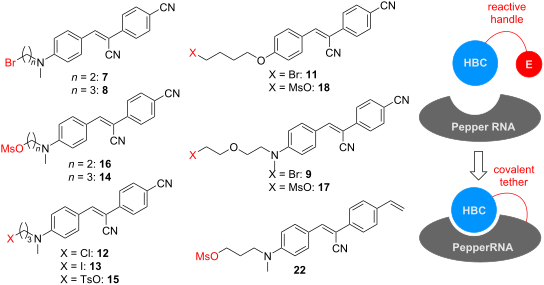
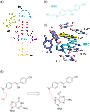
- , however, there was no complementary RNA-based tool with comparable live-cell-imaging properties. Based on the autocatalytically generated fluorophore 4-(p-hydroxybenzylidene)imidazolidin-5-one (HBI) in GFP, in vitro selection on derivatives of HBI led to the discovery of the first fluorogen-activating



Asymmetric synthesis of fluorinated derivatives of aromatic and γ-branched amino acids via a chiral Ni(II) complex
Beilstein J. Org. Chem. 2025, 21, 659–669, doi:10.3762/bjoc.21.52
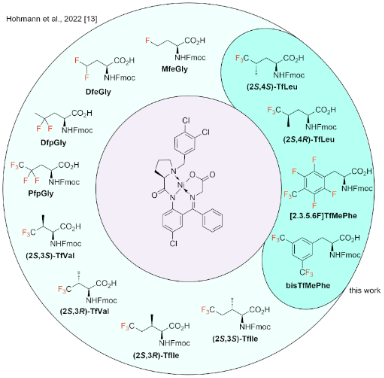
- identified as optimal delivering a yield of alkylated complex of 60% (Table 1, entry 4). With DBU as base different solvents differing in polarity have been tested. At room temperature, acetonitrile proved best and increased the yield to 88% (Table 1, entry 11). Lowering the temperature to 0 °C led to a
- h), and the subsequent fluorenylmethoxycarbonyl (Fmoc) protection with FmocOsu led to the formation of the desired fluorinated amino acids. Here, Fmoc-[2.3.5.6F]TfMePhe (2) was isolated in a yield of 67% and a good enantiomeric purity of 90% ee. Fmoc-bisTfMePhe (3) was obtained even in a
- and 97% de. Both alkylated Ni(II) complexes were then hydrolyzed under standard conditions (HCl/DME 60 °C, 2 h), and the subsequent fluorenylmethoxycarbonyl (Fmoc) protection with FmocOsu led to the formation of the desired fluorinated amino acids. However, only one isomer could be isolated, requiring





