Search results
Search for "O-" in Full Text gives 2272 result(s) in Beilstein Journal of Organic Chemistry. Showing first 200.
Harnessing tethered nitreniums for diastereoselective amino-sulfonoxylation of alkenes
Beilstein J. Org. Chem. 2025, 21, 947–954, doi:10.3762/bjoc.21.78

- regioselective, diastereoselective, and metal-free protocol for alkene amino-hydroxylation, which compared favorably to prior art in this area [25][26][27][28][29][30][31][32]. Naturally, we wondered if other O-nucleophiles were competent in the ring-opening of the aziridinium intermediate. Indeed, almost all


Study of tribenzo[b,d,f]azepine as donor in D–A photocatalysts
Beilstein J. Org. Chem. 2025, 21, 935–944, doi:10.3762/bjoc.21.76

- computational study to design new PCs to be employed in atom transfer radical polymerization (O-ATRP) [17]. Notably, the sulfur-based structure 2 showed excellent performance for this transformation. One year later, the same research group reported its use in a reversible addition-fragmentation chain-transfer



Silver(I) triflate-catalyzed post-Ugi synthesis of pyrazolodiazepines
Beilstein J. Org. Chem. 2025, 21, 915–925, doi:10.3762/bjoc.21.74
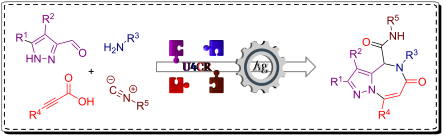
- involving the Ugi reaction between arylglyoxals 1, benzylamines 2, o-azidobenzoic acid (3), and cyclohexyl isocyanide (4a), followed by a triphenylphosphine-promoted tandem Staudinger/aza-Wittig cyclization (Scheme 1a) [33]. The overall strategy was enabled by the presence of an azide group in the
- trifluoromethyl and nitro groups. Furthermore, substrates 15m–o derived from aliphatic amines, also performed well, furnishing pyrazolodiazepines 16m–o in up to 89% yield. The structure of 16m, a representative compound of this series, was confirmed through single-crystal X-ray diffraction (scXRD) analysis




Recent advances in controllable/divergent synthesis
Beilstein J. Org. Chem. 2025, 21, 890–914, doi:10.3762/bjoc.21.73

- , thereby offering unprecedented control over chemo-, regio-, and stereoselectivity parameters in catalytic manifolds. In 2015, the Jiang group developed a palladium-catalyzed regioselective three-component C1 insertion reaction (Scheme 1) [19]. In this reaction, an o-iodoaniline 1, phenylacetylene, and
- carbon monoxide were used as starting materials, and two natural product frameworks of phenanthridone and acridone alkaloids could be selectively obtained by controlling ligands. The reaction of o-iodoaniline with in situ-generated arynes under CO atmosphere under ligand-free conditions selectively
- intermediates Int-53 or Int-53'. Reductive elimination of Int-53 or Int-53' regenerates Pd(0) and produces intermediate 55. With the assistance of the base K2CO3, the ten-membered silacycle 55 undergoes rapid ring contraction via cleavage of two Si–O bonds and formation of one Si–O bond, leading to 56 and Int




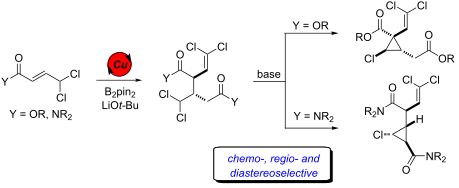
Cu–Bpin-mediated dimerization of 4,4-dichloro-2-butenoic acid derivatives enables the synthesis of densely functionalized cyclopropanes
Beilstein J. Org. Chem. 2025, 21, 877–883, doi:10.3762/bjoc.21.71
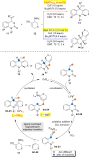
- species A which is in equilibrium with the Cu–O enolate B [11]. In the presence of excess of LiOt-Bu, a salt metathesis reaction between this base and intermediate B generates lithium enolate C and LCuOt-Bu to close the copper catalytic cycle. The formation of a lithium enolate is consistent with the


Unraveling cooperative interactions between complexed ions in dual-host strategy for cesium salt separation
Beilstein J. Org. Chem. 2025, 21, 845–853, doi:10.3762/bjoc.21.68

- carbonyl (C=O) groups, as well as direct ion-pairing interactions between 18-crown-6-complexed Cs+ and hexaurea-bound PO43−. Single-crystal structural analysis corroborates these interactions, shedding light on the underlying mechanisms and providing valuable guidance for the rational design of advanced
- , only two examples provide clear evidence of cooperative interactions based on single crystal structures [28][29], where the 18-crown-6 complexed K+ cation forms ion-dipole interactions with the carbonyl (C=O) or nitro (NO2) groups of the anion-bound receptors (KF and K2CO3). Recently, we demonstrated
- interactions between K+ and C=O moieties [31], similar to these seen in the single crystal structures of KF and K2CO3 complexes. These provide a promising opportunity that can be used to identify the cooperative interaction underpinning complexed ions in dual-host strategy-based extraction. To do this, the


4-(1-Methylamino)ethylidene-1,5-disubstituted pyrrolidine-2,3-diones: synthesis, anti-inflammatory effect and in silico approaches
Beilstein J. Org. Chem. 2025, 21, 817–829, doi:10.3762/bjoc.21.65

- -hybridized carbon atom directly bonded to the nitrogen atom of the secondary amino group of compound 5a. In the structure of each pyrrolidine-2,3-dione derivative 3a–e, there is an α,β-unsaturated ketone moiety in which the π systems of the C=C and C=O bonds could overlap each other to yield an extended
- a dihedral angle of 49.86(10) 86.22(11)° with the phenyl rings C6–C11 and C18–C23, respectively. The angle between both phenyl rings is 70.76(11)°. The stereochemistry around the double bond is Z, allowing an intramolecular N–H···O hydrogen bond between one of the carbonyl oxygen atoms and the amino
- group (Table S2 in Supporting Information File 1). The N and C atoms of the 1-methylamino)ethylidene group are coplanar with the pyrrolidine ring (max. deviation of 0.074(2) Å for atom C17). The molecules form inversion dimers through N–H···O hydrogen bonding. Despite the presence of aromatic rings, no


Synthesis and photoinduced switching properties of C7-heteroatom containing push–pull norbornadiene derivatives
Beilstein J. Org. Chem. 2025, 21, 807–816, doi:10.3762/bjoc.21.64
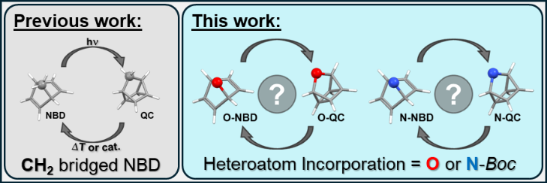
- . Starting with 1-((bromoethynyl)sulfonyl)-4-methylbenzene, which was previously prepared and characterized [40][41], Diels–Alder reaction with either cyclopentadiene, furan or Boc-protected pyrrol, resulted in the NBD precursors C-NBD1, O-NBD1 and N-NBD1, respectively [31][42]. With these precursors in hand
- the corresponding boronic acid in a degassed toluene/H2O mixture (4:1, v/v) which was heated to 80 °C for 18 h (for detailed information see Supporting Information File 1). Using the described procedure, the oxygen containing derivatives O-NBD2 and nitrogen substituted N-NBD2 were successfully
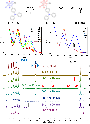
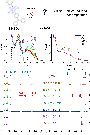
- . Photoswitching The photoswitching of the NBDs to corresponding QCs was monitored by UV–vis and 1H NMR spectroscopy. With increasing electronegativity of the bridge-atom, a slight bathochromic shift in the absorption spectra of the parent NBD precursors O-NBD1 and N-NBD1 was found (Figure 2a and 2c). For the


Regioselective formal hydrocyanation of allenes: synthesis of β,γ-unsaturated nitriles with α-all-carbon quaternary centers
Beilstein J. Org. Chem. 2025, 21, 800–806, doi:10.3762/bjoc.21.63
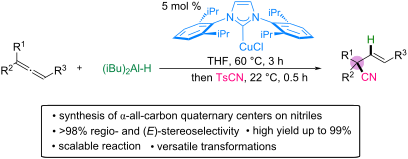
- , ethyl, phenethyl, and allyl groups, also underwent smooth cyanation, resulting in α-quaternary nitriles 3f–i in yields of 85–94%. Furthermore, aryl-substituted allenes 1j–o, incorporating electron-donating or electron-withdrawing substituents such as methyl, fluoro, chloro, bromo, trifluoromethyl, or
- methoxy groups on the phenyl ring, were compatible with the reaction, producing nitriles 3j–o in 88–93% yields. In particular, thienyl-substituted allene 1p was efficiently transformed into the desired nitrile 3p. We further demonstrated the versatility of this protocol using 1,1,3-trisubstituted allenes




Recent advances in the electrochemical synthesis of organophosphorus compounds
Beilstein J. Org. Chem. 2025, 21, 770–797, doi:10.3762/bjoc.21.61
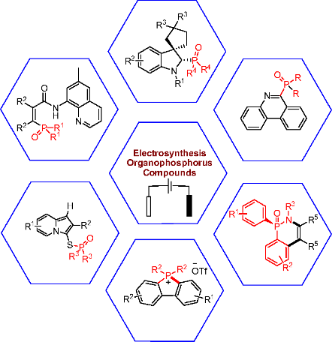
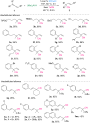
- that when the reaction was carried out in the presence of TEMPO as a radical scavenger, a side product, TEMPO-P(O)R2, was formed (it was confirmed using high-resolution mass spectrometry). The results revealed that the reaction proceeded in a radical pathway (Scheme 1). Based on the cyclic voltammetry
- derivatives of glycine with diarylphosphine oxide (R2P(O)–H) for the synthesis of 1-aminoalkylphosphine oxides without the use of any transition metal catalyst or external oxidant. In this conversion, 1-aminoalkylphosphine oxides were formed in an undivided cell using a carbon electrode as the anode and
- nickel as the cathode in the presence of tetrabutylammonium bromide (TBAB) at the constant current of 6 mA. The electrodes used in the reaction are all in plate form. The presence of TBAB causes the resulting bromide anion to oxidize to bromine radical and react with R2P(O)–H to produce a radical


Development and mechanistic studies of calcium–BINOL phosphate-catalyzed hydrocyanation of hydrazones
Beilstein J. Org. Chem. 2025, 21, 755–765, doi:10.3762/bjoc.21.59
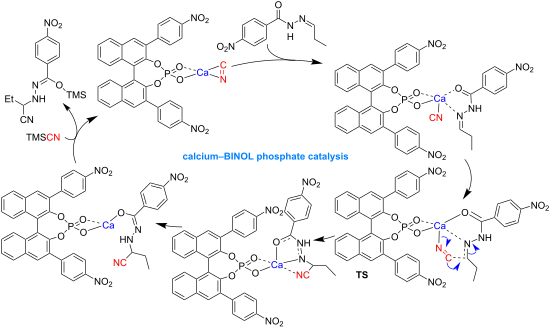
- that silicon is bound via the carbonyl oxygen in 12, as also shown by DFT computations. This is further corroborated by observation of a 13C NMR signal at 146 ppm for an sp2 carbon in the backbone of the product, which fits better for a C=N than a C=O bond. Recovery of the catalyst resting state 7 is
- -state structure, two bonds (Ca–O and Si–C) are broken, while a Si–O bond is simultaneously formed, in a concerted step implying a cyclic flow of six electrons in a five-membered ring. The isocyanide Ca–N–C bond angle in TS 11-12 lies between that of 7 and 9. While the replacement step is slow, and hence
- (product O=C(C1=CC=C(Br)C=C1)NNC(C#N)CC2=CC=CC=C2, 2’’) contain the supplementary crystallographic data for this paper. These data are provided free of charge by The Cambridge Crystallographic Data Centre via http://www.ccdc.ac.uk/data request/cif. Supporting Information File 32: Synthetic procedures, 1H


Copper-catalyzed domino cyclization of anilines and cyclobutanone oxime: a scalable and versatile route to spirotetrahydroquinoline derivatives
Beilstein J. Org. Chem. 2025, 21, 749–754, doi:10.3762/bjoc.21.58
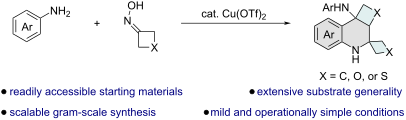
- to be compatible substrates, affording cyclo-O/S-containing STHQ derivatives 3ab and 3ac in good yields. Additionally, ester-functionalized cyclobutanones exhibited smooth reactivity with aniline, enabling the synthesis of substituted STHQ motifs 3ad and 3ae in satisfactory yields. Notably, when


Orthogonal photoswitching of heterobivalent azobenzene glycoclusters: the effect of glycoligand orientation in bacterial adhesion
Beilstein J. Org. Chem. 2025, 21, 736–748, doi:10.3762/bjoc.21.57
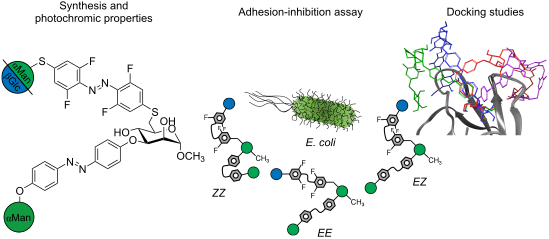
- conjugated to the 3- and the 6-position of a methyl mannoside scaffold (Figure 1, 1 (6βGlc3αMan)) [24]. Orthogonal photoswitching of the two glycoantennas is guaranteed by (i) ortho-fluorination of one azobenzene moiety and (ii) S-azobenzene versus O-azobenzene conjugation, resulting in significantly shifted
- 3-O-(mannosyloxyazobenzene)-6-thio-mannoside 11 was employed, which was prepared according to a known procedure applied for the synthesis of the heterobivalent glycocluster 6βGlc3αMan 1 (cf. Supporting Information File 1, Scheme S1). The cross-coupling of thiol 11 with the azobenzene
- α-ᴅ-mannopyranosyloxyazobenzene mannosides 6βGlc 3 and 6αMan 4 were prepared first (Scheme 2A). The synthesis of the β-ᴅ-glucopyranosyl mannoside 6βGlc 3 started from the literature-known S,O-acetylated mannoside 13 [35], which was chemoselectively deprotected at the 6-position employing DTT (1,4


Acyclic cucurbit[n]uril bearing alkyl sulfate ionic groups
Beilstein J. Org. Chem. 2025, 21, 717–726, doi:10.3762/bjoc.21.55
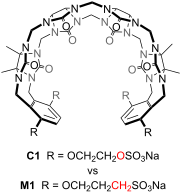
- , two aromatic o-xylylene walls, and four sulfonates as solubilizing ionic groups. In accord with these structural features, M1 binds a variety of hydrophobic and cationic guest molecules by the hydrophobic effect, π–π interactions, and electrostatic (ion–dipole and ion–ion) interactions. Although
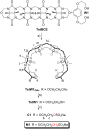
- ][66][67]. Previously, we have studied the influence of the length of the O(CH2)nSO3Na sidearm (n = 0, 2, 3, 4) and found that the M0 host – where the hydrophobic linker (CH2)n was completely removed – displayed higher binding affinity than M1 which we attributed to the location of the ionic group
- closer to the ureidyl C=O portals [68][69]. However, a close examination of the structures of M0 and M1 show that the ionic group for M1 is a sulfonate and for M0 is a sulfate. Accordingly, M1 and M0 differ in two ways: a) different (CH2)n linker length and b) different ionic group (sulfonate versus




Origami with small molecules: exploiting the C–F bond as a conformational tool
Beilstein J. Org. Chem. 2025, 21, 680–716, doi:10.3762/bjoc.21.54
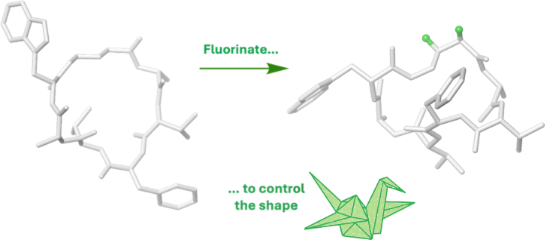
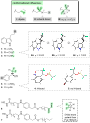
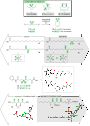
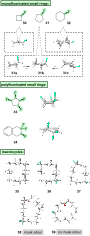
- fluorine atoms into the structure. The C–F bond has certain fundamental characteristics that enable it to serve as an effective conformational tool (Figure 1) [2][3][4]. First, the C–F bond is quite short at only ≈1.35 Å (cf. ≈1.09 Å for C–H, or ≈1.43 Å for C–O). The short length of the C–F bond, and the
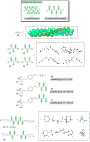
- happens if fluorine is introduced onto one of the carbons that is directly attached to oxygen (Figure 6). This makes possible a hyperconjugative interaction between a lone pair on oxygen and the σ* orbital of the C–F bond (I, Figure 6) [76]. This interaction biases the rotational profile about the O–C(F
- pendant aryl moiety, is better for target-binding and hence 41 is a ≈10-fold more potent inhibitor of BACE-1 than 40. Several further examples of cyclic ethers will be examined in section 5 (sugars). The anomeric effect applies in acyclic ethers, too. Consider the non-fluorinated scaffold, Ph–O–CH3 (42








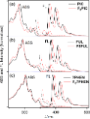
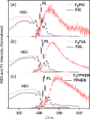
Photochemically assisted synthesis of phenacenes fluorinated at the terminal benzene rings and their electronic spectra
Beilstein J. Org. Chem. 2025, 21, 670–679, doi:10.3762/bjoc.21.53

- napthalene-1,5-dicarboxaldehyde was protected as an acetal, was prepared through a 5-step reaction sequence. Phosphonium salt 5 [39] and the partly protected o-phthalaldehyde 6 [47] were obtained by previously reported procedures. The reaction of phosphonium salt 5 with aldehyde 6 in the presence of KOH and





Recent advances in allylation of chiral secondary alkylcopper species
Beilstein J. Org. Chem. 2025, 21, 639–658, doi:10.3762/bjoc.21.51
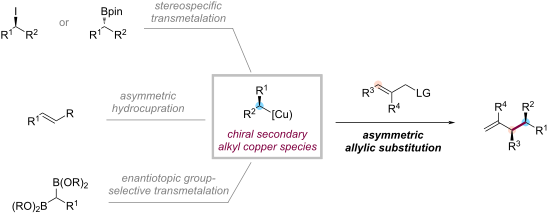
- significance of this transformation lies in its unique ability to efficiently create a stereogenic center while forming new carbon–carbon or carbon–heteroatom bonds (e.g., C–N, C–O, and C–S) with excellent selectivities. The field of metal-catalyzed allylic substitution has evolved significantly since its




Entry to 2-aminoprolines via electrochemical decarboxylative amidation of N‑acetylamino malonic acid monoesters
Beilstein J. Org. Chem. 2025, 21, 630–638, doi:10.3762/bjoc.21.50
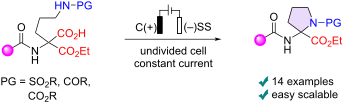
- observed by LC–MS when the electrolysis was performed in 5:1 MeCN/D2O (Scheme 2, reaction 2). The considerably higher O–H bond dissociation energy (119 kcal/mol) [12] as compared to that of the C–H bond in MeCN (86 kcal/mol) [13] renders the hydrogen atom abstraction from water by a carbon-centered radical
- undergo the decarboxylative cyclization, but also N-mesyl-protected monoester 9f could be converted into 2-aminoproline derivative 6f in 60% yield using a graphite cathode. However, the N-o-nosyl-protecting group is not compatible with the developed electrolysis conditions, likely because it undergoes an
- of N-o-nosyl-protected monoester 9g was performed in a divided cell in the presence of NaOH as a base (1 equiv). Gratifyingly, by this route N-o-nosyl-protected 6g was obtained in 25% yield. The attempted synthesis of 2-aminopipecolic acid derivative 6h under the developed conditions was unsuccessful



Semisynthetic derivatives of massarilactone D with cytotoxic and nematicidal activities
Beilstein J. Org. Chem. 2025, 21, 607–615, doi:10.3762/bjoc.21.48
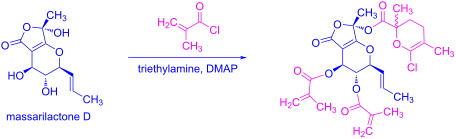
- -carbonyl group was linked through an ester bond and the only hydroxy group available for this esterification was the one at C-7. This compound was finally elucidated as massarilactone D 3,4-di-O-methacryloyl-7-O-(6-chloro-3,4-dihydro-2,5-dimethyl-2H-pyran-2-carbonyl). For the formation of compound 2, an
- ]+ corresponding to the molecular formula C29H24O7. The presence of two cinnamoyl moieties was supported by resonances shown at δH 7.77 (d, J = 16.0 Hz, H-3'''), 7.76 (d, 16.0, H-3''), 7.72–7.70 (o, H-5'', H-9'', H-5''', H-9'''), 7.46–7.44 (o, H-6'', H-7'', H-8'', H-6''', H-7''', H-8'''), 6.60 (d, J = 16.0 Hz, H-2
- ''), 129.3 (C-5''', C-9'''), 118.0 (C-2''), and 117.8 (C-2''') [19][20]. The HMBC correlations were observed from H-3 (δH 5.43, t, J = 3.6 Hz) to C-1''' (δC 165.7) and from H-4 (δH 5.90, o) to C-1'' (δC 165.9). The 1H NMR spectrum of compound 3 revealed the presence of two signals at δH 5.28 (d, J = 3.0 Hz


Formaldehyde surrogates in multicomponent reactions
Beilstein J. Org. Chem. 2025, 21, 564–595, doi:10.3762/bjoc.21.45
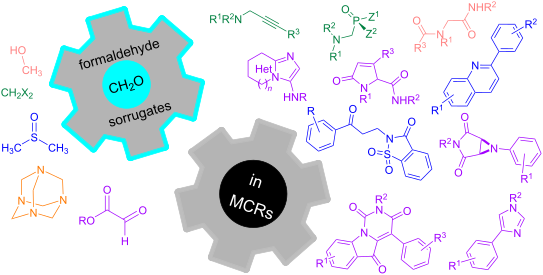
- , several efforts have been made to improve the chemoselectivity of the oxidation step. Among the most relevant examples, o-iodoxybenzoic acid (IBX) has been used in Ugi and Passerini reactions to oxidize the suitable alcohol to the desired aldehyde [13]. Alternatively, catalytic amounts of a ternary system
- phosphites can also undergo an addition to the C=O bond of the carbonyl component (Abramov reaction) giving α-hydroxy phosphonates 33 as byproducts (Scheme 26a) [72]. Competition between the two nucleophiles for the electrophilic carbonyl compound depends on their relative reactivity [74][77] and this lack
- of chemoselectivity becomes important when formaldehyde is used. Moreover, primary amines (alkyl- and arylamines) can also react with two equivalents of both the formaldehyde and the P(O)H compound. In this case, a double Kabachnik–Fields condensation gives bis(phosphorylmethyl)amines 34 as possible


Synthesis of the aggregation pheromone of Tribolium castaneum
Beilstein J. Org. Chem. 2025, 21, 510–514, doi:10.3762/bjoc.21.38
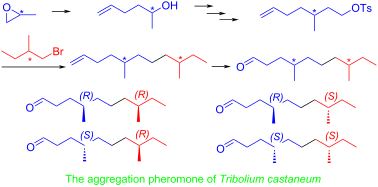
- (R)-citronellic acid [18], methyl (S)-3-hydroxy-2-methylpropanoate, (S)-2-methyl-1-butanol [19], (R)-2,3-O-isopropylideneglyceraldehyde [20], (R)- and (S)-citronellol [21], (R)-4-methyl-δ-valerolactone [22], porcine pancreatic lipase (PPL)-catalyzed acetylation of racemic citronellol [23], and Evan′s


Unprecedented visible light-initiated topochemical [2 + 2] cycloaddition in a functionalized bimane dye
Beilstein J. Org. Chem. 2025, 21, 500–509, doi:10.3762/bjoc.21.37
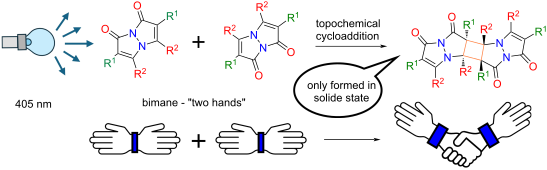
- Metodej Dvoracek Brendan Twamley Mathias O. Senge Mikhail A. Filatov School of Chemical and Biopharmaceutical Sciences, Technological University Dublin, City Campus, Grangegorman, D07 ADY7 Dublin, Ireland School of Chemistry, Trinity College Dublin, The University of Dublin, Dublin 2, Ireland
- groups play a role by increasing the number of hydrogen bonds (C–H···O, 3.18(5)–3.62(6) Å) The intermolecular distances between the C–H groups and the chlorine atoms in Cl2B (A) are C13A–H13···Cl1A, 3.69(5), and C18A–H18C···Cl2A, 3.69(3) Å, indicating further molecular attraction [22]. A previously


Synthesis of N-acetyl diazocine derivatives via cross-coupling reaction
Beilstein J. Org. Chem. 2025, 21, 490–499, doi:10.3762/bjoc.21.36
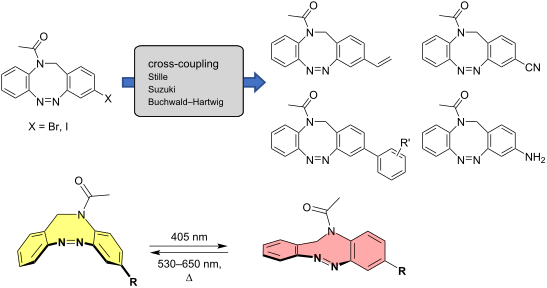
- biochemical reactions usually take place in aqueous environments [13]. The substitution of one CH2 group in the CH2CH2 bridge by N–C(=O)–CH3 leads to an intrinsic water solubility of the N-acetyl diazocine 1 (Figure 1) [3]. Furthermore the photoconversion of 1 shows no significant drop in pure water in


Synthesis of electrophile-tethered preQ1 analogs for covalent attachment to preQ1 RNA
Beilstein J. Org. Chem. 2025, 21, 483–489, doi:10.3762/bjoc.21.35
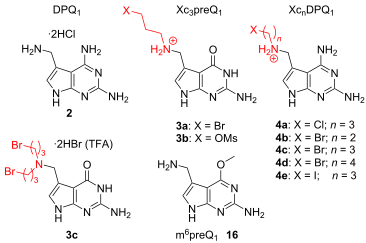
- were required to obtain the corresponding mesylate 3b. Similar to 11, compound 12 was isolated as its trifluoroacetate salt. Selective Boc protection of the aliphatic amine gave 13, which was selectively O-mesylated to give compound 14. Compound 14 was found to slowly undergo intramolecular cyclization


Photomechanochemistry: harnessing mechanical forces to enhance photochemical reactions
Beilstein J. Org. Chem. 2025, 21, 458–472, doi:10.3762/bjoc.21.33
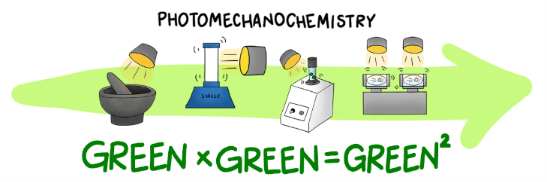
- investigated. When o-terphenyl (10.1) was milled (30 Hz, PTFE balls) and irradiated (λ = 270 nm) in the presence of silica gel (bulking agent), I2 (1 equiv) as an oxidant, and K2CO3 (1 equiv) as a base in the presence of toluene, the expected product 10.2 was obtained in 81% yield after isolation upon 181 h of