


Search results
Search for "catalysis" in Full Text gives 1304 result(s) in Beilstein Journal of Organic Chemistry. Showing first 200.
Synthesis of the 1,5-disubstituted tetrazole-methanesulfonylindole hybrid system via high-order multicomponent reaction
Beilstein J. Org. Chem. 2024, 20, 3077–3084, doi:10.3762/bjoc.20.256
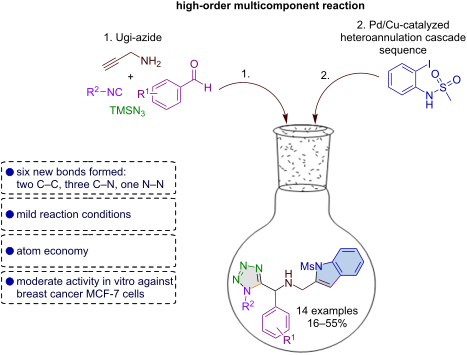
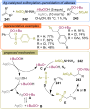
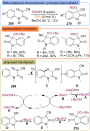
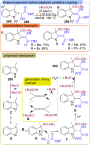
- trifluoroethanol to Et3N for the subsequent catalysis). Thus, this protocol enabled a straightforward and rapid synthesis of highly 2-substituted indoles under mild reaction conditions, highlighting the versatility of propargylamine as a bifunctional reagent in post-Ugi-azide transformations. Our group pioneered



Enantioselective regiospecific addition of propargyltrichlorosilane to aldehydes catalyzed by biisoquinoline N,N’-dioxide
Beilstein J. Org. Chem. 2024, 20, 3069–3076, doi:10.3762/bjoc.20.255
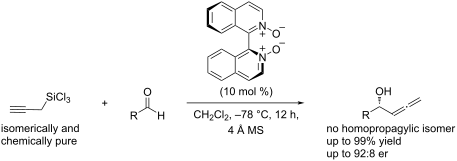
- % yield with 61:39–92:8 enantiomeric ratios. Furthermore, possible mechanisms of propargyl–allenyl isomerization of propargyltrichlorosilane were computationally investigated. Keywords: α-allenic alcohol; computational chemistry; Lewis base catalysis; organocatalysis; propargyltrichlorosilane
- benzaldehydes, which may be attributable to that they have smaller steric demands in the vicinity of the carbonyl carbon atom than benzaldehyde. Importantly, we did not observe the corresponding homopropargylic alcohols [51] in all cases. Since this work is the first asymmetric catalysis study of isomerically


Extension of the π-system of monoaryl-substituted norbornadienes with acetylene bridges: influence on the photochemical conversion and storage of light energy
Beilstein J. Org. Chem. 2024, 20, 3061–3068, doi:10.3762/bjoc.20.254
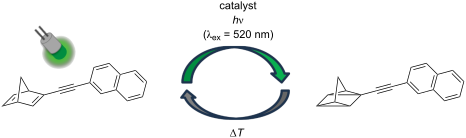
- particular, this system shows a high energy storage capacity of up to 1 MJ/kg, and the energy can be conveniently released in form of heat by controlled photolysis, thermolysis, or catalysis [8][14]. However, the parent norbornadiene (1a) only absorbs ultraviolet light, which is of limited availability in


Chemical structure metagenomics of microbial natural products: surveying nonribosomal peptides and beyond
Beilstein J. Org. Chem. 2024, 20, 3050–3060, doi:10.3762/bjoc.20.253

- offloading step always entails the same chemical reaction, wherein nucleophilic attack is promoted by the catalytic triad of a TE via general base catalysis. This is likely why traditional mechanistic studies that focused on the enzyme active site failed to work out how TEs control NRP topology. A priori


Tailored charge-neutral self-assembled L2Zn2 container for taming oxalate
Beilstein J. Org. Chem. 2024, 20, 3007–3015, doi:10.3762/bjoc.20.250
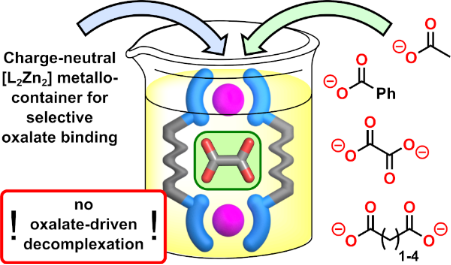
- catalysis [80]. Inspired by these reports, our goal was to overcome the competitive nature of oxalate by encapsulating it in a charge-neutral metallocontainer for the first time. We revisited our previous receptor design and it was clear that the zinc–zinc distance needs to match the size of oxalate in




Advances in radical peroxidation with hydroperoxides
Beilstein J. Org. Chem. 2024, 20, 2959–3006, doi:10.3762/bjoc.20.249
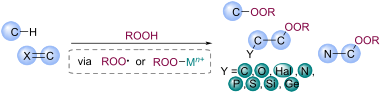
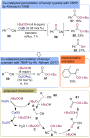
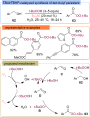
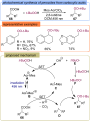
- , either by themselves or with the aid of metal complex catalysis, and to provide an insight into the reactivity of these species. The present work is divided into sections, according to the type of the substrate: C(sp3)–H substrates; aromatic systems; compounds with unsaturated C–C or C–Het bonds. The
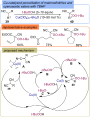
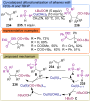
- photoredox catalysis [26][27][28]. These methods allow selectivity to be controlled despite the presence of the complex cocktail of radical species generated by hydroperoxides under redox or homolysis conditions. The main challenge in selective radical peroxidation is the wide range of possible pathways
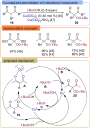
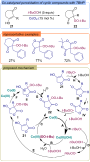
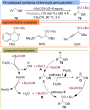
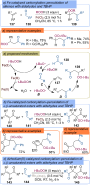
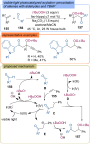
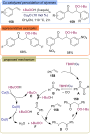
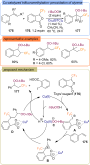
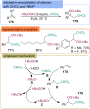
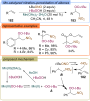
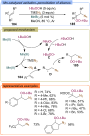
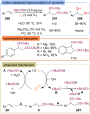
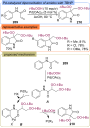
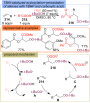
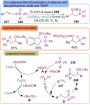
- compounds (β-diketones, β-ketoesters, and malonic esters) with TBHP via homogeneous and heterogeneous Cu(II)-catalysis were developed (Scheme 10) [45][46][47]. It was assumed that the reaction pathway includes the formation of diketonate complex A from β-dicarbonyl compound 19 and copper(II) salt, which































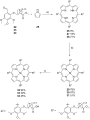
Synthesis of fluorinated acid-functionalized, electron-rich nickel porphyrins
Beilstein J. Org. Chem. 2024, 20, 2954–2958, doi:10.3762/bjoc.20.248
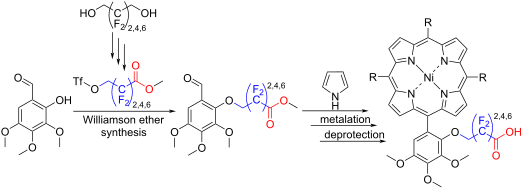
- . After metalation with Ni(acac)2 and hydrolysis electron-rich porphyrins were obtained, that are equipped with covalently attached long chain acid substituents. The target compounds have potential applications in catalysis, sensing, and materials science. The fluorinated aliphatic carboxylic acids (TfO


Multicomponent synthesis of α-branched amines using organozinc reagents generated from alkyl bromides
Beilstein J. Org. Chem. 2024, 20, 2834–2839, doi:10.3762/bjoc.20.239
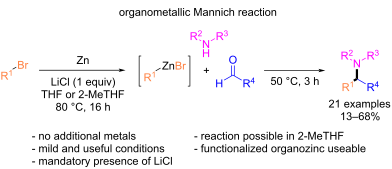
- remains tenuous. Indeed, until recently, mixed alkylzinc species were only employed by Carretero and co-workers in related nucleophilic additions to activated imines under Cu catalysis [22]. In 2022, our group demonstrated that alkyl iodides offer a reliable source of heteroleptic organozinc compounds


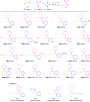
C–C Coupling in sterically demanding porphyrin environments
Beilstein J. Org. Chem. 2024, 20, 2784–2798, doi:10.3762/bjoc.20.234
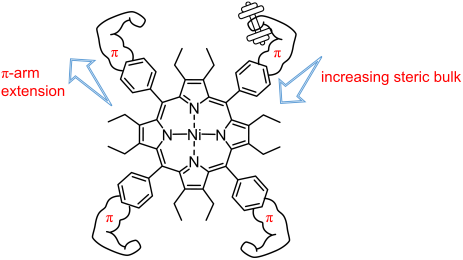
- porphyrin architectures, which could be used in supramolecular assemblies, catalysis, or sensing. In this work a library of arm-extended dodecasubstituted porphyrins was synthesized through the optimization of the classic Suzuki–Miyaura coupling of peripheral haloaryl substituents with a range of boronic
- substrates in their void. Keywords: C–C coupling; conformational analysis; nonplanar porphyrin; Pd-catalysis; porphyrin; Introduction Porphyrins are tetrapyrrolic macrocycles that perform essential processes in nature, such as oxygen transport in hemoglobin and photosynthesis [1]. Porphyrins are often


Copper-catalyzed yne-allylic substitutions: concept and recent developments
Beilstein J. Org. Chem. 2024, 20, 2739–2775, doi:10.3762/bjoc.20.232
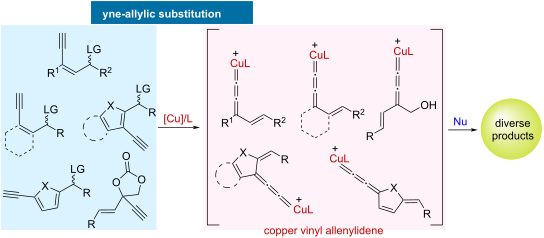
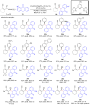
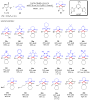
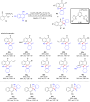
- developments and illustrates the influences of copper salt, ligand, and substitution pattern of the substrate on the regioselectivity and stereoselectivity. Keywords: copper-catalysis; copper vinyl allenylidene intermediate; 1,3-enyne; 1,4-enyne; yne-allylic substitution; Introduction Copper is earth








Synthesis of benzo[f]quinazoline-1,3(2H,4H)-diones
Beilstein J. Org. Chem. 2024, 20, 2708–2719, doi:10.3762/bjoc.20.228
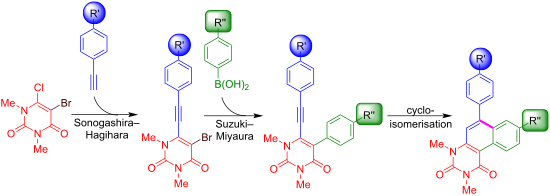
- have already been identified for flavins, making them interesting for photoredox catalysis [68][69]. Inspired by the current interest in the synthesis of novel uracil-derived cyclic compounds and our previous studies, we herein wish to report a new method for the synthesis of a series of novel uracil
- University of Rostock (Germany) and Leibniz Institute for Catalysis (Germany). Funding We are grateful for the financial support of the State of Mecklenburg-Western Pomerania (Germany). Conflict of Interest There are no conflicts or financial interests to declare.




5th International Symposium on Synthesis and Catalysis (ISySyCat2023)
Beilstein J. Org. Chem. 2024, 20, 2704–2707, doi:10.3762/bjoc.20.227
- Coimbra, 3004-535 Coimbra, Portugal LAQV-REQUIMTE, Institute for Research and Advanced Training (IIFA), University of Évora, Rua Romão Ramalho, 59, 7000-671 Évora, Portugal 10.3762/bjoc.20.227 Organic synthesis and catalysis are two of the main stalwarts of the chemical sciences, and they have undergone
- extraordinary advances over the past 150 years. They are a crucial tool for the development of new molecules across a wide range of fields, including drug discovery, energy, materials science, and many more. The ability to design and create novel compounds through organic synthesis, aided by catalysis, is
- fundamental to advancing technologies that address global challenges in health, sustainability, and beyond. By enabling the production of complex molecules with specific functions, chemical synthesis and catalysis play a key role in innovation across the above-mentioned fields and thus improve our quality of

Computational design for enantioselective CO2 capture: asymmetric frustrated Lewis pairs in epoxide transformations
Beilstein J. Org. Chem. 2024, 20, 2668–2681, doi:10.3762/bjoc.20.224
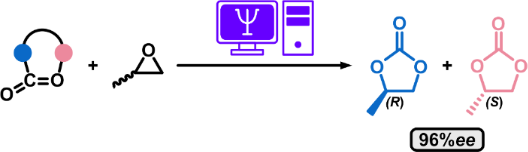
- catalyst efficiency and selectivity in sustainable chemistry applications. Keywords: asymmetric catalysis; carbon dioxide; CO2; epoxide; frustrated Lewis pairs (FLPs); volcano plot; Introduction The field of frustrated Lewis pairs (FLPs) has flourished since their seminal discovery in 2006 by Stephan and
- alkenes [10][11], they have since found applications in catalysis [12][13]. Among the first catalytic uses of FLPs were the hydrogenation of unsaturated compounds [12][14] and the reduction of CO2 using H2 as a reductant [7][15][16][17]. FLPs have become an attractive avenue for the reduction of CO2
- conditions [37][38][39]. When considering asymmetry, it was necessary to include large substituents on the catalyst to induce steric hindrance. These modifications increase the size of the asymmetric catalysts. Thus, the calculations presented in subsection “Asymmetric catalysis” were optimised at the B3LYP


Efficient modification of peroxydisulfate oxidation reactions of nitrogen-containing heterocycles 6-methyluracil and pyridine
Beilstein J. Org. Chem. 2024, 20, 2599–2607, doi:10.3762/bjoc.20.219
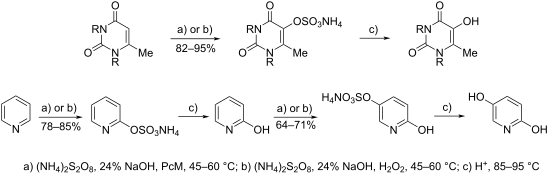
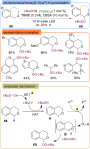
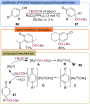
- -hydroxy-6-methyluracil, etc.). One of the successful methods for hydroxylation is peroxydisulfate oxidation. By modifying the Elbs reaction through catalysis and the introduction of additional oxidants, we have been able to significantly increase the yields of practically useful compounds. Keywords
- (analytically pure grade, Reakhim LLC, Russia), and ZnSO4·7H2O (analytically pure grade, LLC Reachim, Russia); 1,3,6-trimethyluracil was synthesized according to the method [45] from 6-methyluracil, dimethyl sulfate, and NaOH. General procedure for the peroxydisulfate oxidation of uracils 1 and 4 a) Catalysis


Synthesis and cytotoxicity studies of novel N-arylbenzo[h]quinazolin-2-amines
Beilstein J. Org. Chem. 2024, 20, 2592–2598, doi:10.3762/bjoc.20.218
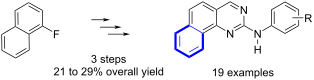
- attractive results in this area. Keywords: Buchwald–Hartwig coupling; cytotoxicity; heterocycles; Pd catalysis; quinazolines; Introduction Nitrogen-containing heterocyclic molecules are ubiquitous in living systems. Among them, quinazolines, and especially the 4-aminoquinazolines (type A molecules, Figure


A review of recent advances in electrochemical and photoelectrochemical late-stage functionalization classified by anodic oxidation, cathodic reduction, and paired electrolysis
Beilstein J. Org. Chem. 2024, 20, 2500–2566, doi:10.3762/bjoc.20.214
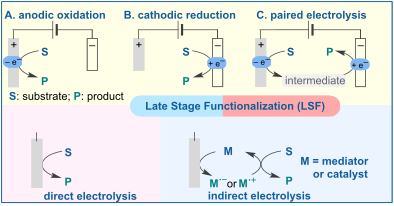
- Nian Li Ruzal Sitdikov Ajit Prabhakar Kale Joost Steverlynck Bo Li Magnus Rueping KAUST Catalysis Center (KCC), King Abdullah University Science and Technology (KAUST), Thuwal 23955-6900, Saudi Arabia Institute for Experimental Molecular Imaging, RWTH Aachen University, Forckenbeckstrasse 55
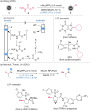
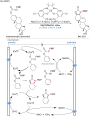
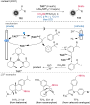
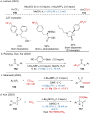
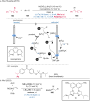
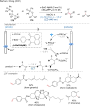
- the hydrosilane to generate a silyl radical. This silyl radical is then oxidized anodically to produce a silyl cation. The silyl cation subsequently abstracts a proton from water (H2O), forming the desired silanol product (Scheme 28). While many methods combining metal catalysis and electrochemistry
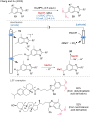
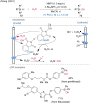
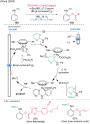
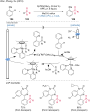
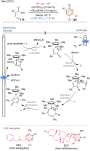
- product (Scheme 34). To date, only a few enantioselective reactions using metal catalysis and electrochemistry have been reported. Very recently, Ackermann and coworkers employed Co(OAc)2 as a catalyst and a salicyloxazoline derivative as a chiral ligand to achieve the electrochemical atroposelective C–H






















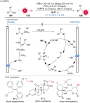
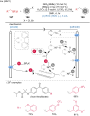
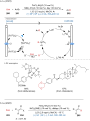


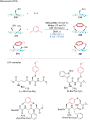


Machine learning-guided strategies for reaction conditions design and optimization
Beilstein J. Org. Chem. 2024, 20, 2476–2492, doi:10.3762/bjoc.20.212

- are applicable to various substrates within the same reaction type [211][212][213][214][215]. For instance, the generality of chiral catalysts for asymmetric or enantioselective catalysis has been a longstanding interest in synthetic chemistry [216]. Angello et al. [53] applied uncertainty-minimizing


HFIP as a versatile solvent in resorcin[n]arene synthesis
Beilstein J. Org. Chem. 2024, 20, 2469–2475, doi:10.3762/bjoc.20.211
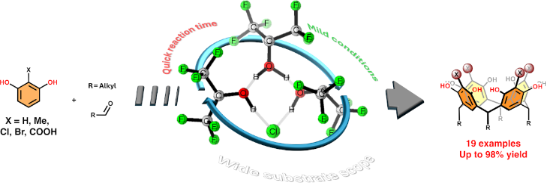
- ], Szumna [37][38][39], Reinhoudt [40][41], Konishi [42][43][44], Tiefenbacher [45][46][47][48][49][50][51][52], Strongin [53][54][55] among others. The wide-ranging popularity of resorcin[n]arenes is rooted in the numerous applications these compounds have in supramolecular chemistry, e.g., catalysis and


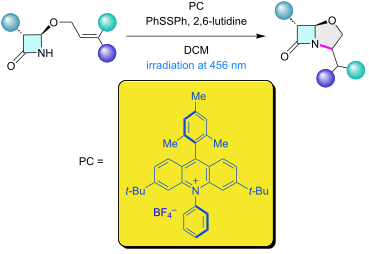
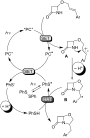
Photoredox-catalyzed intramolecular nucleophilic amidation of alkenes with β-lactams
Beilstein J. Org. Chem. 2024, 20, 2461–2468, doi:10.3762/bjoc.20.210
- Valentina Giraldi Giandomenico Magagnano Daria Giacomini Pier Giorgio Cozzi Andrea Gualandi Department of Chemistry “G. Ciamician”, ALMA MATER STUDIORUM - Università di Bologna, Via Gobetti 85, 40129 Bologna, Italy Center for Chemical Catalysis - C3, ALMA MATER STUDIORUM - Università di Bologna
- , Via Gobetti 85, 40129 Bologna, Italy 10.3762/bjoc.20.210 Abstract The direct nucleophilic addition of amides to unfunctionalized alkenes via photoredox catalysis represents a facile approach towards functionalized alkylamides. Unfortunately, the scarce nucleophilicity of amides and competitive side
- the linked alkene moiety, followed by hydrogen transfer from the hydrogen atom transfer (HAT) catalyst. This process was used to successfully prepare 2-alkylated clavam derivatives. Keywords: β-lactam; acridinium photocatalyst; alkenes; amides; intramolecular radical reaction; photoredox catalysis




Evaluating the halogen bonding strength of a iodoloisoxazolium(III) salt
Beilstein J. Org. Chem. 2024, 20, 2401–2407, doi:10.3762/bjoc.20.204
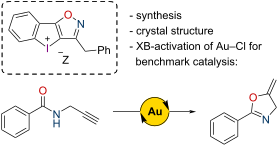
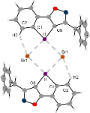
- . Finally, the potential as halogen-bonding activator was benchmarked in solution in the gold-catalyzed cyclization of a propargyl amide. Keywords: diaryliodonium; gold catalysis; halogen bonding; hypervalent iodine; non-covalent interactions; Introduction The compound class of diaryliodonium (DAI) salts
- in a Mannich reaction [4]. In 2018, our group showed in a proof-of-principle study [5] that the Lewis acid catalysis by DAI salts is based on halogen bonding (XB), an interaction between a Lewis base (XB acceptor) and an electrophilic halogen atom in the Lewis acid (XB donor) [6][7][8][9][10]. In
- applied as catalyst for the cyclization of propargylic amide 11, a typical benchmark reaction in gold catalysis (Scheme 2) [24][25][26][27], which had previously already been activated by iodine(I) and iodine(III)-based XB donors [15][18]. To evaluate the activity of the new iodoloisoxazolium 7BArF, it




Asymmetric organocatalytic synthesis of chiral homoallylic amines
Beilstein J. Org. Chem. 2024, 20, 2349–2377, doi:10.3762/bjoc.20.201
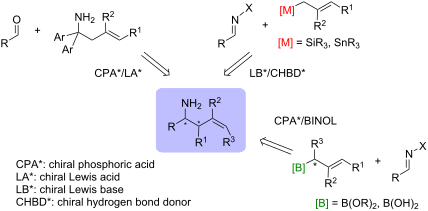
- , encompassing cutting-edge advances in hydrogen-bond catalysis and non-classical approaches. Furthermore, practical examples showcasing the application of these innovative methodologies in total synthesis are presented. Keywords: asymmetric catalysis; asymmetric synthesis; chiral amines; organicatalysis
- ] exploited the application of hydrogen-bond donor catalysis in asymmetric dearomative α-allylations of in situ-generated Ν-acylquinolinium salts 108 generated with 2,2,2-trichloroethyl chloroformate (TrocCl) (Scheme 22). Screening through a range of catalysts including the known squaramide and thiourea
- transfer reagents; (iv) direct metal-free imine carbanion addition to electrophilic alkene. Class (i) underwent an evolution from catalysis by covalent interaction to chiral hydrogen-bonded catalysis, which allowed the expansion of the allyl component scope from simple allyl to substituted allyl groups


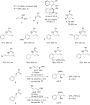


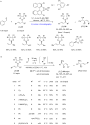


Stereoselective mechanochemical synthesis of thiomalonate Michael adducts via iminium catalysis by chiral primary amines
Beilstein J. Org. Chem. 2024, 20, 2313–2322, doi:10.3762/bjoc.20.198
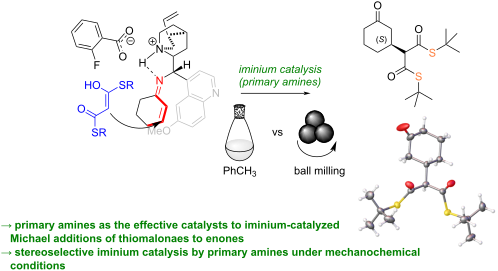
- hour compared to 24 or even 168 hours in solution-based reactions. It is noteworthy that this represents one of the early reports on the application of iminium catalysis using first-generation chiral amines under mechanochemical conditions, along with the utilization of easily enolizable thioesters as
- nucleophiles in this transformation. Keywords: asymmetric catalysis; iminium catalysis; mechanochemistry; organocatalysis; thioesters; Introduction Mechanochemistry, particularly solventless processes under ball milling conditions, offers the opportunity to devise unconventional reaction pathways [1][2][3][4
- [15][16] or iminium-ion catalysis [17] under ball-mill conditions are scarce, in contrast to the abundance of transformations catalyzed by such covalent catalysis. Among the numerous organocatalytic reactions facilitated by primary amine-based iminium ions, Michael-type additions deserve special


Hydrogen-bond activation enables aziridination of unactivated olefins with simple iminoiodinanes
Beilstein J. Org. Chem. 2024, 20, 2305–2312, doi:10.3762/bjoc.20.197
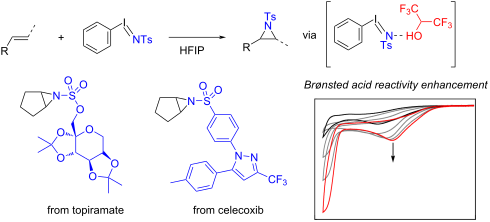
- Phong Thai Lauv Patel Diyasha Manna David C. Powers Department of Chemistry, Texas A&M University, College Station TX, 77843, USA 10.3762/bjoc.20.197 Abstract Iminoiodinanes comprise a class of hypervalent iodine reagents that is often encountered in nitrogen-group transfer (NGT) catalysis. In
- the potential for chemical non-innocence of fluorinated alcohol solvents in NGT catalysis. Keywords: aziridination; electrochemistry; H-bond activation; hypervalent iodine; nitrene transfer; Introduction Hypervalent iodine reagents find widespread application in selective oxidation chemistry due to
- catalysts or photochemical procedures have been developed to enable this transformation [7][8][9]. The reactivity of hypervalent iodine reagents can be enhanced via Lewis acid catalysis [10]. For example, PIDA becomes a stronger oxidant upon coordination of BF3·OEt2, enabling chemistry that was not


Catalysing (organo-)catalysis: Trends in the application of machine learning to enantioselective organocatalysis
Beilstein J. Org. Chem. 2024, 20, 2280–2304, doi:10.3762/bjoc.20.196
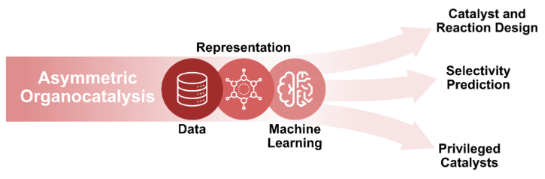
- Research (NCCR) Catalysis, ETH Zurich, Zurich CH-8093, Switzerland 10.3762/bjoc.20.196 Abstract Organocatalysis has established itself as a third pillar of homogeneous catalysis, besides transition metal catalysis and biocatalysis, as its use for enantioselective reactions has gathered significant
- developments in ML specifically for organocatalysis over the last decade, with a focus on its applications. We aim to provide a starting point to catalysis researchers who are interested in ML as well as an assessment of critical challenges to more experienced ML users. We will first give a primer on ML
- pitfall regarding computational data is its accuracy with respect to the ground truth, in particular for multiple factors relevant throughout catalysis, such as non-covalent interactions (NCIs) for organocatalysis or spin properties for transition metal catalysis [35][36]. While most quantities can in


Deuterated reagents in multicomponent reactions to afford deuterium-labeled products
Beilstein J. Org. Chem. 2024, 20, 2270–2279, doi:10.3762/bjoc.20.195
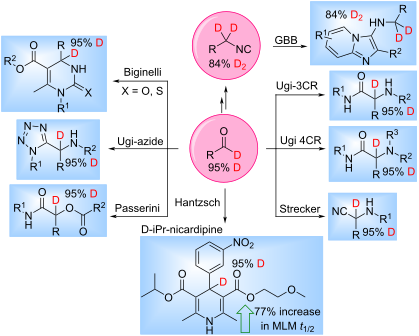
- reagents in MCRs and determination of discrepancies in deuterium retention with MCRs has yet to be explored, although one would expect scrambling to be limited. Thus, we began by gathering highly deuterated aldehydes (>95% D) prepared via NHC catalysis [13] and developed a route to deuterated [D2]-benzylic





