Search results
Search for "coupling" in Full Text gives 2090 result(s) in Beilstein Journal of Organic Chemistry. Showing first 200.
Studies on the syntheses of β-carboline alkaloids brevicarine and brevicolline
Beilstein J. Org. Chem. 2025, 21, 955–963, doi:10.3762/bjoc.21.79

- position 4 of β-carboline by cross-coupling reactions. Thanks to its scalability, this novel approach ensures a broad accessibility to the target compound for potential pharmacological measurements. Using detailed NMR studies, the NMR signals have been assigned for both the base and its dihydrochloride
- salt for further confirming their structures. A new synthesis of the related alkaloid brevicolline was also attempted from the same intermediate. However, after successful coupling of β-carboline with N-methylpyrrole, the trials to saturate the pyrrole ring under various conditions led to unexpected
- reactions: reduction of ring A of the β-carboline skeleton or trifluoroethylation of the pyrrole moiety occurred, leading to interesting and potentially useful derivatives. Keywords: alkaloid; β-carboline; Carex brevicollis DC; cross-coupling reaction; trifluoroethylation; Introduction Carex brevicollis


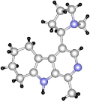
Study of tribenzo[b,d,f]azepine as donor in D–A photocatalysts
Beilstein J. Org. Chem. 2025, 21, 935–944, doi:10.3762/bjoc.21.76

- electronic coupling between the donor and the acceptor due to the highly twisted structure [35] as shown in the HOMO. As a consequence, the Eox of molecule 5e is similar to the Eox of the phenoxazine core, with respect to the rest of the family (5a–d) that possesses higher Eox since their HOMO is localized
- showed a better performance in comparison with the D–A–D compound 3 (Table 3, entry 7). Furthermore, we obtained pleasing outcomes when we tried the photocatalyzed reductive pinacol coupling of benzaldehyde (15), as reported by Rueping [38]. In this methodology, the reduction of compound 15 is
- ). Giese addition using N-Cbz-Pro (12) and dimethyl maleate (13). Pinacol coupling of benzaldehyde (15). Supporting Information Supporting Information File 10: Reactivity studies, general experimental procedures, product isolation and characterization, spectroscopic data for new compounds, and copies of



A convergent synthetic approach to the tetracyclic core framework of khayanolide-type limonoids
Beilstein J. Org. Chem. 2025, 21, 926–934, doi:10.3762/bjoc.21.75
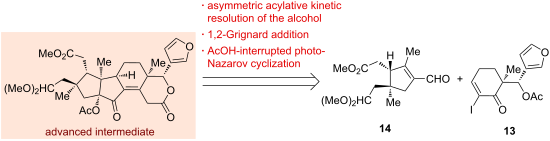
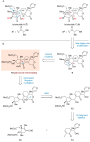
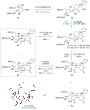
- molecules could be synthesized from diol 9 through a late-stage modification involving adjustment of the oxidation state and regioselective acylation. The formation of 9 was envisioned to proceed via an intramolecular pinacol coupling [30][31] of [5,5,6,6]-tetracycle 10, which forges the A2 ring while




Silver(I) triflate-catalyzed post-Ugi synthesis of pyrazolodiazepines
Beilstein J. Org. Chem. 2025, 21, 915–925, doi:10.3762/bjoc.21.74
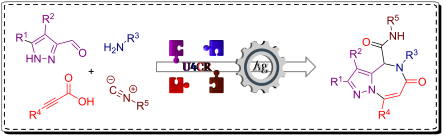
- employed the U4CR of ortho-halogenated benzaldehydes 7, primary amines 2, 3-substituted propiolic acids 8, and isocyanides 4 to synthesize propargylamides 9. These propargylic Ugi adducts 9 were subsequently subjected to a Cu-catalyzed tandem azide–alkyne cycloaddition/Ullmann coupling resulting in the




Recent advances in controllable/divergent synthesis
Beilstein J. Org. Chem. 2025, 21, 890–914, doi:10.3762/bjoc.21.73

- environment around the copper center disfavors a direct interaction with nucleophilic alkyl radicals. Instead, the reaction proceeds via an outer-sphere mechanism, where the alkyl radical reacts with the copper-activated C=N unsaturated bond, enabling stereocontrolled C(sp3)–C(sp3) coupling. In contrast, with
- C(sp3)–C(sp3) coupling via distal stereocontrol, efficiently producing C3-alkylated pyrrolidines, while the nickel catalytic system afforded C2-alkylated pyrrolidines through a tandem alkene isomerization/hydroalkylation process. This method utilized readily accessible catalysts, chiral BOX ligands
- insertion to achieve C3 selectivity, whereas nickel catalysis involved alkene isomerization to generate a (2,3-dihydropyrrolyl) intermediate Int-35, followed by C2-selective coupling. In 2024, the Zheng group reported a catalyst-controlled cyclization reaction of bicyclo[1.1.0]butanes (BCBs) 32 with α




Cu–Bpin-mediated dimerization of 4,4-dichloro-2-butenoic acid derivatives enables the synthesis of densely functionalized cyclopropanes
Beilstein J. Org. Chem. 2025, 21, 877–883, doi:10.3762/bjoc.21.71
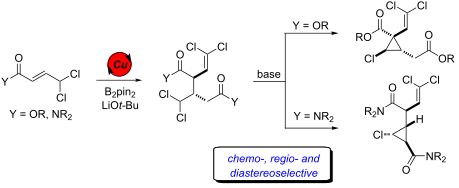
- carboboration of unsaturated hydrocarbons [1][2][3][4][5][6][7]. In the course of our investigation of the copper-catalyzed borylative coupling of alkynes with allylic gem-dichlorides [3], we observed that alkyl 4,4-dichloro-2-butenoates deviated from the general reactivity trend. While allylic gem-dichlorides
- bearing aromatic and aliphatic substituents efficiently provided the allylboration product (Scheme 1a), the use of ester derivative 1 under same reaction conditions led to the formation of an unexpected product arising from the coupling of two dichloride molecules with no alkyne incorporation (Scheme 1b


Light-enabled intramolecular [2 + 2] cycloaddition via photoactivation of simple alkenylboronic esters
Beilstein J. Org. Chem. 2025, 21, 854–863, doi:10.3762/bjoc.21.69
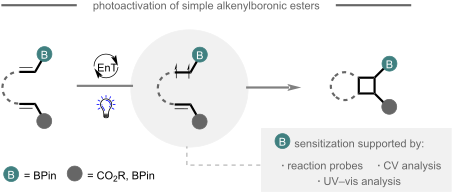
- excitation [66][67], product derivatization was explored (Scheme 2A). While initial efforts for oxidation proved challenging, due to a competing retro-aldol ring-opening reaction, employing a buffered system enabled access to β-alcohol 5. Given the previous power of trifluoroborates in cross-coupling



Chitosan-supported CuI-catalyzed cascade reaction of 2-halobenzoic acids and amidines for the synthesis of quinazolinones
Beilstein J. Org. Chem. 2025, 21, 839–844, doi:10.3762/bjoc.21.67
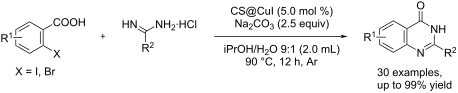
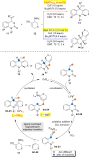
- , which acts as a base. Subsequently, I undergoes oxidative addition and complexation with the amidine 2 to generate intermediate II. This intermediate then undergoes reductive elimination to form intermediate III, releasing CS@CuI back into the system. Finally, the coupling reaction between the carboxyl


4-(1-Methylamino)ethylidene-1,5-disubstituted pyrrolidine-2,3-diones: synthesis, anti-inflammatory effect and in silico approaches
Beilstein J. Org. Chem. 2025, 21, 817–829, doi:10.3762/bjoc.21.65

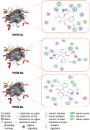
- , show geminal coupling to each other [19]. However, in the 1H NMR spectrum of product 5a the above peaks were absent and the appearance of a new doublet at 2.76 ppm representing three protons from the methyl group (CH3) is observed. In addition, the 2D 1H–1H COSY NMR spectrum of 5a exhibited spin–spin
- coupling between the secondary amino proton and the proton resonance at 2.76 ppm (see Supporting Information File 1). Therefore, the doublet resonance signal at 2.76 ppm correlates to three protons from the methyl group (CH3) directly bonded to the nitrogen atom of the secondary amino group (NH


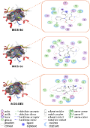
Synthesis and photoinduced switching properties of C7-heteroatom containing push–pull norbornadiene derivatives
Beilstein J. Org. Chem. 2025, 21, 807–816, doi:10.3762/bjoc.21.64
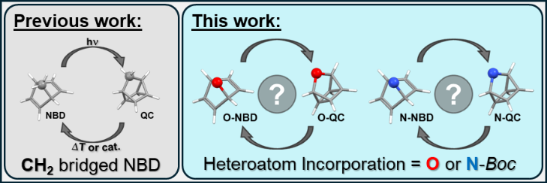
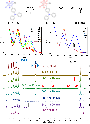
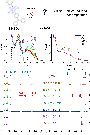
- a subsequent Suzuki cross-coupling reaction with (4-(diphenylamino)phenyl)boronic acid was performed. The reaction conditions were adapted from prior experiments with C-NBD1 [40] and further refined for the heterocyclic analogues. Optimal results were achieved using K2CO3, Pd(OAc)2 and RuPhos with


Recent advances in the electrochemical synthesis of organophosphorus compounds
Beilstein J. Org. Chem. 2025, 21, 770–797, doi:10.3762/bjoc.21.61
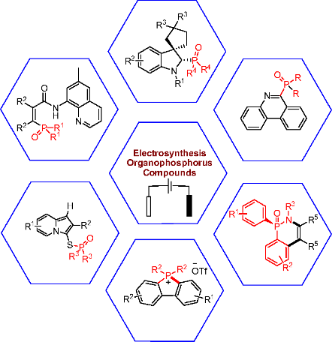
- amides with electron-withdrawing or electron-donating groups on their aromatic ring, producing products with yields ranging from 51% to 82%. In 2023, Lei and co-workers [47] reported an electrochemical C–P bond formation via a coupling reaction of C–H bonds of alkynes, alkenes, and aryl compounds with
- dialkyl phosphonates at carbon and platinum electrodes as the anode and cathode in the presence of a silver catalyst in a divided cell (Scheme 3). According to the report, the silver catalyst is central to the coupling reaction. The study of the effect of alternating current (a.c.) electrolysis parameters
- ferrocene and ruthenocene via coupling reaction. This method provides an efficient and versatile synthetic approach for producing phosphorylated metallocenes but also aids in interpreting the regioselectivity and reactivity of C−H functionalization in unsymmetric metallocenes. They used a platinum electrode


Orthogonal photoswitching of heterobivalent azobenzene glycoclusters: the effect of glycoligand orientation in bacterial adhesion
Beilstein J. Org. Chem. 2025, 21, 736–748, doi:10.3762/bjoc.21.57
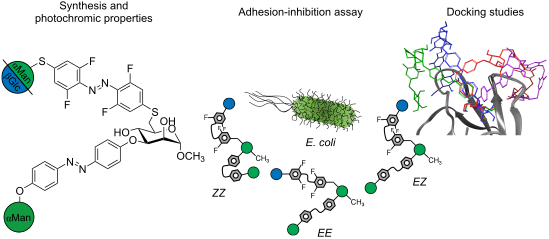
- and excellent yield of 94% (Scheme 1). A chemoselective deprotection of the mannosyl thioacetate 7 to yield the glycosyl thiol 8 was achieved using 0.95 equivalents of sodium carbonate. The crude product was in turn submitted to a Buchwald–Hartwig–Migita cross-coupling reaction [33] with the
- azobenzene derivative 9 [34] to furnish 10. This reaction had to be carried out at −78 °C in order to suppress nucleophilic substitution of the ortho-fluorine substituents in 9 by the thiol 8, a reaction that competes with the desired cross-coupling. For the second Buchwald–Hartwig–Migita cross-coupling, the
- 3-O-(mannosyloxyazobenzene)-6-thio-mannoside 11 was employed, which was prepared according to a known procedure applied for the synthesis of the heterobivalent glycocluster 6βGlc3αMan 1 (cf. Supporting Information File 1, Scheme S1). The cross-coupling of thiol 11 with the azobenzene


Synthesis of HBC fluorophores with an electrophilic handle for covalent attachment to Pepper RNA
Beilstein J. Org. Chem. 2025, 21, 727–735, doi:10.3762/bjoc.21.56
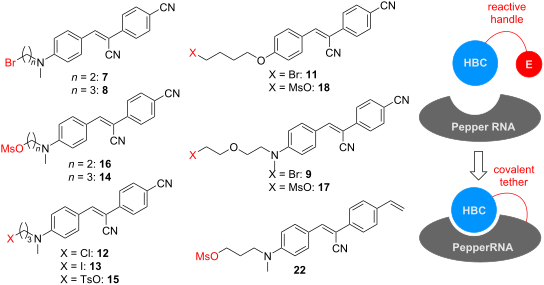
- provide fluorophore 19. Subsequent palladium-catalyzed cross-coupling with tributyl(vinyl)tin resulted in the installation of the vinyl group (compound 20). Finally, cleavage of the silyl ether gave the free alcohol 21, which was converted into the corresponding mesyloxypropyl HBC ligand 22. The



Photochemically assisted synthesis of phenacenes fluorinated at the terminal benzene rings and their electronic spectra
Beilstein J. Org. Chem. 2025, 21, 670–679, doi:10.3762/bjoc.21.53

- was obtained by a Migita–Kosugi–Stille coupling between bromophenanthrene 15 and (E)-1,2-bis(tributylstannyl)ethene to afford diarylethene 18 followed by Mallory photoreaction. The obtained intermediate 18 contained residual palladium and isolation was not successful due to its poor solubility in





Recent advances in allylation of chiral secondary alkylcopper species
Beilstein J. Org. Chem. 2025, 21, 639–658, doi:10.3762/bjoc.21.51
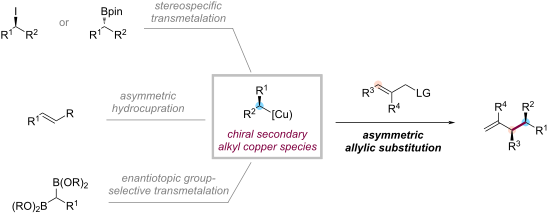
- AAA methodologies. Review Copper-catalyzed stereospecific coupling of chiral organometallic species with allylic electrophiles The asymmetric construction of carbon–carbon bonds through copper-catalyzed AAA has emerged as a powerful synthetic tool in organic chemistry [41][42][43][44][45]. The
- organolithium species and the other employing chiral organoboron compounds. Copper-mediated stereospecific coupling of chiral organolithium species with allylic electrophiles In the organolithium approach, a breakthrough was achieved by Knochel and co-workers through carefully controlled reaction conditions
- stereochemical integrity. Through these careful experimental controls, Knochel and co-workers effectively addressed the long-standing challenge of handling these traditionally unstable chiral organometallic intermediates. Copper-catalyzed stereospecific coupling of chiral organoboron species with allylic




Photocatalyzed elaboration of antibody-based bioconjugates
Beilstein J. Org. Chem. 2025, 21, 616–629, doi:10.3762/bjoc.21.49
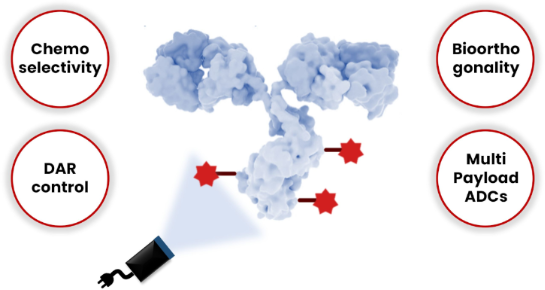
- covalent bioconjugation. Effective bioconjugation has been dramatically facilitated by the development of robust bioorthogonal reactions, which has revolutionized the field of chemical biology [17]. A bioorthogonal reactive group can be introduced into proteins via direct chemical coupling on specific
- native amino acids, by enzymatic coupling, or by bioengineering for the incorporation of non-canonical amino acids [18][19]. In fact, incorporating non-natural amino acids significantly broadens the scope of reactions that can be used in bioconjugation. As an example, click chemistry comprises one
- particularly useful and important tool in which azides and other dipolar species engage with reactive alkenes and alkynes on non-canonical amino acids [20]. Transition-metal-mediated processes, including metathesis reactions, aryl cross-coupling reactions, and conjugate addition reactions with dehydroalanine


Semisynthetic derivatives of massarilactone D with cytotoxic and nematicidal activities
Beilstein J. Org. Chem. 2025, 21, 607–615, doi:10.3762/bjoc.21.48
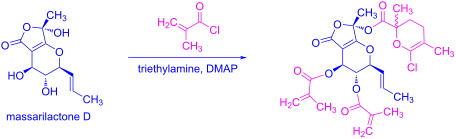
- recorded in deuterated solvents (CDCl3 and acetone-d6) with an Avance III 700 (Bruker, Billerica, MA, USA) (1H: 700 MHz, 13C: 175 MHz) and an Avance III 500 (Bruker, Bremen, Germany) (1H: 500 MHz, 13C: 125 MHz) spectrometers. Chemical shifts are given in parts per million (ppm), and coupling constants in


Formaldehyde surrogates in multicomponent reactions
Beilstein J. Org. Chem. 2025, 21, 564–595, doi:10.3762/bjoc.21.45
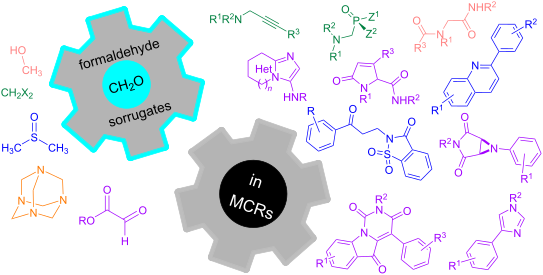
- et al. developed a three-component Mannich-type reaction under oxidative and catalytic conditions that allows the coupling of aryl ketones 18 and saccharine (19) using DMSO as the solvent and the source for a methylene bridge linking the two building blocks (Scheme 15) [49]. Following this strategy
- available from the reaction between aldehydes and amines (primary or secondary), the reaction is called AAA coupling: amine–aldehyde–alkyne coupling (Scheme 19). In this context, the use of formaldehyde as a C1 building block is suitable despite the unstable aminol intermediate. There are several examples
- showing how formaldehyde or paraformaldehyde can be used in the AAA coupling of three components for the synthesis of propargylamines [58][59][60][61]. However, the problems associated with the stability of the imine/enamine intermediate generated from formaldehyde must still be addressed. Several


Deep-blue emitting 9,10-bis(perfluorobenzyl)anthracene
Beilstein J. Org. Chem. 2025, 21, 515–525, doi:10.3762/bjoc.21.39
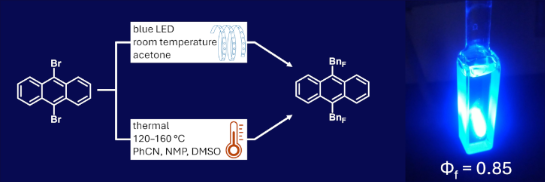
- -step reactions with anthraquinone starting materials [24], or by Ullman coupling reactions of acene bromides with perfluoroalkyl iodides [25]. Notably, direct UV photoinduced reactions between anthracene and perfluoroalkyl iodides in the presence of a reducing agent, Na2S2O3, yielded perfluoroalkylated
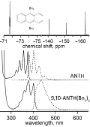
- and C6F5 moieties appeared in the expected regions of −δ = 71–74 ppm and −δ = 140–165 ppm, respectively. Through-space F–F coupling was observed between the CF2 group and the ortho-F atoms, resulting in a triplet and a multiplet, respectively. Using 1,4-C6H4(CF3)2 as an internal standard, the F/H mole
- the long ANTH axis (Figure S5 in Supporting Information File 1). This insulation further inhibits any electronic coupling between the columns. Having effectively zero π–π overlap should result in reduced electronic coupling between molecules, which may be a beneficial factor for OLED applications





Synthesis of the aggregation pheromone of Tribolium castaneum
Beilstein J. Org. Chem. 2025, 21, 510–514, doi:10.3762/bjoc.21.38
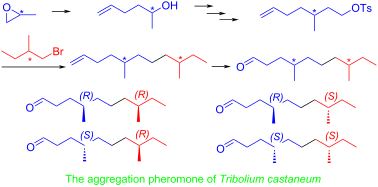
- is a destructive stored product pest. The aggregation pheromone of this pest was prepared via a new and effective strategy. The key steps include the ring-opening reaction of chiral 2-methyloxirane, the stereospecific inversion of chiral secondary tosylate, Li2CuCl4-catalyzed coupling of tosylate
- coupling, and finally leads to the target pheromones by olefin oxidation with RuCl3/NaIO4. Results and Discussion The retrosynthetic analysis of the aggregation pheromone (4R,8R)-1 is shown in Scheme 1. Obviously, the target pheromone (4R,8R)-1 could be synthesized via an oxidation of chiral terminal
- olefine (5R,9R)-12, which could be obtained through Li2CuCl4-catalyzed coupling of chiral tosylate (S)-10 with a Grignard reagent derived from (R)-1-bromo-2-methylbutane ((R)-11). The key chiral building block (S)-10 was envisaged to be prepared through a sequence of hydrolyzation, decarboxylation, borane


Synthesis of N-acetyl diazocine derivatives via cross-coupling reaction
Beilstein J. Org. Chem. 2025, 21, 490–499, doi:10.3762/bjoc.21.36
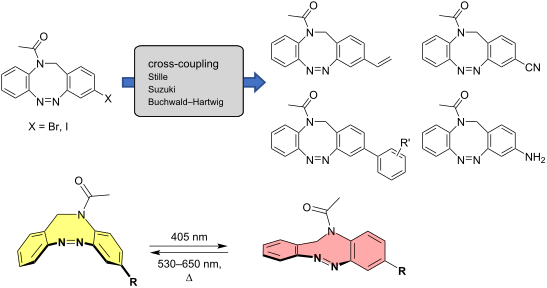
- switching efficiency in aqueous solutions. In order to investigate the chemistry of this promising photoswitch and to unlock further applications, we now investigate strategies for the synthesis of derivatives, which are based on cross-coupling reactions. Fourteen vinyl-, aryl-, cyano-, and amino
- -substituted diazocines were prepared via Stille, Suzuki, and Buchwald–Hartwig reactions. X-ray structures are presented for derivatives 1, 2 and 7. Keywords: cross-coupling; diazocine; N-acetyl diazocine; photoisomerization; photoswitch; thermal relaxation; Introduction Diazocines are frequently used
- substitution. Substituents such as halogen atoms must be introduced into the N-acetyl diazocine structure during the synthesis of the building blocks. In the present work we start from mono- and dihalogenated N-acetyl diazocine 2–4 (Figure 2) and focus on the further derivatization via cross-coupling reactions


Organocatalytic kinetic resolution of 1,5-dicarbonyl compounds through a retro-Michael reaction
Beilstein J. Org. Chem. 2025, 21, 473–482, doi:10.3762/bjoc.21.34
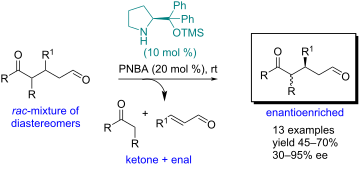
- organometallic catalysis [15], enzymatic catalysis [16], aminocatalysis [17][18][19], and hydrogen-bonding catalysis [20][21][22]. The Michael addition reaction is a versatile synthetic methodology that allows the formation of new carbon–carbon and carbon–heteroatom bonds through the coupling of electron-poor


Photomechanochemistry: harnessing mechanical forces to enhance photochemical reactions
Beilstein J. Org. Chem. 2025, 21, 458–472, doi:10.3762/bjoc.21.33
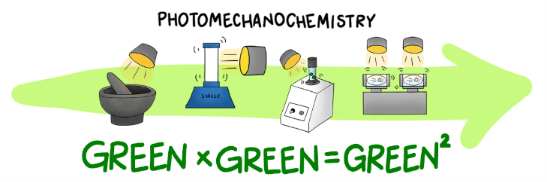
- . Also in this case, the addition of toluene was beneficial and excellent yield of the corresponding product (10.2) was observed in 30 h of reaction. As a comparison, the latter reaction required 48 h in solution. Intriguingly, 10.3 could in turn be synthesized via a mechanochemical Suzuki coupling
- benefits of the photomechanochemical approach in the field of synthesis [77]. Specifically, they developed photomechanochemical conditions for the atom-transfer-radical addition (ATRA) of sulfonyl chlorides to alkenes, pinacol coupling of carbonyl compounds, decarboxylative acylation, and photocatalyzed [2
- traditional solution-phase synthesis. In fact, in the latter case, almost complete recovery of the starting material was observed. Second, the authors found that the replacement of diisopropylethylamine (DIPEA) with Hantzsch ester in the role of sacrificial reductant for the pinacol coupling of benzaldehyde




New tandem Ugi/intramolecular Diels–Alder reaction based on vinylfuran and 1,3-butadienylfuran derivatives
Beilstein J. Org. Chem. 2025, 21, 444–450, doi:10.3762/bjoc.21.31
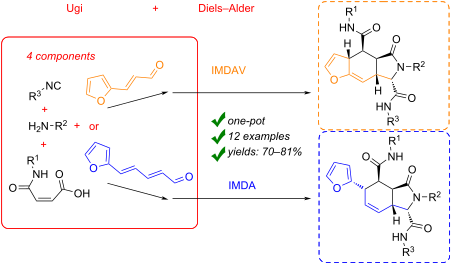
- products were identified via NMR as 4,4a,5,6,7,7a-hexahydro-3aH-furo[2,3-f]isoindoles. The structures of compounds 5 were confirmed by NMR spectroscopy data (for details and discussion see Supporting Information File 1). The NMR data for the obtained furoindole skeleton signals and spin-coupling constants




The effect of neighbouring group participation and possible long range remote group participation in O-glycosylation
Beilstein J. Org. Chem. 2025, 21, 369–406, doi:10.3762/bjoc.21.27
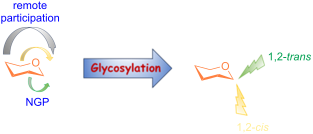
- glycosylation reaction between the two extremes of substitution reactions enables the synthetic chemists to manoeuvre and design the coupling reactions according to the regio- and stereochemical demand. In chemical glycosylation, the role of protecting groups in directing the attack of the incoming nucleophile