Search results
Search for "ester" in Full Text gives 1547 result(s) in Beilstein Journal of Organic Chemistry. Showing first 200.
The effect of neighbouring group participation and possible long range remote group participation in O-glycosylation
Beilstein J. Org. Chem. 2025, 21, 369–406, doi:10.3762/bjoc.21.27
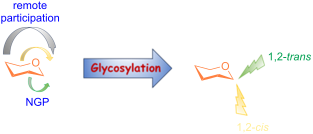
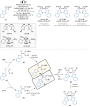
- groups interact with the anomeric carbon and thereby help in the formation of a specific stereocentre. So, modulating the neighbouring protecting group in the C-2 position of glycosyl donors helps in improving the stereoselectivity of the produced glycoside bonds. Ester-type participating protecting
- the cases (exception depicted for perbenzoylated SBox glycosides exhibiting superarmament [79] proving to be more reactive than the analogous perbenzylated donors) thereby reducing the reactivity of the glycosyl donors. The challenge is to activate the ester-protected glycosyl donor and to implement
- will do injustice to all the numerous other works with acetyl groups. An ester group similar to the acetyl building block, i.e., the benzoyl group, has also been extensively used for the same purpose. Although the use of a benzoyl group in comparison to the acetyl group deviates from the principle of




Synthesis, characterization, antimicrobial, cytotoxic and carbonic anhydrase inhibition activities of multifunctional pyrazolo-1,2-benzothiazine acetamides
Beilstein J. Org. Chem. 2025, 21, 348–357, doi:10.3762/bjoc.21.25
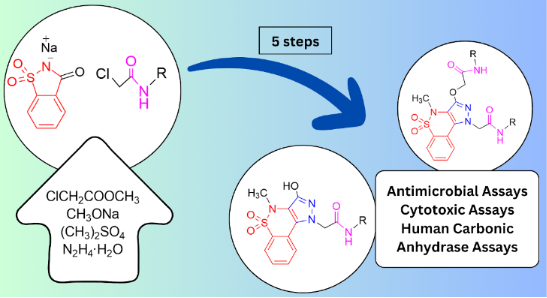
- were evaluated for their antimicrobial, cytotoxic, and human carbonic anhydrase (hCA) inhibition potential. Results and Discussion Chemistry The targeted compounds were synthesized using the general scheme shown in Scheme 1. The ester group was introduced at the nitrogen of saccharine sodium (1) using


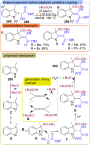
Synthesis of new condensed naphthoquinone, pyran and pyrimidine furancarboxylates
Beilstein J. Org. Chem. 2025, 21, 340–347, doi:10.3762/bjoc.21.24
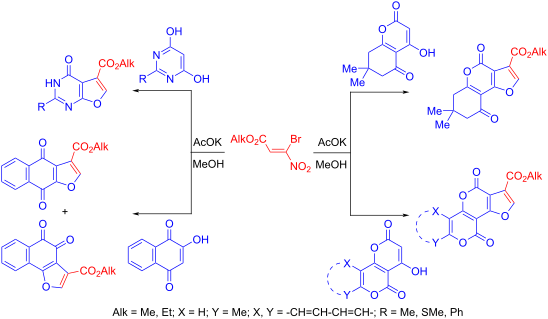
- frequency values (1725–1731 cm−1). This observation may be due to the position of the ester fragment relative to the heterocyclic system. The analysis of the results of X-ray diffraction analysis shows that the torsion angle C(10)–C(3)–C(16)–O(17) of methyl esters 5a and 6c is −0.8(2), and 5(2)°, and of
- . In turn, in the IR spectra (KBr) of compounds 7a–f, absorption bands of the ester fragment in the region of 1714–1750 cm−1 and absorption bands of the carbonyl group of the amide fragment in the region of 1674–1688 cm−1 are observed, which suggests the existence of these compounds in the solid phase


Red light excitation: illuminating photocatalysis in a new spectrum
Beilstein J. Org. Chem. 2025, 21, 296–326, doi:10.3762/bjoc.21.22

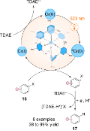
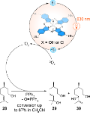
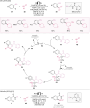
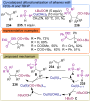
- the substrate, an activated ester 25, subsequently generating carbon-centered radicals without the need for sacrificial electron donors via a decarboxylation process. In reacting with electron-deficient alkenes or alkynes 26, these radicals further yield tetralin and dialin moieties 27, respectively
- hydrogen-atom-transfer mechanisms with a Hantzsch ester 34 as presented in Scheme 12. Moreover, the study has explored the impact of substrate steric hindrance and halogen bond strength on catalytic efficiency, revealing that bromo- and iodo-substrates react more efficiently, while chloro-substrates















Three-component reactions of conjugated dienes, CH acids and formaldehyde under diffusion mixing conditions
Beilstein J. Org. Chem. 2025, 21, 262–269, doi:10.3762/bjoc.21.18
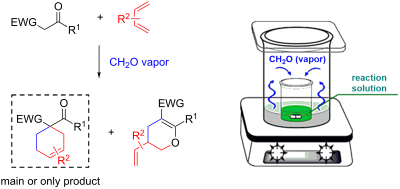
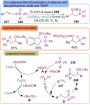
- conditions, we studied the possibility of generating active methylidene derivatives from malonic ester, Meldrum's acid, cyanoacetic acid ester, acetoacetic ester, acetylacetone and 1,3-diphenylpropane-1,3-dione (1). We found that, with the exception of malonic ester, all compounds reacted with formaldehyde
- acetylacetone from the inner vial into the outer vessel containing formaldehyde, which affected the yield of all [4 + 2]-cycloaddition adducts involving this CH acid, regardless of the choice of diene. For acetoacetic ester and 1,3-diphenylpropane-1,3-dione, it was found that in addition to the main products 5
- cyanoacetic ester and acetylacetone. The configuration of the products 4 and 5 was established by bromination of a small amount of these isomeric compounds in CDCl3 (Scheme 6) and subsequent analysis of the mixture by 1H NMR spectroscopy. For the stereoisomers 4, the main product was lactone 22, identified by


Recent advances in electrochemical copper catalysis for modern organic synthesis
Beilstein J. Org. Chem. 2025, 21, 155–178, doi:10.3762/bjoc.21.9

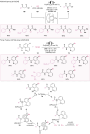
- enantioselectivity. First, the reaction of ketimine ester 33 and 2,3-dimethylhydroquinone at 10 °C provided the chiral 1,4-addition product 35 via dynamic kinetic asymmetric transformation (DyKAT). Conversely, when the reaction was performed at −10 °C, the reaction pathway switched from DyKAT to kinetic resolution
- (KR) of the racemic ketimine ester, providing the same chiral product 35 with recovered enantioenriched starting material. Additionally, when a 1-naphthyl ester was used instead of a methyl ester at −10 °C, 1,4-addition followed by intramolecular tandem annulation generated the corresponding chiral
- product 36. Finally, using 1-naphthyl ester and relatively bulkier 2,6-dimethylhydroqunone as starting materials produced chiral 1,6-addition products 37. In mechanistic studies, using quinone 38 instead of hydroquinone 34 in the electrochemical-free process produced the desired product 36, with a similar








Cu(OTf)2-catalyzed multicomponent reactions
Beilstein J. Org. Chem. 2025, 21, 122–145, doi:10.3762/bjoc.21.7

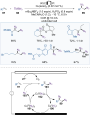
- radical mechanisms. Synthesis of α-aminonitriles 1. Synthesis of β-amino ketone or β-amino ester derivatives 3. Synthesis of 1-(α-aminoalkyl)-2-naphthol derivatives 4. Synthesis of thioaminals 5. Synthesis of aryl- or amine-containing alkanes 6 and 7. Synthesis of 1-aryl-2-sulfonamidopropanes 8. Synthesis






Recent advances in organocatalytic atroposelective reactions
Beilstein J. Org. Chem. 2025, 21, 55–121, doi:10.3762/bjoc.21.6
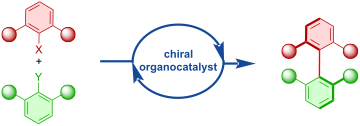
- -naphthols, new atroposelective reactions of quinones and iminoquinones were developed [63]. The reaction of quinones with an ester group 109 and indoles with alkyl substituents 110 catalyzed by CPA C29 provided products 112 with regioselectivity on the pyrrole ring of indole (Scheme 35). On the contrary
- arylpyrrole derivatives (R)-235 and 237 [101]. In the first case, arylpyrroles 235 reacted with either diethyl 2-oxomalonate or dihydroxymalonate ester derivatives 236 (Scheme 69). A kinetic resolution was done with arylpyrroles 235 and diethyl 2-oxomalonate. The possibility of the kinetic resolution was






Facile one-pot reduction of β-nitrostyrenes to phenethylamines using sodium borohydride and copper(II) chloride
Beilstein J. Org. Chem. 2025, 21, 39–46, doi:10.3762/bjoc.21.4
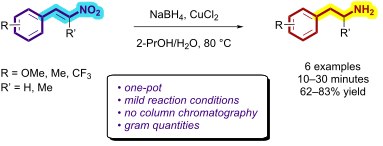
- -nitrostyrene (4a), precursor of most of the hallucinogenic 2C-X family (Table 1). This method was also tested on other types of scaffolds to investigate its potential general applications and effects on other substituents. As sodium borohydride per se does not reduce ester nor nitro functionalities [15][16][17
- ][18][19][20][21][22][28][29], the presence of the copper salt results in overcoming this issue and leads to isolated yields above 90% (7–9) (Scheme 2). Therefore, the NaBH4/CuCl2 system was proved to work on aromatic ester, nitro, and α,β-unsaturated nitroalkene functionalities. Our work demonstrates
- reductive methods used to date for the synthesis of substituted phenethylamines from their α,β-unsaturated nitroalkene analogues. Furthermore, the NaBH4/CuCl2 system is effective at reducing nitro and ester functionalities on aromatic structures, while leaving intact benzoic acid, amido- and halogenated


Synthesis of acenaphthylene-fused heteroarenes and polyoxygenated benzo[j]fluoranthenes via a Pd-catalyzed Suzuki–Miyaura/C–H arylation cascade
Beilstein J. Org. Chem. 2024, 20, 3290–3298, doi:10.3762/bjoc.20.273
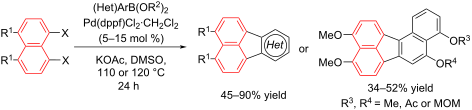
- -diiodonaphthalene (12) and thiophene-3-ylboronic acid and ester derivatives 17 under the optimized conditions reported in our previous work (Table 1) [43]. Gratifyingly, the reaction worked smoothly with the use of thiophene-3-ylboronic acid (17a) to give acenaphtho[1,2-b]thiophene (15a) in 76% yield when Pd(dppf
- ] or catechol [47] boronic esters as the final products. Therefore, it is important that they can be directly utilized with our methodology without further boronic ester interconversions. To this end, we first tested the reaction of thiophene-3-ylboronic acid pinacol ester (17b), and we were pleased to
- see that the desired product 15a was isolated with a similar reaction yield (78%, Table 1, entry 2). Thiophene-3-ylboronic acid catechol ester (17c) was also found to be a competent reaction partner affording the final product 15a successfully, albeit in a slightly lower yield (69%, Table 1, entry 3


Reactivity of hypervalent iodine(III) reagents bearing a benzylamine with sulfenate salts
Beilstein J. Org. Chem. 2024, 20, 3281–3289, doi:10.3762/bjoc.20.272
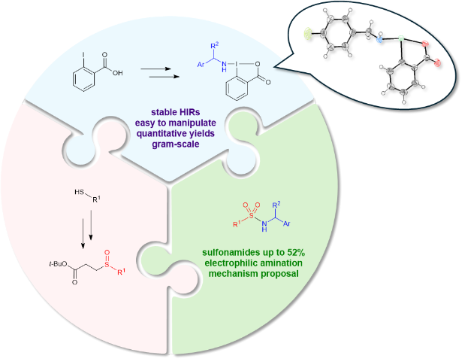
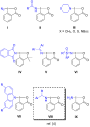
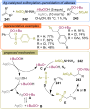
- : 4a (2 equiv), NaH (2.4 equiv), 2a, TEMPO (10 mol %), degassed DMF (0.055 M). NO – not observed. Mechanism proposed for sulfonamide 5, β-sulfinyl ester 4, disulfide 7, and sulfide 3 formations. The ionic steps are illustrated in green, whereas the radical steps appear in purple [35]. Optimization of



Giese-type alkylation of dehydroalanine derivatives via silane-mediated alkyl bromide activation
Beilstein J. Org. Chem. 2024, 20, 3274–3280, doi:10.3762/bjoc.20.271
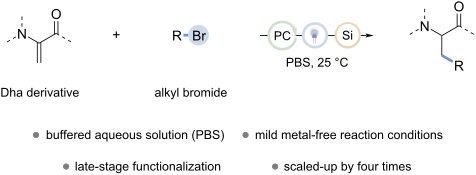
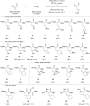
- yield of 4. Besides, the introduction of a boronic pinacol ester group, useful for subsequent post-functionalization, compound 7 was achieved in a relatively lower yield of 36%. Interestingly, the reaction also worked adequately for primary alkyl bromides with electron-withdrawing groups as demonstrated



Germanyl triazoles as a platform for CuAAC diversification and chemoselective orthogonal cross-coupling
Beilstein J. Org. Chem. 2024, 20, 3198–3204, doi:10.3762/bjoc.20.265
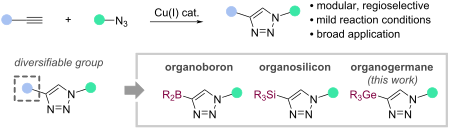
- chromene (12) were tolerated. Benzylic azides were accommodated including those bearing nitro (2), iodo (3), and boronic ester groups (5, 21). Strained rings were effective including cubane (18) and bicyclopentane (20). While 18 and 20 were isolated in lower yield, no evidence of ring opening was observed
- displaying an arylboronic acid and MIDA ester (22 and 23) gave no reaction, side reactions were observed with a dialkynyl germane (24), and the product derived from azide 25 was unstable to purification. To further demonstrate the compatibility and utility of germanyl alkynes in CuAAC reactions, we applied



Synthesis of 2H-azirine-2,2-dicarboxylic acids and their derivatives
Beilstein J. Org. Chem. 2024, 20, 3191–3197, doi:10.3762/bjoc.20.264
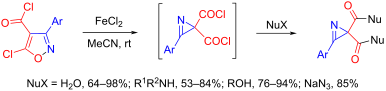
- a 4 mmol scale gave dimethyl ester 11a in 99% yield. Unexpectedly, the reaction of branched alcohols with diacyl chloride 2a failed. For example, the reaction with benzyl alcohol resulted in the formation of an overly complex mixture of products. Adding bases to trap HCl did not improve the
- situation. Dibenzyl ester 11c was prepared using traditional activation of carboxylic acid 6a, although the yield was only 23%. A higher yield of the branched ester 11d (86%, as a mixture of diastereomers) was obtained by carbene insertion, generated by blue LED irradiation of methyl 2-diazo-2-phenylacetate




Direct trifluoroethylation of carbonyl sulfoxonium ylides using hypervalent iodine compounds
Beilstein J. Org. Chem. 2024, 20, 3182–3190, doi:10.3762/bjoc.20.263
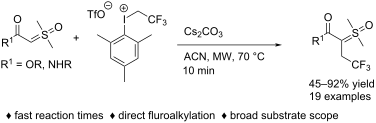
- reported the α-alkylation of carbonyl sulfoxonium ylides via a Michael addition approach that occurred without any competition from cyclopropanation [30]. While this reaction represented the first direct alkylation of sulfoxonium ylides, it was nonetheless limited to the more reactive ester ylide variants
- studies using methyl ester sulfoxonium ylide 1a and 2,2,2-trifuoroethyl(mesityl)iodonium triflate salt (2a), as model substrates (see also Table S1 in Supporting Information File 1). Combining these at room temperature in acetonitrile produced 3a in 8% 1H NMR yield (Table 1, entry 1). Repeating the
- scope and limitations of this novel transformation (Scheme 2). Initially, we investigated the effects of introducing various substituents around the ester group of the carbonyl sulfoxonium ylide. We discovered that the reaction worked very well for various alkyl ester derived substrates (3b–g). For


Synthesis of extended fluorinated tripeptides based on the tetrahydropyridazine scaffold
Beilstein J. Org. Chem. 2024, 20, 3174–3181, doi:10.3762/bjoc.20.262
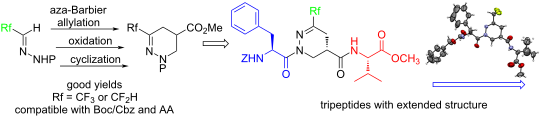
- or ester substituent. Firstly, the group of Haupt reported the synthesis of ethyl esters of tetrahydromethylpyridazine in 20% yield in a mixture of methanol and water by the reaction of methylhydrazine with acetylene dicarboxylic esters through the formation of enhydrazine (Scheme 1a), [23]. Later
- the ester function, as previously reported [32][33][34][35]. The corresponding adducts 5a–f were isolated with good yields from 66 to 88%. In the case of hydrazides 5e and 5f, the mixture of diastereomers (1:1 ratio) could not be separated at this stage. Although no stereoselectivity is observed, it
- chromatography. With dipeptides 7e and 7f stereoisomerically pure, we next focused our attention on the preparation of novel peptidic structures to perform some conformational analyses. Starting from the methyl ester 7, each diastereomer was engaged in a classical sequence of saponification in the presence of


Advances in radical peroxidation with hydroperoxides
Beilstein J. Org. Chem. 2024, 20, 2959–3006, doi:10.3762/bjoc.20.249
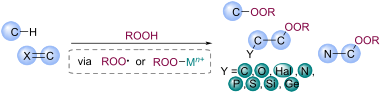
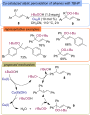
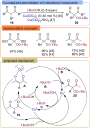
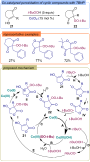
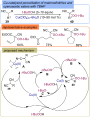
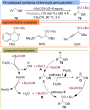
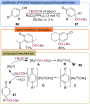
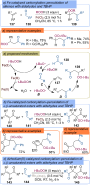
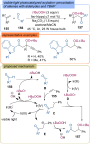
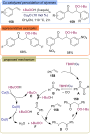
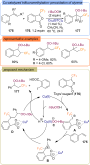
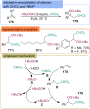
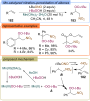
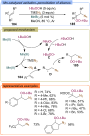
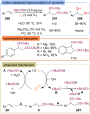
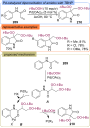
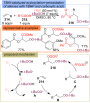
- leads to the formation of the target product 139. Later, iron-catalyzed three-component reactions of α,β-unsaturated carbonyl compounds 140, aldehydes 141, and TBHP leading to α-ester-β-keto peroxides 142 have been developed (Scheme 45b) [106][107][108]. Radical coupling of arylaldehydes 144 with α,β































Synthesis of fluorinated acid-functionalized, electron-rich nickel porphyrins
Beilstein J. Org. Chem. 2024, 20, 2954–2958, doi:10.3762/bjoc.20.248
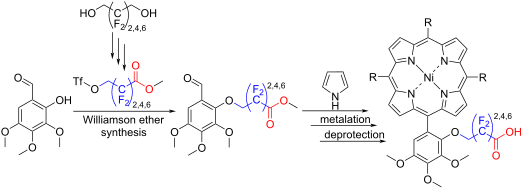
- –CH2–(CF2)n–COOCH3 (n = 2,4,6, Tf = triflate) were synthesized. The triflates were reacted with 2-hydroxy-3,4,5-trimethoxybenzaldehyde via Williamson ether syntheses. The resulting electron-rich compounds were used as aldehydes in the Rothemund reaction with pyrrole to form ester-substituted porphyrins
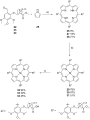
- Williamson ether synthesis to yield 22 (78%), 23 (44%), and 24 (44%). Compounds 22, 23, and 24 were used as aldehyde components in the Rothemund-type synthesis of metal-free porphyrins 26 (9%), 27 (18%), and 28 (21%) (see Scheme 3). Metalation was achieved with nickel acetylacetonate to obtain the ester
- ester-functionalized aldehydes 22, 23, and 24. Conditions: a) NIS, TFA, Na2CO3, MeCN, reflux, 18 h; b) Cu2O·H2O, 2-pyridinaldoxime, TBAB, CsOH, H2O, N2, rt, 18 h; c) Cs2CO3, DMAc, N2, rt, 3 h. Porphyrin synthesis. a) Rothemund porphyrin synthesis of metal-free porphyrins 26, 27, and 28; b) metalation of


Recent advances in transition-metal-free arylation reactions involving hypervalent iodine salts
Beilstein J. Org. Chem. 2024, 20, 2891–2920, doi:10.3762/bjoc.20.243

- benzyl ester generated rather than the corresponding methyl esters. The reaction was also performed with a 6-membered cyclic diaryliodonium salt, which proceeded successfully and produced the respective iodo-containing arylated product in 59% yield with 76% ee after 24 h. Using the same reaction
- conditions, the arylation of tyrosine methyl ester was also performed. The resulting compound was arylated at both O- and N-positions. The investigations were continued with the unsymmetric anisyl salts, and the results showed high chemoselectivity for N-arylation. Iodonium salts containing the anisyl
- assessed as inhibitors of galectin-9 and were found to exhibit selectivity and potency against galectin-9. In 2021, Chen and colleagues developed a method to synthesize naproxen-containing diaryliodonium salts 67 using naproxen methyl ester 65 and ArI(OH)OTs 66, activated by trimethylsilyl




C–H Trifluoromethylthiolation of aldehyde hydrazones
Beilstein J. Org. Chem. 2024, 20, 2883–2890, doi:10.3762/bjoc.20.242
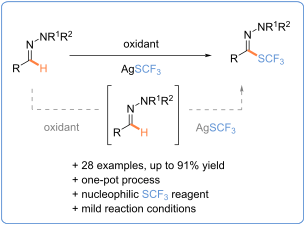
- being explained by a tedious purification. Interestingly, the methodology was successfully applied to the functionalization of aliphatic hydrazones 1s and 1t and even the hydrazone derived from citronellal 1u. The method was functional group-tolerant to various functional groups (nitro, CN, ester


N-Glycosides of indigo, indirubin, and isoindigo: blue, red, and yellow sugars and their cancerostatic activity
Beilstein J. Org. Chem. 2024, 20, 2840–2869, doi:10.3762/bjoc.20.240
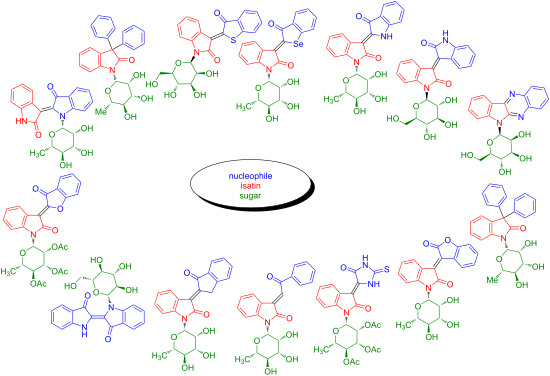
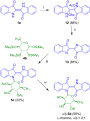
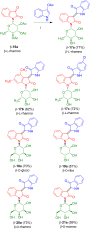
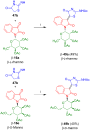
- ). Dehydrogenation of the latter with DDQ afforded the anomerically pure indol-N-glycoside β-26a which upon benzylation and methylation gave products β-27a and β-27b, respectively. Iodination gave products β-28a and β-28b, however, due to the basic reaction conditions (I2, NaOH, DMF), ether rather than ester










C–C Coupling in sterically demanding porphyrin environments
Beilstein J. Org. Chem. 2024, 20, 2784–2798, doi:10.3762/bjoc.20.234
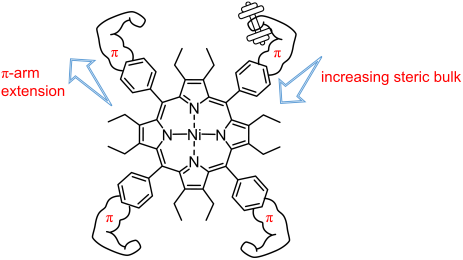
- the starting material porphyrin 13 being left unreacted. On switching the substrate from boronic acid to the boronic acid ester and opting for the weaker base Cs2CO3 instead of K3PO4, a significant difference in reactivity was observed with a 72% yield accomplished in the synthesis of porphyrin 29
- (Table 1, entry 9), bearing a methoxycarbonyl electron-withdrawing group utilizing boronic acid pinacol ester 18b. Following on from these results porphyrin 30 was synthesized in an 8% yield, when switching to weaker base Cs2CO3 using pinacol ester 16b (Table 1, entry 6). Switching the base to a weaker
- observed (Table 3, entries 9 and 10). 4-Pyridylboronic acid pinacol ester (25) was also attempted; however, no product was formed. Vinylboronic acid ester 22, was also explored as a substrate, with multiple porphyrin products being observed by TLC and by 1H NMR. Desymmetrization of the porphyrin was also


Copper-catalyzed yne-allylic substitutions: concept and recent developments
Beilstein J. Org. Chem. 2024, 20, 2739–2775, doi:10.3762/bjoc.20.232
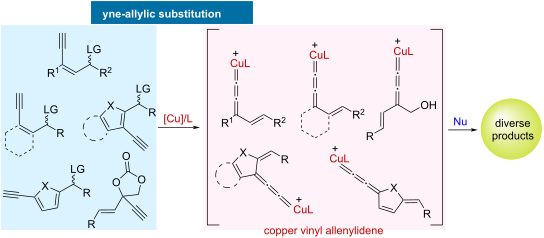
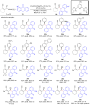
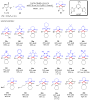
- ester was also a suitable substrate for the reaction (Scheme 20, 20p). In addition, the presence of substituents such as hydroxy or chlorine groups on the anthrones had no impact on the reaction (Scheme 20, 20q–t). Chiral coumarins, renowned for their bioactive properties, form the cornerstone of
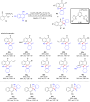
- vinyl allenylidene species. A series of differently substituted spiro-cyclic products can be obtained with high yields, regio- and stereoselectivities (Scheme 32, 30a–x). Preliminary mechanistic studies indicated that the reaction first undergoes a substitution at the α-position of yne-allylic ester








Synthesis of fluoroalkenes and fluoroenynes via cross-coupling reactions using novel multihalogenated vinyl ethers
Beilstein J. Org. Chem. 2024, 20, 2691–2703, doi:10.3762/bjoc.20.226

- (Table 3, entries 1–3). Introduction of 3,4-methylenedioxyphenyl (4e) or p-fluorophenyl groups (4f) to 1a proceeded in high yields (Table 3, entries 4 and 5). Boronic acids with carbonyl groups such as acetyl, ester or formyl moieties in para position (4g–i) underwent the cross-coupling in 76, 96 or 77
- –Miyaura cross-coupling. The reaction of 1b or 1c, which had a m-methoxy or p-nitro group on the benzene ring, with 4a proceeded smoothly to furnish 2p or 2q in good yieds (Table 3, entries 15 and 16). A phenyl group could be introduced into 1d possessing an ester moiety in moderate yield, whereas the


Transition-metal-free decarbonylation–oxidation of 3-arylbenzofuran-2(3H)-ones: access to 2-hydroxybenzophenones
Beilstein J. Org. Chem. 2024, 20, 2655–2667, doi:10.3762/bjoc.20.223
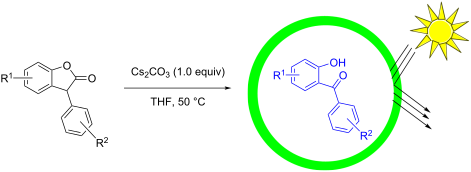
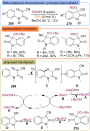
- -hydroxybenzophenones are conventionally prepared via Fries rearrangement of a phenyl ester [10]. Organocatalytic methods have also been reported for the synthesis of 2-hydroxybenzophenones [11]. In addition, several metal-mediated methods for their synthesis have been reported. For example, the Rh-catalyzed