Search results
Search for "catalytic" in Full Text gives 1707 result(s) in Beilstein Journal of Organic Chemistry. Showing first 200.
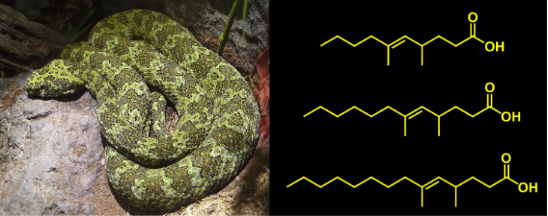
The scent gland composition of the Mangshan pit viper, Protobothrops mangshanensis
Beilstein J. Org. Chem. 2024, 20, 2644–2654, doi:10.3762/bjoc.20.222
- concentrated under a stream of N2. Hydrogenation: The solvent of the natural extract (100 µL) was removed with a stream of N2 and taken up in pentane (100 µL) and a catalytic amount of Pd/C was added. The reaction was then stirred for 1 h under a H2 atmosphere. The catalyst was filtered and rinsed with pentane
- , catalytic amounts of 4-(dimethylamino)pyridine (DMAP) and freshly distilled 3-pyridinemethanol (1 drop) were added. The reaction mixture was heated to 60 °C for 1 h and filtered. The filtrate was washed three times with H2O, the organic phases were dried over sodium sulfate and filtered before GC–MS


Efficient modification of peroxydisulfate oxidation reactions of nitrogen-containing heterocycles 6-methyluracil and pyridine
Beilstein J. Org. Chem. 2024, 20, 2599–2607, doi:10.3762/bjoc.20.219
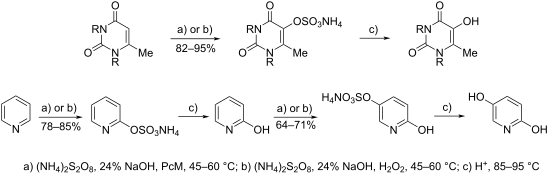
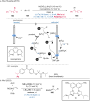
- ][19][20]. The catalytic activity of metallophthalocyanines originates from their planar, cyclic structure with a developed π-conjugation system. This makes the fifth and sixth coordination sites of the central metal ion available for coordination with the reactant molecules of the catalytic reaction
- -ammonium sulfate, probably due to the destruction of the pyrimidine ring. PcZn turned out to be the least active catalyst, resulting in a yield of MU-5-ammonium sulfate 2 of 72% (0.05 wt %). The catalysts’ activity decreased in the order of PcFe(II) > PcCo > PcFe(III) > PcMn > PcNi > PcZn. The catalytic


A review of recent advances in electrochemical and photoelectrochemical late-stage functionalization classified by anodic oxidation, cathodic reduction, and paired electrolysis
Beilstein J. Org. Chem. 2024, 20, 2500–2566, doi:10.3762/bjoc.20.214
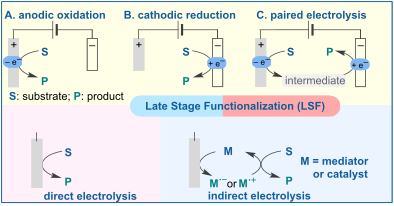
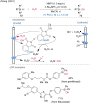
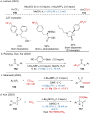
- products were obtained in good yields (51–81%). The reaction involves the catalytic dehydrochlorination of DCE at the cathode, simultaneously with anodic oxidative aromatic chlorination using cathodically released HCl as the chloride source (Scheme 13). Additionally, the Lei group demonstrated a double
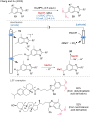
- − is protonated to produce DDQH2. The anodic oxidation of DDQH2 regenerates DDQ, which re-enters the catalytic cycle (Scheme 29). Furthermore, Qiu and coworkers disclosed a metal-free electrochemical dihydroxylation of unactivated alkenes using water as the hydroxy source under air conditions [40
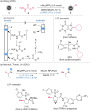
- ). In 2023, the Guo group reported the enantioselective cross-dehydrogenative amination via electrochemical oxidation of C–H and N–H bonds, successfully achieved the LSF of several bioactive molecules and natural products with good yields and high stereoselectivities [50]. The plausible catalytic


























Visible-light-mediated flow protocol for Achmatowicz rearrangement
Beilstein J. Org. Chem. 2024, 20, 2493–2499, doi:10.3762/bjoc.20.213
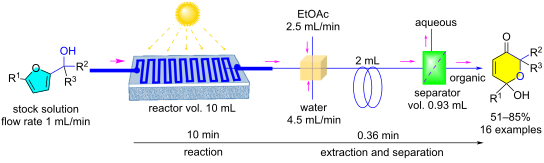
- -prefunctionalized materials in order to proceed with the rearrangement. However, the Achmatowicz reaction or similar methodologies involve a catalytic to stoichiometric amount of oxidants such as m-CPBA [7], PCC [8], Br2 [9], NBS [10], DMDO [11], KBr/Oxone [12], Na2S2O8 [13], photosensitizers/O21 [14], or Me2S [15
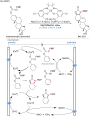
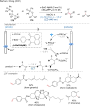
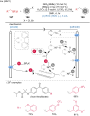
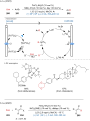
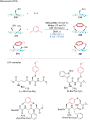
- corresponding products (3o, 3p) in good yields. All the products obtained were characterized by 1H NMR, 13C NMR and mass spectrometry techniques. A plausible catalytic cycle has been postulated based on a literature study [13], and is shown in Figure 2. With the exposure of photocatalyst to sunlight/LED light
- , [Ru(bpy)3]2+ undergoes transition to [Ru(bpy)3]2+* which is quenched by persulfate resulting in [Ru(bpy)3]3+ along with the simultaneous generation of sulfate and a sulfate radical. SET from furfuryl alcohol closes the catalytic cycle of the PC and an intermediate A is generated with L (L = SO4−· or



HFIP as a versatile solvent in resorcin[n]arene synthesis
Beilstein J. Org. Chem. 2024, 20, 2469–2475, doi:10.3762/bjoc.20.211
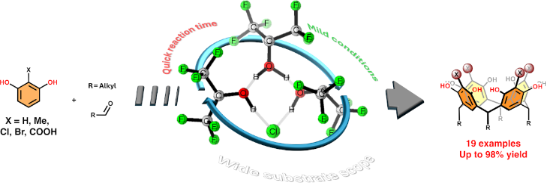
- efficient solvent for synthesizing resorcin[n]arenes in the presence of catalytic amounts of HCl at ambient temperature and within minutes. Remarkably, resorcinols with electron-withdrawing groups and halogens, which are reported in the literature as the most challenging precursors in this cyclization, are
- as the catalyst (Table 1, entries 1–4). The removal of HCl from the reaction conditions unveiled the crucial role of the catalyst in the process (Table 1, entry 5), which was expected; however, note that here we use the acid in catalytic amounts and not in excess as reported in the literature [73][74


Facile preparation of fluorine-containing 2,3-epoxypropanoates and their epoxy ring-opening reactions with various nucleophiles
Beilstein J. Org. Chem. 2024, 20, 2421–2433, doi:10.3762/bjoc.20.206
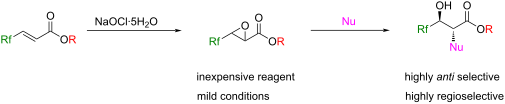
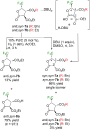
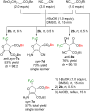
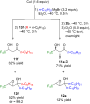
- its convenient handling and availability at a low cost. Following to the reported protocol [41], although a catalytic amount of Al2O3 and MgO worked nicely (entries 1 and 2 in Table 1), it was clarified that these additives were not necessary for the attainment of the same level of chemical yields





Evaluating the halogen bonding strength of a iodoloisoxazolium(III) salt
Beilstein J. Org. Chem. 2024, 20, 2401–2407, doi:10.3762/bjoc.20.204
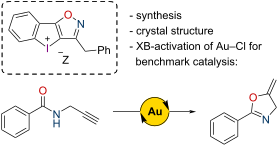
- resulting order of catalytic activity of these halogen-bond donors is in line with the above-mentioned previous benchmark of these activators [13]. Finally, also the new iodoloisoxazolium salt 7BArF was applied and a comparably high activity was observed (ca. 85% conversion after 2 h). This result marks




Asymmetric organocatalytic synthesis of chiral homoallylic amines
Beilstein J. Org. Chem. 2024, 20, 2349–2377, doi:10.3762/bjoc.20.201
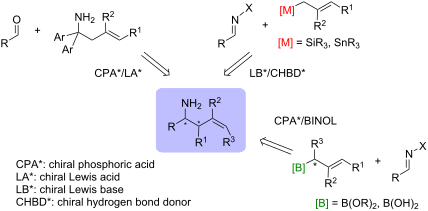
- ,β-unsaturated imines 9. However, with ethynylimines 12, the enantioselectivity dropped to a modest level. In addition, the reaction with sterically hindered tertiary allylboronates, such as the chiral (R)-α-cyclohexyl-α-methyl-allylboronate required the use of catalytic amounts of zinc tert-butoxide
- ) required an extended reaction time (10 days). The relatively low activity of the sulphonamide catalyst 45 also necessitates higher loadings of 10 mol % (Scheme 10). In 2019, a novel catalytic approach to homoallylic N-carbamoylamino esters 50 was described by Jacobsen and co-workers [34]. This allylation
- concerted SN2 mechanism or SN1 mechanism with the allyl nucleophile addition step as rate-determining. Interestingly, the authors observed a 0.55 order in the catalyst, which indicates that a substantial part of the catalyst forms a hydrogen-bonded dimer with Kdiss ≈ 1000 M−1 when not in the catalytic cycle




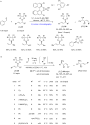


Stereoselective mechanochemical synthesis of thiomalonate Michael adducts via iminium catalysis by chiral primary amines
Beilstein J. Org. Chem. 2024, 20, 2313–2322, doi:10.3762/bjoc.20.198
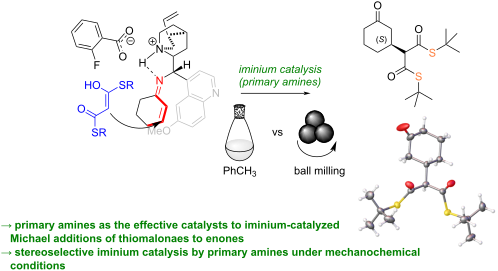
- -based catalytic system for the highly stereoselective addition of various bisthiomalonates to chalcones and dienones [29]. While recognizing the potential for greater selectivity enhancement and time savings with ball milling, hydrogen-bonding catalysis was effective only with aromatic enones, yielding
- significant enhancement of catalytic system efficiency and results from the dramatic decrease in enantioselectivity observed in mill reactions. Additionally, the catalyst’s synthesis requires an extra synthetic step. We decided to conduct further investigations utilizing system A or its modifications. First
- , changes in the epi-amino alkaloid core of the two-component catalytic system were investigated. Introduction of the 2’-substitution to the quinine core as in AQ-2 and AQ-4 (Scheme 2) resulted in the decrease of chirality transfer providing the product with 50% and 72% ee, respectively. A similar trend was


Catalysing (organo-)catalysis: Trends in the application of machine learning to enantioselective organocatalysis
Beilstein J. Org. Chem. 2024, 20, 2280–2304, doi:10.3762/bjoc.20.196
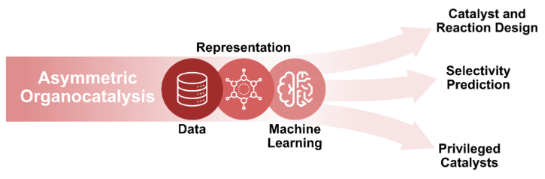
- optimization algorithm allowed them to discover multiple trade-off optima, enabling a scientist to select the ideal catalyst based on the specific requirements of catalytic activity and selectivity, while still accounting for catalyst generality through design of the objectives. Noticeably, data analysis
- witnessed a surge in data-driven approaches to improve the design of reactions, e.g., by inferring mechanistic features through statistical modelling, the generation of catalyst structures with increased catalytic activity, or optimising the reaction conditions to maximise the yield or selectivity. In
- of the key catalytic steps [23][139][140][141][142] and commonly uses calculated or measured physical parameters of reaction components to make decisions in a design effort. In line with the early developments of statistical modelling through Hammett parameters to correlate substrate properties to


Deuterated reagents in multicomponent reactions to afford deuterium-labeled products
Beilstein J. Org. Chem. 2024, 20, 2270–2279, doi:10.3762/bjoc.20.195
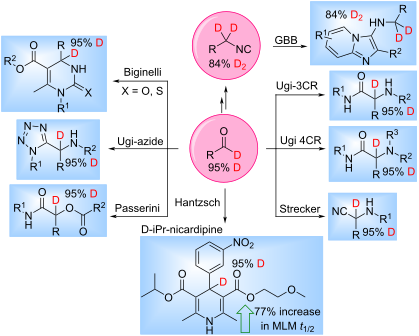
- modification of 1d, representative of the large swath of chemical space accessible by Ugi-deprotect-cyclize (UDC) methodology, gave the dihydroquinoxaline 1g in good yield with high deuterium retention [29][30][31][32]. The catalytic three-component Ugi reaction was first reported by List in 2008 [33][34] and


gem-Difluorination of carbon–carbon triple bonds using Brønsted acid/Bu4NBF4 or electrogenerated acid
Beilstein J. Org. Chem. 2024, 20, 2261–2269, doi:10.3762/bjoc.20.194
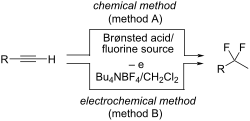
- HF is still inevitable [40][41]. Quite recently, Crimmin and co-workers reported gem-difluorination by shuttling between fluoroalkanes and alkynes, in which catalytic HF played a key role [42]. In the course of our study on the fluorination reaction, we have envisioned that the combination of a



Electrochemical allylations in a deep eutectic solvent
Beilstein J. Org. Chem. 2024, 20, 2217–2224, doi:10.3762/bjoc.20.189
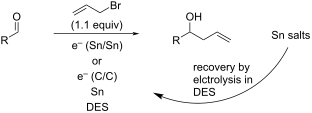
- limitation by using electrochemistry with catalytic amounts of metal or perhaps by recovering and recycling the metal with a recyclable solvent was the goal motivating this project. With this as a background, we undertook an investigation of electrochemical allylation in DES. Results and Discussion While
- reducing the waste generated in these allylations. While non-sacrificial graphite electrodes had failed to result in any reaction, it seemed possible that the use of a catalytic amount of tin metal or a tin salt with graphite electrodes would result in a superior reaction due to in situ reduction and/or
- . While the DES clearly had some ability to be recycled, the use of catalytic amounts of metal had uniformly failed. Recognizing that DES have been used extensively for electroplating and metal deposition, though it seemed that this might provide an opportunity for metal recovery and reuse [19]. To this

O,S,Se-containing Biginelli products based on cyclic β-ketosulfone and their postfunctionalization
Beilstein J. Org. Chem. 2024, 20, 2143–2151, doi:10.3762/bjoc.20.184
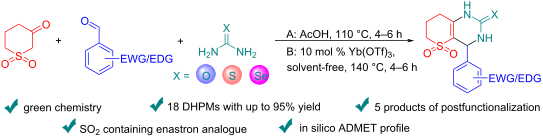
- ). Results and Discussion Reaction optimization Over the past two decades more than 300 various catalytic systems have been proposed for Biginelli chemistry, e.g., simple inorganic and organic acids, metal salts, metal oxides, ionic liquids, phosphines, nanocatalysts, organocatalysts, ion exchange resins [1
- , Leishmania amazonensis, Tcruzi epimastigota, Dengue larvicida, and for selected cases Alzheimer and Sars-COVID. For more details, see Table S1 (Supporting Information File 1). Conclusion In summary, we have demonstrated the catalytic regioselective Biginelli synthesis of new S-heterocyclic systems ‒ 4-aryl

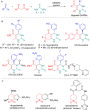


Factors influencing the performance of organocatalysts immobilised on solid supports: A review
Beilstein J. Org. Chem. 2024, 20, 2129–2142, doi:10.3762/bjoc.20.183
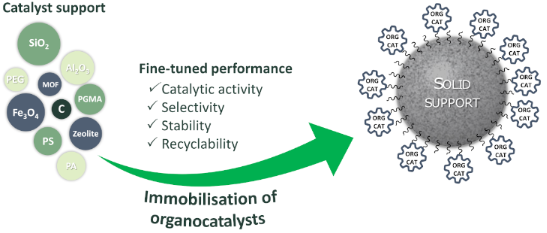
- , providing a cost-effective alternative to traditional catalytic methods. The immobilisation of organocatalysts offers the potential to increase catalyst reusability and efficiency in organic reactions. This article reviews the key parameters that influence the effectiveness of immobilised organocatalysts
- , including the type of support, immobilisation techniques and the resulting interactions. In addition, the influence of these factors on catalytic activity, selectivity and recyclability is discussed, providing an insight into optimising the performance of immobilised organocatalysts for practical
- and an environmental perspective. An efficient catalytic process is characterised by the fact that the catalyst can be easily and, if possible, completely separated from the reaction mixture. Catalysts can be classified into homogeneous and heterogeneous catalysts. In homogeneous catalysis, the


Efficacy of radical reactions of isocyanides with heteroatom radicals in organic synthesis
Beilstein J. Org. Chem. 2024, 20, 2114–2128, doi:10.3762/bjoc.20.182
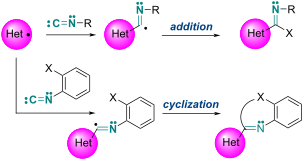
- photoirradiation conditions (Scheme 3b). Thus, it was shown that the photoirradiated dithiolation of aliphatic isocyanides with (PhS)2 proceeded as a catalytic reaction of (PhSe)2 (30 mol %). In the dithiolation products 4 from aliphatic isocyanides, two PhS-groups were observed non-equivalently, suggesting the
- thioselenation and catalytic dithiolation of isocyanides. Synthesis of carbacephem framework. Sequential addition of (PhSe)2 to ethyl propiolate and isocyanide. Isocyanide insertion reaction into carbon-tellurium bonds. Radical addition to isocyanides with disubstituted phosphines. Radical addition to phenyl


Computational toolbox for the analysis of protein–glycan interactions
Beilstein J. Org. Chem. 2024, 20, 2084–2107, doi:10.3762/bjoc.20.180


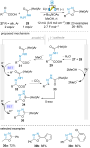
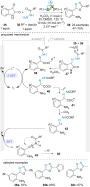
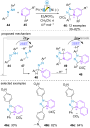
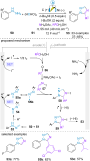
Multicomponent syntheses of pyrazoles via (3 + 2)-cyclocondensation and (3 + 2)-cycloaddition key steps
Beilstein J. Org. Chem. 2024, 20, 2024–2077, doi:10.3762/bjoc.20.178

- the ecological and economic requirements. This “ideal” synthesis would commence with simple starting materials, progress through safe, catalytic, and quantitative conversions, and culminate in streamlined processes, all conducted within a single reaction vessel. Multicomponent reactions (MCR) closely
- -oxodithioesters 48 react with primary or cyclic aliphatic amines, resulting in the formation of β-oxothioamides 50, which can then be directly converted into the corresponding 5-aminopyrazoles 49 with aromatic hydrazines in the presence of catalytic amounts of acetic acid (Scheme 14) [68]. The process exhibits
- intermediates undergo cyclization following a Michael addition to yield the corresponding pyrano[2,3-c]pyrazoles 63 (Scheme 20) [91]. Safaei-Ghomi et al. succeeded in isolating the intermediately formed pyrazole 64 [92]. Since pyrano[2,3-c]pyrazoles are fused heterocycles of interest, catalytic methods for




Understanding X-ray-induced isomerisation in photoswitchable surfactant assemblies
Beilstein J. Org. Chem. 2024, 20, 2005–2015, doi:10.3762/bjoc.20.176
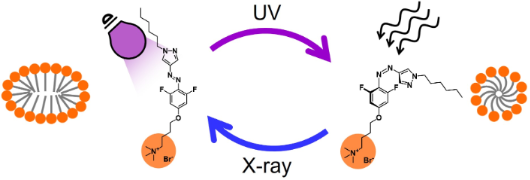
- to the closer proximity leading to more efficient transfer of the catalysing species between molecules [40]. This suggests that there is a breakdown in the efficiency of the catalytic transfer at the concentrations studied here, or there is a critical water concentration needed to produce a


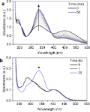

Harnessing the versatility of hydrazones through electrosynthetic oxidative transformations
Beilstein J. Org. Chem. 2024, 20, 1988–2004, doi:10.3762/bjoc.20.175
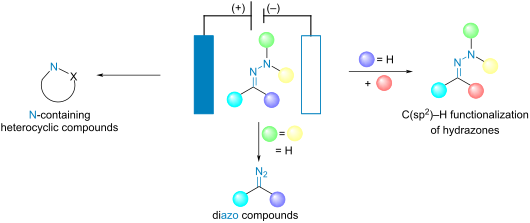
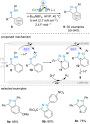
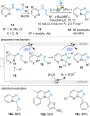
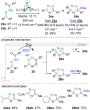
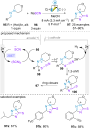
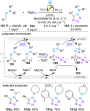
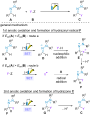
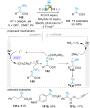
- -diphenylethylene proceeded with similar efficiency, thereby excluding any radical pathway. As such, it was proposed that the catalytic electrooxidation of iodide (ENH4I = 0.41 V and 0.75 V vs Ag/AgCl in dimethylacetamide for I−/I3− and I3−/I2 redox couples) into iodine provided a green and mild tool to in situ
- aldehyde-derived hydrazones 114 and diarylphosphine oxide 115. The phosphorylation proceeded with slightly higher yield in the presence of a catalytic amount of manganese dibromide but its role was not clearly identified. Cyclic voltammetry analysis supported the initial oxidation of the hydrazone (Ep/2 of
- (Scheme 26) [76]. Electrochemical access to diazo compounds Diazo compounds are highly useful synthetic reagents in organic chemistry. For instance, they are regularly utilized as 1,3-dipoles in cycloaddition reactions or as precursor of carbenes under thermal, photochemical, and catalytic transition









Development of a flow photochemical process for a π-Lewis acidic metal-catalyzed cyclization/radical addition sequence: in situ-generated 2-benzopyrylium as photoredox catalyst and reactive intermediate
Beilstein J. Org. Chem. 2024, 20, 1973–1980, doi:10.3762/bjoc.20.173
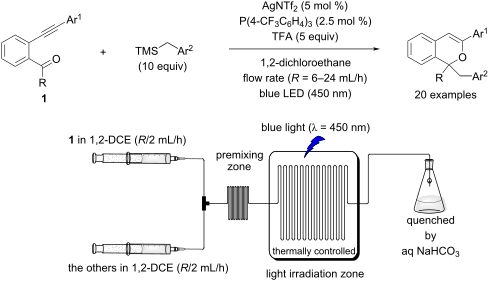
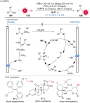
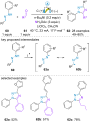
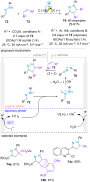
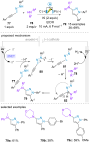
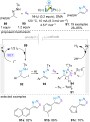
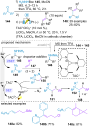
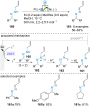
- subsequent photochemical radical addition [46][47][48][49][50][51][52][53][54], which affords 1H-isochromene derivatives 3 through three catalytic cycles (Scheme 1a) [55]: catalytic cycles I and II and a photoredox cycle of the photocatalyst [56][57] (see Supporting Information File 1 for the overall
- catalytic cycles). In catalytic cycle I, the key cationic components, 2-benzopyrylium intermediates A, are generated in situ by the activation of the alkyne moiety of ortho-carbonyl alkynylbenzene derivatives 1 in the presence of the π-Lewis acidic metal catalyst [M]X [AgNTf2 or Cu(NTf2)2] and subsequent
- intramolecular cyclization followed by proto-demetalation with trifluoroacetic acid (TFA). In catalytic cycle II, photoexcitation of the generated 2-benzopyrylium intermediates A under light irradiation facilitates single-electron transfer (SET) from benzyltrimethylsilane derivatives 2 as the donor molecule


Solvent-dependent chemoselective synthesis of different isoquinolinones mediated by the hypervalent iodine(III) reagent PISA
Beilstein J. Org. Chem. 2024, 20, 1914–1921, doi:10.3762/bjoc.20.167
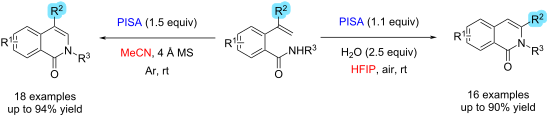
- ) diacetate (PIDA) [22][23]. And more recently, Du and our group have developed a method for the chemoselective cycloisomerization of o-alkenylbenzamides to 3-arylisoquinolinones, using PhIO as oxidant in combination with a catalytic amount of trimethylsilyl trifluoromethanesulfonate [24]. Although




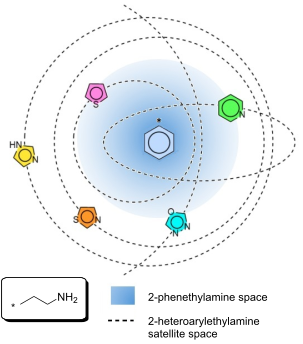
2-Heteroarylethylamines in medicinal chemistry: a review of 2-phenethylamine satellite chemical space
Beilstein J. Org. Chem. 2024, 20, 1880–1893, doi:10.3762/bjoc.20.163
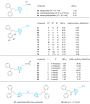
- tumor bed of a vast diversity of human tumor types. As phenylalanine is the preferred substrate of IL4I1 catalytic activity, Presset et al. [6] reported novel phenylalanine derivatives as a strategy to inhibit IL4I1 activity, as this enzyme has a preference for hydrophobic amino acids. Among them




The Groebke–Blackburn–Bienaymé reaction in its maturity: innovation and improvements since its 21st birthday (2019–2023)
Beilstein J. Org. Chem. 2024, 20, 1839–1879, doi:10.3762/bjoc.20.162
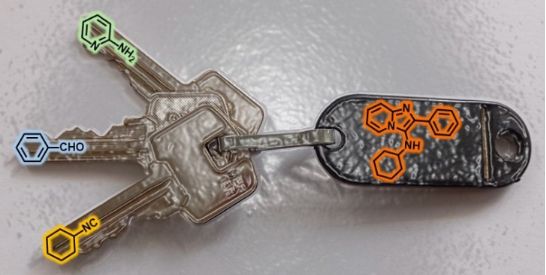
- future perspectives of this reaction. Review 1 Novel synthetic methods The previously mentioned review, published in 2019 [1], had already highlighted how wide the variety of methods were used to conduct the GBB reaction: as much as 46 different catalytic systems had been reported in the literature at
- conditions can also be found. 1.1 Metal and Brønsted acid catalysts As previously mentioned, Sc triflate is the most widely used Lewis acid for the GBB reaction, generally exhibiting higher catalytic activity compared to other metal triflates, such as Yb, In or Bi. No extensive work had been done on rare
- , was not observed. In 2016, Sashidhara et al. reported the catalytic effect of Ag(OTf) on GBB reactions, postulating its role in activating the attack of the isocyanides onto the imine intermediates [7]; some years later Liu et al. reported a similar role of AgOAc [8]. Although the reaction was tested






A facile three-component route to powerful 5-aryldeazaalloxazine photocatalysts
Beilstein J. Org. Chem. 2024, 20, 1831–1838, doi:10.3762/bjoc.20.161
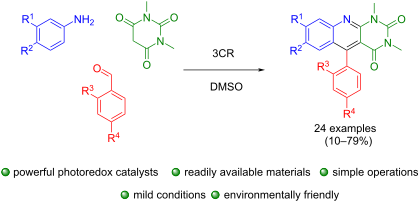
- was significantly enhanced when refluxing in DMF with a catalytic amount of AlCl3 compared to the reaction in clear DMF (Table 1, entries 7–9). Other Lewis acids were not as effective, except for a combination of DMSO/TMSOTf (Table 1, entry 4). The application of AcOH/PPA for the synthesis of 5