


Search results
Search for "light" in Full Text gives 1413 result(s) in Beilstein Journal of Organic Chemistry. Showing first 200.
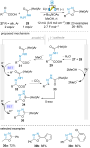
Efficient modification of peroxydisulfate oxidation reactions of nitrogen-containing heterocycles 6-methyluracil and pyridine
Beilstein J. Org. Chem. 2024, 20, 2599–2607, doi:10.3762/bjoc.20.219
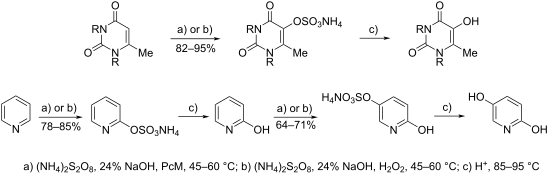
- TLC (eluent ethanol/ammonia aqueous 4:1), cooled to room temperature, alkalinized with NaHCO3 solution to pH 7–8, extracted with chloroform (3 × 10 mL), and the organic layer was dried with MgSO4. After removal of the solvent 1.17 g (95%) of pyridin-2(1H)-one (9) was obtained as a thick mass of light
- brown color. After recrystallization from ethanol, 1.11 g (90%) of pyridine 9 were obtained as a light yellow powder. Mp 108–110 °С; 1H NMR (CDCl3) δ 6.16 (dd, 1H, С5H), 6.38 (d, 1H, С3H), 7.38 (d, 1H, С6H), 7.40 (dd, 1H, С4H), 11.5 (s, 1H, C1-OH); 13С NMR (CDCl3) δ 104.8 (С4), 119.7 (С3), 135.2 (С6
- with hot ethanol. 0.9 g (50%) to obtain a reddish brown glassy solid. After recrystallization in ethanol, light beige crystals of 2,5-dihydroxypyridine (11) were obtained. Mp 107–109 °С; 1H NMR (CDCl3) δ 6.96 (1H, С3H), 7.16 (1H, С6H), 7.60 (1H, С4H), 9.76 (C5-OH), 10.78 (C2-OH); 13С NMR (CDCl3) δ106.2


Synthesis and cytotoxicity studies of novel N-arylbenzo[h]quinazolin-2-amines
Beilstein J. Org. Chem. 2024, 20, 2592–2598, doi:10.3762/bjoc.20.218
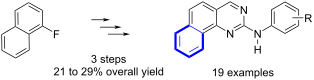
- traces of residual moisture. Reactions were monitored by thin-layer chromatography (TLC) using E. Merck silica gel plates and components were visualized by illumination with short wavelength UV light and/or staining (ninhydrin or basic KMnO4). All aldehydes were distilled right before use. All aryl


Transition-metal-free synthesis of arylboronates via thermal generation of aryl radicals from triarylbismuthines in air
Beilstein J. Org. Chem. 2024, 20, 2577–2584, doi:10.3762/bjoc.20.216
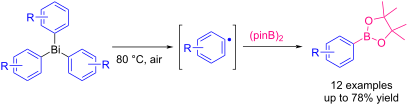
- of photocatalysts or UV light irradiation without metal catalysts [45][46][47][48]. Similar homolysis by electrolysis has also been reported [49]. These two activation methods required special equipment (i.e., light sources or electronic devices). To achieve thermal homolysis of the Ar–Bi bonds, the
- reaction conditions were harsh, requiring heating at 260 °C for several days [50]. Thus, only two examples of the use of triarylbismuthines as aryl radical sources have been reported for the synthesis of arylboronates, which proceeds under light irradiation conditions (Scheme 1a) [47][48]. Our group has

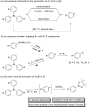


Anion-dependent ion-pairing assemblies of triazatriangulenium cation that interferes with stacking structures
Beilstein J. Org. Chem. 2024, 20, 2567–2576, doi:10.3762/bjoc.20.215
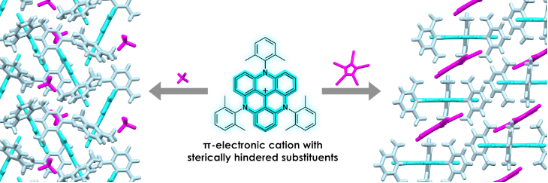
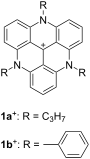
- +) cations, used as visible light fluorescent dyes, have been synthesized via a nucleophilic aromatic substitution (SNAr) reaction with primary alkylamines (e.g., 1a+; Figure 1) [15][16]. The highly planar geometry of the TATA+ core unit induces π–π stacking structures in single-crystal and film states, as



A review of recent advances in electrochemical and photoelectrochemical late-stage functionalization classified by anodic oxidation, cathodic reduction, and paired electrolysis
Beilstein J. Org. Chem. 2024, 20, 2500–2566, doi:10.3762/bjoc.20.214
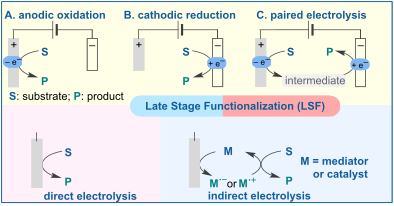
- achieved compared to many classical methods. In light of the general trend towards more chemoselective protocols with broader functional group compatibility, there has been a growing interest in exploring the potential of electrosynthesis for the late-stage functionalization of complex scaffolds
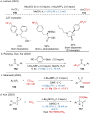
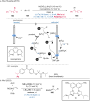
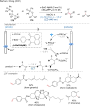
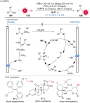
- , which is then photochemically homolyzed by light (392 nm) to produce chlorine radicals. These chlorine radicals act as hydrogen-atom-transfer (HAT) reagents to form alkane radicals. The resulting alkyl radicals then undergo a Minisci-type reaction, resulting in alkylated heteroarene products. This
- constant voltage (CV) conditions and light irradiation under a nitrogen atmosphere. This method demonstrates broad compatibility with various functional groups and complex substrates, including alcohol, carboxylic acid, esters, alkyl chloride, and tosylate groups. Notably, the LSF of compounds such as






















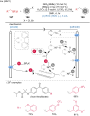
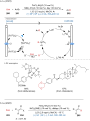


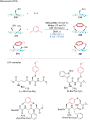


Visible-light-mediated flow protocol for Achmatowicz rearrangement
Beilstein J. Org. Chem. 2024, 20, 2493–2499, doi:10.3762/bjoc.20.213
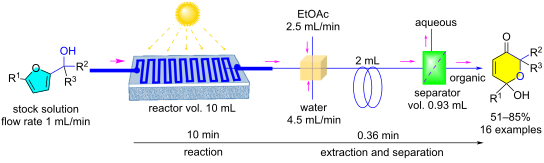
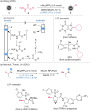
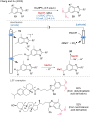
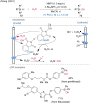
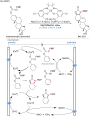
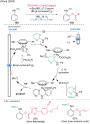
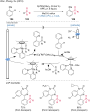
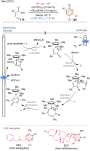
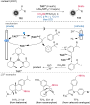
- and development of a visible light-assisted modular photo-flow reactor with a seamlessly integrated post-synthetic work-up procedure enabling the efficient synthesis of dihydropyranones from furfuryl alcohols. The reaction uses sun light as green energy source, and the novel photo-flow reactor
- a result, developing an alternative strategy would be an attractive solution to address the limitations described above. Flow chemistry was chosen as the most attractive alternative for the photo-induced (visible light) Achmatowicz rearrangement to convert furfuryl alcohol scaffolds into
- dihydropyranones due to its ability to better control of reaction conditions, including more uniform light exposure and improved mixing efficiency, which result in higher reaction rates and more consistent product quality. Additionally, the flow system enhances mass transfer and reduces reaction times, leading to



Photoredox-catalyzed intramolecular nucleophilic amidation of alkenes with β-lactams
Beilstein J. Org. Chem. 2024, 20, 2461–2468, doi:10.3762/bjoc.20.210
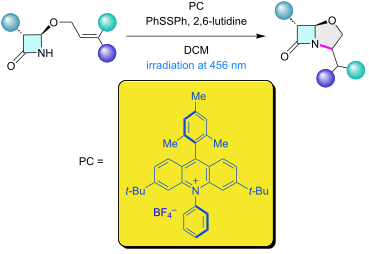
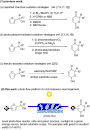
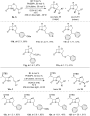
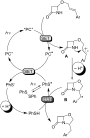
- reaction was carried out in DCM with acridinium PC IV (5 mol %), 50 mol % of PhSSPh as HAT catalyst, and lutidine (50 mol %) as the base. Upon 72 hours of irradiation with a blue light at 456 nm, the product 11c was obtained in a satisfactory yield as a mixture of diastereoisomers in a 1.4:1 ratio (Table 1
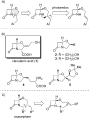
- as final product, characterized by significant ring strain [59]. Under light irradiation, PhSSPh is in equilibrium with the corresponding thiyl radical, which is subsequently reduced to thiophenolate by PC•, originating from the reduction of *PC+. The reduction potential of PhS−/PhS• (Epred = +0.45 V




Improved deconvolution of natural products’ protein targets using diagnostic ions from chemical proteomics linkers
Beilstein J. Org. Chem. 2024, 20, 2323–2341, doi:10.3762/bjoc.20.199
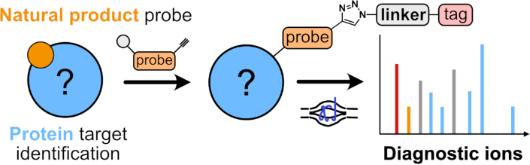
- -linker, several probe-derived ions were observed (Figure 9B). The isoDTB-linker’s availability in ‘light’ and ‘heavy’ form together with highly optimized protocols and direct presets in MSFragger for streamlined analysis make this linker a feasible choice for site identifications of probe–peptide
- commonly used proteases [109]. Multiple modifications to the peptide sequence and linker structure were consecutively introduced by the Cravatt lab including the ‘light’ and ‘heavy’ derivatives containing stable isotopes enabling the quantification and direct comparison between the conditions [80]. The
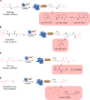
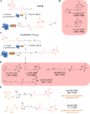
- showing the search improvement by diagnostic ions (Figure 12). The DADPS-linker containing ‘light’ or ‘heavy’ valine can be synthetized in total nine steps [111]. After the introduction of the DADPS-based linker by Szychowski et al. for the first time several interesting analogs were developed, including




Hydrogen-bond activation enables aziridination of unactivated olefins with simple iminoiodinanes
Beilstein J. Org. Chem. 2024, 20, 2305–2312, doi:10.3762/bjoc.20.197
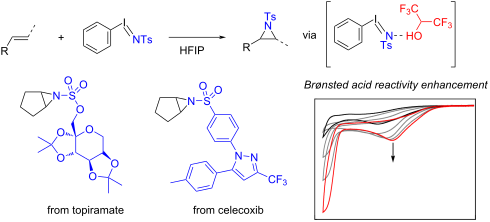
- (Table 1, entry 9). Attempts to generate 2a in situ using 1 equivalent of TsNH2 (4) in combination with 1 or 2 equivalents of PhIO (5) resulted in aziridination yields of 19% and 27%, respectively (Table 1, entries 10 and 11). Finally, exclusion of ambient light had no impact of the aziridination of 1a


Selective hydrolysis of α-oxo ketene N,S-acetals in water: switchable aqueous synthesis of β-keto thioesters and β-keto amides
Beilstein J. Org. Chem. 2024, 20, 2225–2233, doi:10.3762/bjoc.20.190

- silica gel 60 F200) were analyzed under UV light (254 nm). Chromatographic purifications were performed on SDZF silica gel 160. The starting α-oxo ketene N,S-acetals 1 are known compounds [40][41] and easily prepared according to References [40][58]. Typical procedure for the preparation of β-keto



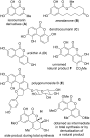
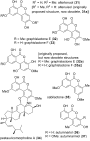
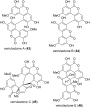
Natural resorcylic lactones derived from alternariol
Beilstein J. Org. Chem. 2024, 20, 2171–2207, doi:10.3762/bjoc.20.187






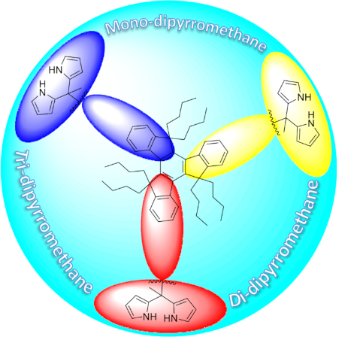
Novel truxene-based dipyrromethanes (DPMs): synthesis, spectroscopic characterization and photophysical properties
Beilstein J. Org. Chem. 2024, 20, 2163–2170, doi:10.3762/bjoc.20.186
- ][12][13]. The most promising applications of truxene-based systems have been found in organic photovoltaics (OPVs), dye‐sensitized solar cells (DSSCs), fluorescent probes, organic thin‐film transistors (OTFTs), lasers, organic light emitting diodes (OLEDs), liquid crystals, non-linear optical (NLO
- -pyrrole) (18): Light orange solid; yield 80% (458 mg, starting from 400 mg of 17); Rf 0.44 (20% ethyl acetate/petroleum ether); mp 160–162 °C; 1H NMR (400 MHz, CDCl3) δ 8.15 (d, J = 8 Hz, 3H), 7.89 (s, 6H), 7.34 (s, 3H), 6.96 (s, 3H), 6.74 (s, 6H), 6.24 (s, 6H), 6.06 (s, 6H) 2.84 (s, 6H), 2.18 (s, 9H


Finding the most potent compounds using active learning on molecular pairs
Beilstein J. Org. Chem. 2024, 20, 2152–2162, doi:10.3762/bjoc.20.185

- shown in the inlet with a green bar while the times it ‘stays’ in the same cluster is shown with a light blue bar. Arrow gradient towards darker grey indicates increasing iteration number. Tree-based model navigation of chemical space. T-SNE of a representative dataset (CHEMBL232-1, Alpha-1b adrenergic
- another is shown in the inlet with a green bar while the times it ‘stays’ in the same cluster is shown with a light blue bar. Arrow gradient towards darker grey indicates increasing iteration number. Supporting Information Supporting Information File 54: Supplementary figures and tables


O,S,Se-containing Biginelli products based on cyclic β-ketosulfone and their postfunctionalization
Beilstein J. Org. Chem. 2024, 20, 2143–2151, doi:10.3762/bjoc.20.184
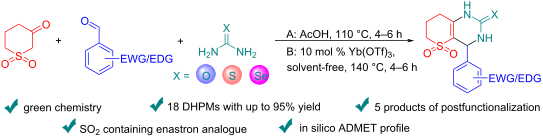
- ][4][9] or even visible light-driven methods [25][26][27][28]. We started our study from the optimization of the reaction conditions using β-ketosulfone 1, benzaldehyde and thiourea as model reaction. According to the literature, the reaction has been shown to work best and most efficiently under



Efficacy of radical reactions of isocyanides with heteroatom radicals in organic synthesis
Beilstein J. Org. Chem. 2024, 20, 2114–2128, doi:10.3762/bjoc.20.182
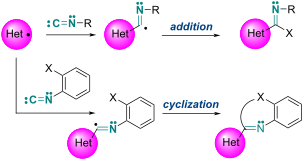
- , when using sunlight, which is an inexhaustible natural energy, it is expected to be the most environmentally friendly method. The homolysis of E–E upon visible light irradiation is induced by exciting one electron of the isolated electron pair on E to the anti-bonding orbital of the E–E-bond (σ
- methods. For these reasons, it is no exaggeration to say that radical reactions of group 17 interelement compounds with isocyanides have hardly been developed. Upon exposure to near-UV light, perfluoroalkyl iodides (RFI) undergo homolysis to form perfluoroalkyl radicals (RF•) and iodine radical (I•). The
- %). Since it is known that the carbon radical capturing ability of (PhTe)2 is even four times higher than that of (PhSe)2 [31], we investigated the radical addition to isocyanides using a disulfide–ditelluride binary system under photoirradiation. The visible-light-irradiated thiotelluration reaction did


Computational toolbox for the analysis of protein–glycan interactions
Beilstein J. Org. Chem. 2024, 20, 2084–2107, doi:10.3762/bjoc.20.180


Multicomponent syntheses of pyrazoles via (3 + 2)-cyclocondensation and (3 + 2)-cycloaddition key steps
Beilstein J. Org. Chem. 2024, 20, 2024–2077, doi:10.3762/bjoc.20.178




Understanding X-ray-induced isomerisation in photoswitchable surfactant assemblies
Beilstein J. Org. Chem. 2024, 20, 2005–2015, doi:10.3762/bjoc.20.176
- Beatrice E. Jones Camille Blayo Jake L. Greenfield Matthew J. Fuchter Nathan Cowieson Rachel C. Evans Department of Materials Science & Metallurgy, University of Cambridge, 27 Charles Babbage Road, CB3 0FS, United Kingdom Diamond Light Source, Harwell Science and Innovation Campus, Didcot
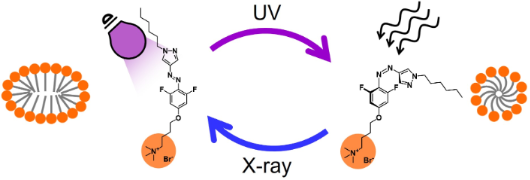
- mechanisms of structural changes using in-situ light irradiation with rapid, time-resolved data collection. However, X-ray irradiation has been shown previously to induce Z-to-E isomerisation of Azo-PS, which can lead to inaccuracies in the measured photostationary state. Here, we investigate the effect of
- light and X-ray irradiation on micelles formed from two different PS, containing either an Azo or AAP photoswitch using SAXS with in-situ light irradiation. The effect of X-ray irradiation on the Z isomer is shown to depend on the photoswitch, solvent, concentration and morphology. We use this to create



Harnessing the versatility of hydrazones through electrosynthetic oxidative transformations
Beilstein J. Org. Chem. 2024, 20, 1988–2004, doi:10.3762/bjoc.20.175
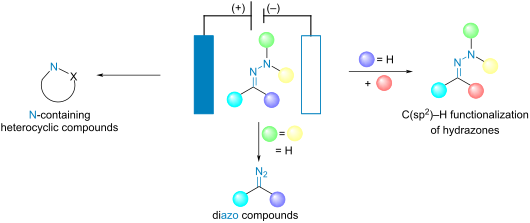
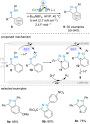
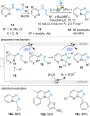
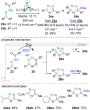
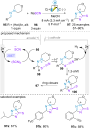
- photocatalyst TAC+. The electrolysis was carried out at a constant cell potential of 1.5 V under white light irradiation. The carbonyl compound 144 was initially treated with tert-butyl carbazate (145) in acetonitrile in the presence of molecular sieves, followed by the addition of trifluoroacetic acid (TFA) to



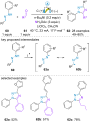


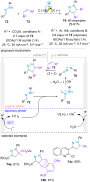
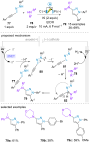

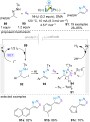


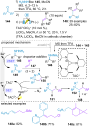

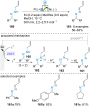
Development of a flow photochemical process for a π-Lewis acidic metal-catalyzed cyclization/radical addition sequence: in situ-generated 2-benzopyrylium as photoredox catalyst and reactive intermediate
Beilstein J. Org. Chem. 2024, 20, 1973–1980, doi:10.3762/bjoc.20.173
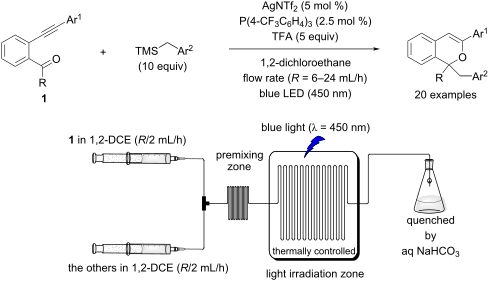
- continues to flow and the reaction can be quenched immediately when necessary, the decomposition of an unstable product under the reaction conditions can be avoided [22][23][24][25]. Furthermore, when a photoreaction is performed in a flow system, there is an advantage that the light irradiation efficiency
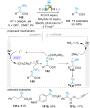
- intramolecular cyclization followed by proto-demetalation with trifluoroacetic acid (TFA). In catalytic cycle II, photoexcitation of the generated 2-benzopyrylium intermediates A under light irradiation facilitates single-electron transfer (SET) from benzyltrimethylsilane derivatives 2 as the donor molecule
- feature of this sequential transformation is that the in situ-generated 2-benzopyrylium intermediates A are used not only as an electrophile but also as a photoredox catalyst. However, as this reaction is carried out under relatively harsh conditions (i.e., light irradiation, use of an excess amount of


1,2-Difluoroethylene (HFO-1132): synthesis and chemistry
Beilstein J. Org. Chem. 2024, 20, 1955–1966, doi:10.3762/bjoc.20.171

- silane that was obtained was pyrolyzed to form vinyl fluoride. It was shown that SF5Br easily reacted with the E- and Z-isomer, respectively, of 1,2-difluoroethylene in the presence or absence of light, yielding a mixture of erythro- and threo-isomeric addition products in both cases (Scheme 14) [92
- ]. However, under light irradiation, conversion and product yield were higher, although the ratio of diastereomers produced in both cases was almost the same for the E- and Z-isomer, respectively, and did not depend on irradiation. The reaction of 1,2-difluoroethylene with PCl3 and O2 was described by Boyce


Regioselective alkylation of a versatile indazole: Electrophile scope and mechanistic insights from density functional theory calculations
Beilstein J. Org. Chem. 2024, 20, 1940–1954, doi:10.3762/bjoc.20.170
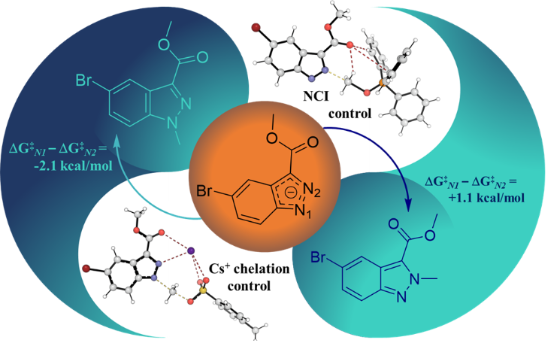
- ethyl acetate in hexane from 0–60%) to give methyl 5-bromo-2-alkyl-2H-indazole-3-carboxylate in 90–97% yield. For 16a, 291 mg, 92%, as a light pink solid. Mp 110.7 °C; 1H NMR (300 MHz, DMSO-d6) δ 8.14 (d, J = 2.0 Hz, 1H), 7.77 (dd, J = 9.1, 0.7 Hz, 1H), 7.49 (dd, J = 9.0, 1.9 Hz, 1H), 4.42 (s, 3H), 3.98


Negishi-coupling-enabled synthesis of α-heteroaryl-α-amino acid building blocks for DNA-encoded chemical library applications
Beilstein J. Org. Chem. 2024, 20, 1922–1932, doi:10.3762/bjoc.20.168
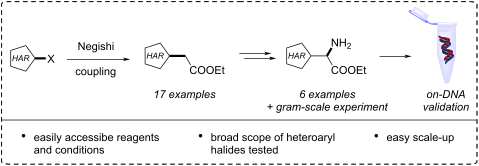
- Negishi reaction (Supporting Information File 1). Preliminary experiments were carried out with and without blue light irradiation in the PhotoCubeTM photoreactor [45]. These experiments revealed that while the conversion of imidazoles and pyrazoles benefits from irradiation, thiazoles seem to be largely
- unaffected by the presence of light (see pages 5 and 6 in Supporting Information File 1). In the case of indazoles, increased reaction rates were observed in the presence of light, but the overall yield was the same for the dark and irradiated experiments. Although these reactions are typically complete
- within 4 h in the dark, irradiation with blue light halves the reaction time for many compounds. Overall, these observations are in line with those of Alcazar et al. [43]. In their work, the authors demonstrated the formation of a complex between palladium and the organozinc reagent which is absorbing in


Novel oxidative routes to N-arylpyridoindazolium salts
Beilstein J. Org. Chem. 2024, 20, 1906–1913, doi:10.3762/bjoc.20.166
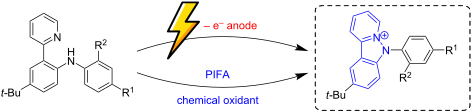
- has been confirmed by the experimental results given in Scheme 2 above. Comparison of the CV curves measured for N-arylpyridoindazolium salts S1–S3 and their precursors – the diarylamines – sheds light of the nature of the electrochemical process. In Figure 1a, it is shown for salt S2. If the


Hetero-polycyclic aromatic systems: A data-driven investigation of structure–property relationships
Beilstein J. Org. Chem. 2024, 20, 1817–1830, doi:10.3762/bjoc.20.160
- molecules have been used in diverse settings, functioning as organic field effect transistors [10][11][12], light-emitting diodes [13][14][15], organic semiconductors [16][17], organic photovoltaics [1][18][19][20][21][22], photocatalysts [23], and biological agents for tracking or inhibition [24][25], and
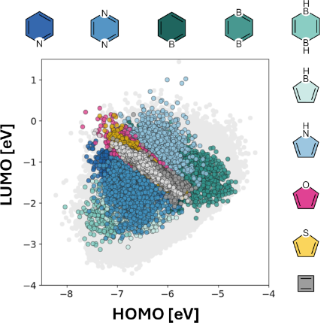
- nature on the molecular properties of PASs. Our goal is to delineate specific structure–property relationships that may shed light on these prevalent, yet still mysterious, compounds and serve as design principles for future PASs. Data The molecules in COMPAS-2 contain 11 cyclic building blocks varying
- distribution of the COMPAS-1 molecules (light blue) is contained within the distribution of the COMPAS-2 molecules (purple). In other words, the expansion of the building block library widens the property distributions towards both higher and lower energies, providing access to functional molecules with





