Search results
Search for "NMR spectra" in Full Text gives 2318 result(s) in Beilstein Journal of Organic Chemistry. Showing first 200.
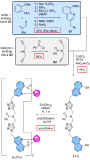
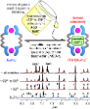
Tailored charge-neutral self-assembled L2Zn2 container for taming oxalate
Beilstein J. Org. Chem. 2024, 20, 3007–3015, doi:10.3762/bjoc.20.250
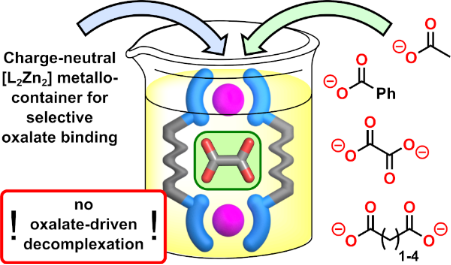
- sufficient quality to obtain a solid-state structure of the oxalate host–guest complex [(C2)@L2Zn2]2− so that we utilized DFT calculations to model the expected structure of the host–guest species (Figure 3a). Therefore, we funneled structural information obtained from NMR spectra into our starting geometry
- Information Supporting Information File 2: Synthetic protocols, characterization data, NMR spectra, guest binding investigations, data fitting, and computational modeling details. Funding The authors are grateful for financial support by the Fonds der Chemischen Industrie (FCI) through a Liebig grant and the




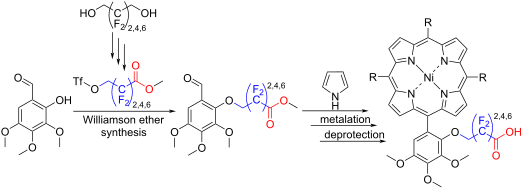
Synthesis of fluorinated acid-functionalized, electron-rich nickel porphyrins
Beilstein J. Org. Chem. 2024, 20, 2954–2958, doi:10.3762/bjoc.20.248
- Information File 42: Experimental procedures, characterization data of all products, and copies of 1H, 13C, and 19F NMR spectra. Acknowledgements We thank Dr. Claus Bier for the help with the HPLC–ESIMS measurements.


gem-Difluorovinyl and trifluorovinyl Michael acceptors in the synthesis of α,β-unsaturated fluorinated and nonfluorinated amides
Beilstein J. Org. Chem. 2024, 20, 2946–2953, doi:10.3762/bjoc.20.247
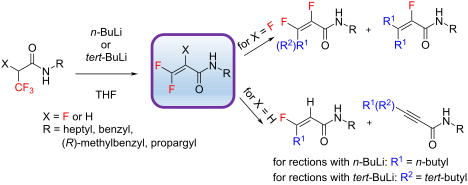
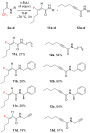
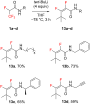
- products. These highly stable compounds were isolated after purification on silica gel in good yields (Scheme 2) and characterized by spectroscopic methods. The reaction proceeded with very high Z-stereoselectivity (Scheme 2, compounds 9a–d). In the 19F NMR spectra of crude mixtures, only trace amounts of
- analyzing the differences in the chemical shift values in the 1H NMR spectra for NCH3 and NCH2- proton groups, based on our previous studies concerning fluorinated amides [46][47]. Conclusion In this study, we have established that tri- and tetrafluorinated amides, featuring a CF3 group at the α position




4,6-Diaryl-5,5-difluoro-1,3-dioxanes as chiral dopants for liquid crystal compositions
Beilstein J. Org. Chem. 2024, 20, 2940–2945, doi:10.3762/bjoc.20.246
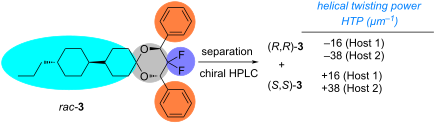
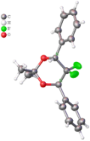
- ,R)-3, (S,S)-3, (R,R)-4 and (S,S)-4. Supporting Information Supporting Information File 38: Experimental procedures, analytical data and copies of NMR spectra. Acknowledgements The Centre Commun de Spectrométrie de Masse (CCSM) et de RMN (CCRMN) of the Université Claude Bernard Lyon 1 are thanked


Structure and thermal stability of phosphorus-iodonium ylids
Beilstein J. Org. Chem. 2024, 20, 2931–2939, doi:10.3762/bjoc.20.245
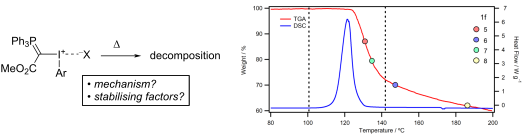
- 100% conversion (i.e., constant moles) with decomposition product marked. XRD data. DSC and TGA dataa. Supporting Information Supporting Information File 33: Experimental procedures, analytical data (NMR spectra), thermal (DSC, TGA) and structural (XRD) data. Supporting Information File 34: X-ray


The charge transport properties of dicyanomethylene-functionalised violanthrone derivatives
Beilstein J. Org. Chem. 2024, 20, 2921–2930, doi:10.3762/bjoc.20.244
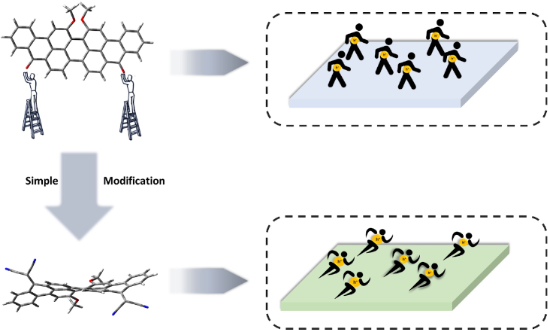
- materials. Supporting Information Supporting Information File 30: NMR spectra of compounds, crystallographic informnation and OFET plots. Acknowledgements We acknowledge EPSRC UK National Mass Spectrometry Facility at Swansea University and EPSRC UK National Crystallography Service. Funding Sondos


Multicomponent synthesis of α-branched amines using organozinc reagents generated from alkyl bromides
Beilstein J. Org. Chem. 2024, 20, 2834–2839, doi:10.3762/bjoc.20.239
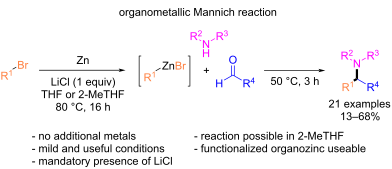
- Supporting Information File 22: Experimental procedures, compound characterization data, and NMR spectra for all compounds. Funding The authors acknowledge the support of the French Agence Nationale de la Recherche (ANR) under reference ANR-20-CE07-0003 (BILIOMAR project).


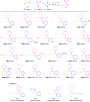
Synthesis of tricarbonylated propargylamine and conversion to 2,5-disubstituted oxazole-4-carboxylates
Beilstein J. Org. Chem. 2024, 20, 2827–2833, doi:10.3762/bjoc.20.238

- . Ltd. and purified by distillation. 1H and 13C{1H} NMR spectra were recorded on a JEOL JMN-ECZ400S spectrometer (400 MHz and 100 MHz, respectively) using TMS as internal standard. The assignments of the 13C{1H} NMR signals were reaffirmed by DEPT experiments. IR spectra were recorded with a JASCO FT/IR
- reaction using other N,O-acetals 1 and alkynes 3. Conversion of adducts 4 to oxazoles 5. Ring closure of 4a using ammonium acetate. Supporting Information Supporting Information File 18: Spectral data for 4, 5, and 9 as well as 1H and 13C NMR spectra.


Investigation of a bimetallic terbium(III)/copper(II) chemosensor for the detection of aqueous hydrogen sulfide
Beilstein J. Org. Chem. 2024, 20, 2818–2826, doi:10.3762/bjoc.20.237

- magnetic resonance (1H NMR) spectra was recorded on a Bruker DRX400 spectrometer operating at 400 MHz. High-resolution mass spectrometry (HRMS) was performed using a Bruker BioApex 47e FTMS with an analytical electrospray source employing NaI for accurate mass calibration (ESI). UV–vis absorption spectra


Synthesis and antimycotic activity of new derivatives of imidazo[1,2-a]pyrimidines
Beilstein J. Org. Chem. 2024, 20, 2806–2817, doi:10.3762/bjoc.20.236
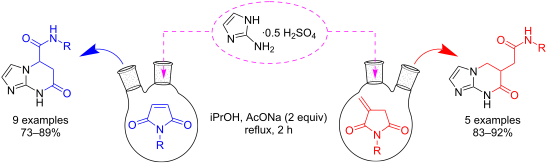
- -6-yl)acetamides 5a–e. In 1H NMR spectra of the products, the characteristic signals for the protons of the methylene and methine fragments of the pyrimidine cycle are important in establishing the regiochemistry of the process. Thus, in the 1Н NMR spectra of compounds 4, the following reference


Mechanochemical difluoromethylations of ketones
Beilstein J. Org. Chem. 2024, 20, 2799–2805, doi:10.3762/bjoc.20.235
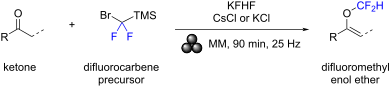
- NMR spectroscopy using 1,2-dichloroethane as internal standard. Optimization of the reaction conditions.a Supporting Information Supporting Information File 12: Experimental procedures, optimization studies, compound characterization data, NMR spectra, and mechanistic investigations. Funding General


C–C Coupling in sterically demanding porphyrin environments
Beilstein J. Org. Chem. 2024, 20, 2784–2798, doi:10.3762/bjoc.20.234
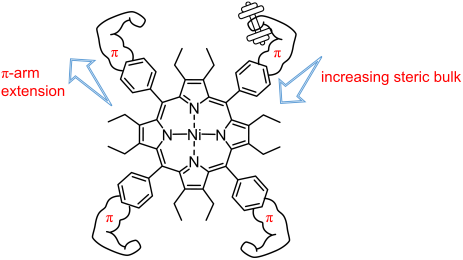
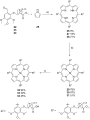
- the existence of this structure in solution was obtained from VT-NMR studies (Figure S51 and Figure S52 in Supporting Information File 1), with asymmetry observed in the β-ethyl CH3 resonances δH = 0.58 and 0.73 ppm and peak broadening in both the aromatic region and the {1H}13C NMR spectra


Access to optically active tetrafluoroethylenated amines based on [1,3]-proton shift reaction
Beilstein J. Org. Chem. 2024, 20, 2776–2783, doi:10.3762/bjoc.20.233
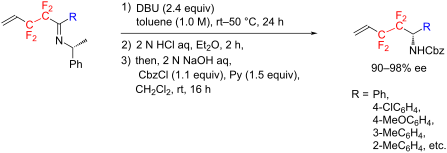
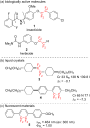
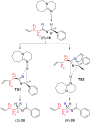
- reaction mechanism. Investigation of the reaction conditions. Supporting Information Supporting Information File 3: Full experimental details, 1H, 13C, 19F NMR spectra of 16a–g and 23a–g, and HPLC charts of racemic as well as chiral compounds 23a–g. Supporting Information File 4: Crystallographic



Synthesis of spiroindolenines through a one-pot multistep process mediated by visible light
Beilstein J. Org. Chem. 2024, 20, 2722–2731, doi:10.3762/bjoc.20.230
- laboratory, and the results will be reported in due course. Experimental General methods 1H, 13C and 19F NMR spectra were recorded on a JEOL 400 spectrometer (at 400 MHz, 101 MHz and 376 MHz, respectively). Unless otherwise stated, NMR spectra were recorded using residual solvent as the internal standard; 1H
- NMR: TMS = 0.00; (CD3)2SO = 2.50; and 13C NMR: CDCl3 = 77.16; (CD3)2SO = 39.52. Data for 1H NMR spectra are reported as follows: chemical shift (δ ppm), multiplicity, coupling constants (Hz) and integration. Data for 13C NMR spectra are reported in terms of chemical shift (δ ppm). Interpretation of
- spectra has been made also with the aid of gCOSY, gHSQC and gHMBC experiments. The following abbreviations are used to indicate the multiplicity in NMR spectra: s, singlet; d, doublet; t, triplet; q, quartet; m, multiplet. For some compounds the extra peaks are due to residual of the starting material (<5





Synthesis of benzo[f]quinazoline-1,3(2H,4H)-diones
Beilstein J. Org. Chem. 2024, 20, 2708–2719, doi:10.3762/bjoc.20.228
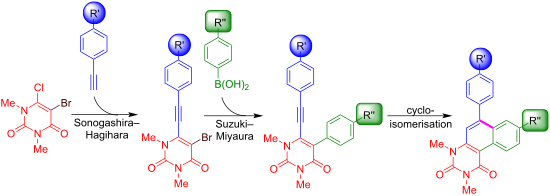
- of 1,3-dimethyl-5-phenyl-6-[2-(phenyl)ethynyl]uracil derivatives 5a, 5d, 5f, 5g, 5h, and 5i in dichloromethane (c = 1·10−5 M) at 20 °C. Supporting Information Supporting Information File 20: Copies of NMR spectra. Acknowledgements We are grateful for the technical and analytical support of the




Synthesis of fluoroalkenes and fluoroenynes via cross-coupling reactions using novel multihalogenated vinyl ethers
Beilstein J. Org. Chem. 2024, 20, 2691–2703, doi:10.3762/bjoc.20.226

- and 3 as new fluorine-containing building blocks. Experimental General information 1H NMR, 19F NMR, and 13C NMR spectra were recorded on JEOL ECZ 400S spectrometers. Chemical shifts of 1H NMR are reported in ppm from tetramethylsilane (TMS) as an internal standard. Chemical shifts of 13C NMR are
- and various boronic acids 4. Cross-coupling reactions between multihalogenated vinyl ethers 1 and various alkynes 5. Supporting Information Supporting Information File 16: Characterization data for 2b–s and 3b–w, and copies of 1H, 13C, and 19F NMR spectra.


Transition-metal-free decarbonylation–oxidation of 3-arylbenzofuran-2(3H)-ones: access to 2-hydroxybenzophenones
Beilstein J. Org. Chem. 2024, 20, 2655–2667, doi:10.3762/bjoc.20.223
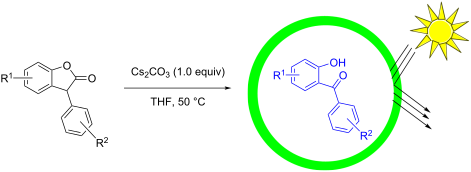
- was extracted with CHCl3 and the 1H NMR spectra were recorded in CDCl3. As can be seen from Figure 4, a gradual increase of the peak at δ 5.3 ppm with concomitant decrease of the peak at δ 11.6 ppm is observed and indicated the gradual formation of THF-hydroperoxide, along with the concomitant
- over anhydrous Na2SO4. FTIR spectra were recorded as films with a Bruker Tensor II spectrophotometer. The 1H and 13C NMR spectra were recorded with a Varian 500 MHz NMR spectrometer, and were processed using Bruker TOPSPIN software. Melting points (mp) were measured on a Büchi B-540 apparatus. X-ray
- compounds 4ja, 4fb, and 4ma. Partial 1H NMR spectra of the aliquots (taken at different time intervals) from the reaction mixture. Plausible mechanism for the transition-metal-free decarbonylation–oxidation. UV–vis absorption spectra of selected synthesized compounds 4aa, 4cb, 4eb, and 4fb from 225–500 nm




The scent gland composition of the Mangshan pit viper, Protobothrops mangshanensis
Beilstein J. Org. Chem. 2024, 20, 2644–2654, doi:10.3762/bjoc.20.222
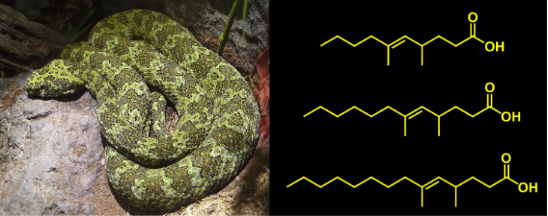
- ) and C-6-methyl (1.56 ppm) and was assigned as the E-diastereomer. This assignment is further supported by the 13C NMR spectra. The major diastereomer shows C-7 at 39.7 ppm, a typical value for (E)-configured aliphatic chains with allylmethyl groups [29], while the (Z)-isomers show values around 30 ppm
- obtained using a GC 6890 (Agilent Technologies) coupled to a JMS-T100GC mass spectrometer (GC-AccuTOF, JEOL, Japan) using the time-of-flight (70 eV) method. A ZB5 MS column (Phenomenex, 30 m, 0.25 mm i.d. 0.25 µm film thickness) and helium as carrier gas were used. NMR spectra were obtained using Bruker
- procedures, NMR spectra. Acknowledgements We thank A. Faasen, R. Hartdegen, C. Hollowed, and B. Lawrence for the permission to access to snakes at the Bronx Zoo, New York. The photo in the graphical abstract was taken by Junkyardsparkle from wikipedia.org https://upload.wikimedia.org/wikipedia/commons/c/ca


Efficient modification of peroxydisulfate oxidation reactions of nitrogen-containing heterocycles 6-methyluracil and pyridine
Beilstein J. Org. Chem. 2024, 20, 2599–2607, doi:10.3762/bjoc.20.219
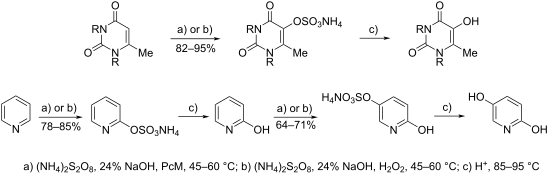
- classes. Experimental 1H and 13C NMR spectra were recorded on a Bruker Avance III 500 MHz spectrometer at 500.13 MHz (1H) and 125.73 MHz (13C) with 5 mm QNP sensors at a constant sample temperature of 298 K. The solvents were DMSO-d6, D2O, CDCl3 and the internal standard was SiMe4. Chemical shifts in the
- 13C and 1H NMR spectra are given in parts per million (ppm). Elemental analyses were performed on a CHNS Euro-EA 3000 automatic analyzer. Melting points were determined on combinated Boetius tables. IR spectra were obtained on an IR Prestige-21 Shimadzu spectrophotometer in KBr pellets. Freshly
- (9) on the amount of H2O2.a Supporting Information Supporting Information File 2: NMR spectra of compounds 2, 3, and 6. Funding This work was financially supported by the Ministry of Science and Higher Education of the Russian Federation (State Assignment No. 122031400278-2). Spectral experiments


Synthesis and cytotoxicity studies of novel N-arylbenzo[h]quinazolin-2-amines
Beilstein J. Org. Chem. 2024, 20, 2592–2598, doi:10.3762/bjoc.20.218
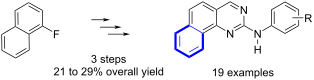
- bromides and other reagents were used as they were received from commercial suppliers, unless otherwise noted. THF and Et2O were dried over sodium-benzophenone and distilled prior to use. 1H NMR spectra were recorded at 300 and 400 MHz, and 13C NMR spectra at 75 and 100 MHz, in CDCl3 or DMSO-d6 using TMS
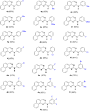
- desired targets 4. Cytotoxic studies (IC50 determination) of selected quinazolines 4.a Supporting Information Supporting Information File 2: Supplementary Table S1; spectral and analytical data for compounds 4b–s as well as all copies of 1H and 13C NMR spectra of compounds 4. Acknowledgements We thank


Base-promoted cascade recyclization of allomaltol derivatives containing an amide fragment into substituted 3-(1-hydroxyethylidene)tetronic acids
Beilstein J. Org. Chem. 2024, 20, 2585–2591, doi:10.3762/bjoc.20.217
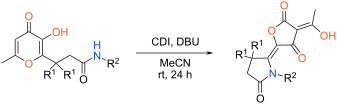
- formation of various unidentified byproducts. The obtained tetronic acids 4 are solid crystalline compounds, whose structure was proved by 1H, 13C NMR spectroscopy and high-resolution mass spectrometry. The 1H NMR spectra of the synthesized products contain characteristic signals of protons of the methyl
- Unless otherwise stated, all starting chemicals were commercially available and were used as received. The starting compounds 1 were prepared by a procedure described in the literature [33][34]. NMR spectra were recorded with Bruker AM 300 (300 MHz) in DMSO-d6. Chemical shifts (ppm) are given relative to
- , copies of NMR spectra, X-ray crystallographic data and refinement details. Supporting Information File 142: Analytical data of all compounds 4, 7 and 9. Acknowledgements Crystal structure determination was performed in the Department of Structural Studies of Zelinsky Institute of Organic Chemistry


Transition-metal-free synthesis of arylboronates via thermal generation of aryl radicals from triarylbismuthines in air
Beilstein J. Org. Chem. 2024, 20, 2577–2584, doi:10.3762/bjoc.20.216
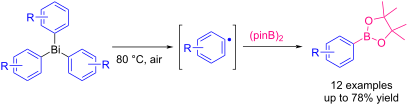
- without further purification. All solvents were used without distillation. Triarylbismuthines 1 were synthesized according to the previously reported procedures [62]. 1H, 13C{1H}, and 11B NMR spectra were recorded in CDCl3 using a Bruker AVANCE III HD 500 spectrometer at 500, 126, and 160 MHz
- File 138: Investigation of the boron residue in the crude mixture by 11B NMR measurement, characterization data of the compounds, and copies of 1H NMR and 13C{1H} NMR spectra. Acknowledgements We acknowledged Dr. Tran Dat Phuc and Mr. Soichiro Mita (Osaka Prefecture University) for their initial



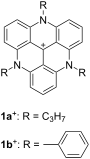
Anion-dependent ion-pairing assemblies of triazatriangulenium cation that interferes with stacking structures
Beilstein J. Org. Chem. 2024, 20, 2567–2576, doi:10.3762/bjoc.20.215
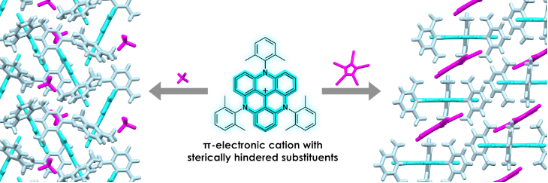
- further purification unless otherwise stated. According to the previous procedure [30], 4,8,12-tris(2,6-dimethylphenyl)-4,8,12-triazatriangulenium as a Cl− ion pair, 2+-Cl−, was prepared. NMR spectra used in the characterization of products were recorded on a JEOL ECA-600 600 MHz spectrometer. All NMR
- NMR spectra of new ion pairs, details for crystal structures, and theoretical calculations. Acknowledgements Theoretical calculations were partially performed at the Research Center for Computational Science, Okazaki, Japan (Projects: 22-IMS-C077, 23-IMS-C069, and 24-IMS-C067). The synchrotron
- spectra were referenced to residual solvent. UV–visible absorption spectra were recorded on a Hitachi U-4500 spectrometer. Fluorescence spectra were recorded on a Hitachi F-4500 fluorescence spectrometer. MALDI–TOF MS was recorded on a Shimadzu Axima-CFRplus. TLC analyses were carried out on aluminum



Visible-light-mediated flow protocol for Achmatowicz rearrangement
Beilstein J. Org. Chem. 2024, 20, 2493–2499, doi:10.3762/bjoc.20.213
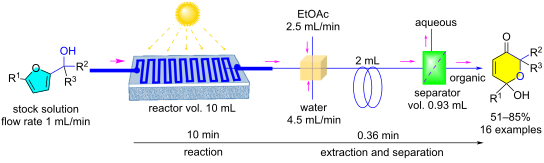
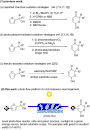
- mechanism for the photochemically induced Achmatowicz rearrangement. Strategies for Achmatowicz rearrangement. Optimization of continuous flow Achmatowicz reactiona. Supporting Information Supporting Information File 133: Experimental section and NMR spectra. Supporting Information File 134: Video of the



Photoredox-catalyzed intramolecular nucleophilic amidation of alkenes with β-lactams
Beilstein J. Org. Chem. 2024, 20, 2461–2468, doi:10.3762/bjoc.20.210
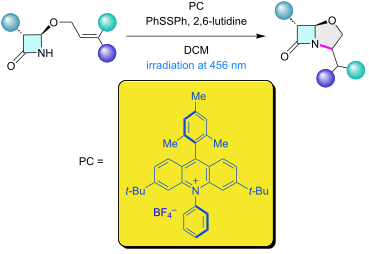
- characterization, spectroscopic data for new compounds, and copies of NMR spectra. Funding P. G. C., D. G., and A. G. acknowledge the University of Bologna for financial support. MIUR national project (PRIN 2017 ID: 20174SYJAF) SURSUMCAT “Raising up Catalysis for Innovative Developments” and European Union’s