


Search results
Search for "intermediate" in Full Text gives 2228 result(s) in Beilstein Journal of Organic Chemistry. Showing first 200.
Reactivity of hypervalent iodine(III) reagents bearing a benzylamine with sulfenate salts
Beilstein J. Org. Chem. 2024, 20, 3281–3289, doi:10.3762/bjoc.20.272
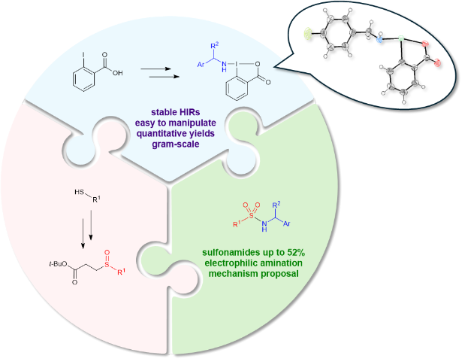
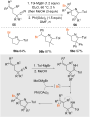
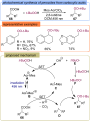
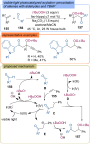
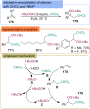
- ) [32][33]. To investigate the reactivity of the BBXs in this electrophilic amination reaction, the generated compound 4 was subjected to a retro-Michael addition to produce the sulfenate anion intermediate, followed by the addition of BBX 2. Based on our experience with HIRs, the reaction of 2 with
- reaction (Table 1, entry 1) [4]. In the presence of potassium carbonate, only starting material 4a was detected. A stronger base to generate the nucleophilic intermediate was tested, and sulfonamide 5aa was detected in trace amounts (Table 1, entry 2). Considering the low solubility of the hypervalent
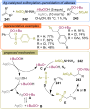
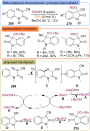
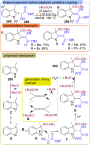
- Supporting Information File 1). We propose a mechanism pathway involving the retro-Michael addition of 4, releasing acrylate and hydrogen (H2). The charge of the sulfenate anion may shift between sulfur and oxygen atoms, possibly leading to an O-Michael addition (pathway B) [35]. The intermediate of these



Non-covalent organocatalyzed enantioselective cyclization reactions of α,β-unsaturated imines
Beilstein J. Org. Chem. 2024, 20, 3221–3255, doi:10.3762/bjoc.20.268
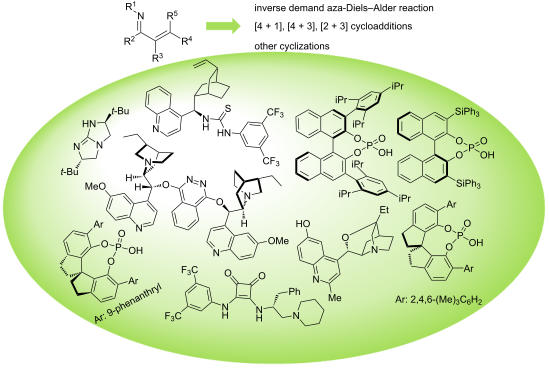
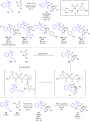
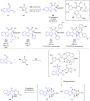
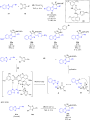
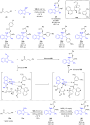
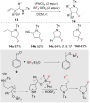
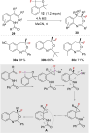
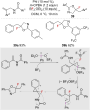
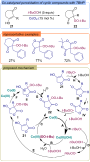
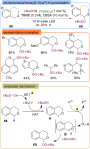
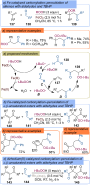
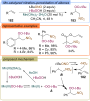
- hydrogen bonding with the protonated tertiary amine. Then, a Michael addition of malononitrile to the azadiene takes place to obtain exclusively the (S)-intermediate A. Subsequently an intramolecular nucleophilic addition of the nitrile leads to the intermediate B, which undergoes tautomerization to
- azlactones through H-bond interactions with the squaramide moiety. The activated complex undergoes a [4 + 2] cyclization, through the Si-face attack of the enolate to the 1-azadiene leading to intermediate A which undergoes tautomerization and protonation to yield the chiral tricyclic derivative 16. To
- -derived azadiene by H-bonding. This dual activation promotes a stereoselective addition of 3-chlorooxindole to the azadiene leading to intermediate A. The latter is also activated by the chiral guanidine and undergoes an intramolecular nucleophilic substitution which delivers the product 19b with the





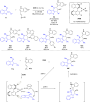


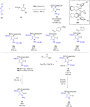


Discovery of ianthelliformisamines D–G from the sponge Suberea ianthelliformis and the total synthesis of ianthelliformisamine D
Beilstein J. Org. Chem. 2024, 20, 3205–3214, doi:10.3762/bjoc.20.266
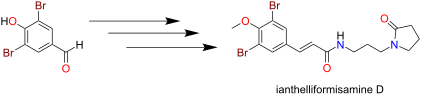
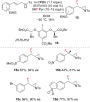
- /CH2Cl2 at room temperature (17% yield). Subjecting the methoxylated benzaldehyde intermediate 9 to a Doebner–Knoevenagel condensation with malonic acid and pyridine afforded the brominated cinnamic acid analogue 10 in 54% yield [19]. Amidation chemistry using carbonyldiimidazole (CDI) [18] and the


![[Graphic 1]](/bjoc/content/inline/1860-5397-20-266-i2.svg?max-width=637&scale=1.18182)
![[Graphic 2]](/bjoc/content/inline/1860-5397-20-266-i3.svg?max-width=637&scale=1.18182)
![[Graphic 3]](/bjoc/content/inline/1860-5397-20-266-i4.svg?max-width=637&scale=1.18182)

![[Graphic 4]](/bjoc/content/inline/1860-5397-20-266-i5.svg?max-width=637&scale=1.18182)
![[Graphic 5]](/bjoc/content/inline/1860-5397-20-266-i6.svg?max-width=637&scale=1.18182)

Multicomponent reactions driving the discovery and optimization of agents targeting central nervous system pathologies
Beilstein J. Org. Chem. 2024, 20, 3151–3173, doi:10.3762/bjoc.20.261

- was withdrawn from phase III clinical trials due to insufficient efficacy compared to current antipsychotic drugs (APDs). However, POM demonstrated to be effective to treat certain populations [69]. The large-scale synthesis of a key intermediate of POM was described by Waser et al. [70] in 2011. In
- /cyclization approach. General synthesis of 2,3-dichlorophenylpiperazine-derived compounds by the Ugi reaction and Ugi/deprotection/cyclization approach. Bucherer–Bergs multicomponent reaction to obtain a key intermediate in the synthesis of pomaglumetad methionil (POM). Ugi reaction to synthesize racetam


Hypervalent iodine-mediated intramolecular alkene halocyclisation
Beilstein J. Org. Chem. 2024, 20, 3113–3133, doi:10.3762/bjoc.20.258
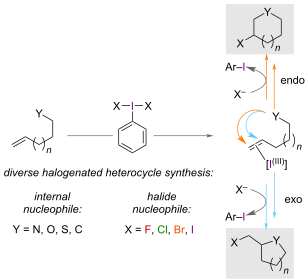
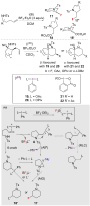
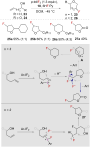
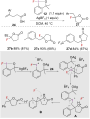
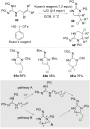
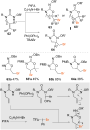
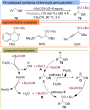
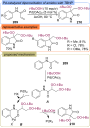
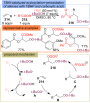
- fluoride ion to displace PhI. In pathway B (bottom), the nitrogen is oxidised by the iodane, generating an electrophilic intermediate B. Nucleophilic attack by the double bond subsequently forms the 6-membered ring intermediate C, which is either immediately attacked by fluoride to form both cis and trans
- ring A (Scheme 2). The Pd(II) intermediate is oxidised by PhI(OPiv)2/AgF, forming Pd(IV). Formation of the product can occur either by reductive elimination by Pd(IV) or SN2 nucleophilic attack by fluorine with concomitant palladium reduction. Reductive elimination of the Pd(II) intermediate forms the
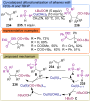
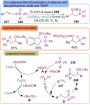
- proposed by the authors (Scheme 3). Activation of the HVI reagent by H-bonding leads to ligand exchange to give an aminofluoro iodonium intermediate A. Cyclisation occurs via nitrogen attack on the alkene to then give aziridinium intermediate B. Subsequent nucleophilic attack by fluoride on the more



















Advances in the use of metal-free tetrapyrrolic macrocycles as catalysts
Beilstein J. Org. Chem. 2024, 20, 3085–3112, doi:10.3762/bjoc.20.257
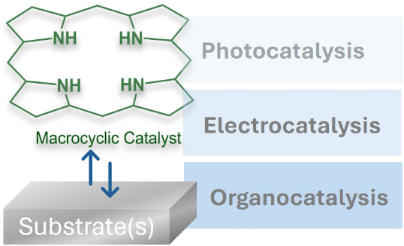
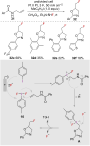
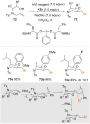
- activates the Cu–Cl bond via chloride···calixpyrrole (N–H···Cl) hydrogen-bonding interactions toward the formation of the nitrene intermediate from chloramine-T (NaCl=NTs). Additionally, calix[4]pyrrole served as a phase-transfer catalyst in this reaction. Since chloramine-T had low solubility in
- porphyrin radical anion. Ultimately, protonation of intermediate E led to the final product. Formation of intermediates, such as enamine A and cation radical B, was confirmed using techniques like ESIMS, 1H NMR, and EPR, Stern–Volmer quenching experiments, respectively. All these mechanistic studies
- intermediate. This intermediate was subsequently oxidized by the porphyrin cation radical, leading to the formation of the final product and completing the catalytic cycle. They have further screened porphyrins with both electron-withdrawing and electron-donating groups at the periphery as potential


Synthesis of the 1,5-disubstituted tetrazole-methanesulfonylindole hybrid system via high-order multicomponent reaction
Beilstein J. Org. Chem. 2024, 20, 3077–3084, doi:10.3762/bjoc.20.256
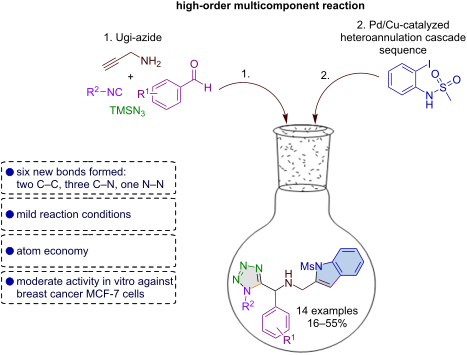
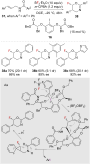
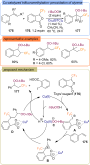
- first catalytic cycle begins with the coupling of 1,5-disubstituted tetrazole-alkyne 19 and methanesulfonyl-2-iodoaniline 17 forming the intermediate 23. Following a reductive elimination, the Sonogashira-like product 24 is produced, which then progresses into the second catalytic cycle. In this cycle
- , an intramolecular cyclization takes place, facilitated by CuI. This step involves a 5-endo-dig cyclization, where the negatively nitrogen atom of the sulfonamide 25 attacks intramolecularly to yield the intermediate 26. The final product is formed when iodide is regenerated as CuI, allowing it to re



Enantioselective regiospecific addition of propargyltrichlorosilane to aldehydes catalyzed by biisoquinoline N,N’-dioxide
Beilstein J. Org. Chem. 2024, 20, 3069–3076, doi:10.3762/bjoc.20.255
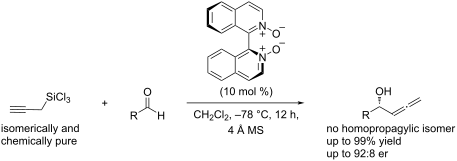
- prevent a direct Si–N interaction. From Rprop, the amine group of N,N-diisopropylethylamine abstracts the H1 proton with a barrier of 14.2 kcal/mol to form an intermediate (IN1). The intermediate IN1 is unstable (endergonic by 14.0 kcal/mol) and will immediately stabilize to another intermediate (IN2


Chemical structure metagenomics of microbial natural products: surveying nonribosomal peptides and beyond
Beilstein J. Org. Chem. 2024, 20, 3050–3060, doi:10.3762/bjoc.20.253

- megaenzyme machinery that contains multiple modules arranged in an assembly line fashion, each of which is responsible for incorporating a single BB into the growing peptide intermediate (Figure 3a). One module typically contains one adenylation (A) domain that folds and operates semi-autonomously, which
- of action (MOA) (e.g., membrane lysis and depolarization) [30][34] and specific MOA (e.g., dysregulation of ClpP protease [33], inhibition of topoisomerase I/II [36][68], blocking lipid II transport by flippase [29], sequestration of cell wall biosynthetic intermediate C55-(di)phosphate, etc.) [35
- of an NRP despite the fact that this feature is known to be important for bioactivity [79][80]. Typically, the C-terminus of the NRP intermediate is covalently linked via a thioester bond to the phosphopantetheine prosthetic arm of the peptide carrier protein (also known as the thiolation (T) domain


Cyclodextrin-based rotaxanes for polymer materials: challenge on simultaneous realization of inexpensive production and defined structures
Beilstein J. Org. Chem. 2024, 20, 3026–3049, doi:10.3762/bjoc.20.252
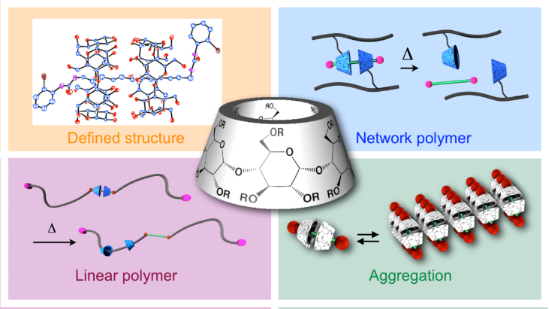
- stabilization effect could be affected by the bulkiness and polarity of the axle-end moieties. Meanwhile, the deslipping reaction of some [3]rotaxanes directly yielded the dumbbell and two wheels without any [2]rotaxane intermediate, indicating that the deslipping on [2]rotaxane proceeded faster than on [3
- ]rotaxane. In this case, the energy diagram of the deslipping reaction differs from those of the ones bearing a [2]rotaxane intermediate (Figure 9E). As revealed in this study, the CD-based size-complementary rotaxane exhibiting a simple framework (no ionic substituents nor deoxynucleotide) was obtained






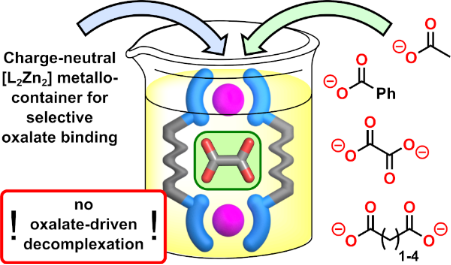
Tailored charge-neutral self-assembled L2Zn2 container for taming oxalate
Beilstein J. Org. Chem. 2024, 20, 3007–3015, doi:10.3762/bjoc.20.250
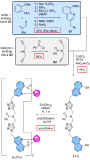
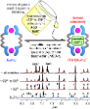
- determined by NMR (see Supporting Information File 1, Figures S7, S9, S11, S13, S15, and S17). 1H NMR dicarboxylate binding studies were carried out with oxalate (C22−) and longer variants C(2+n)2− up to adipate (with n = 4). Oxalate addition to [L2Zn2] results in an intermediate exchange with broadened NMR
- S20 in Supporting Information File 1). An average binding constant for oxalate of log K = 4.39 was obtained by UV–vis spectroscopy (Figures S21–S26 in Supporting Information File 1) since the intermediate-like exchange prevents the determination directly from the 1H NMR titration. The binding constant
- which is observed for acetate, benzoate, and oxalate. a) 1H NMR titration (500 MHz, 500 µM, DMSO-d6, 25 °C) of [L2Zn2] with oxalate showing intermediate-like exchange. b) Negative ESI-MS spectrum of [L2Zn2] with 5 equiv oxalate showing the formation of [(C2)@L2Zn2]2− as host–guest complex. a) Optimized




Advances in radical peroxidation with hydroperoxides
Beilstein J. Org. Chem. 2024, 20, 2959–3006, doi:10.3762/bjoc.20.249
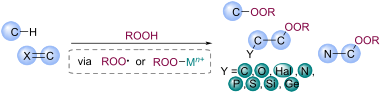
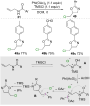
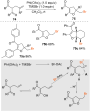
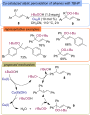
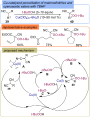
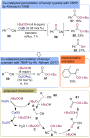
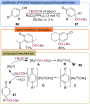
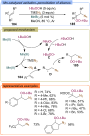
- )] [40]. Introduction of the tert-butylperoxy fragment into the allylic position of substituted cyclohexenes 6 was carried out using Pd(OAc)2 in ambient conditions (Scheme 5) [41]. The corresponding allylic peroxy ethers 7 were synthesized in 62–75% yields, the key intermediate was proposed to be L2Pd(OO
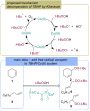
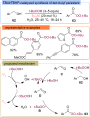
- formation of tert-butoxy and tert-butylperoxy radicals from TBHP as a result of redox reactions with Cu(I)/Cu(II). The tert-butoxy radical abstracts the hydrogen atom from alkene 8 to form the C-centered radical A. The subsequent attack of the tert-butylperoxy radical on intermediate A leads to the
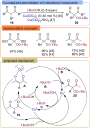
- tert-butylperoxy radical from TBHP. Intermediate A can be formed by reaction of substrate 35 with the tert-butylperoxy or the NO3 radical, further recombination with the tert-butylperoxy radical leads to the target product 36. Also, peroxidation of barbituric acids was achieved using TBHP/TiO2































Structure and thermal stability of phosphorus-iodonium ylids
Beilstein J. Org. Chem. 2024, 20, 2931–2939, doi:10.3762/bjoc.20.245
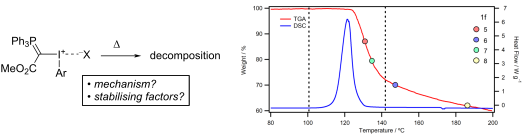
- understanding of the decomposition mechanism. Despite large differences in Tonset, most samples showed relatively consistent second decomposition steps at ca. 225 °C (Figure 3b), which is indicative of a common decomposition intermediate for all compounds. To investigate this common intermediate, ex-situ mass
- ) results in (methoxycarbonyl(iodo)methyl)triphenylphosphonium salt 5 (observed by MS). Deiodination or decarboxylation from this intermediate afford 6 and 7, respectively. After heating to T2, (methyl)triphenylphosphonium salt 8 is observed, which may be formed from 6 and 7 by decarboxylation and loss of
- involving scission of the C(ylid)–I bond or the C(Ar)–I bond was proposed based on ex situ MS and NMR analysis, resulting in the formation of (methyl)triphenylphosphonium intermediate 8. The nature of the arene substituent (I–Ar) and anion (X) appear to play an important, yet currently unquantifiable, role


Recent advances in transition-metal-free arylation reactions involving hypervalent iodine salts
Beilstein J. Org. Chem. 2024, 20, 2891–2920, doi:10.3762/bjoc.20.243

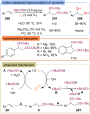
- state, eosin Y*. This excited state further undergoes oxidation via a single-electron-transfer (SET) reaction with Ar2IBF4 26, producing eosin Y+ and a phenyl radical 30 (Scheme 10). The radical intermediate 30 selectively binds to the C2 position of either quinoline or pyridine N-oxide, forming
- intermediate I. Furthermore, intermediate I subsequently undergoes another SET reaction, resulting in intermediate II and the regeneration of the photocatalyst. Intermediate II undergoes deprotonation, facilitated by the presence of Cs2CO3 as base, to yield the final products 27 or 29. Additives like BQ likely
- assist in the deprotonation of intermediate II to produce final products 27, while K2S2O8 aids in the oxidation of the photocatalyst in the case of pyridine N-oxide. In another photoinduced reaction procedure, Murarka et al. reported the formation of aryl radicals from a tetrameric electron donor




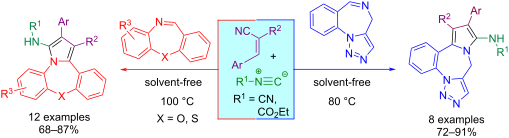
Synthesis of pyrrole-fused dibenzoxazepine/dibenzothiazepine/triazolobenzodiazepine derivatives via isocyanide-based multicomponent reactions
Beilstein J. Org. Chem. 2024, 20, 2870–2882, doi:10.3762/bjoc.20.241
- synthesizing pyrrole-fused dibenzoxazepine is illustrated in Scheme 5. The reaction is initiated by the nucleophilic attack of the isocyanide 2 on the gem-diactivated olefin 1 to give the zwitterion intermediate 7. The reaction proceeds with the nucleophilic attack of the zwitterion intermediate 8 on the
- cyclic imine 3 until intermediate 9 is formed. Then, with the cyclization process intermediate 10 is obtained. Finally, pyrrole-fused benzoxazepine is synthesized by successive processes involving the loss of HCN and the tautomeric enamine imine formation. The successful synthesis of pyrrole-fused






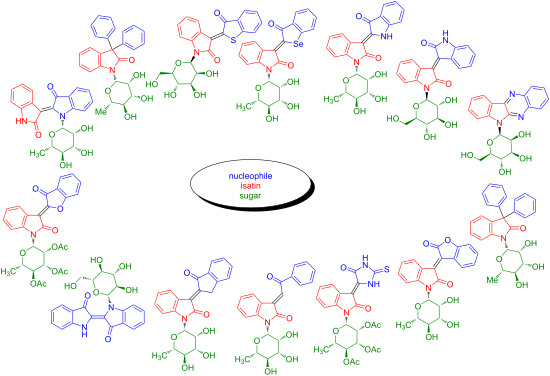
N-Glycosides of indigo, indirubin, and isoindigo: blue, red, and yellow sugars and their cancerostatic activity
Beilstein J. Org. Chem. 2024, 20, 2840–2869, doi:10.3762/bjoc.20.240
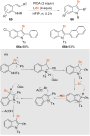
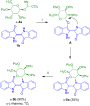
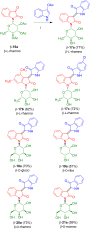
- (4a) initially resulted in the glycosylation of the oxygen atom to give intermediate A (−20 °C, 1.5 h). Extension of the reaction time (20 °C, 12 h) afforded N-indigoglycoside 5a which was isolated in 35% yield. The product contained an α-rhamnosyl moiety with 4C1 conformation. The formation of the
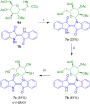
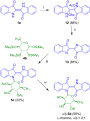
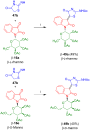
- -O-trimethylsilyl-ʟ-rhamnopyranose (4b) with TMSI gave intermediate A containing an anomeric iodide. Electrophilic addition of rhamnosyl iodide A to one of the two imino groups of 13 gave intermediate B. Another electrophilic addition of n-propyl mercaptane to the second imino group afforded
- intermediate C which underwent extrusion of iodine and dipropyl disulfide to give intermediate D. Subsequent reaction with acetic anhydride, pyridine and KHF2 resulted in the replacement of the TMS by acetyl groups which was important for practical reasons (stability during chromatography). The reaction of 13










Synthesis of tricarbonylated propargylamine and conversion to 2,5-disubstituted oxazole-4-carboxylates
Beilstein J. Org. Chem. 2024, 20, 2827–2833, doi:10.3762/bjoc.20.238

- phenacyl group, yielding 9 without any detectable cyclization product (Scheme 4). This hydration process is thought to proceed via two paths. The reaction is initiated by the protonation of the ethynyl group to generate the vinyl cation intermediate 10. Product 9 is directly formed by the attack of a water
- molecule on this cation, followed by tautomerism (path a). The intramolecular attack of an amide carbonyl on this cationic site in intermediate 10, leading to the formation of oxonium ion 11, is also possible (path b). After the addition of water, the formed hemiacetal 12 was hydrolyzed to give the


Synthesis and antimycotic activity of new derivatives of imidazo[1,2-a]pyrimidines
Beilstein J. Org. Chem. 2024, 20, 2806–2817, doi:10.3762/bjoc.20.236
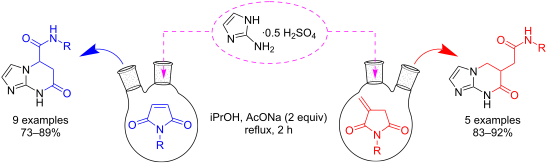
- in the mass spectra were interpreted on the basis of pre-calculated weights (as molecular ions with [M + H]+) for all possible initial, intermediate, and expected interaction products (Table 1). The tentative experiments showed that when toluene or dioxane were used as solvents, the maximum
- and 7a are formed (Scheme 4). Although intermediate 7a has a lower activation energy (∆G = −0.23 kcal/mol), further recyclization processes are not possible due to the positive free energy change (∆G > 0). In this context, the formation of the final product is only possible to proceed via intermediate
- 6a, which undergoes subsequent cyclization steps more favorably, leading to the formation of the target product 4a (∆G = −3.02 kcal/mol). This suggests that the first step of intermediate formation is the critical one. It is also noteworthy that the Michael addition via intermediate 6a is an


Copper-catalyzed yne-allylic substitutions: concept and recent developments
Beilstein J. Org. Chem. 2024, 20, 2739–2775, doi:10.3762/bjoc.20.232
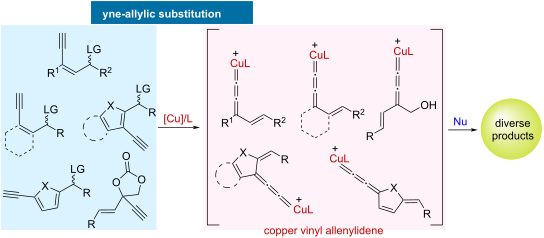
- developments and illustrates the influences of copper salt, ligand, and substitution pattern of the substrate on the regioselectivity and stereoselectivity. Keywords: copper-catalysis; copper vinyl allenylidene intermediate; 1,3-enyne; 1,4-enyne; yne-allylic substitution; Introduction Copper is earth
- ] and Nishibayashi [53] groups in 2008, Cu-catalyzed asymmetric propargylic substitutions have made significant progress [54][55][56][57][58][59][60]. The protocol allows the use of stabilized nucleophiles via the outer-sphere mechanism, and the copper allenylidene intermediate formed by copper and
- acetylide-bonded allylic cation as the key intermediate is proposed (Scheme 6a). It is worth noting that the nucleophilic attack favors a less sterically hindered site. Therefore, disubstituted alkene moiety prefers γ-attack while trisubstituted alkene moiety is inclined to α-attack (Scheme 6b). Lin and He


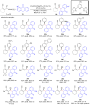


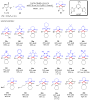


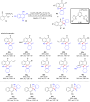


Synthesis of spiroindolenines through a one-pot multistep process mediated by visible light
Beilstein J. Org. Chem. 2024, 20, 2722–2731, doi:10.3762/bjoc.20.230
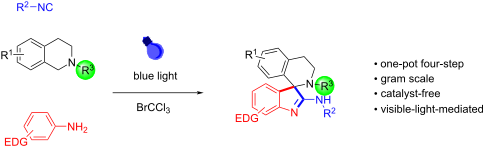
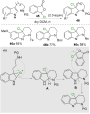
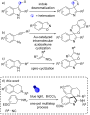
- reacts with an isocyanide and an electron-rich aniline in a three-component Ugi-type reaction to give an α-aminoamidine. This compound might undergo an additional visible light-mediated oxidation to furnish a second iminium intermediate, which acts as electrophile in an intramolecular electrophilic
- indicates that the second oxidation is faster than the multicomponent reaction, as intermediate 2d is not accumulated in the reaction mixture, but easily undergoes the C–N bond oxidation and the subsequent cyclization. A probable mechanistic pathway for the formation of spiro-indolenine is outlined in





5th International Symposium on Synthesis and Catalysis (ISySyCat2023)
Beilstein J. Org. Chem. 2024, 20, 2704–2707, doi:10.3762/bjoc.20.227
- easily recovered by precipitation using polar solvents. This catalyst proved to be excellent for the preparation of (S)-baclofen on a gram scale, furnishing the main chiral intermediate in high yield and enantioselectivity. Furthermore, the catalyst was recycled over five cycles while maintaining its
- Suzuki couplings and the reduction of the thiazole moiety to 2,3-dihydro[1,3]thiazolo[4,5-b]pyridines, a crucial intermediate, using BH3⋅NH3 and tris(pentafluorophenyl)borane as a Lewis acid, followed by treatment with formic acid. Gillie et al. reported the synthesis of a laterally fused N-heterocyclic

Computational design for enantioselective CO2 capture: asymmetric frustrated Lewis pairs in epoxide transformations
Beilstein J. Org. Chem. 2024, 20, 2668–2681, doi:10.3762/bjoc.20.224
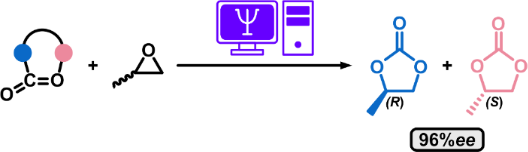
- is the energy of the rate-limiting TS, Ij the energy of the most populated intermediate, and δGi,j a correction that accounts for the cyclic nature of the catalytic cycle [26]: The energy span is a crucial parameter as it directly correlates with the turnover frequency (TOF) of the catalytic reaction
- new intermediate (Min5) is stabilised, in which the oxygen of CO2 has attacked the electrophilic carbon of PO, and the oxygen atom of PO interacts with the LB. This mechanism is exclusive to phosphorus-containing FLPs, as nitrogen does not support this type of reactivity. Subsequently, the
- intermediate undergoes reorganization, leading to Min2. Surprisingly, family 5, having phosphorus as the Lewis base, presents a different reactivity from the other families (Figure S3, Supporting Information File 1). Compounds F5_PB_H and F5_PB_CF3 react following mechanism 3 (Figure 5C), but the reaction


Transition-metal-free decarbonylation–oxidation of 3-arylbenzofuran-2(3H)-ones: access to 2-hydroxybenzophenones
Beilstein J. Org. Chem. 2024, 20, 2655–2667, doi:10.3762/bjoc.20.223
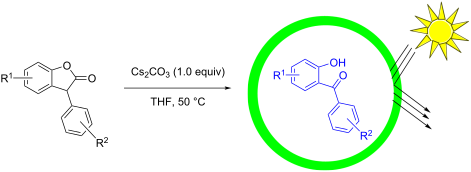
- enolization of benzofuranone 3 in the presence of a base produced intermediate A. The latter reacted with hydroperoxide to form B with the concomitant generation of the radicals, which further reacted with intermediate B to form intermediate C. Finally, C is hydrolysed with the release of one molecule CO2 and




The scent gland composition of the Mangshan pit viper, Protobothrops mangshanensis
Beilstein J. Org. Chem. 2024, 20, 2644–2654, doi:10.3762/bjoc.20.222
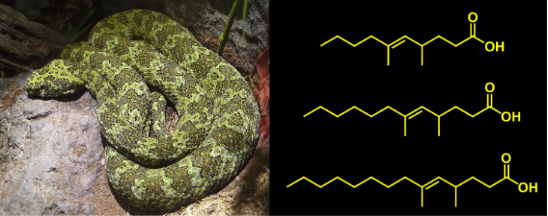
- , Figure S1), confirming the acid functional group in the natural compounds. In support of these data, GC/IR analysis of Dm (Supporting Information File 1, Figure S2) showed strong carbonyl bands at 1741 cm−1 accompanied by two intermediate bands at 1198 cm−1 and 1177 cm−1, characteristic of ester valence


Applications of microscopy and small angle scattering techniques for the characterisation of supramolecular gels
Beilstein J. Org. Chem. 2024, 20, 2608–2634, doi:10.3762/bjoc.20.220





