


Search results
Search for "photoredox" in Full Text gives 183 result(s) in Beilstein Journal of Organic Chemistry.
Visible-light photoredox catalysis enabled bromination of phenols and alkenes
Beilstein J. Org. Chem. 2014, 10, 622–627, doi:10.3762/bjoc.10.53
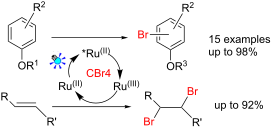
- of phenols and alkenes has been developed utilizing visible light-induced photoredox catalysis. The bromine was generated in situ from the oxidation of Br− by Ru(bpy)33+, both of which resulted from the oxidative quenching process. Keywords: alkenes; bromination; phenols; photoredox catalyst
- . Recently, an intriguing and promising strategy for the application of photoredox catalysts to initiate single electron transfer processes have been developed [16][17][18][19][20][21][22]. Since the pioneering work from the groups of MacMillan [23][24][25], Stephenson [26][27][28], Yoon [29][30][31] and
- others [32][33][34][35][36][37][38][39][40][41][42][43][44] demonstrated the usefulness of Ru(bpy)3Cl2 and its application to various visible-light-induced synthetic transformations, visible-light-photoredox catalysis has emerged as a growing field in organic chemistry and has been successfully applied


Recent applications of the divinylcyclopropane–cycloheptadiene rearrangement in organic synthesis
Beilstein J. Org. Chem. 2014, 10, 163–193, doi:10.3762/bjoc.10.14
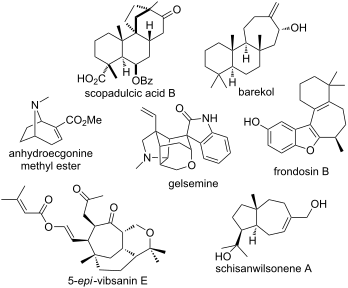
- coworker [200] found an intriguing example of a light mediated radical cyclization/arylvinylcyclopropane rearrangement. Subjecting cyclopropyl bromide 237 to an Ir-polypyridyl catalyst and visible light initiated the desired photoredox cascade forming a cyclopropylradical, which readily cyclized in an 5




The renaissance of organic radical chemistry – deja vu all over again
Beilstein J. Org. Chem. 2013, 9, 2778–2780, doi:10.3762/bjoc.9.312
- homolytic aromatic substitution (BHAS) [3], b) photoredox catalysis [4][5][6][7][8], c) redox chemistry using Bu4NI in combination with t-BuOOH [9], d) transition metal catalyzed processes where radicals are suggested to interact directly with copper, nickel, zinc, palladium, gold and so on [10][11][12][13
New developments in gold-catalyzed manipulation of inactivated alkenes
Beilstein J. Org. Chem. 2013, 9, 2586–2614, doi:10.3762/bjoc.9.294
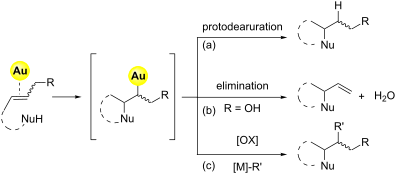
- , (i.e. styrene and gem-disubstituted olefins) to be efficiently employed (Scheme 39b) [85]. An innovative approach to the double functionalization of olefins was developed by Glorius and co-workers, very recently. The authors reported on the use of visible light-mediated photoredox catalysis to access
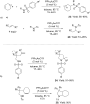
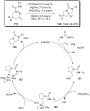
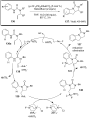
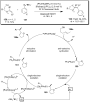
- , the initial anti oxy-auration of the double bond led to the alkylgold intermediate 159, that was oxidized to [Au(II)] 160 via a SET process by the aryl radical formed in the photoredox catalytic cycle. The highly reactive species 160 was promptly oxidized by [Ru(III)(bpy)3]3+ affording the [Au(III
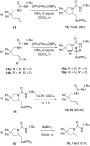
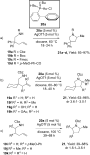
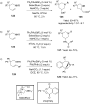
- aryltrimethylsilanes. b) Oxyarylation of alkenes catalyzed by gold in presence of iodine-(III) compound IBA as an external oxidant. Oxy- and amino-arylation of alkenes by [Au(I)]/[Au(III)] photoredox catalysis. Comparison of the catalytic activity of TfOH and PPh3AuOTf in the addition of phenols to alkenes








Recent advances in transition metal-catalyzed Csp2-monofluoro-, difluoro-, perfluoromethylation and trifluoromethylthiolation
Beilstein J. Org. Chem. 2013, 9, 2476–2536, doi:10.3762/bjoc.9.287
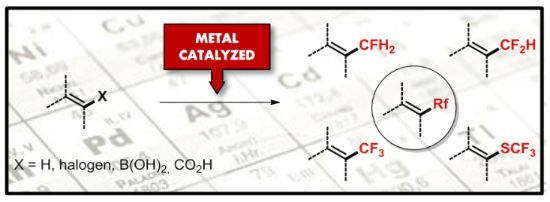
- of N. Kamigata et al. is that the reaction takes place under photoredox catalysis, allowing much milder reaction conditions (23 °C for D. W. C. MacMillan et al. vs 120 °C for N. Kamigata et al.). Higher yields were obtained, especially in the case of pyrroles (2-Rf-pyrrole: 88% yield for D. W. C
- (Figure 16). The mechanism of the reaction was similar to that proposed by N. Kamigata et al. (Figure 15). A complementary study was published by E. J. Cho et al. in 2012 [106]. Here, terminal and internal alkene C–H bonds were trifluoromethylated under photoredox Ru-catalysis, using trifluoromethyl
- analogues in the photoredox catalytic reactions discussed in section 3.3.1. Although also active, the iridium catalysts showed lower selectivity and are more expensive [105][106][107]. A different strategy was simultaneously reported by the groups of J. F. Hartwig and Q. Shen [35][37]. The approach consists


Regioselective 1,4-trifluoromethylation of α,β-unsaturated ketones via a S-(trifluoromethyl)diphenylsulfonium salts/copper system
Beilstein J. Org. Chem. 2013, 9, 2189–2193, doi:10.3762/bjoc.9.257
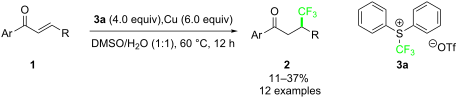
- chalcones. During the preparation of this article, the Nicewicz group showed a single example of conjugate trifluoromethylation of chalcone with sodium trifluoromethanesulfinate salt in the presence of N-methyl-9-mesitylacridinium as a photoredox catalyst resulting in a low product yield of 31% as a mixture
- detected like in the photoredox trifluoromethylation reaction [22]. Conclusion We developed for the first time the copper-mediated conjugate trifluoromethylation of simple α,β-unsaturated ketones through the use of shelf-stable electrophilic trifluoromethylating reagent 3a under mild conditions. Although


The chemistry of amine radical cations produced by visible light photoredox catalysis
Beilstein J. Org. Chem. 2013, 9, 1977–2001, doi:10.3762/bjoc.9.234
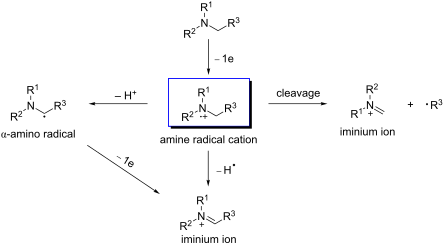
- highly sought-after synthetic intermediates including iminium ions, α-amino radicals, and distonic ions. One appealing method to access amine radical cations is through one-electron oxidation of the corresponding amines under visible light photoredox conditions. This approach and subsequent chemistries
- are emerging as a powerful tool in amine synthesis. This article reviews synthetic applications of amine radical cations produced by visible light photocatalysis. Keywords: α-amino radical; amine radical cation; catalysis; distonic ion; free radical; iminium ion; photoredox; visible light
- reduction [33][34]. Since 2008, seminal works from MacMillan, Yoon, and Stephenson have reinvigorated the field of visible light photoredox catalysis [35][36][37][38][39][40][41][42]. The use of amines as both the electron donor and the substrate, rather than just the electron donor, has become a major




Flow photochemistry: Old light through new windows
Beilstein J. Org. Chem. 2012, 8, 2025–2052, doi:10.3762/bjoc.8.229
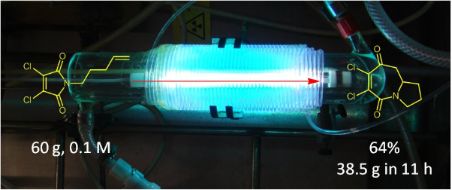
- entirely unsuccessful under batch conditions to be conducted [54]. Eosin Y (36) catalysis was also applied to an organocatalytic (42) photoredox α-alkylation of octanal (40, Scheme 15) to aldehyde 43. The reaction proved to be high yielding under both batch and microflow conditions, and a reduced


Other Beilstein-Institut Open Science Activities



